Recolor a marked area with Fix a spot in C2Story
Paint over a watering can with Fix a spot, submit one targeted edit, and verify the saved red result. Includes the actual marks, exact prompt, matching caption correction and phone-size checks.
This walkthrough uses Edit image → Fix a spot → Paint over it to recolor a watering can in an existing illustration. We performed the edit in the live C2Story UI on October 14, 2026, then checked the saved image and matching caption after a refresh and in the signed-out reader.
Before you start
Sign in to C2Story and open a book you own from My Books. You need an existing illustration and enough credits for the edit; our Generate area displayed 1 credit.
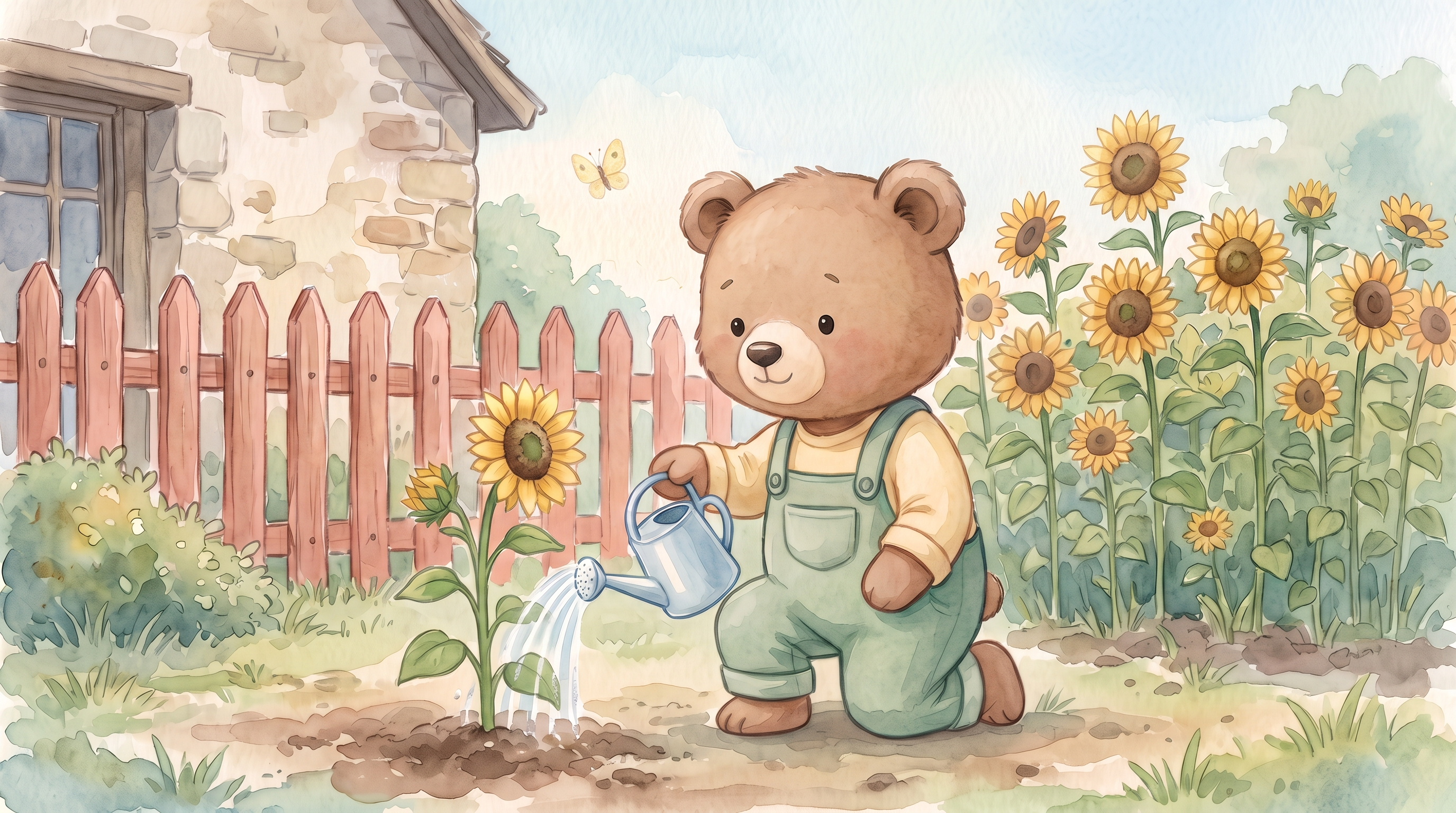
We reused the already saved one-page Milo Waters His Sunflower. The character, garden, coral fence and yellow butterfly were pre-existing assets from earlier workflows. This tutorial creates one replacement image for that same page, plus a one-word caption correction. It does not create another book or video.
Success meant turning the blue watering can warm red while retaining its recognizable shape and water stream, preserving the surrounding scene, and finding the result again after reopening. The surrounding scene is checked visually; this is not a promise of pixel-identical preservation.
Step 1 — Open Fix a spot on the existing image
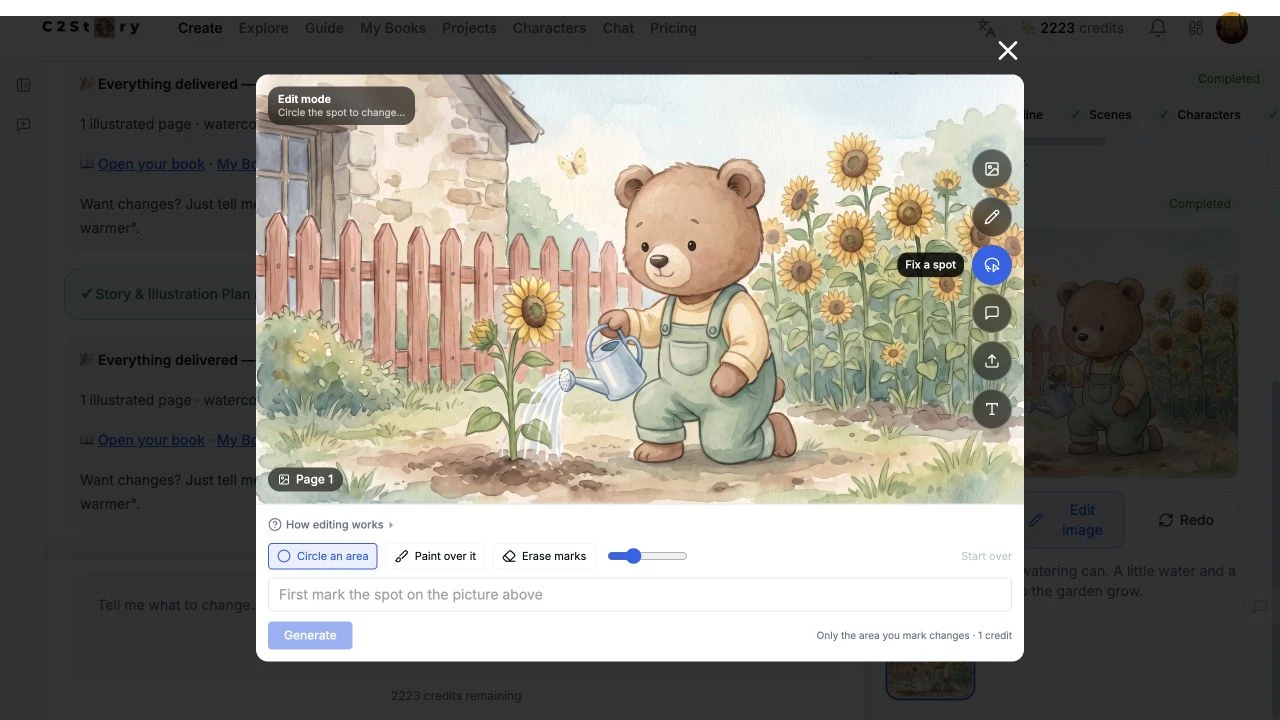
From the book reader, click Edit Book, then Edit image on page 1. Select Fix a spot. The dialog offers Circle an area, Paint over it, Erase marks, a mark-size slider and Start over.
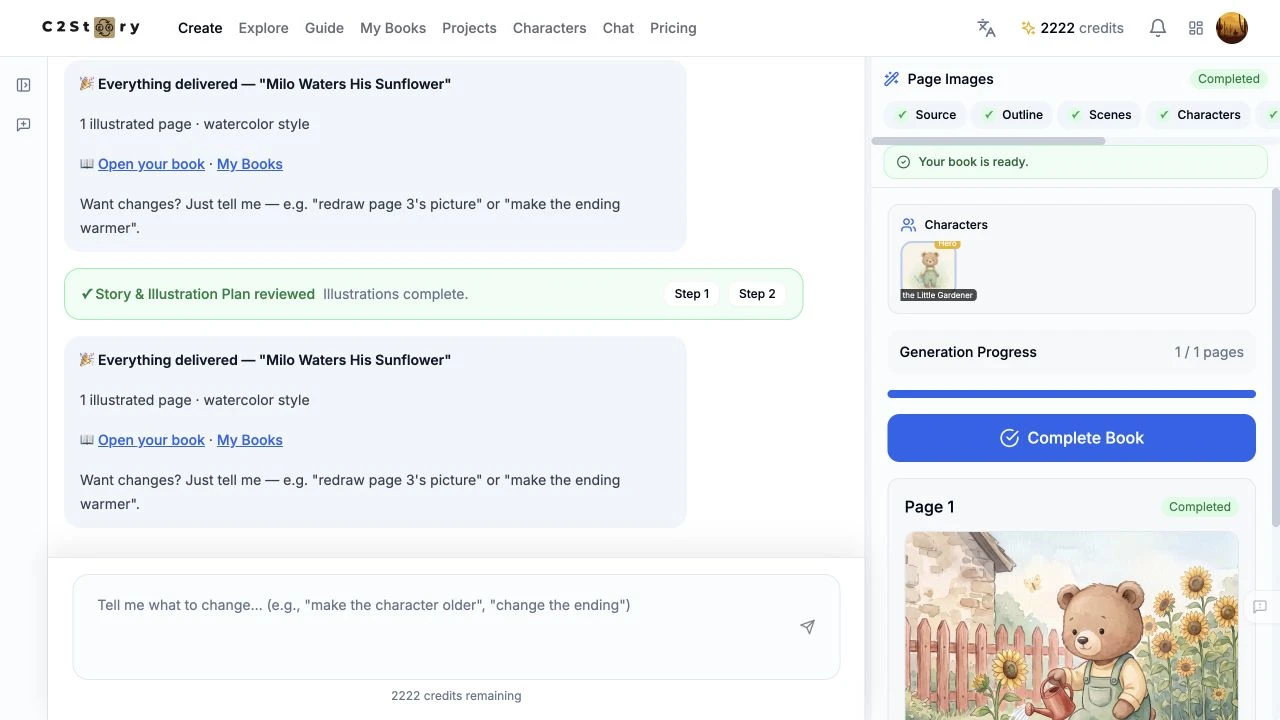
Our actual starting image is shown below. Its blue can and butterfly both existed before this run.
Step 2 — Paint the target area and describe the change
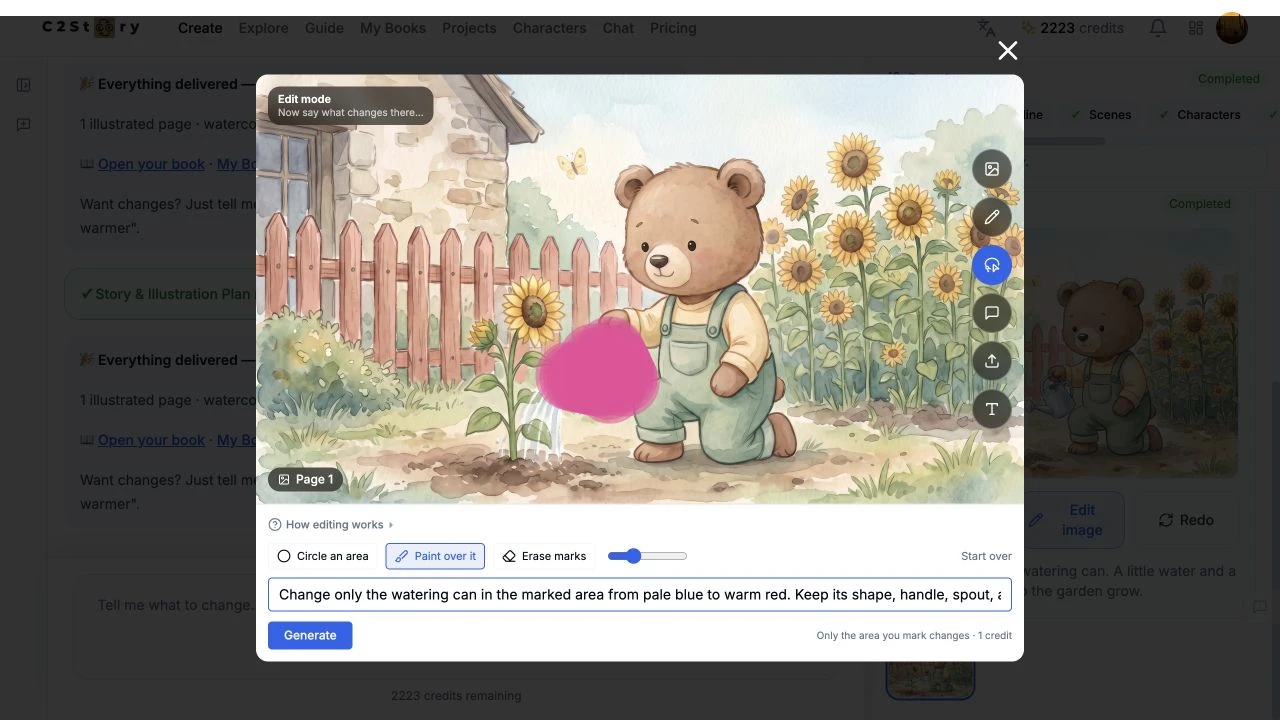
We initially tried a diagonal stroke with Circle an area, cleared it using Start over, then selected Paint over it. With Mark size 36, we painted over the can using three short strokes. The pink overlay in the screenshot is the actual submitted mark, including a small margin around the object.
We entered this exact instruction:
Change only the watering can in the marked area from pale blue to warm red. Keep its shape, handle, spout, and the flowing water. Preserve Milo, his clothes, all flowers, the butterfly, the fence, the composition, and the soft watercolor style.
The single-line input displays only part of the instruction at once. No external reference was uploaded. No model or aspect-ratio selector was visible in this dialog, and the edit's underlying model was not disclosed here. The existing page and requested style were watercolor.
Step 3 — Generate once and review
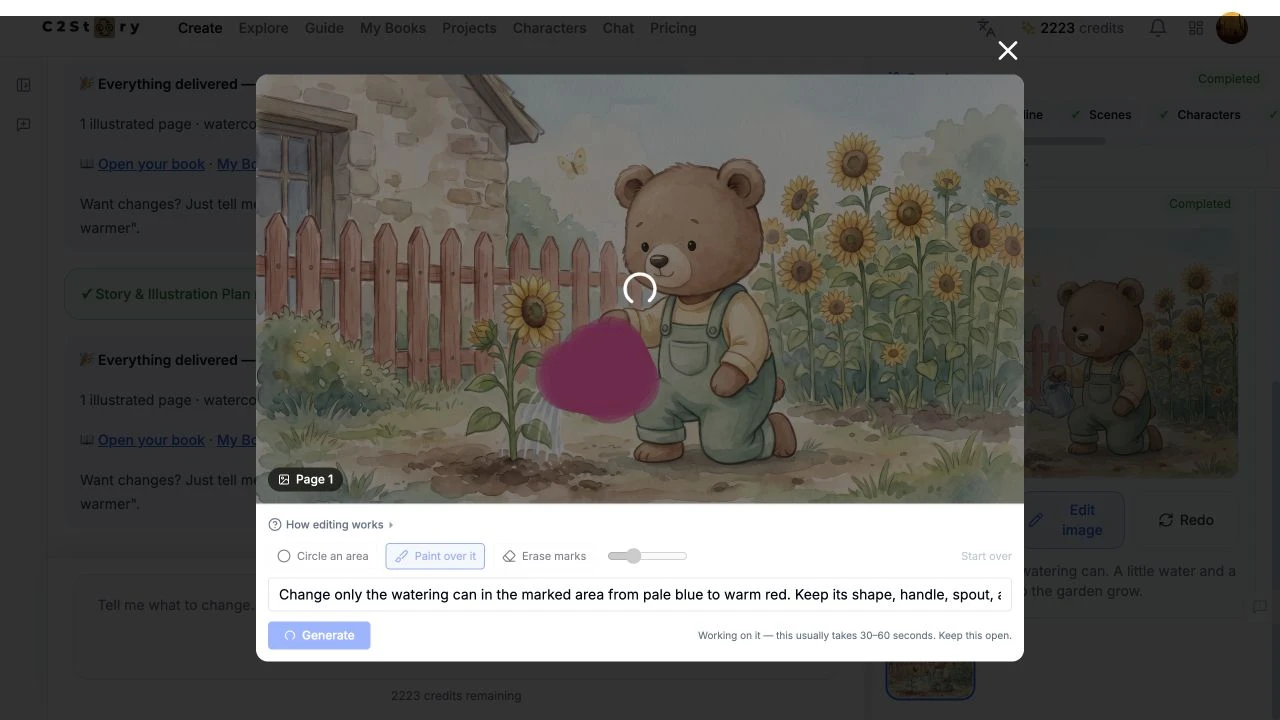
Click Generate once. The interface disabled its controls and asked us to keep it open. We waited without submitting a second request.
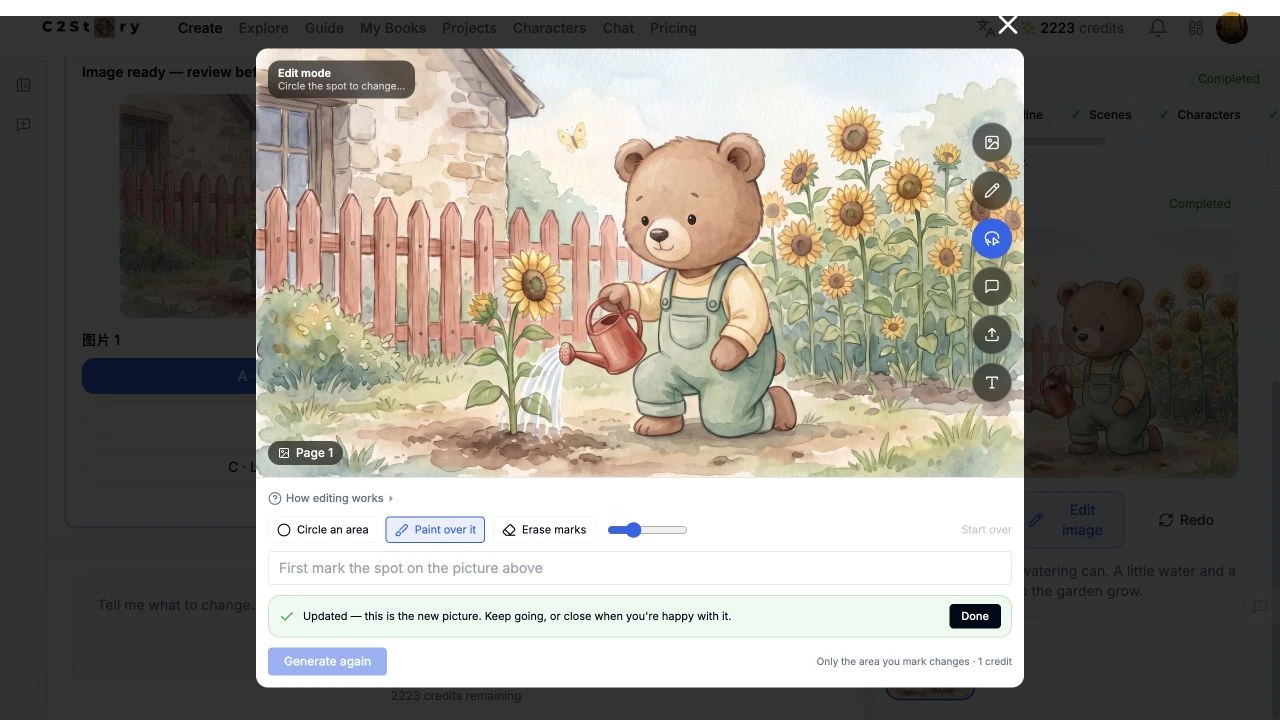
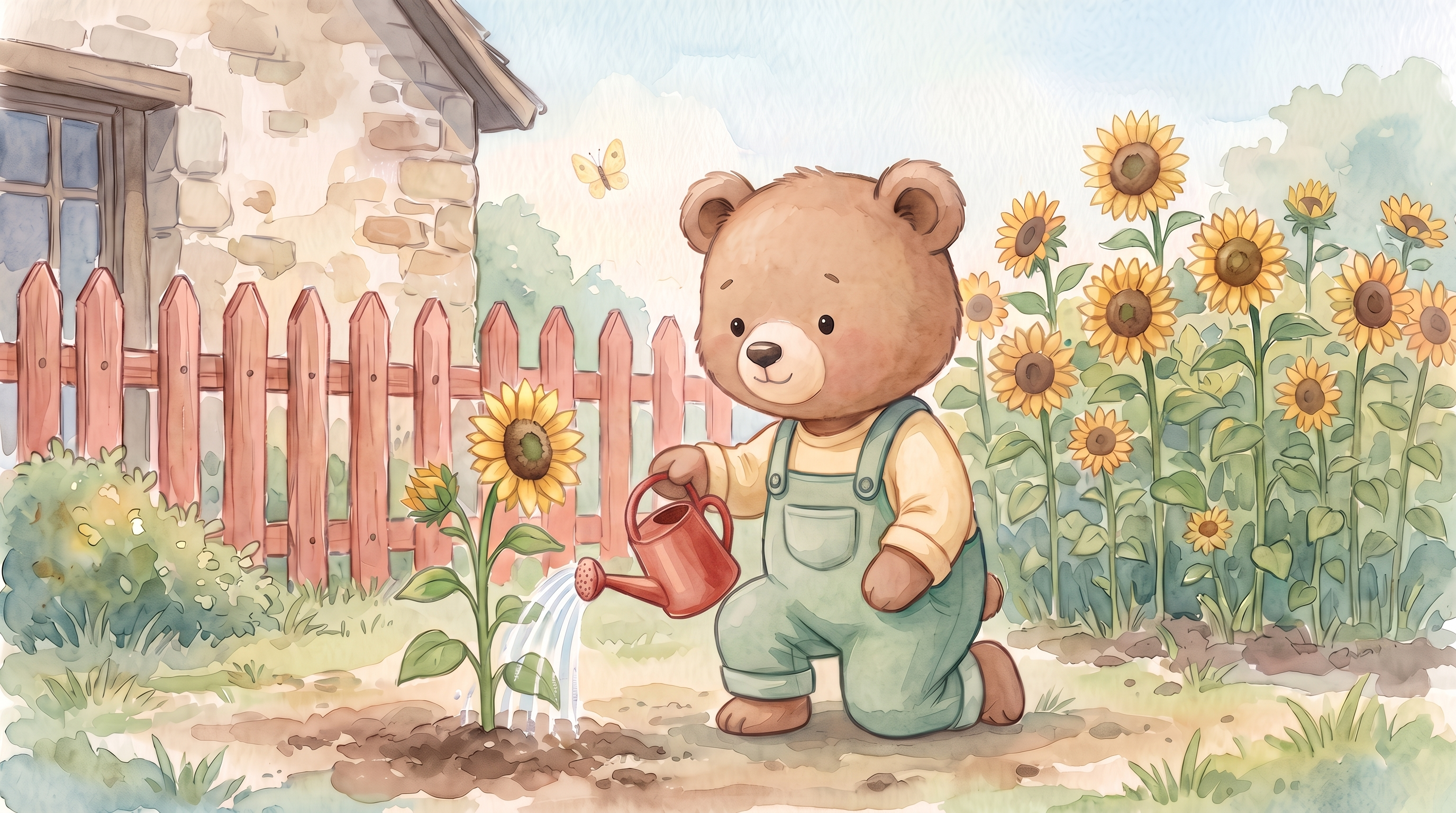
The dialog showed Updated — this is the new picture. The can became warm red, with its handle, spout and flowing water still visible. Milo, his clothing, the flowers, butterfly, fence and overall composition remained recognizable. Click Done when satisfied. A separate review card behind the dialog continued automatically; we made no additional generation.
Step 4 — Keep the caption consistent and verify saving
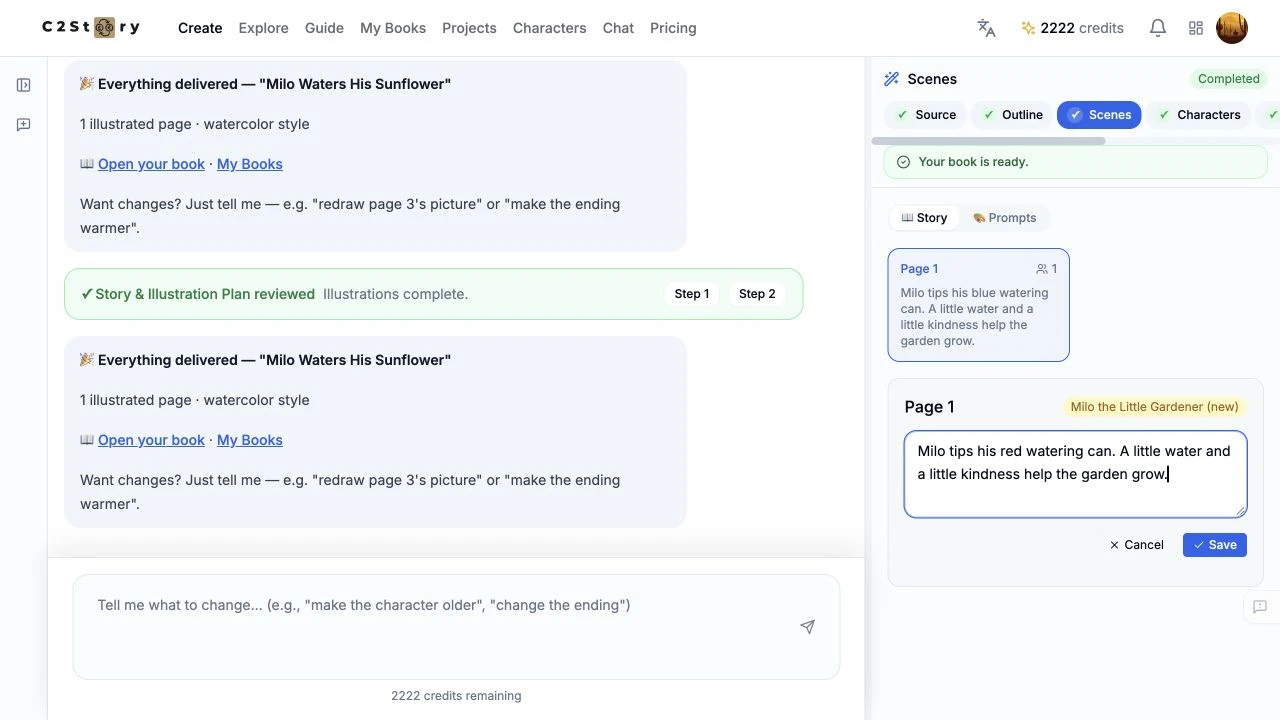
Refreshing the editor retained the red can. The old caption still said “blue watering can”: editing the image had not changed the page text. We opened Scenes → Story → Edit, changed only blue to red, and clicked Save. The exact saved text was:
Milo tips his red watering can. A little water and a little kindness help the garden grow.
After a full reload, the same page retained both the red can and corrected caption. The UI balance was 2,223 before generation and 2,222 after refresh, an observed one-credit decrease matching the displayed edit price. The immediate balance was stale until refresh. No itemized bill was inspected.
Step 5 — Check the public result
This book was already Public. We clicked its normal Share control; no copy confirmation or clipboard link was returned in this browser. We used the actual reader address and verified it after signing out.
Read Milo Waters His Sunflower
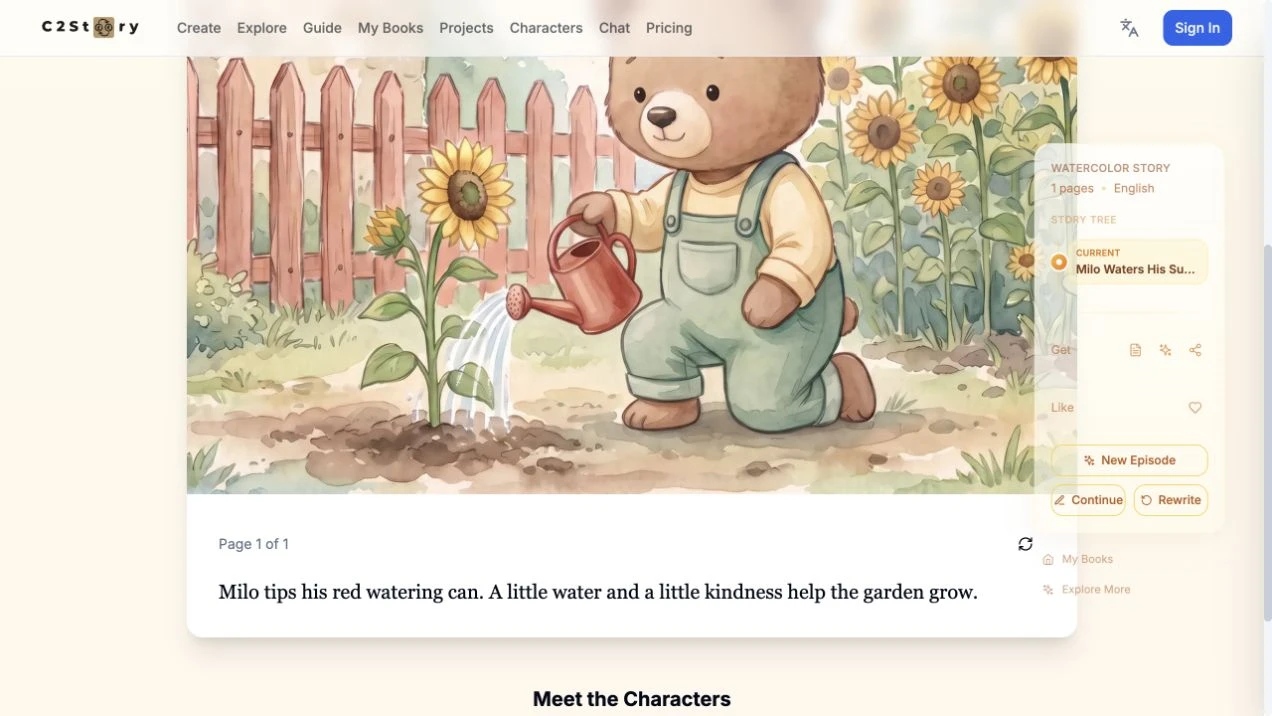
The Scroll reader displayed the saved result and corrected text at 1280 × 720.

At 390 × 844, the image and caption were visible without horizontal page overflow. This is still the same pre-existing one-page book.
Phone editing coverage and limits
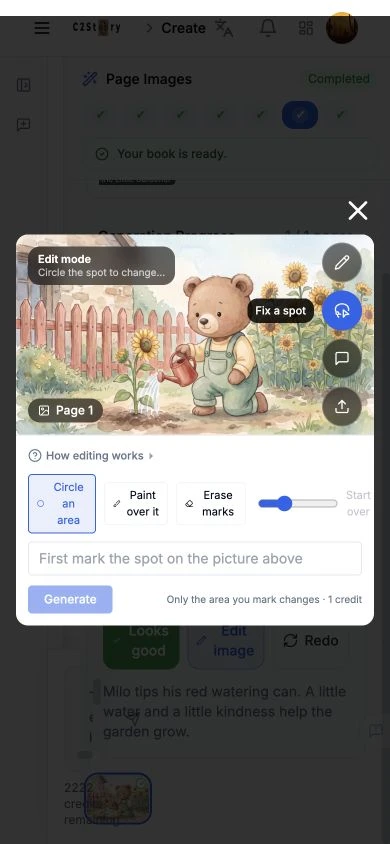
At 390 × 844, we reopened Edit image → Fix a spot. The saved picture, mark tools, input and Generate control were visible. The tool row was cramped: labels wrapped and Start over sat against the right edge. Desktop is the verified environment for the actual painting and submission in this walkthrough.
Desktop editing, refresh persistence, and signed-out desktop and phone-size reading were tested. Phone painting, phone submission, physical devices, Flip mode, exports and video were not tested. No purchase, extra generation or community reward claim was needed.
A first like from an active subscriber gives a community author 1 credit. Likes are permanent; self-likes and repeat rewards are excluded.