
Make a gentle watercolor bedtime illustration
Help a little hedgehog arrive home without a dark, intimidating forest. Compare two generated examples and use distance, warm light and open space to shape the page.
The small brief
A little hedgehog carries a lantern home. We want one gentle picture-book illustration to accompany the sentence: “The light bobbed softly, and home was just a few steps away.” The goal is a calm scene with a clear destination.
Finished illustration
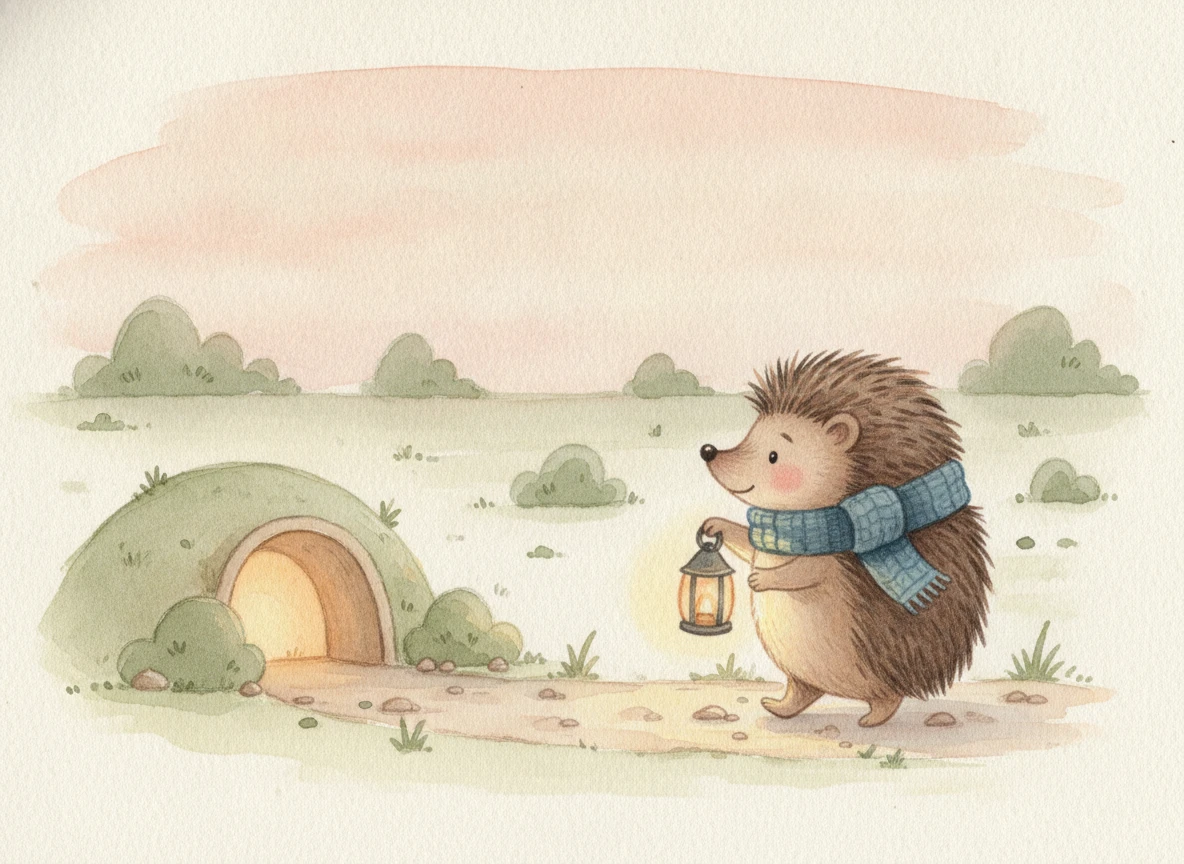
Finished illustration: the hedgehog, short path and warmly lit home share an open clearing.
1. Start with one page-sized moment
Open Create, choose Create a Story, and describe the hedgehog’s short journey home. Choose Watercolor in the style picker. For these sample images we used Nano Banana and landscape 4:3 framing. C2Story exposes the image-model selector in the preview area; keep your choice consistent while comparing results.
Keep the character description short: tiny friendly hedgehog, soft brown spines, round face, blue knitted scarf. Give this page one action—carrying the lantern toward home. Put any discovery, dialogue or arrival in a different page rather than crowding all of them into the same illustration.
2. Inspect the first scene
Our first prompt asks for a night forest. It leaves the distance to home and the scale of the trees fairly open.
Soft watercolor picture-book illustration of a tiny friendly hedgehog with a blue knitted scarf carrying one glowing lantern along a forest path at night. Tall trees, dark blue forest, a winding path toward a distant burrow. Child-friendly, no text, no watermark.
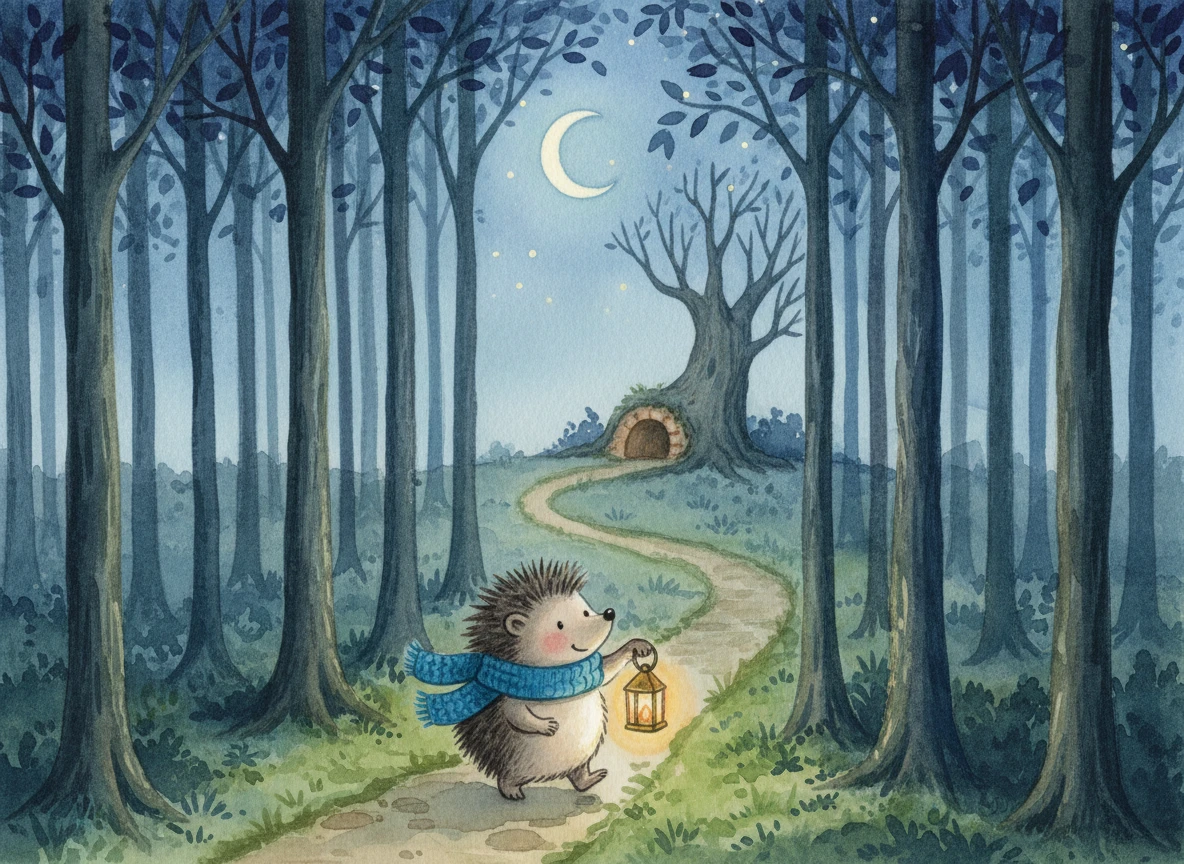
First independent example: a lantern scene described with a night forest and a distant home.
Ask what the picture communicates before you read the accompanying sentence. Is home easy to locate? Does the character seem close to safety or deep inside a large landscape? “Cute” in a prompt does not specify these spatial choices.
3. Make calmness visible
For the second prompt, bring the doorway close, shorten the path and open the space around the character. Keep the watercolor medium and the blue scarf. Replace the broad instruction “make it cozy” with concrete lighting and shape choices.
Gentle watercolor picture-book illustration on textured cream paper, visible soft pigment edges, no photorealism. A tiny friendly hedgehog with soft brown spines, a round face and a blue knitted scarf carries one softly glowing amber lantern home. The hedgehog fills the lower right third, shown in profile facing left along a SHORT clearly visible path toward a cozy rounded burrow doorway on the left. Warm pale peach twilight sky, muted sage shrubs, low rounded plants, spacious open clearing, no towering trees. The home is near, the entrance warmly lit, expression calm and content. Low contrast, soft shadows, simple shapes, no threatening silhouettes or darkness, no text, no watermark.
When a page in your book needs this change, choose Edit image on that page, or B · Needs changes in image review. Give focused feedback:
Keep the same hedgehog, blue scarf, lantern and watercolor texture. Bring the warmly lit home close on the left. Make the path short and easy to see. Replace tall dark trees with low rounded plants and a pale peach twilight sky.
The two illustrations here were generated independently; this feedback is a practical way to request the same compositional direction on your own page.
4. Check the finished page
Look for three readable elements: character, path and destination. Make sure the lantern remains a small light source, the hedgehog’s face is visible, and the open space still feels like a coherent clearing. Check that the scarf and body remain recognizable if this is part of a larger book.
Use the final illustration at the top with one short sentence of story text. The image can carry the setting while the sentence carries the gentle movement. Read the page aloud and check whether you are asking the picture to show more than one event.
Troubleshooting
The page still feels gloomy: specify lighter overall values and softer shadows. The lantern overwhelms the face: ask for a small soft amber glow. The home disappears: state its location and its short distance from the character. The medium changes: repeat “watercolor on textured cream paper” and keep the selected style unchanged.
These choices are visual storytelling techniques; a child’s reaction still depends on the reader and the story context. Review the page for your intended audience.
What we observed in these results
The first result has tall dark trunks, a long winding path and a small distant doorway. The final image replaces those with a short path, low plants and a large nearby warm doorway. The comparison makes the lighting and distance choices visible; the hedgehog itself also changes because these are separate generations.
How these examples were made
We generated these original examples for this guide with Nano Banana through C2Story’s image-generation backend. The two examples are independent text-to-image generations using the exact prompts below. They demonstrate composition choices; they are not a controlled edit that holds every pixel or character feature fixed. The finished assets shown here are still illustrations. Your result can vary, so use the visual checks before accepting it.
A first like from an active subscriber gives a community author 1 credit. Likes are permanent; self-likes and repeat rewards are excluded.