
C2StoryvsGPT-5for Book Creation
GPT-5 is OpenAI's flagship chat model — brilliant at writing, dialogue, code, and reasoning. It does not output finished illustrated picture books. C2Story is the picture-book finishing tool — same hero on every page via the Character Library, 50+ illustration styles, print-ready 300 DPI PDF, Kindle export. Different shapes — and a workflow that uses both for indie book launches.
- Honest side-by-side feature comparison
- When to pick GPT-5 (writing, brainstorming, code, chat)
- When to pick C2Story (bound illustrated picture books)
- The brainstorm-first workflow for picture-book launches
50,000+
Books Created
10,000+
Active Creators
50+
Art Styles
4.9/5
User Rating
Two Different Output Shapes for Book Creation
Most “C2Story vs GPT-5 for book creation” searches expect a feature tear-down. They aren't feature-comparable products. GPT-5 is OpenAI's flagship general-purpose chat model. C2Story is an illustrated picture-book creation tool. Different output shapes, different jobs. The honest read: pick by what your idea wants to be — or use both, with GPT-5 first for brainstorming and C2Story second for the bound illustrated book.
GPT-5
General-Purpose Flagship Chat Model
- World-class prose, dialogue, brainstorming
- Code, math, research, multi-step reasoning
- Voice mode + image input + document parsing
- One-off images via integrated image gen
- Best for: writing · code · chat · brainstorming
Built for: text-shaped output of every kind · the universal chat / reasoning model for everyday work.
C2Story
Illustrated Picture-Book Creation Tool
- Drafts story text + illustrates every spread
- Same hero on every page — Character Library
- Age-tier prose (board book / easy reader / chapter)
- 50+ illustration styles locked across the book
- Exports KDP-ready 300 DPI PDF + Kindle ebook
Built for: writing · illustrating · character consistency · age-tier prose · print-ready picture-book PDF.
Where GPT-5 Wins, Where C2Story Wins
No tear-down. Both products are excellent at what they were built for. Here's an honest feature-by-feature read so you pick the right tool for what your idea actually wants to be.
Product Class
What You Get Out
Writes Story Text
Both write story text. GPT-5 is world-class at long-form prose, dialogue, and brainstorming. C2Story drafts story text inside a picture-book layout — paragraphs sized for spreads, age-tier prose (board book / easy reader / early chapter / middle grade), and a beat structure that fits 8–60 illustrated pages. Different specialties: GPT-5 is the open novelist, C2Story is the picture-book layout engine.
Illustrates The Story For You
GPT-5 can call an image generator and produce one-off illustrations one at a time, but each image is generated fresh from a prompt — character details drift between calls. C2Story illustrates every spread of the picture book in a chosen art style (50+ styles incl. watercolor, cartoon, Pixar 3D, classical storybook, anime, manga) and renders the full multi-page book in one flow.
Same Hero On Every Page
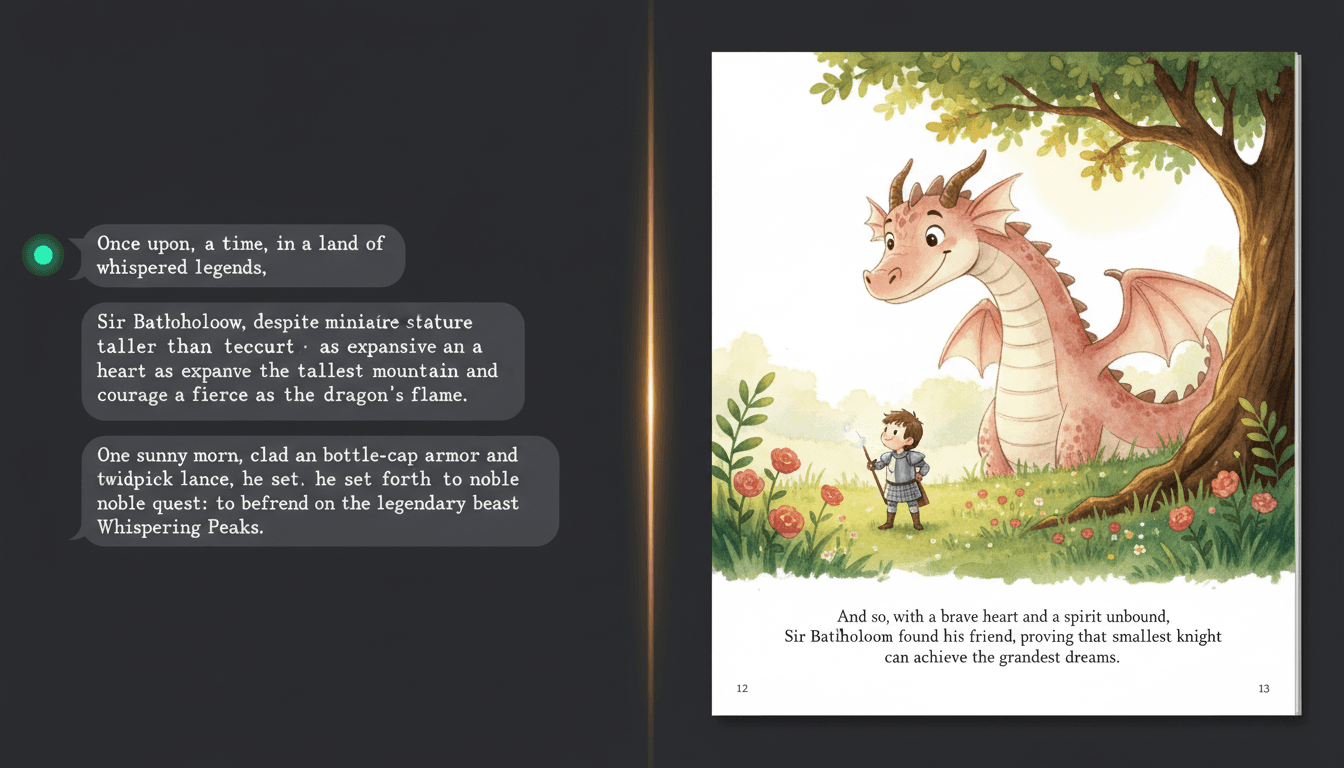
C2Story's Character Library locks the same recognizable face, outfit, props, and proportions across every page of every book — and across sequels and a multi-book series. GPT-5 has no persistent character object — each image generation call starts fresh from the text prompt, so the protagonist drifts (different face, different hair, different armor) between pages. This is the single biggest gap when you try to make a real picture book in a chat window.
Picture-Book Layout
C2Story arranges art + text into multi-page picture-book spreads (full-bleed left + right pages, page numbers, title page, dedication page, cover spine and back cover). GPT-5 has no concept of pages, spreads, gutters, bleed, or trim sizes — it returns a flat chat thread; the page-by-page layout has to happen in another tool.
50+ Picture-Book Illustration Styles
C2Story ships 50+ illustration styles tuned for printed picture books — watercolor, cartoon, Pixar 3D, classical heritage storybook, anime, manga, illuminated manuscript, comic, papercraft, paper-cut, oil pastel, and more. The chosen style is locked across every spread so the printed book reads as one cohesive illustrated work. GPT-5 can describe styles but does not enforce style consistency across multiple images.
Age-Tier Prose Templates
C2Story has built-in age-tier templates — board book (ages 2-4, simple sentences), easy reader (5-7), early chapter (8-10), middle grade (11-12) — that constrain vocabulary, sentence length, and beat count automatically. GPT-5 can mimic the age tier if you prompt carefully and re-prompt; the templates aren't baked in.
Print-Ready 300 DPI PDF Export
C2Story exports the full-bleed 300 DPI print-ready PDF in KDP-accepted picture-book trim sizes (8.5"x8.5", 8.5"x11", 6"x9"). Drop into Amazon KDP, Lulu, IngramSpark, or Blurb — pass print-quality check on first upload. GPT-5 does not export PDFs at all; you would have to assemble pages in another tool.
Kindle Ebook Export
C2Story exports a fixed-layout Kindle ebook (KDP-accepted) so the picture book reads correctly on Fire tablets, Kindle apps, and iPad / Android. GPT-5 returns text in chat — converting that to a properly laid-out fixed-layout EPUB / MOBI requires an external publishing tool.
General-Purpose Reasoning
GPT-5 is a world-class reasoning model — code, math, research, structured outputs, JSON, agent tool-calling, multi-step planning. C2Story is single-purpose (illustrated books); it does not try to compete on general chat, code, or math.
Programming / Code Generation
GPT-5 writes, debugs, and refactors code across most languages — one of its flagship strengths. C2Story has no coding capability because that's not the job; if you need code, use GPT-5.
Multi-Modal Voice + Vision Chat
GPT-5 handles voice mode, photo Q&A, document parsing, and real-time multi-turn conversation. C2Story's job is to render finished illustrated books; multi-modal chat is not part of the product.
API + Developer Access
GPT-5 has a full developer API used inside other products as a building block. C2Story is a consumer-facing illustrated-book creator; integration is consumer-app shaped (sign in, prompt, get bound book).
Pricing
Best At
What GPT-5 Is Genuinely Great At
GPT-5 is one of the most capable general-purpose AI models on the market. When your task is text-shaped — writing, brainstorming, code, reasoning, chat — it is genuinely outstanding, and C2Story does not pretend to compete on those jobs.
Brilliant Writing Engine
GPT-5 drafts story prose, dialogue, plot outlines, character bios, blurbs, query letters, and back-cover copy at a quality most human writers respect. If your bottleneck is "I cannot write the first draft," GPT-5 is genuinely outstanding at unblocking that — even for picture-book length.
World-Class General Reasoning
GPT-5 handles code, math, research synthesis, multi-step planning, JSON-shaped outputs, and agent tool-calling at flagship-model quality. It is one of the most capable general-purpose models on the market.
Conversational + Multi-Modal
Voice mode, image input, document parsing, real-time multi-turn chat. GPT-5 is shaped for interactive Q&A — ideal for brainstorming, refining, and iterating on a story idea before you commit to building the book.
Developer API Building Block
GPT-5 ships with a full developer API used inside thousands of other products. If you are an engineer wiring an AI feature into an app, GPT-5 is one of the obvious foundations to build on.
What C2Story Is Genuinely Great At
When you need a multi-page illustrated picture book with the same hero on every page — drafted, illustrated, age-tier-clean, exported as a print-ready PDF and a Kindle ebook — this is where C2Story was built to win.
Writes & Illustrates A Bound Book
GPT-5 returns chat. C2Story returns a bound illustrated picture book — every spread rendered in your chosen art style, page numbers, title page, cover, back cover. You arrive at a finished printable artifact, not a long chat thread to assemble somewhere else.
Same Hero, Every Page
Save your protagonist to the Character Library. Every spread of every book reuses the same recognizable face, outfit, props, and proportions — locked into the character object, not regenerated from text each time. GPT-5 has no persistent character object; chat-based image gen drifts between calls. C2Story builds the hero into the medium.
Print-Ready 300 DPI PDF Export
Export a full-bleed 300 DPI picture-book interior PDF + cover PDF in KDP-accepted trim sizes (8.5"x8.5" picture book, 8.5"x11" landscape, 6"x9" early reader). Drop into Amazon KDP, Lulu, IngramSpark, or Blurb — pass print-quality check on the first upload.
50+ Picture-Book Illustration Styles
Soft watercolor, bright cartoon, Pixar 3D, classical heritage storybook, anime, manga, illuminated manuscript, comic, papercraft, oil pastel, and 40 more — locked across every page so the printed book reads as one cohesive illustrated work, not a deck of inconsistent AI portraits.
Six Real Scenarios — Which Tool Wins Each
The honest answer changes by job. Some ideas want to be a chat conversation — those use GPT-5. Some want to be a bound picture book — those use C2Story. Some want both — and there's a clean workflow for that.
Brainstorm A Story Idea
You have a vague idea ("a tiny knight afraid of dragons") and want to talk it out — plot beats, character motivations, age-appropriate themes, a one-paragraph premise. GPT-5 is the right tool — its conversational reasoning is built for exactly this kind of back-and-forth. C2Story is not in this picture yet.
Self-Publish A Children's Picture Book
You want a 24-page illustrated picture book listed for sale on Amazon worldwide with the same recognizable hero on every page. C2Story drafts and illustrates the book with a consistent protagonist and exports the KDP-ready 300 DPI PDF. GPT-5 returns chat text and one-off images — the multi-page picture book with a locked hero is not a shape GPT-5 outputs.
Brainstorm Plot + Build The Book
You want to think the story through with an AI first, then turn it into a real bound illustrated book. The canonical workflow: brainstorm in GPT-5 (premise, beats, character bio, age-tier voice), paste the agreed outline into C2Story, save the protagonist to the Character Library, pick an art style, and let C2Story render the full picture book + print-ready PDF.
Personal Gift Book For A Child
A birthday gift for one specific child — same hero on every page, beautifully bound, never going to a global storefront. C2Story is the right tool — the Character Library locks the hero across every spread, the print-ready PDF makes the hardcover, and the finished book sits on a shelf for years. GPT-5 cannot deliver this artifact.
Classroom Storybook Library
A teacher building bound illustrated picture books with student names, reading-level-tiered vocabulary, and consistent characters across a series. C2Story builds the books and exports print-ready PDFs the school can print. GPT-5 is useful for the teacher's lesson-plan side, not for the bound illustrated artifact itself.
Bedtime Book For A Specific Kid
You want a quiet bedtime book with a personal hero — read at 8 p.m. with a parent, kept on the kids' shelf, re-read for months. C2Story is the right tool. GPT-5 can read a story aloud in voice mode, but a chat thread is not a book — a bound illustrated book is.
The Four-Step Workflow — Brainstorm In GPT-5, Build The Book In C2Story
Most indie picture-book launches use both tools — GPT-5 to talk the idea through and draft the manuscript, then C2Story to render the illustrated picture book + print-ready PDF. Here's the canonical hand-off.
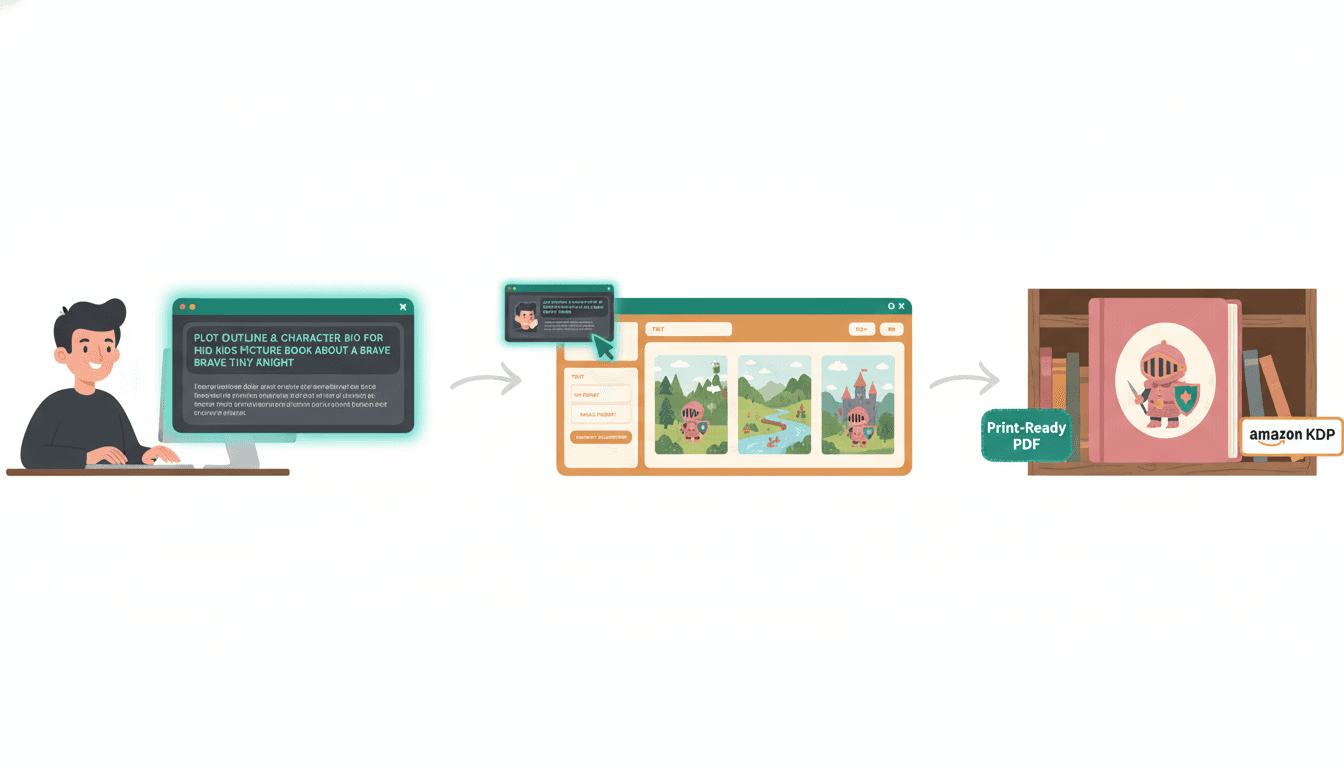
Brainstorm In GPT-5
Talk through the premise, character bio, plot beats, age tier, and tone. Ask GPT-5 to draft a one-paragraph synopsis, a beat sheet, and a full character bio. Iterate until you love it.
Paste Into C2Story
Paste the synopsis as the prompt. Paste the character bio so C2Story builds the persistent hero in the Character Library. Paste the beat sheet as the page-by-page outline.
Pick Style + Render Book
Choose one of 50+ illustration styles (watercolor, Pixar 3D, classical storybook, anime). C2Story renders every spread with the SAME hero, age-tier prose, professional layout.
Export & Publish
Print-ready 300 DPI full-bleed PDF + cover PDF for Amazon KDP / Lulu / IngramSpark / Blurb. Fixed-layout Kindle ebook. Hardcover-ready, KDP-ready, gift-ready.
Same Hero — Through The Entire Bound Picture Book
GPT-5's image generation produces fresh images per prompt — the hero's face drifts between page 1 and page 12. C2Story's Character Library stores the protagonist as a persistent object so every spread, every book, and every sequel reuses the same recognizable hero. The bound book reads as one cohesive illustrated work, not a deck of inconsistent AI portraits.


GPT-5 Picks A Style Per Prompt. C2Story Locks One Across The Whole Book.
Picture-book illustration is its own discipline — watercolor, cartoon, Pixar 3D, classical heritage storybook, anime, manga. C2Story locks one style across every spread of the book, then exports a 300 DPI PDF that prints cleanly through KDP, Lulu, IngramSpark, or any pro print-on-demand pipeline.


“I brainstorm every picture book in GPT-5 — premise, character bio, beat sheet — then build the actual bound book in C2Story. Same little hero on every page, same watercolor look across the whole series, KDP-ready PDF exported straight to Amazon. Two tools, one launch. GPT-5 thinks with me; C2Story makes the book.”
— Priya, Indie Children's Author & KDP Self-Publisher
C2Story vs GPT-5 for Book Creation FAQ
Explore More Story Ideas
Discover more styles, tools, and story types
Farm Stories
Friendly farm animals and barnyard fun
Explore
Mythic Bestiary Picture Books
Legendary beasts with a temper of their own
Explore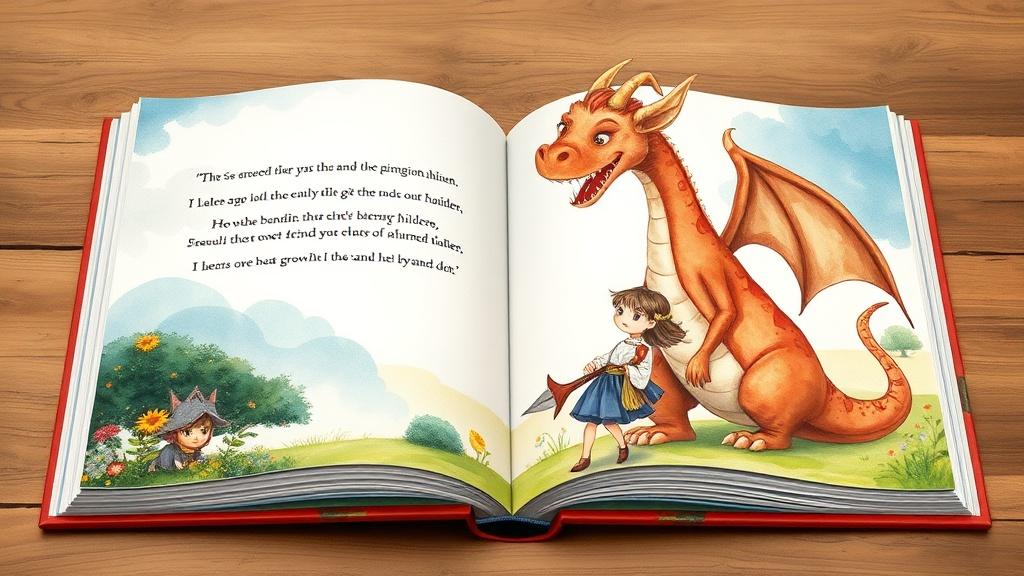
AI Story Generator
Generate complete stories with AI
Explore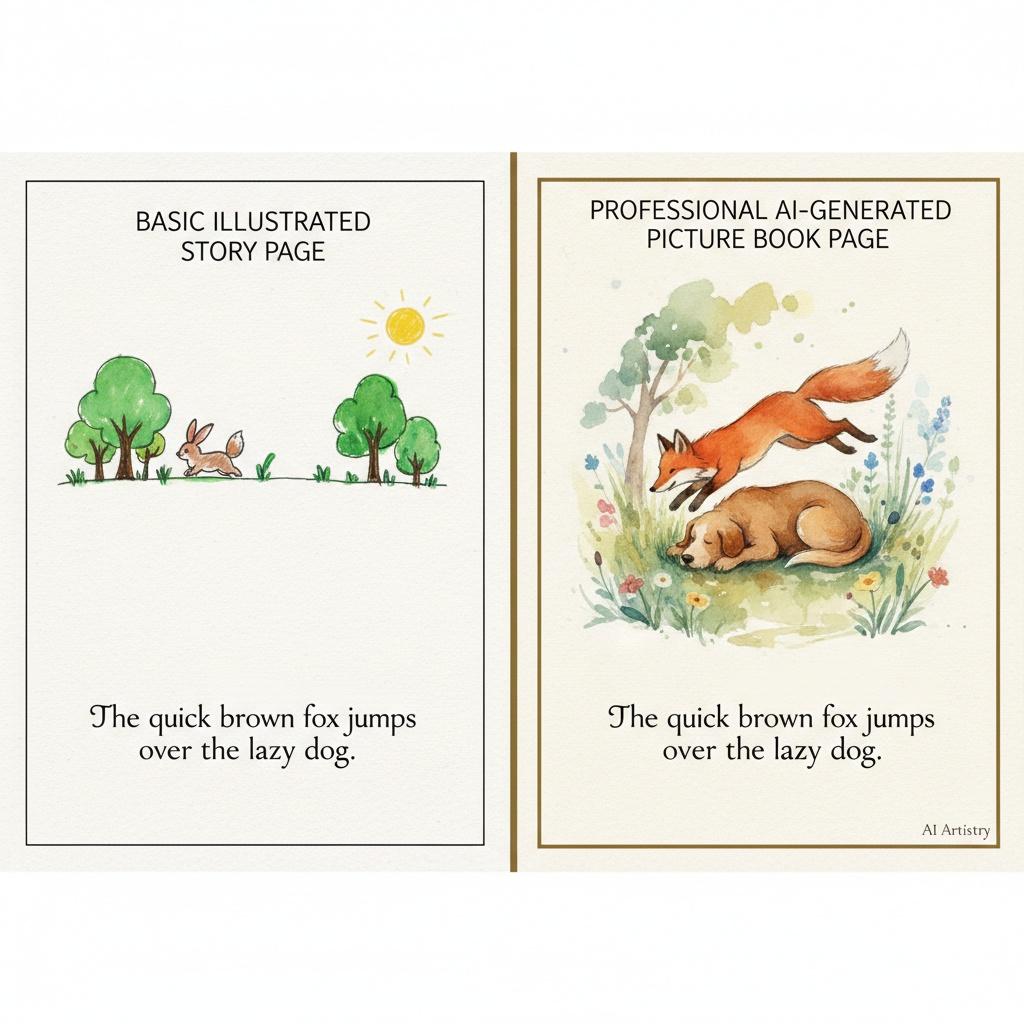
Storybird Alternative
Better AI story creation
ExploreWant The Bound Illustrated Picture Book GPT-5 Cannot Finish? Start Here.
GPT-5 brainstorms the idea. C2Story is where the picture book gets made. Build the illustrated book with a consistent hero on every page, export the print-ready PDF, ship to Amazon KDP.
C2Story vs GPT-5 For Book Creation — The Honest Read
C2Story vs GPT-5 for book creation is a search people run when they're working out which AI tool to actually use to make a children's picture book. The honest answer is that they aren't feature-comparable tools — they output different shapes of artifact. GPT-5 is OpenAI's flagship general-purpose chat model — the same model used for writing, brainstorming, code, math, research, structured outputs, agent tool-calling, voice mode, image input, and one-off image generation, all wrapped inside a chat thread. Its job is to take any text-shaped question and return a high-quality text-shaped answer (plus a one-off image if you ask for it). C2Story is an illustrated picture-book creation tool — its job is to draft the story text inside a picture-book layout, illustrate every spread of the book in a chosen art style, lock the same hero on every page via the Character Library, and export a finished bound picture book as a print-ready 300 DPI PDF (for Amazon KDP, Lulu, IngramSpark, Blurb, BookBaby) plus a Kindle ebook.
The clearest way to choose between them for book creation is to ask what shape you want the finished artifact to be in. If your output is a draft of prose — a manuscript, an outline, a character bio, a query letter, an Amazon book description, an author's note — then it's text-shaped and GPT-5 is the right tool. Its writing quality, dialogue, plotting, structured outputs, and revision behavior are flagship-grade and almost every working author who uses AI uses GPT-5 (or a peer model) as their everyday writing assistant. If your output is a bound illustrated picture book — a 24-page hardcover with the same recognizable hero on every page, a watercolor or Pixar-3D or anime style locked across the whole book, a print-ready 300 DPI PDF you upload to KDP — then it's book-shaped and C2Story is the right tool. No chat model on Earth, GPT-5 included, currently outputs a bound illustrated picture book in one shot. The picture-book layout, the persistent Character Library, the 50+ style lock-in, and the print-ready PDF export are purpose-built features C2Story exists specifically to provide.
The single biggest functional gap between C2Story and GPT-5 for book creation is illustrated character consistency. GPT-5's integrated image generation is genuinely excellent at single images, but every image generation call starts fresh from the text prompt — so even with careful prompting (“same character as before, same red plume, same freckles”) the protagonist drifts between calls. Different face shape, slightly different hair, slightly different shade of red on the armor. For one hero portrait the drift is invisible. For a 24-page picture book where the same hero appears on every page, the drift is the difference between a real book and a folder of inconsistent AI images. C2Story's Character Library stores the protagonist as a persistent object (name, face, outfit, props, proportions, color palette) that gets re-applied to every spread — not re-prompted. That object-level consistency is why C2Story-rendered books read as one cohesive illustrated work and why the same-hero promise is the single most-praised feature in C2Story reviews. A bound picture book without it reads as a slideshow of mismatched portraits no matter how good any one page looks — and that's the gap C2Story closes that a general-purpose chat model was not built to close.
Many picture-book creators end up using both tools, sequentially, not as substitutes. The canonical GPT-5 + C2Story book creation workflow is four steps. First, brainstorm the story in GPT-5 — talk through the premise (one paragraph), the character bio (name, age, look, personality, what they want, what they're afraid of), the page-by-page beat sheet (6-12 beats for a picture book), and the age tier (board book 2-4, easy reader 5-7, early chapter 8-10, middle grade 11-12). Iterate until you love it. Second, paste the agreed outline into C2Story — synopsis as the prompt, character bio so C2Story builds the persistent hero in the Character Library, beat sheet as the page-by-page outline. Third, pick an art style in C2Story (watercolor for bedtime, Pixar 3D for adventures, classical heritage storybook for heirloom gifts, anime for older readers) and let C2Story render the full picture book — every spread illustrated with the same hero, age-tier prose, professional layout. Fourth, export the print-ready 300 DPI PDF + cover PDF for Amazon KDP, Lulu, IngramSpark, or Blurb, plus the fixed-layout Kindle ebook. The two tools occupy different points in the picture-book creation pipeline and complement rather than compete — GPT-5 is the writing room, C2Story is the book-finishing factory.
Want to see real C2Story books? Browse our community gallery for examples in every style. Want a side-by-side look at C2Story against other AI tools? See ChatGPT vs C2Story for the broader ChatGPT comparison, Gemini vs C2Story, DALL-E vs C2Story, Midjourney vs C2Story, Canva vs C2Story, or C2Story vs Amazon KDP. Ready to start your picture book? Try the AI picture book maker, the AI children's book creator, the self-publish children's book guide, or jump straight to the create flow.