
OC Lore GeneratorYour Character Already Exists. Give Them Somewhere to Be From.
Lore is not the character — it is everything around them. C2Story generates the world, the factions, the bloodline and the history your OC came out of, then draws any of it with your character on-model in every scene.
- A world with named places, borders and rules it obeys
- Factions that want something your OC has
- A timeline of events that happened before page one
- Saved as fixed canon — and illustrated, not just written
250,000+
Stories Created
80,000+
Characters Saved
45+
Art Styles
4.9/5
Creator Rating
How to Generate Lore for Your OC
Three steps, and the first one is just telling it who your character is — however little you have decided.
Bring Your OC
A name and a vibe is enough, and an existing bio is better. Anything you paste is treated as fixed canon — the generator builds around what you already decided instead of politely overwriting it.
“Half-elf archivist, exiled, hates nobles”
Build the World Outward
Region, governing power, rival factions, the rules the world runs on, the bloodline and the events that predate your story — each piece generated against the ones already saved, so none of it contradicts.
Exiled from where, by whom, over what
Illustrate the Canon
Draw the map, the crest, the ancestor, the founding myth — or drop your OC into a scene from their own history. Your saved design means the same face appears in all of it.
Lore you can post, not just read
Place, Power, History, Blood, Rules
Lore is not one thing. These are the five layers that make a character feel like they came from somewhere, in the order they are easiest to build.
Place
A region with a name, a climate, a way people make a living and one detail a local would mention that an outsider would not. Geography is the cheapest lore there is and it quietly explains half a culture.
Where they are from
Power & Factions
Who governs, who resents it, and which of them can reach your OC. A faction that cannot ever affect your character is set dressing; one that wants something from them is a plot engine.
Who can cause them trouble
History
Two or three dated events with living consequences — a war, a collapse, a treaty nobody honours. Mentioned in passing without explanation, they do more for a world than any amount of description.
What happened before page one
Bloodline
The house, the crest, the debt, the ancestor everyone brings up. Family is the joint where world-scale lore meets a personal life, which is why it is the layer that makes a character suddenly writable.
Who they came from
Rules
How the magic or the tech works and — more importantly — what it costs and who is not allowed it. A system with a price generates conflict; a system that just works generates nothing.
What this world does differently
Your OC’s Position In It
The last layer, and the one people skip: where exactly your character stands relative to all of the above. Insider or exile, heir or bastard, believer or apostate. This is what turns lore into story.
Where they stand
Lore is not backstory
Worth separating, because conflating them is why OC profiles so often read as a list of sad events with no world behind them. A backstory is what happened to your character — a childhood, a loss, the reason for the scar. Lore is what was happening around them — the empire that drafted their village, the order that trains people like them, the plague year that emptied the capital. Build the lore first even if the backstory is what you actually want, because the good parts of a personal history are almost always collisions with something bigger, and you cannot collide with a world that does not exist yet.
A Compendium Nobody Reads, Including You
The usual failure is not too little lore. It is forty pages of gorgeous unconnected detail that never once puts pressure on your character.
Lore as an Encyclopedia
- ✕ Twelve nations, none of which can reach your OC
- ✕ A magic system with rules but no cost
- ✕ History that never comes up in the present
- ✕ Beautiful world, still no idea what to write
Lore as Pressure
- Three factions, each wanting something your OC has
- A system with a price somebody has to pay
- Past events with consequences still running
- Every entry could start a scene tomorrow
The test for any piece of lore: could this ever cause a problem for my OC? If not, it is decoration — keep it, but build the load-bearing parts first.
A Map, a Faction Chart and a Timeline
Lore arrives as things you can look at and post, not as an undifferentiated block of text to scroll past.
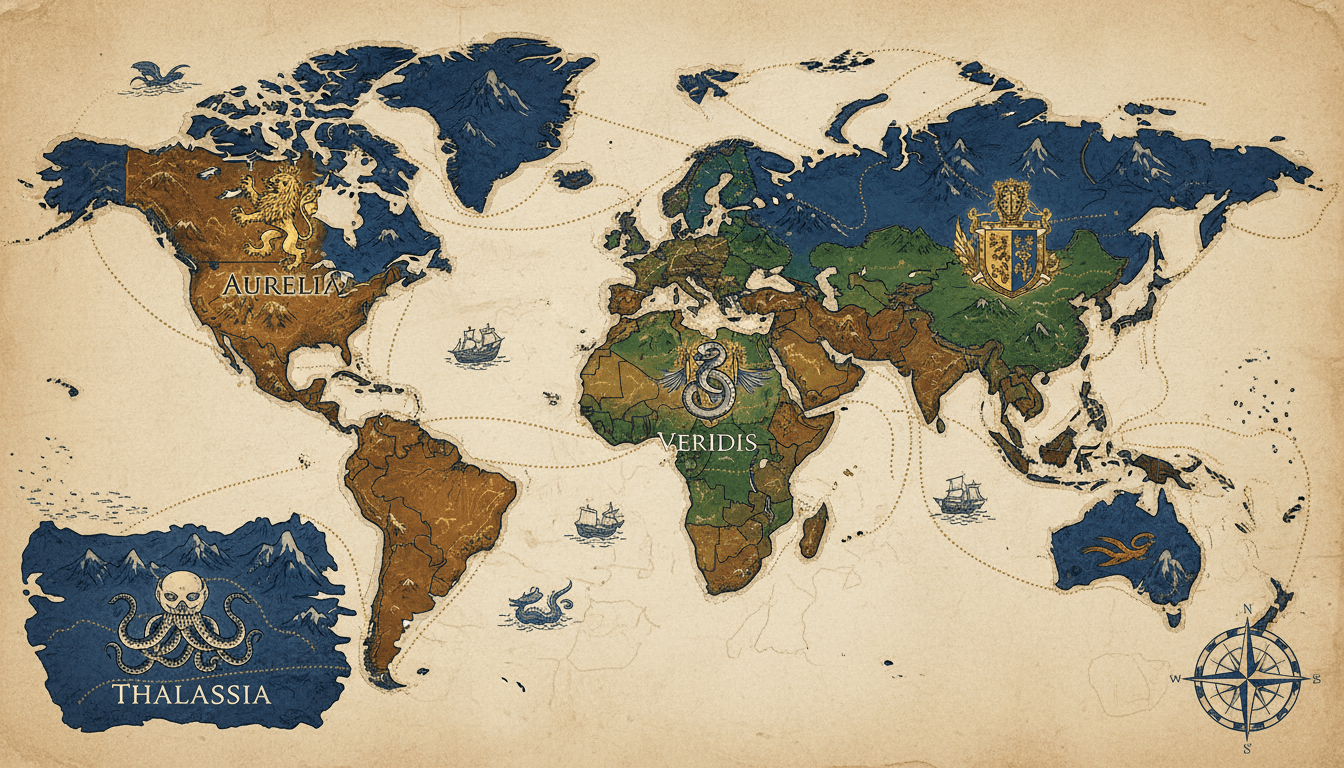
The Map It Happens On
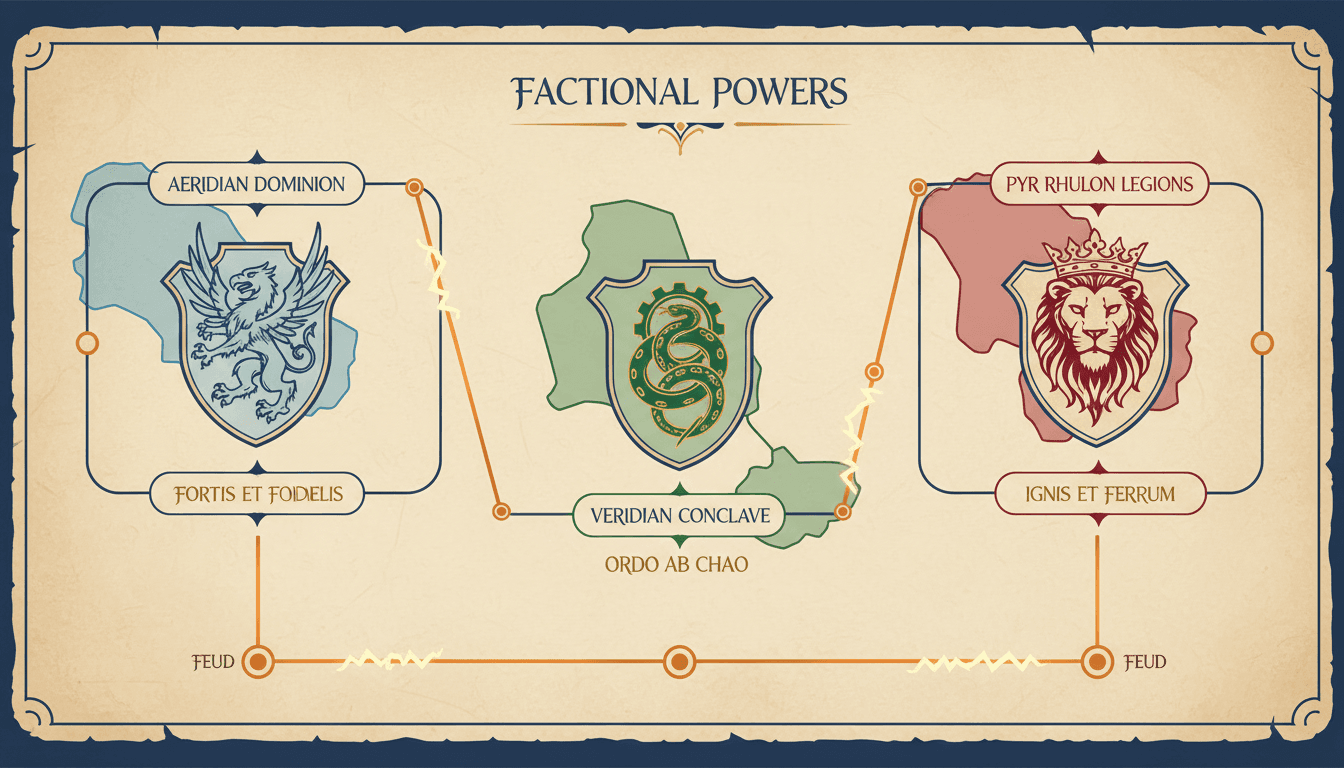
Who Wants What
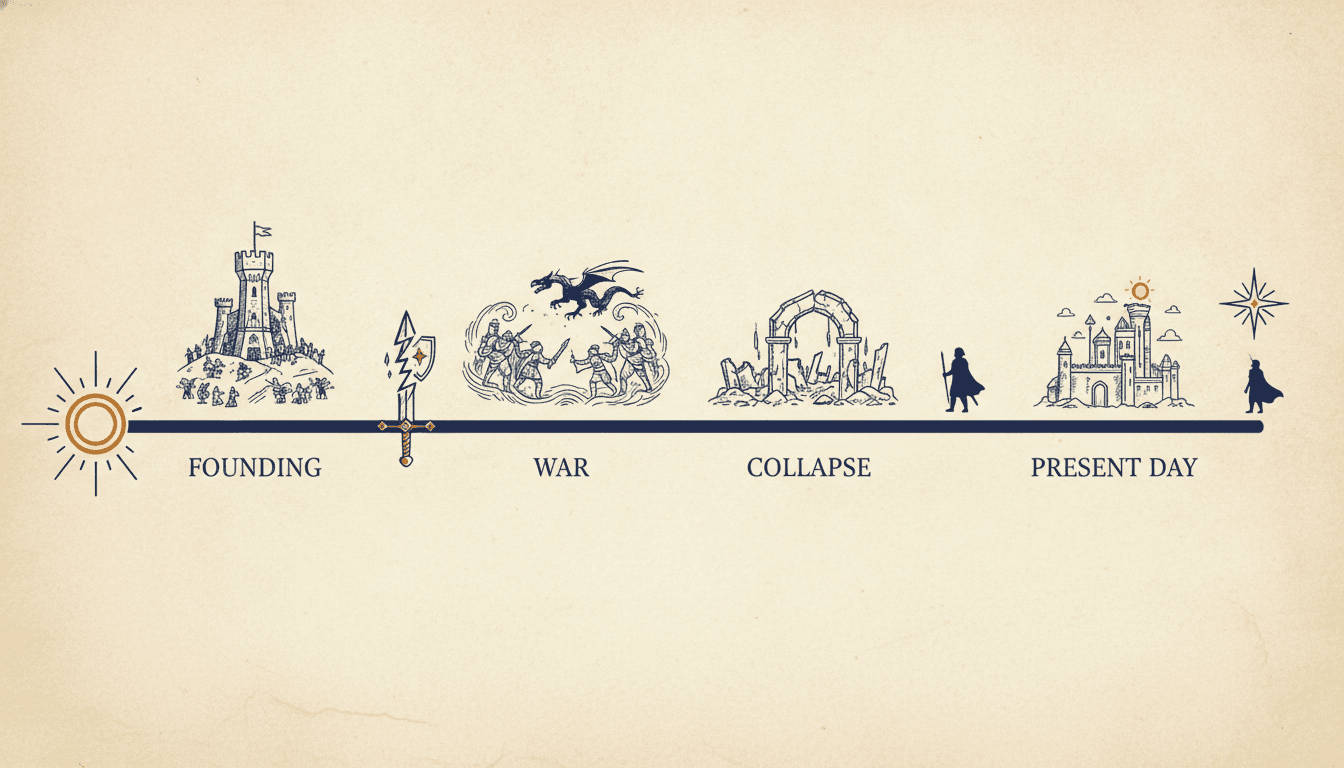
What Already Happened
“Build the kingdom my knight OC swore an oath to”
“Three rival guilds my rogue OC has burned bridges with”
“The war that ended forty years before my OC was born”
“My OC’s house, its crest, its motto and its disgrace”
“How magic works in my OC’s world, and what it costs”
“Illustrate the founding myth my OC grew up hearing”
Lore Shapes Worth Generating
Fantasy, sci-fi, modern-supernatural or academy drama — the layers are the same, only the furniture changes.
World, Factions, History, Bloodline, Character
Every layer can be illustrated in whichever of 45+ art styles suits your OC — and your character stays on-model through all of it.
The World
Places With Names
The Factions
Powers in Conflict
The History
Events Before Page One
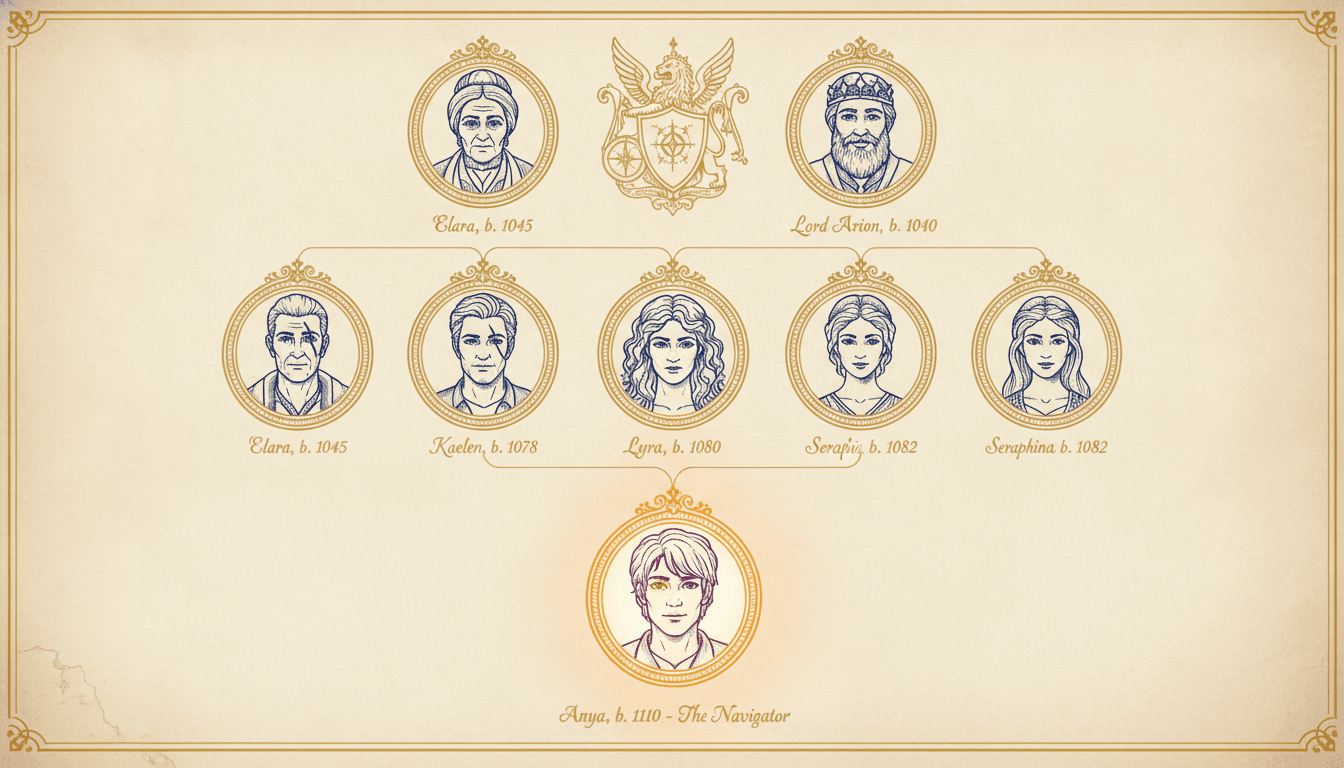
The Bloodline
Who They Came From
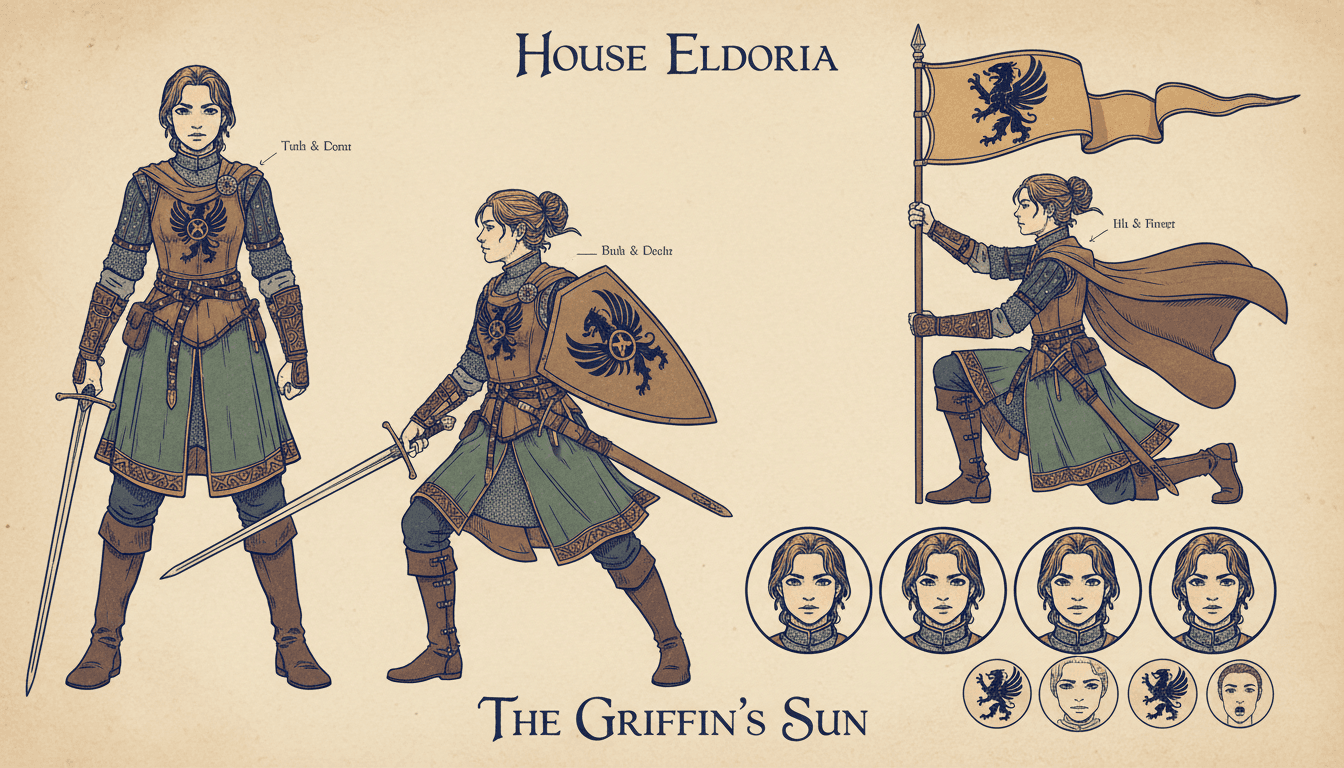
The Character
Locked and On-Model
Match your world’s look with 45+ art styles including Anime, Manga, Fantasy, Cinematic and Watercolor.
What Changes When the Lore Is Built Around One Character
Six things a general worldbuilding generator cannot do, because it does not know whose world it is.
Lore Built Around One Character
Generic worldbuilding gives you a world and leaves you to squeeze your OC into it. This starts from your character and works outward — the places that shaped them, the powers that can reach them, the history that explains why they are like this.
Everything Connects to Something
A faction is only interesting if it wants something your OC has. Each piece of lore is generated against the ones already in place, so the guild your rogue robbed is the same guild that runs the city they are hiding in.
Conflict Baked Into the Setting
Factions come with grudges, borders come with disputes and bloodlines come with debts. Lore that contains tension hands you plot for free — you are never staring at a beautiful map wondering what happens on it.
A Timeline That Predates Page One
Worlds feel real when things happened before your story started and nobody explains them. The generator lays out founding, rise, war and collapse as a dated timeline, so your OC can reference an event in passing and have it hold up.
Saved as a Reusable Lore Bible
Lore lives in the project rather than in a chat window you will lose. Names, dates, crests and rules stay fixed, so the capital is spelled the same way in chapter one and chapter thirty and the map does not quietly change shape.
And Your OC Stays On-Model Inside It
Lore is only worth generating if you can see it. Save your OC once with reference images and every illustrated scene — throne room, battlefield, childhood village — renders with the same face, hair and outfit you designed.
Who Generates OC Lore?
OC Creators & Toyhouse Users
You have the design, the palette and the personality nailed, and the lore field still says “TBD”. This fills the half of the profile that is hardest to write, and gives you art to put beside it.
Roleplayers
RP falls apart when two players disagree about how the world works. A fixed, written lore document — factions, map, rules — settles that before it becomes an argument mid-scene.
Worldbuilders
You enjoy the world more than the plot, which is fine until nothing gets written. Building lore around a specific character keeps the detail load-bearing and turns a setting into something with a story in it.
Fanfic & Original Fiction Writers
A believable backdrop is what stops an OC reading as a floating protagonist. Generate the surrounding world once, save it as canon, and write inside it for as long as the project runs.
Is the World the Part You Are Missing?
This page is for creators whose OC exists but whose world does not. If your gap is elsewhere, one of these is a better door — they all share the same character library.
Yes — my OC has nowhere to be from
Start here. Bring the character, build the world outward, save it as canon and illustrate it.
I do not have the OC yet
Design the character first — appearance, personality, signature outfit — and lock the look before you build a world around them.
I want the OC rolled for me
Generate a brand-new original character on demand, reroll until something clicks, then come back here to give them a world.
The world exists, I need the story
Turn your OC and their lore into a full illustrated story, fanfic or comic starring them.
I have many characters and many stories
A shared universe with crossing casts and connected series is a bigger container than one character’s lore. That page handles it.
I keep losing my own canon
A character bible pins looks, voices and details as a reusable record so nothing drifts across a long project.
Frequently Asked Questions
Explore More Story Ideas
Discover more styles, tools, and story types
Dragon Stories
Epic fire-breathing adventures
Explore
Whimsical Absurd Picture Books
Bendy structures & invented creatures
Explore
Bedtime Stories for Anxious Kids
Calming tales that soothe worries
Explore
Storybee Alternative
More styles & features
ExploreOC Lore — Building the World Your Original Character Came Out Of
An OC lore generator answers a different question from an OC generator. A character generator gives you a person: a face, a palette, a personality, a signature coat. Lore gives you everything that person is standing in — the region they are from, the power that governs it, the factions with a reason to care about them, the family they were born into, the rules the world runs on, and the events that happened long before your story starts. Most OC folders are heavy on the first thing and empty on the second, which is exactly why so many beautifully designed characters are impossible to actually write.
The first distinction worth making is between lore and backstory, because conflating them is the reason OC profiles so often read as a list of sad events with nothing behind them. Backstory is what happened to your character — a childhood, a loss, the reason for the scar. Lore is what was happening around them: the empire that drafted their village, the order that trains people like them, the plague year that emptied the capital, the treaty that nobody has honoured in thirty years. They are not the same layer, and the order matters. Build the world first even when the personal past is what you are after, because the interesting parts of anyone’s history are collisions with something larger, and you cannot collide with a world that has not been invented yet.
The second thing worth knowing is how much lore an OC actually needs, which is less than most people assume but denser. Three or four specific things beat a forty-page compendium: one place with a name and a texture, one faction that wants something, one past event with consequences still running, and one rule this world obeys that ours does not. That is enough for a reader to sense a world behind your character and enough for you to write from tomorrow. The reliable failure mode is the encyclopedia — twelve nations none of which can reach your OC, a magic system with elaborate rules and no cost, centuries of history that never once comes up in the present. Gorgeous, and completely inert. The test for any entry is simple: could this ever cause a problem for my character? If it cannot, it is decoration. Keep it, but build the load-bearing parts first.
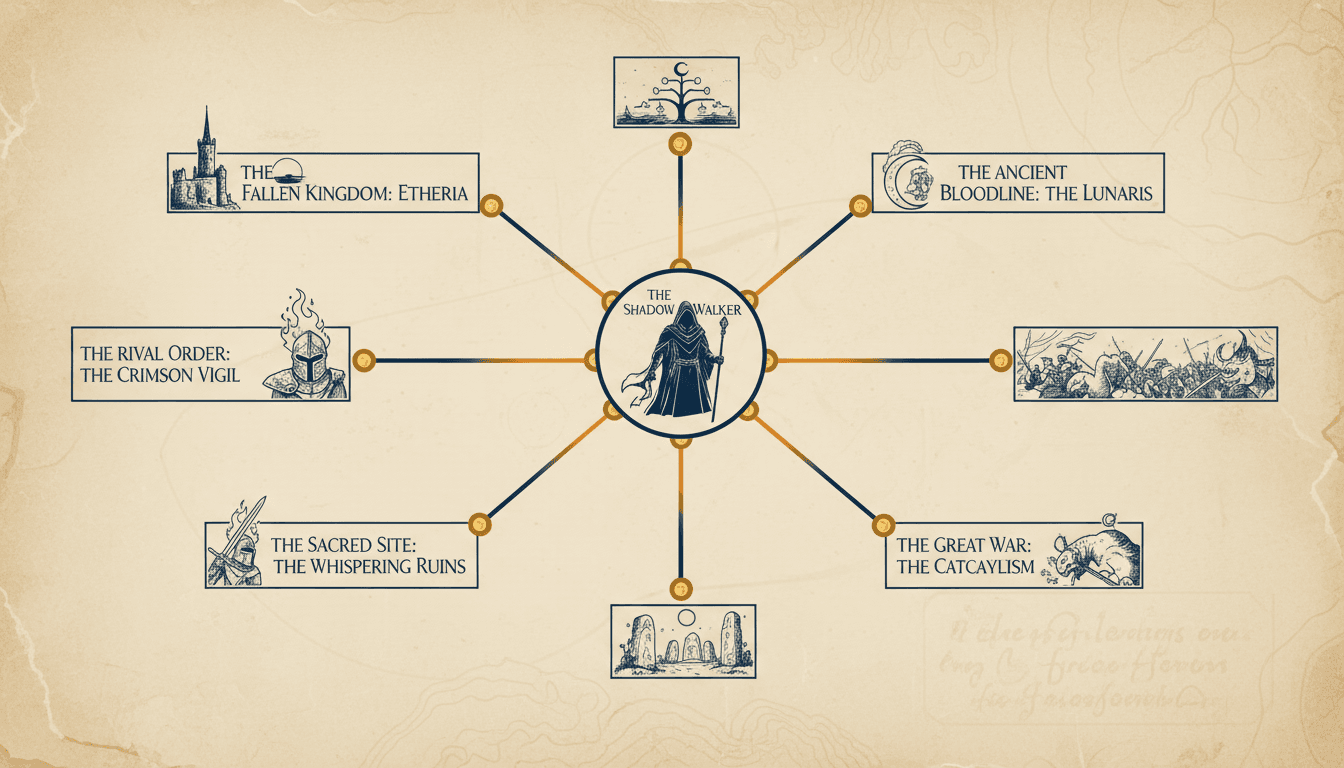
C2Story generates lore in layers, outward from the character rather than outward from nothing. Place comes first, because geography is the cheapest lore there is and it quietly explains half a culture. Then power and factions — who governs, who resents it, and crucially which of them can reach your OC, since a faction your character will never encounter is set dressing while one that wants something from them is a plot engine. Then history, two or three dated events that still have consequences, the kind that can be mentioned in passing without explanation. Then the bloodline: the house, the crest, the debt, the ancestor everyone brings up, which is the joint where world-scale lore meets a personal life and usually the layer that makes a character suddenly writable. Then the rules of the magic or the technology, and specifically the price and who is forbidden from paying it. And last, the layer people skip — where your OC stands relative to all of it. Insider or exile, heir or bastard, believer or apostate. That position is what converts lore into story.
Each piece is generated against the pieces already saved, which is what keeps a world from contradicting itself. The guild your rogue robbed is the same guild that runs the city they are now hiding in; the war on the timeline is the one that emptied the province on the map. And anything you paste in yourself is treated as fixed canon rather than politely overwritten, so an OC who already has forty percent of a world keeps that forty percent and gets the rest built around it. That is the more common starting point: most OCs arrive with a few strong pieces and a lot of undefined space, and the undefined space is what makes them hard to write.
Lore is then saved into the project rather than left in a chat window you will close. This matters more than it sounds. The usual way a long OC project falls apart is not a dramatic plot hole but slow drift — the capital changes name, a faction quietly swaps sides, a journey that took three days in chapter two takes an afternoon in chapter twenty. Fixed canon means names, dates, crests, spellings and system rules come from the same record every time. Paired with a locked character design, it is the combination that survives a run of many chapters.
The part that separates this from a text lore generator is that you can see all of it. Illustrate the map of the territory, the crest of your OC’s house, a portrait of the ancestor everyone mentions, or the founding myth drawn as a short sequence — and drop your character into any scene from their own history with the same face, hair and outfit every time, because their design is saved once and reused. Lore you can show is lore people actually engage with, which is why an illustrated world lands on Toyhouse, Tumblr or DeviantArt in a way that a wall of text never quite does. Everything generated is yours, with full rights to post, publish and print.
Ready to start? Bring your OC and build outward. Still designing the character? The OC creator covers appearance and personality, and the original character generator rolls a new one on demand. Once the world exists, the OC story generator turns it into illustrated stories starring your character. Running many characters across connected series? That is a bigger container — see the story universe builder. And to stop your own canon drifting over a long project, keep an AI character bible or open your character library.