Pet Memorial BookYou Cannot Take Another Photo
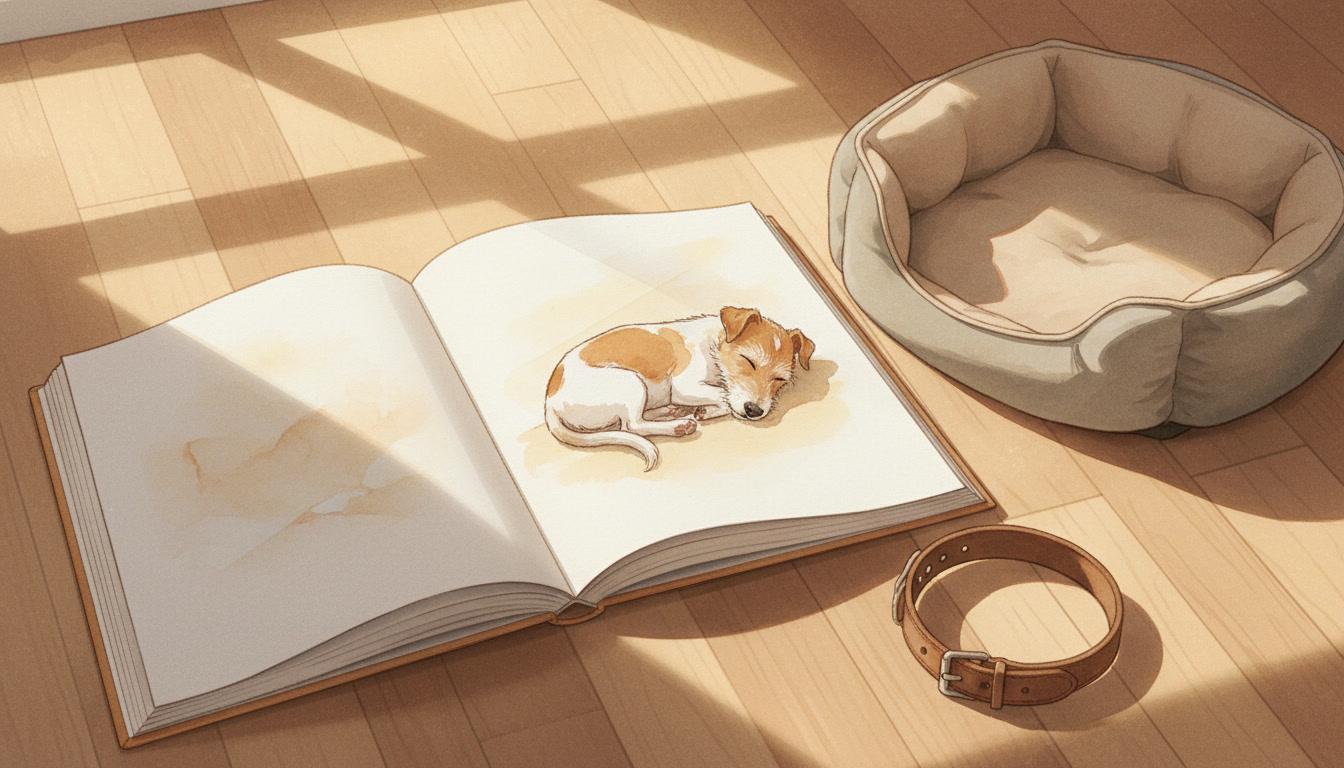
A pet memorial book is made from a closed archive — whatever is already on your phone is all there will ever be. So the job is not writing an adventure. It is getting one specific animal, with their bent ear and their ridiculous habits, drawn the same way on every page.
- Up to fourteen reference photos on one character — the blurry ones help
- Name the markings, not the breed, so it is your dog and not a stock dog
- Uploaded photos are always private, on every plan
- The same animal, on model, from the first page to the last
250,000+
Stories Created
80,000+
Characters Saved
45+
Art Styles
4.9/5
Creator Rating
How to Make a Pet Memorial Book
Three steps, and the first one is an hour of scrolling backwards through your camera roll.
Gather the Photos First
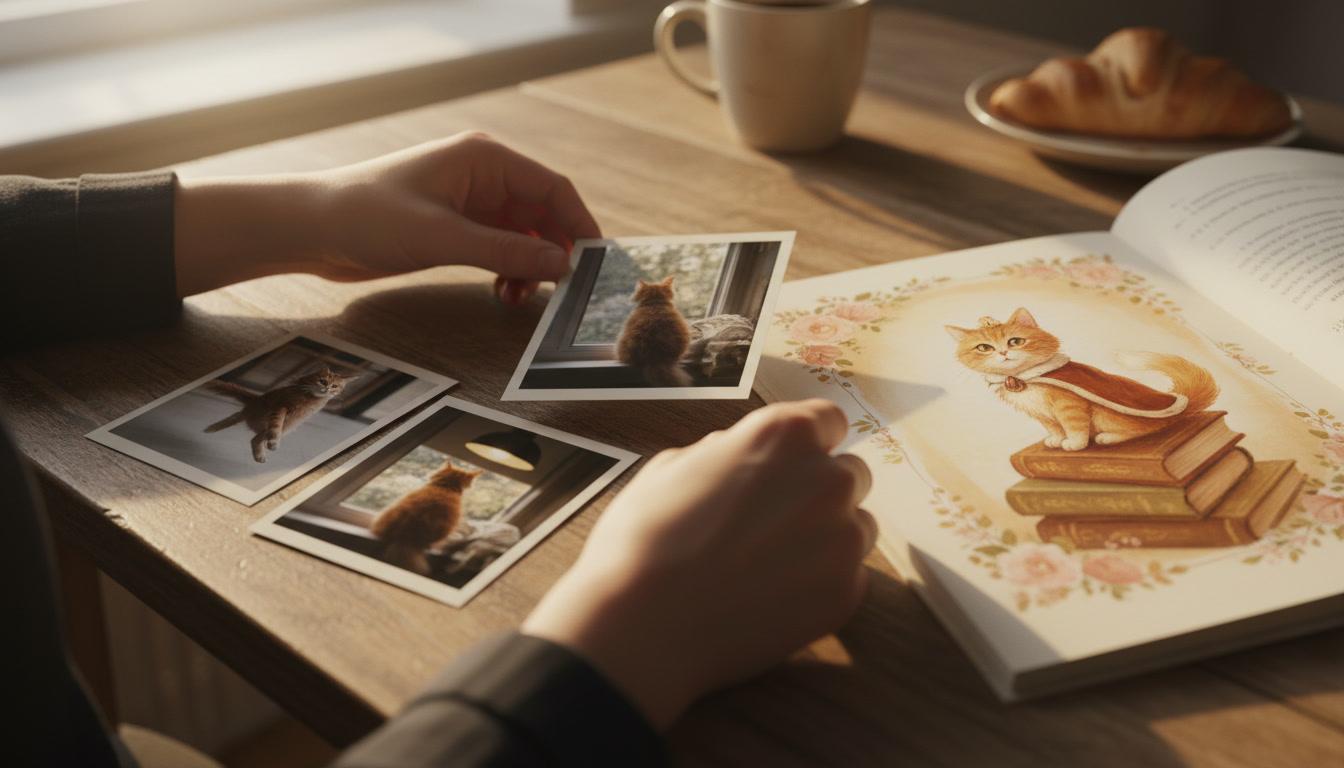
Go back through the camera roll and pull everything, not just the good ones. Attach several to the same character rather than choosing one — the cap is fourteen. The dark one shows the shape, the one from behind shows the tail, the blurry one shows how they stood.
11 photos → 1 saved character
Name the Markings, Not the Breed
The character record keeps appearance and distinguishing features apart from the species on purpose. Use them. "Bent left ear, white blaze, grey muzzle, one white sock" beats "border collie" every single time, because a breed gets you a stranger.
bent left ear · white blaze · grey muzzle
Write the Ordinary Days
Not the arc. The Tuesdays. The stolen sock, the exact patch of sun, the sound with no spelling. Then one quiet page near the back for the ending, and the dedication last, once you have seen what the book turned out to be.
9 ordinary pages · 1 quiet one
Why the photo gathering comes before the writing
Because the photographs will tell you what the book is about. An hour of scrolling backwards turns up the four pictures of the same chair, the run of shots from one afternoon at the beach, the fact that you have eighty photos of them asleep and almost none of them running. That is the shape of the animal you actually lived with, and it is more honest than anything you would have written from memory at a blank page. If the animal is still here and this is a celebration rather than a memorial, start from the pet story book instead — different job, same character library.
A Pet Memory Book Is Made From a Closed Archive
Every other kind of pet book can go and take a better picture. This one cannot. Everything else follows from that.
You Cannot Take Another Photo
Every other pet book assumes the animal is asleep in the next room and you can go get a better picture. A pet memorial book is made from a closed archive — whatever is already on your phone is all there will ever be. That one fact changes the whole job. You are not directing a photoshoot; you are working from evidence, and the work is getting the most out of pictures that were never meant to be reference material.
Blurry Photos Still Count
You can attach several reference photographs to one character rather than picking a single best shot — up to fourteen of them on a single entity. The bad ones earn their place: the one from behind shows the tail, the dark one shows the shape, the blurry one shows how they stood. No individual photo has to be good if the set between them covers the animal.
The Markings Are the Whole Point
Write "golden retriever" and you get a stock golden retriever — a handsome dog that is not your dog, which is worse than nothing. The character record has separate fields for appearance and distinguishing visual features precisely so you can name the bent ear, the white sock on one paw, the grey that crept up the muzzle in the last two years. Specificity is the only thing standing between a memorial and a greetings card.
A Photograph Comes Back As a Painting
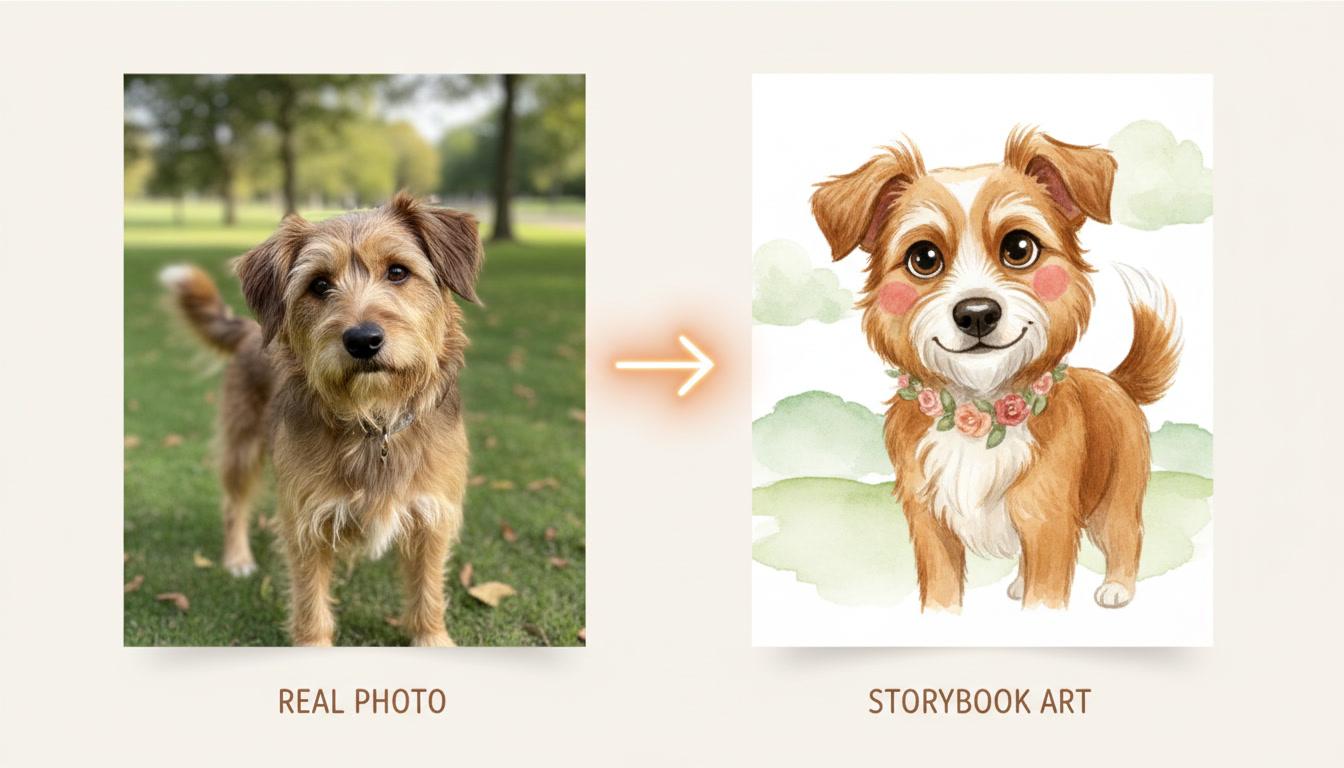
The photo you upload is a likeness reference, never the page. What appears in the book is a painted storybook character: the set of character art styles deliberately contains no photorealistic or real-person option at all, by design, and the prompt that builds every character image pins an illustration style every time. For a memorial that is the correct answer — a model-generated photorealistic version of an animal you loved lands very badly.
Photos You Upload Are Always Private
Characters made from a text description can be shared into the public library depending on your plan. Characters made from an uploaded photo never are — the code sets an upload to private unconditionally, regardless of what plan you are on. Nobody browses your dog. This matters more here than anywhere else on the site, because the photographs going in are the last ones that exist.
One Redraw Cannot Lose Them
If you regenerate a page, the saved portrait is still the reference the next image is drawn from. That fallback is guarded on purpose: without it, a single regeneration could permanently replace an uploaded likeness with a generic drawn animal that no amount of redrawing brings back. On a pet memorial book that failure would not be an inconvenience, it would be the end of the project.
Things worth putting in that nobody thinks of at a blank page
Name the Markings, Not the Breed
This is the single decision that separates a pet memorial book from a card with a nice drawing on it.
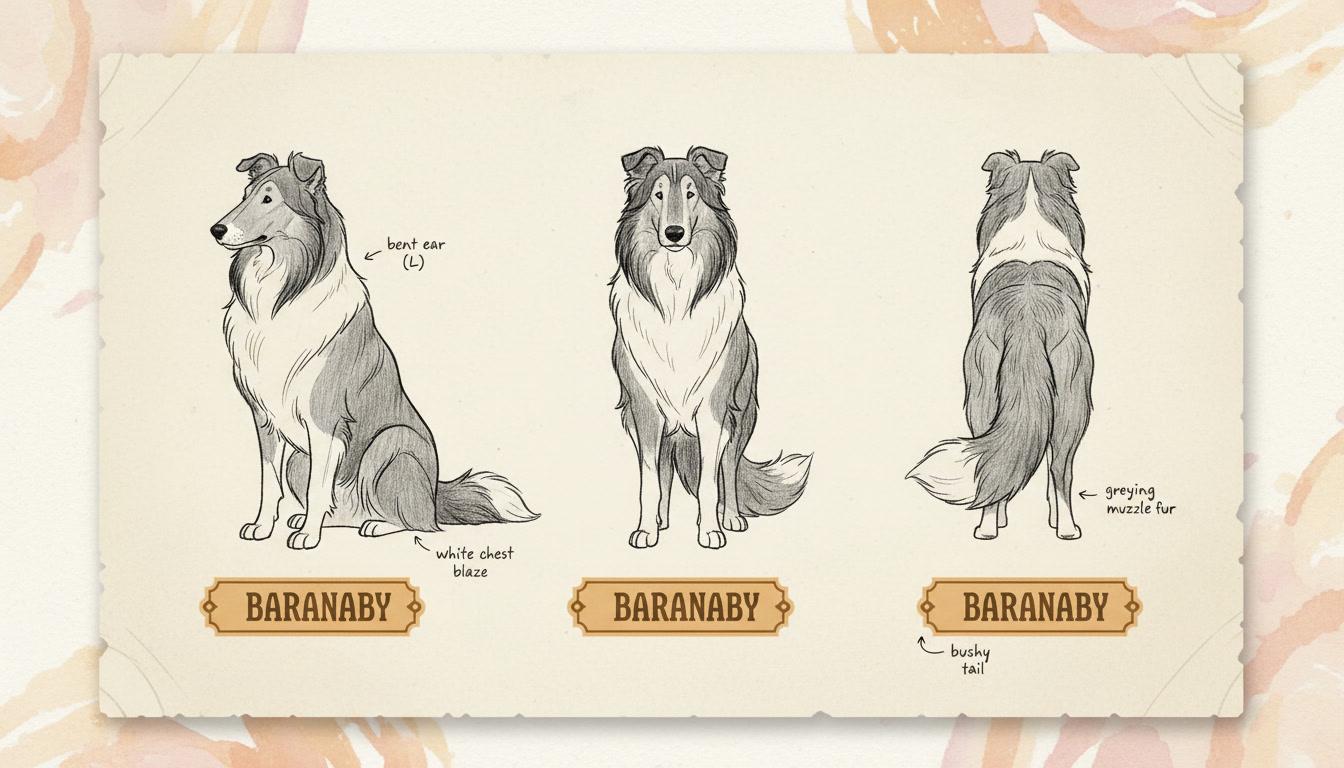
Write what only you would notice
- The ear that never went fully up
- The white patch nobody else could describe
- How the grey arrived, and when
- The way they sat — the specific wrong way
- Size next to a thing in your house
What gets you a stranger
- The breed name on its own
- "Cute", "fluffy", "loyal" — true of millions
- A colour with no pattern attached
- Adjectives about how they made you feel
- One flattering photo and nothing written
Photos and words do different jobs — use both
A photograph carries the shape and the colour and nothing about what mattered. A written description carries the bent ear you can only see from one side and the fact that the grey arrived in the last two winters. The character record holds both at once — the reference images and the written appearance are separate fields, and the prompt builder was specifically fixed so that filling in a free-form image description no longer silently throws away everything else you typed. That bug is worth knowing about because it is exactly what makes people give up and accept a generic animal.
Your Photos Are a Reference, Never a Page
What you upload drives the drawing. What comes out is a painting. And nobody else ever sees either one.
Fourteen
References on One Character
Reference images are stored on the character itself and capped at fourteen. Use the budget. A set of mediocre photographs covering several angles beats one good one, because what you are giving the illustrator is coverage, not a portrait.
Private
Uploads Are Never Shared
A character built from an uploaded photograph is written to storage as private regardless of your plan — it is an unconditional rule in the code, not a preference. Text-described characters follow the normal plan rules; uploads never do.
Illustrated
No Photorealistic Option Exists
The character art styles are storybook, cartoon, watercolour, anime and 3D. There is deliberately no real-person or photoreal setting in the set, and every character prompt pins an illustration style. You cannot end up with an uncanny render of your dog.
Saved
A Record, Not a Retyped Sentence
Your animal becomes a character record with a fixed portrait and design. Every page draws from that record, which is the difference between one dog through the book and twenty near-misses that all have the same name.
Durable
Regenerating Cannot Erase Them
Redraw a page and the saved portrait remains the reference. This is guarded explicitly: without it, one regeneration could permanently replace an uploaded likeness with a generic drawn animal and no redraw would bring it back.
Separate
The House Is Not a Face
Places and objects are excluded from likeness handling on purpose. The kitchen, the garden, the basket carry no likeness, so a photo of your dog is never used as the drawing guide for a room — which is how interiors come back looking oddly like a portrait.
A photograph goes in; a painting comes out
Whatever you have. Eleven photographs of one cat, most of them imperfect, taken over nine years on three different phones.
They are used as a drawing reference for your book, stored privately, and never placed on a page as photographs.
A painted storybook animal with your cat's markings, in one style, holding still across every page of the book.
Which is the right answer for a memorial. Nobody wants a photorealistic model-generated version of an animal they loved.
If what you want is the actual photographs laid out on pages, that is a photo book — a different craft with a different tool, and worth doing as well as this rather than instead of it.
Who Is the Pet Memorial Book Actually For?
Same animal, same photographs, three genuinely different books. Trying to write all three at once produces none of them.
A keepsake for you
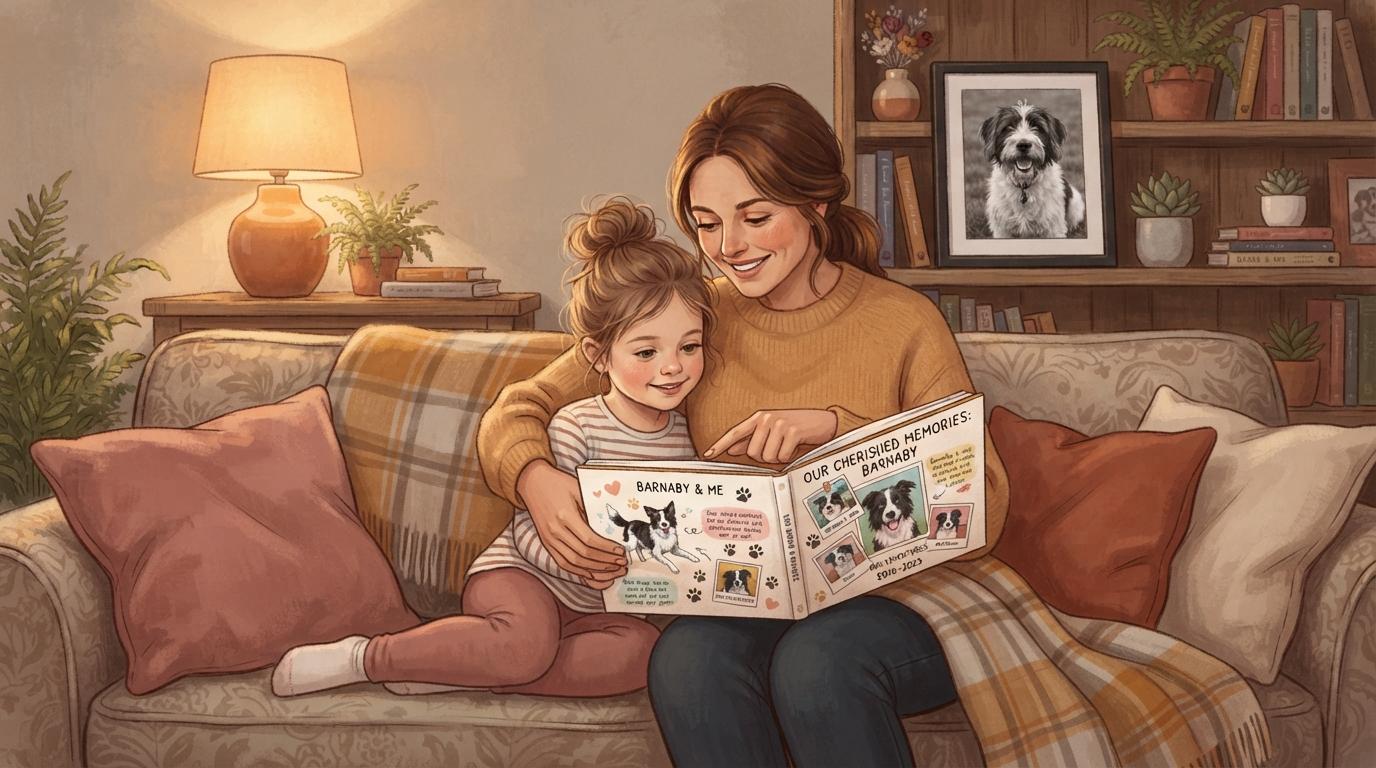
Private jokes allowed. It does not have to resolve anything, explain anything or land on a comforting note. Mostly ordinary days, one quiet page near the back, and a dedication written to an animal who cannot read it. This is the version most people are actually making.
A book for a child
This one needs a shape: they were here, this is what they were like, this is what happened, this is what we do now. Gentler pacing, a much softer last third, and nothing left dangling. Same saved character, so the second book is quick once the first exists.
A book for someone else
For the person who lived with them and is doing worse than you are, or the friend whose dog died last month. Lean harder on things only that person would recognise, and keep yourself out of the dedication. It is one of the few gifts that cannot be bought.
This is a keepsake, not grief support
Making a book is a good thing to do with a fortnight of feeling strange, and it is not a substitute for talking to someone if the loss has knocked you further sideways than you expected. Pet bereavement is taken seriously by actual bereavement services and by most veterinary practices, who can usually point you at one. C2Story makes an object. That is a real and useful thing, and it is the extent of what it is.
Five Pages a Pet Memory Book Usually Has
Not a template — just the pages that turn up in nearly every one that works.
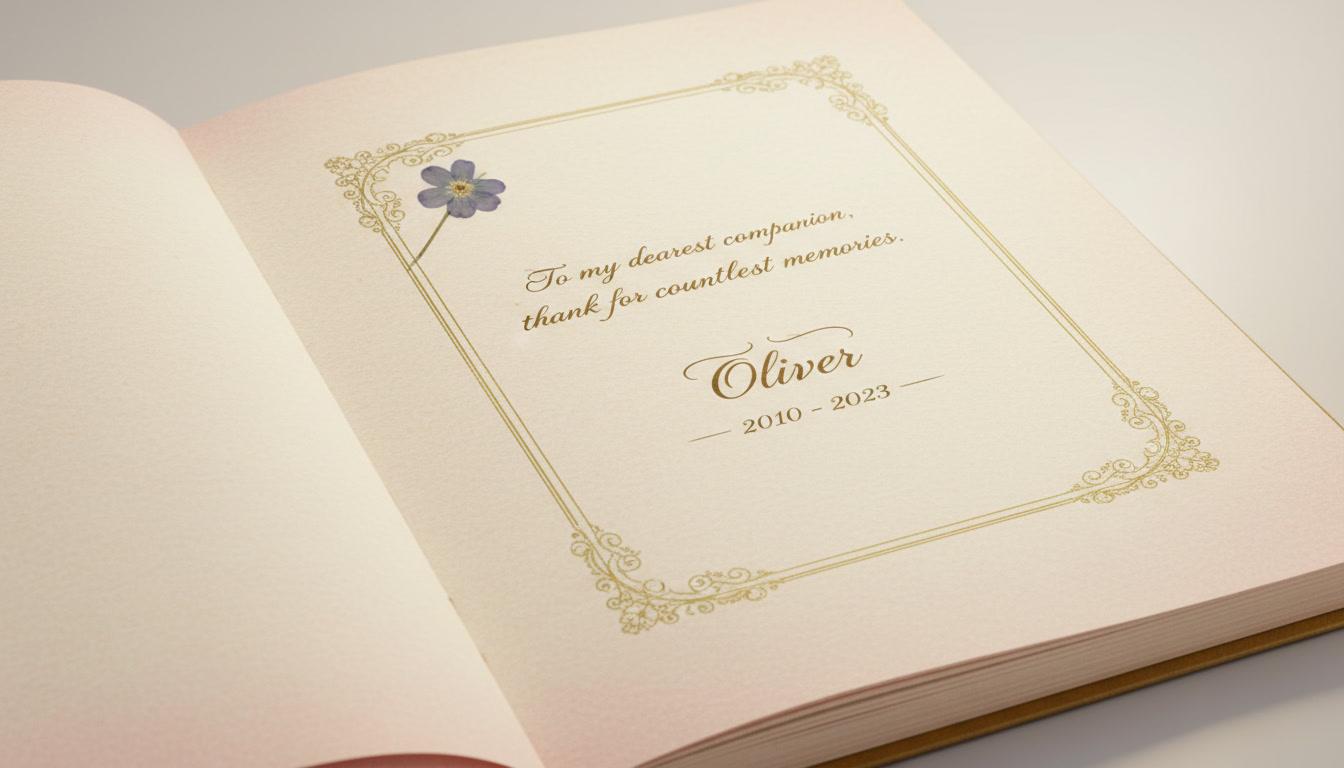
The Dedication
A name and two years
The Likeness
A photo, redrawn
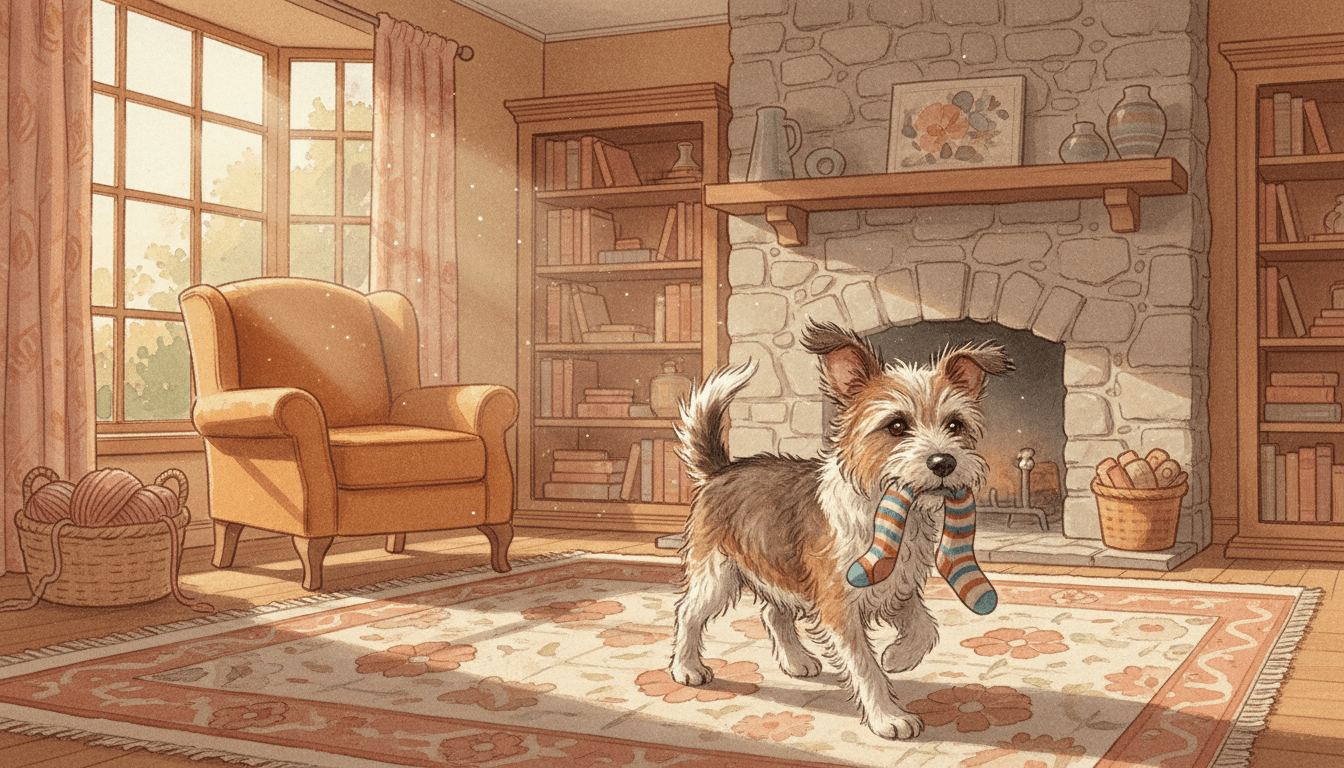
The Habit
The ridiculous thing they did
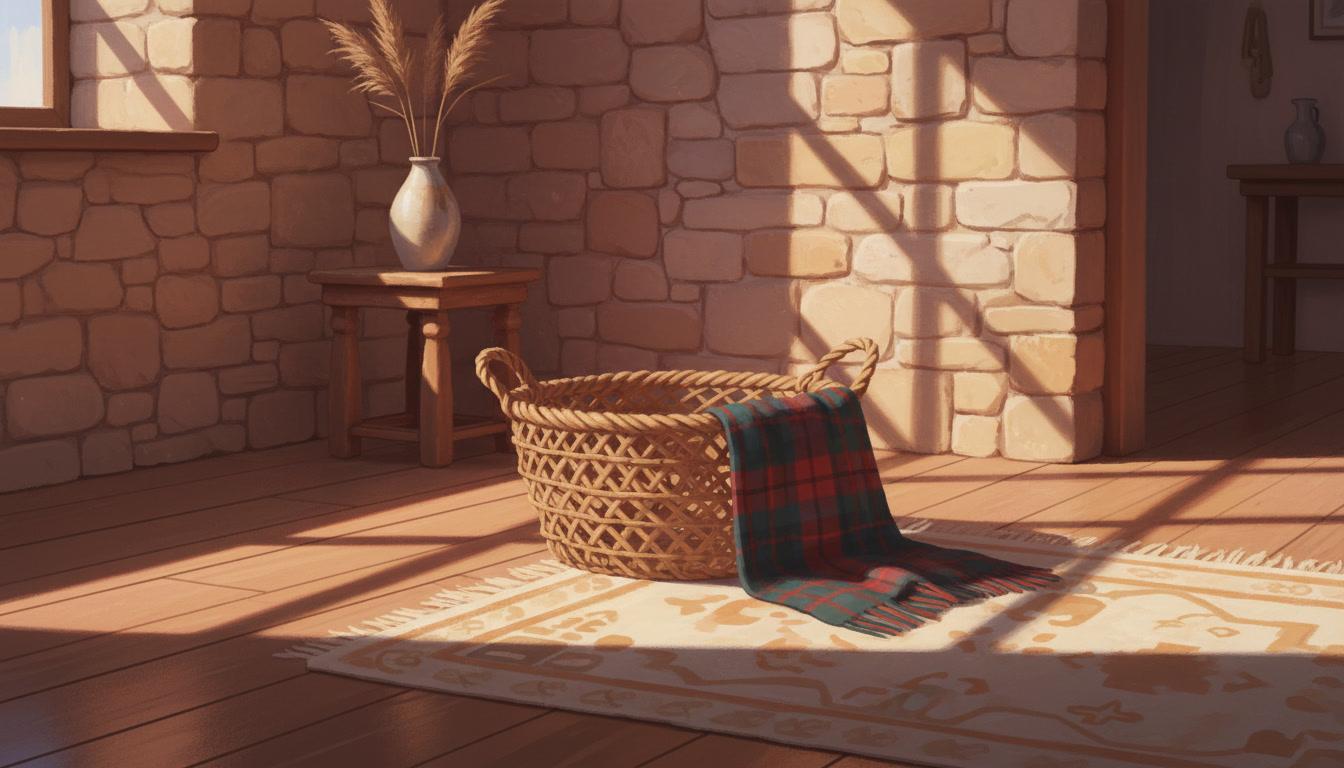
The Quiet Page
The empty basket
The Markings
Bent ear, white blaze
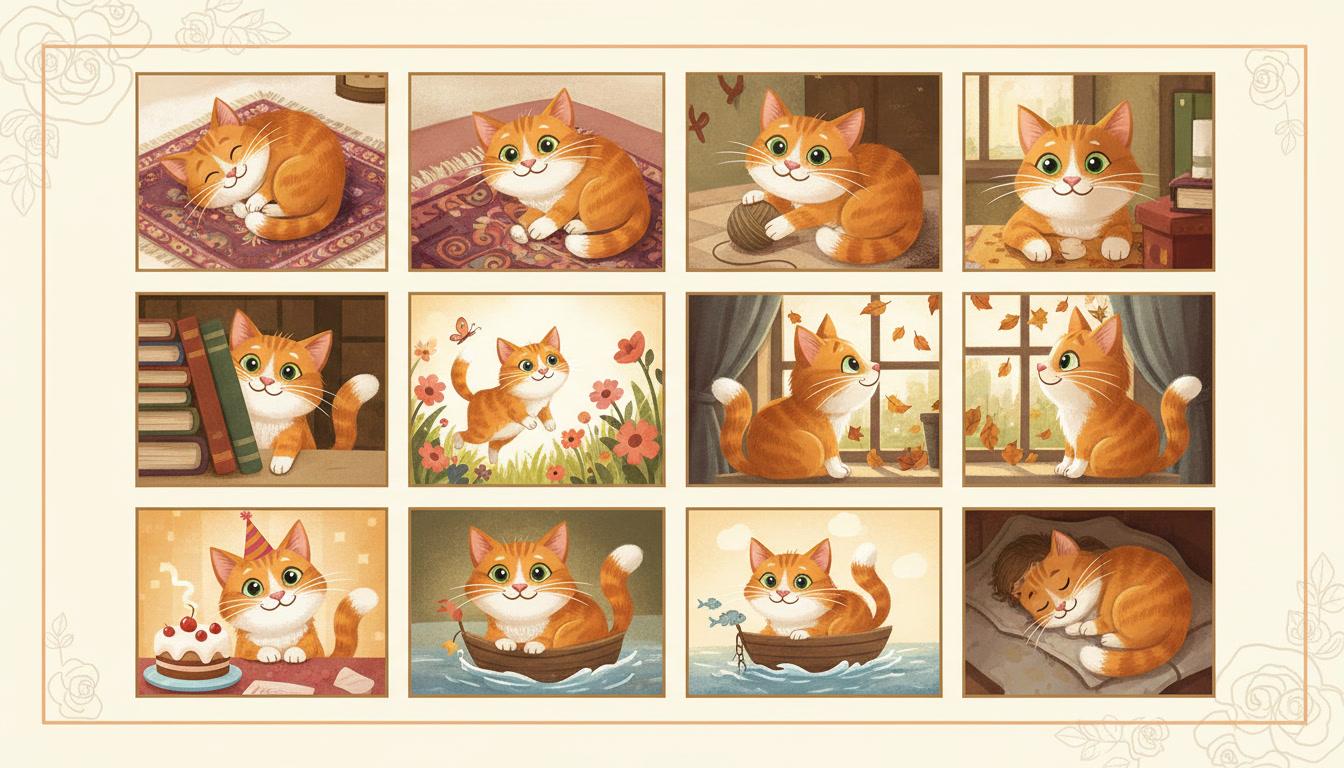
The Same Animal, Every Page
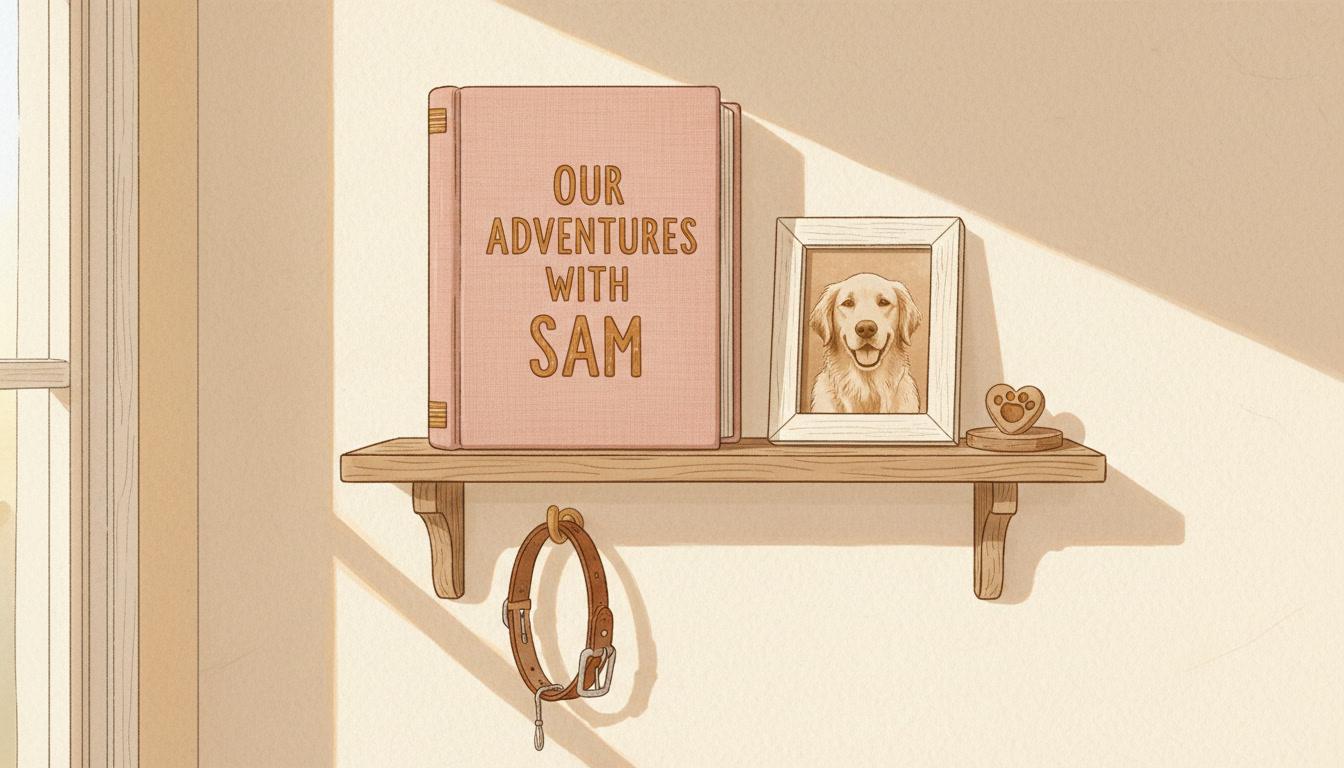
Made to Sit on a Shelf
Somewhere to Put It
What a Pet Memorial Book Will Not Do
Better to know these now than halfway through an evening you were already finding difficult.
Nobody Posts You a Hardcover
There is no printing or shipping operation behind this. You can buy a PDF download of your finished book — a one-off per-book purchase, yours to keep, print or share — and the physical object is whatever you make from that file at a print shop, a photobook service or at home. Allow a few days if someone else is printing it.
It Is Not a Photograph of Your Pet
Every page is an illustration. The character art styles contain no photorealistic option and the prompt builder always pins an illustration style, so an uploaded photo becomes a painted animal rather than a rendered copy. If you wanted the photographs themselves on the page, this is the wrong tool and a photo book is the right one.
Bad Photos Cannot Be Invented Away
If the only pictures you have are three dark ones from the same angle, the drawing will get the shape and miss the detail. Words close some of that gap — name the markings, the posture, the size relative to something in your house — but there is no version of this that recovers information nobody photographed.
It Will Not Write Your Feelings For You
You can get a full draft in minutes and it will be smooth, kind and completely generic, because the model does not know that they sat on the stairs and not the sofa. The book is only as specific as what you put in. That is the work, and honestly it is also the point of doing it.
Words Are Free, Pictures Are Not
Writing, rewriting, restructuring and renaming cost nothing. Generating illustrations is where credits go. So settle the text and get the character description right before generating a set of pages you will want to replace once you see the first drawing of them.
It Is Not Grief Counselling
A book is an object and a couple of evenings of attention, which is a genuinely useful thing to do with a loss that other people tend to move past quickly. It is not therapy, and pet bereavement support exists and is worth using if this one has hit harder than you were expecting.
None of these are reasons not to make it. They are the things worth knowing before you sit down with the camera roll.
Is a Memorial Book What You Meant?
This page is for a book about an animal who is gone. If you pictured something else, one of these starts closer — and they all share the same saved characters.
Yes — make the memory book
Their markings, their habits, their ordinary days, drawn the same way on every page.
My pet is still here
The living version: your dog or cat cast as the hero of an adventure rather than remembered in one.
I want animal stories generally
The whole pet shelf — puppies, kittens, rescues, adoptions and new arrivals, for children who love animals.
I want to start from photographs
Upload the pictures and build the book around them instead of describing everything in words.
The animal keeps changing
Lock one design so the dog on the last page is the dog from the first one.
It is the whole family, not one pet
The years, the house, the people — a family history gathered into one illustrated record.
A child is taking it badly
Gentle bedtime stories written for worry rather than adventure, for the weeks after.
It is a different occasion
Weddings, anniversaries, graduations, retirements — the full occasion shelf in one place.
Save the character first
Build the animal once, with the photos and the markings, then decide what book to put them in.
I want it soft, not bright
Watercolour is the style most memorial books land on. Choose once and the whole book holds it.
It needs to be in another language
Make the second copy for the relatives who read in a different one, same pages and same drawings.
Show me everything else
The full shelf of generators, converters and editors, all built on one character library.
Frequently Asked Questions
Explore More Story Ideas
Discover more styles, tools, and story types
Cowboy Stories
Pony rides, lasso practice and Wild West treasure trails
Explore
Cartoon Picture Books
Bold colors & playful characters
Explore
Children's Book Creator
Design beautiful kids books
Explore
Storybird Alternative
Better AI story creation
ExploreA Pet Memorial Book Is the One Book You Cannot Take a Better Photo For
Every other pet book in the world is made on the assumption that the animal is asleep in the next room. If the first drawing is not quite right, you go and take a better picture and try again at the weekend. A pet memorial book is the exception, and that single difference reorganises the entire job. The archive is closed. Whatever is already on your phone, in the old backup, in the folder from the phone before this one, is all the reference material that will ever exist. You are not directing a photoshoot. You are working from evidence, and the craft is getting the most out of pictures that were never taken to be reference material in the first place.
Which is why the first hour of making a pet memory book is not writing. It is scrolling backwards through nine years of camera roll and pulling everything, including the bad ones. The dark photo shows the shape. The one from behind shows the tail and how they carried it. The blurry one, oddly, often shows the posture better than the sharp one. You can attach several reference photographs to a single character rather than being forced to choose one flattering shot — fourteen is the cap — and a set of mediocre pictures covering a few angles beats one good portrait every time, because what the illustration needs is coverage rather than beauty. Scrolling back also tells you what the book is about before you have written a word: the four pictures of the same chair, the eighty photographs of them asleep and almost none of them running. That is the animal you actually lived with.
The second decision is the one that separates a real memorial from a card with a nice drawing on it, and it is this: name the markings, not the breed. Write "golden retriever" and you get a stock golden retriever — a handsome dog who is not your dog, which is considerably worse than nothing. The character record deliberately keeps species, appearance and distinguishing visual features as separate fields so that you can say the ear that never went fully up, the white blaze down the chest, the single white sock, the grey that arrived in the last two winters. The prompt builder was specifically fixed at one point so that filling in the free-form image description no longer silently discarded everything else you had typed, which is exactly the failure that makes people shrug and accept a generic animal. Photographs carry shape and colour. Words carry the things only you would notice. Use both.
What you upload is a reference, never a page. The photograph drives the drawing and then stays out of the book: what appears on the page is a painted storybook character. That is a design decision rather than a limitation — the set of character art styles is storybook, cartoon, watercolour, anime and 3D, with no photorealistic or real-person option in it at all, and every character image prompt pins an illustration style before it is sent. For a memorial this is the right answer, because a photorealistic model-generated version of an animal you loved lands very badly indeed and nobody discovers that until they are looking at one. Watercolour is where most of these books end up. Choose the style once and the whole book holds it.
Privacy is worth stating plainly here, because the pictures going into a pet memorial book are usually the last ones anybody will ever take. A character created from an uploaded photograph is stored as private unconditionally, regardless of which plan you are on — it is a hard rule in the code, not a preference you have to remember to switch. Characters written from a text description follow the ordinary plan rules and can appear in the public library; an upload never does. Your photographs are used as a drawing reference for your book and nothing else. Nobody browses your dog.
Then consistency, which on this kind of book is not a nice-to-have. Your animal becomes a saved character record with a fixed design and a portrait, and every page is drawn from that record rather than from a sentence re-read and re-guessed each time, which is how you end up with twenty pages of slightly different dogs who happen to share a name. The likeness also survives editing: redraw a page and the saved portrait is still the reference for the new image. That fallback is guarded explicitly, because without it a single regeneration could permanently replace an uploaded likeness with a generic drawn animal that no amount of redrawing brings back — an annoyance on most projects and the end of this one. Places and objects are handled separately from people and animals for the same reason: the kitchen and the basket have no likeness, so a photo of your dog is never used as the drawing guide for a room. The deeper version of all of this lives in the character consistency tool.
As for what goes in it: ordinary days, in specific detail. The instinct is to write the arc — we got you, we loved you, we lost you — and that book is finished in three pages and could be about anyone's animal. The ones that work are built from small true things. Where they slept when nobody was looking. The noise with no spelling. The walk route, drawn as a map. The thing they stole repeatedly for years. The one command they understood and the four they ignored. How they greeted each person in the house differently. Put the ending in, but give it one quiet page near the back rather than the whole book, and write the dedication last, once you have seen what the book turned out to be. Decide early who it is for, too: a keepsake for yourself can be full of private jokes and does not have to resolve anything, while a book that helps a four-year-old understand where the cat went needs a shape and a much gentler last third. Many families make both, and the second is quick because the character is already saved.
Practically: you make and keep the book online, and you can buy a PDF download of it — a one-off per-book purchase, yours to keep, print or share. Nobody manufactures a hardcover and posts it to you; there is no printing or shipping operation behind this, so the physical object is whatever you make from that file at a print shop, through a photobook service, or at home. Writing and rewriting cost nothing; generating illustrations is the part that spends credits, so settle the text and the character description before committing to pages. And a last honest note: a book is an object and two evenings of real attention, which is a genuinely good thing to do with a loss that the rest of the world tends to move past in about a weekend. It is not grief support, and pet bereavement services exist and are worth using if this has hit harder than you expected. If your animal is still here and this page found you early, the living version is a pet story book, the wider shelf is AI pet-themed storybooks, and the best possible time to photograph the bent ear from three angles is today.