Felt & KnitPicture Books
A felt illustration style does not draw the world, it rebuilds it in fabric. Fuzzy yarn, real stitching, button eyes and hand-sized props, held across an entire puppet style picture book rather than one handsome photograph.
- Homespun yarn and felt nap, with the seams left showing
- No outlines — shape reads from lamp light on fibre
- A built miniature set on every page, floor included
- Free credits by request — no card
50,000+
Stories Created
10,000+
Active Creators
50+
Art Styles
4.9/5
User Rating
What Makes a Felt Illustration Style Look Handmade
Not the pastel palette, and not simply the fuzz. Four things follow from building a thing instead of drawing it.
Everything has to be re-stated in fabric
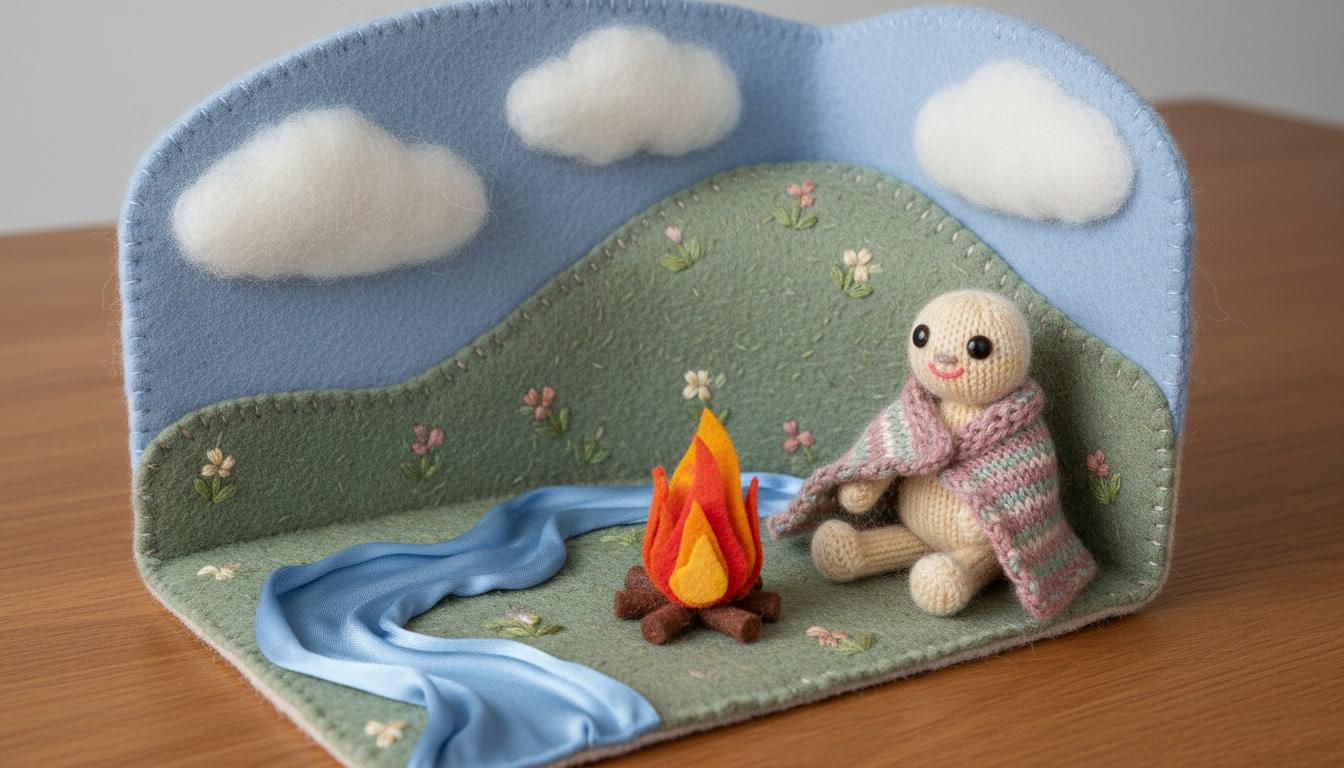
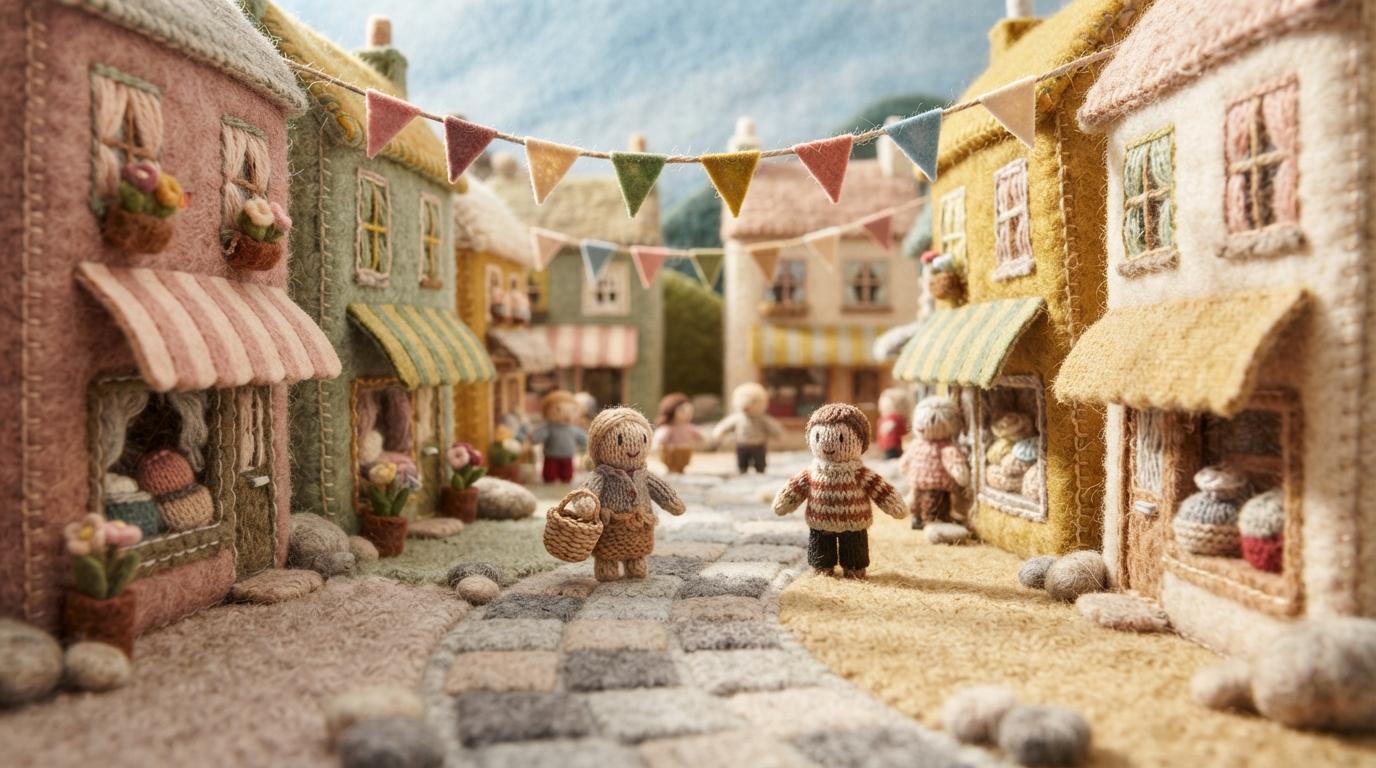
This style does not depict a river, it substitutes one. The brief it carries asks for real thread, stitching and felt nap to stay visible, which quietly rules out anything that could not be cut, sewn or knitted. So water becomes a ribbon, fire becomes layered felt flames, cloud becomes carded wool. Nothing is drawn. Everything is translated into something a pair of hands could have made.
There are no outlines, only light on the nap
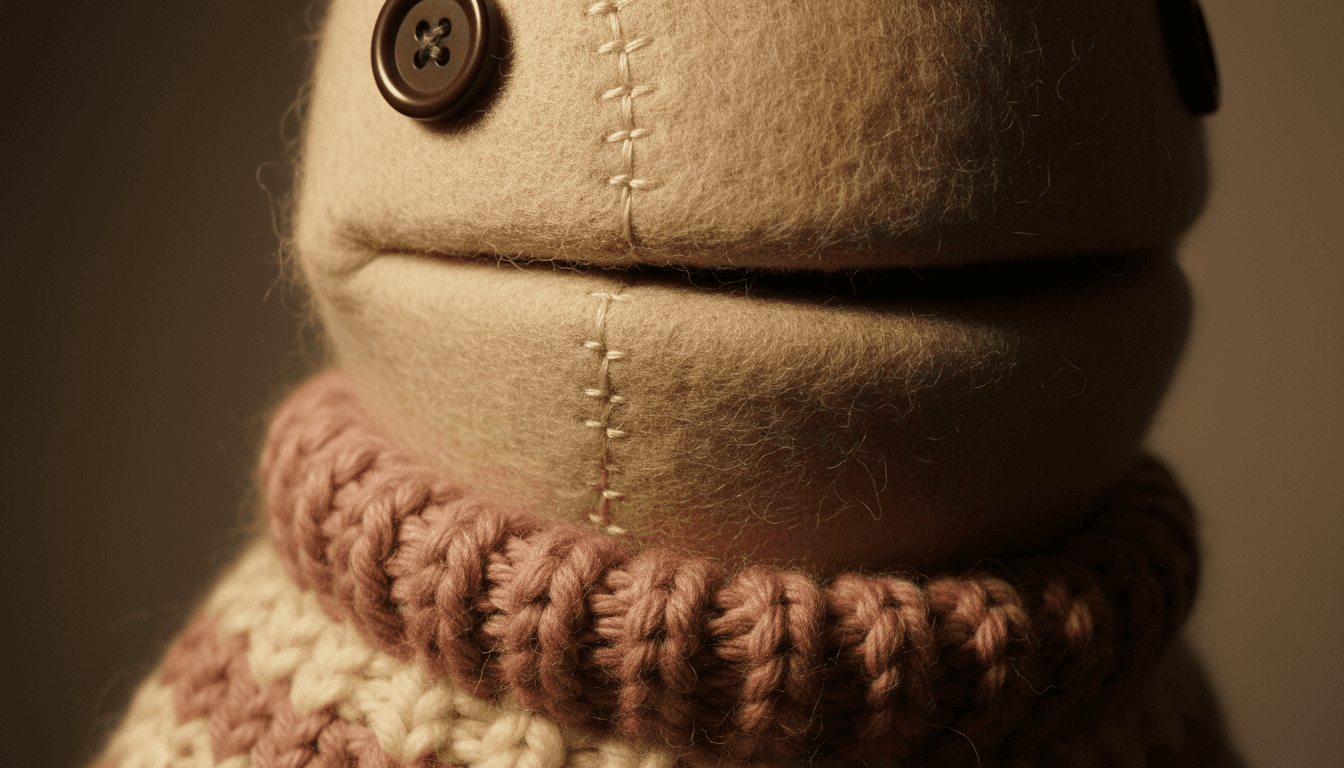
The line weight here is specified, word for word, as soft fuzzy fiber edges, and the lighting as warm soft tabletop lighting. Put those together and a shape only reads because a lamp is catching the fuzz on one side of it. That is a real constraint worth knowing before you write: tone and fibre direction do all the separating, so intricate small detail tends to dissolve into fluff.
The world is a built set, so it has a floor
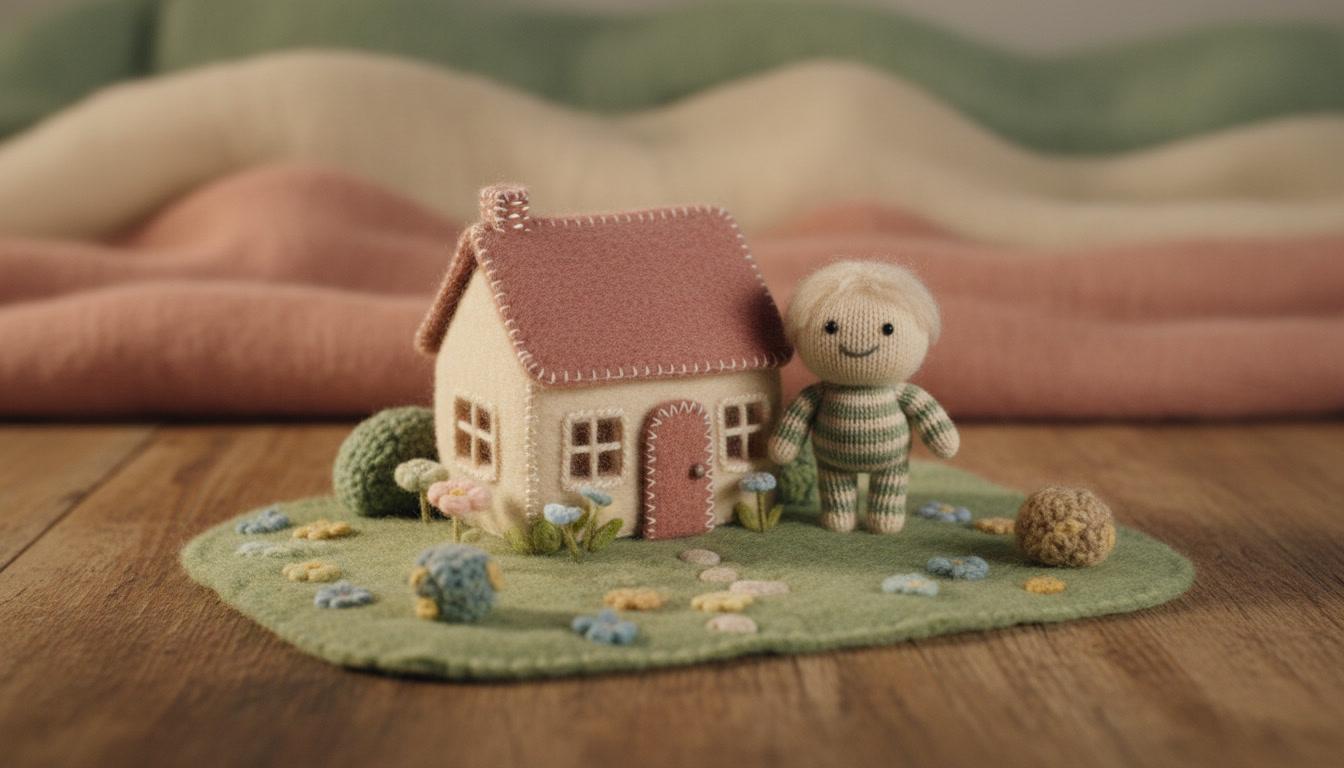
The instruction is to render the full miniature set the story describes, with the tactile realism of a physical model. A set is a real object on a table: it has ground, a backdrop and an edge. Interiors, gardens, streets and workshops come back convincingly. Open voids, vast skies and underwater scenes have to pretend, because fabric has nothing to be endless with.
Clothes are sewn, not coloured in
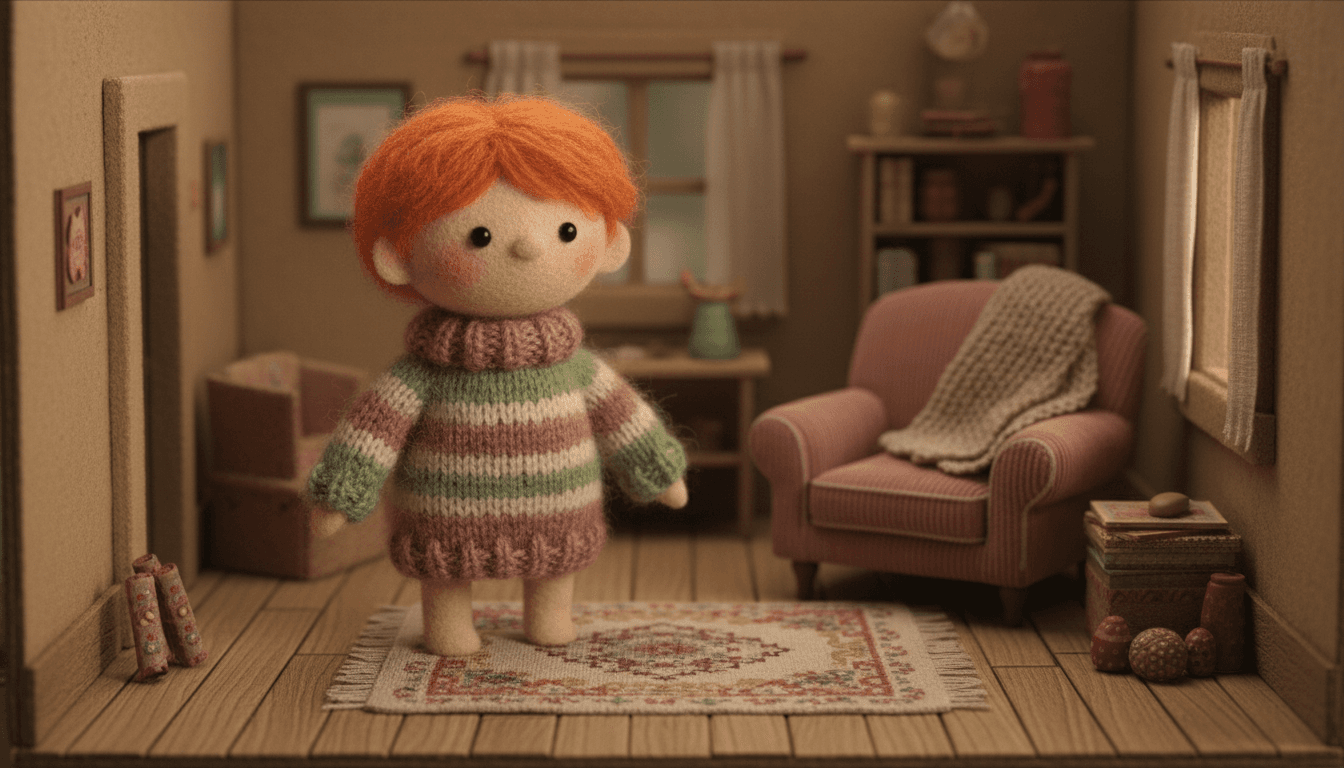
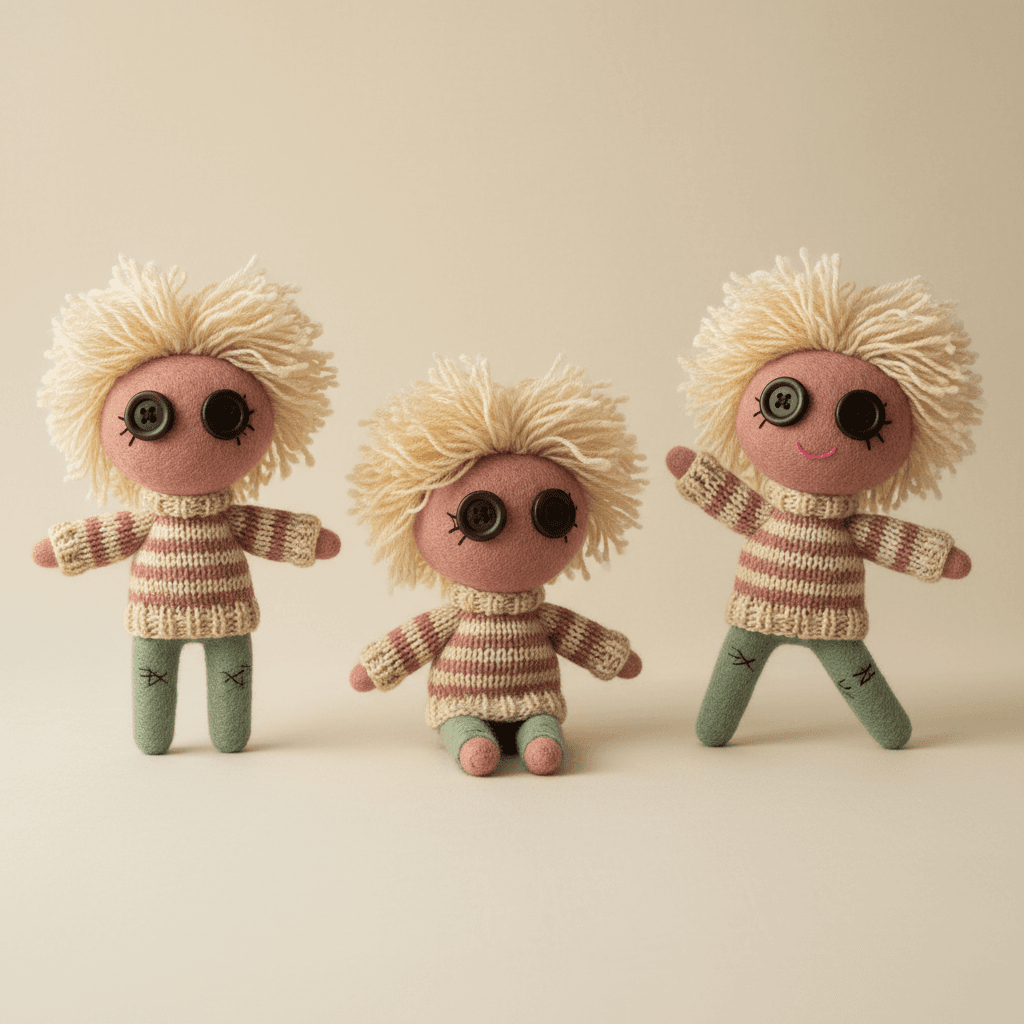
The style asks for exaggerated head-to-body proportions and quirky fashionable outfits, because a puppet is a built thing that has to be dressed and posed. A character here is a body with a garment on it rather than a silhouette filled with colour — which makes wardrobe the most reliable way to keep a cast recognisable from page to page.
Fabric Has One Register: Hard Things Get Soft
Every material has a limit, and this one is unusually easy to name. Felt and yarn cannot be transparent, cannot be wet, cannot be sharp and cannot be cold. Whatever you put on the page arrives touchable — a knife, a storm, a sheet of glass, a city at night. They all come back as something you could squeeze.
That is a gift for some stories and a problem for others. Warmth, comfort, repair, small domestic adventures and anything about making things are all on home ground, because the surface is already saying what the story means. Menace and awe are working uphill against a material that is constitutionally reassuring.
So write scenes with a floor under them. “The kitchen at bedtime” gives the style a set to build. “Falling through endless dark” gives it nothing to cut out of felt.
And keep the detail hand-sized. A teapot, a loaf, a tiny book with sewn pages. Fine filigree disappears into the nap, because fibre has a minimum size and it is not small.
The style carries its refusals in writing. Alongside what it asks for, it names what must not show up on any page:
“Handmade” Covers Three Different Materials
Here is the part worth knowing before you commit a whole book. C2Story groups ten styles under 3D, and most of them are rendered rather than made — polygons, voxels, glossy dolls, smooth animated-movie surfaces. Only three are built by hand on a table, and those three do not agree about what the surface should feel like.
Felt & Knit Puppet asks for homespun yarn, fuzzy fibre and visible thread. Plush Toy asks for fuzzy stitched fabric and button eyes, and refuses hard surfaces and sharp edges by name. Clay Animation swaps fibre for plasticine and asks for visible fingerprints and sculpted clay edges instead.
Fibre or clay is the first question. Fibre is soft everywhere and cannot hold a point. Clay can be pressed smooth, so it carries expression and gesture better.
Dressed or cuddly is the second. The puppet style builds characters with outfits and exaggerated proportions. Plush Toy builds them as soft round toys — gentler, simpler, and the easiest of the three for the very youngest readers.
All three are honestly handmade. Only one is the book you are picturing, and choosing on purpose costs nothing.
Create a Felt & Knit Picture Book in 3 Steps
From a one-line idea to a finished book built out of yarn and felt, in under two minutes.
Describe the story
A sentence is enough. This look is strongest on interiors, gardens, streets, workshops, animals and made objects — anything with ground under it — so something like "a knitted bear who cannot get warm" gives the material plenty to do.
"The sweater that was too big, until one winter it was not"
Pick your material
Felt & Knit Puppet for yarn, stitching and outfits, Plush Toy for soft round huggable characters, Clay Animation for sculpted plasticine with fingerprints, or Ragdoll Gothic for patchwork in a darker key. One decision, and it sets the whole book.
Dusty pink, sage green, mustard wool, warm cream
Generate and export
C2Story writes the story, breaks it into pages and builds every one as a felt and knitted set. Read it on screen, share the link, or export the PDF and take that file to a printer.
Whole book rendered, PDF export, instant sharing
Felt & Knit Puppet and Its Handmade Neighbours
Worth being plain about scope: Felt & Knit Puppet is one style, not a category. These are the four tactile looks worth comparing before you commit a whole book.
Felt & Knit Puppet
Stop-motion handmade felt and knitted puppets: homespun yarn, fuzzy fibre, real thread and visible stitching, a playful retro pastel palette of dusty pink, sage green and warm cream wool, exaggerated head-to-body proportions and quirky outfits, lit like a tabletop model. Its refusals are explicit — no smooth digital 3D, no glossy plastic, no flat vector, no photorealistic human.
Plush Toy
Soft felt and fabric characters with fuzzy stitched texture, button eyes and a huggable stuffed-animal build, in soft fabric pastels and candy colours, with no outlines and only soft fabric seams. It refuses hard surfaces, metal and sharp edges outright. Rounder, simpler and squeezier than the puppet style — and it is not interested in clothes.
Clay Animation
The same tabletop, a different material: handmade plasticine characters with visible fingerprint texture, soft studio light and sculpted clay edges, in warm clay tones and earthy pastels. Clay can be pressed smooth and pulled to a point, which fibre cannot. Pick it when your story needs faces that act, rather than surfaces you want to touch.
Ragdoll Gothic
Stitched ragdoll in a darker register: button eyes, patchwork fabric, seams left showing, a creepy-cute mood and a muted dusty palette of faded plum, grey and aged fabric tones. Mechanically it is the felt family — handmade, sewn, soft-edged — but aimed at an older reader who likes a shiver with the cosiness.
One more handmade option sits outside the 3D group: Paper Cut builds its scenes from layered paper cutouts with real shadows between the layers — made by hand, but flat rather than fuzzy. If what you actually want is the smooth animated-movie surface rather than a tabletop one, see the 3D animation style; for handmade warmth that stays on paper, try the crayon style.
Puppet Style Picture Book Ideas to Get You Started
Fabric is better at warmth, repair, small rooms and made things than at storms and vast distances. These six lean into that.
The Sweater That Was Too Big
A hand-me-down jumper that swallows a small child, until one winter it does not. In this style a garment is an actual knitted object with its own stitches, so a story about clothes is a story about the material the book is made of.
Create this storyA River Made of Ribbon
A child walks to the edge of the world and finds it is sewn. The substitution this style performs anyway — ribbon water, felt fire, wool cloud — turned into the plot, which only a handmade look can get away with.
Create this storyThe Loose Thread
Something starts to unravel and has to be mended before bedtime. Fraying, stitching and patching are things this style can actually show, because the seams are visible on every page rather than hidden under rendering.
Create this storyToo Cold for the Little Bear
A knitted bear who cannot get warm, and a house full of people who each try something. Wool is the material of warmth, so a story about being cold has the whole palette and texture already arguing on its side.
Create this storyNine Hands Made This House
Who sewed the curtains, who cut the door, who knitted the rug. A book about things being made, in a style whose entire brief is that a person made it — the subject and the surface saying the same thing.
Create this storyThe Smallest Teapot in the House
A tea party where every single object has to fit in a paw. Miniature sets are hand-sized by nature, so props are this look at its most convincing — far more so than a sweeping landscape would be.
Create this storyAI-Generated Felt and Knitted Illustrations
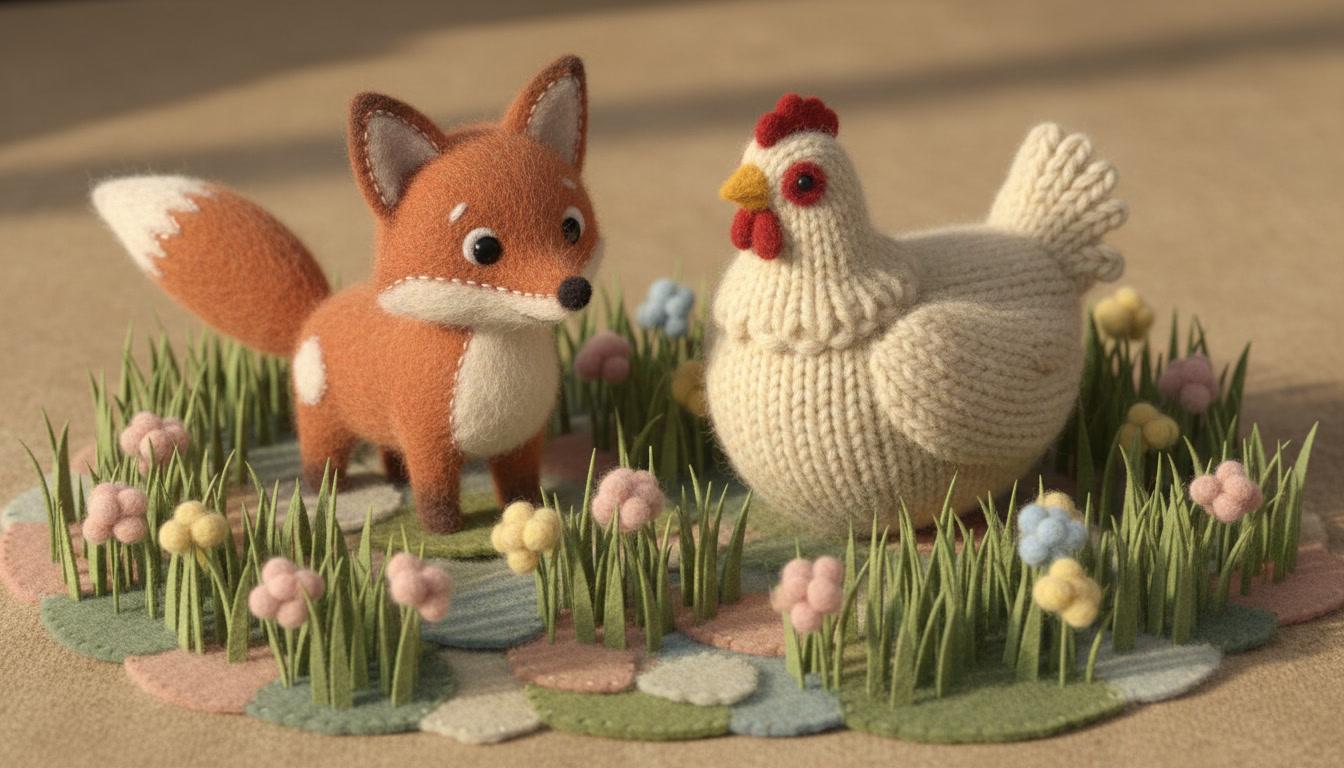
Look at the edges. Nothing is outlined, every seam is showing, and one warm lamp is doing all of the explaining.
Knitted Character Art for Every Subject
Characters, animals, materials, wardrobe, props — the same yarn, the same stitching and the same warm lamp, spent on whatever your story is actually about.
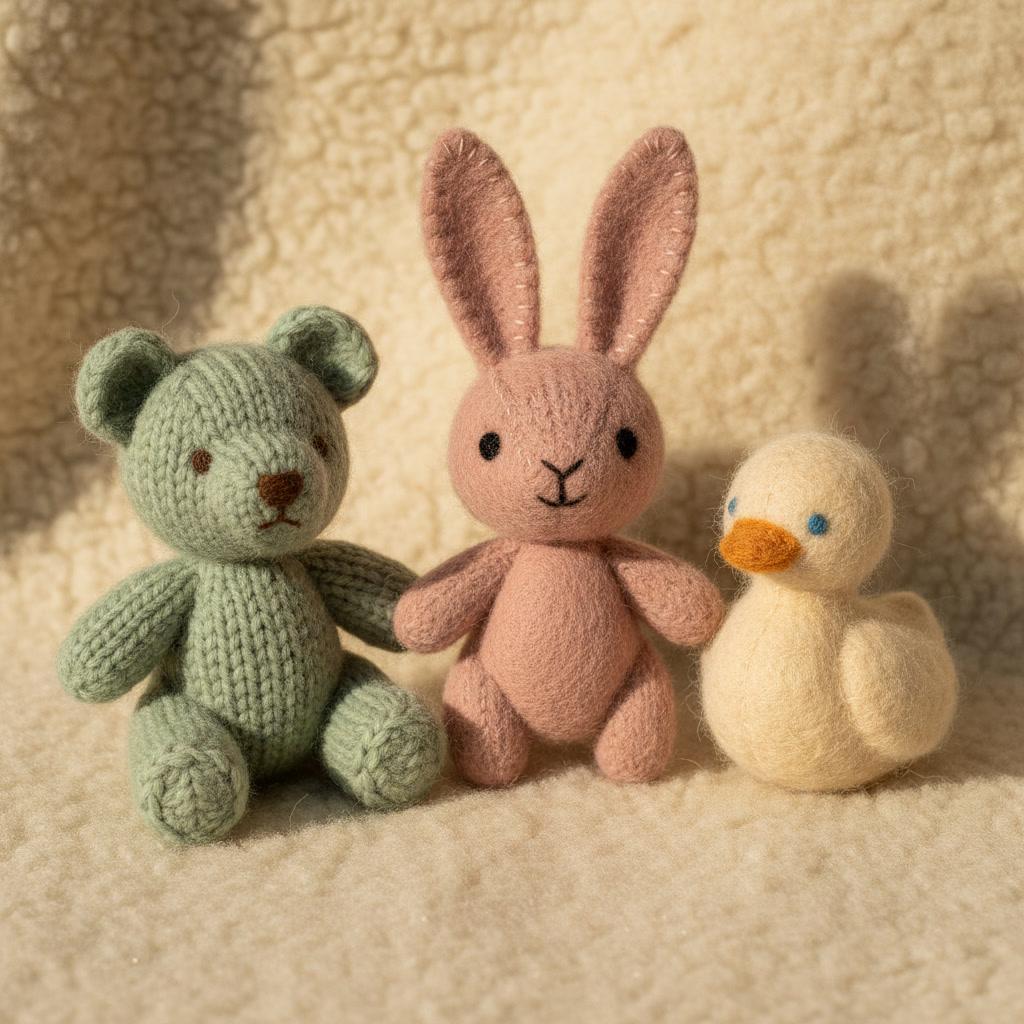
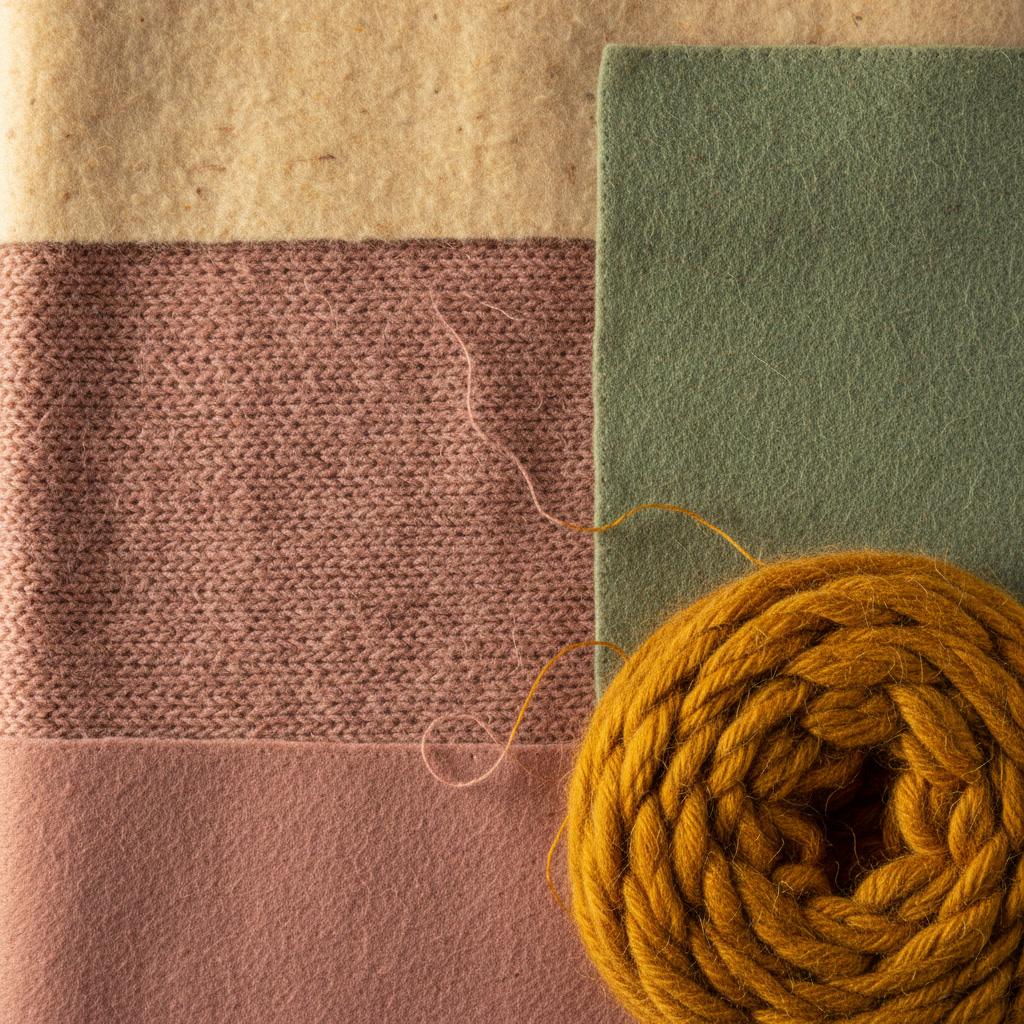
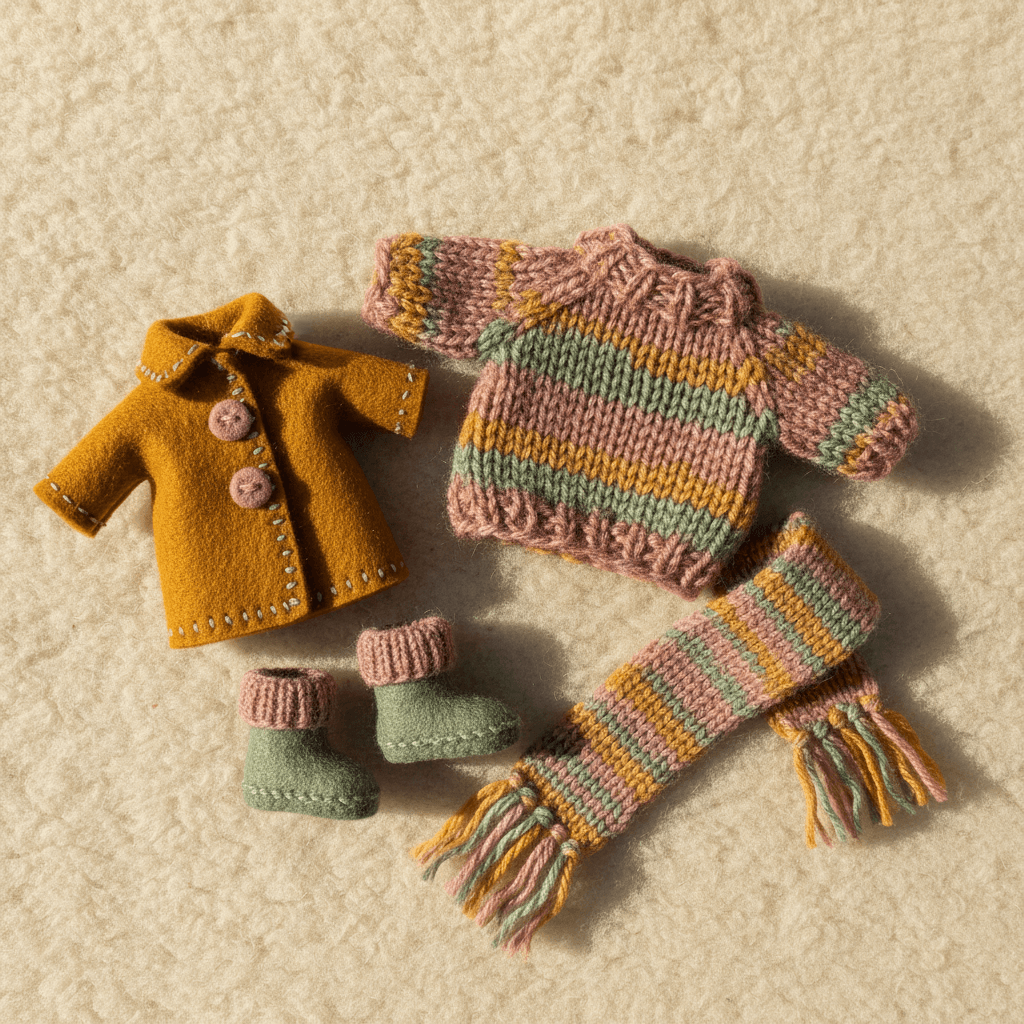
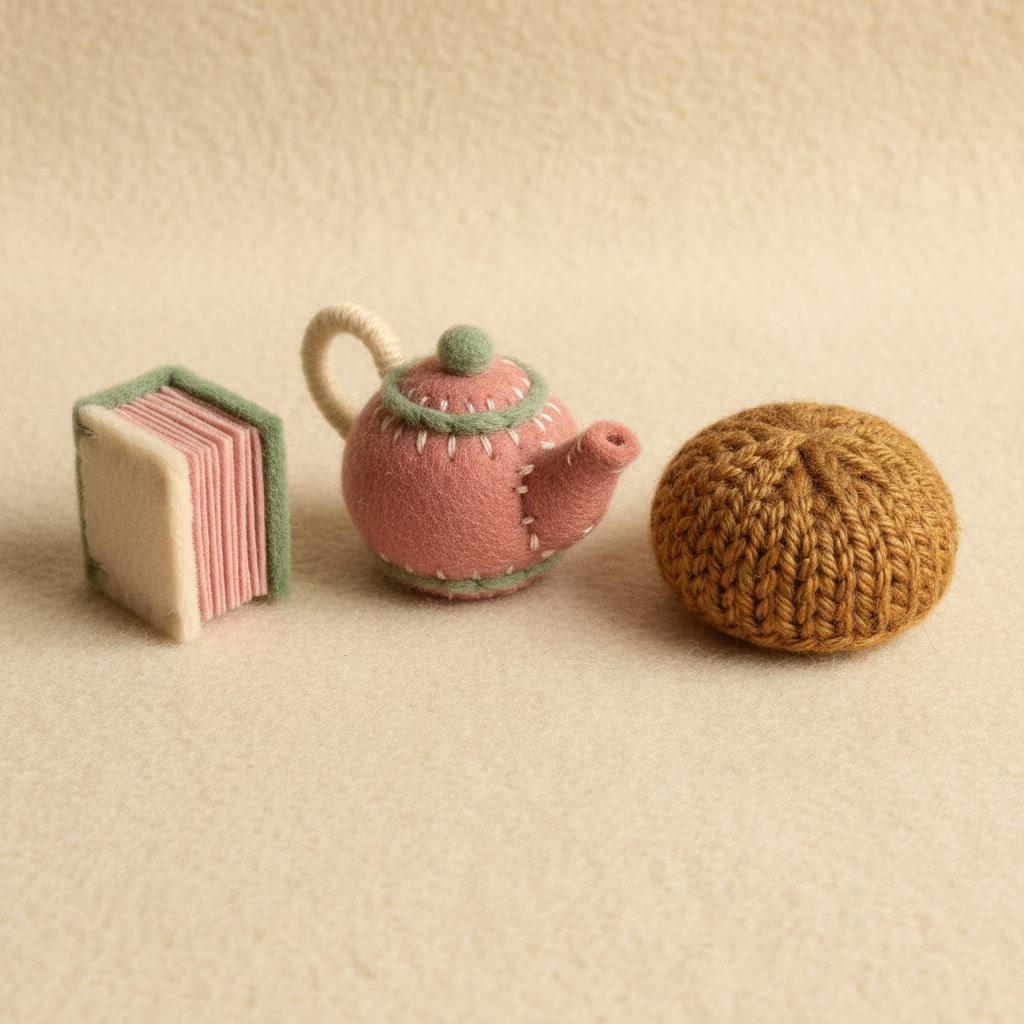
Everything You Need for Felt & Knit Picture Books
One good felt puppet is easy. Twenty-four pages built from the same wool, with the same cast in the same clothes, is the part that needs building.
The same workshop on every page
One fixed brief — homespun yarn, visible stitching, felt nap, retro pastel palette, warm tabletop light — is carried into every page of the book. Page twenty is built from the same materials as page one, instead of slowly turning into something smoother.
Gloss is refused in writing
Left alone, an image model polishes: it smooths the fuzz, adds a highlight and hardens the edge, because shiny reads as finished. This style names the four things that must never appear — smooth digital 3D, glossy plastic, flat vector, photorealistic human — so the reflex that would turn your felt into a vinyl toy is the one it is told to suppress.
A cast held together by its wardrobe
Save your characters in the Character Library, with up to fourteen reference images each, and the description travels into every page and into later books. Here the garment does the heavy lifting: a sage sweater with chunky stitches and two felt buttons is a fact you can check, not a vibe you have to trust.
A palette that comes with the material
There is no colour picker and no hex field. The style brings its own retro pastel range — dusty pink, sage green, warm cream wool — and your scene descriptions steer inside it: a winter page comes back paler and woollier, a market page warmer and more mustard.
Whole books, not single props
You are not prompting for one handsome puppet portrait. Describe the story and C2Story writes it, breaks it into pages, and builds every page as a felt and knitted set matched to what that page actually says.
Any language you read aloud in
Fabric carries no language of its own. Write the story in English, Chinese, Japanese, Spanish, French and more — the yarn, the stitching and the pastel palette do not change with the text.
Felt & Knit Picture Books — Questions
What people ask before committing a whole book to yarn, felt and visible seams.
Explore More Story Ideas
Discover more styles, tools, and story types
Bug Stories
Ladybugs, butterflies, busy bees and glowing fireflies
Explore
Art Brut Picture Books
Thick wobbly outlines & off-kilter figures
Explore
Bedtime Stories for Anxious Kids
Calming tales that soothe worries
Explore
Midjourney vs C2Story
Stories, not just images
ExploreFelt & Knit Picture Books — Build a Whole Story Out of Fabric with AI
A felt picture book is built rather than drawn. A child is a knitted body with yarn hair, two button eyes and a chunky sweater; a fox is cut felt with embroidered eyes; a kitchen is a small stitched set with a fabric floor and hand-sized props on it. Colour arrives as dyed wool in a playful retro pastel range — dusty pink, sage green, mustard, warm cream — and a single warm tabletop lamp does all the modelling. C2Story applies that one brief across an entire book, so every page keeps the same fibre, the same visible thread and the same soft fuzzy edges, instead of one page happening to come out right.
The thing most worth understanding about a felt illustration style is that it translates rather than depicts. Nothing on the page can be a thing that fabric could not become, so water turns into ribbon, fire into layered felt flames, cloud into carded wool. That substitution is the charm, and it is also the constraint: hard things get soft, wet things get dry, and sharp things get rounded off. There is no outline anywhere either — the line weight this style carries is literally soft fuzzy fibre edges — so a shape only reads because the lamp catches the nap on one side of it. Write scenes with a floor under them and keep the detail hand-sized, and the material does the rest.
It is also worth knowing which handmade look you are actually after, because C2Story groups ten styles under 3D and only three of them are built on a table. Felt & Knit Puppet is the one with a wardrobe: homespun yarn, fuzzy fibre, real stitching, exaggerated head-to-body proportions and quirky outfits, and it refuses smooth digital 3D, glossy plastic, flat vector art and photorealistic humans outright. Plush Toy builds soft round huggable characters with button eyes and fabric seams, refusing hard surfaces and sharp edges by name — the gentlest of the three for the youngest readers. Clay Animation swaps fibre for plasticine with visible fingerprints and sculpted edges, which carries expression better but invites touch less. And Ragdoll Gothic takes the same patchwork and stitches into faded plum and grey for a reader who wants a shiver with the cosiness. All four are honestly handmade; only one is the book in your head.
Consistency works in your favour in a handmade felt storybook, because a character here is a short list of checkable facts rather than a page of rendered detail: that yarn colour, those two buttons, that sage sweater with the chunky stitches. Keep your cast in the Character Library, with up to fourteen reference images each, and the description travels from page one to the end of the book and into later books too. The trade-off is that the material is honest and drift has nowhere to hide. Write the story in any language you read aloud in, then export the finished book as a PDF — that file is the handoff to whichever printer you already use, and uncoated or lightly textured matte stock suits fibre far better than a glossy sheet, which reads as the plastic this style refuses. Start free: see our pricing plans, browse every option on the illustration styles hub, compare it with the 3D animation style or the crayon style, or go straight to the AI Story Generator.