
Mecha Picture BooksA Shine on Every Curve
Type your story idea and C2Story turns it into mecha picture books: small lacquered robots in crimson and gold, with jointed limbs and sharp highlights, on every page.
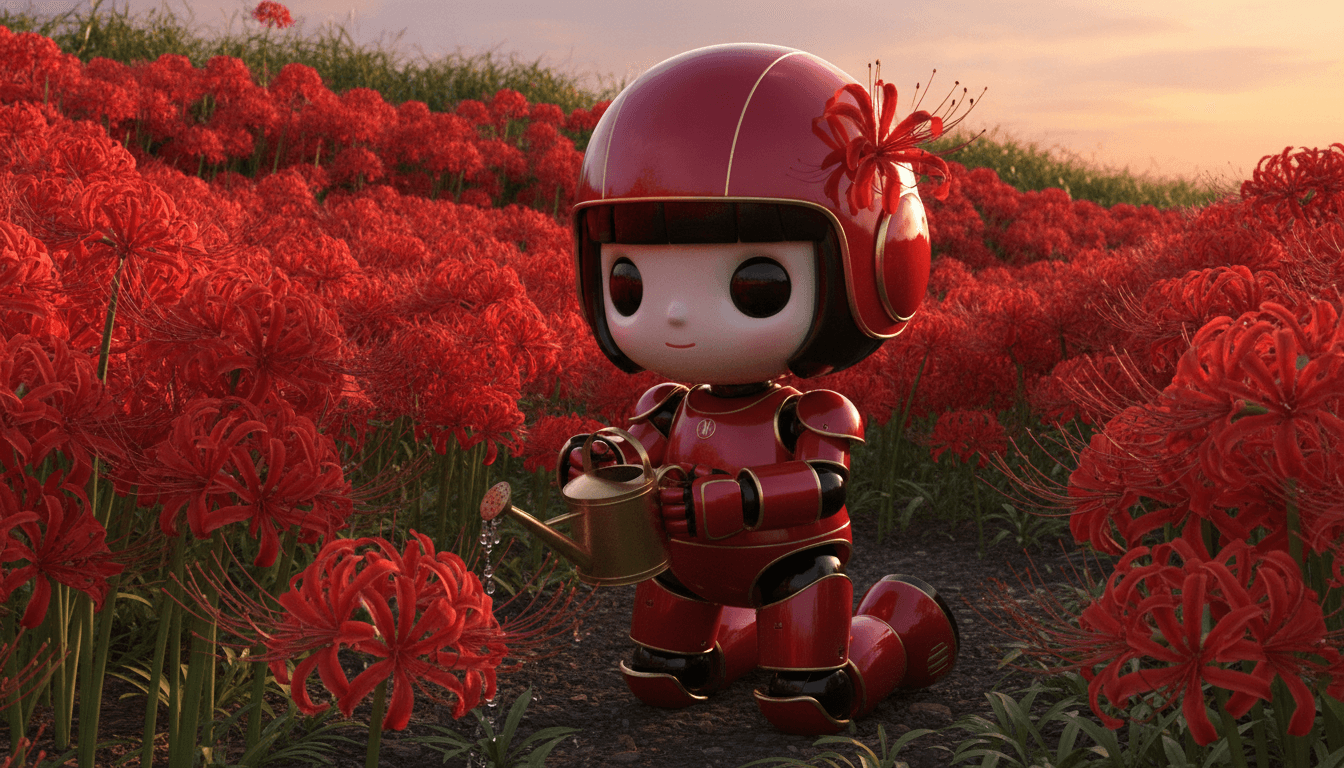
A small robot girl crouches in a field of red spider lilies at sunset with a brass watering can. Her helmet is crimson lacquer with a thin gold rim, her face is smooth ceramic white, and the low sun runs in bright lines along every plate. This is mecha illustration as a designer toy rather than a war machine: glossy, jointed, precise, and small enough to sit on a shelf.
- High-gloss lacquer and ceramic sheen
- Visible joints at every bend
- Crimson, gold, ceramic white and gloss black
- Sharp reflective highlights, never matte
What Makes Mecha Character Art Look This Way
Every style here is a written brief: a palette, a light, a line weight and a short list of refusals. Four things in this one decide the look, and none of them appears in any other brief in the library.
The only brief that wants shine
Every style in C2Story is a short written brief. Seventeen of the seventy-eight refuse gloss by name. This is the only one that asks for it: high-gloss lacquer, a ceramic-like sheen, and no matte or rough surfaces at all. Another 3D brief in the library, Deadpan 3D Urbanite, asks for exactly the opposite: matte clay, and no glossy polished CGI.
Light you see on the surface
Most briefs describe their light by mood: warm, soft, moonlit, flat. This one is the only brief that calls its light reflective. It names sharp studio highlights, so the light shows up as bright lines on the armour and small reflections of whatever is nearby, not as a glow over the scene.
Every joint is drawn
It asks for extremely fine articulated mechanical joints and crisp precise mechanical edges. No other brief mentions a joint. Shoulders, elbows, wrists, hips and knees come out as visible gloss-black ball joints, which is why a pose reads so clearly: you can see exactly where the figure bends.
The hero is a made thing
It is the only brief whose subject is a machine: a mecha android in the shape of a designer toy, in vivid crimson armour with gold trim, ceramic white and deep gloss black. Its refusals are matte rough surfaces, low-detail modelling, flat 2D art and photorealistic humans.
Why Mecha Illustration Has to Shine
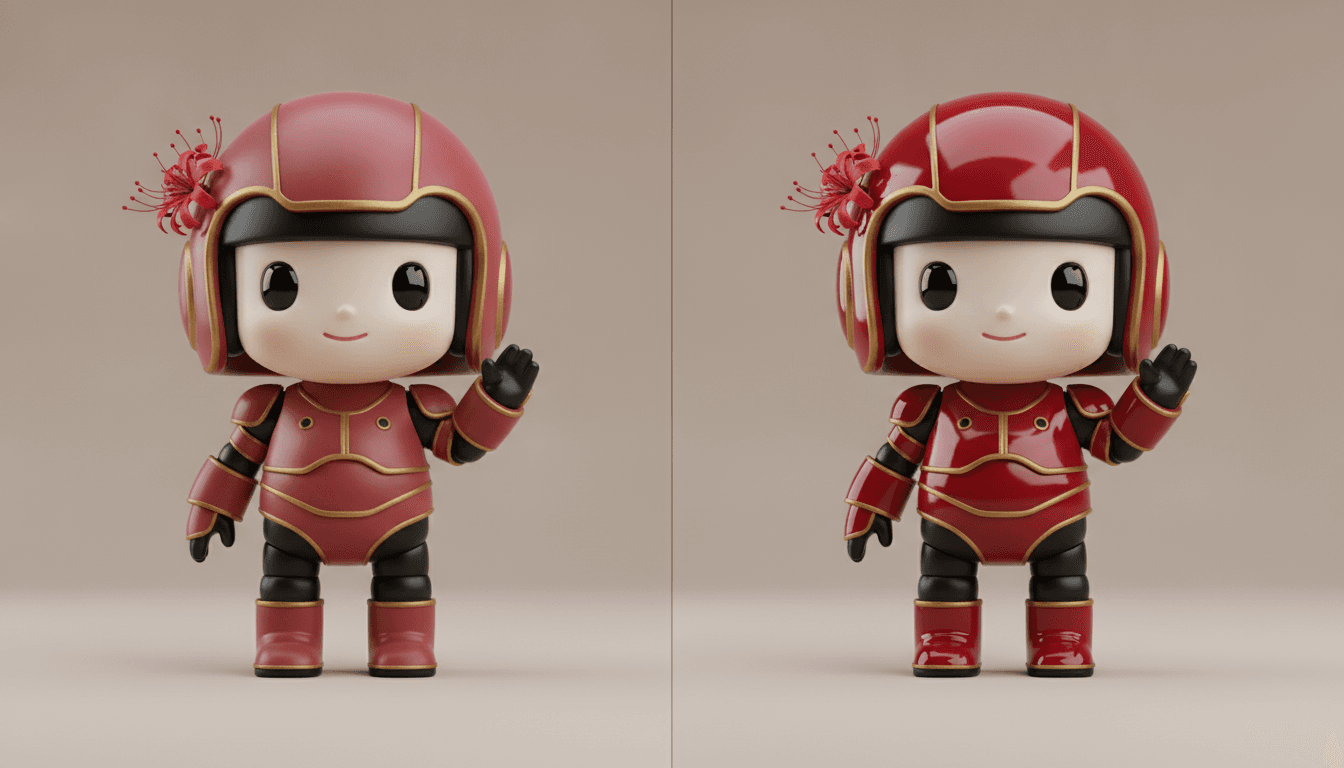
Look at one robot twice. Same helmet, same plates, same wave, same grey wall. On the left the armour has a soft satin finish: the highlights are dull and spread out, and she reads as a nicely made figure.
On the right the same armour is lacquered. Bright white highlights run along the helmet, the shoulder plates and the boots, and the crimson goes deep and wet. Nothing about her shape changed, but now she looks hard and precious. That is the difference the brief is paying for, and it is why its first refusal is matte, rough surfaces.
Its four refusals keep the surface glossy, the detail fine, the figure solid and the people toy-like.
Write Who Built It
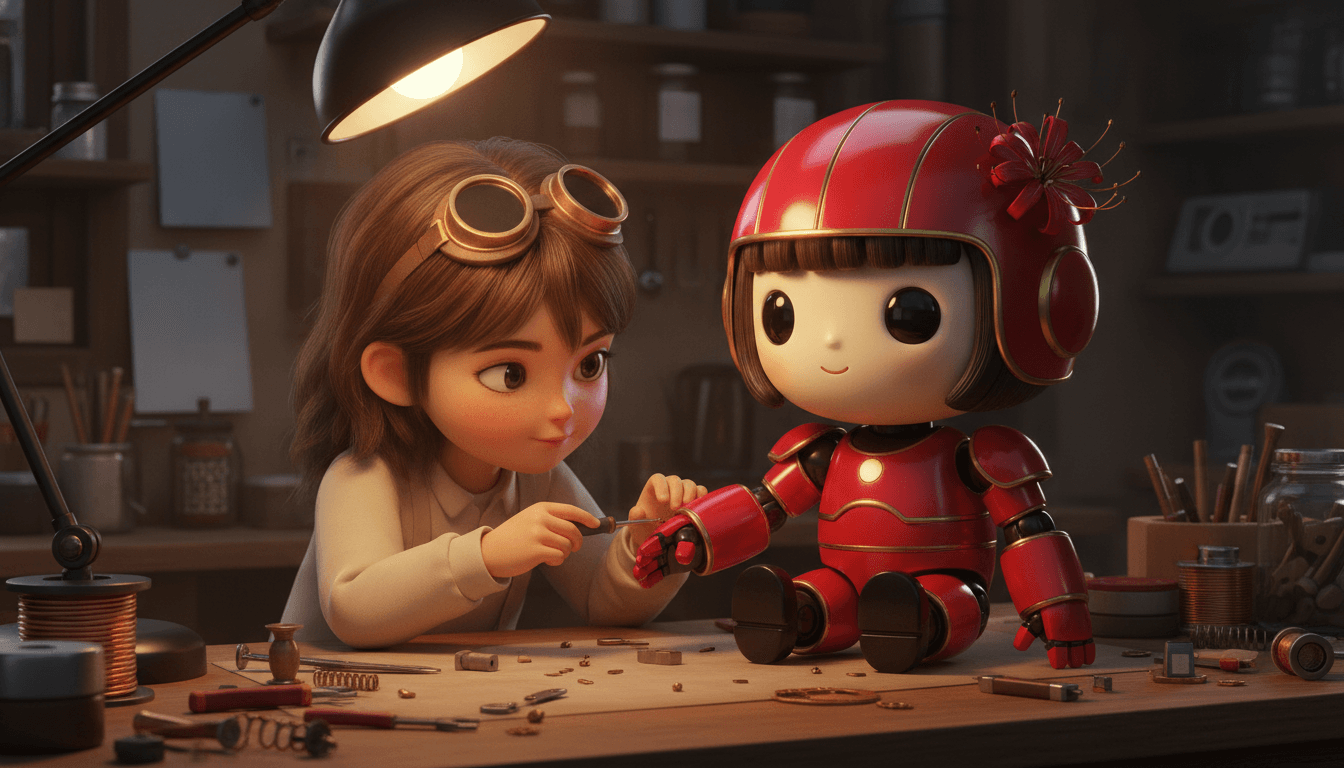
A girl in brass goggles leans over a workbench with a screwdriver the size of a matchstick, working on the hand of a small crimson robot who sits there holding still for her. Nobody has to explain the book. You can see who made the robot, and you can see that the robot knows.
Every other hero in the library is a person or an animal, so the reader takes them as given. A robot is always somebody’s work. The gold trim is a choice somebody made, the joints are somebody’s engineering, and the reader wonders why. Answer that on the first page, a girl in a workshop, a gardener who needed help, a toymaker who was lonely, and the whole book has a reason to exist.
In a book you do not write image prompts; C2Story writes them from your story. A page that says “the robot is in the garden” gets a figure standing among flowers. A page that says “the robot Mei built to water the lilies kneels by the one that will not open” gets a job, a pose and something to look at.
From One Sentence to Mecha Picture Books
You pick the look once. The brief is then applied to every page, so the lacquer, the gold trim and the jointed limbs never drift.
Describe the robot and its maker
Write a sentence or two about who built the robot, what for, and what happens to it. Give it one helmet shape and one thing it carries so it reads instantly on every page.
Choose Glossy Mecha Doll
Pick the style from the style list in the editor. From then on every page uses the same high-gloss finish, the same crimson and gold, and the same fine joints.
Get a whole book
C2Story writes the story, splits it into pages and illustrates each one. Regenerate any page you want to change without touching the rest, read it online, share it, or buy the PDF download to hand to a printer.
This Style and Its Three Nearest Neighbours
One shares the 3D, one shares the idea of a hero who was made by hand, and one shares the armour. Here is what each actually asks for.
Glossy Mecha Doll
The style on this page
A high-gloss mecha android designer toy: vivid crimson armour plating with gold trim, extremely fine articulated mechanical joints, a ceramic-like glossy sheen and sharp reflective highlights on lacquered armour. It refuses matte rough surfaces, low-detail modelling, flat 2D art and photorealistic humans.
Pixar-Style 3D
Same medium, a family-film finish
Listed as 3D Animation in the editor: stylised 3D characters in a family animated-film look, with detailed textures and cinematic lighting. Choose it for expressive animated-movie characters of any kind. Choose mecha when you want a hard shell, crisp edges and a shine you could see your reflection in.
Felt Puppet
Also a made thing, but sewn
A handmade felt-and-knit look where everything is fabric and lit by a soft tabletop lamp. It refuses glossy surfaces. Both styles turn your characters into objects somebody made. Felt makes them soft and stitched; mecha makes them lacquered and jointed.
Heroic Fantasy Cel
The other brief with armour
The only other brief that mentions armour, drawn as flat 2D cels on painted backdrops, lit warm on one side and cold on the other. If you want knights, swords and castles in hand-painted 2D, go there. If you want armour as a glossy shell on a small friendly robot, stay here.
Story Ideas for Mecha Picture Books
Each idea starts with a robot, a reason it was made, and one small thing it cannot do yet.
A Robot Design Style Across a Book
Pages generated to this one brief and not retouched. Three honest notes: the tin bird we asked for came back as a small round silver wind-up toy you would not call a bird; the character sheet’s kneeling pose came back standing; and our first rainy-street and umbrella pages put stray lettering on shop signs, so we moved those scenes to a lane and a park and regenerated them. Expect the occasional frame you need to redo.
Satin, then lacquer
Who built her
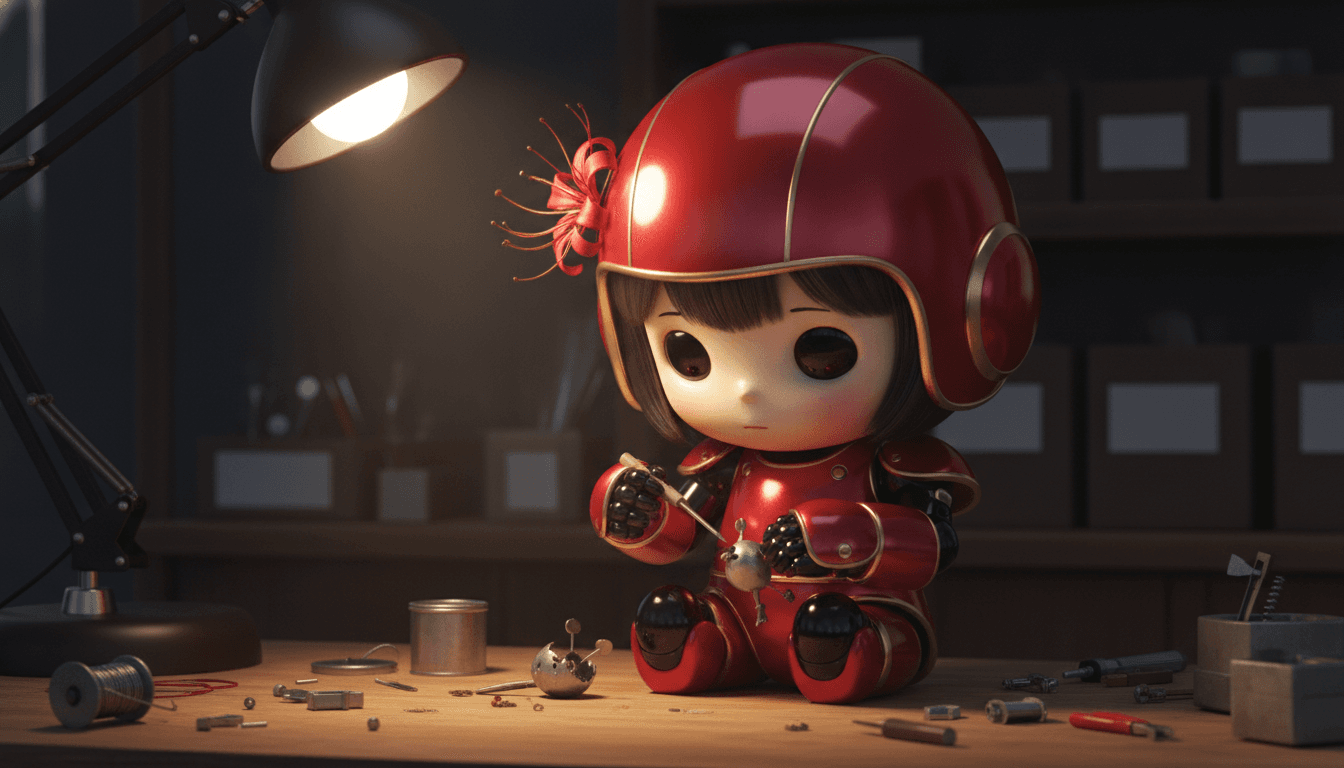
Mending something small
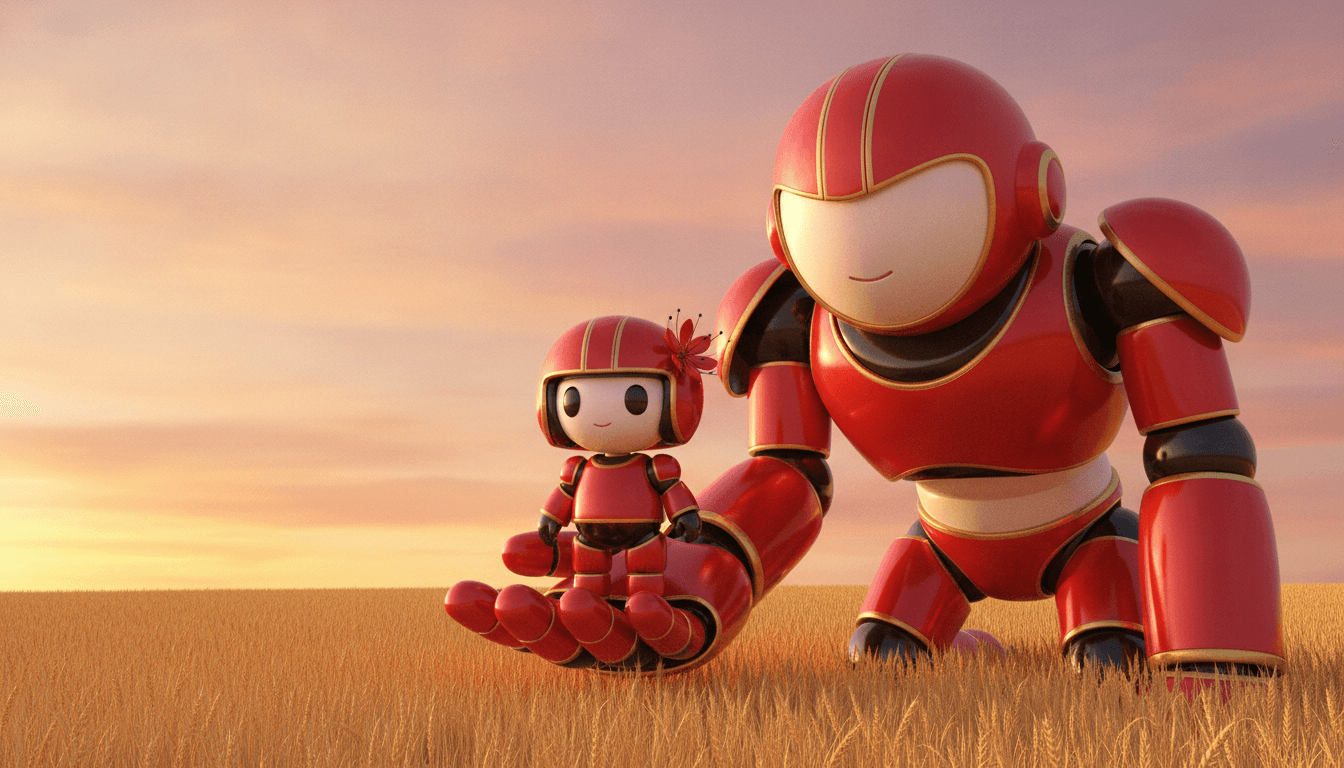
Same plates, same gold trim, same black joints, at two very different sizes.
Fine Joints, Held on Model
The character sheet is plain on purpose, so you can see the design: crimson helmet with gold seams, black bob, spider-lily ornament, the same plates and joints in every square. The four scenes put her on a rooftop, in the snow, under an umbrella and close up on one jointed hand, and the finish holds in every light.
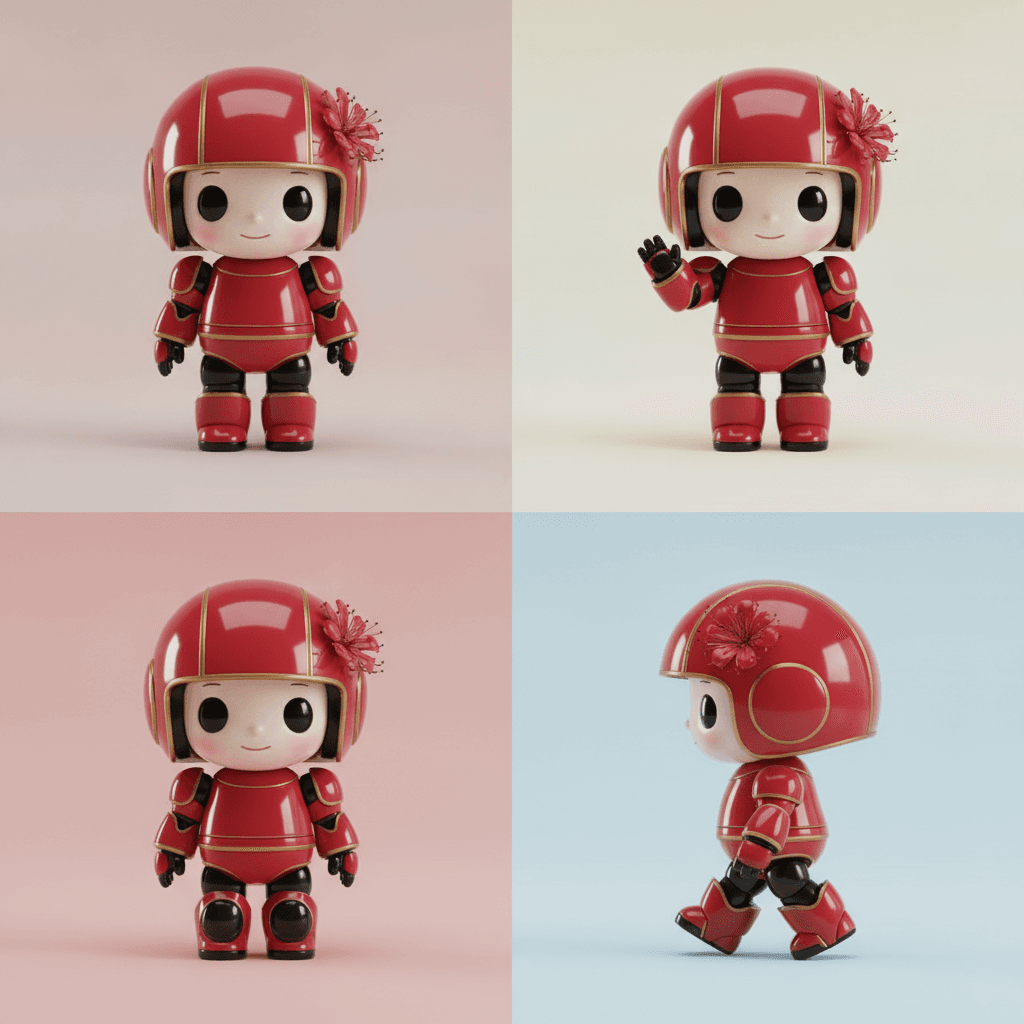
One robot, four squares
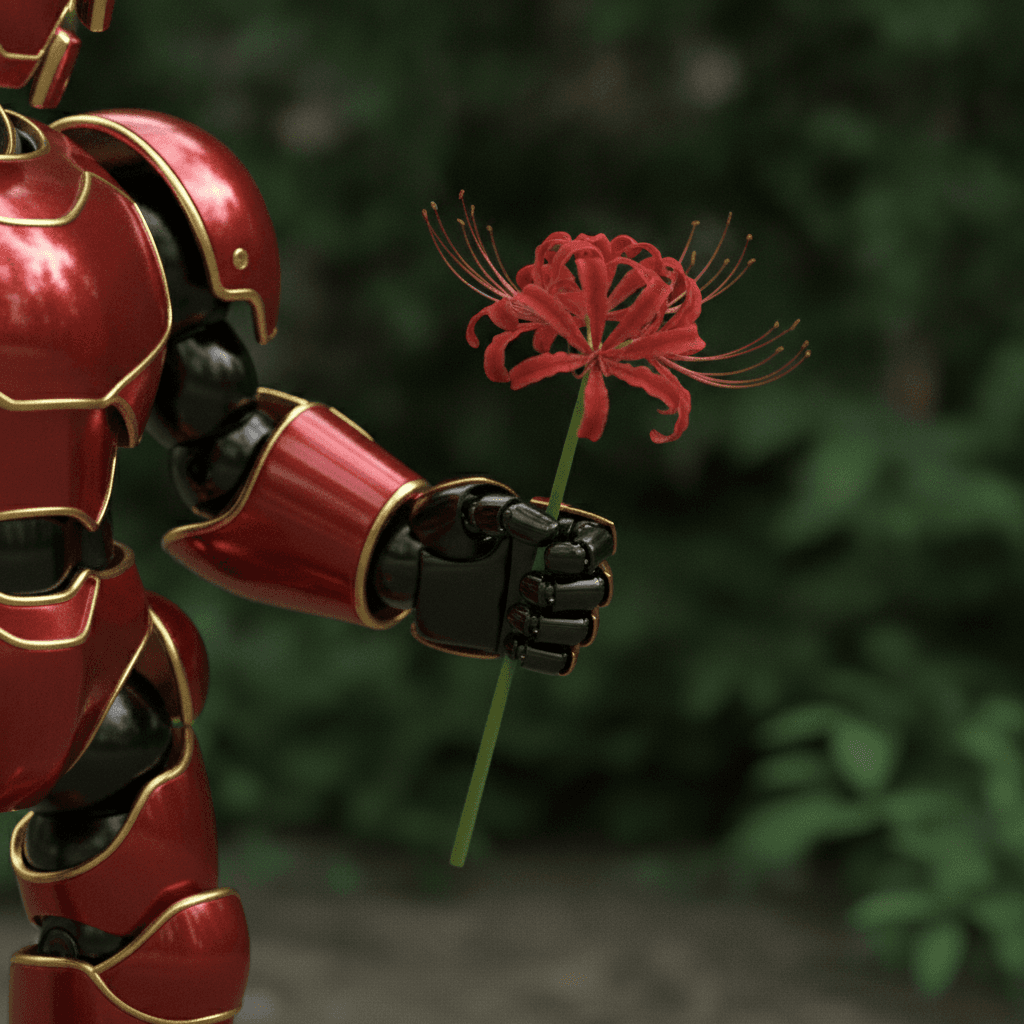
Every finger jointed
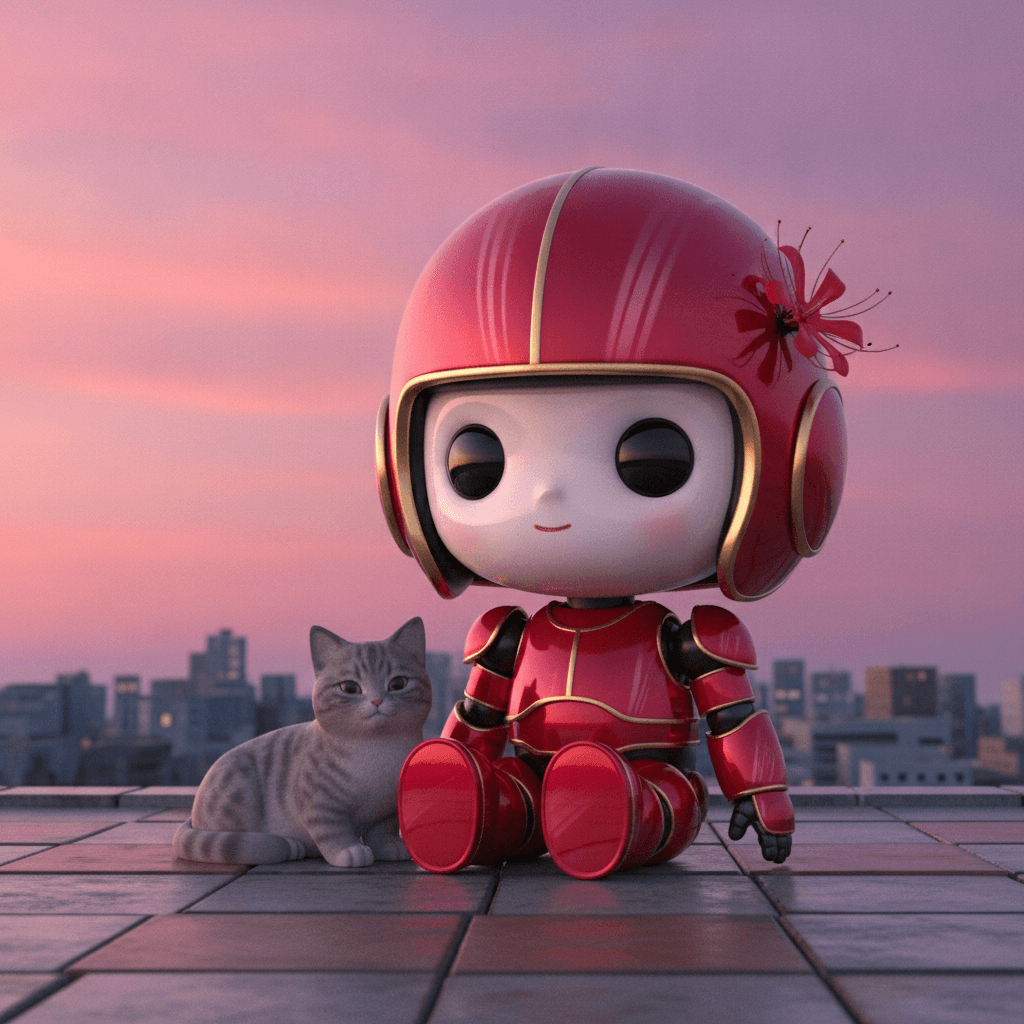
The sky on her helmet
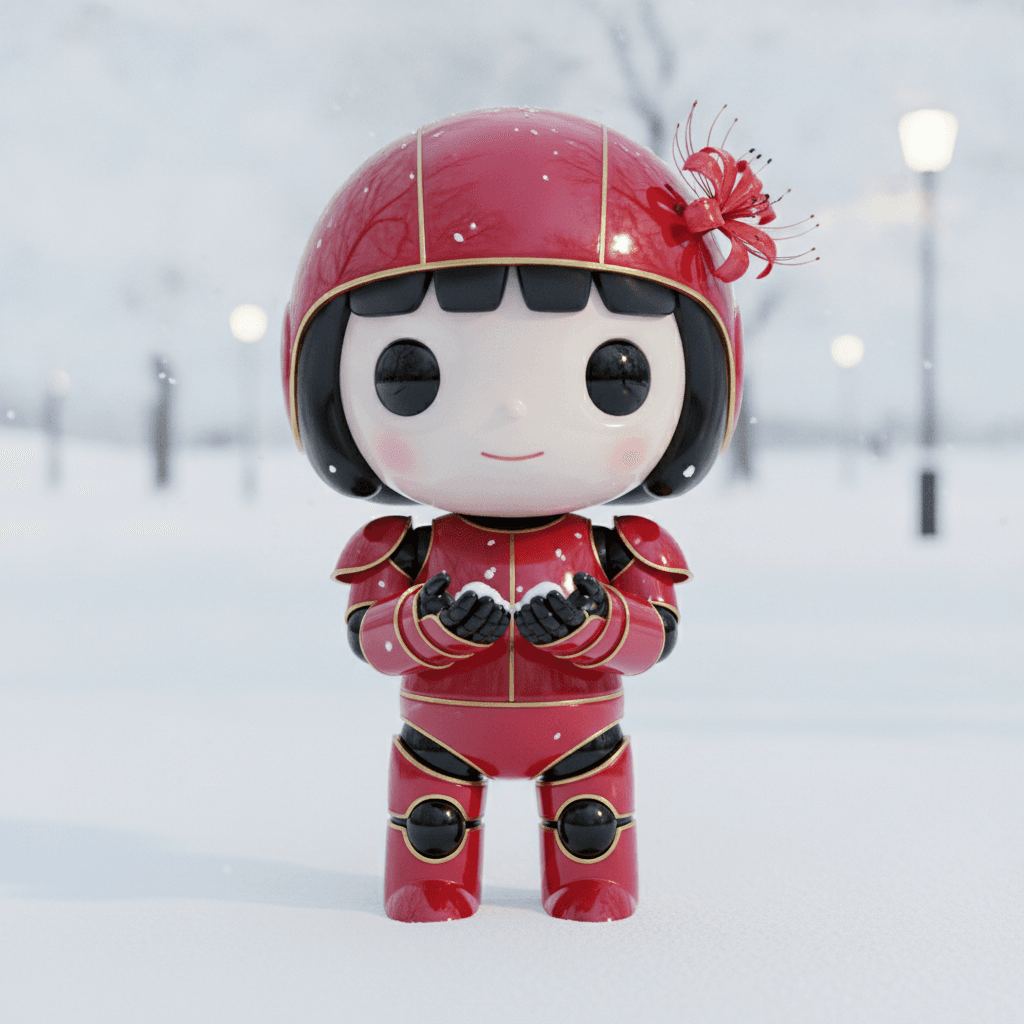
First snow
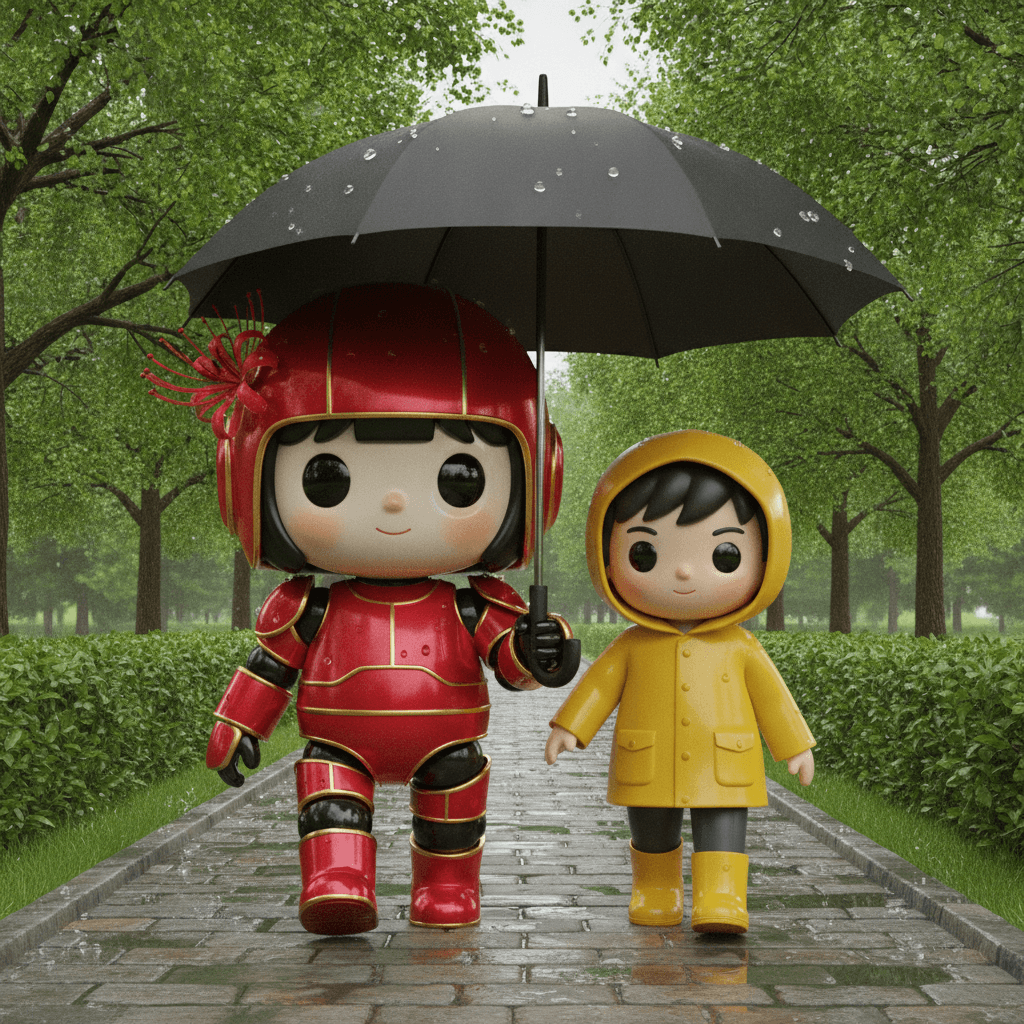
Room under the umbrella
Making Whole Mecha Picture Books
What is useful in a book drawn this way and where the limits are, in the order you are likely to meet them.
One robot on every page
A mecha hero is easy to keep on model because it is all fixed shapes: helmet, plates, trim lines, joints. Describe them once, or save the character in the Character Library with up to fourteen reference images. Characters made from an uploaded photo stay private.
Write who built it
Nothing in this style is born. Every hero is a made thing, so the most useful line you can write is who made it and what for. A robot built to water a garden and a robot built to carry a lantern stand differently, hold different things and look at the page differently.
Say what it carries
The brief’s own sample holds a giant mechanical scythe. None of our pages did, because each prompt said what the robot held instead: a watering can, a lantern, an umbrella, a screwdriver. Name the object on every page and that is what you get.
People come out as toys too
The brief refuses photorealistic humans, so the people who share a page with your robot come out as stylised 3D figures. On our pages the boy in the raincoat looks like a vinyl toy and the girl inventor like an animated-film character. If you want real-looking people next to a robot, this is the wrong style.
Mecha without the battles
Mecha usually means giant robots and fights. Nothing in this brief asks for a fight, and every page here is a garden, a workshop, a rooftop, a wheat field or a path in the rain. Write the story as care, repair and small adventures and the armour stays a costume, not a weapon.
A whole book from a sentence
Describe the story in a sentence and C2Story writes it, splits it into pages and draws every page to the same brief, in English, Chinese, Japanese, Spanish, French and more. Read online, share a link, or buy the PDF download as the handoff to your printer. Pages are licensed for commercial use under the terms of service.
Other styles with a made-by-hand or rendered finish: for family animated-film 3D, Pixar-style 3D picture books; for a world sewn from felt and wool, felt puppet picture books; for armour and swords in painted 2D, heroic fantasy cel picture books; for robots as a story theme in any style, robot-themed storybooks; and for every style side by side, the children’s book illustration styles gallery.
Questions About Mecha Picture Books
Explore More Story Ideas
Discover more styles, tools, and story types
Knight Stories
Brave knights and castle quests
Explore
Sketchbook Concept Picture Books
Loose pen and rustic washes on grainy paper, fantasy characters with an attitude
Explore
Bedtime Stories for Anxious Kids
Calming tales that soothe worries
Explore
Storybee Alternative
More styles & features
ExploreBuild a Small Robot, Then Give It Something to Do
A garden to water, a lantern to carry, a tin bird to mend. Describe your story once and every page keeps the same crimson lacquer, the same gold trim and the same fine joints.
Mecha Picture Books: Lacquer, Joints and a Robot Somebody Made
Mecha picture books rest on a brief that asks for shine. C2Story runs seventy-eight hand-drawn style briefs, each a short written record of a palette, a light, a line weight and a few refusals. Seventeen of them refuse gloss by name; only this one asks for it. It is also the only brief that calls its light reflective, the only one that mentions a joint, and the only one whose hero is a machine.
The look is mecha illustration in the shape of a designer toy: a high-gloss android with vivid crimson armour plating, thin gold trim, a ceramic-white face and deep gloss-black articulated joints, under sharp reflective studio highlights. It refuses matte rough surfaces, low-detail modelling, flat 2D art and photorealistic humans, so the surface stays lacquered, the detail stays fine and any people on the page come out toy-like too.
This mecha character art suits gentle stories about made things: a robot built to water a garden, a robot a child keeps repairing, a toy that goes out in the rain to bring somebody home, a giant robot nobody has switched on for years. Write who built it and what for, and say what it carries on every page. Save your robot in the Character Library with up to fourteen reference images and it stays on model. It is weaker for soft watercolour bedtime books, real-looking people and anything that should feel hand-drawn.
The choice between neighbours is clear. Take Pixar-style 3D for animated-movie characters, felt puppet for a world sewn from fabric, and heroic fantasy cel for armour in painted 2D. Take this robot design style for hard, glossy, jointed characters with a shine on every curve. Type your idea in the box at the top of the page and C2Story writes the story, splits it into pages and draws every page to the same brief, with the paid PDF download as the handoff to your printer.