
Sketchbook Concept Picture BooksHeroes Who Would Rather Not
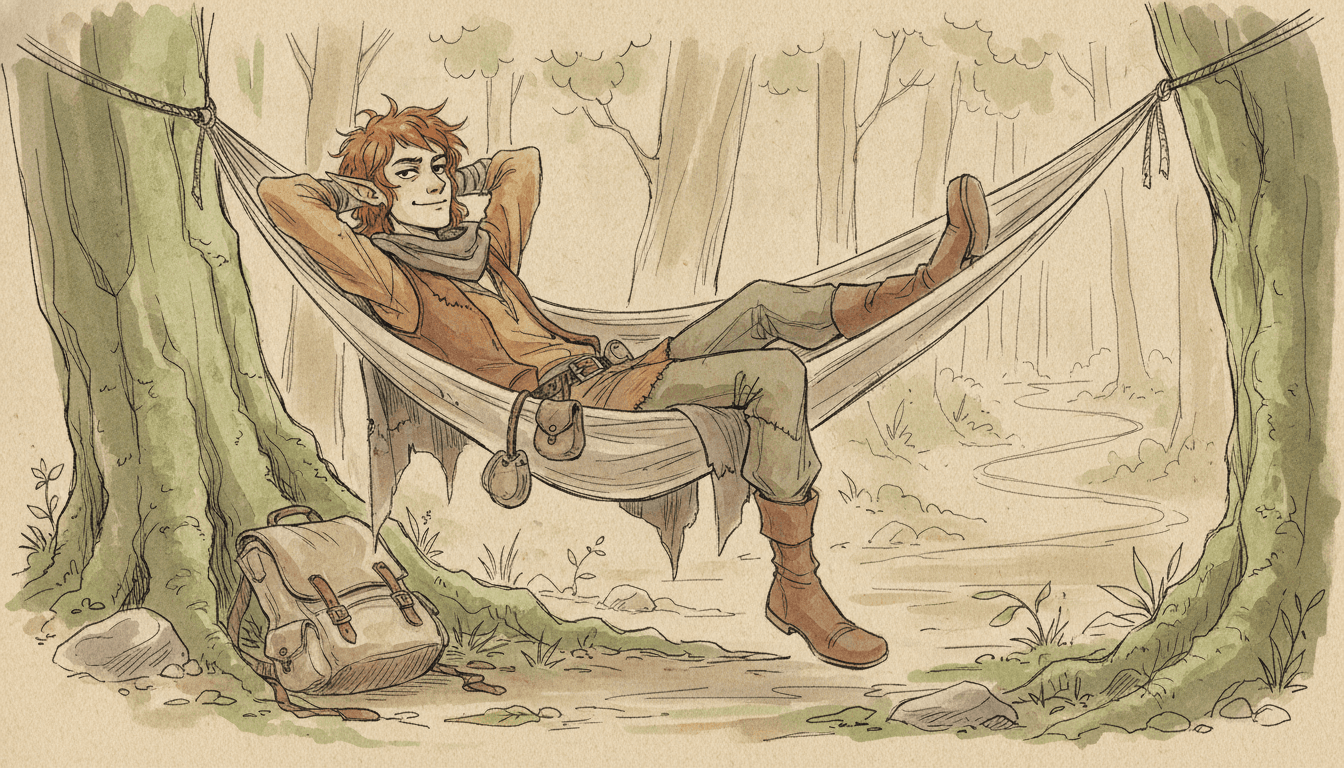
The quest can wait; the hammock is right here. Sketchbook concept picture books are drawn like the working pages of a fantasy art book: a loose, wandering pen, rustic watercolour washes soaking into grainy paper, costumes worked out layer by layer, and characters with an attitude of their own.
- Loose pen line, washes on grainy paper
- Layered, lived-in fantasy costume
- Moss green, faded rust, parchment tan
- Free credits by request, no card
50,000+
Stories Created
10,000+
Active Creators
50+
Art Styles
4.9/5
User Rating
What Makes Concept Sketchbook Art Different
Every style here is a written brief: a palette, a light, a line weight and a short list of refusals. Four things in this one decide the look, and three of them appear in no other brief among the seventy-eight.
A character with a temperament
Every style in C2Story is a short written brief. Seventy-seven of the seventy-eight describe how things are drawn. This one also says who the character is: “a lazy rebellious attitude”, and a sample of a rogue lounging with a defiant smirk. Other briefs use words like moody or playful, but they mean the light or the energy of the line. This is the only one that hands its cast a mood of their own.
A study, not a finished painting
It is the only brief that asks for a character-sheet, art-book look, the only one that calls its sample a study, and the only one that asks for a lived-in sketch. The pages read as working drawings that someone stopped before polishing. Its line weight is the only one of the seventy-eight described as wandering: loose, fine, a little broken, never an even outline.
Costume as design
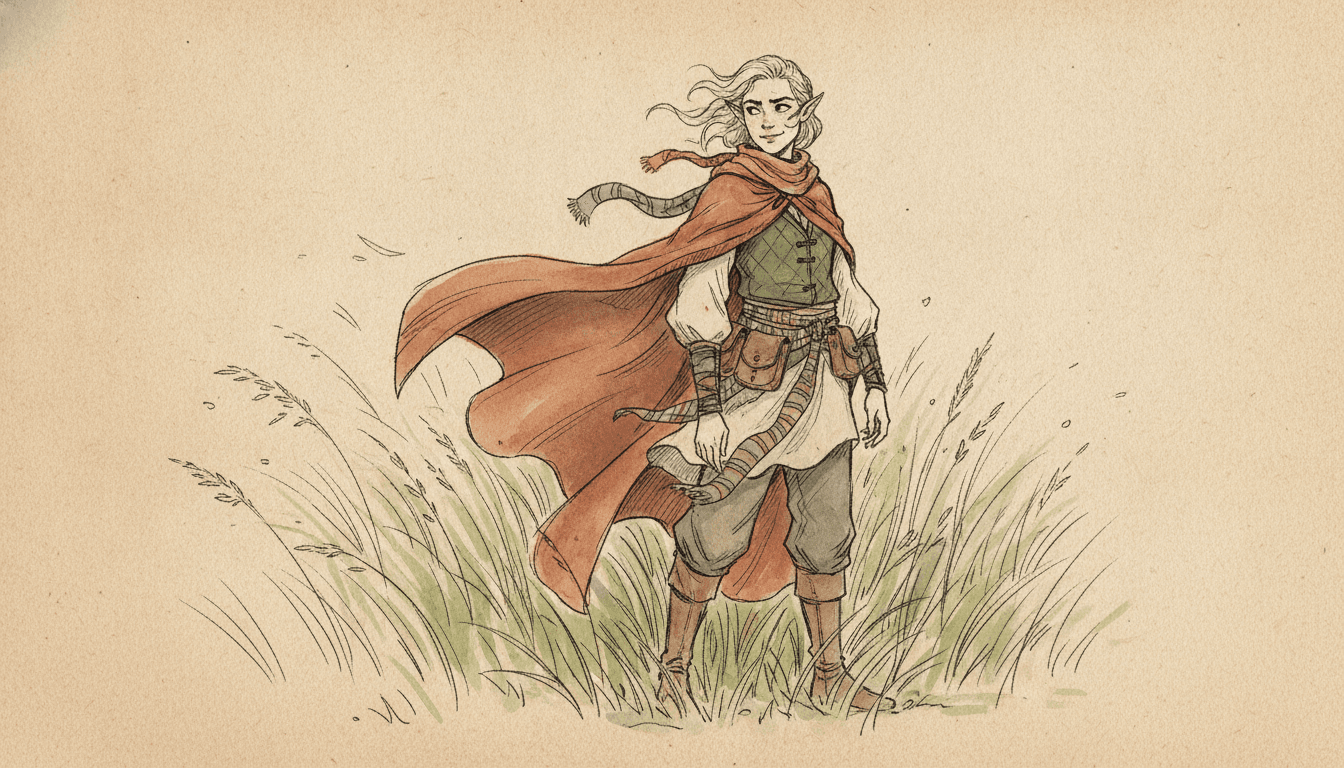
No other brief names costume design. Here the clothes are layered on purpose: a scarf over a vest over a long shirt, a sash with pouches, patched sleeves, a cloak, soft boots. The style draws each layer separately, which is what makes a traveller look as if they have been on the road a while, and gives every character three or four things a reader can recognise them by.
Rustic washes on grainy paper
Pen with watercolour is common in the library; seven briefs pair them. This one keeps its washes rustic and muted, in moss green, faded rust and parchment tan, and lets the grain of the paper show through. It refuses clean vector art, flat digital fills, generic cute faces and slick photoreal rendering, so nothing on the page is smooth.
What “Avoid Generic Cute Faces” Looks Like
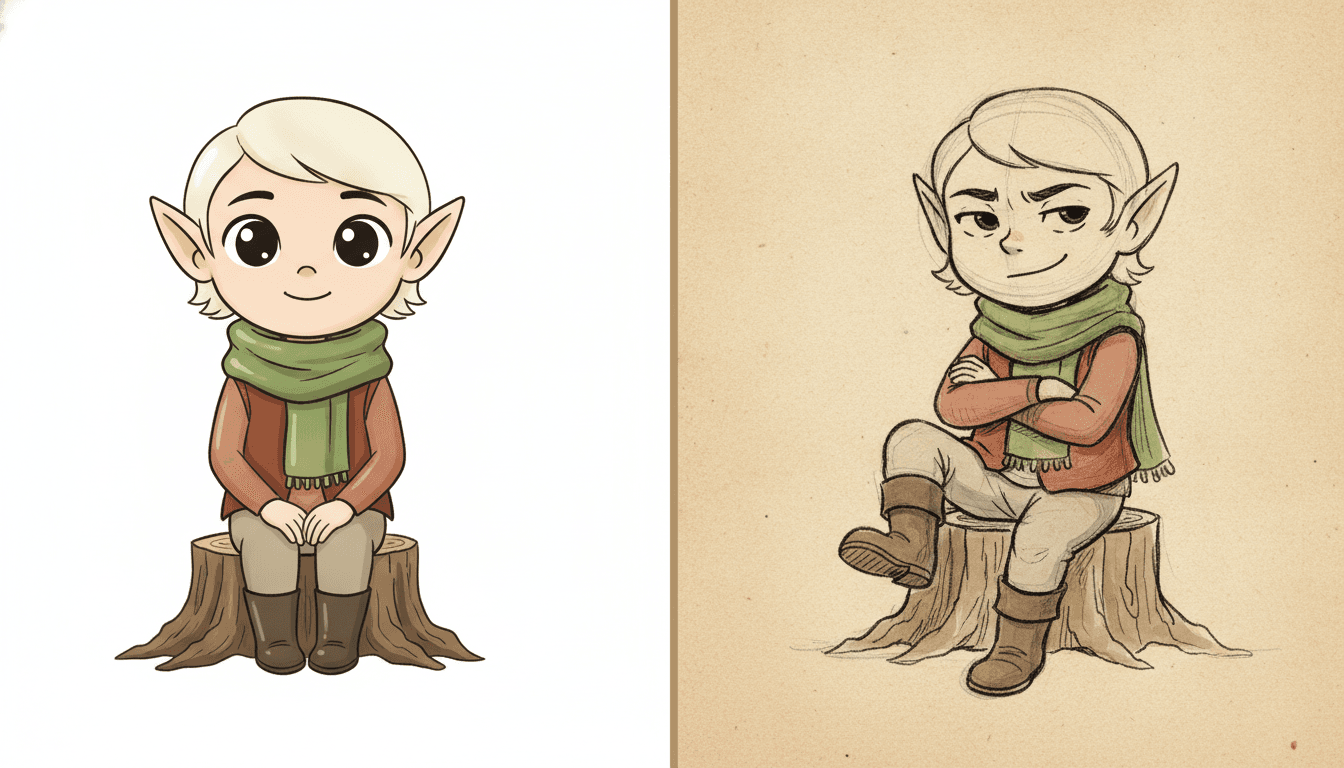
Look at one small traveller twice. Same pointed ears, same green scarf, same rust vest, same tree stump. On the left he is a clean cartoon on white: huge round shiny eyes, a tiny smile, hands folded neatly in his lap. He is sweet, and he could be anybody.
On the right he is slouched back, arms folded, one boot up on the stump, one eyebrow down and a smirk going sideways. The line is loose, the wash is thin, the paper shows through, and you can still see the faint circle someone drew to place his head. Nothing about his clothes changed. What changed is that he now has an opinion. That is what this fantasy sketch style asks for on every page, and the left half is what it refuses.
Its four refusals all push the page away from anything smooth.
Write What They Won’t Do
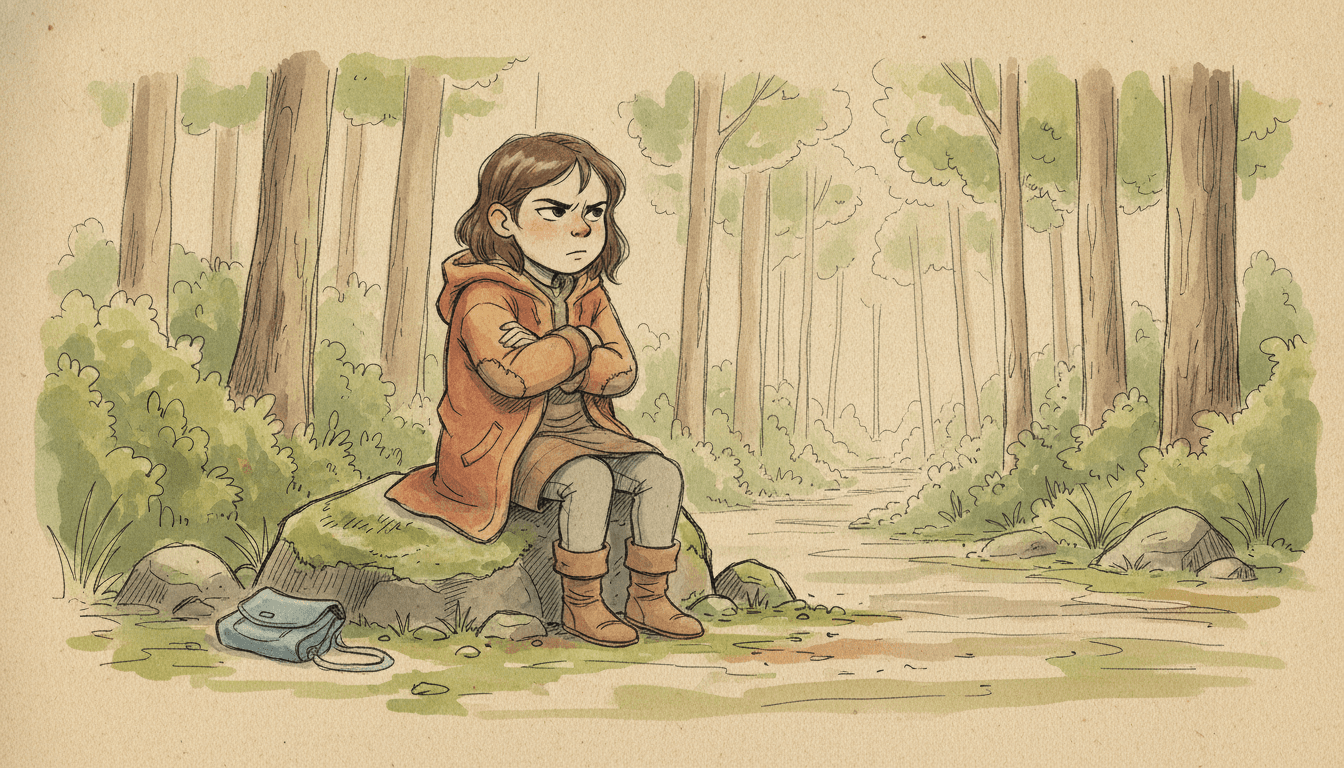
The girl beside this paragraph has sat down on a rock in the middle of the path, folded her arms and decided she is not going any further. Her satchel is on the ground where she dropped it. The path carries on without her. You know exactly who she is, and nobody had to explain it.
That is where the writing goes in this style. The brief already gives its characters a lazy, rebellious streak and a sample who is lounging when he should be doing something. It draws an unwilling body very well: slumped, sprawled, arms folded, a boot up, eyes closed on purpose. So give it a refusal on every page. “He would not get out of the hammock.” “She sat down and would not move.” “Grandmother would not come inside.” Then say what they are refusing, because the thing they are ignoring, the path, the hill, the rain, is the rest of the picture.
In a book you do not write image prompts; C2Story writes them from your story, and the moment you choose to describe is the strongest thing it has to go on. A page that says “she was tired” gets a figure; a page that says “she would not take one more step” gets a character.
From One Sentence to Sketchbook Concept Picture Books
You pick the look once. The brief is then applied to every page, so the line, the washes and the paper never drift.
Describe the cast and their moods
Write a sentence or two about who is in the story and what happens, and find the places where somebody digs their heels in. Give each character a layered costume and say whether their ears are pointed.
Choose Fantasy Sketchbook Concept
Pick the style from the Styles Library. From then on every page uses the same loose pen, the same moss and rust washes and the same grainy tan paper.
Get a whole book
C2Story writes the story, splits it into pages and illustrates each one. Regenerate any page you want to change without touching the rest, read it online, share it, or buy the PDF download to hand to a printer.
This Style and Its Three Nearest Neighbours
One is concept art finished instead of sketched, one shares the fantasy wardrobe, and one borrows from the same animation tradition with the opposite face. Here is what each actually asks for.
Fantasy Sketchbook Concept
The style on this page
Fantasy animation concept sketch, loose fine pen ink lines, rustic watercolour washes with grainy paper texture, pointed elf ears and a lazy rebellious attitude, layered exotic costume design and an indie art-book character-sheet aesthetic, every scene rendered as a lived-in concept sketch. It refuses clean vector art, flat digital fills, generic cute faces and slick photoreal rendering.
2D Visual Development
Also concept art, finished instead of sketched
Crisp geometric silhouettes, bold flat colour blocks and polished concept-art confidence. It asks for exactly what this brief refuses: clean edges and flat fills. Both design a character before the story starts. Visual development settles the shape and one prop; the sketchbook concept settles the attitude and the costume, and leaves the drawing loose.
Ornate Dark Fantasy
Also fantasy, also dressed for it
Gorgeously dressed figures in jewel tones, intricate decoration and a candlelit gothic mood. It shares this brief’s love of clothes and its fantasy setting, and nothing else. Dark fantasy is finished, ornamented and lit; the sketchbook concept is daylight, muted washes and a scarf that has been patched twice.
Gouache Animation Storybook
The other brief that borrows from concept art
Thick impasto gouache, snowy cinematic light and clear, innocent big eyes, with what its brief calls concept-art richness. It borrows the same animation tradition and points it the other way: wide-eyed and sincere, painted rather than drawn. If your main character is wonder-struck, take that one. If they are rolling their eyes, take this.
Story Ideas for Sketchbook Concept Picture Books
Each idea is built on somebody who would rather not, with somewhere outdoors to refuse it in, which is what this brief draws best.
The Hero Who Took a Nap
The village picks a young elf to go on the great quest. He gets as far as the first good hammock, and the quest has to come to him.
Not One More Step
A girl sits down on a rock halfway up the forest path and refuses to go on, and one by one the creatures of the wood come to find out why.
Grandmother Will Not Come Inside
It is raining, everyone is calling her in, and the old elf on the porch has a cup of tea and a perfectly good view. A story about doing things your own way at any age.
The Apprentice Who Asked Why
A wizard’s apprentice will not do a single chore until someone explains what it is for, and the explanations get stranger as the book goes on.
The Cloak That Was Too Big
A small traveller inherits a cloak with too many pockets, and each pocket holds something left by someone who wore it before.
One Apple a Day
A lazy thief sits on the same fence every afternoon eating an apple from the same orchard, until the day the farmer sits down next to him.
What Rough Concept Illustration Looks Like Across a Book
Pages generated to this one brief, with nothing retouched afterwards. Two honest notes: the traveller on the fence was meant to be small in a wide valley and came back much closer, and his apple is a brighter red than the muted palette allows. The hill-path page above asked for a teenage boy refusing to get up and drew a grey-haired grown man instead.
Generic cute, then a person
Every layer drawn
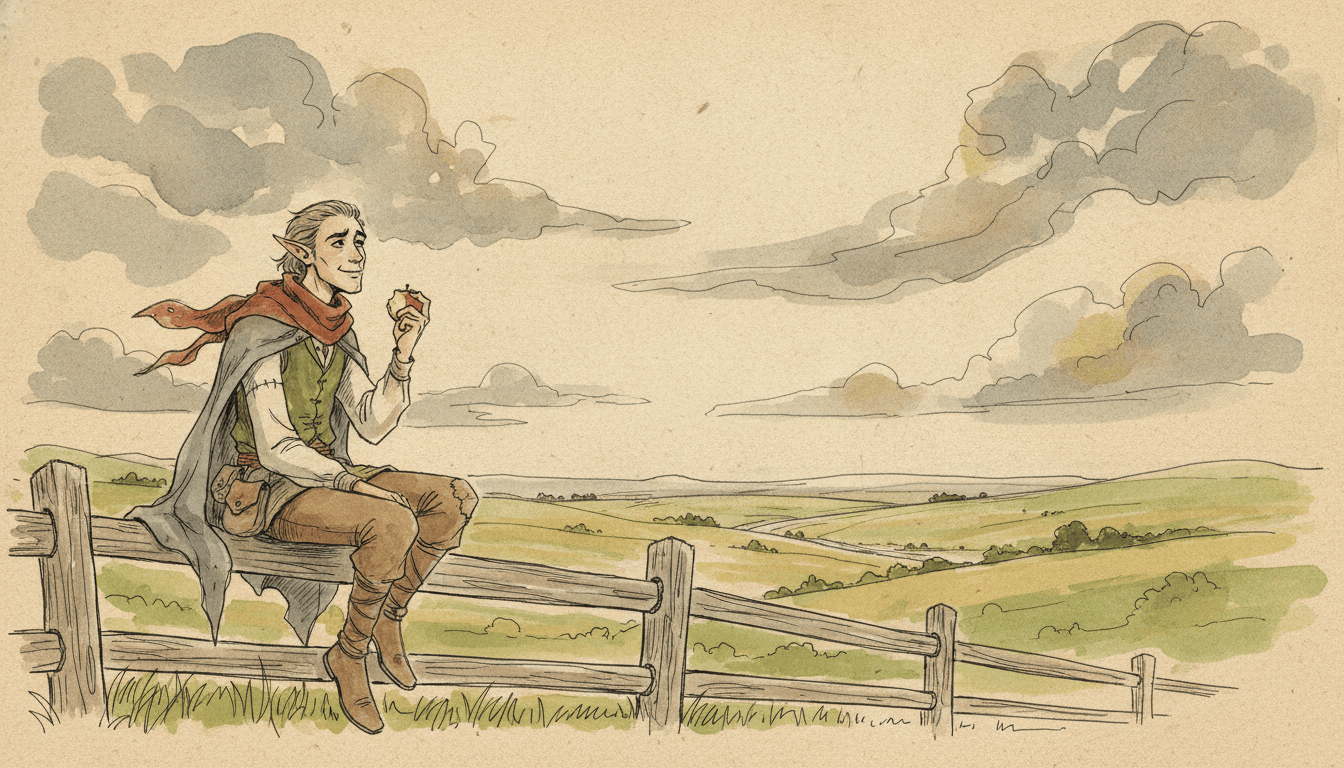
An apple on the fence
A Lived-In Cast, Held Steady
Here is where the design held and where it wandered. The red-haired traveller keeps his hair, scarf, vest, sash and boots through four views, but picked up a brown cloak nobody asked for in three of them. The grandmother was meant to have her feet up on the barrel and is sitting on it instead. The stump and the two children came back as vignettes on bare paper rather than filling the square, which suits a sketchbook study and would need a fuller description on a real page.
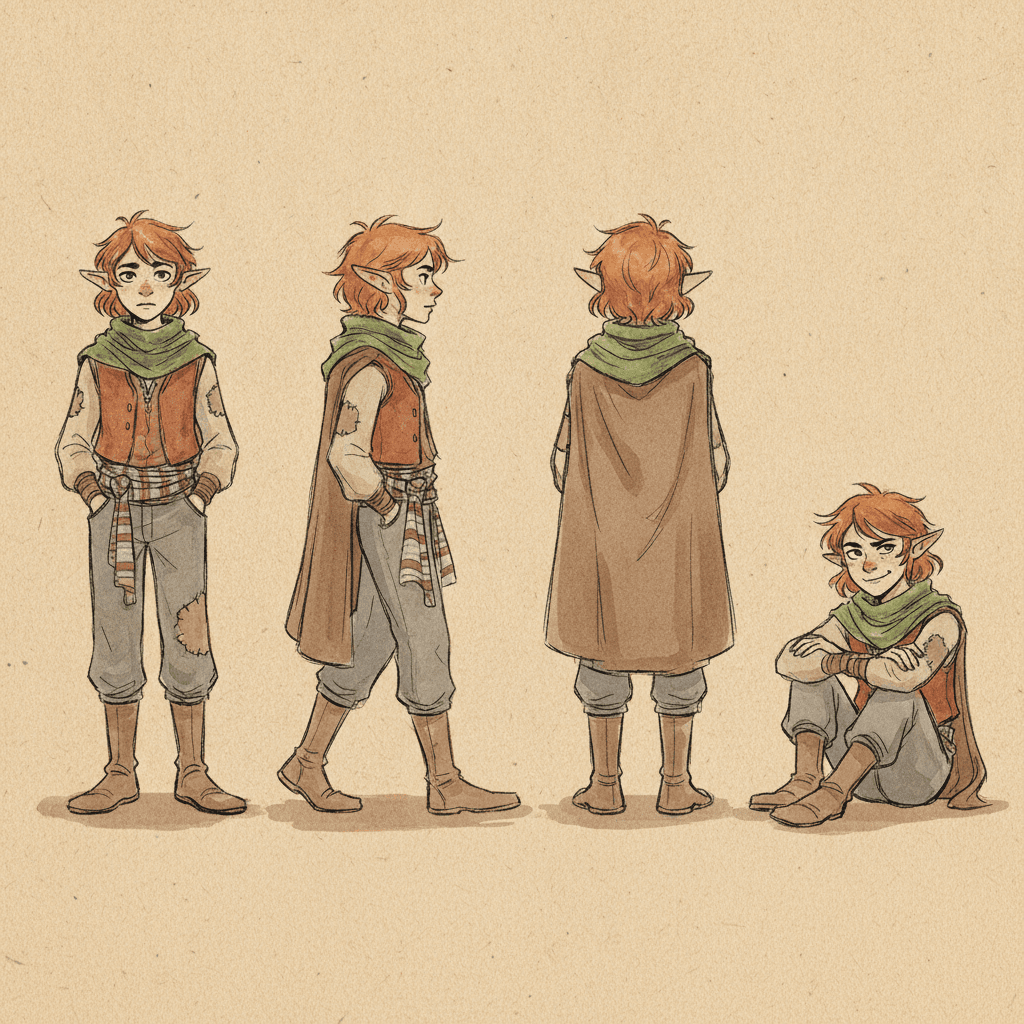
One character, four views
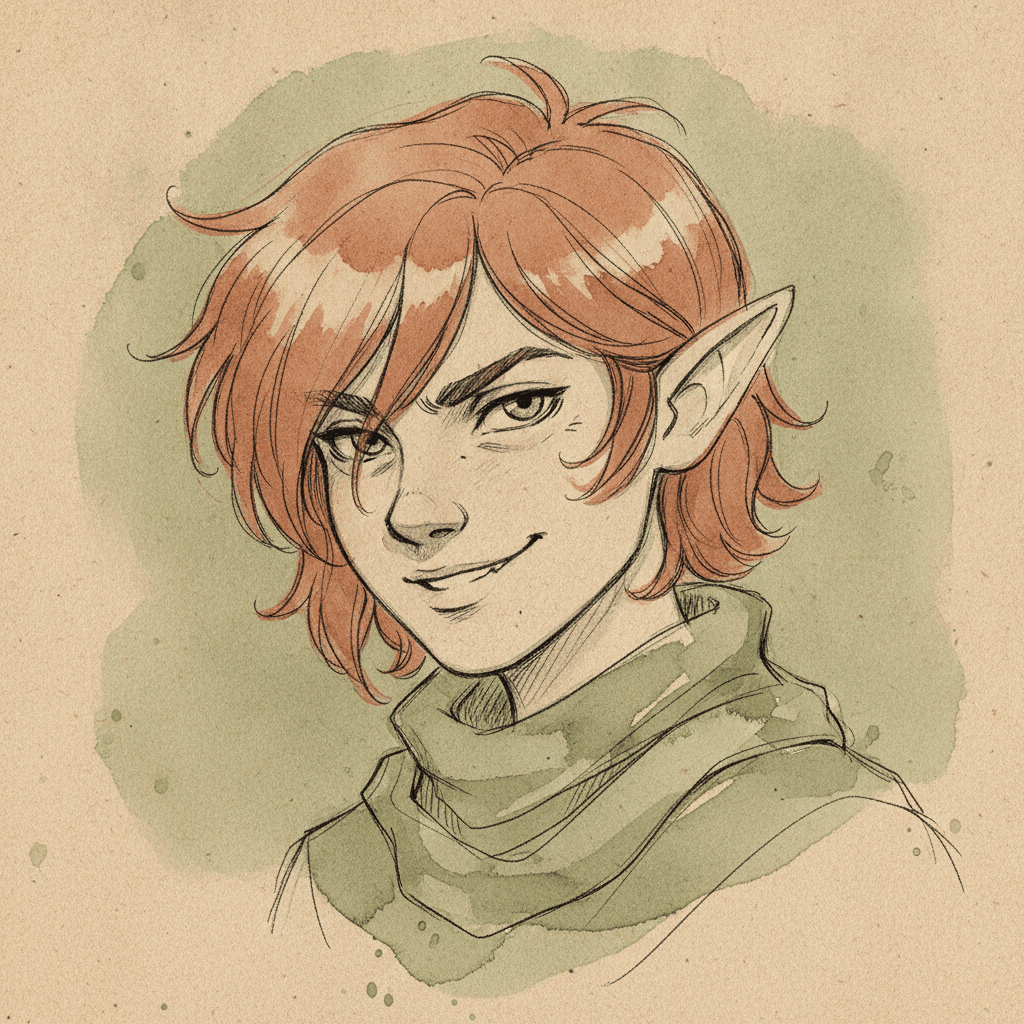
The smirk, up close
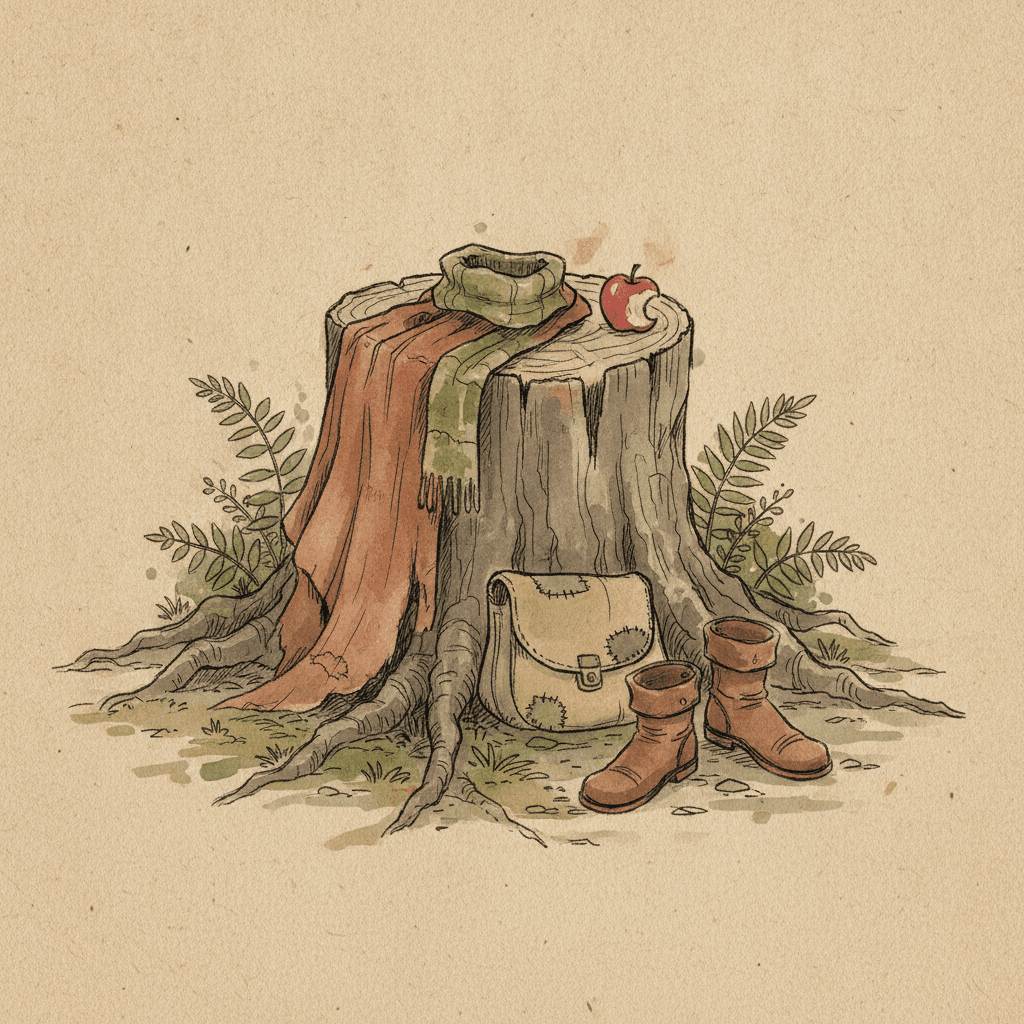
Left on a stump
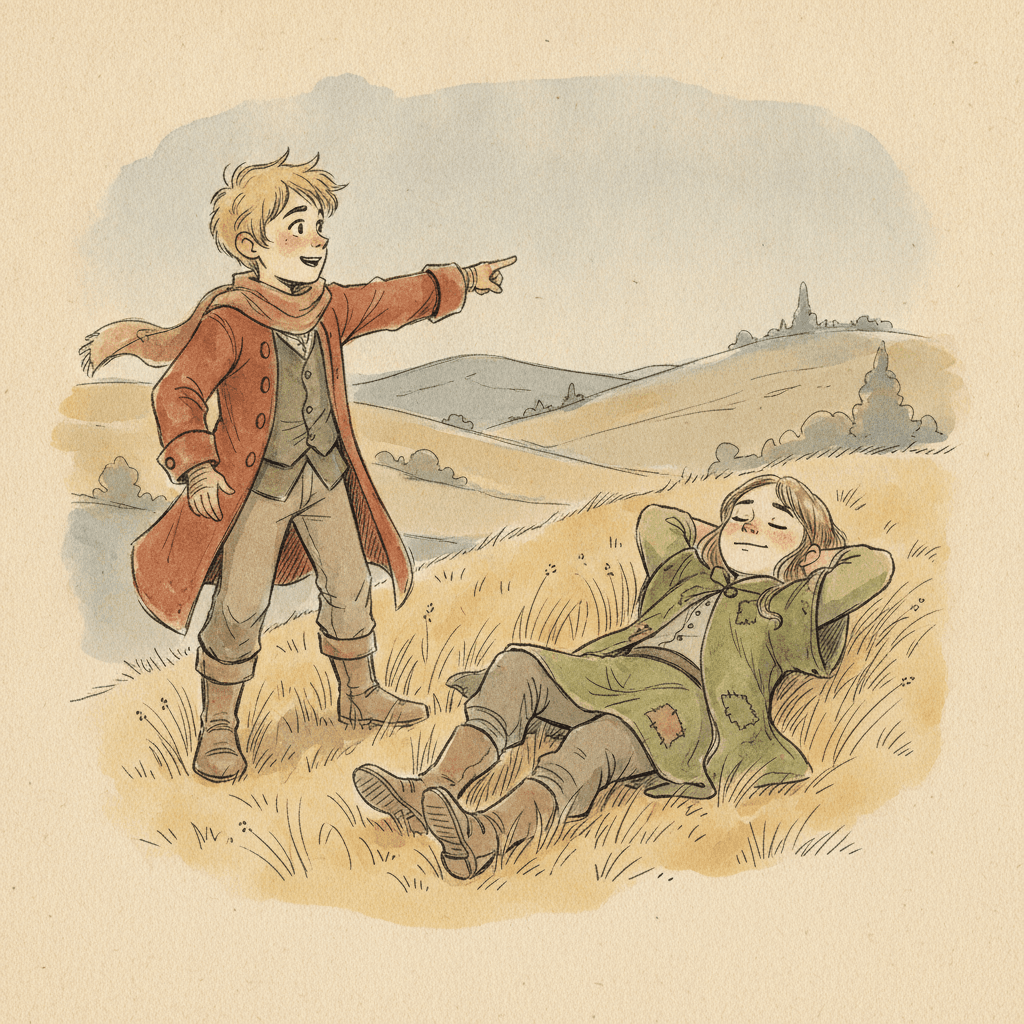
One wants to go
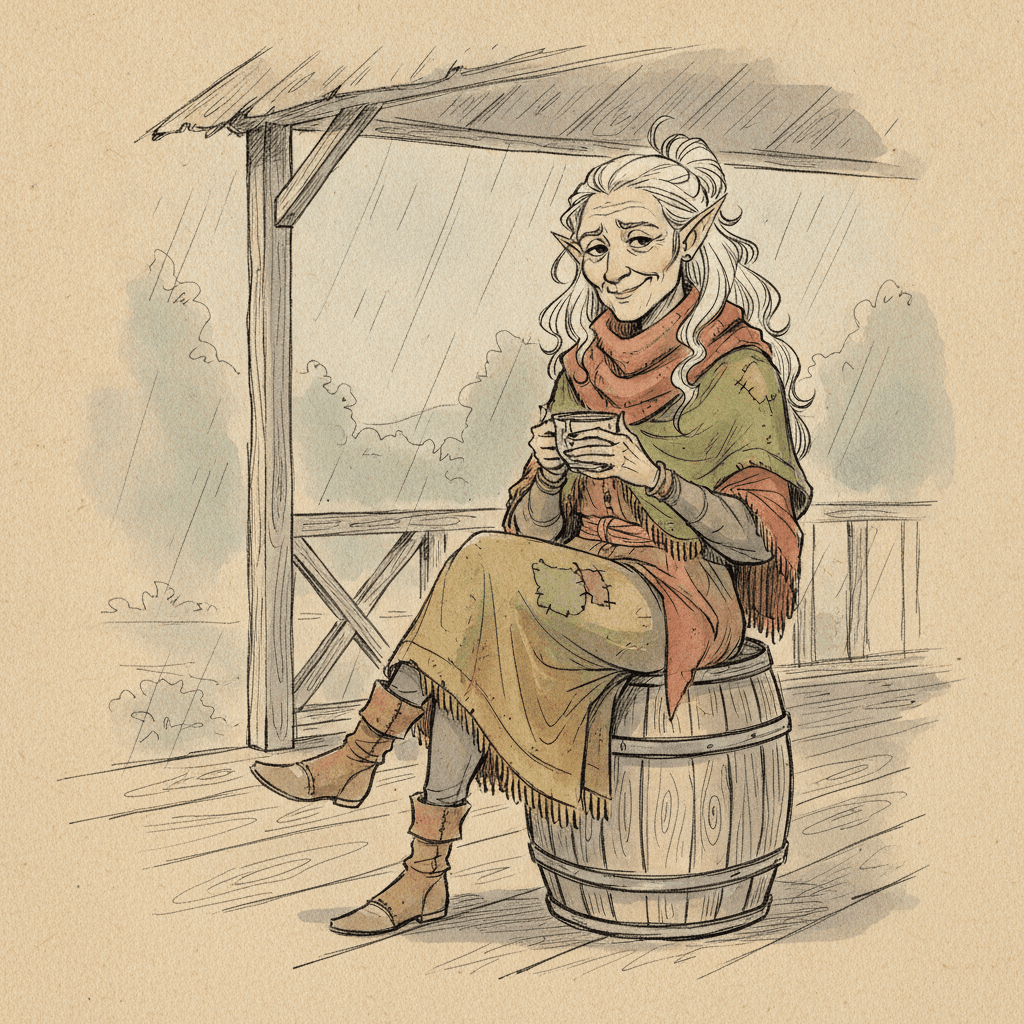
Staying out of the rain
Making Whole Sketchbook Concept Picture Books
What is useful in a book drawn this way and where the limits are, in the order you are likely to meet them.
One character, kept on model
Save each character in the Character Library with up to fourteen reference images and a short written description. A layered costume helps: the traveller on this page kept his red hair, green scarf, rust vest, striped sash and boots across four views. Inside a project you can also generate a character sheet on the Design tab. Characters made from an uploaded photo stay private to your account.
Write what they won’t do
The pictures are drawn from what you write, and this brief already knows its characters are a little lazy and a little rebellious. Give it something to refuse. “She sat down and would not move” gives it a pose, a face and a reason. Every strong page here is a refusal: a hammock instead of a quest, a rock instead of a path, a porch instead of indoors.
Ears are part of the brief
It is the only brief in the library that names pointed elf ears, so characters lean that way unless you say otherwise. If your hero is human, say so in their description and mention their ears. The two children on this page were described with round human ears and neither came back pointed; every character described as an elf got long pointed ones.
Daylight, muted, never glossy
The light is soft sketchbook daylight with no strong shadow, and the palette is moss, rust and tan. That suits a road story, a forest, a porch in the rain. It is the wrong brief for a neon city, a bright birthday party or a scene that needs real darkness; for night and candlelight, look at dark fantasy instead.
Fantasy by default
The brief is written for fantasy, so the world arrives with cloaks, satchels, boots, hammocks and hill paths. A modern story can still use it, but expect your characters to look as if they have just come in off a long walk. Every story here was built around travellers, and that is where it is strongest.
A whole book from a sentence
Describe the story in a sentence and C2Story writes it, splits it into pages and draws every page to the same brief, in English, Chinese, Japanese, Spanish, French and more. Story text sits beside the picture, not inside it. Read online, share a link, or buy the PDF download as the handoff to your printer. Pages are licensed for commercial use under the terms of service.
Other fantasy and sketch styles, each built on a different idea: for polished concept art with flat colour, visdev 2D picture books; for jewel tones and candlelight, dark fantasy picture books; for impasto paint and wide eyes, gouache picture books; for legendary beasts in ink, mythic bestiary picture books; and for a rough line drawn at the speed of a joke, gag manga picture books.
Questions About Sketchbook Concept Picture Books
Explore More Story Ideas
Discover more styles, tools, and story types
Safari Stories
Jeep rides, giraffes, elephants and lions on the savanna
Explore
Ligne Claire Picture Books
One even ink line & flat unshaded colour
Explore
Bedtime Stories for Anxious Kids
Calming tales that soothe worries
Explore
Storybee Alternative
More styles & features
ExploreSketchbook Concept Picture Books: Loose Pen, Lived-In Characters
Sketchbook concept picture books rest on a brief that knows who its characters are. C2Story runs seventy-eight hand-drawn style briefs, each a short written record of a palette, a light, a line weight and a few refusals. The Fantasy Sketchbook Concept brief is the only one that gives its cast a temperament, the only one that asks for a character-sheet, art-book look, the only one that names costume design, and the only one whose line is described as wandering.
The look is concept sketchbook art for a picture book: a loose, fine pen line, rustic watercolour washes in moss green, faded rust and parchment tan, the grain of rough paper showing through, layered fantasy costume and soft daylight. It refuses clean vector art, flat digital fills, generic cute faces and slick photoreal rendering.
This rough concept illustration suits fantasy stories about characters with a will of their own: a hero who would rather nap, a girl who will not walk another step, a grandmother who will not come in from the porch. Write what each character refuses and what they are ignoring, describe their costume in layers, and say whether their ears are pointed. It is a weaker fit for bright party scenes, real darkness and very young readers. Characters stay on model through the Character Library, with up to fourteen reference images each.
The choice between neighbours is clear. Take visdev 2D for polished concept art in flat colour, dark fantasy for jewel tones and candlelight, and the gouache animation storybook for wide-eyed wonder. Take this style when the drawing should stay a sketch and the hero should have an attitude. Describe the story in a sentence and C2Story writes it, splits it into pages and draws every page to the same brief, with the paid PDF download as the handoff to your printer.