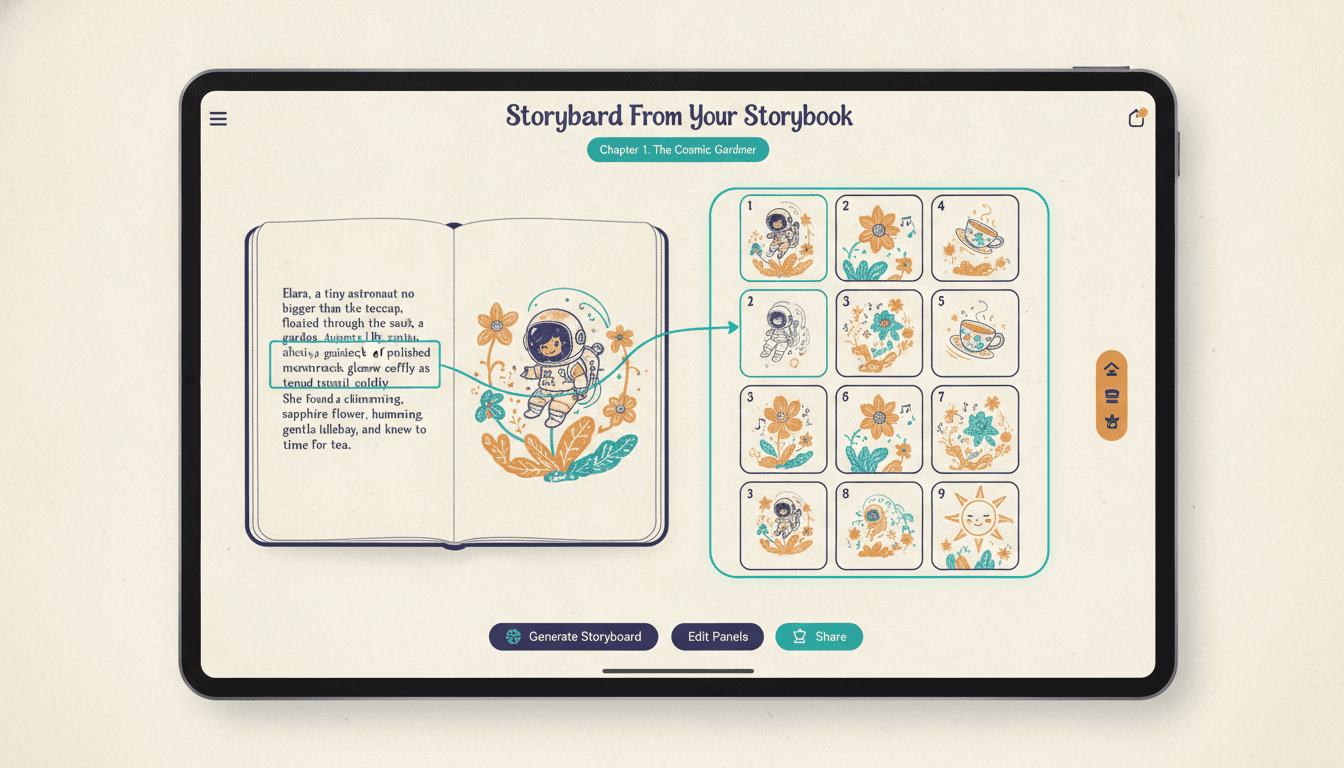
Storyboard From Your StorybookThe Board Is a Map of the Text
Your chapter already exists, so the board should not be invented — it should be cut from your own sentences. Every shot owns a real, verbatim chunk of the text, the chapter is covered edge to edge, and you rearrange the whole thing before a single picture is paid for.
- Every shot maps to verbatim text — nothing dropped, nothing reworded
- Merge two shots, split one in half, re-board finer or coarser
- A blocking sketch and a brief before any illustration is generated
- Edit the chapter later and keep the board you already directed
250,000+
Stories Created
80,000+
Characters Saved
45+
Art Styles
4.9/5
Creator Rating
How to Make a Storyboard From Your Storybook
Three steps, and the first two are entirely text — which is exactly why this is worth doing before anything renders.
Bring the Chapter
A finished picture book, a manuscript, a chapter of a novel — anything with prose in it. It is cut into atomic sentence segments first, by us, before the model reads a word of it.
2,400 words → 118 sentence segments
The Chapter Becomes Shots
Consecutive segments are grouped into numbered shots that tile the chapter with no gaps. Titles, cast, locations and hours — no illustration briefs yet, so the shape is still cheap to argue with.
118 segments → 14 shots, covering all 118
Direct the Shots You Kept
Merge, split and re-cut until the board reads right, then each confirmed shot is directed into a brief, a blocking sketch and a reader caption. Illustrations come after that, not before.
shot 6 → focus · brief · sketch · caption
Why the briefs deliberately arrive late
Splitting a chapter and directing a shot are two separate phases because they fail differently. A bad split is a structural mistake — a scene cut in the wrong place, two beats crammed into one panel — and it is visible in ten seconds when all you are reading is fourteen titles and their text. A bad brief is a local mistake, and fixing one is a small job. If the briefs were written during the split you would be reading fourteen paragraphs of camera direction while trying to judge a shape, and you would approve the shape by accident. So the first pass hands you a skeleton on purpose. If you want the pictures immediately and the structure decided for you, the AI picture book maker is the faster door.
Every Shot Owns a Real Piece of Your Book
A board generated from a summary is a guess with panel numbers on it. A board cut from your sentences is something you can check.
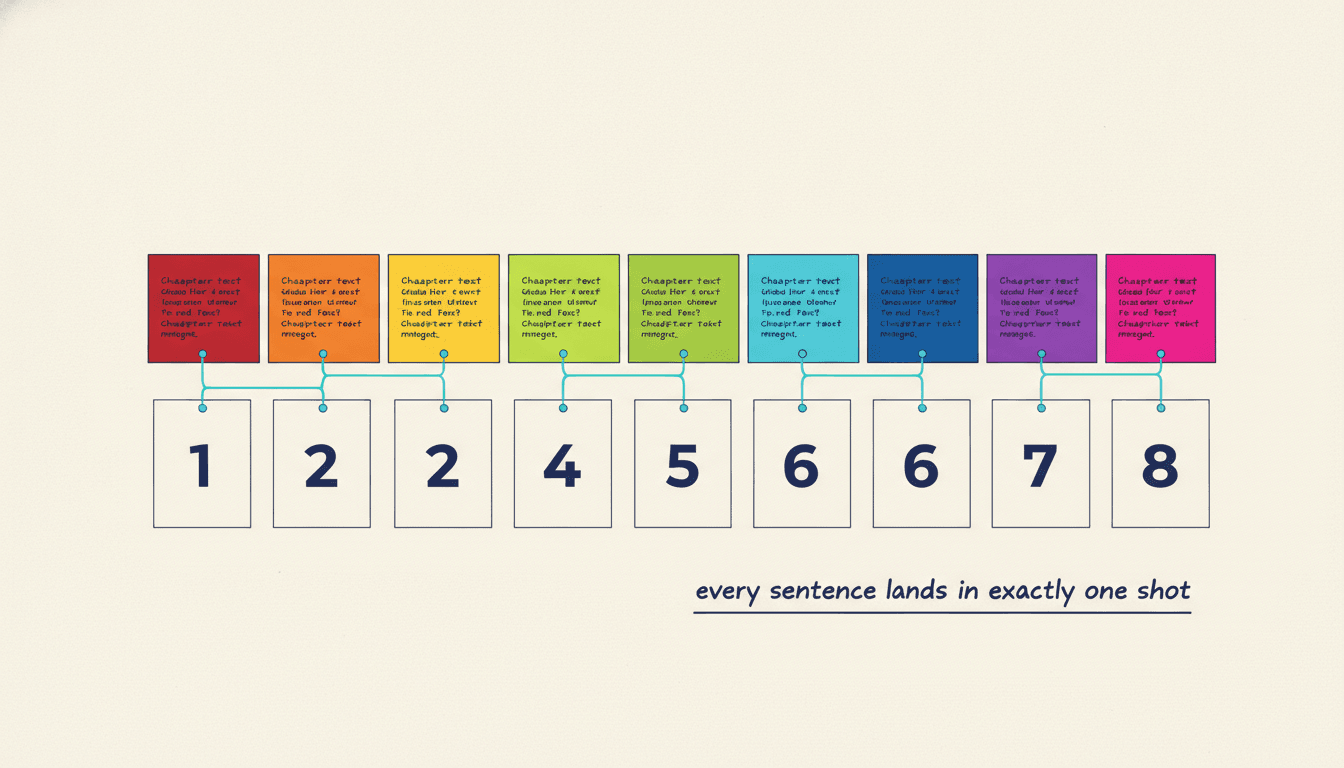
The Board Is a Map of the Text, Not a Reaction to It
Ask most tools to board a book and they read it, get the gist, and invent shots that feel about right — which is why the board quietly loses your third paragraph. Here the chapter is cut into sentence segments first, and the AI is only allowed to decide how to GROUP consecutive segments into shots. Every shot therefore owns real, verbatim text. Nothing is dropped and nothing is paraphrased.
Coverage Is Guaranteed, Not Hoped For
The shots cover the whole chapter with no gaps and no overlaps: point at any sentence in your book and there is exactly one panel that carries it. That single property is what makes a board from a book auditable. You are not checking whether the AI remembered a scene — you are reading a map, and a map with a hole in it is visibly wrong.
One Frozen Instant per Panel
A paragraph usually contains three or four actions in a row, and a panel can only hold one of them. So each shot is directed as a specification of a single still image — the one most representative moment, described as what is visible in one frozen frame rather than as a retelling of what happens. That discipline is the difference between a board and a summary.
Boarding Is Two Phases, Deliberately
First the whole chapter is split into shots — titles, cast, locations, no briefs yet — so you can judge the shape of the board while it is still cheap to change. Only then is each confirmed shot directed into its illustration brief. Reviewing thirty shot boundaries takes two minutes; discovering them after thirty illustrations have been paid for does not.
Merge, Split and Re-Cut by Hand
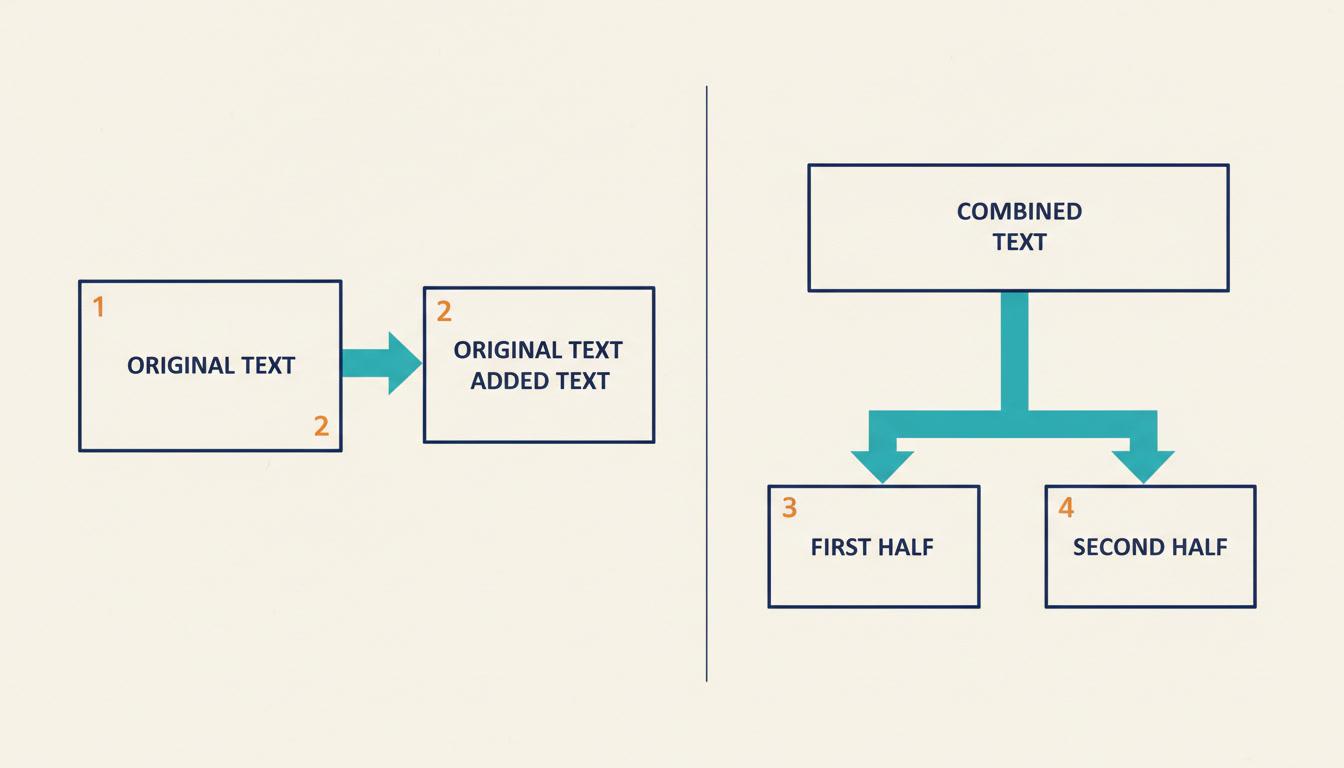
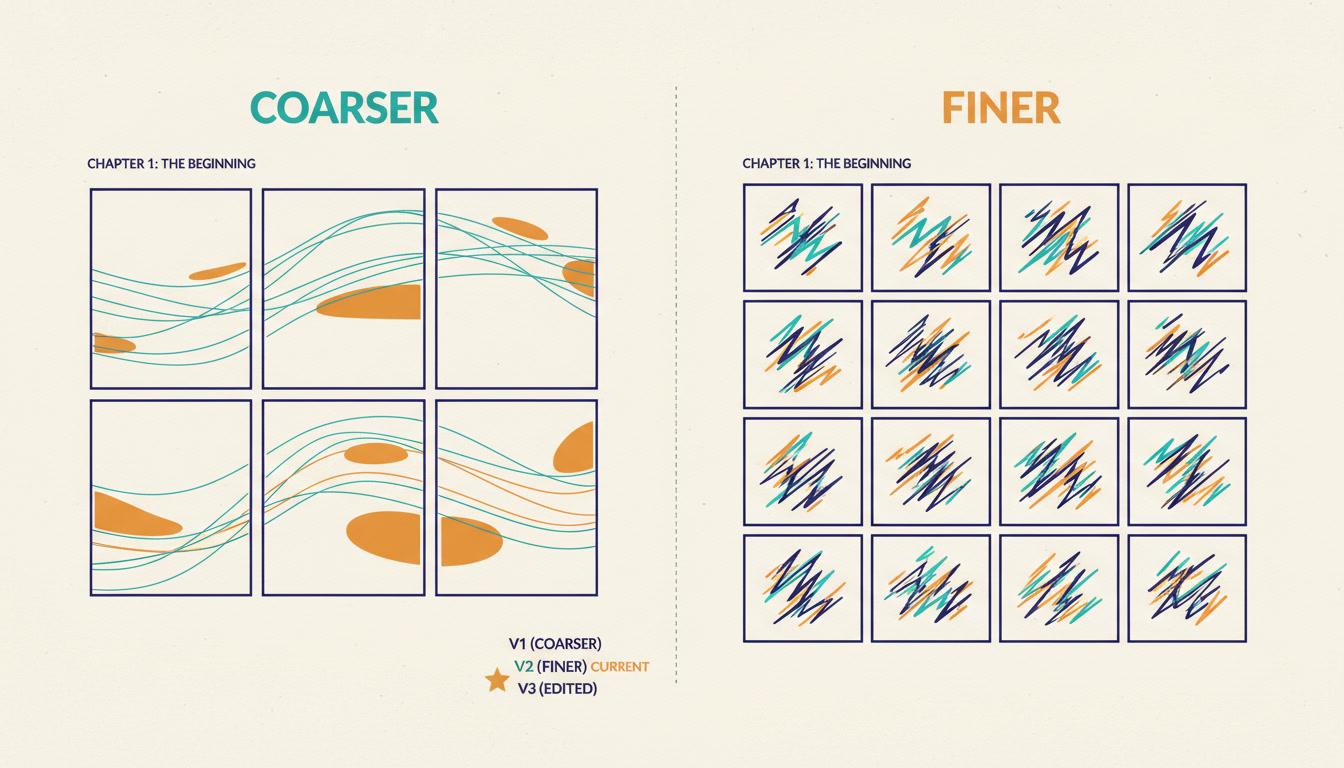
The first pass is a draft, not a verdict. A shot can be merged into the one above or below it, with its text joined in reading order; a shot that covers too much can be split at its sentence midpoint into two. The whole chapter can be re-boarded finer or coarser, and the board you had is kept as a version you can switch back to.
The Cast on a Shot Points at Real Records
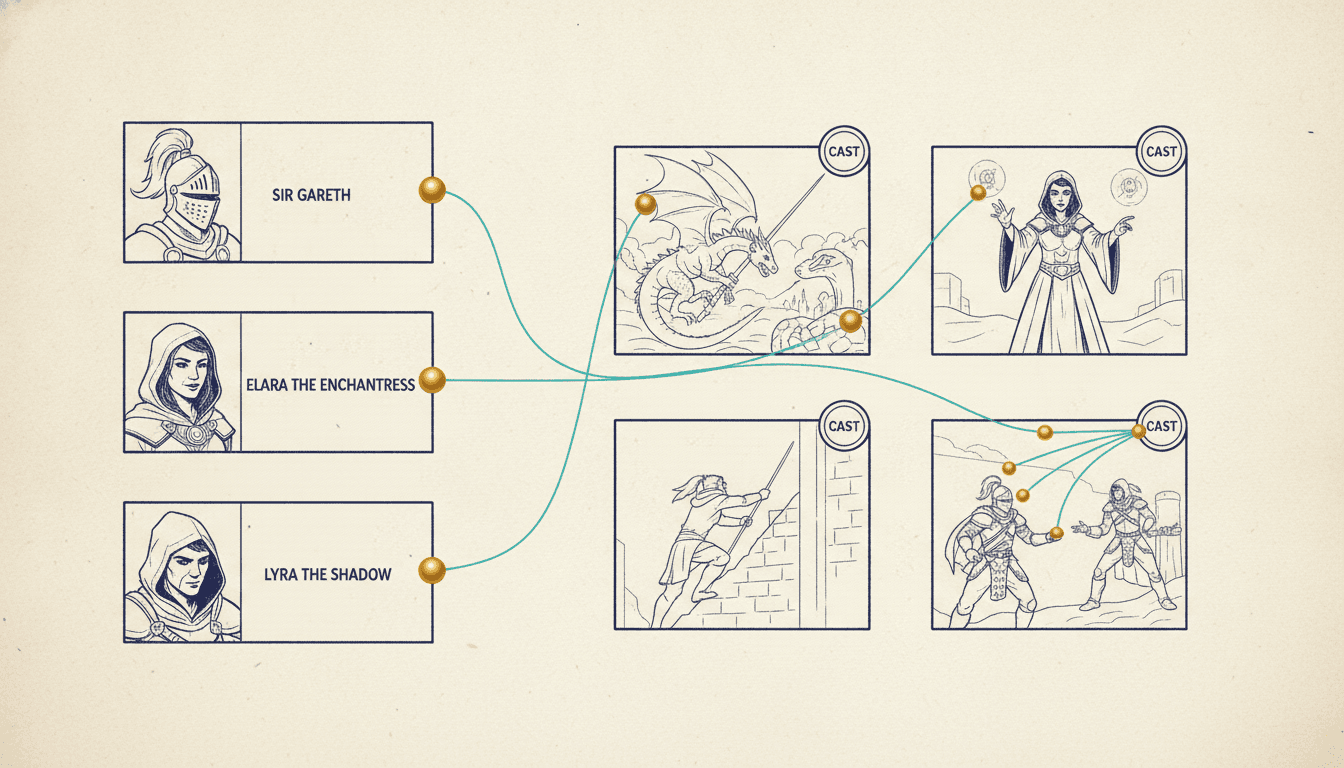
Character names on a panel are not decorative labels. Once a name resolves to a saved character, that identity is frozen onto the shot, so renaming the character, or having two near-duplicate records, does not silently drop the reference image and leave the model to invent somebody. Same person in shot two and shot twenty-two.
Things you can only do when the board is made of your own text
Merge, Split and Re-Cut the Board
The first pass is a draft. Where one page ends and the next begins is a decision an author makes, not a number a model settles on your behalf.
One Shot at a Time, by Hand
- Merge a shot into the one above or below it
- The joined text stays in reading order, so coverage holds
- Split an overloaded shot at its sentence midpoint
- A single-sentence shot says so instead of inventing a half
Or Re-Board the Whole Chapter
- Finer: more, smaller shots, roughly one per beat
- Coarser: fewer, larger shots that breathe
- Or pin an exact count — 24 pages means 24 shots
- Every re-board is a new draft; the old one is kept
A re-board never costs you the board you had
Re-boarding a chapter does not overwrite anything. Each pass is saved as its own draft, exactly one of which is current, and the others stay in the version list to switch back to or archive. That is what makes it safe to actually experiment with density — board the chapter at eight shots, board it again at twenty, read both, keep the one that works. The thing it deliberately does not do is silently preserve the old briefs and images across a full re-split: those were written for different chunks of text and would be describing panels that no longer exist. When you want to keep them, you do not re-split at all — you sync the board to the edited text instead, which is the next section.
What One Shot in a Storybook Storyboard Holds
Not a thumbnail and a line of dialogue. A shot is a small, structured record — and most of it exists so the picture that comes later has nothing left to guess.
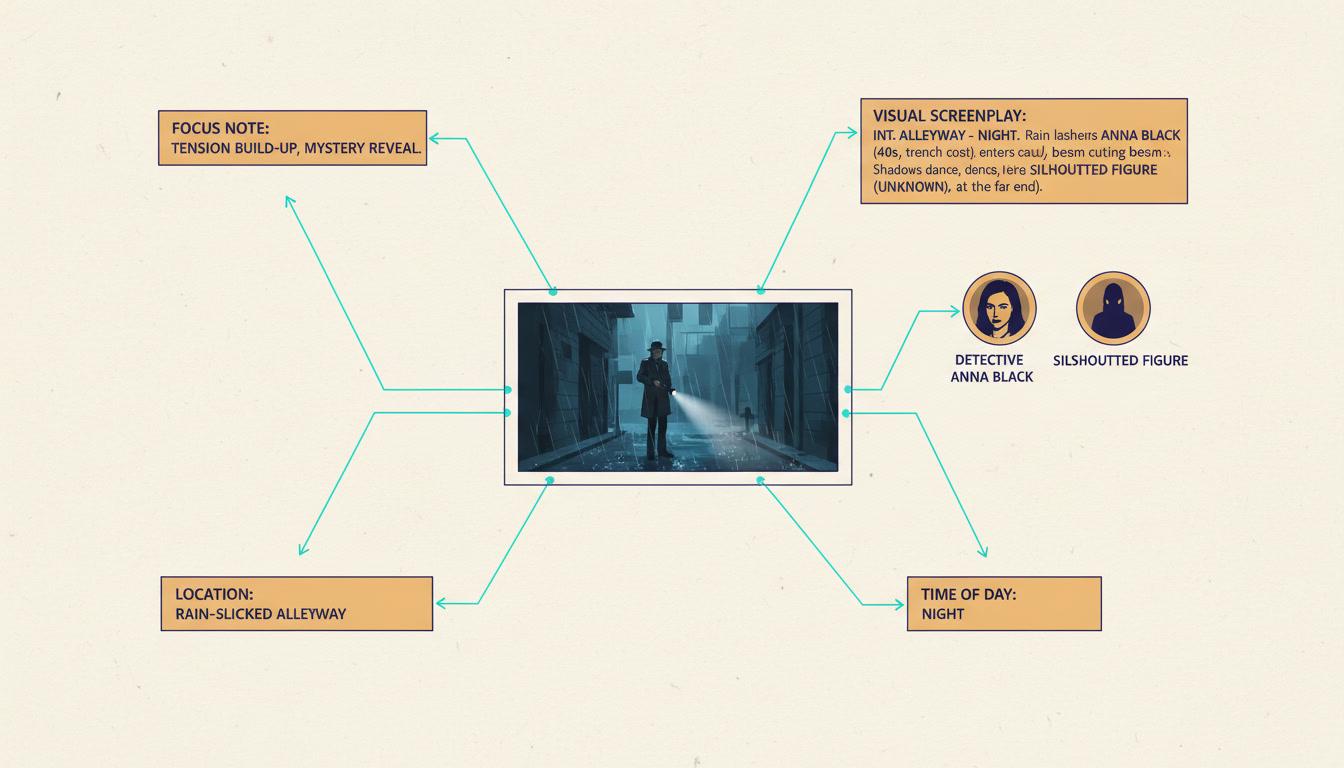
The text
The Chunk It Covers
The verbatim passage this shot is responsible for, set when the chapter was split. It is the reason the board can be audited: the panel is not an interpretation of the chapter, it is a claim about which sentences it represents.
The focus
What the Page Is Really About
One line, written before the brief, naming the single thing this page exists to show. It is the answer to the question every overloaded panel fails: of the four things that happen in this paragraph, which one is the picture?
The brief
Seven Sections, One Frozen Frame
Subject, environment, composition, camera, lighting, mood and details — a specification of one still image rather than a retelling of the action. Montage pages are the exception and get their panel layout stated first.
The sketch
Blocking Before Budget
A rough vector sketch of the composition: where figures stand, how the frame divides, what the camera does. It costs nothing, and it is the cheapest way to catch three identical mid-shots in a row.
The caption
The Words a Reader Sees
The clean picture-book text for the page, stored separately from the brief. One is written for whoever draws the page and one is written for whoever reads it, and collapsing them is how books end up narrating their own camera angles.
The tags
Cast, Props, Place and Hour
Who is in it, what they are holding, where it happens, what time of day — plus an optional date marker, so a shot set next spring gets spring clothes and two shots in the same month agree about the coat.
A name on a panel is a fragile key, so it gets pinned
Cast chips are born from your prose, so they hold display names and may point at a character record that does not exist yet. That is fine while you are still writing, and it is editable by hand.
But rename the character, scan them in twice, or write the name in another language, and a name-only lookup finds nothing.
The first time a name does resolve to a real saved character, that identity is frozen onto the shot and used from then on — stable through renames and duplicates.
Which matters because when the reference drops, the model does not stop. It invents a face, and your book has two of somebody.
This is the same problem the character consistency tool solves inside a single book, and an AI character bible solves across a series. On a board it just shows up earlier, which is the point of boarding.
You Changed the Chapter. Keep the Board.
Authors edit. If editing two paragraphs costs you thirty directed shots, you stop editing — which is the worst thing a writing tool can teach you.
Sync the Board Instead of Re-Splitting It
Re-splitting a chapter is the honest move when the writing has genuinely changed shape. When you have only added a scene, it is a catastrophe: every brief and every generated illustration is discarded because the shot boundaries all moved.
So there is a second path. The text your board currently covers is diffed against the new chapter at the segment level. Unchanged segments keep their shot untouched — brief, sketch, illustration and all — and each run of added text becomes new empty shots inserted exactly where it belongs.
Deleted Text Is Reported, Not Quietly Dropped
If your edit removed a passage, the shots covering it are not silently deleted. You asked to keep your existing work, and a tool that quietly bins a panel you had already directed is not keeping it — so the removal is surfaced and the decision is handed back to you.
Nothing is regenerated as part of a sync either. The new shots arrive empty and wait to be directed, so you can see exactly how much new work the edit created before any of it is done.
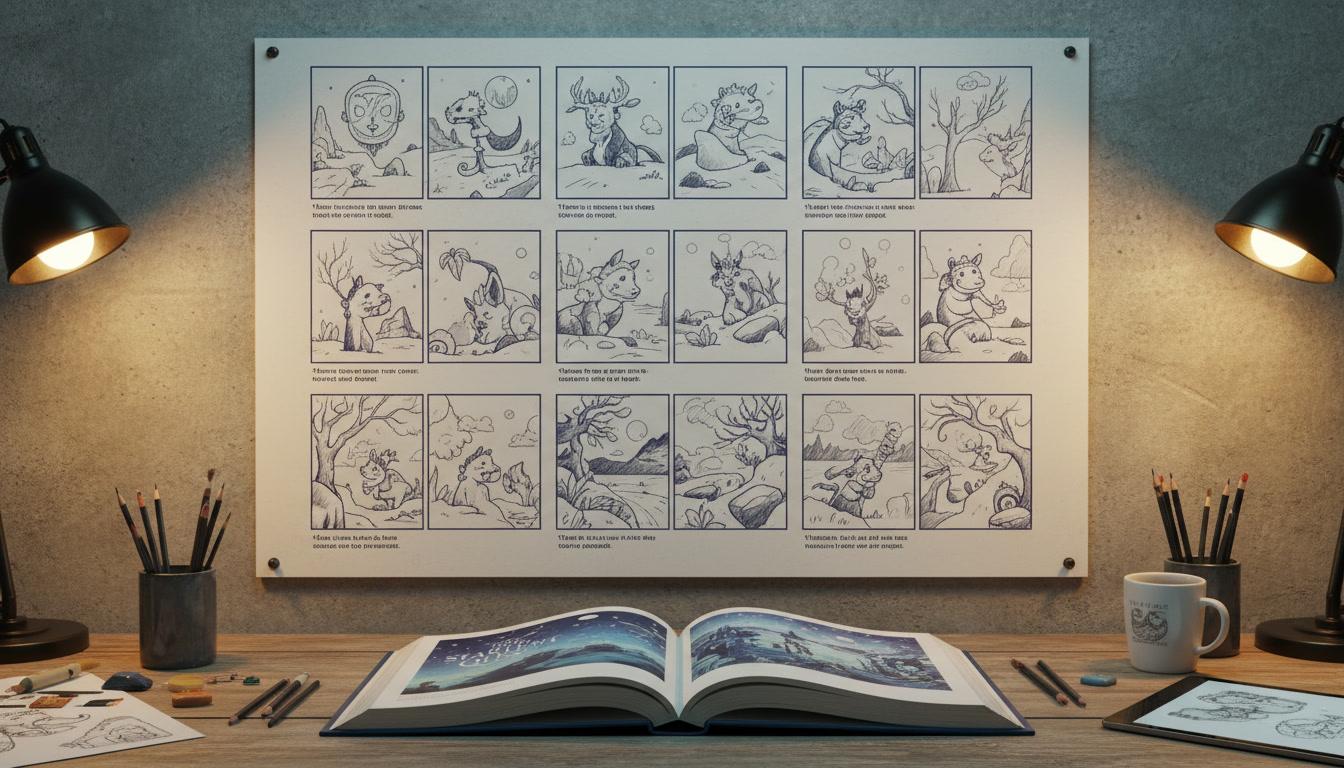
The Board Becomes the Book
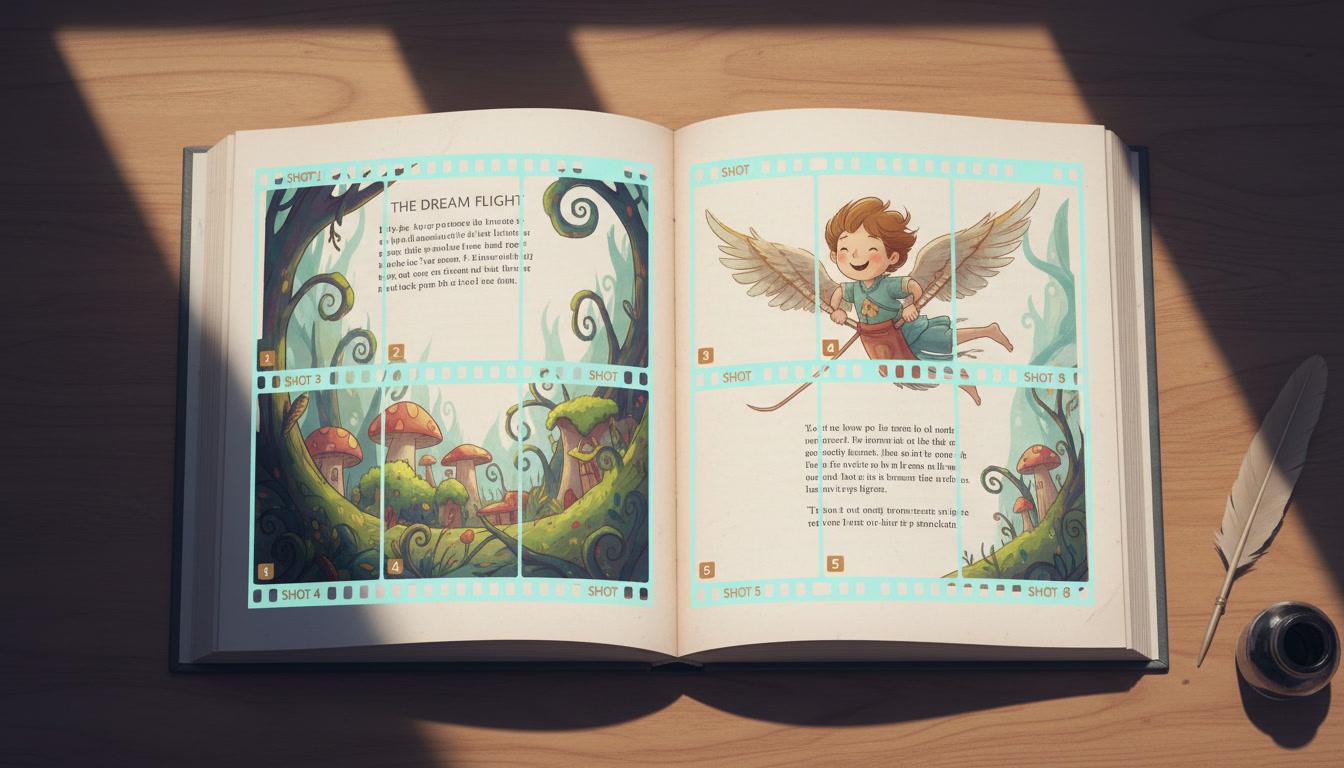
A storyboard is usually a throwaway: you plan with it, then rebuild the real thing somewhere else. Here it is the structure the book is made of. Once a board’s shots have their illustrations, it compiles straight into a picture book — one shot, one page, its image plus its reader caption — with no round trip through the creation flow.
The compiled book registers as a version of that chapter, so it appears in your Book tab and in My Books alongside everything else. Board it, direct it, render it, read it. And if a chapter is simply too big for one board, it can be split into chapters of a set number of shots first.
What Boarding a Storybook Sounds Like
Plain sentences about shot numbers, because that is what a board gives you: something specific to point at.
Nothing Falls Between Shots
Merge and Split
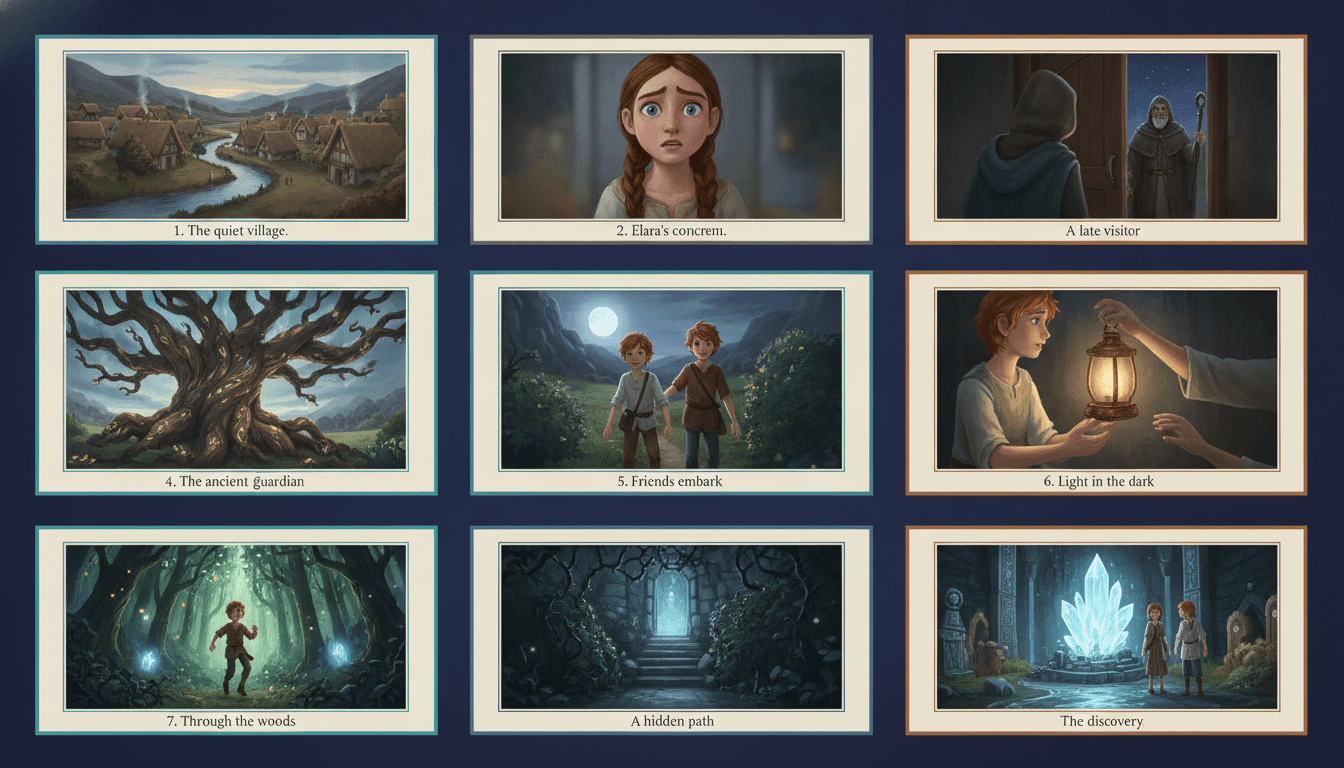
Nine Shots, One Chapter
“Board chapter one — I want about twelve shots”
“Shots 4 and 5 are the same beat — join them”
“Shot 9 covers too much. Cut it in two”
“Re-board this chapter finer — one shot per beat”
“Shot 6 should be a wide from behind her, not a close-up”
“I added two paragraphs — board those without touching the rest”
The Map
Every sentence has a panel
The Cut
Merge up, split in two
The Density
Six shots or eighteen
The Shot Card
Focus, frame, cast, hour
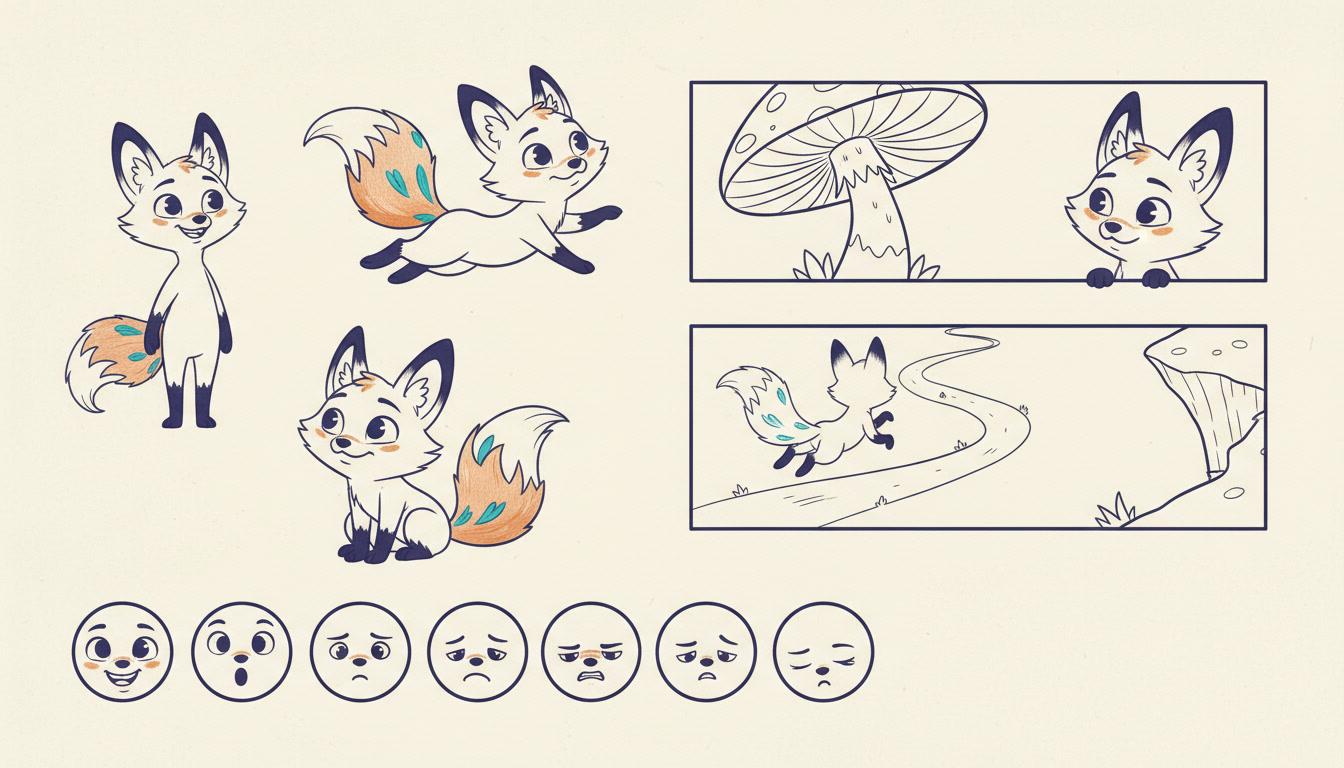
The Cast
On model, every angle
What a Storyboard From a Storybook Will Not Do
Worth knowing before you board a whole novel on a Sunday afternoon.
A Merge or a Split Clears That Brief
When two shots join or one splits in half, the brief and any image on the affected shots are cleared — not out of spite, but because a brief written for a different chunk of text is no longer a description of this panel. Keeping it would make the board lie about what it shows. Only the shots you touched are affected; the rest of the board is untouched.
A Full Re-Split Does Not Preserve Your Briefs
Re-boarding a chapter finer or coarser moves every boundary, so the previous briefs and illustrations do not carry over. The old draft is kept as a version you can return to, but it is a fresh board rather than a translated one. If you only edited the text and want the existing work kept, sync the board instead of re-splitting it.
Boarding Needs Text, Not a Link
The chapter has to be in the project as text. A URL to a document somewhere will not be opened and fetched — paste the writing in. Being told that up front beats a board built confidently out of nothing, but it is a real limitation and it is the one people hit first.
The Board Is Not a Rewrite
Boarding decides where the cuts fall in your prose. It does not improve the prose, restructure your plot or fix a scene that is not working — and it deliberately cannot, because the moment it is allowed to reword the text, the map stops matching the territory and coverage means nothing.
A Panel Is One Frozen Instant
Each shot specifies a single still image, so a paragraph with four actions in it gets the one most representative moment rather than all four. Montages are the explicit exception — ask for a multi-panel page and you get a stated panel layout — but the default is one moment, because that is what a page of a picture book actually is.
Boards Are Cheap, Pictures Are Not
Splitting a chapter, directing shots, writing captions and drawing blocking sketches are all text-level work. Generating the illustrations is where credits go. That asymmetry is the entire argument for boarding first: every structural mistake you catch while it is still a board is an illustration you did not pay for twice.
None of these are discovered at the end. A shot that cannot be split says so when you click split, and a change that needs a full re-board is named as one before it runs.
Is the Board the Part You Need?
This page is for people who already have the writing and want to see the shots before anything renders. If you pictured something else, one of these is a better start — they all share the same saved characters.
Yes — board my chapter
Bring the text, get a numbered board that covers it, and re-cut it before a single illustration is generated.
I have no text — just a scene in my head
The generator invents the shots from an idea, with camera angles and a shot list. Different job, different door.
Skip the board, make the book
Let the structure be decided for you and go straight to illustrated pages. Faster, and less of it is your call.
My words are finished, I need pictures
Bring the manuscript and get the illustrations, without stopping to argue about where the pages break.
It is a novel, not a picture book yet
The long-form version of this problem: a whole book condensed into spreads a child can sit through.
I want panels, not pages
A comic page is several frames at once, with gutters and bubbles doing work a picture book page does not.
My cast keeps changing faces
Lock each design once so every shot on the board draws from the same reference instead of guessing again.
I keep losing track of who is who
Pin looks, names and history into one reusable record so book three still agrees with book one.
The book exists and one page is wrong
Change that page — its words, its picture, or a character on it — without regenerating anything you liked.
The pages are done, now move them
Turn the finished spreads into a narrated watch-along rather than planning new ones.
The pages are right, now voice them
Cast a separate voice per character, saved to the character so it holds for the whole book.
Show me everything else
The full tool shelf — generators, converters and editors, all working off one saved character library.
Frequently Asked Questions
Explore More Story Ideas
Discover more styles, tools, and story types
Beach Stories
Sandcastles, seashells, tide pools and splashing waves
Explore
Ghibli Style Books
Dreamy Miyazaki-inspired art
Explore
Bedtime Stories for Anxious Kids
Calming tales that soothe worries
Explore
Midjourney vs C2Story
Stories, not just images
ExploreMake a Storyboard From Your Storybook Before a Single Page Is Drawn
There are two completely different jobs hiding under the word storyboard, and confusing them is why so many boards are useless. The first is invention: you have an idea, a scene in your head, a thirty-second ad concept, and you need somebody to propose the shots. The second is adaptation: the writing already exists, it is finished, it is not yours to reword, and the only real question is where the cuts fall in it. A storyboard from your storybook is the second job, and it needs a different tool, because a generator that invents shots when handed a finished chapter will quietly drop your third paragraph and hand you a plausible-looking board with a hole in it.
The design decision that makes book to storyboard work is that the chapter is cut into atomic sentence segments before the model ever reads it. Those segments are produced deterministically, by code, splitting on real sentence and line boundaries. The AI is then given one job and only one: decide which consecutive runs of segments belong together as a shot. It never rewrites, so it cannot paraphrase your prose. The shots are defined by positions that tile the chapter from beginning to end, so it cannot leave a passage unassigned. What you get is a board where every panel owns a contiguous, verbatim chunk of your own writing, and where you can point at any sentence in the book and find exactly one shot carrying it.
That property — coverage — is what makes a board auditable rather than merely impressive. Checking an invented board means re-reading your chapter and trying to remember whether the bit with the lantern made it in. Checking a mapped board means looking for a gap, and a gap is visible. It is the difference between trusting a summary and reading a map, and it is the entire reason this is worth building separately from a generic AI storyboard generator, which remains the right tool when there is no text yet and the shots genuinely do need inventing.
Boarding happens in two phases on purpose. The first pass splits the whole chapter into numbered shots with titles, cast, locations and times of day, and writes no illustration briefs at all. That is deliberate: a bad split is a structural mistake and it is visible in ten seconds when all you are reading is fourteen titles, whereas fourteen paragraphs of camera direction would bury it. Only once you have argued with the shape does each confirmed shot get directed — and directing a shot means writing a specification of one still image, not a retelling of the action. A paragraph usually holds three or four things happening in a row, and a page can only show one of them, so each brief picks the single most representative moment and describes what is visible in that frozen instant.
Then you re-cut, because the first pass is a draft and page breaks are an authorial decision. Any shot can be merged into the one above or below it, with the two chunks of source text joined in reading order so coverage survives the edit. Any shot carrying too much can be split at its sentence midpoint. The whole chapter can be re-boarded finer, toward one shot per beat, or coarser, into fewer frames that breathe — or pinned to an exact count when you are working to a twenty-four or thirty-two page format. Every re-board arrives as a new draft with the previous one kept in the version list, which is what makes it safe to actually experiment: board it at eight shots, board it at twenty, read both, keep the better one.
One shot holds more than a thumbnail. There is the verbatim passage it covers; a one-line focus naming what the page is really about; a brief in seven labelled sections — subject, environment, composition, camera, lighting, mood, details; a rough vector blocking sketch showing where the figures stand and what the camera is doing; the clean reader caption the finished page will display, stored separately from the brief because one is written for whoever draws the page and one for whoever reads it; and the tags — cast, props, location, time of day, plus an optional date marker that keeps seasonal wardrobe consistent so two shots in the same month agree about the coat. The blocking sketch in particular costs nothing and is the cheapest possible way to notice that three pages in a row are the same flat mid-shot from the front.
Cast names on a panel are pinned rather than merely written. A display name born from your prose is a fragile key: rename the character, scan them into a near-duplicate record, or write the name in a different language, and a name-only lookup finds nothing — at which point the model stops using the reference image and invents a face, and your book now contains two of somebody. So the first time a name resolves to a real saved character, that identity is frozen onto the shot and used from then on. It is the same consistency problem the character consistency tool handles inside a book and an AI character bible handles across a series; on a board it simply surfaces earlier, which is rather the point of boarding.
Authors edit, and a storybook storyboard generator that punishes editing teaches you to stop. Re-splitting a chapter throws away every brief and image because all the boundaries move, so there is a second path for the common case where you only added a scene: the text your board covers is diffed against the new chapter at the segment level, unchanged segments keep their shot untouched — brief, sketch, illustration and all — and each run of added text becomes new, empty shots inserted in the right place, waiting to be directed. Text you removed is reported rather than silently deleted, because you asked to keep your work and quietly binning a panel you had already directed is not keeping it.
And when the board is right, it becomes the book. A board whose shots have their illustrations compiles directly into a picture book — one shot, one page, its image plus its caption — registered as a version of that chapter so it appears in your Book tab and in My Books without a round trip. The board is not a planning artefact you abandon once the real work starts; it is the structure the finished book is built from. Bring the chapter you already wrote, board it, argue with the cuts while they are still free, and then spend credits on pictures you have already decided you want. If you would rather skip the structure and go straight to illustrated pages, the AI picture book maker is the faster route; if it is a novel you are condensing, start at novel to picture book; and if the book already exists and one page of it is simply wrong, editing an AI-generated book is the smaller, cheaper fix.