How to Adapt a Novel Into a Comic Series
When you adapt a novel into a comic, you are not shortening a book — you are converting it into sight and sound. A novel runs on what characters think; a comic can only show what a reader can see and hear. This guide is about making that conversion, line by line.
- The camera test: which lines are already panels
- The three fates of every interior line
- What to cut once the art is doing the describing
- How the surviving scenes become issues
50,000+
Stories Created
6 Passes
Novel to Panels
2–4 Pages
Per Novel Scene
On-Model
In Every Panel
How to Adapt a Novel Into a Comic in 6 Passes
Each pass asks one question of the manuscript. Do them in order and the adaptation decides itself — most of the agonising over “what do I keep?” comes from trying to answer all six at once.
Find the Scenes, Not the Chapters
A chapter is a prose unit — it can hold three scenes, or half of one, or a page of reflection with nothing visible happening at all. A comic is built from scenes. Read the novel once with a pencil and mark every place where somebody does something in a place at a time. Those marks, not the chapter breaks, are your raw material.
A stretch with no marks in it is usually a stretch the comic does not need.
Run the Camera Test on Every Line
Take any sentence and ask one question: where would the camera be? If you can answer — a kitchen, over her shoulder, close on his hands — the line is already a panel. If you cannot, the line lives inside a character’s head, and the head is the one place a comic camera cannot go. That single test sorts an entire novel in an afternoon.
Answerable = draw it. Unanswerable = it needs converting, or it goes.
Give Every Interior Line One of Three Fates
Interiority is most of what a novel is, so you cannot simply delete it. Each interior line gets one of three fates: show it (turn the feeling into an action, an expression, or a detail of the room), say it (move it into dialogue somebody actually speaks), or cut it (accept that the reader will infer it from the art).
“She was afraid he would leave” becomes her quietly moving his coat away from the door.
Cut What the Drawing Now Carries
This is where most of your word count goes, and it should. Every description of a face, a room, the weather, or what someone is wearing is now redundant — the panel says it faster and better. Keep only prose that the picture genuinely cannot deliver, and delete the rest without mourning it.
If the art already shows it, the words are repeating themselves.
Rewrite Dialogue to Balloon Length
Novels let a character speak for half a page. A speech balloon holds about twenty-five words before it starts eating the drawing. Break long speeches across several balloons and several panels, cut the throat-clearing at the start of each line, and let a reaction panel carry the subtext instead of an adverb.
Read every line aloud. If you run out of breath, it needs another balloon.
Group the Scenes Into Issues and Lock the Cast
Now that you know which scenes survive, stack them into issues and decide where each one ends. Design your cast once before you illustrate anything, so the protagonist in issue six is unmistakably the person from issue one — drift is the fastest way to make an adaptation feel amateur.
The issue-splitting mechanics get their own walkthrough in the book to comic series tool.
The Camera Test: Panel, or Interiority?
Read a sentence and ask where the camera would have to stand to film it. That question, applied line by line, is the whole craft of adapting a novel into a comic compressed into four words.
No Camera Position
Lives inside a head. Convert it or lose it.
- ✕ Thoughts, doubts and private reasoning
- ✕ Memory and backstory told as summary
- ✕ Descriptions of what a face “meant”
- ✕ Authorial commentary and asides
Camera Position Obvious
Already a panel. Draw it.
- Somebody entering, leaving, taking, refusing
- Spoken lines that change the scene
- A specific object doing something specific
- A face reacting in a place at a time
The left column is not waste — it is usually the best writing in the book. It just has to arrive at the reader through a picture now instead of a sentence.
What a Novel Line Looks Like as a Panel
Three conversions do almost all the work when you adapt a novel into a comic: interiority becomes action, long speech becomes a few balloons, and chapters become scenes.
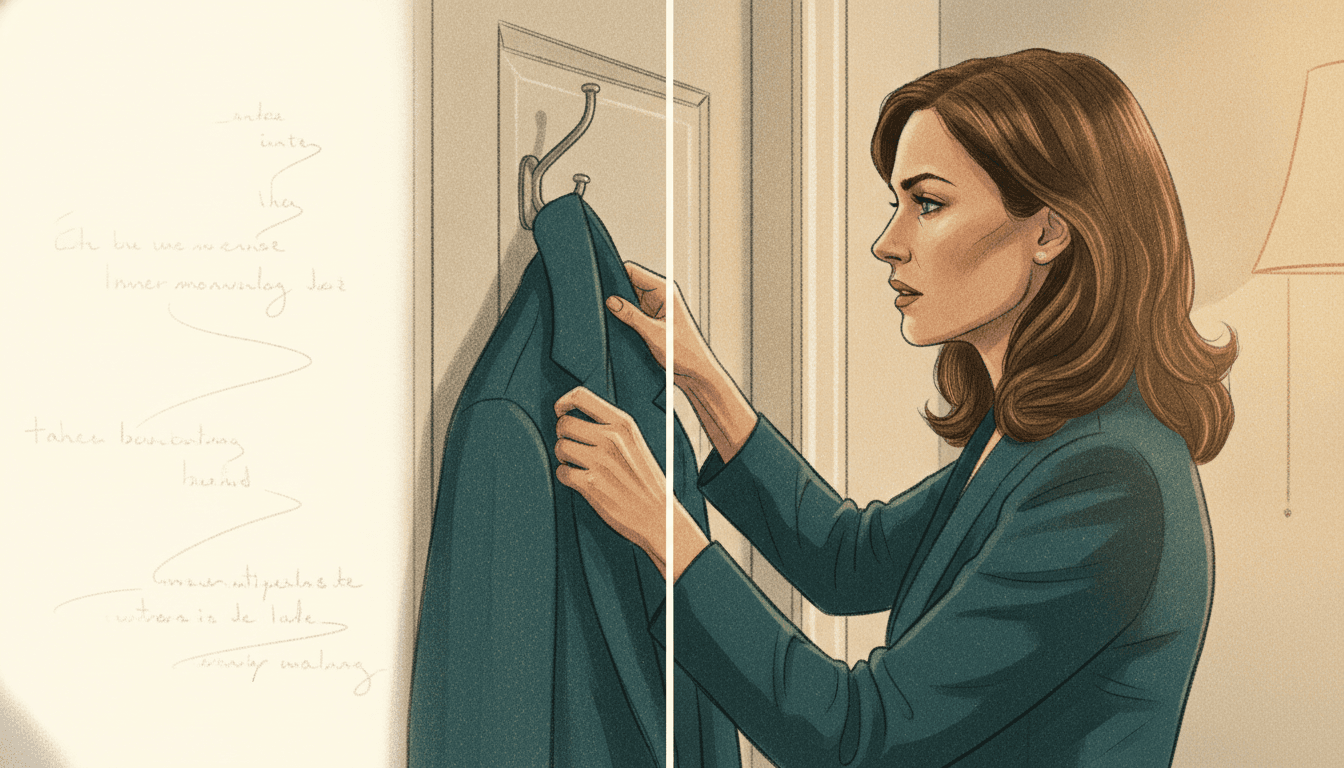
Interiority to Action
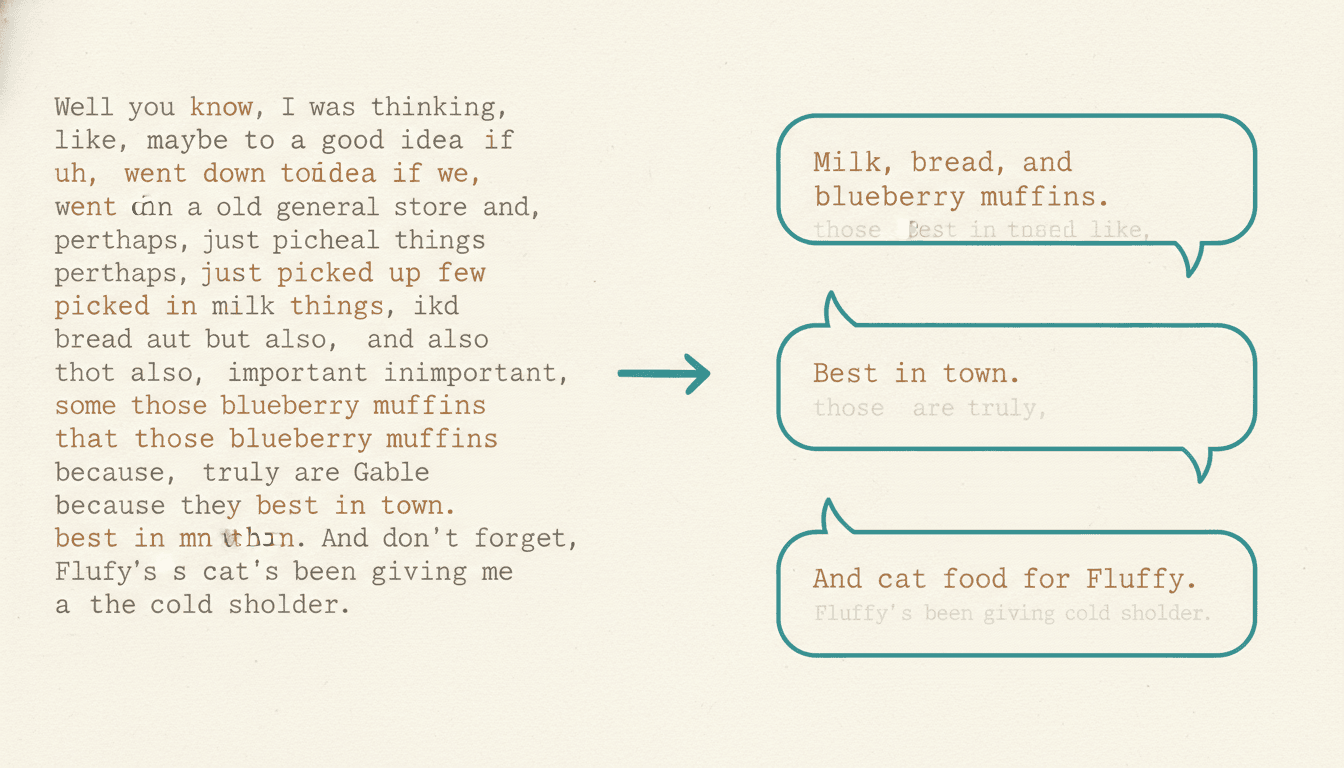
Speech to Balloons
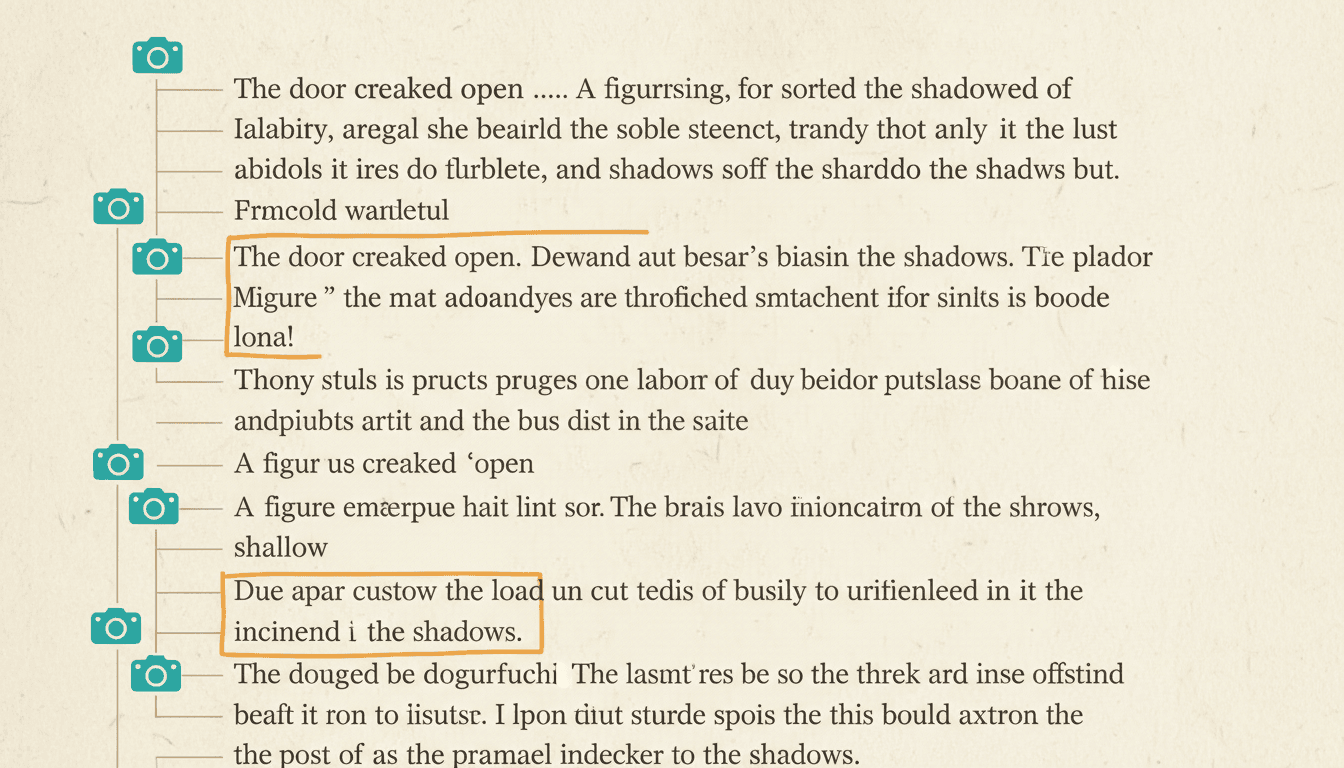
Chapters to Scenes
Six worked examples — the prose on top, what it becomes underneath:
“She had never trusted him, not since the summer.”
She takes the chair furthest from him. One panel, no words.
“The room smelled of rain and old paper.”
An establishing panel: a warped window, a stack of swollen books.
“He remembered the accident every time he drove.”
A two-panel cut: his hands on the wheel, then a flash of headlights.
“She was furious but said nothing.”
A close-up on the jaw, and a balloon from the other character filling the silence.
“He explained the whole arrangement to her over dinner.”
Three balloons across two panels — only the sentence that changes her mind survives.
“Her hair was the colour of wet sand, and she was taller than her sister.”
Nothing. The drawing already said it on page one.
The Craft Terms an Adapter Actually Uses
None of these are jargon for its own sake — each one names a decision you will make dozens of times while adapting a book into comics.
What Changes When Prose Becomes Panels
Adaptations fail in predictable places. These are the six, and knowing them in advance is most of the battle.
Interiority Goes Outside
A novel can tell you what someone thinks. A comic can only show what they do about it. Every thought worth keeping has to become a gesture, an object, a glance, or a spoken line — that conversion is the real work of adapting a novel into a comic.
Description Becomes Redundant
Pages of setting and physical description are doing a job the art now does instantly. Cutting them is not a loss of quality; it is the adaptation working. Keep only the details a reader could look straight at the panel and still miss.
Dialogue Gets Shorter and Sharper
Speech that reads naturally on the page looks enormous in a balloon. Trim greetings, repetitions and stage-setting, and trust the faces. Comic dialogue is closer to a screenplay than to prose — say less, and let the panel carry the rest.
Time Moves in Gutters
A novel controls time with sentences: meanwhile, an hour later, that winter. A comic controls it with the white space between panels. Learning to let a gutter do the work of a transition sentence is what stops an adaptation reading like an illustrated summary.
Narration Boxes Are a Last Resort
Caption boxes are tempting because they let you keep the prose you love. Used heavily they turn the comic into a picture book with a voiceover. Reserve them for time jumps, place names, and the rare line of voice nothing else can carry.
The Cast Has to Stay On-Model
Prose readers build the character in their heads, so a novelist never worries about consistency. The moment you draw them, every page has to match. Design the cast once and reuse it, or your protagonist quietly becomes a different person by chapter four.
An Adaptation That Reads Like a Comic
Sparing captions, a scene paced across a page, a cast that never drifts, and a run of issues that came out of one book.
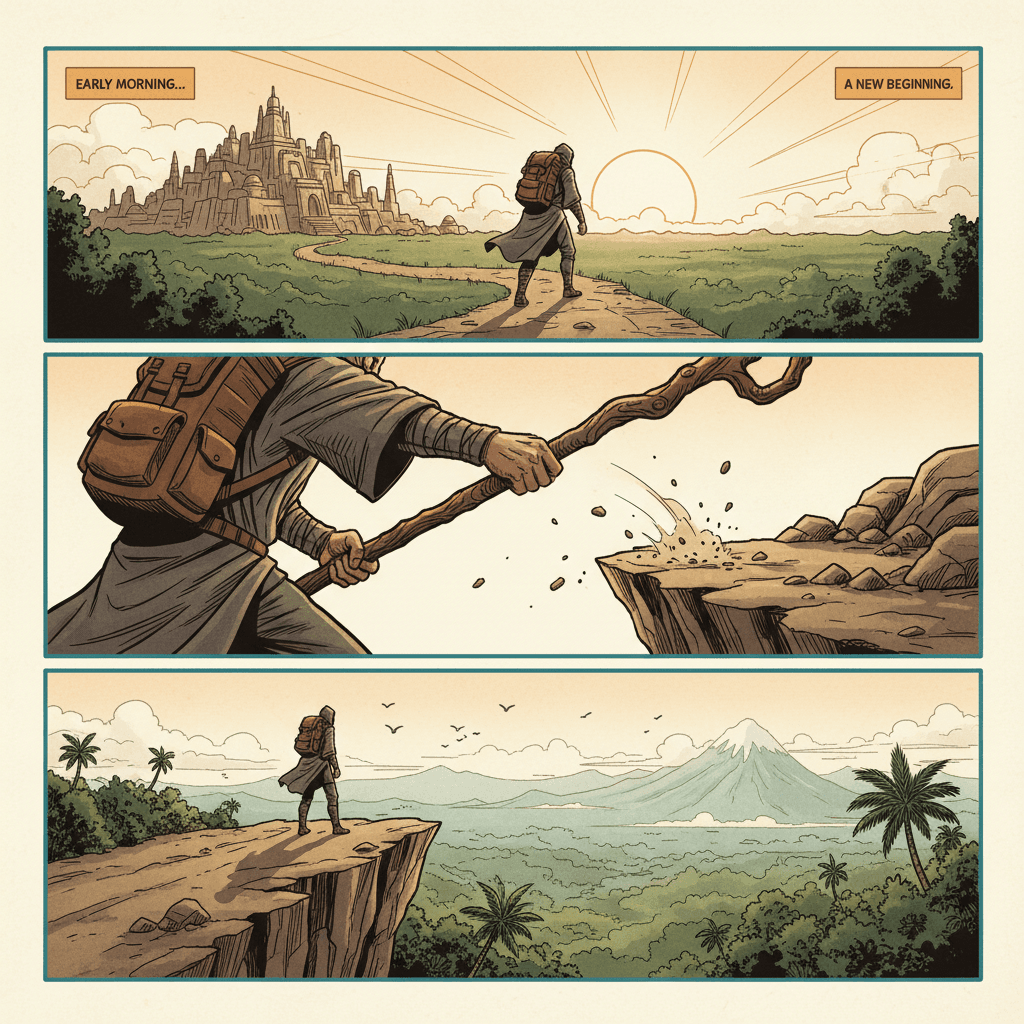
Sparing Captions
Let the art talk
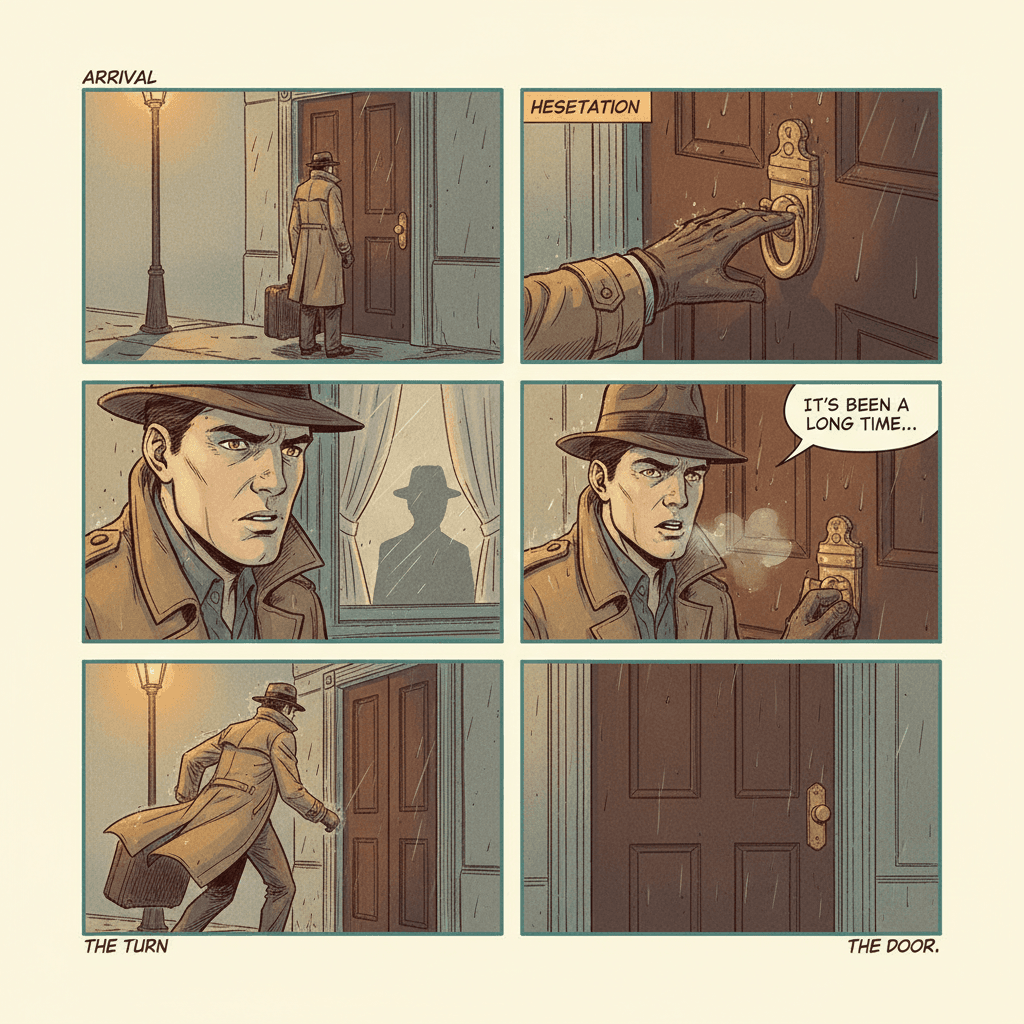
Scene as Six Beats
Pacing on one page
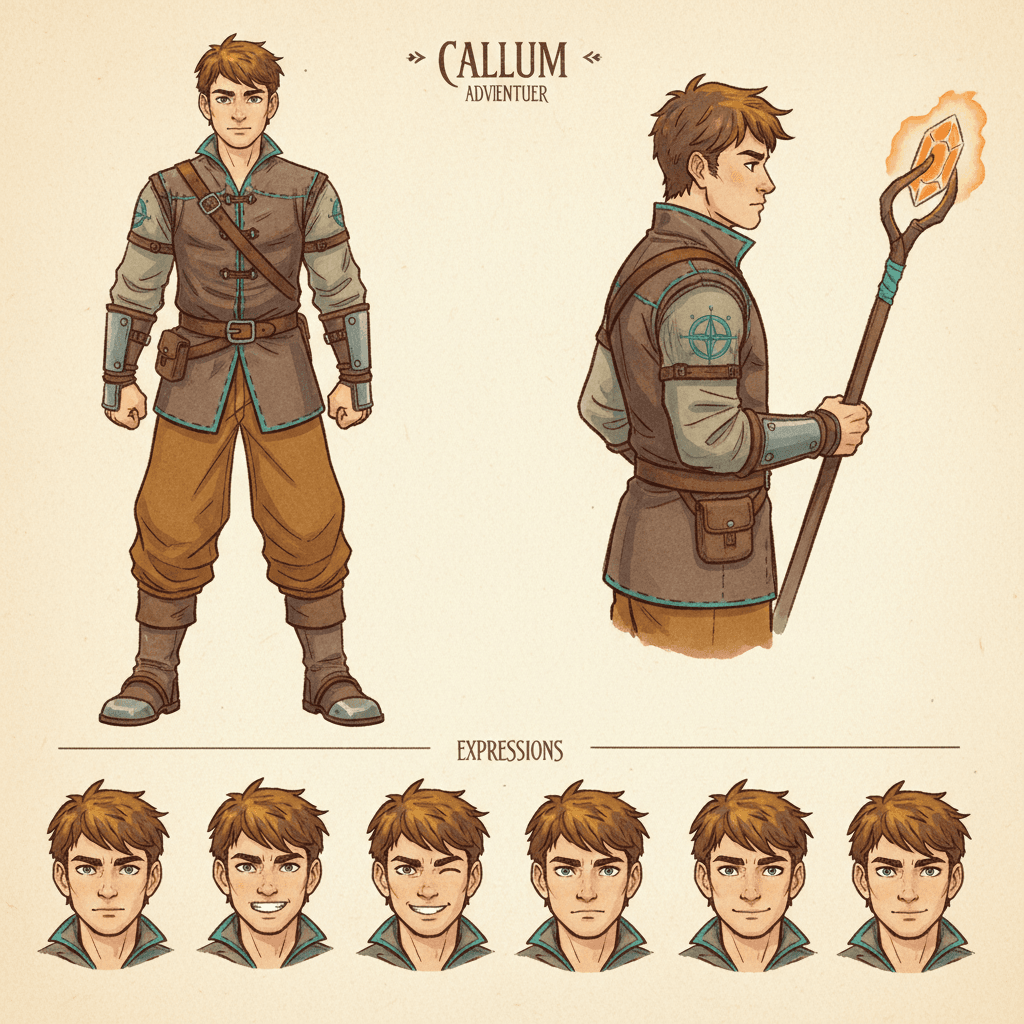
The Cast, Locked
Same face every issue
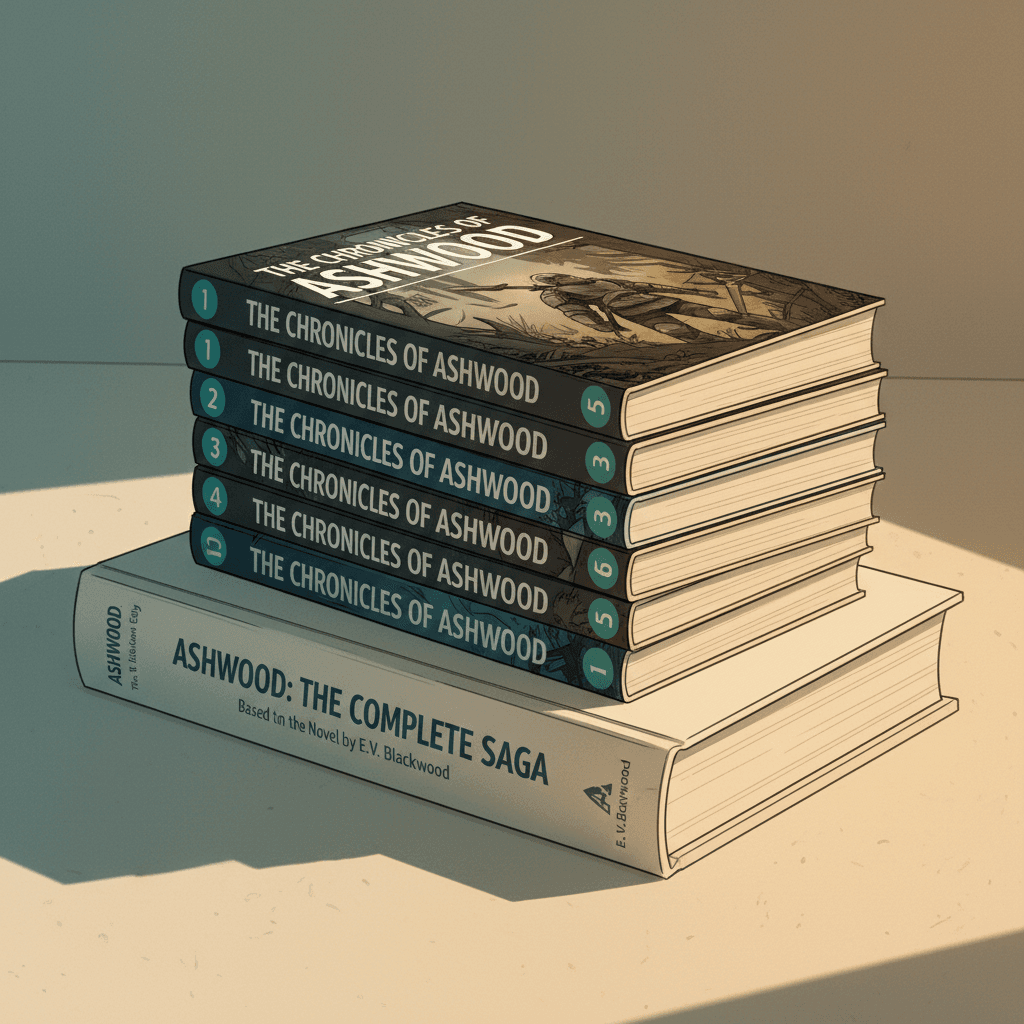
One Novel, a Run
Scenes stacked into issues
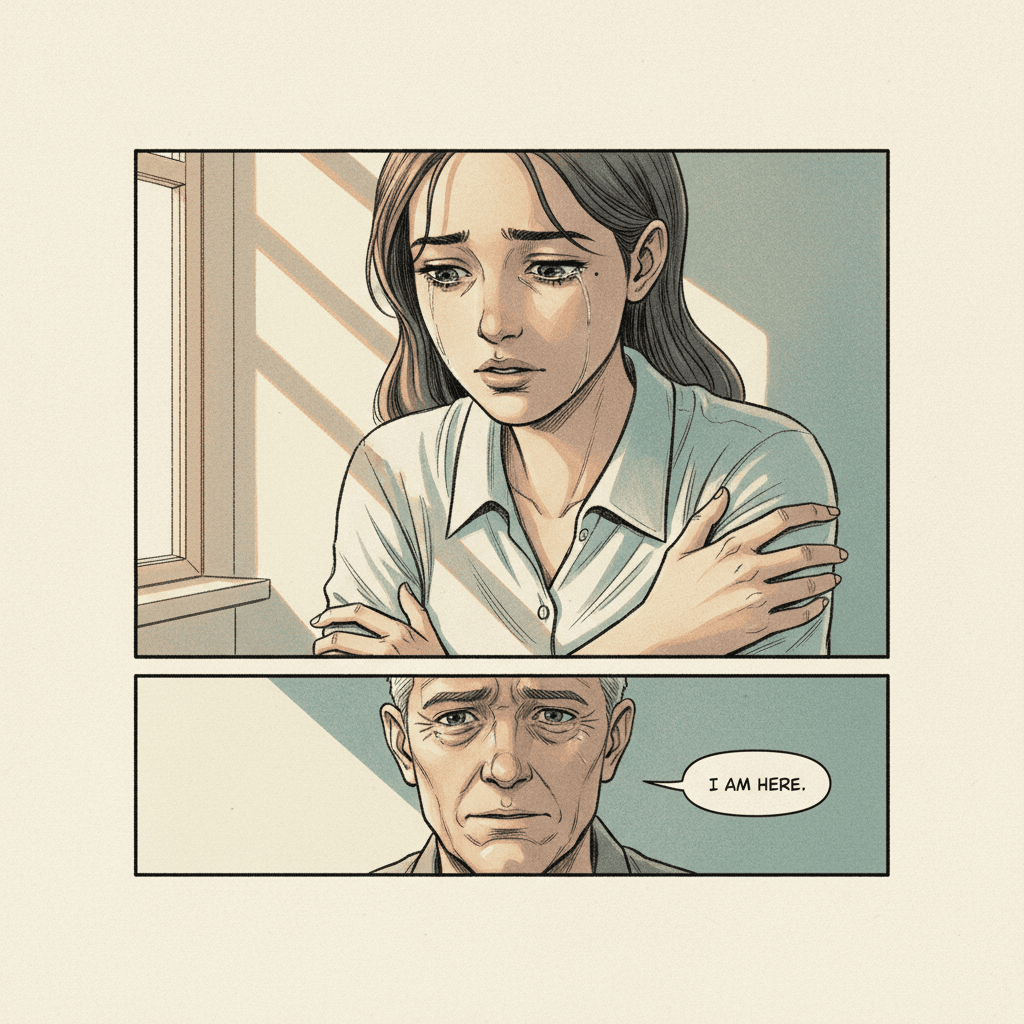
Told Without Words
Faces doing the work
And 45+ art styles including Comic, Manga, Graphic Novel, Watercolor and Cinematic.
Who This Guide Is For
Novelists
You already have the book. Adapting it into a comic gives the same story a second audience — and readers who would never have picked up 90,000 words of prose.
Web Fiction Writers
Serialized fiction adapts beautifully because the scenes are already short and the chapter cuts already land. Comics are where a lot of that audience now lives.
Rights Holders & Estates
Adapting a backlist title into comics is one of the cheapest ways to give an older book a new format and a new shelf without renegotiating anything.
Teachers & Librarians
A comic adaptation of a set text reaches reluctant readers and language learners who bounce off the prose edition — same story, a different door in.
Tools for Your Comic Adaptation
Every tool shares one character library, so the cast you design during pass six travels into every panel of every issue.
Where does each issue end?
The book to comic series tool handles the other half of the job — splitting a whole book into a numbered run and placing the cuts.
Adapting into one comic, not a run?
Convert a single novel into one self-contained comic book with panel layouts and speech balloons.
Starting with one chapter?
Adapt a single chapter first as a test before committing the whole manuscript to a format.
Want the panels drawn now?
The comic creator turns your scene descriptions into finished, laid-out comic pages in the style you pick.
Worried about the cast drifting?
Lock each character’s design once so your protagonist looks identical from the first panel to the last.
Picture book instead of a comic?
The same adaptation logic, aimed at a younger reader and a single illustrated volume.
Frequently Asked Questions
Explore More Story Ideas
Discover more styles, tools, and story types
Space Stories
Blast off to distant galaxies
Explore
Crosshatch Ink Picture Books
Dense hatched shadow & engraved ink texture
Explore
Picture Book Maker
Create illustrated picture books
Explore
Storybee Alternative
More styles & features
ExploreHow to Adapt a Novel Into a Comic Series — What Survives the Conversion
Most advice on how to adapt a novel into a comic starts with length, and that is the wrong end of the problem. The real difficulty is not that a novel is too long; it is that a novel is made of a material a comic cannot hold. Prose can tell you what a character is thinking, remembering, dreading, or refusing to admit. A panel can only show you what is in front of it. So a novel to comic adaptation is a conversion job before it is a compression job: every page of the manuscript has to be sorted into what a reader can see and hear, and what will have to reach them some other way.
The camera test does most of that sorting. Read a line and ask where the camera would stand. If the answer comes instantly — a kitchen at night, over her shoulder, close on his hands — the line is already a panel and you simply draw it. If no camera position exists, you are looking at interiority, and it gets one of three fates: show it, by turning the feeling into an action or an object or an expression; say it, by moving it into dialogue somebody actually speaks; or cut it, and trust the reader to infer it. The lines you cut are often the best writing in the book, which is why adapters resist. They are not being thrown away — they are being re-delivered through a picture.
After that, the cutting becomes easy. Physical description, weather, clothing and room inventories go, because the drawing does all of it in a single glance. Dialogue gets rewritten to balloon length — roughly twenty-five words before a balloon starts crowding the art — with the greetings and stage-setting trimmed and a reaction panel carrying the subtext that an adverb used to carry. Narration boxes stay available, but sparingly: lean on them and the comic turns into an illustrated audiobook, with captions dutifully describing whatever is already visible underneath. A useful rule of thumb for scale is one novel scene to two to four comic pages, so a 90,000-word novel usually lands somewhere between 200 and 400 pages — comfortably a series rather than a single volume.
Which is where the last pass comes in. Once you know which scenes survived, you stack them into issues and decide where each one ends; the book to comic series tool handles that half of the job, and the chapter to comic tool is a good way to test the approach on one chapter before committing the manuscript. If you would rather adapt the whole book as one self-contained volume, the novel to comic book converter does that instead. Whichever route you take, design the cast once with the character consistency tool before any pages are drawn — prose readers build the protagonist’s face themselves and never notice drift, but comic readers notice on the second page. Make the adaptation decisions, and let C2Story handle the drawing.