Book to Comic SeriesA Run, Not One Long Comic
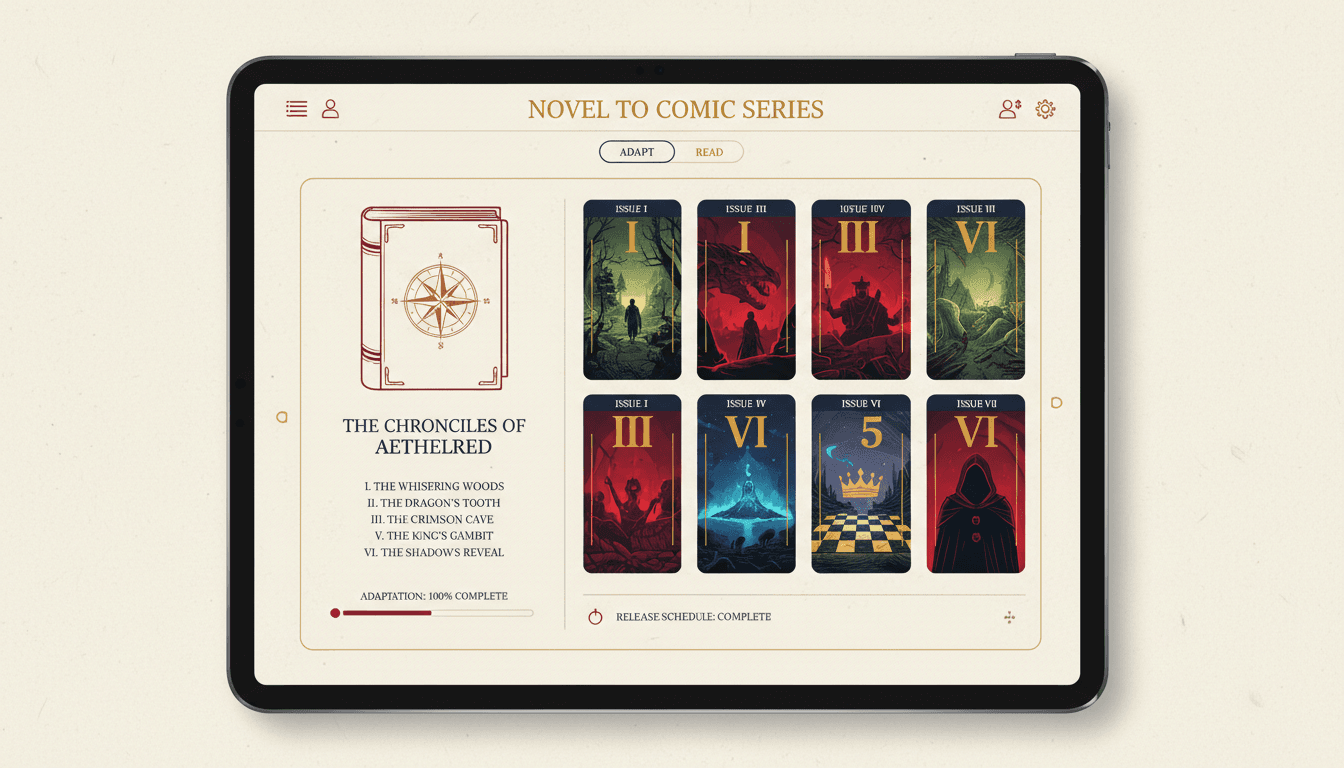
Turn a whole book into a numbered comic series. C2Story splits it into issues, decides where each issue ends, and keeps one cast on-model from issue one to the finale.
- See the issue map before a single page is drawn
- An honest page budget — words in, pages out
- Every issue ends on a turn, not a chapter break
- Same faces, same places, every issue of the run
250,000+
Stories Created
80,000+
Characters Saved
45+
Art Styles
4.9/5
Creator Rating
How the Book to Comic Series Tool Works
Three steps, and the first one produces no artwork at all — which is exactly why the run holds together.
Bring the Whole Book
Upload the manuscript or paste it in — a finished novel, a novella, a memoir, a completed draft. Chapter headings help but are not required; the adaptation finds the scene boundaries itself and reads the cast out of the text.
82,000 words · 24 chapters · 9 named characters
Review the Issue Map
Back comes the shape of the series: chapters grouped into numbered issues, a page budget on each, and a proposed last page. This is the argument worth having. Move chapters, re-cut the run, change six issues into twelve.
Issue #3 · ch. 9–12 · 22 pages · ends on the refusal
Illustrate Issue by Issue
Draw issue one, read it, then keep going. Every issue pulls the same character designs and locations from the series, gets a numbered cover, and exports print-ready — so the run can ship on a schedule instead of all at once.
Issue #1 · 24 pages · cover + interiors · print-ready PDF
What Actually Makes a Comic Series a Series
Not the page count. A series is a set of issues that remember each other — and six specific things are doing that work.
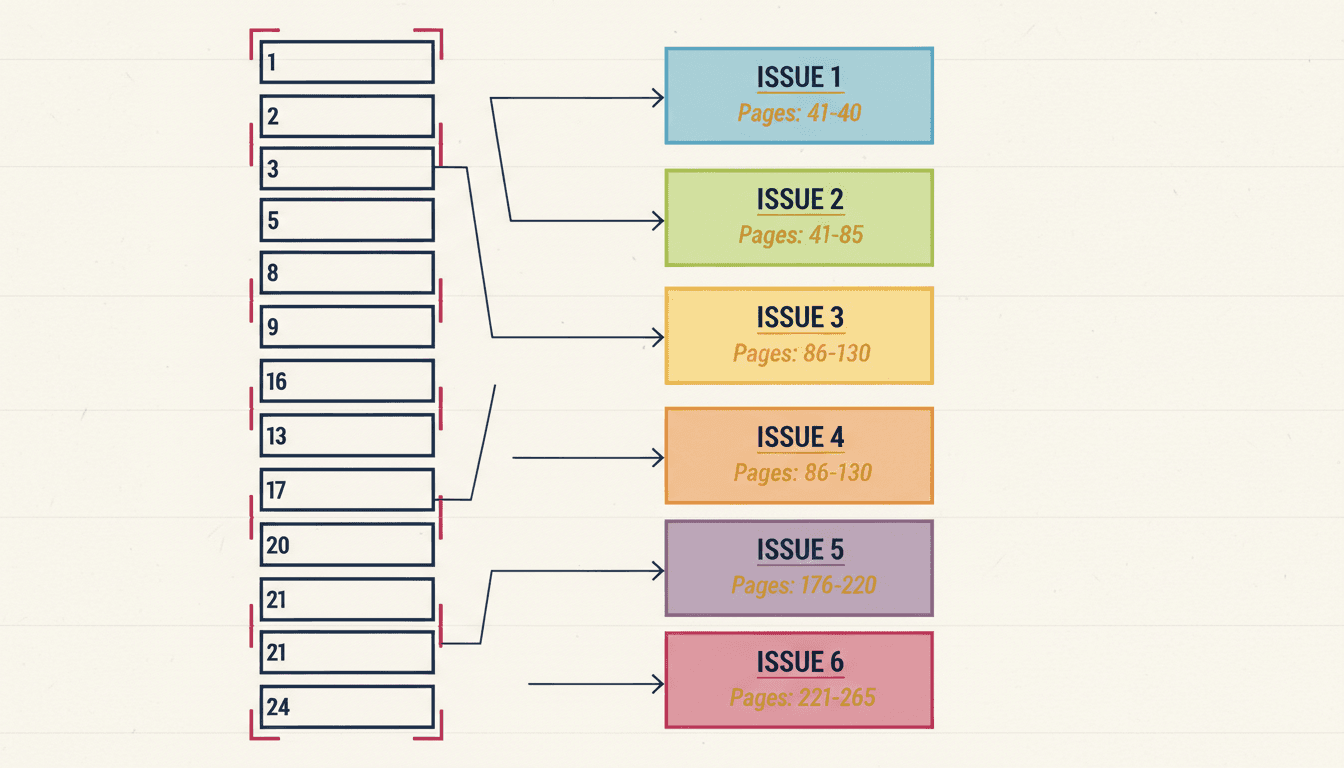
The Issue Map
Which chapters land in which issue. This is the whole adaptation in one page, and it is the only part you can change cheaply — once pages are drawn, re-cutting the run gets expensive fast.
The shapeThe Page Budget
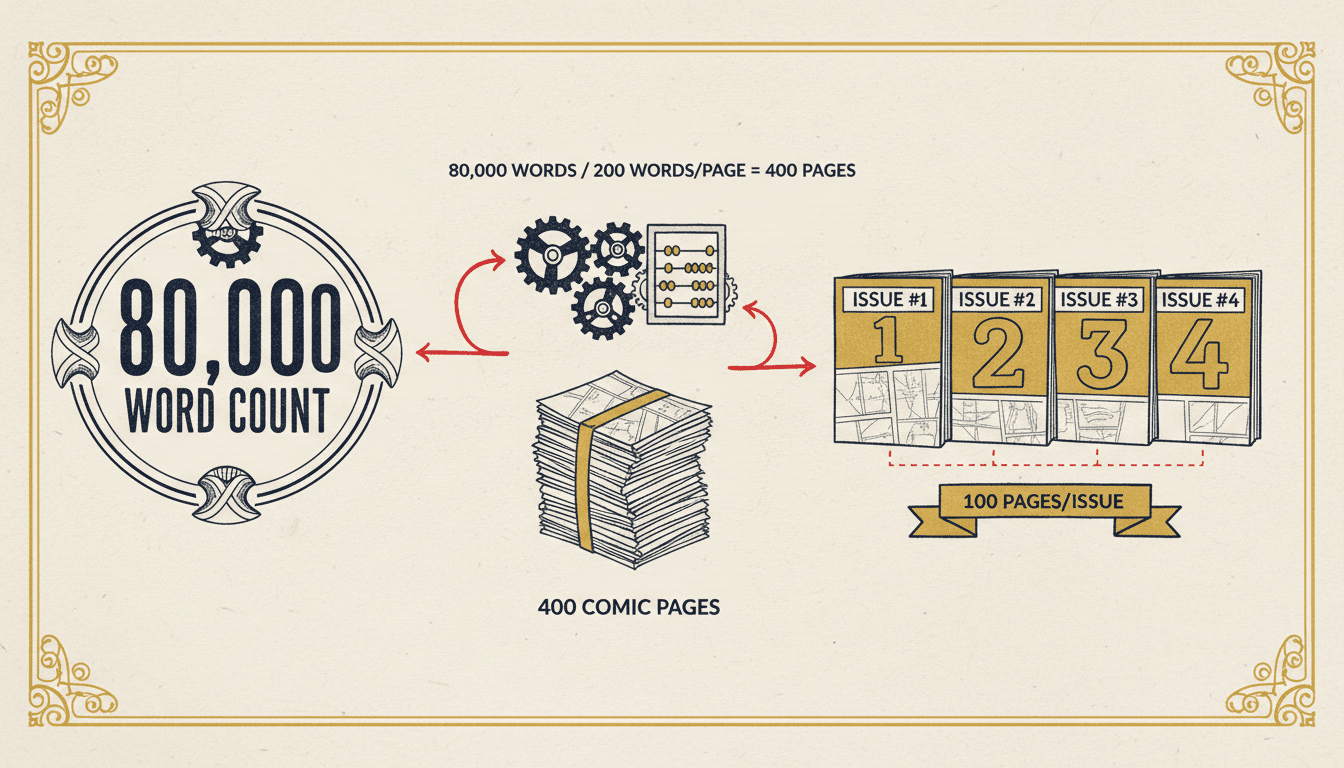
How many pages each issue gets, and how much of your book has to fit in them. A page holds 150–250 adapted words. Skip this and issue five ends up compressing four chapters into eight frantic pages.
The arithmeticThe Last Page
Every issue needs one worth stopping on. Prose chapters end where a writer needed a breath; issues end where a reader needs to come back. Those are almost never the same place in your book.
The hookThe Locked Cast
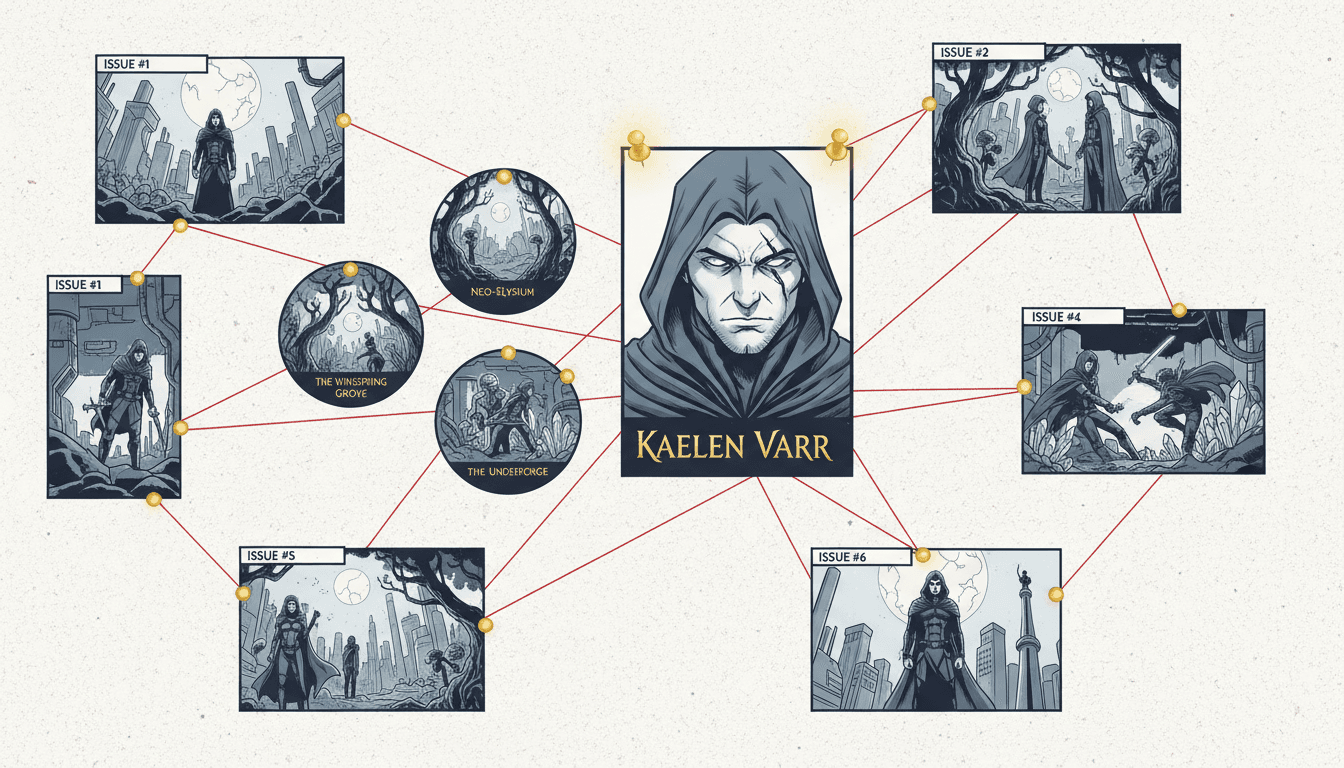
One design per character, reused everywhere. Readers recognise your lead across a nine-month release schedule only if the face survives it, and consistency across issues is harder than consistency within one.
The continuityThe Recap
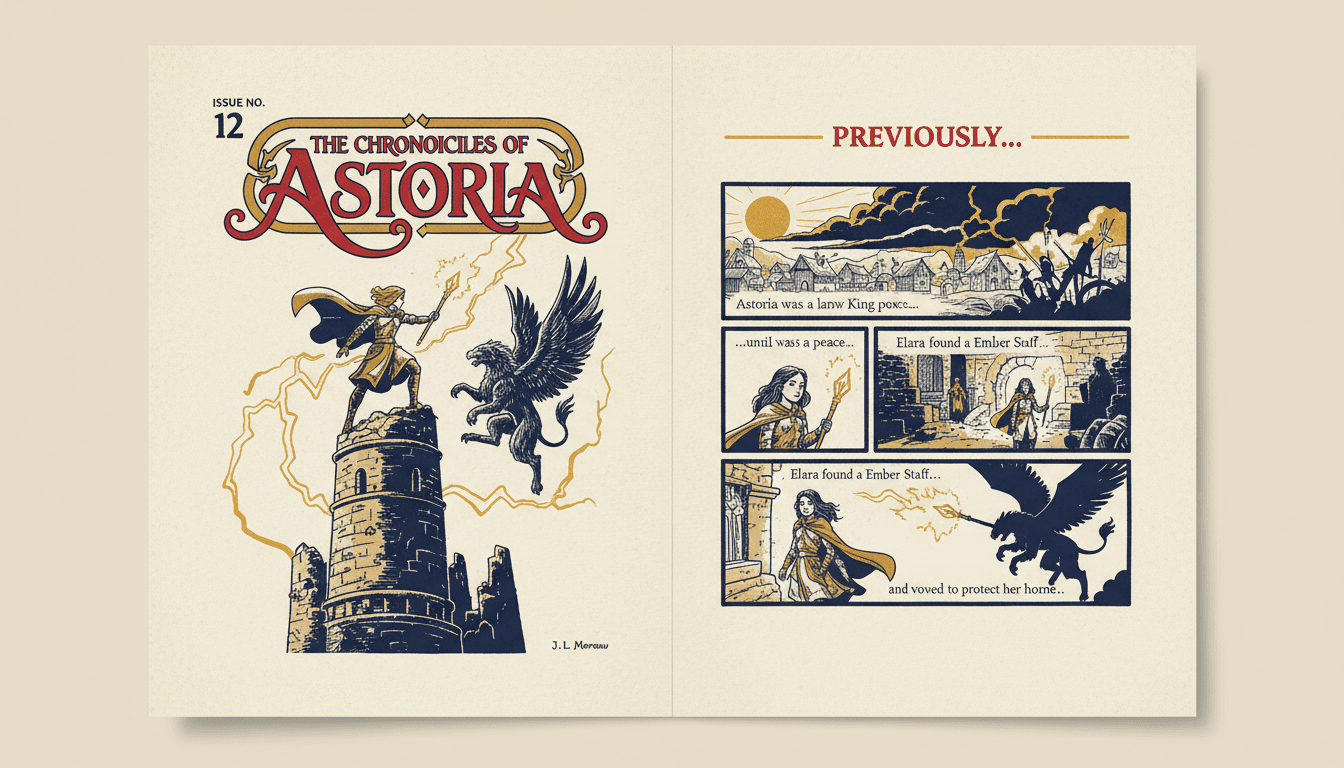
A single page at the front of issues two and up. Nobody remembers issue two by the time issue four lands. One page, never two — a recap longer than that is a confession the issue before it did not land.
The re-entryNot: Even Chunks
Dividing 240 pages into six 40-page blocks is not a series, it is a book with page breaks. Arbitrary cuts are the single most common reason a book to comic adaptation reads as a fragment rather than an issue.
The common trapA series, a graphic novel and a comic book are three different deliverables
Worth separating so you start in the right place. A comic book is one self-contained object, and the AI novel to comic book converter makes one from your text. A graphic novel is book-length and continuous, built by the AI graphic novel generator — one spine, one sitting, no issue breaks. A series is a numbered run released in parts, each part shaped to stand alone and to owe you the next one. This page builds the third, and the difference is not length: it is whether the thing has joints.
The Last-Page Test: Issue or Fragment?
Take the final page of any issue and swap it with the page before it. If nothing is lost, the cut is in the wrong place — you have a fragment, not an issue.
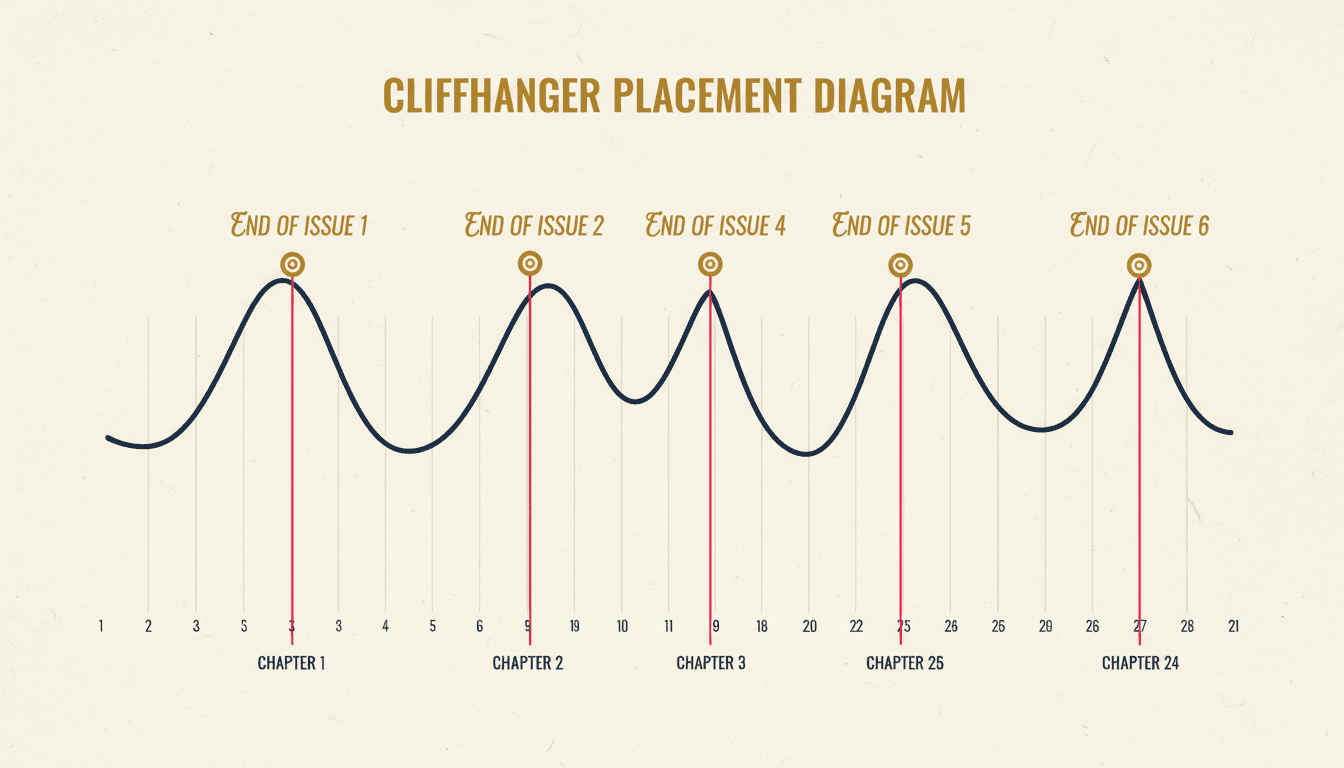
A Fragment
- ✕ Ends at page 40 because 40 pages had gone by
- ✕ Last page: the characters keep walking
- ✕ Nothing has changed since the cover
- ✕ Readers put it down and do not pick up the next
An Issue
- Ends at page 22 because that is where the turn is
- Last page: the door opens and it is the wrong person
- What the reader expects is different than on page one
- Reads whole on its own, and still owes you the next
Every cut in the issue map has to survive the last-page test before it is proposed — which is why the breaks rarely land on your chapter boundaries, and why moving them is the first thing most authors do.
Last pages that pass the test
What a Book to Comic Series Adaptation Gives You
A map you can argue with, a cast that survives the whole run, and issues that ship one at a time.
The Issue Map
One Cast, Every Issue
Cover and Recap Per Issue
“Turn my 82,000-word fantasy novel into a six-issue comic series”
“Plan the issue breaks first — I want to see the map before any art”
“Adapt book one now, but leave room for book two in the same series”
“Twelve shorter issues instead of six long ones, same story”
“Keep every line of my dialogue, cut the description instead”
“Add a one-page recap to the front of issues two through six”
How Long Will the Series Be?
A comic page carries roughly 150–250 words of adapted story, and a standard issue runs 20–24 pages. That is the whole arithmetic, and it decides your run length before you do.
~15 issues
Close Adaptation
Nearly every scene survives. An 80,000-word novel becomes 300-plus pages, which is a multi-year run and the shape most faithful adaptations take.
6–8 issues
Standard Run
The spine of the book at full weight and the subplots compressed. Around 150 pages. This is what most authors actually mean by a comic series.
3–4 issues
Mini-Series
One storyline pulled out and told properly. Roughly 80 pages. Often the smartest first move: prove the book works as comics before committing the rest.
The number nobody tells you before they start
Most people adapting a book into comics for the first time assume the whole novel fits into six issues, and then spend issue five sprinting. It does not fit — not without choosing what the series is about. The page budget puts that choice at the beginning, where it is cheap, instead of at the end, where it costs you the ending. You can pick any of the three shapes above and the map re-cuts itself around it.
One Style, Held Across Every Issue
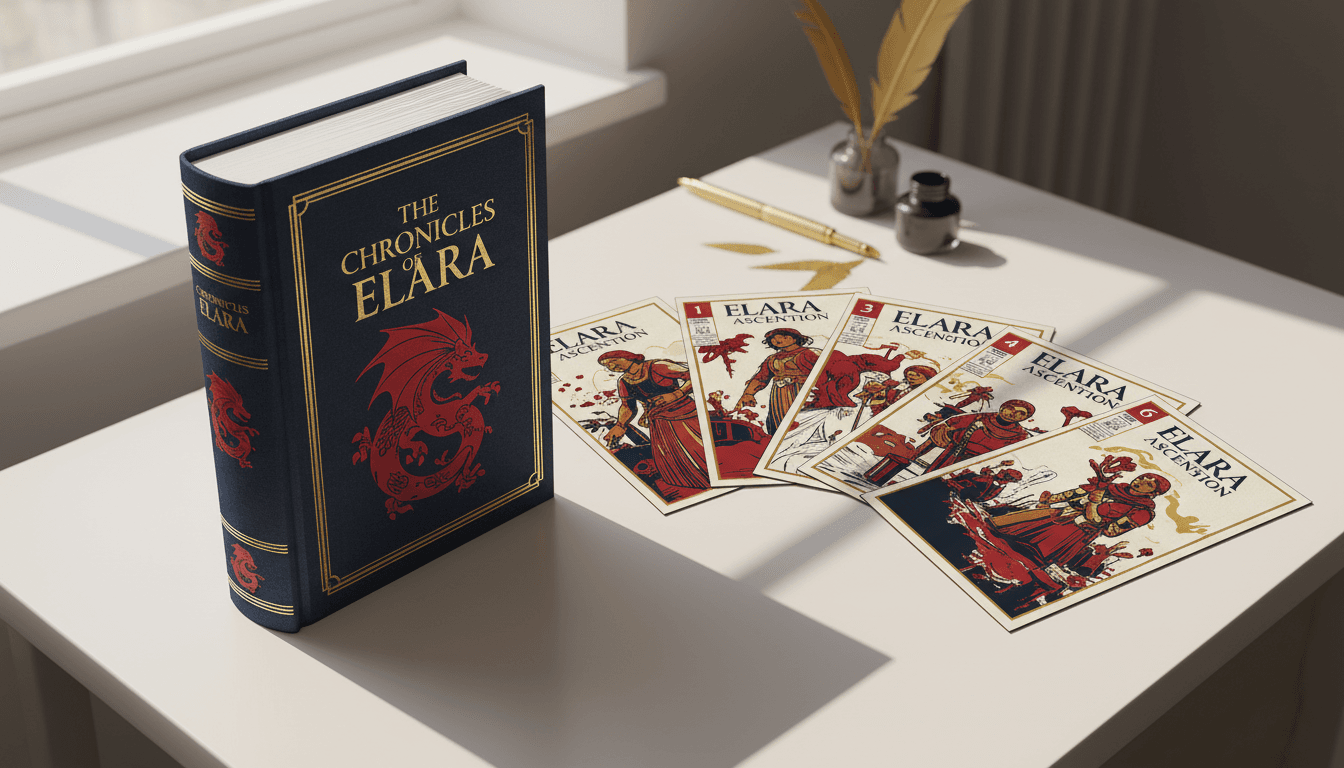
Pick the look once and the whole run inherits it — the same way the cast does.
The Run
Issue #1 to #6
The Map
Chapters to Issues
The Budget
Words to Pages
The Cuts
Where Issues End
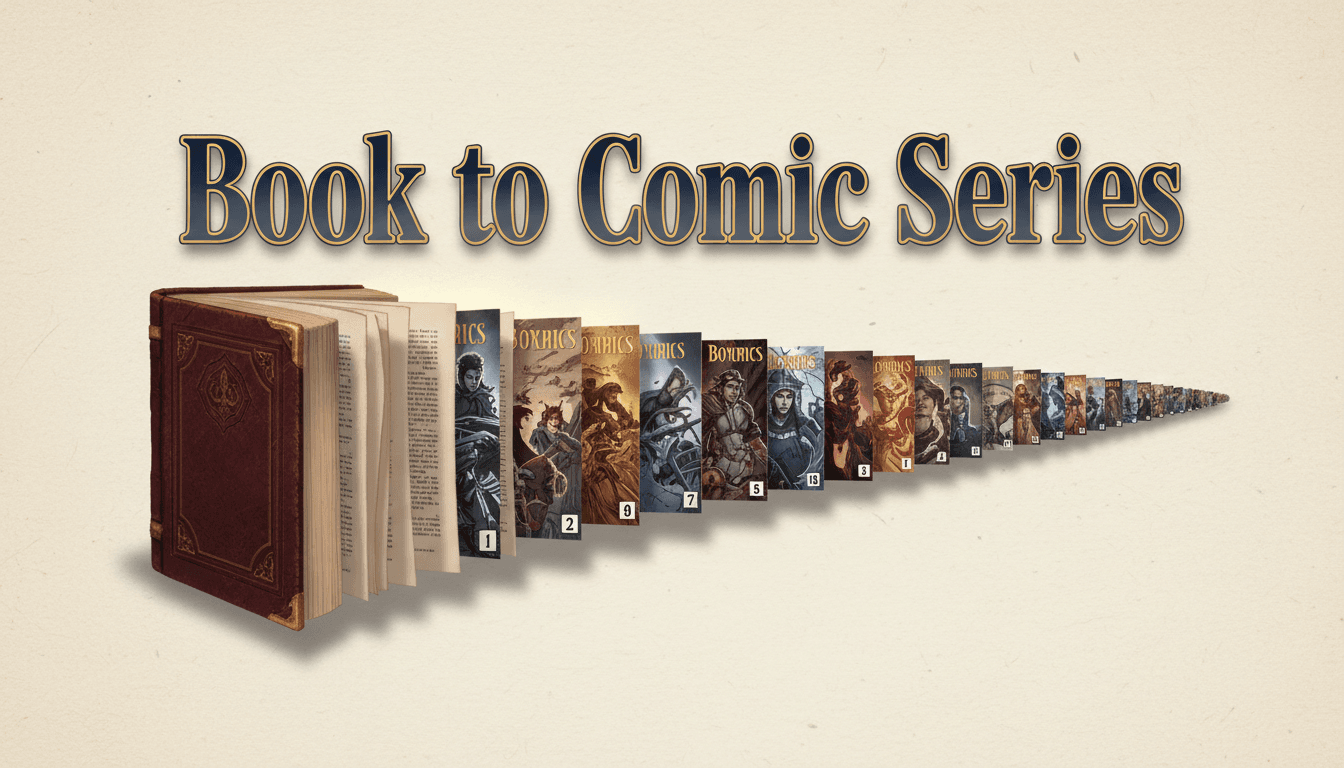
The Shelf
A Whole Series
45+ art styles including American comic, manga, noir, painterly and watercolor.
What Changes When the Whole Book Is Planned as a Run
Six things a page-at-a-time comic generator cannot do, because it has never seen the rest of your book.
You Get the Issue Map Before Any Art
The first thing a book to comic series adaptation produces here is not a picture — it is the map: every chapter of your book assigned to a numbered issue, with a page budget and a proposed last page for each one. You argue with the map, drag chapters between issues and re-cut the run, and only then does anything get drawn.
A Page Budget That Is Honest With You
A comic page holds roughly 150 to 250 words of adapted story, so an 80,000-word novel is not a six-issue comic without decisions. The budget shows you the real arithmetic per issue up front instead of letting you discover it in issue four, when the pacing has already collapsed.
One Cast, Locked Across the Whole Run
Your lead is designed once and reused in every issue — same face, same build, same coat — along with the locations readers are supposed to recognise. A series that redraws its protagonist each issue is a pile of comics; the reuse is what makes a run feel like one object.
Re-Cut Without Redrawing Everything
Decide that issue three is doing too much and you can move its last three chapters into issue four, and only the affected pages rebuild. The map is the source of truth, so changing the shape of the series does not mean starting the adaptation over.
Covers and Recaps Come With the Issues
Each issue gets a numbered cover in the same art style as the interiors and an optional one-page “previously” strip, because readers arrive at issue four having forgotten issue two. These are the parts people adapting a book into comics almost always forget until publication week.
Publish the Run, Not a Folder of Images
Export each issue as a print-ready PDF or a web-ready set, numbered and ordered, with consistent trim and margins across the series. Release them on a schedule, collect them into a single volume later, or do both from the same source.
Who Turns a Book Into a Comic Series?
Self-Published Novelists
The book is out and the second wave of readers is not coming from Amazon. A comic run gives the same story a new shelf, a new audience and eleven months of release-day posts instead of one launch.
Small Presses & Rights Holders
A backlist title with a loyal readership is the easiest thing in the world to serialise, and the hardest to budget an artist for. An issue map makes the adaptation a schedule instead of a commission.
Serial Fiction Writers
You already think in instalments, which is most of the battle. The issue structure is the part of comics that maps cleanly onto how your story was written in the first place.
Teachers & Nonfiction Authors
A dense book becomes readable when it is six short illustrated issues rather than 300 pages. Classroom sets, study guides and explainer runs all work better cut into parts people finish.
Is the Run the Part You Are Missing?
This page is for people with a finished book who want it released as numbered issues. If your gap is somewhere else, one of these is a better door — they all share the same character library.
Yes — split my book into issues
Start here. Bring the manuscript, get the issue map with page budgets, then illustrate the run one issue at a time.
I want one comic book, not a run
A single self-contained comic from your novel — panels, speech bubbles, one object, no issue structure.
I want one long graphic novel
Book-length and continuous, read in one sitting. Same art, different container — no breaks, no covers, one spine.
Picture book, not comic panels
Full-page illustrations with text beneath rather than gutters and speech bubbles. A different reading format entirely.
I am writing new volumes, not adapting
Build a multi-volume book series from scratch with one cast and universe, rather than converting a book you already finished.
My continuity is the problem
One living series bible for characters, world rules and timeline, so issue nine still agrees with issue one.
My cast keeps changing faces
Lock each character design once and reuse it everywhere. The single biggest failure mode of a long comic run.
I do not have a book yet
Write and draw an original comic from an idea instead of adapting an existing manuscript.
Short strips, not issues
Three to six panels at a time for social posts — the opposite end of the scale from a numbered run.
I just want to upload the manuscript
Drop in the file and see what the adaptation reads out of it — cast, chapters, scene boundaries — before deciding a format.
My comic already exists
Turn finished comic pages into motion. The step after the run ships, not part of the adaptation.
I keep losing my own canon
Pin looks, voices, history and decisions in a reusable record so nothing drifts between issues.
Frequently Asked Questions
Explore More Story Ideas
Discover more styles, tools, and story types
Circus Stories
Big-top clowns, acrobats and parades
Explore
Gouache Picture Books
Flat opaque paint & matte brush edges
Explore
AI Story Generator
Generate complete stories with AI
Explore
Storybee Alternative
More styles & features
ExploreBook to Comic Series — One Book, Split Into a Run Worth Following
A book to comic series adaptation fails or succeeds long before anybody draws a panel. The art is the visible part and the part everyone worries about, but the decision that actually determines whether the run works is structural: how a book that was written to be read continuously gets cut into instalments that were never in it. Prose does not come pre-divided into issues. It comes divided into chapters, and chapters end where a writer needed a breath rather than where a reader needs to come back next month. Those are different places in almost every book ever written, which is why so many adaptations read as a novel with page breaks in it.
So the first thing this tool produces is not artwork — it is the issue map. Every chapter of your book assigned to a numbered issue, a page budget attached to each one, and a proposed last page for all of them. It arrives as an argument rather than a result, because you are the person who knows which subplot is load-bearing. Drag chapters between issues, merge two thin ones, split a fat one across a break, turn six issues into twelve. The map is cheap to change and drawn pages are not, which is the entire reason the planning step comes first and comes free.
The test every cut has to survive is the last-page test, and it is the most useful thing on this page. Take the final page of an issue and swap it with the page before it. If nothing is lost, the cut is in the wrong place. An issue that ends with the characters still walking is a fragment; an issue that ends with the door opening onto the wrong person is an issue. What you are looking for is a turn — a reversal, an arrival, a refusal, a revelation — something that changes what the reader expects. Cutting a 240-page adaptation into six even 40-page blocks feels tidy and produces six pieces that each stop mid-thought, which is the most common way a book to comic adaptation quietly stops being a series.
Then there is the arithmetic, which nobody enjoys and everybody needs. A comic page carries roughly 150 to 250 words of adapted story once dialogue has been trimmed and description has become art, and a standard issue runs 20 to 24 pages. Run those numbers against an 80,000-word novel and a close adaptation is north of 300 pages — about fifteen issues, a multi-year commitment. The same novel cut to its spine sits comfortably in six or eight. A three-issue mini-series pulling out one storyline is often the smartest opening move of all, because it proves the book works as comics before you commit the rest of it. None of these is the wrong answer. The wrong answer is discovering the arithmetic in issue five and sprinting through your own ending.
What turns a set of issues into a run people follow is that the issues remember each other. Your lead is designed once and that saved design is what every subsequent issue draws from, so the face in issue nine is the face from issue one — across a release schedule that might span a year. Recurring locations work the same way, and they matter more than people expect: readers learn a place across issues and the recognition does work that dialogue would otherwise have to. Each issue gets a numbered cover in the series style and an optional one-page recap at the front, because nobody remembers issue two by the time issue four lands. One page of recap, never two; a longer one is a confession that the issue before it did not land.
It is worth being precise about what you are actually making, because three different deliverables get called the same thing. A comic book is one self-contained object, which is what the AI novel to comic book converter builds from your text. A graphic novel is book-length and continuous — one spine, one sitting, no breaks — and the AI graphic novel generator handles that shape. A comic series is a numbered run released in parts, each part built to stand alone and still owe you the next one. The difference is not length. It is whether the thing has joints. If you want one object, take one of the other two doors; if you want something readers wait for, you want the run.
Your prose survives the process more than most authors fear. Dialogue is kept and trimmed rather than paraphrased into somebody else’s voice, description mostly converts into art because that is what art is for, and interiority is the genuinely hard case — a novel can spend a paragraph inside a character’s head and a comic has to put it on a face, into a caption, or cut it. Every one of those conversions is marked, so you can restore as a caption anything that carried weight. And the output ships: each issue exports print-ready with consistent trim and margins across the series, so you can release on a schedule, collect the run into one volume later, or do both from the same source. Everything you make is yours outright — publish it, serialise it, crowdfund it, sell it. You should only adapt a book you wrote or hold the rights to, and beyond that the work and the rights stay with you.
Ready to start? Bring the manuscript and see the issue map for free. Not sure which format the book wants? Compare it against a single novel to comic book conversion, a novel to picture book treatment, or read how to turn a novel into a picture book first. Writing new volumes rather than adapting an old one? The book series creator is that side of the shelf, and the story series generator builds episodic runs from scratch. Worried about continuity over a long run? Keep a series bible and lock your cast with the character consistency tool. Splitting a long book a different way? See split a novel into an illustrated book, or open your character library and start the run.