Novel to Script AI:Rewrite Novel Scenes as a Screenplay
A novel to script AI workflow has two jobs: find where each scene starts and ends, then rewrite the prose as scene headings, action and dialogue. Below is a real run of both on one short passage.
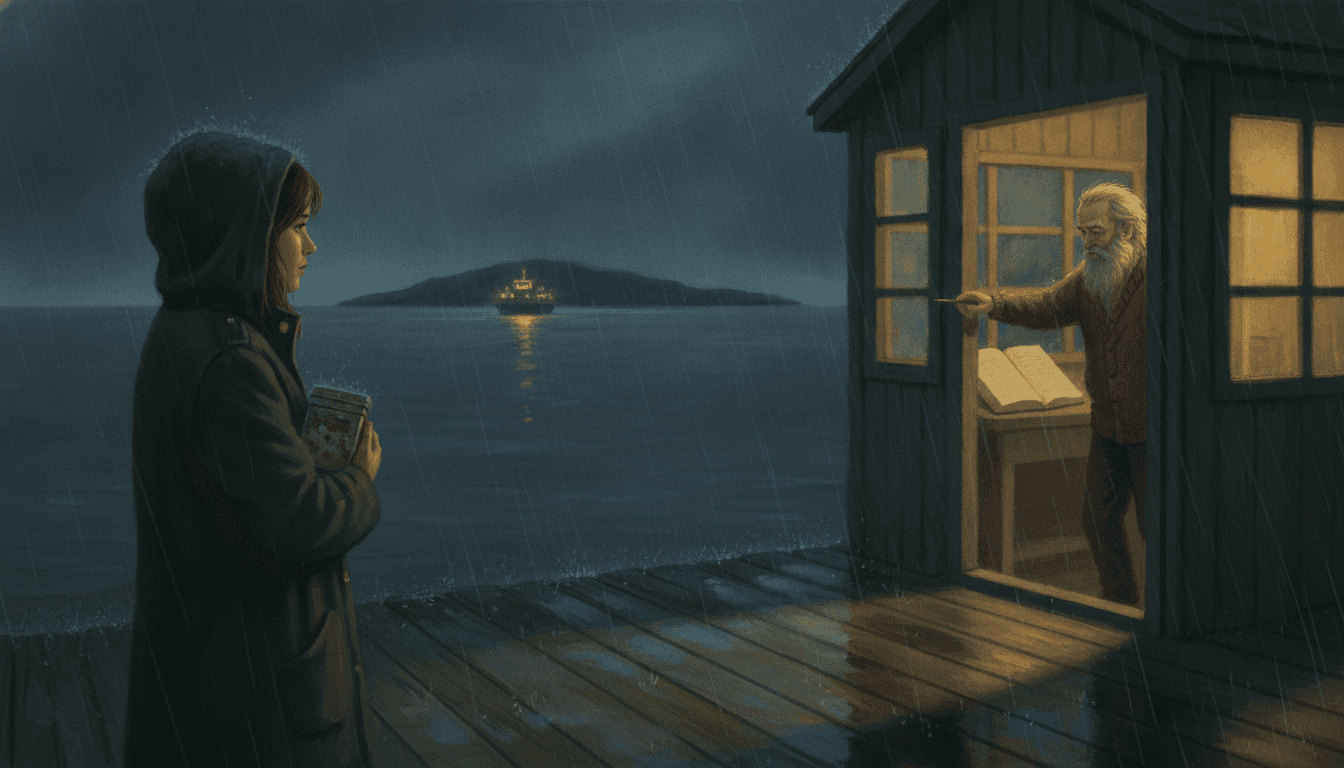
Scene 1 of the worked example, illustrated from C2Story's scene breakdown.
What a Novel to Script AI Rewrite Changes
A novel tells. A script shows. Every line of the script must be something an actor can say or a camera can film, so the rewrite changes three things:
- Scene headings. Each change of place or time gets a line like
EXT. FERRY DOCK - NIGHT. - Action. Description becomes short present-tense lines. "She ran" becomes "She runs".
- Dialogue. Speech moves under the speaker's name, and the "she said" tags disappear.
What cannot be filmed has to change shape. "The lighthouse had been dark for nine years" is a fact in a reader's head. In a script it becomes a line of dialogue, a shot of the rusted door, or it is cut.
Step 1: Let C2Story Find the Scenes
We pasted the sample passage (the one behind the button above) into C2Story's storyboard step. It split the passage into three scenes and listed place, time, cast and the props each character carries. The table is its output, unedited.
Scene 1: Late for the Last Ferry
Location: The dock and ticket hut
Time: night
Cast: Mara, Old Tobin
Carried props: her father's tin box
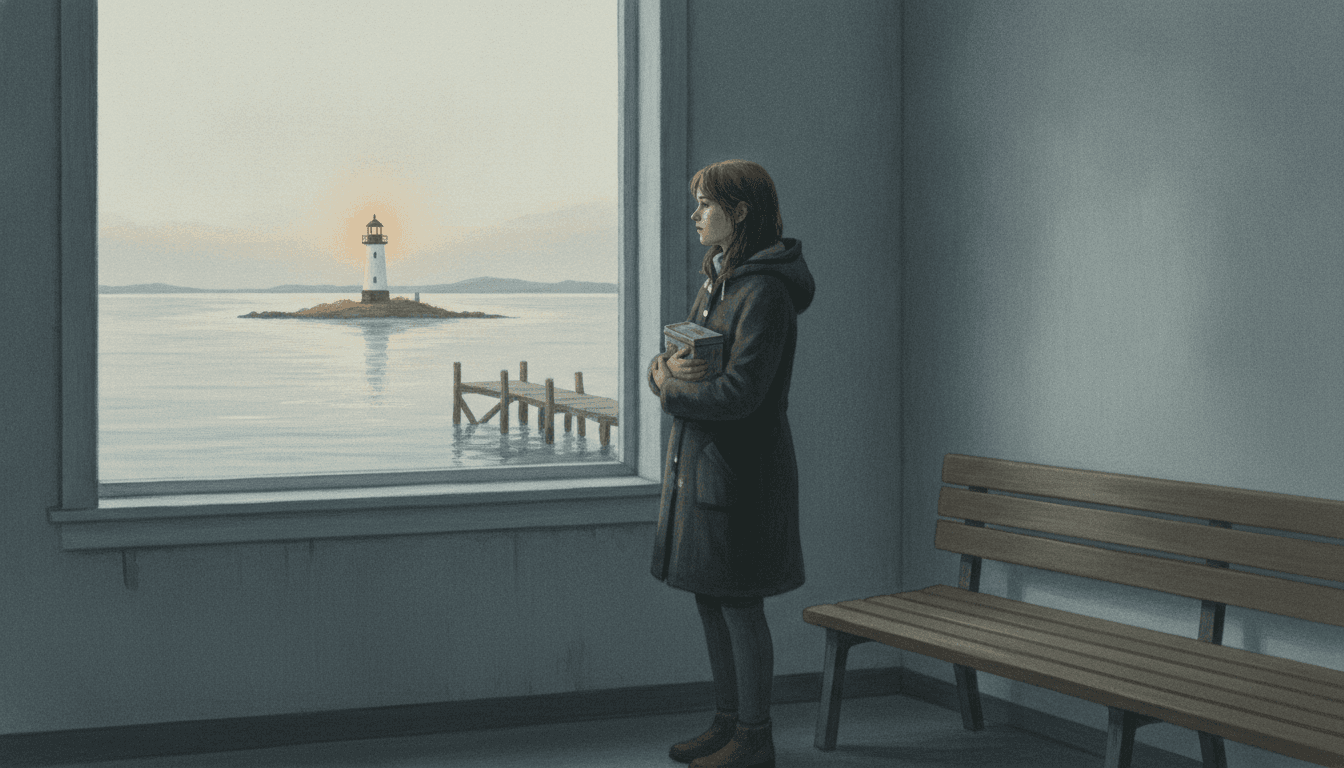
Scene 2: A Lamp in the Dark Lighthouse
Location: The harbour waiting room and the far shore
Time: dawn
Cast: Mara
Carried props: her father's tin box
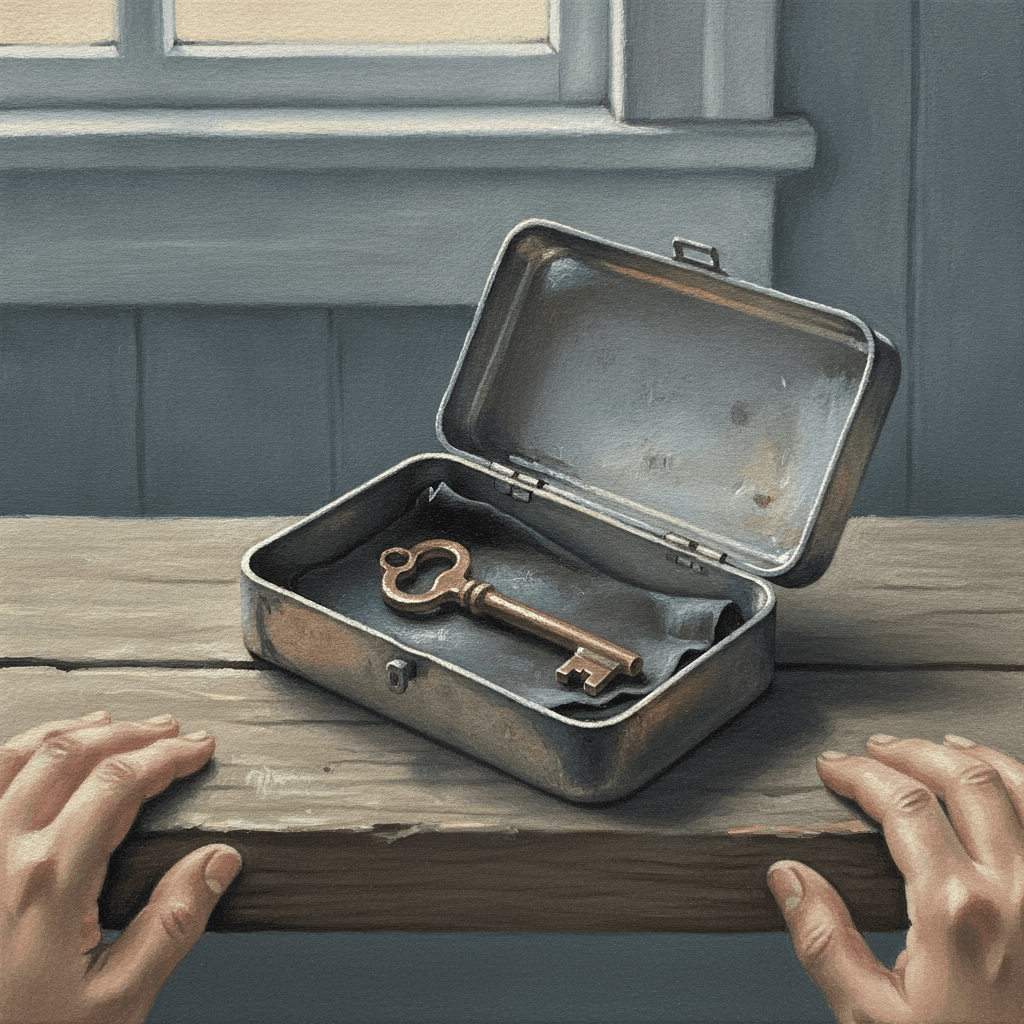
Scene 3: The Brass Key
Location: The harbour waiting room
Time: dawn
Cast: Mara
Carried props: her father's tin box, a single brass key
Part of the shot brief it wrote for scene 1:
Camera: Eye-level, medium-wide shot, 35mm lens.
Lighting: Cold, dim night; the ticket hut's warm interior light spills a little onto the wet dock, while the rest is blue-black rain and the single yellow glow of the ferry far off.
Mood: Damp, disappointing, quietly final.
That brief guides the illustration. It is a picture specification, not screenplay pages.
Step 2: Rewrite the Scenes in Script Format
The script on the right was formatted by hand from that breakdown. Three choices are worth copying:
- One scene became two headings. The breakdown kept the night on the bench and the dawn at the window together. A script needs a new heading when time jumps, so the waiting room gets NIGHT and then DAWN.
- Scene 3 joined scene 2. The key is found in the same room, the same morning, so it stays under the DAWN heading as continuous action.
- "Dark for nine years" was cut. Nobody says it and the camera cannot show it. Save it for a later line of dialogue.
The props list helps too: the tin box appears in every scene, so it is in the first action line and pays off in the last.
EXT. FERRY DOCK - NIGHT

Rain. A ferry horn sounds twice.
MARA (20s), hood up, runs the last stretch,
a dented tin box pressed to her ribs.

In the lit doorway of the ticket hut,
OLD TOBIN bends over a ledger. He does not look up.

                OLD TOBIN
          You're late.

                MARA
          The bus broke down at the quarry.
          Is there another boat tonight?

Tobin closes the ledger and points his pen at the
water: the last ferry, a smudge of yellow light
halfway to the island.

                OLD TOBIN
          Not tonight. Not in this.

INT. HARBOUR WAITING ROOM - NIGHT

Mara asleep on a bench, the tin box under her head.

INT. HARBOUR WAITING ROOM - DAWN

The rain has stopped. Through the window: a flat
silver harbour. On the island, above the jetty,
a lamp burns at the top of the lighthouse.

Mara jolts upright. The box falls open.
Inside, wrapped in oilcloth: a single brass key.
A Novel to Script AI Checklist
- Work one chapter at a time, never the whole book.
- List the scenes first. Agree on place and time before writing a line.
- Mark every thought, memory and backstory sentence. Decide: dialogue, image, or cut.
- Switch to the present tense and shorten. Four lines of action is a long block.
- Keep each character's voice. Copy dialogue word for word, then trim.
- Track props and costumes from scene to scene, as the breakdown does.
If you ask a chat assistant to do the rewrite, give it the scene list from step 1 and these rules. A novel to script AI prompt with a fixed scene list drifts far less than "turn this chapter into a screenplay".
What C2Story Does With a Novel
In the C2Story Studio you add chapters, and each chapter can be split into scenes, given shot briefs and illustrated, as shown above. The finished result is a picture book or a comic, not a screenplay file. To go that way, see AI novel to comic book, the AI storyboard generator, or the guide on adapting a novel into a comic series.