
Relationship Cartoon Picture BooksThe Joke Is the Other Person
Three of the seventy-eight style briefs here share the same comic-timing sentence. Only one leaves the room out. A relationship cartoon picture book is built from that one, where the only thing left for a face to react to is the person beside it.
- Two people, a sofa and a floor line: the setting is only suggested
- Deadpan, awkward or suddenly exaggerated, aimed at each other
- Clean simple outlines, soft flat fills and one muted accent
- Free credits by request, no card
50,000+
Stories Created
10,000+
Active Creators
50+
Art Styles
4.9/5
User Rating
What Makes a Relationship Cartoon Different From Two Funny Faces
Every style here is a written brief: a palette, a light, a line weight and a short list of refusals. Four lines in this one decide everything, and the first is the one no other brief contains.
The only brief that leaves the room out on purpose
Every style in C2Story runs on a short written brief: a palette, a lighting note, a line weight and a few things to avoid. Three of the seventy-eight hand-drawn briefs share almost the same sentence about deadpan, awkward or suddenly exaggerated expressions with clear comic timing. Then each says what to do with the rest of the frame. One asks for a full modern-life setting. One asks to render the full comedic scene. This one asks for a simple suggested setting, and it is the only brief in the library whose setting is merely suggested. One other brief keeps its settings sparse, but it still draws them. Here a sofa and a floor line are the whole room.
So the only thing left to react to is the other person
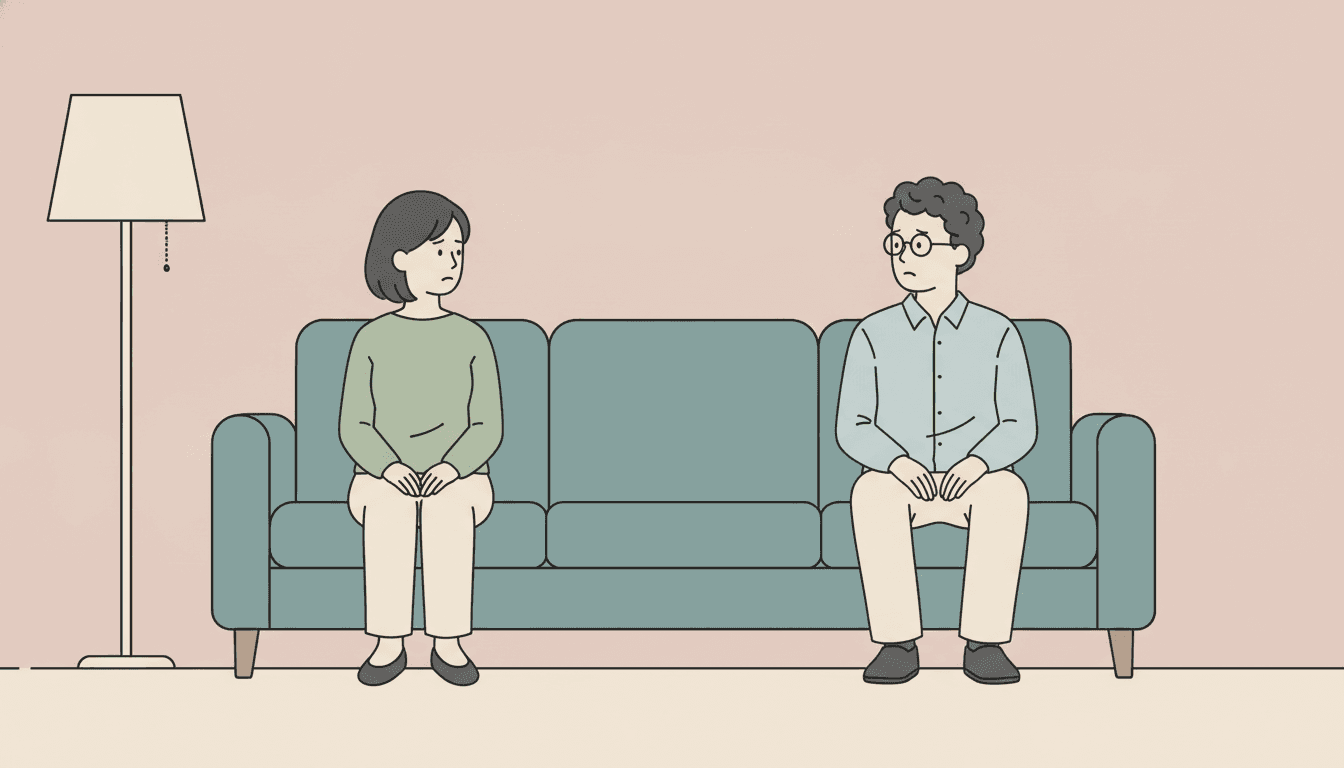
That missing room is what the whole style rests on. In its two comic-timing relatives the face reacts to something in the scene: a commute, a toppled stack of plates, a dog on the table. Take the scene away and that something disappears too. What is left in the frame for an awkward glance or a sudden exaggerated face to land on is the second person. Even the brief’s preview line is two people and no event, a couple sitting apart on a sofa exchanging an awkward glance. Nothing has happened. The joke is that they both know why the cushion between them is empty.
Written for grown-ups, in pairs
The brief names its cast more precisely than nearly any other: urban men and women, in a minimal adult comic, doing wry relationship satire. Those words are rare here. Only this brief says men and women. Only this brief says wry. Only one other mentions relationships at all, a deadpan cartoon whose tiny relationships are between blank figures who never react to each other. This is not a children’s look that happens to have adults in it. It is about the people who share a kitchen, a car or a forty-year marriage, and about how well they know each other’s faces.
Faces cut down to eyes, a mouth and a few key shapes
The brief reduces faces and clothes to essentials and builds identity from clear outlines, eyes and mouth plus a few key shapes. That reduction is shared: three briefs here talk about faces in terms of eyes and mouth, so it is not this style’s own invention. What this style does with it is. With only two dots and a line to work with, a face cannot act alone, so the expression is read off the other face in the frame. A raised eyebrow means very little by itself. Aimed at a man proudly showing off a crooked shelf, it says everything. The line stays clean, simple and even. It is not the thick contour of bold flat satire or the rough line of gag manga.
Take the Room Away and the Gap Becomes the Picture
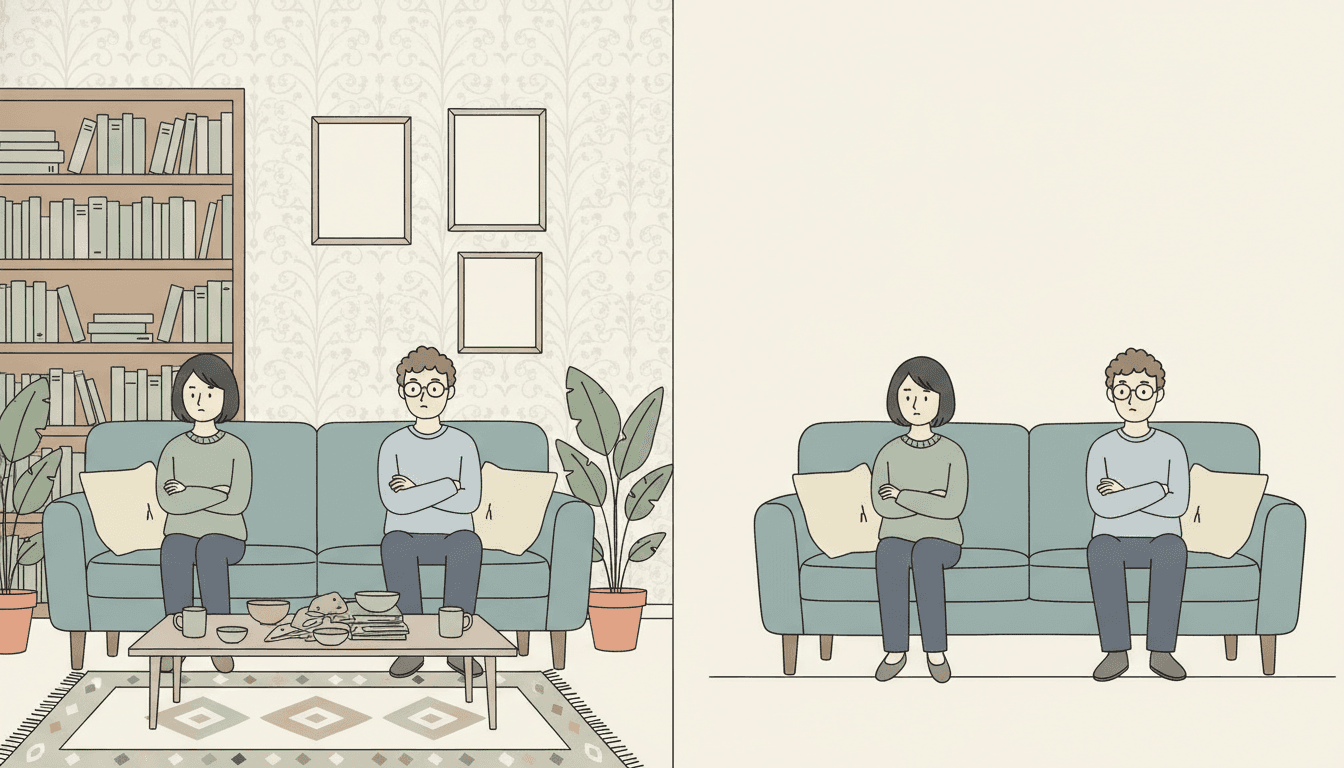
The picture beside this is the same couple twice, in the same pose, with the same folded arms and the same sulky mouths. On the left the room is drawn in full: bookcase, wallpaper, frames, plants, rug and a coffee table covered in clutter. Your eye goes looking around it. On the right the room is reduced to a sofa and one line for the floor, and the folded arms are suddenly the whole picture.
That is the brief’s simple suggested setting at work, and it is why the four things it refuses are uniform cute smiles, fine detail, heavy shading and photorealism. Each of them would fill the frame with something other than the two people. Detail fills it with things, shading fills it with mood, and realism fills it with a real room. A uniform cute smile does the most damage, because two people smiling the same pleasant smile have nothing to say to each other.
So a minimal satire illustration here is not minimal to look tidy. It is minimal so that the most obvious thing on the page is the space between two people.
Every Funny Style Here Aims Its Joke Somewhere Different
Seven of the seventy-eight briefs touch comedy, and each one puts the joke in a different place. In the deadpan cartoon the joke is nobody noticing. In whimsical absurd it is the world itself. In bold flat satire it is a verdict on modern life. In heta-uma it is the drawing being wrong. In the single-panel cartoon it is the situation. In gag manga it is the response to an event.
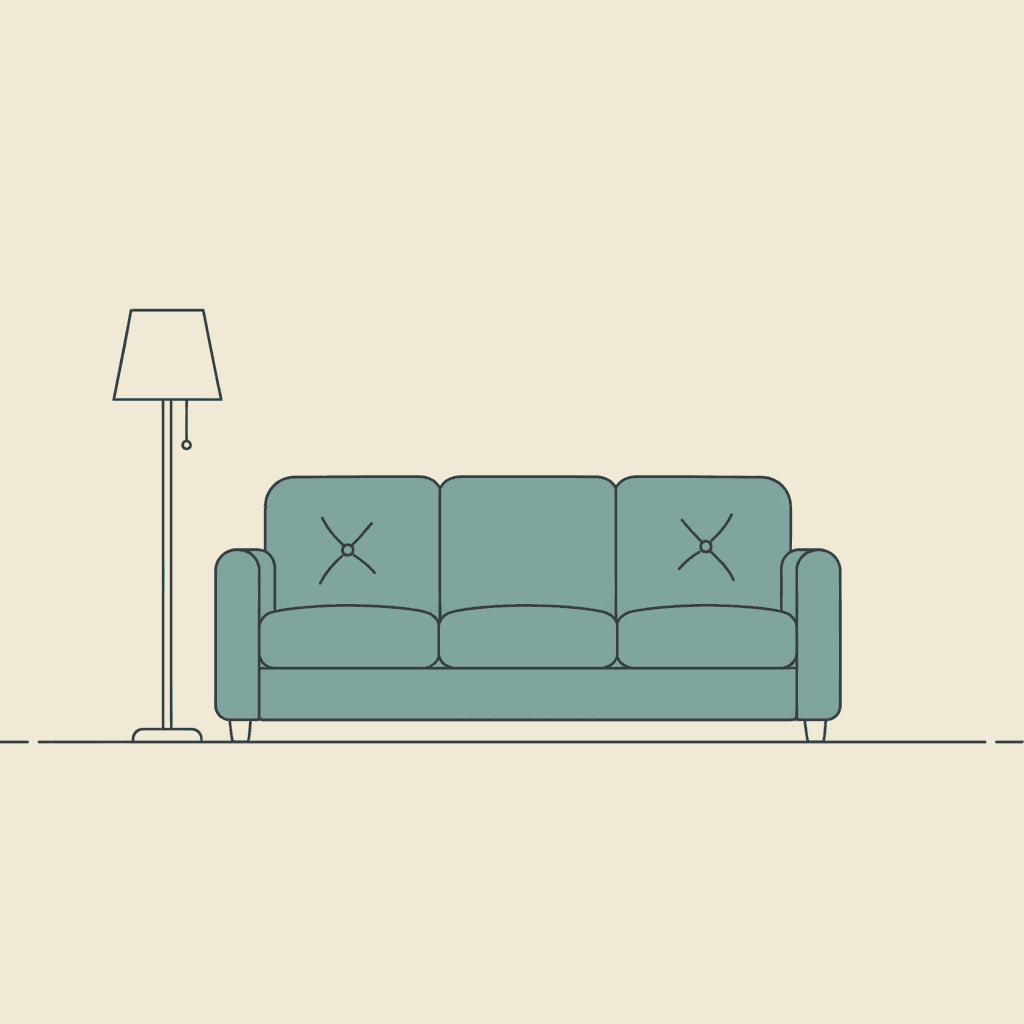
In a relationship cartoon it is the other person. Nothing in the world is wrong, the drawing is clean, and often nothing has happened at all. One person is reacting to another person they know very well. The picture beside this is the entire setting the brief allows: a sofa, a lamp and a floor line. Every page in this style gets about that much room, and the two people have to supply the rest.
From One Sentence to a Book About Two People
You pick the relationship cartoon look once. The brief is then applied to every page, so neither face drifts.
Describe two people and one thing
A sentence is enough. He put up a shelf. We both wanted the last slice. Forty years of the same breakfast. You do not need a plot, just two people who know each other and something small for them to look at each other about.
Choose Minimal Relationship Satire
That fixes the whole brief at once: clean simple outlines, soft flat fills with one muted accent, flat even lighting, a suggested setting and the four refusals. Save both characters first and give them different silhouettes.
Get a book, not a cartoon
C2Story writes the story, splits it into pages and builds each one to the brief. Your words are set as type rather than lettered into the art. Read it on the web, share it, or buy the PDF to hand to a printer.
This Style and Its Three Nearest Neighbours
Two of these share the relationship cartoon’s comic-timing sentence and one shares its interest in pairs. Here is what each actually asks for.
Minimal Relationship Satire
The style on this page
A minimal adult comic illustration of urban men and women in wry relationship satire. Faces and clothing are reduced to essentials, character identity is built from clear outlines, eyes and mouth plus a few key shapes, and expressions are deadpan, awkward or suddenly exaggerated with clear comic timing, against a simple suggested setting. The palette is a clean black line, soft flat fills and one muted accent. The light is flat and even. The line is a clean simple outline. The four refusals are uniform cute smiles, fine detail, heavy shading and photorealism.
Bold Flat Satire
Same sentence, a full room and a verdict
The nearest relative. The comic-timing sentence is word for word the same, and so is the first refusal, uniform cute smiles. The differences are the line and the room. That brief draws a thick heavy black contour and punchy accent hues where this one draws a clean simple outline and soft fills. It also asks for a full modern-life setting, so the joke is aimed at the world the characters live in: the commute, the phone, the queue. Take bold flat satire when the page makes a point about modern life. Take this one when the page makes a point about one particular person.
Gag-Manga Reaction
Same timing, an event and a witness
The second relative on comic timing, and the loud one. Its brief is built on strong reactions to something that has just happened, in a rough energetic sketchy line, and it asks to render the full comedic scene, so there is always an event: a dropped mug, a toppled stack. Here nothing need happen at all. Gag manga is a person reacting to the world. Relationship satire is a person reacting to the person beside them, often about something that happened years ago.
Deadpan Dialogue Cartoon
Also a pair, but nobody reacts
The only other brief that mentions relationships, and the easiest to confuse with this one, because both like two figures in a lot of white space. But that brief gives everyone blank expressionless faces and lists exaggerated expressions among its refusals, so a blank child stands beside an equally blank dog and the reader supplies the reaction. This brief lets one face suddenly go big, and that face is aimed at the other one. Choose the deadpan cartoon when neither of them notices. Choose this when one of them notices the other.
Couple Comic Style Story Ideas That Suit the Brief
Each relationship cartoon idea plays to the same strength: two people who know each other, one small thing, and a look.
He Put Up a Shelf
One proud man, one crooked shelf, one look from the person who knew it would be crooked. The style draws the shelf in two lines and spends the rest of the page on the look.
Forty Years of Not Listening
An anniversary book in which every page is the same breakfast table, and the story is in which of the two of them is talking. A suggested setting keeps the table, and the marriage, centre stage.
The Last Slice
Two flatmates, one plate, nine pages of pretending not to want it. A good shape for this brief because the event never happens and the comedy is entirely in the sideways looks.
After You, No, After You
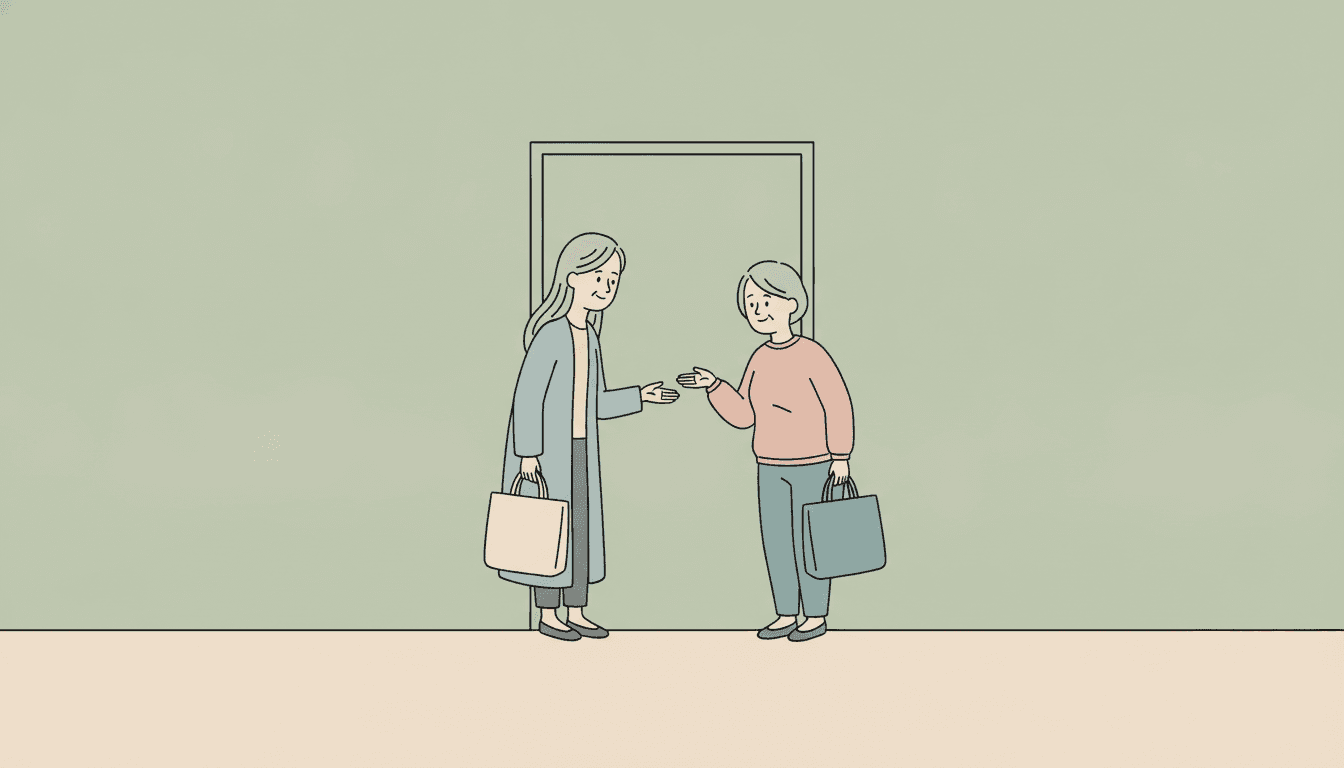
Two old friends who have been too polite to each other for thirty years. Awkwardness is one of the three expressions the brief names, and politeness is where adults keep most of theirs.
We Both Remember It Differently
How a couple met, told twice, once by each of them, on facing pages. The setting is only suggested, so the two versions can disagree about everything except the two faces.
Our First Year, Honestly
A wedding-anniversary or moving-in gift that is funny instead of soppy: the thermostat, the towels, the route to the supermarket. Wry rather than romantic is exactly the register the brief asks for.
What Two People and a Floor Line Look Like
Relationship cartoon pages generated to this one brief, with nothing retouched afterwards.
The Room, Drawn and Suggested
After You
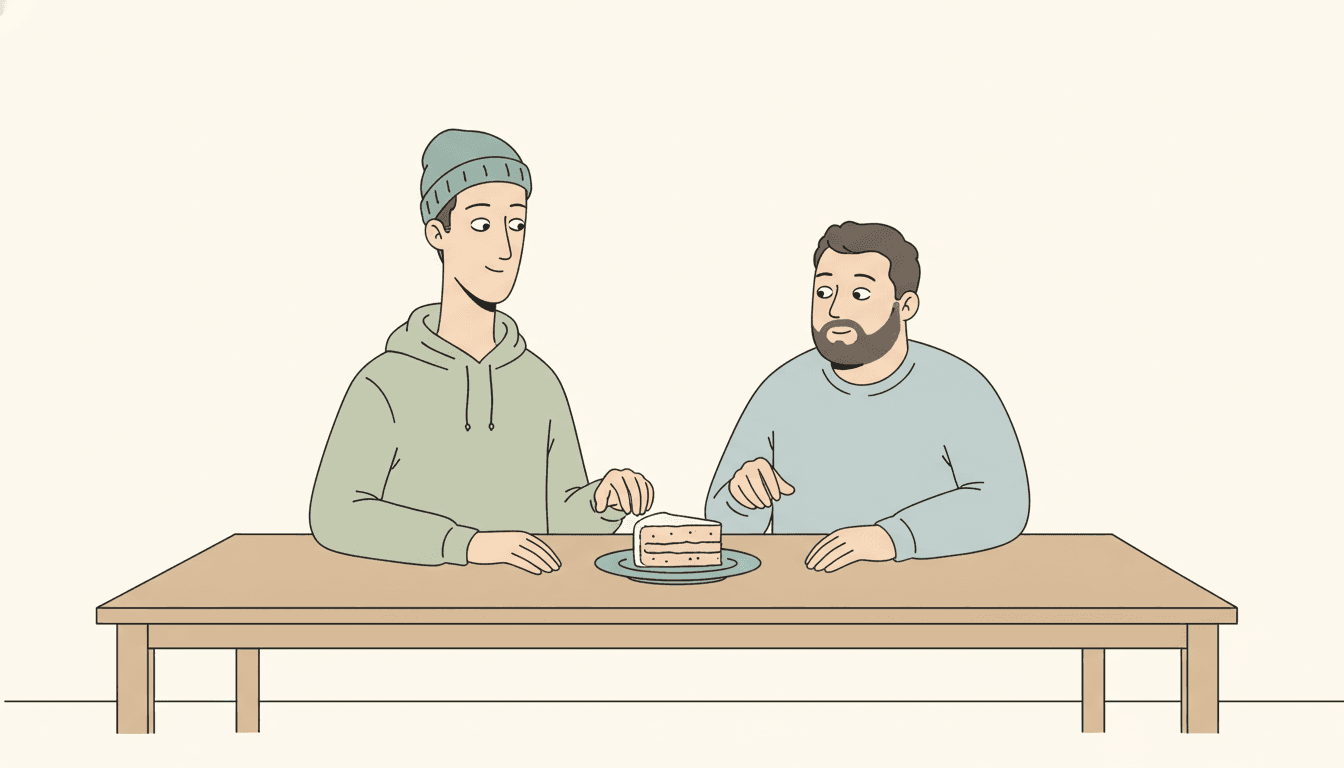
The Last Slice
A Few Key Shapes, Three Expressions and the Space Between
People are known by their outlines, and a face is only a couple of marks, so the look between two faces carries the meaning.
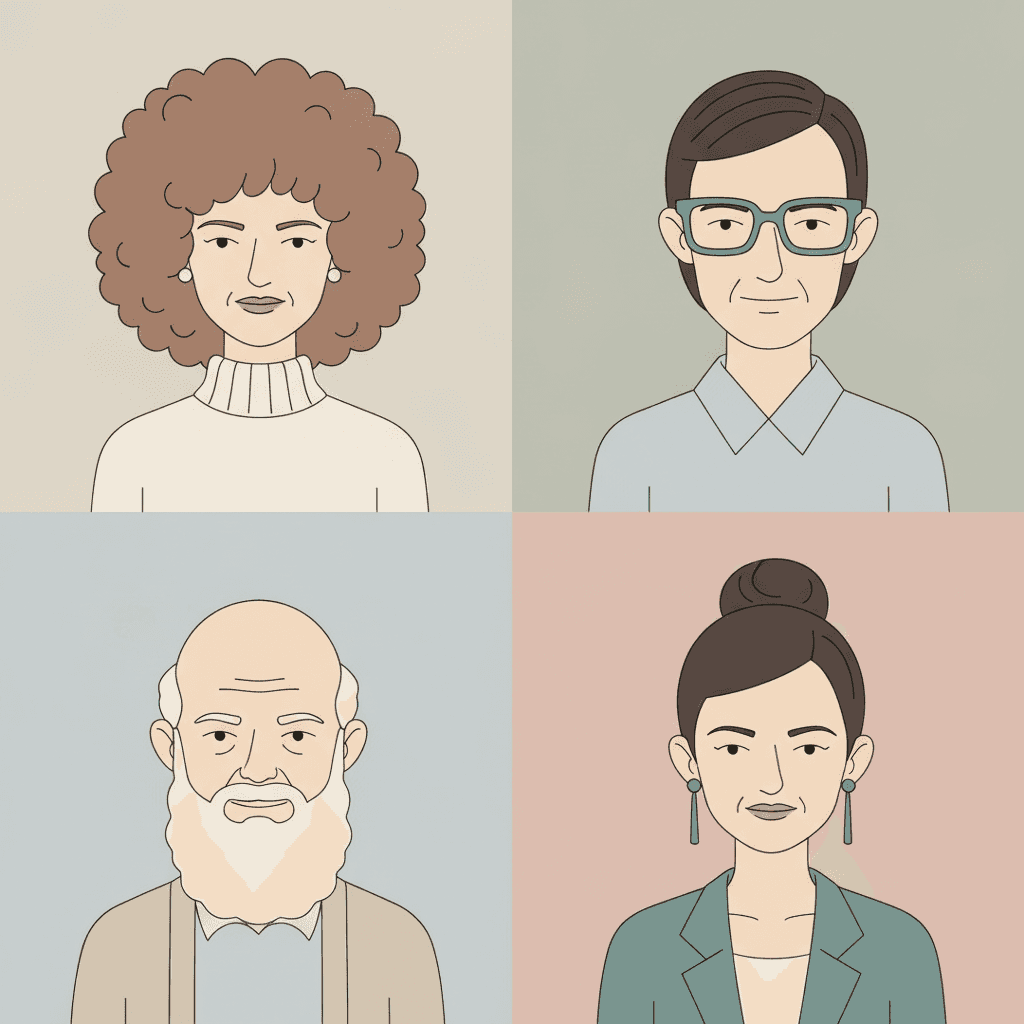
Known by the Outline
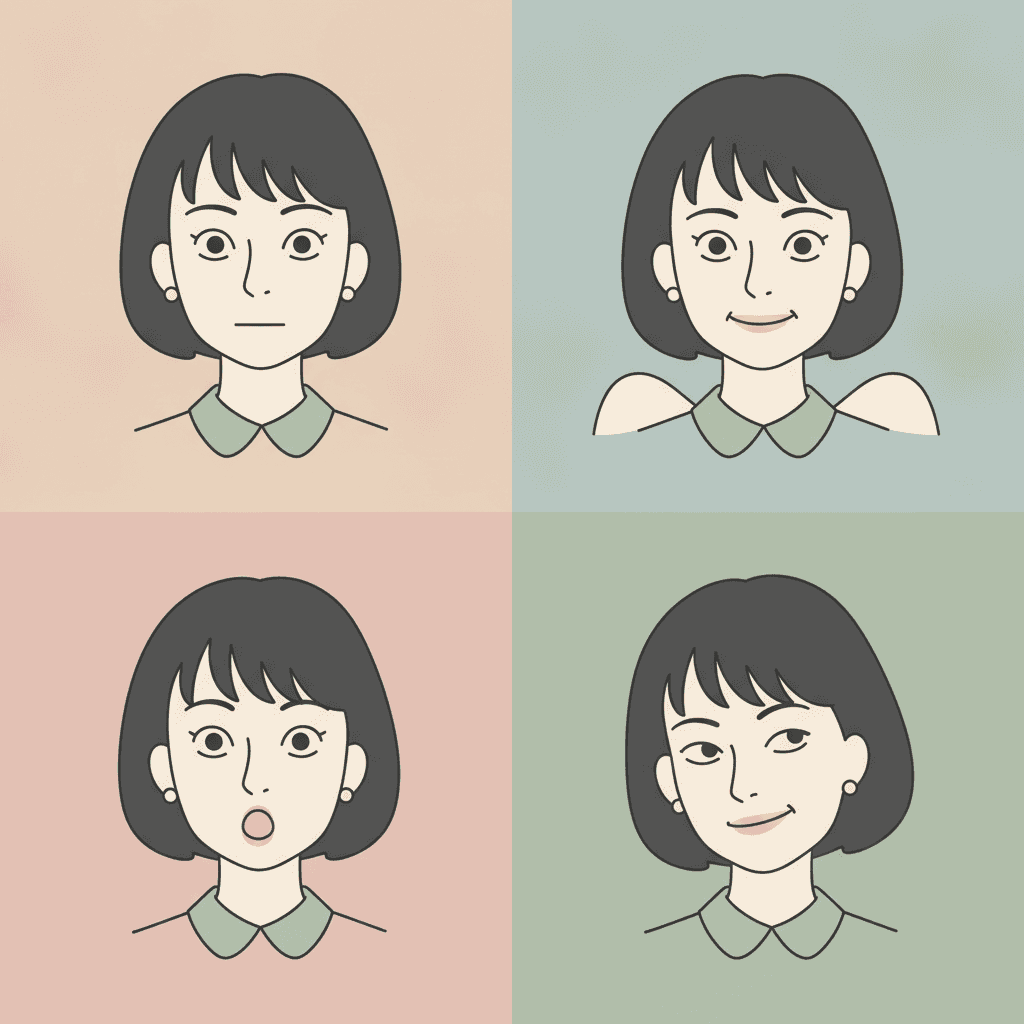
One Face, the Whole Register
The Whole Room
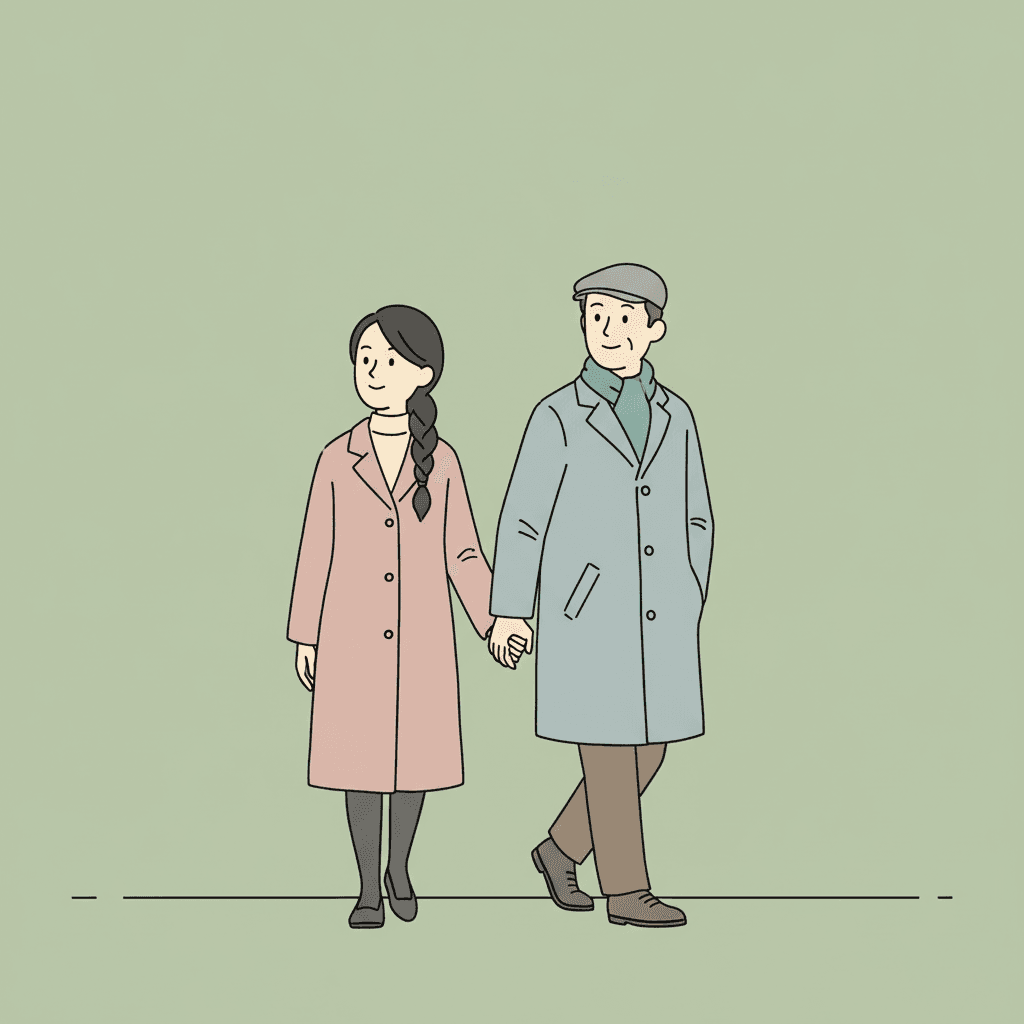
Both Quietly Pleased With Themselves
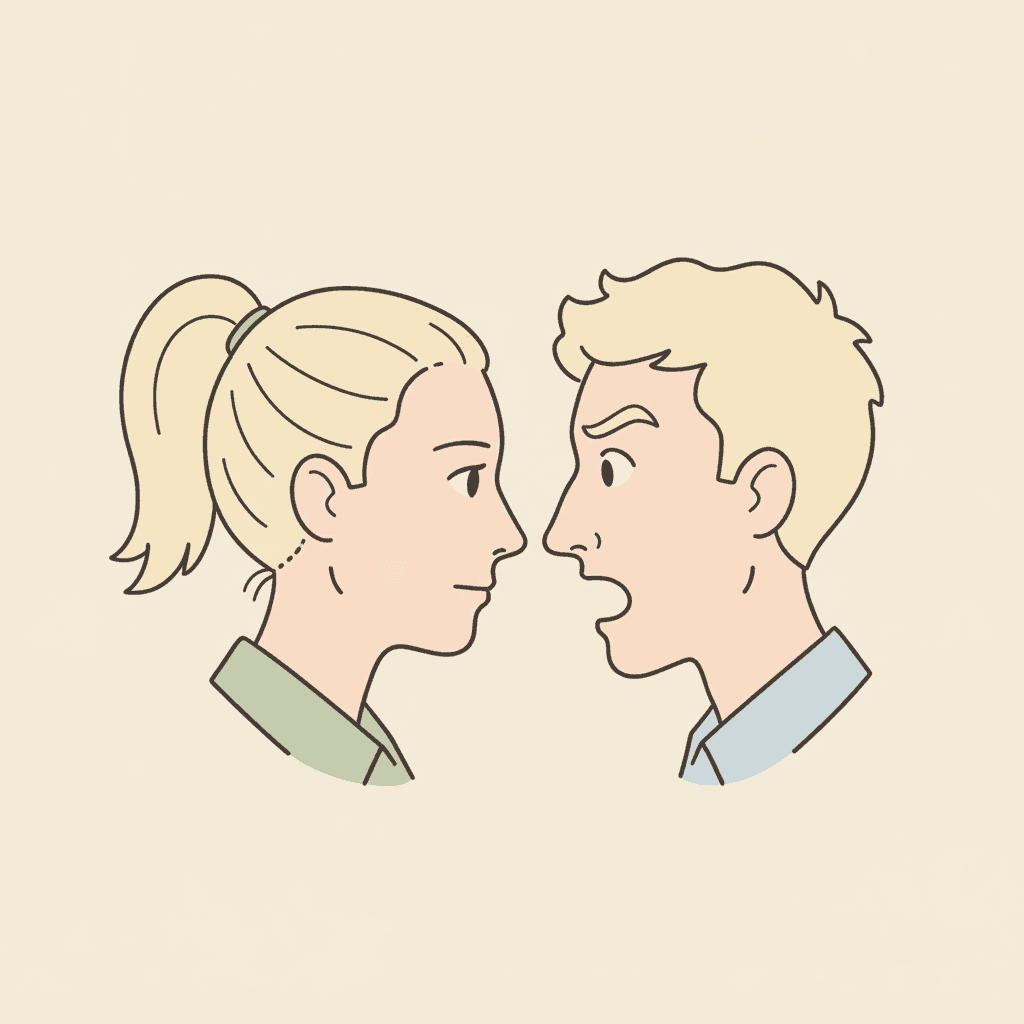
Nose to Nose
Making a Whole Relationship Cartoon Picture Book
What is useful in a relationship cartoon book and where the limits are, in the order you are likely to run into them.
Two characters, both on model, every page
A relationship book doubles the usual consistency problem, because there are always at least two faces and the reader is watching both. In a style where each face is only two eyes, a mouth and a haircut, a small drift is enough to make a husband look like somebody else by page seven. C2Story carries one fixed brief into every page: a clean simple outline, soft flat fills with one muted accent, flat even lighting and the four refusals of uniform cute smiles, fine detail, heavy shading and photorealism. Save each person in the Character Library with up to fourteen reference images and both stay themselves. Characters built from an uploaded photo stay private to your account.
Identity lives in the outline, so choose it well
Because the faces are so reduced, the people are recognised by their silhouettes: a cloud of curls, a bun, a flat cap, square glasses, a beard. This is the most useful thing to know before you start. Give each of the two a shape the other does not have, such as one tall and one short, or one with hair and one without, and they stay readable even when they are small on the page. Two people with the same build and the same haircut are hard to tell apart in any style. In this one they become the same person.
Soft fills and one muted accent, on purpose
The palette is recorded as a clean black line, soft flat fills and one muted accent. That is quiet colour, but not drained colour. It stays out of the way because in this style the colour has nothing to describe, since the room is only suggested. The accent tends to find the thing the two people are disagreeing about: the sofa, the shelf, the plate. The honest cost is the light. It is flat and even and casts nothing, so there is no dusk, no lamplight and no mood lighting, and a tender or melancholy page has to get there on the words. There is no global greyscale switch in C2Story either.
Not the style for a story about a place
The real constraint. A suggested setting means the house, the street and the holiday are a sofa, a doorway and a floor line, and the brief refuses fine detail on top of that. If your story depends on where it happens, such as a city at night, a garden or a grandmother’s kitchen full of things, this brief will not give you the place. The fine-line ink style draws tiny figures inside large, detailed rooms, and botanical ink fills the page with things. This one keeps only what the two people are reacting to.
A whole book, not one cartoon
This kind of drawing usually lives as a single cartoon, one couple and one look, shared once and forgotten. You are not making one. Describe the story and C2Story writes it, splits it into pages and builds each page to this brief based on what that page says, so the same two people carry a setup and a payoff across a whole book. Your words are set as type rather than lettered into the art, so there are no speech balloons. When you want it on paper, the paid PDF download is the handoff to your printer, and everything you make is licensed for commercial use.
A gift book for grown-ups, mostly
Where this one honestly sits with readers: it is written for adults, and its best use is the book one adult makes for another, for an anniversary, a wedding, a moving-in or a retirement. Children can enjoy the faces, but the joke usually depends on knowing what a long look across a sofa means, and that takes some years. For a family book the children will read, the gag manga or deadpan cartoon styles land faster. You can write in English, Chinese, Japanese, Spanish, French and more, and the look does not change with the language.
If the book is a gift for a couple, our wedding story book page covers the occasion itself, and Valentine’s Day stories covers the sweeter end of the register this style deliberately avoids. For the same comic timing with a full room and a thicker line, see bold flat illustration picture books, and for a pair where nobody reacts at all, deadpan cartoon picture books.
Questions About Relationship Cartoon Picture Books
Explore More Story Ideas
Discover more styles, tools, and story types

Camping Stories
Tents, campfires, hiking and starry nights
Explore
Whimsical Absurd Picture Books
Bendy structures & invented creatures
Explore
Bedtime Story Generator
Cozy goodnight stories for kids
Explore
Storybird Alternative
Better AI story creation
ExploreRelationship Cartoon Picture Books: A Clean Line, a Suggested Room and Two People Who Know Each Other
A relationship cartoon picture book rests on one unusual decision: the room is left out. C2Story runs seventy-eight hand-drawn style briefs, each a short written record of a palette, a light, a line weight and a few refusals. Three of them share almost the same sentence about deadpan, awkward or suddenly exaggerated expressions with clear comic timing. The other two ask for a full modern-life setting and a full comic scene. This one, the Minimal Relationship Satire style, asks for a simple suggested setting, and no other brief in the library does. With the room reduced to a sofa and a floor line, the only thing left for a face to react to is the other person.
The cast is the second decision. The brief names urban men and women, a minimal adult comic and wry relationship satire. It is the only brief here to say men and women and the only one to say wry, and just one other mentions relationships at all, a deadpan cartoon whose figures never react to each other. Faces and clothes are reduced to essentials, identity is built from clear outlines, and each face is eyes and a mouth plus a few key shapes. A face that minimal cannot act alone, so the expression is read off the second face in the frame. A raised eyebrow means little by itself, but aimed at a man showing off a crooked shelf it says everything.
The rest of the brief keeps out of the way. The line is a clean simple outline, neither the thick contour of bold flat satire nor the rough line of gag manga. The palette is a clean black line, soft flat fills and one muted accent, and the light is flat and even. The four refusals of uniform cute smiles, fine detail, heavy shading and photorealism all remove things that would compete with the two people. That makes a couple comic style book well suited to an anniversary, a wedding, a moving-in or a retirement, and poorly suited to a story about a place, because the place is only ever suggested.
So the choice between the funny styles here is reasonably clear. Take the deadpan cartoon if nobody should notice anything. Take bold flat satire if the page makes a point about modern life. Take gag manga if something happens and somebody reacts. Take a minimal satire illustration in this brief when two people who know each other too well are looking at each other about something small. Describe the story in a sentence and C2Story writes it, splits it into pages and builds every page to the same brief, keeping both characters on model, in English, Chinese, Japanese, Spanish, French and more, with the paid PDF download as the handoff to your printer.