
Oil Pastel Picture BooksCosy, at Full Volume
Most gentle styles get their comfort by turning the colour down. This one turns it up. Oil pastel picture books are drawn in thick waxy colour laid on by hand, with no ink line around anything — where two colours meet, they are rubbed together, the way you would smudge a real oil pastel with your thumb.
- Thick, grainy, waxy strokes you can see
- Creamy high-saturation peach, butter yellow and rose
- Edges smudged together instead of outlined
- Free credits by request, no card
50,000+
Stories Created
10,000+
Active Creators
50+
Art Styles
4.9/5
User Rating
What Makes Oil Pastel Illustration Different
Every style here is a written brief: a palette, a light, a line weight and a short list of refusals. Four things in this one decide the look, and most of the words that carry them appear in no other brief of the seventy-eight.
Edges rubbed together, not drawn
Every style in C2Story runs on a short written brief: a palette, a lighting note, a line weight and a few things to avoid. Four other briefs give up the outline — two ask for soft blended edges, one for painterly brush edges, one for stippled dots. This is the only one that says how its edges are made: blended smudges, colour rubbed into colour. Smudge appears in no other brief, and its line weight is the only one that is waxy.
Cosy, with the colour turned up
Five briefs whose mood is calm, gentle or soothing refuse saturated colour by name — they get their comfort by turning the colour down. This one asks for creamy high-saturation tones: warm peach, butter yellow, dusty rose. It is the only brief that is both cosy and asks for saturation, so a quiet bedtime page here is warm and loud at once.
Thick colour, layered by hand
Coarse grainy waxy strokes, thick creamy colour blocks, chalky pigment. Layered by hand appears in this brief and no other; coarse in only one other. The surface is the medium you would recognise from a school art box — heavy, a little gritty, and visibly pushed around — and the brief asks for the whole scene and background in that same waxy touch, not just the characters.
Naive figures, built for comfort
The words naive or folk appear in five briefs. In the art-brut and heta-uma briefs the naivety is raw or deliberately wrong; here it is simple rounded proportions in a warm cosy healing mood — and healing appears in no other brief. The brief refuses only four things, all of them digital: vector lines, smooth gradients, photorealism and digital gloss.
The Same Hug, With the Colour Turned Up
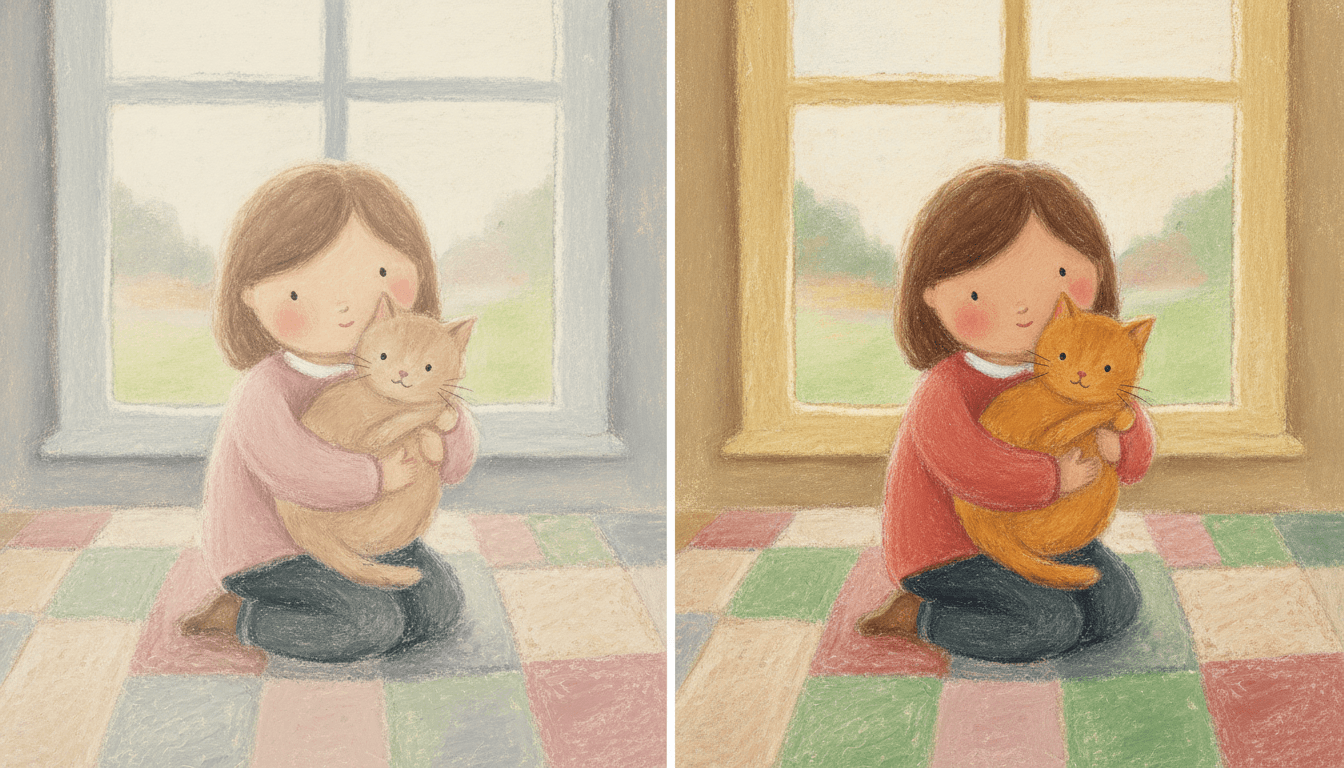
Look at one picture twice. The same girl, the same cat, the same quilt, the same window, drawn in the same waxy oil pastel. On the left every colour is turned down — a pale pink jumper, a pale cat, a grey window frame. It is gentle and it is quiet, and that is how most cosy styles in the library choose to be.
On the right the colours are turned up: a red jumper, a bright ginger cat, a butter-yellow window. Nothing else changed, and the picture got warmer, not louder in a bad way. That is the bet this oil pastel art style makes. Comfort does not have to whisper. A thick, creamy, full-strength colour can feel as safe as a pale one, the way a heavy blanket does.
Its refusals are short, and every one of them is about keeping the screen out of the picture.
Write What Makes the Room Warm
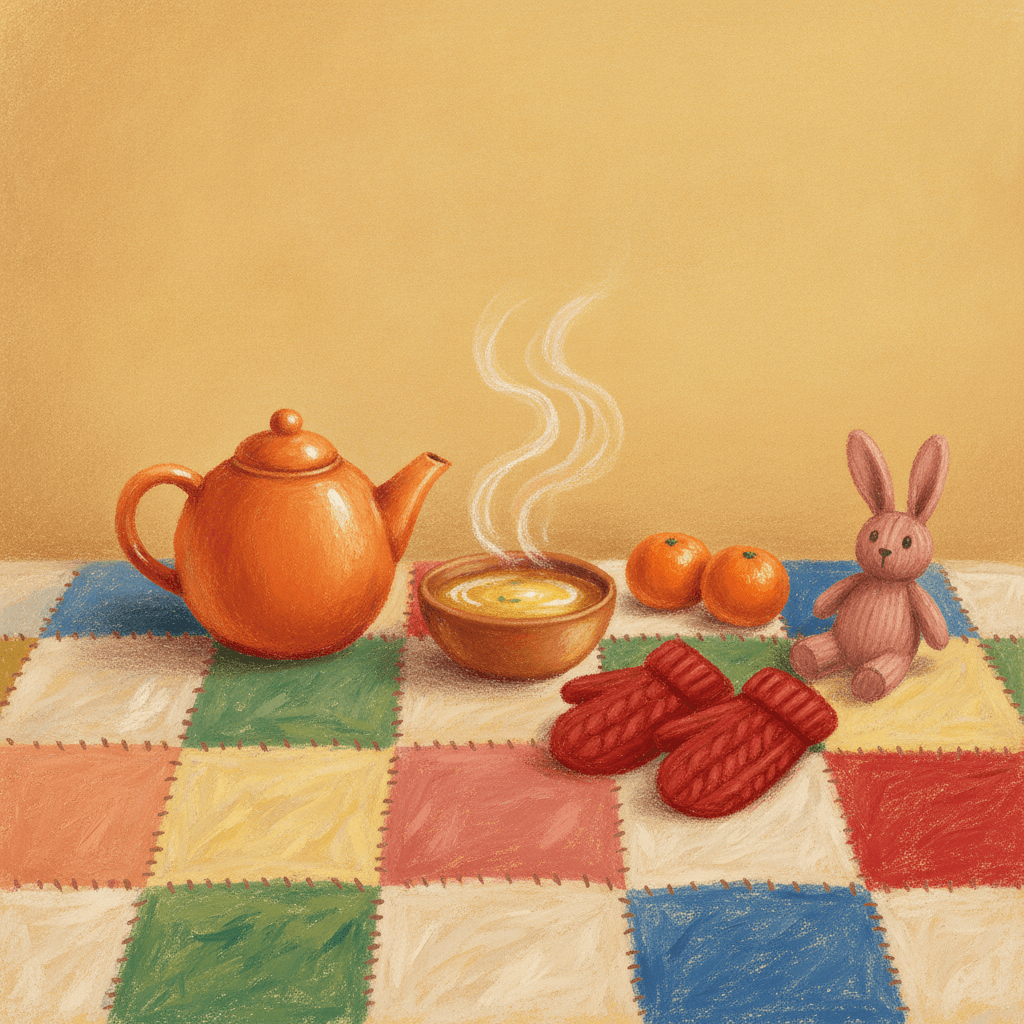
When every colour on the page is already at full strength, colour alone cannot tell the reader where the warmth is. So the warmth has to be a thing. The square beside this paragraph has nobody in it — a teapot, a bowl of soup still steaming, two tangerines, red mittens, a knitted rabbit on a patchwork quilt — and you can still feel who was just there.
Write your story the same way. Instead of saying a page is cosy, put the cosy thing in it: the soup grandmother is stirring, the blanket fort, the quilt pulled up to a chin, the scarf trailing off a father’s shoulders, the cat that is too big to carry. Give each page one warm object, and this oil pastel illustration brief does the rest.
And let things touch. Because the edges are smudged rather than drawn, a cheek against fur or two children in one quilt melt into a single warm shape. A picture of someone alone in a big room is the one thing this style finds hard to make feel cosy.
From One Sentence to an Oil Pastel Picture Book
You pick the look once. The brief is then applied to every page, so the waxy texture, the palette and each character’s colours never drift.
Describe the story and its warm things
Write a sentence or two about who is in the story and what happens. Give each character one outfit by colour, and name the warm things on each page — the soup, the quilt, the scarf, the cat.
Choose Oil-Pastel Healing
Pick the style from the Styles Library. From then on every page uses the same thick waxy strokes, the same creamy high-saturation colour and the same smudged edges.
Get a whole book
C2Story writes the story, splits it into pages and illustrates each one. Regenerate any page you want to change without touching the rest, read it online, share it, or buy the PDF download to hand to a printer.
This Style and Its Three Nearest Neighbours
One shares its wax and its hug, one its thick colour and missing outline, and one its cosiness. Here is what each actually asks for.
Oil-Pastel Healing
The style on this page
A soft oil-pastel illustration with coarse grainy waxy strokes, thick creamy high-saturation colour layered by hand, chalky pigment and blended smudges, naive folk figures with simple rounded proportions, and a warm cosy mood. The light is soft warm diffused light and the edges are soft blended waxy edges, with no outline asked for.
Vintage Crayon Storybook
The same hug in the same room — inside an ink line
Its own sample subject is almost this one’s: a child hugging an animal friend in a cosy room. It is also wax, also warm, and it allows crayon brights. The difference is the line. That brief asks for loose rough ink outlines, coloured-pencil grain and a vintage paper border; this one has no outline and no border, and its colours meet by being rubbed together.
Gouache
Also thick, also no outline — but painted flat
Gouache is opaque and matte, laid on with a brush in flat blocks and broad bands, and its edges are brush edges. Oil pastel is waxy and grainy, and its edges are where a finger went. Choose gouache for clean, still, poster-flat shapes and night skies; choose oil pastel when you want the texture of the stroke to stay on the page.
Korean Cream Doodle
Cosy too — with the colour turned down
A slice-of-life doodle style with delicate thin lines and creamy pastels — soft beige, milky pink, muted sage. It is as cosy as this one, and it gets there the opposite way: thin line, quiet colour, lots of air. Pick it for a gentle grown-up diary; pick oil pastel when the comfort should be thick enough to touch.
Story Ideas for Oil Pastel Picture Books
Each idea is a small, warm story with one comforting thing on every page — which is what this brief draws best.
The Soup That Took All Day
A boy helps his grandmother make soup from breakfast to supper. Every page adds one thing to the pot, and one more person comes in from the cold.
The Fort
It rains all weekend, so two brothers build a fort out of every blanket in the house. By Sunday the dog, the cat and their dad are living in it too.
Ginger Will Not Be Carried
A small girl tries to carry an enormous ginger cat from one room to the next. The cat has other plans, and every page is a new way of being held.
The Red Mittens
A girl loses one red mitten in the snow. The dog finds it, a bird borrows it and a fox sleeps in it before it comes home warm.
Puddle Day
Yellow boots, a red jumper and every puddle between home and the park. A short read-aloud book with one splash per page and a hot bath at the end.
Where the Leaves Go
On an autumn walk on her father’s shoulders, a girl asks where all the orange leaves are going — and they follow them home.
What Oil Pastel Art Style Looks Like Across a Book
Pages generated to this one brief, with nothing retouched afterwards. The blanket fort is the brief at its plainest: rain on the window, and every colour inside the room turned up against it.
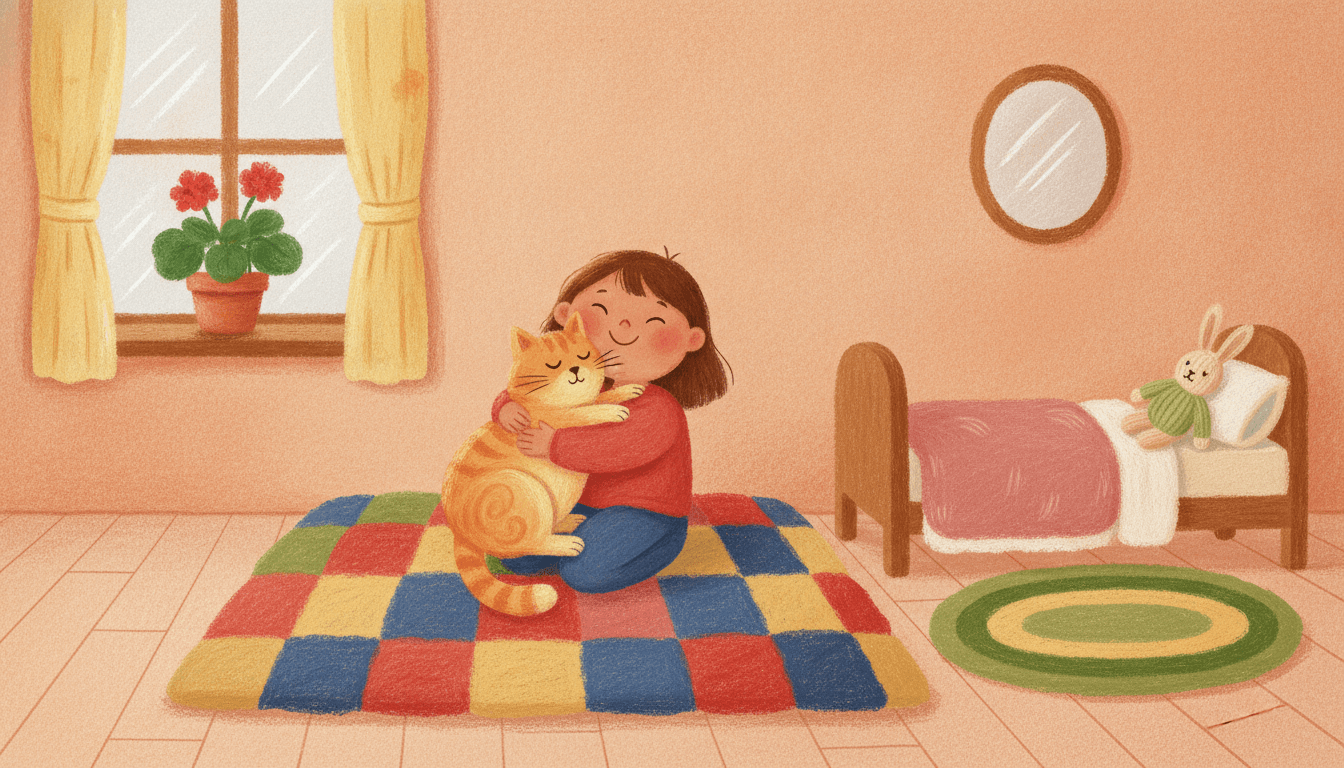
The same hug, colour turned up
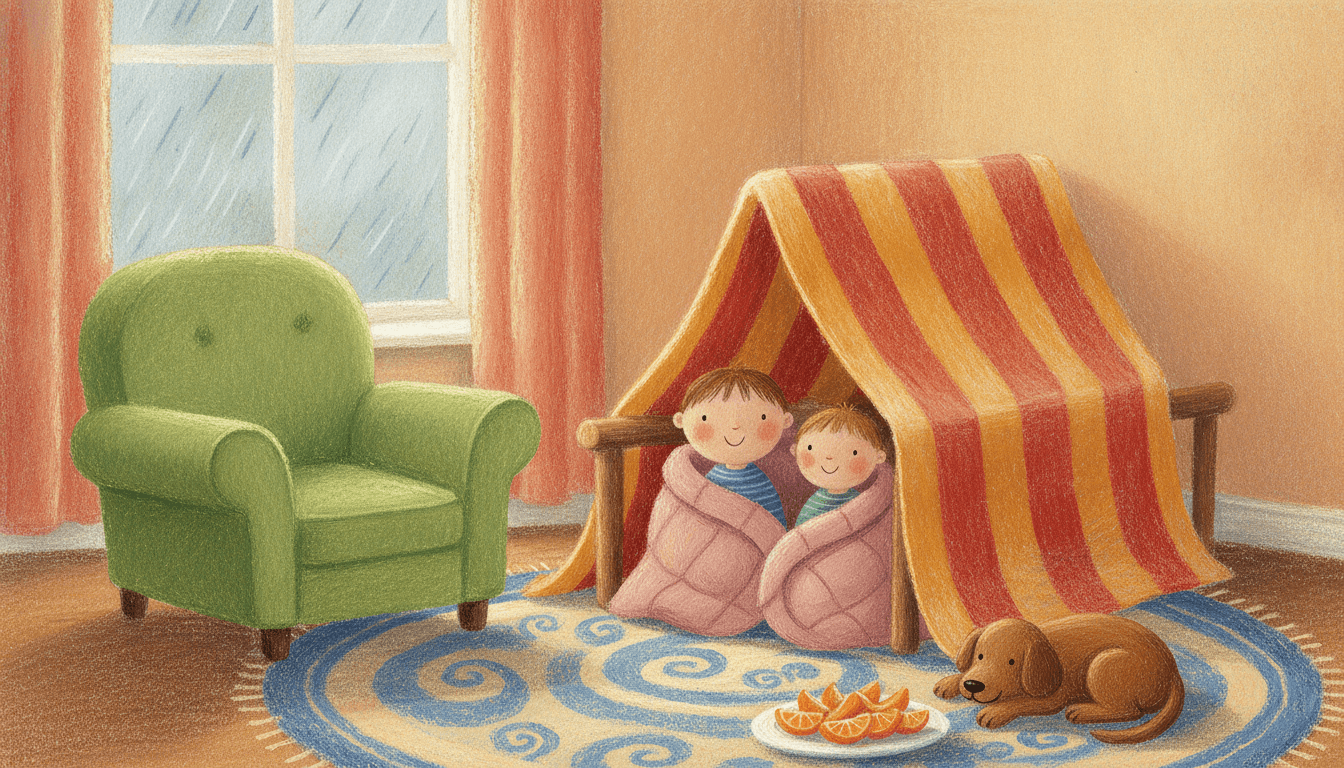
The blanket fort on a rainy day
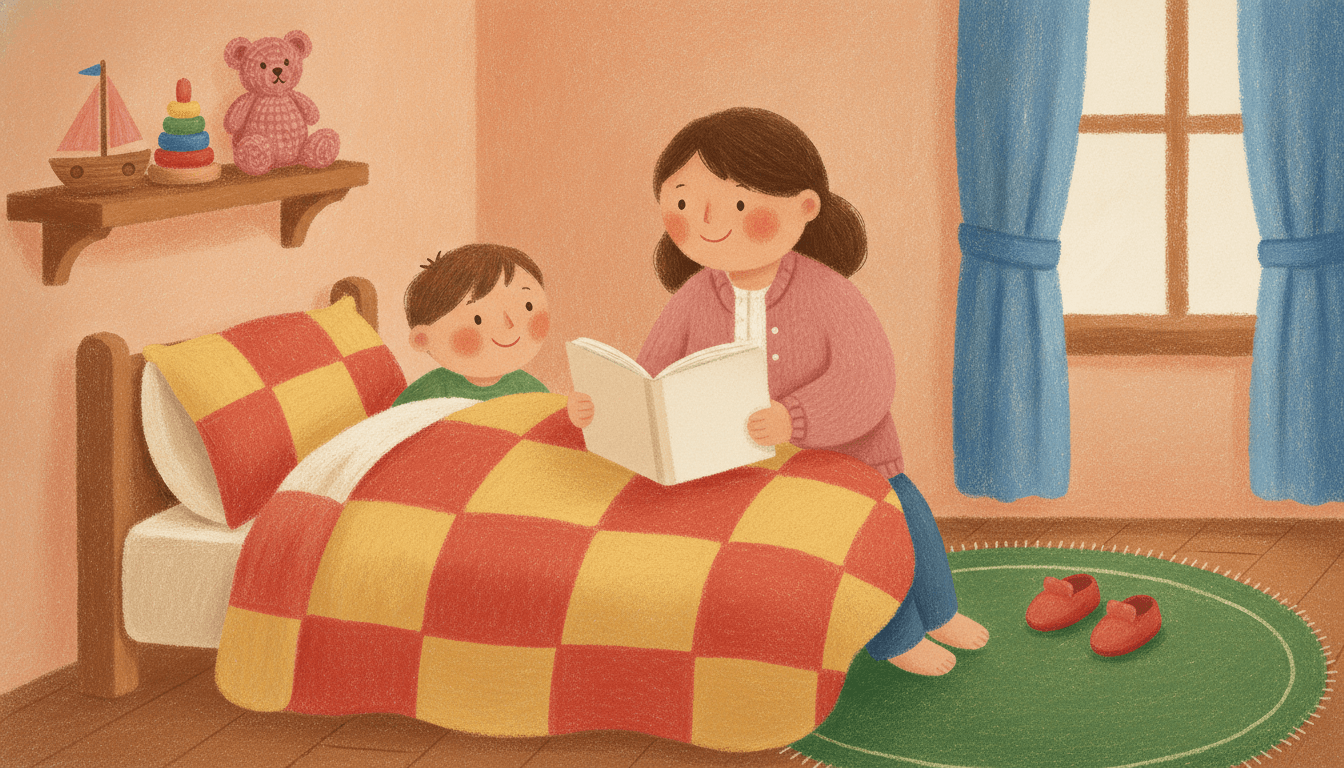
One more page
A Cast You Recognise by Their Colours
In the close-up, a girl’s cheek and a ginger cat’s fur are rubbed into one warm shape. In the character sheet the same girl keeps the same bob, red jumper and yellow boots across four colours. One honest note: the cat in the close-up came out far bigger than the girl, which we kept because it is the best picture here of what the smudge does.
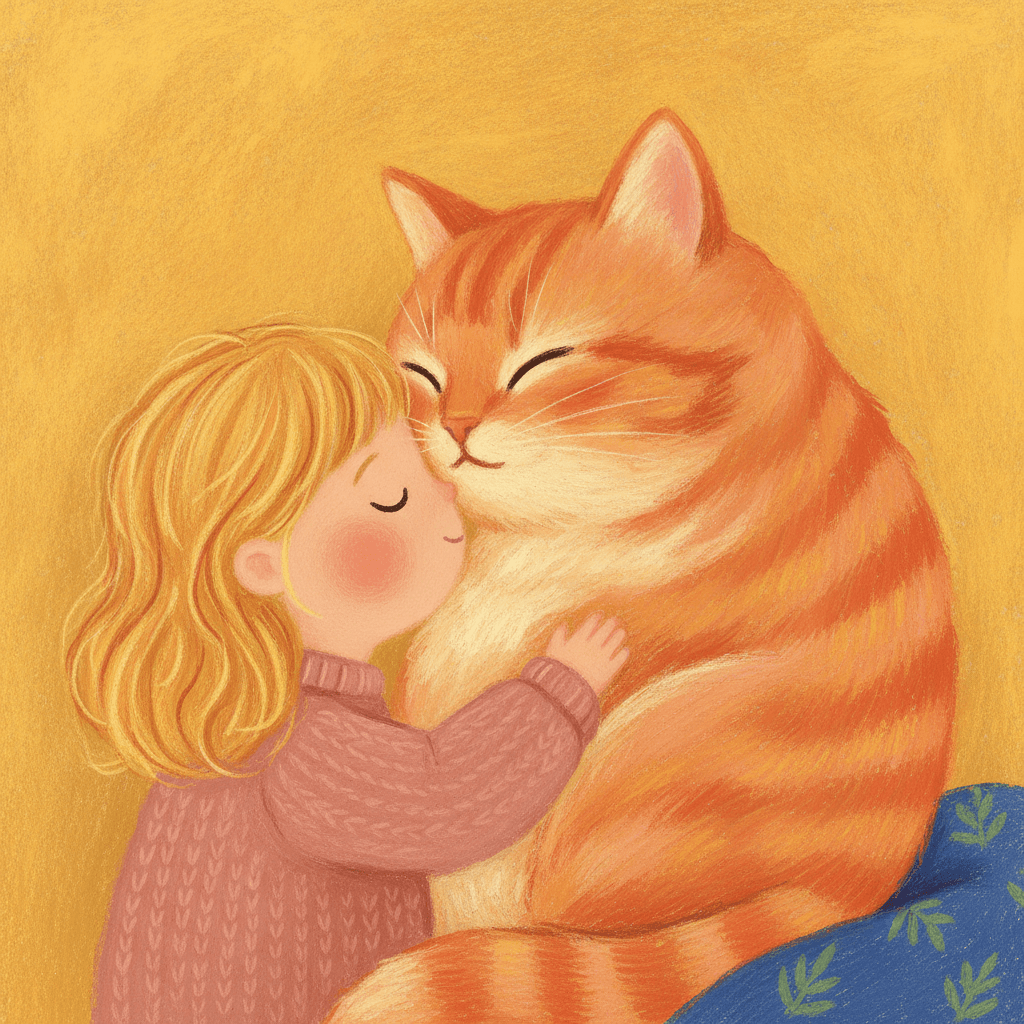
Where the colours touch
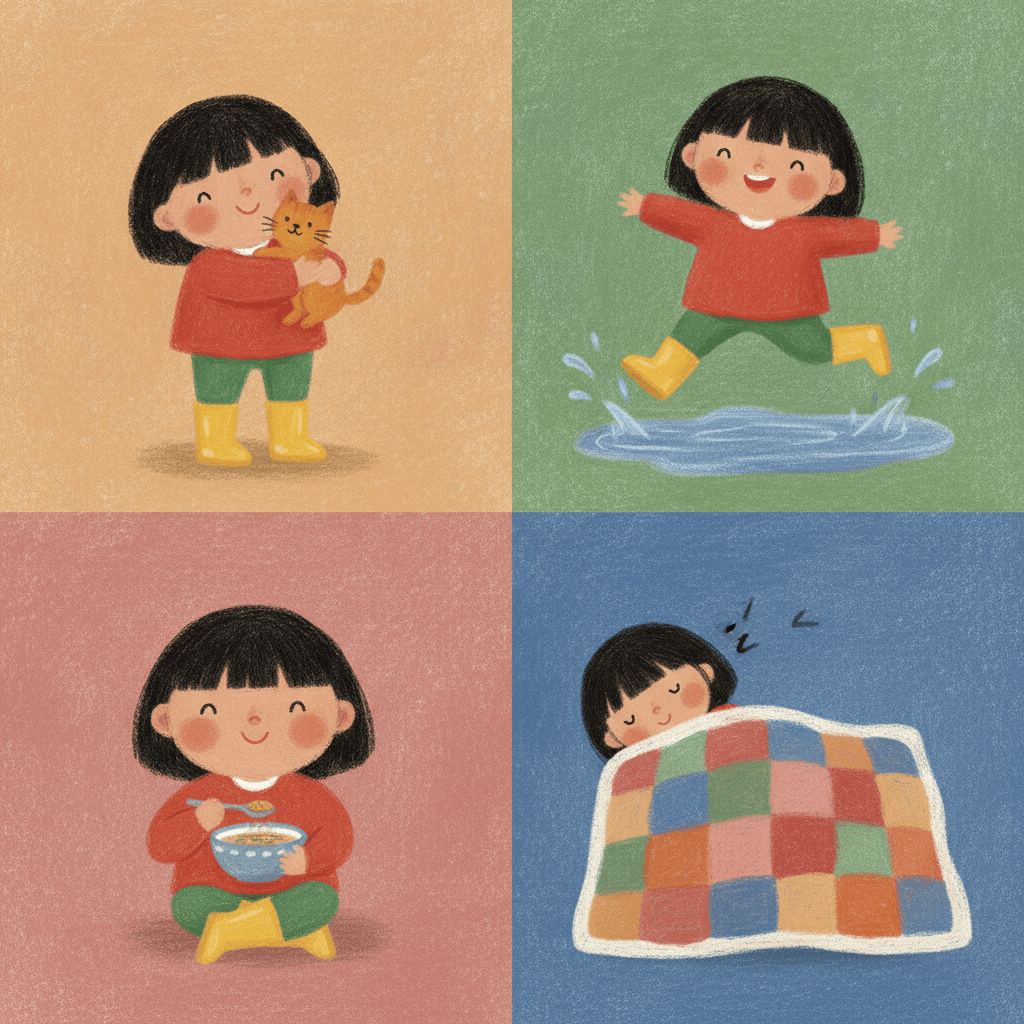
One girl, four colours
What makes the room warm
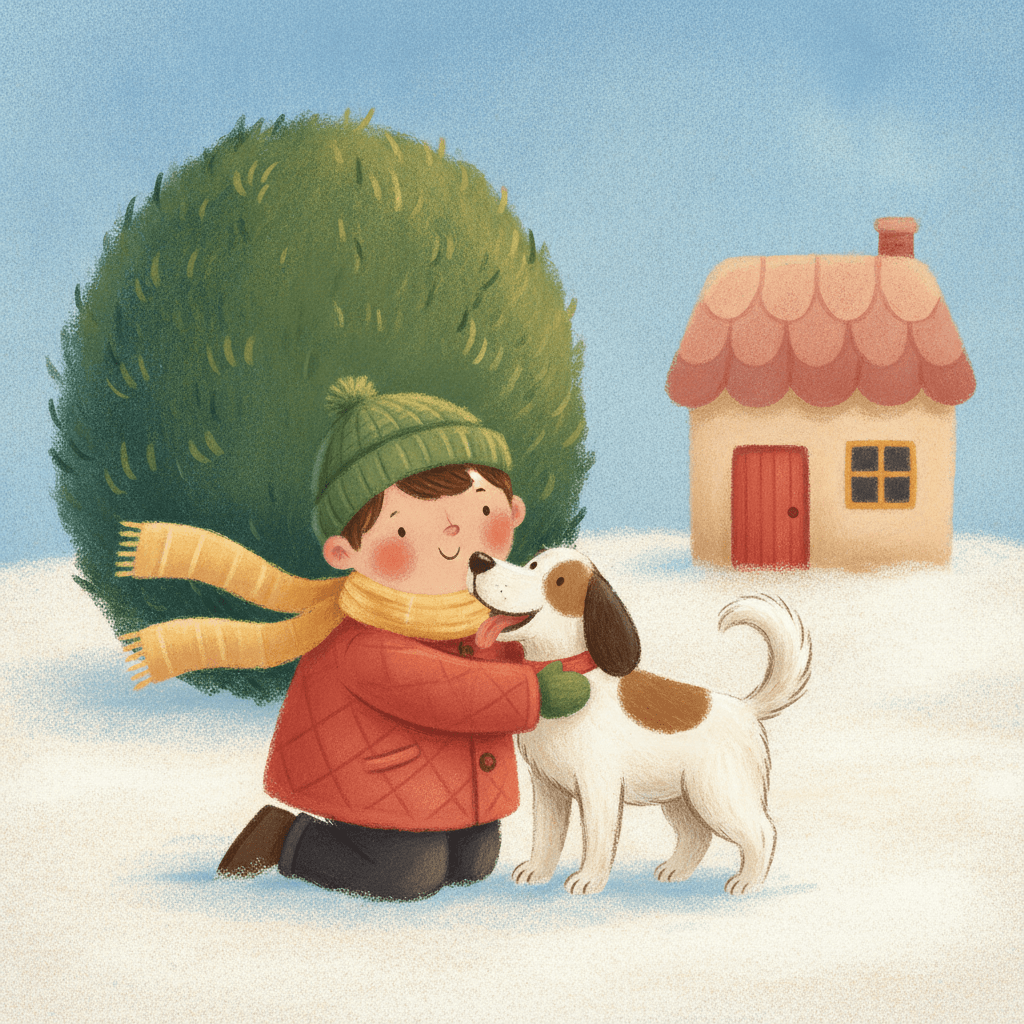
A red coat in the snow
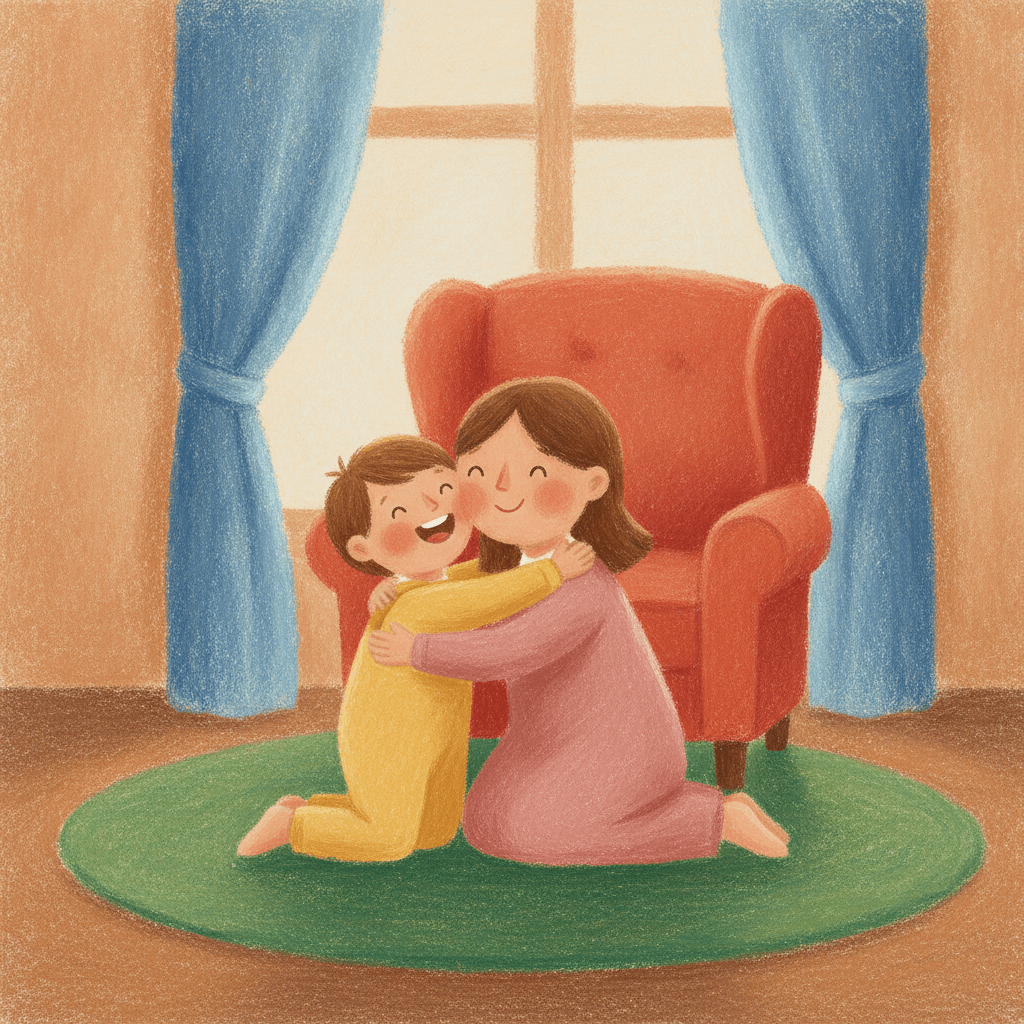
The big hug
Making Whole Oil Pastel Picture Books
What is useful in a book drawn this way and where the limits are, in the order you are likely to meet them.
Same child, every page
Save each character in the Character Library with up to fourteen reference images and describe them in plain words — “black bob, red jumper, green trousers, yellow wellies”. In a style with this much colour, the clothes are what the reader tracks from page to page, so name the colours. Characters built from an uploaded photo stay private to your account.
There is no dark page
The light is soft warm diffused light, filling the room evenly. Bedtime comes out as a bright afternoon with a book in it, as the reading page here shows, and a storm stays on the other side of the window. That suits comfort; it does not suit a power cut, a night-time chase or a frightening chapter.
Not quite outline-free
The brief asks for blended smudged edges and no crisp lines. The image model gets the waxy grain, the thick colour and the rubbed shading, but on most pages it still keeps a thin soft contour around faces and hands, as you can see here. It reads as oil pastel rather than as an inked drawing. If a page comes out harder than its neighbours, regenerate that page alone.
Write ages into the cast
Rounded naive figures make everybody look roughly the same age, and a big sister can come out looking grown-up — one of the hugs on this page was asked for a nine-year-old. If an age difference matters to the story, say it in the character description and give each person a clear height.
Healing means soothing
The brief’s mood is a healing mood in the sense of a soothing one: the picture is meant to make the reader feel better, not to show anyone getting better. Nothing in it refuses a story about being ill or sad, but it will draw that story warm, bright and cosy, which is often exactly right — just know that before you choose it.
A whole book from a sentence
Describe the story in a sentence and C2Story writes it, splits it into pages and draws every page to the same brief, in English, Chinese, Japanese, Spanish, French and more. Story text sits beside the picture, not drawn into it. Read online, share a link, or buy the PDF download as the handoff to your printer. Pages are licensed for commercial use under the terms of service.
Other hand-made textures, each built on a different idea: for wax with an ink line around it, crayon style picture books; for flat, matte, opaque paint, gouache picture books; for transparent washes and white paper, watercolour picture books; for cosy with the colour turned down, Korean doodle picture books; and for a drawing that is honestly a little clumsy, naive cartoon picture books.
Questions About Oil Pastel Picture Books
Explore More Story Ideas
Discover more styles, tools, and story types
Cooking Stories
Little chefs, baking, pizza night and birthday cakes
Explore
Comic Book Stories
Action-packed panel layouts
Explore
AI Story Generator
Generate complete stories with AI
Explore
Storybee Alternative
More styles & features
ExploreOil Pastel Picture Books: Thick Wax, Smudged Edges, Full Colour
Oil pastel picture books rest on a brief that is cosy in an unusual way. C2Story runs seventy-eight hand-drawn style briefs, each a short written record of a palette, a light, a line weight and a few refusals. Most of the gentle ones get their comfort from pale colour and thin line. The Oil-Pastel Healing brief asks for creamy high-saturation colour instead, and it is the only brief whose edges are made by smudging — the only waxy one, and the only one layered by hand.
The look is oil pastel illustration as you would make it with real sticks on paper: coarse grainy strokes, thick creamy colour blocks, chalky pigment, and colours blended into each other with a fingertip rather than separated by a line. The palette is warm peach, butter yellow and dusty rose; the light is soft warm diffused light; the figures are naive and rounded. It refuses vector lines, smooth gradients, photorealism and digital gloss.
This oil pastel art style suits small, warm stories: soup with a grandparent, a blanket fort on a rainy day, a cat too big to carry, red mittens in the snow, a story at bedtime. It is a poor fit for anything dark, because its light has no night in it, and for crowds or fine machinery, because thick wax does not do small detail. Characters stay on model through the Character Library, and the colours they wear are what the reader follows.
The choice between neighbours is clear. Take the vintage crayon brief for wax inside an ink outline, gouache for flat matte paint, watercolour for transparent washes, and Korean doodle for cosy with the colour turned down. Take this oil pastel storybook art when the comfort should be thick enough to touch. Describe the story in a sentence and C2Story writes it, splits it into pages and draws every page to the same brief, with the paid PDF download as the handoff to your printer.