Deadpan CartoonPicture Books
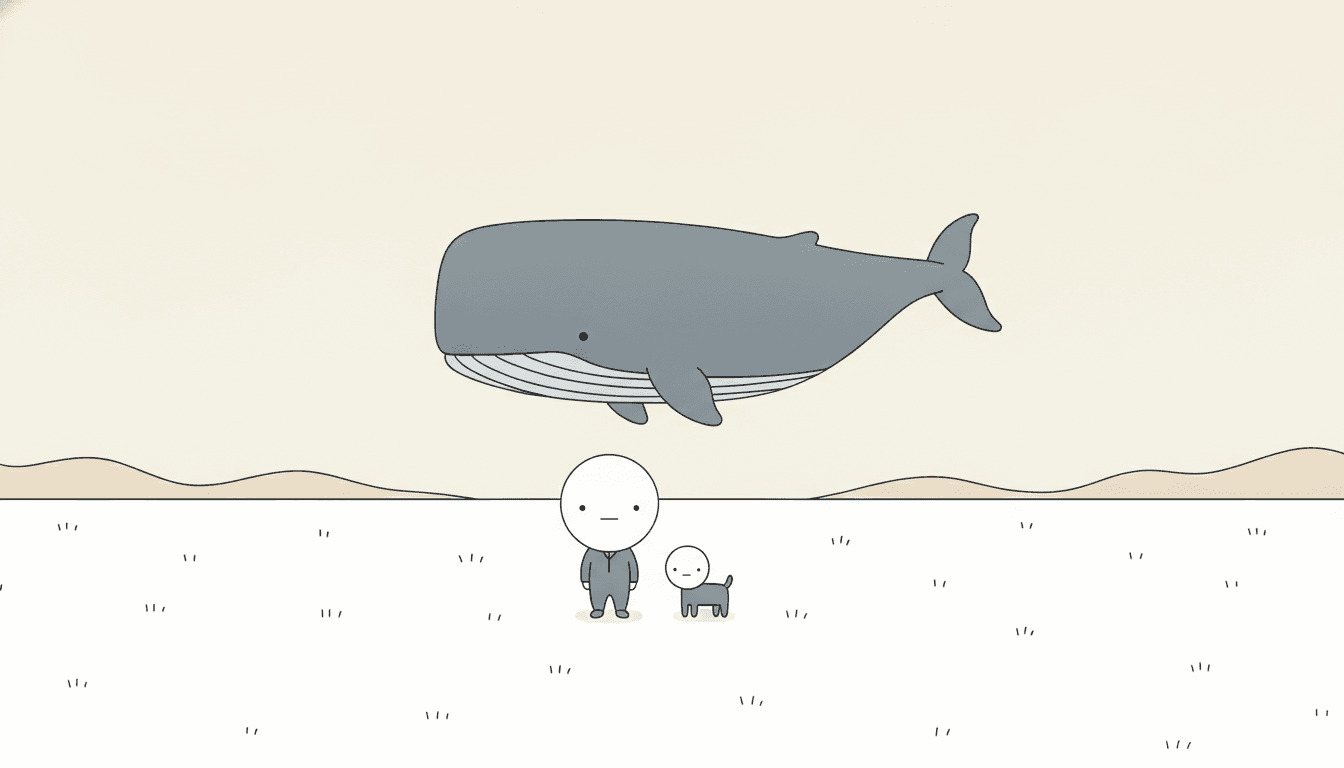
A deadpan cartoon never reacts. Blank round faces, a thin even line, muted grey-blue and beige, and a whale in the sky that nobody turns round for — held across a whole book, not one lucky panel.
- Blank faces — two dots and a flat line, by rule
- Empty space used as a pause, not as distance
- Dry humour built from two straight faces, not one
- Free credits by request — no card
50,000+
Stories Created
10,000+
Active Creators
50+
Art Styles
4.9/5
User Rating
What Makes a Deadpan Cartoon Different From a Funny One
Two of these are about what the face is not allowed to do. The other two are about what the empty page is for.
Deadpan is a reaction that was withheld
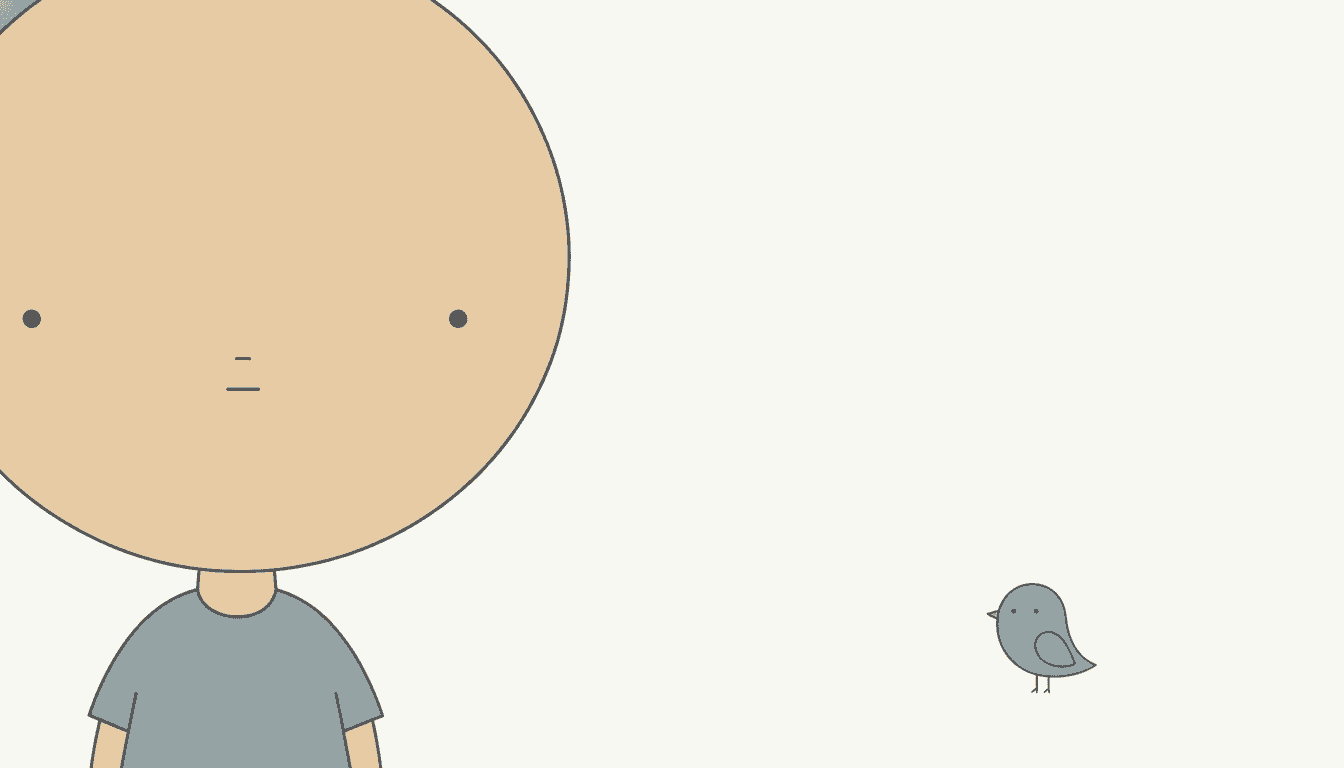
Every other humorous style performs the joke for you: the eyes go wide, the mouth drops open, the limbs fly out. This one does none of that. Its brief asks for simple round-headed characters with blank expressionless faces, which means the picture is not telling you that something funny is happening. It is simply showing you the something, straight-faced, and leaving the rest alone.
The empty space is a pause, not a distance
Several styles here leave a lot of the page bare and they mean different things by it. In a fine-line ink drawing the emptiness is distance — the figure is tiny because the building is tall. Here the instruction is to render the small storytelling moment with generous white space intact, and that space is time. It is the beat after the line, where a louder style would have put the punchline.
The joke needs two blank things, not one
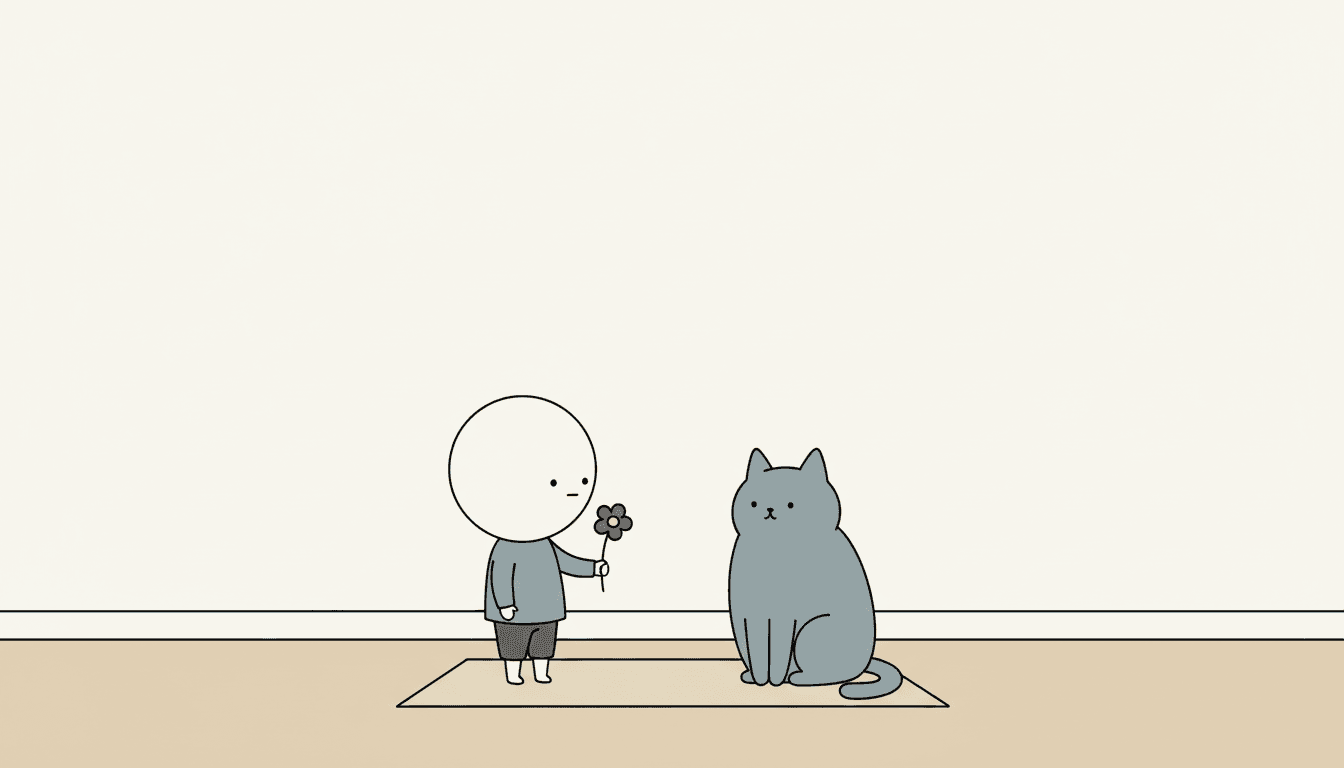
The brief calls for dry absurd humour built from cool detached poses and tiny relationships, and that last phrase is the working instruction. One blank face is just a blank face. A blank child standing beside an equally blank dog is a relationship, and the comedy lives in the gap between them — same expression, different stake. Write scenes with a pair in them and this style has something to do.
It is the one style that forbids the alternative
Seven of the styles here use the word deadpan somewhere in their brief. Six of them offer it as one option among several — deadpan or awkward or suddenly exaggerated. Only this one puts exaggerated expression on its list of things that must never appear. That single line is the whole difference between a style that can be deadpan and a style that has to be.
In a Deadpan Cartoon, the Reaction Is the Reader’s Job
Most humorous illustration does the laughing for you. The eyes go wide, the mouth opens, the arms fly up — the drawing performs the punchline, and you watch it happen.
This style takes all of that away. The faces are blank and expressionless, the poses are cool and detached, and the light is flat and neutral with nothing to emphasise. So the reaction has nowhere left to go except outside the frame. The picture stays level, and the only person in the room who can respond to it is you.
That makes it a read-aloud style. Because the page refuses to land the joke, the timing belongs to whoever is holding the book. Show the picture, say the line, wait. The pause is in the artwork already — it is the empty half of the page.
But it only works on genuinely odd situations. A straight face in front of something ordinary is not dry, it is just a straight face. Give the style something absurd to not react to.
The style names what must never appear, and the second entry is the one that defines it — a ban on the exact tool every other cartoon style uses to point at the joke:
Three Styles Leave the Page Empty, and They Mean Different Things By It
Lots of looks here use a lot of white. That is not one choice repeated — the emptiness is doing a different job in each of them, and picking the wrong one gives you a book that is quiet in the wrong way.
In fine-line ink, the empty space is distance: the figure is small because the building is four storeys tall. In a minimalist style it is subtraction — fewer things on the page, because fewer is the point. Here it is neither. The brief asks to render the small storytelling moment with generous white space intact, and that space is time: the beat after the line, where a louder style would have put the reaction.
There is a test for it. Cover the empty half of the page with your hand. In a fine-line drawing you lose the scale of the place. Here you lose the pause — and with the pause gone, the joke arrives too early and stops being funny.
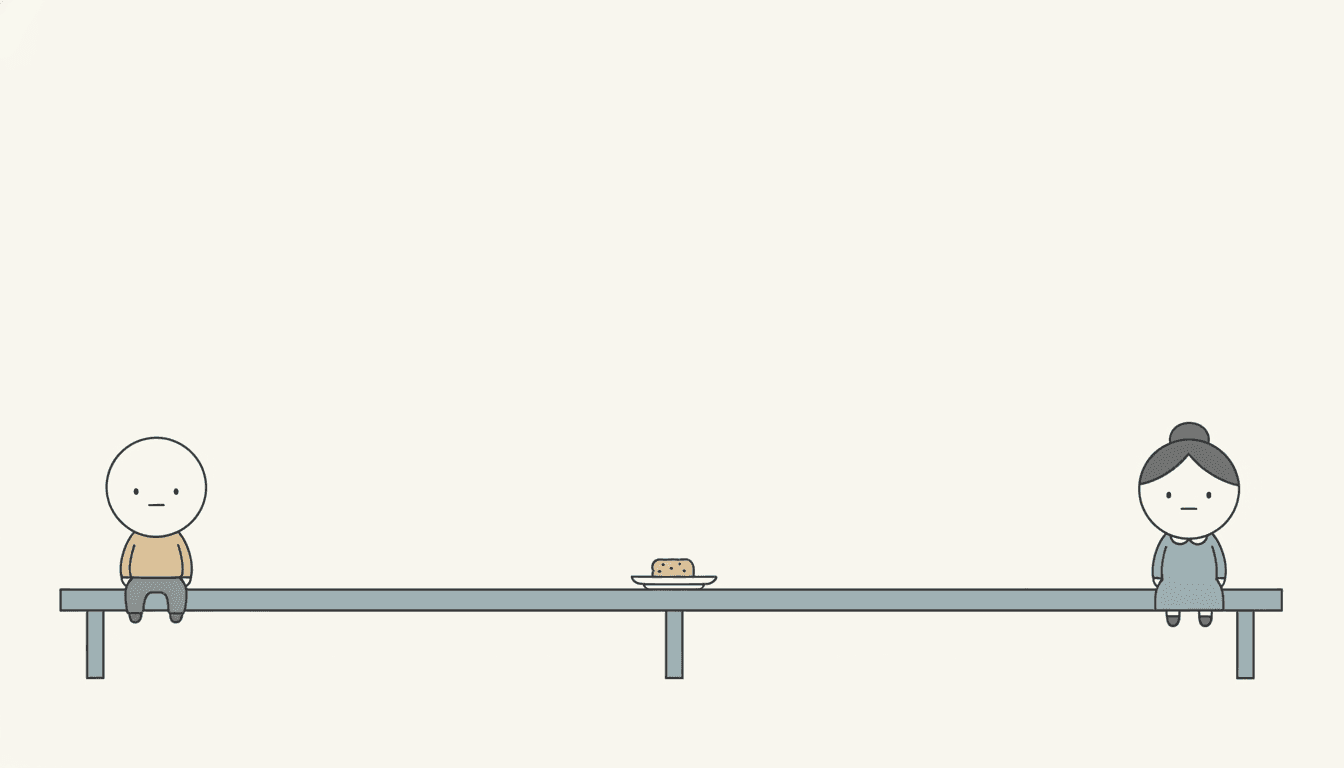
So write scenes with room in them. “A very long bench and two people sitting at opposite ends” hands this style everything it needs. “A crowded market at festival time” fights its refusal of busy backgrounds.
Worth seeing side by side before you commit: the fine-line ink style, where the emptiness measures distance, the minimalist style, which is subtracting rather than pausing, and the bold flat style, which fills the frame and lets the faces react.
Create a Deadpan Cartoon Picture Book in 3 Steps
From a one-line idea to a finished book that keeps its face straight all the way through, in under two minutes.
Describe the story
A sentence is enough. Give this look something quietly absurd and a pair of characters to not react to it — a child and a dog, two strangers on a bench, a queue of three. A situation plus a pair is the whole recipe.
"Unbelievable things happen in one garden, and the dog is unsurprised"
Pick the straight-faced style
Choose Deadpan Dialogue Cartoon for blank round faces in muted colour, Single-Panel Editorial Cartoon for pen line and grey wash, Deadpan Ink Mascot for tall figures in black and white, or Bold Flat Satire if you want to keep the option of a big reaction.
Grey-blue, warm beige, soft white, muted charcoal
Generate and export
C2Story writes the story, breaks it into pages and draws every one to the same brief. Read it on screen, share the link, or export the PDF and take that file to whichever printer or print service you already use.
Whole book drawn, PDF export, instant sharing
Deadpan Cartoon and Its Straight-Faced Neighbours
Four real styles that all keep a straight face, sorted by the two things that actually separate them: whether the face is ever allowed to break, and how old the room is.
Deadpan Dialogue Cartoon
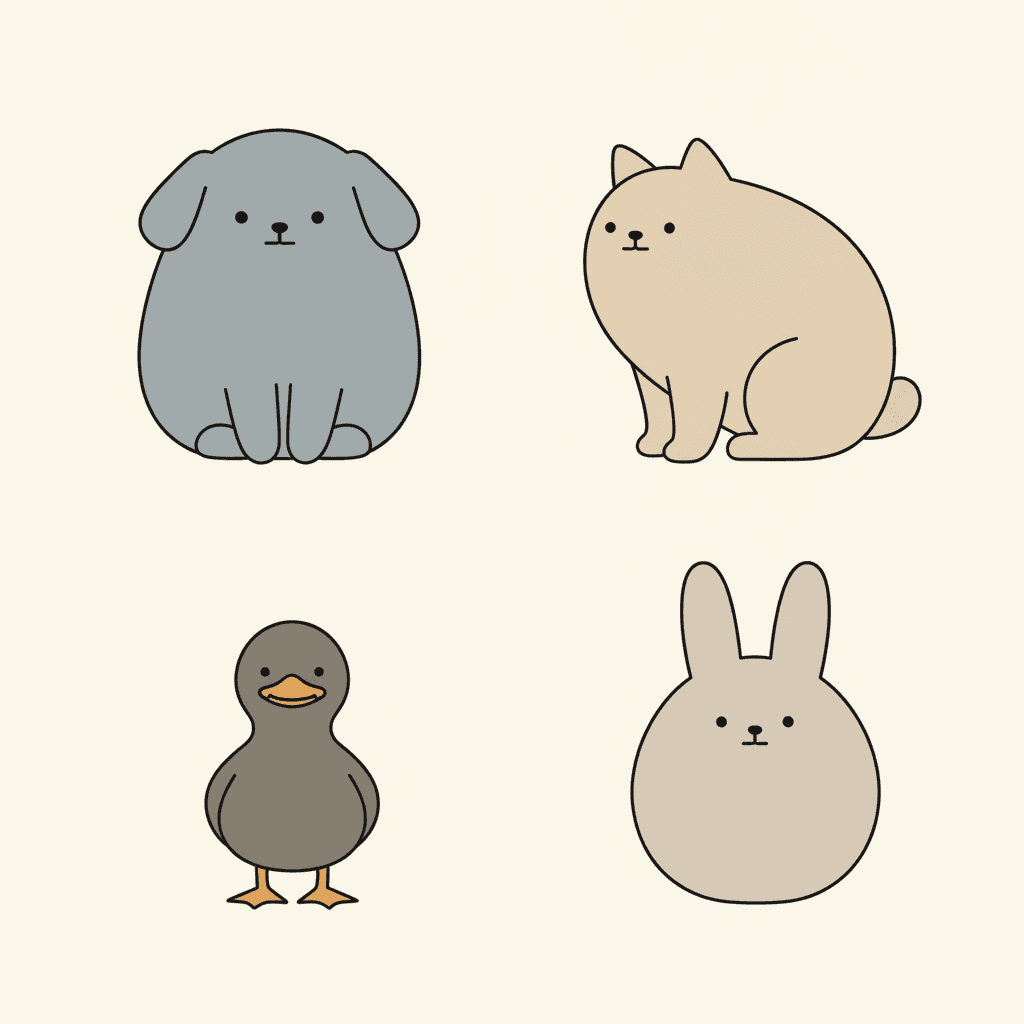
Simple round-headed characters with blank expressionless faces, simple flat animals, small blocks of grey-blue and beige colour, clean outlines set against airy white space, and dry absurd humour built from cool detached poses and tiny relationships. Its lighting is flat neutral light and its line is a clean even thin outline. It is the only one of the straight-faced styles filed under Cartoon rather than Editorial, and the only one whose faces are blank by rule.
Single-Panel Editorial Cartoon
A classic single-panel magazine cartoon: clean black pen linework, an adult everyday scene rendered fully with its setting and props, deadpan straight-faced characters, dry situational humour built around one visual gag, and light grey wash shading. It is the closest relative here, and the split is the room. That one draws offices and dinner parties in ink and grey wash; this one draws a child and a dog in muted colour, with the furniture mostly removed.
Deadpan Ink Mascot
Mid-century black-and-white ink: tall slender elongated characters in adult clothing, deadpan straight faces, confident brush-and-pen lines and strong use of empty white space. It shares the blank stare and the emptiness, then forbids colour outright. Pick it when you want the restraint to feel stylish and grown-up rather than small and gentle — its figures are lanky adults, where this page’s are round-headed and child-sized.
Bold Flat Satire
Thick heavy black contours, flat colour blocks, punchy saturated accents, and expressions specified as deadpan or awkward or suddenly exaggerated with clear comic timing. It is louder on every axis: heavier line, stronger colour, fuller frame, and a face that is allowed to blow up when the moment calls for it. If you want the option of a big reaction kept open, that is the one to choose over this.
Three more relatives are worth knowing about. Deadpan 3D Urbanite does the same dry stare as a matte clay sculpt with an elongated head, Minimal Relationship Satire aims the same reduced faces at wry adult relationship comedy, and Gag-Manga Reaction is the straight opposite — it is built on strong reactions and exaggerated emotion, and uses deadpan only as the setup. For where dry humour sits among the wider families, see our guide to comic book art styles, or browse everything on the illustration styles hub.
Dry Humour Illustration Story Ideas to Get You Started
This look is better at small absurd situations and quiet pairs than at action, crowds or big feelings. These six lean into that.
The Dog Who Was Not Surprised
Increasingly unbelievable things happen in one back garden, and the dog watches all of them with the same face. A style that cannot widen its eyes is the only one that can tell this joke, because the gag is entirely that nothing in the picture changes.
Create this storySomeone Left a Fish at the Bus Stop
Nobody mentions it. Nobody moves it. The queue simply forms around it for a week. Cool detached poses and a plain horizon line are this style’s entire vocabulary, and a public place where everyone agrees not to comment is exactly what it was built to draw.
Create this storyA Perfectly Fine Birthday
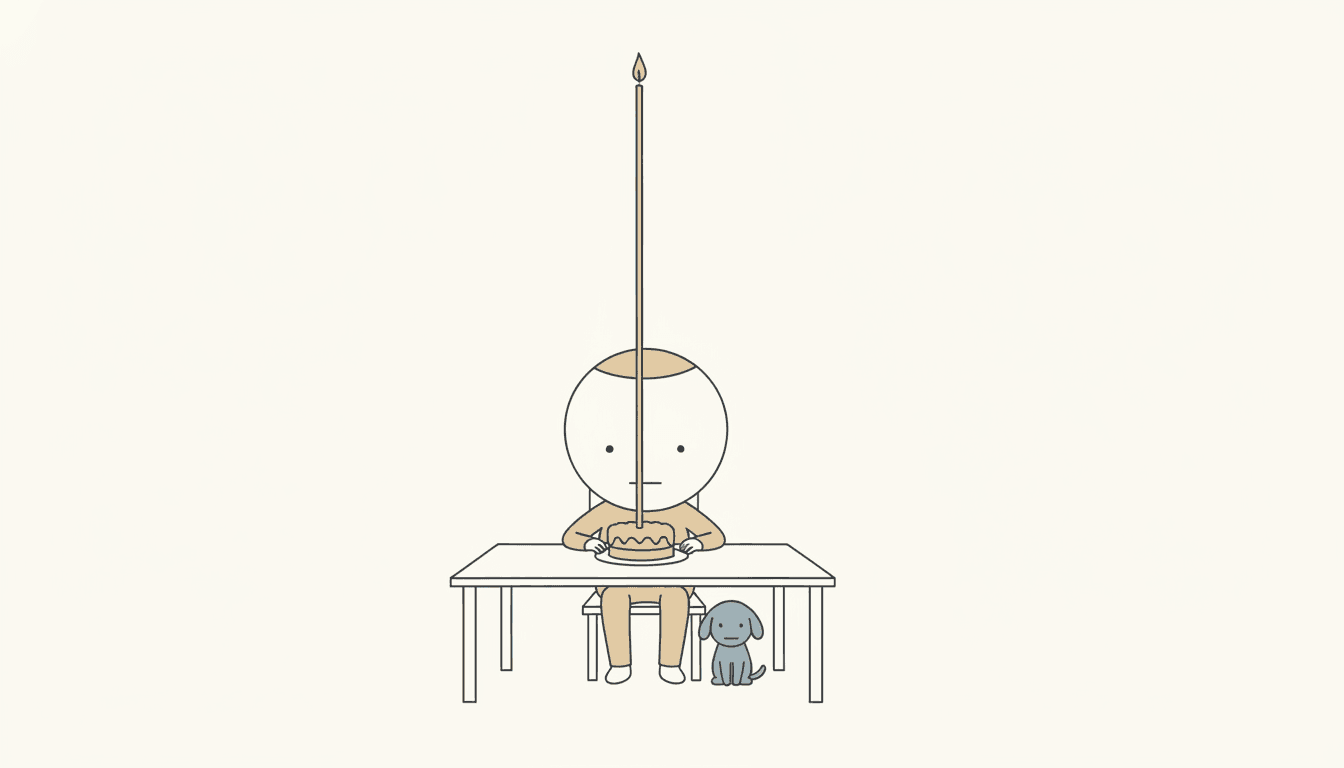
The cake is on fire, the balloon has gone, the guest has not arrived — and the birthday child reports that everything is going well. The gap between what the words claim and what the picture shows is where dry humour lives, and a blank face keeps that gap wide open.
Create this storyThe Long Bench
Two strangers, one bench, four seasons, and a conversation of about eleven words. With generous empty space written into the brief, the distance between two small figures can carry a whole page without anything else being drawn at all.
Create this storyWaiting for the Kettle
Nothing happens, at length, and then it boils. Small undramatic domestic moments are what this look does best, because it has no dramatic lighting and no big expressions to spend on anything grander.
Create this storyMy Pet Is a Whale Now
A child reports a wildly impossible situation in a completely level voice, and the pictures back them up without comment. Absurd humour told straight is the house speciality — the style never winks, which is what makes the premise land.
Create this storyAI-Generated Deadpan Cartoon Illustrations
Try it on these: look for the face that tells you it is a joke. There isn’t one — that is the entire point of the style.
A Single Panel Cartoon Look for Every Subject
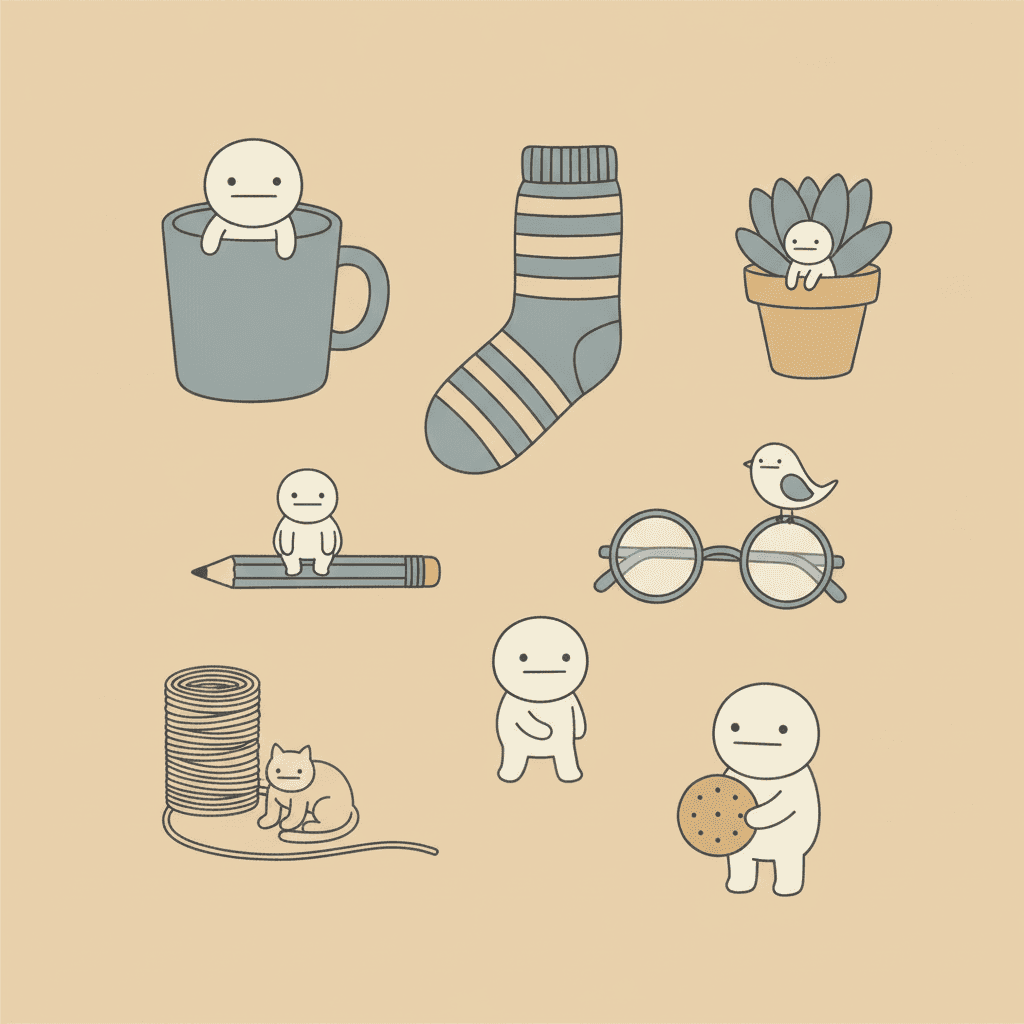
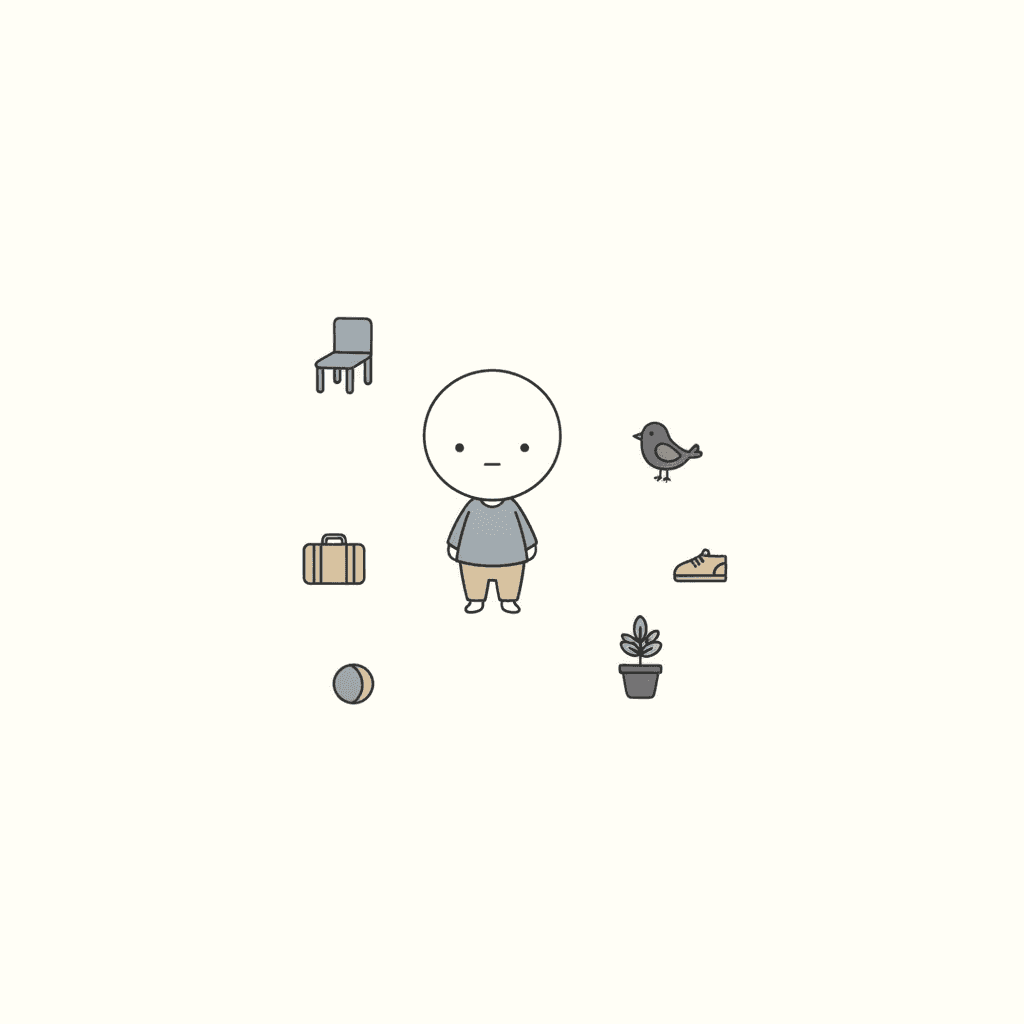
Characters, faces, animals, objects, empty rooms — the same blank stare and the same thin line, spent on whatever your story is actually about.
Everything You Need for Deadpan Cartoon Picture Books
One straight-faced image is easy. Twenty-four of them, with the same cast, the same restraint and nothing allowed to crack, is the part that needs building.
The same blank face on page twenty
One fixed brief — blank expressionless faces, clean even thin outlines, flat neutral light, generous white space — carried into every page of the book. The thing that drifts in a restrained style is restraint itself: an image model keeps reaching for a smile, a raised eyebrow, a bit of blush, because that is what it thinks a children’s book wants. Holding the face still across a whole book is the work.
Four refusals, and the second one is the style
Busy background, exaggerated expression, heavy shading, photorealistic. Three of those are ordinary rendering notes. The second is the entire personality — it removes the one tool every other cartoon style uses to point at the joke, and it is the reason this look cannot quietly turn into a normal cheerful picture book halfway through.
A cast you can tell apart without expressions
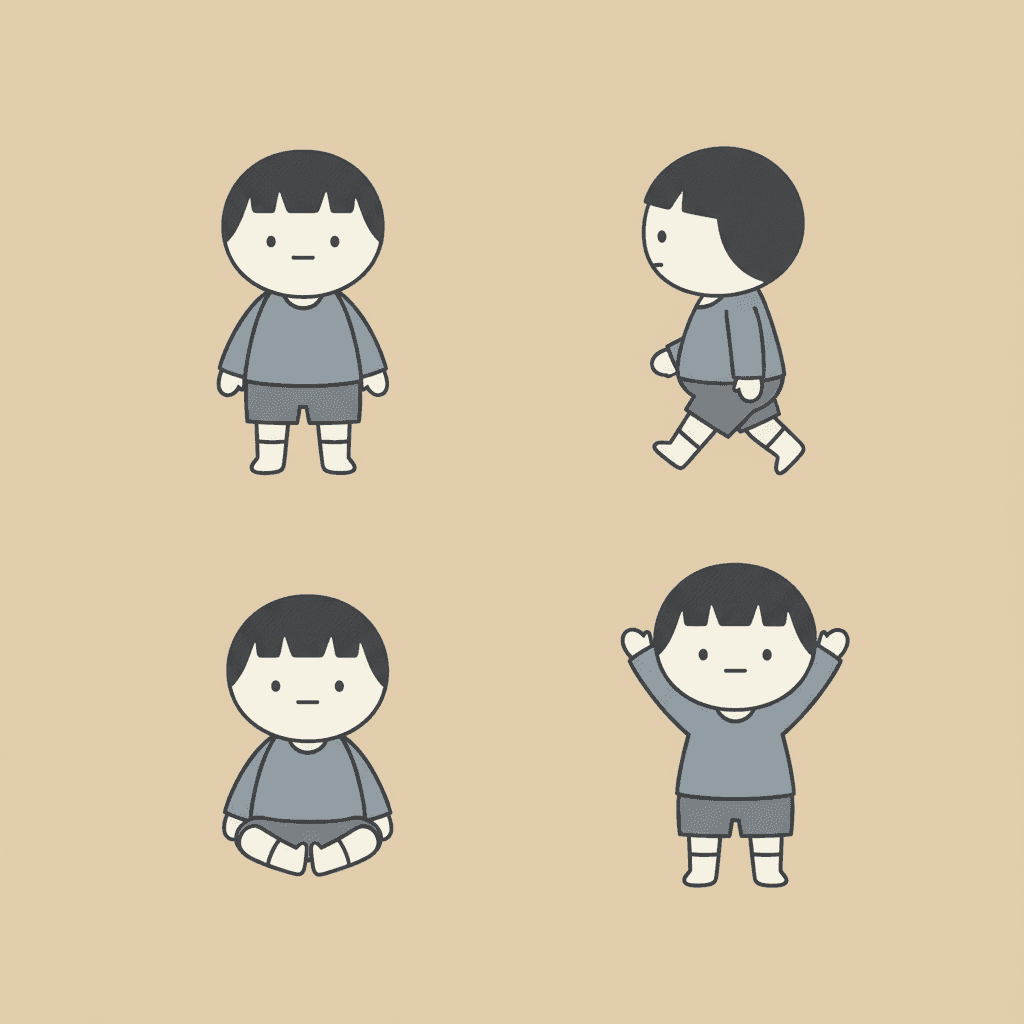
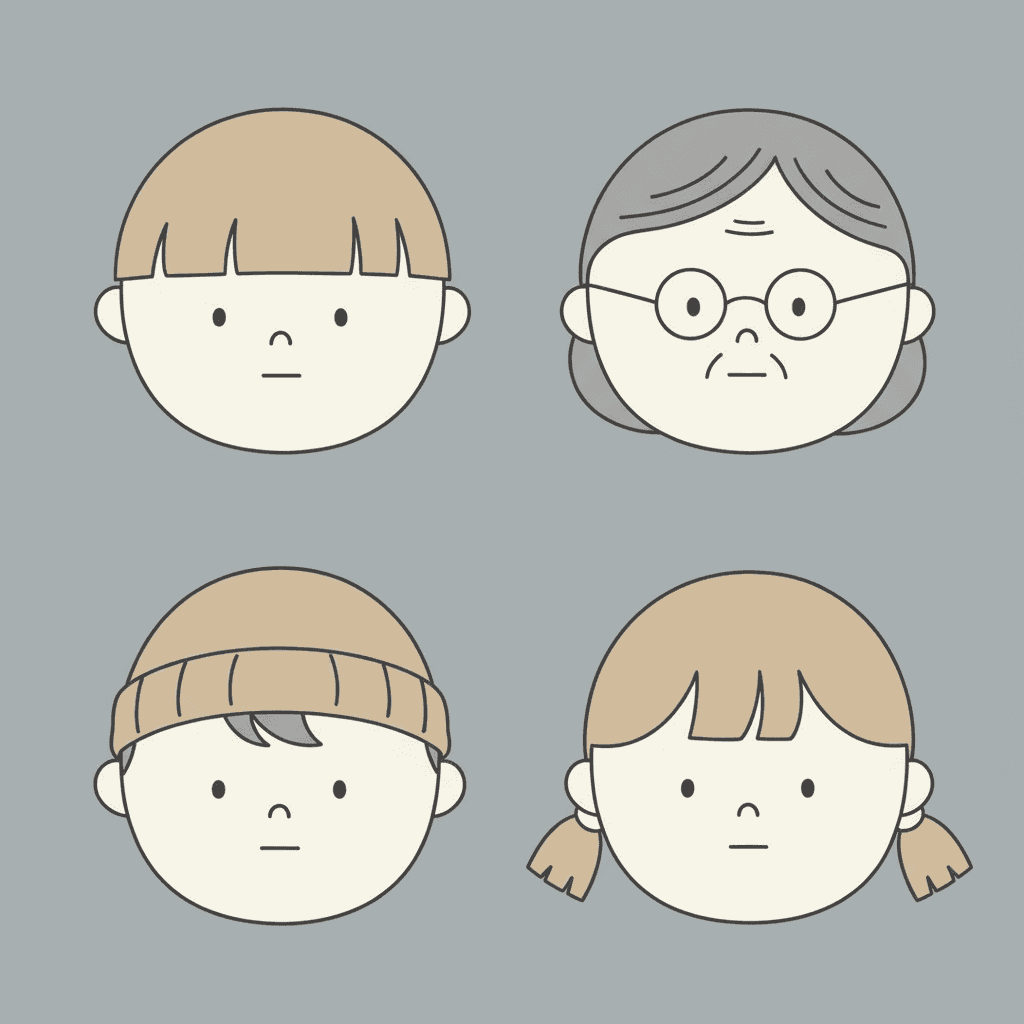
Save your characters in the Character Library, with up to fourteen reference images each, and the description travels into every page and into later books. It matters more here than almost anywhere: when every face is the same two dots and one line, a reader identifies people by head shape, hair, height and what they are wearing, and those are exactly the things a saved character holds steady.
A palette that refuses to get excited
There is no colour picker and no hex field. The range arrives with the look — grey-blue, warm beige, soft white and muted charcoal — and it is doing the same job as the faces. Nothing in it can shout, so nothing in the picture can mark out which part is supposed to be the funny bit.
Whole books, not single gags
You are not prompting for one clever cartoon. Describe the story and C2Story writes it, breaks it into pages, and draws every page in this style, matched to what that page actually says — so the restraint holds across a narrative instead of lasting one lucky image.
Any language you read aloud in
The look carries no language of its own. Write the story in English, Chinese, Japanese, Spanish, French and more — the blank faces, the thin even line and the muted palette do not change with the text. Dry humour travels unusually well, because the picture is not doing the laughing.
Deadpan Cartoon Picture Books — Questions
What people ask before committing a whole book to blank faces and a palette that cannot shout.
Explore More Story Ideas
Discover more styles, tools, and story types
Dance Stories
Ballerinas, tutus, twirling and the big recital
Explore
Cartoon Picture Books
Bold colors & playful characters
Explore
Bedtime Story Generator
Cozy goodnight stories for kids
Explore
Midjourney vs C2Story
Stories, not just images
ExploreDeadpan Cartoon Picture Books — Blank Faces, Dry Humour, Whole Books with AI
A deadpan cartoon is built on one refusal carried a very long way: the drawing is not allowed to react. The characters are simple and round-headed, the faces are blank and expressionless, the poses are cool and detached, and the light is flat and neutral with nothing in it to emphasise anything. Whatever absurd thing is happening in the frame is drawn perfectly straight. On C2Story this is the Deadpan Dialogue Cartoon style, and its brief also fixes the colour — small blocks of grey-blue and beige, clean even thin outlines, and airy white space left intact around the moment. That one brief is applied across an entire book, so the face on page twenty is as blank as the face on page one.
The thing worth understanding before you commit a book to it is where the reaction goes. Nearly every other humorous style puts the reaction inside the picture: the eyes widen, the mouth opens, the limbs fly out, and the drawing performs the punchline while you watch. This style has no way to do that, so the response moves outside the frame and lands on the reader. That is a real advantage for reading aloud, because the page stops controlling the timing and hands it to whoever is holding the book — show the picture, say the line, wait. It also sets a condition: dry humour illustration only works when the situation is genuinely strange. A straight face in front of something ordinary is not deadpan, it is just a straight face. Give the style a whale floating over the lawn, a fish propped at the bus stop, a candle flame that has grown four feet tall, and then let nobody mention it.
The second thing to know is what the empty space is for, because several styles here leave the page bare and they mean different things by it. In fine-line ink, the emptiness is distance — the figure is small because the building is tall. In a minimalist style, it is subtraction, with fewer things on the page because fewer is the point. Here it is time. The brief asks to render the small storytelling moment with generous white space intact, and that space is the beat after the line, the pause where a louder style would have put the reaction. Cover it with your hand and the joke arrives too early. The style also tells you how to write for it: the brief asks for humour built from cool detached poses and tiny relationships, which means one blank face is not enough. A blank child beside an equally blank dog is a relationship, and the comedy sits in the gap between the two of them. Put a pair in most scenes and this look has something to do.
On scope, be plain about one thing. Seven enabled styles here use the word deadpan, and most of them use it as one option among several — deadpan or awkward or suddenly exaggerated. Only this one puts exaggerated expression on its list of things that must never appear, which is why it is the one that cannot quietly turn into a normal cheerful picture book halfway through. The flip side is the honest limitation: a story that needs a child to sob, roar or triumph cannot be told this way, busy backgrounds and crowd scenes are refused outright, and with flat neutral light there is no dusk, no candle glow and no weather. Dry humour also needs a reader old enough to spot the gap between picture and words, which usually arrives around five or six — below that, a child reads the face first, and this style has emptied the face out. Where it excels is books a grown-up and a child read together, and gift books for adults. Keep your cast in the Character Library, with up to fourteen reference images each, so a reader can tell people apart by head shape, hair and height when every expression is identical. Write in any language you read aloud in, then export the finished book as a PDF — that file is the handoff to whichever printer you already use, and the images you generate are licensed for commercial use. Start free: see our pricing plans, browse every option on the illustration styles hub, compare it with the bold flat style or the fine-line ink style, read the guide to comic book art styles, or go straight to the AI Story Generator.