Anthropomorphic AnimalsPicture Books
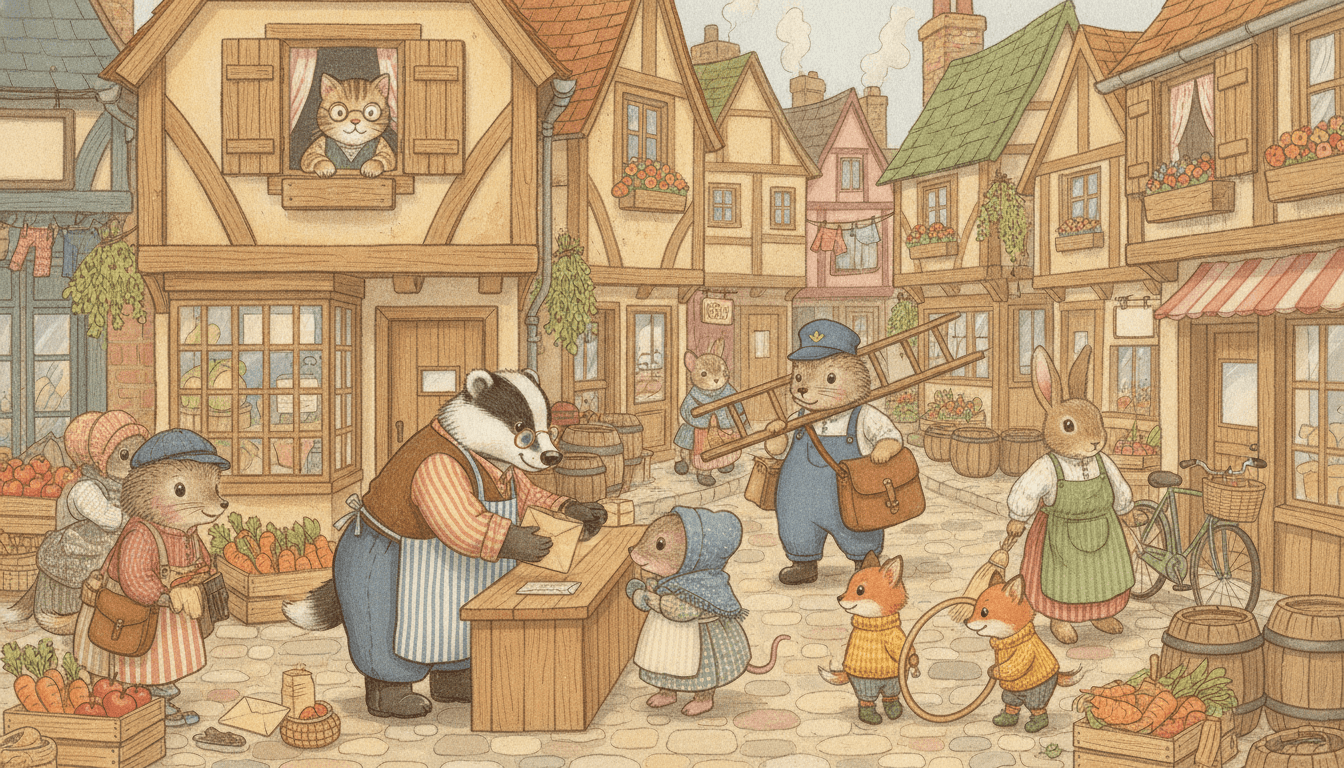
Anthropomorphic animals are not animals in costume. They have trades, counters, parcels and neighbours — a whole little town drawn right out to the edges, held across every page of your book.
- Dressed animal characters with actual jobs
- Pages filled to the edges, never left bare
- Soft rounded contours and warm earthy colour
- Free credits by request — no card
50,000+
Stories Created
10,000+
Active Creators
50+
Art Styles
4.9/5
User Rating
What Makes Anthropomorphic Animals More Than Animals in Clothes
Lots of looks in this library will draw you an animal. Only one of them is asking for a working society, and the other three decisions all exist to keep that society readable.
The animals have jobs. That is the entire idea.
Of the seventy-eight hand-drawn styles switched on in C2Story, exactly one asks for a society. The brief reads a busy little society of animals in occupational roles, and that word — occupational — is doing all the work. Plenty of styles here will happily draw you an animal. Anthropomorphic animals are the only ones in this library with a payroll — this is the single style in which the animal is a baker, a postman, a cobbler or a clerk. The distinction is not decorative: a pet belongs to someone, and a shopkeeper has customers, a trade and a street to live on.
The one picture book style here that refuses an empty background
Every style in the library ends with four refusals. This one refuses photorealism, a gritty dark tone, harsh outlines — and an empty background. That last one is close to unique. Four other styles here refuse a busy or cluttered background; only two refuse an empty one, and this is the only one of those two filed as a picture book style. Density is not a side effect of the subject. It is written into the specification, because a town with nobody in it is not a town.
A crowded page needs a soft line
The line instruction is soft rounded outline, and harsh outline is one of the four things banned outright. Those two go together for a practical reason rather than a sentimental one. Fill a frame with forty things and draw them all with hard black contours and you get noise — the eye finds no way in and gives up. Round the contours, soften the edges, and the same forty things become a street you can read. The gentleness is what makes the density survivable, and it is why anthropomorphic animals drawn to this brief never look crowded in the bad sense.
No gritty dark tone — which is a decision about meaning
The third refusal is a mood, not a technique, and it is the most interesting one on the list. A town of animals in waistcoats is one small step away from satire: give it hard light and a grimy palette and it stops being a children’s book and becomes a fable about people. This brief closes that door. Warm soft daylight, soft cheerful colour, gentle storybook charm. The animals keep their jobs and never become a comment on yours.
Most Styles Here Protect the Paper. This One Protects the Crowd.
Nearly every quiet, pale, restrained look in this library is built to defend empty space. Their refusals exist to stop the page filling up. Four of them ban a busy or cluttered background outright.
An anthropomorphic animals page runs the other direction entirely. Its fourth refusal is empty background, and its composition instruction asks for rich everyday actions and details filling a bustling town scene. Only two styles in the whole library refuse emptiness like that, and this is the only picture book one. The second look is the product — you are buying a page a child can go back to.
It is an incident style. Markets, shops, deliveries, repairs, a staircase shared by four families. Give every animal in frame something to be doing and this look rewards you for it.
And it fights the empty ones. A lone figure on a blank spread, a wide moor, a page that is mostly sky — those will keep populating themselves. For stillness, pick a style built for it instead of arguing with this one.
Its four refusals, in the order the brief states them:
Dressed Animal Characters, or Observed Animals? One of Them Has a Job.
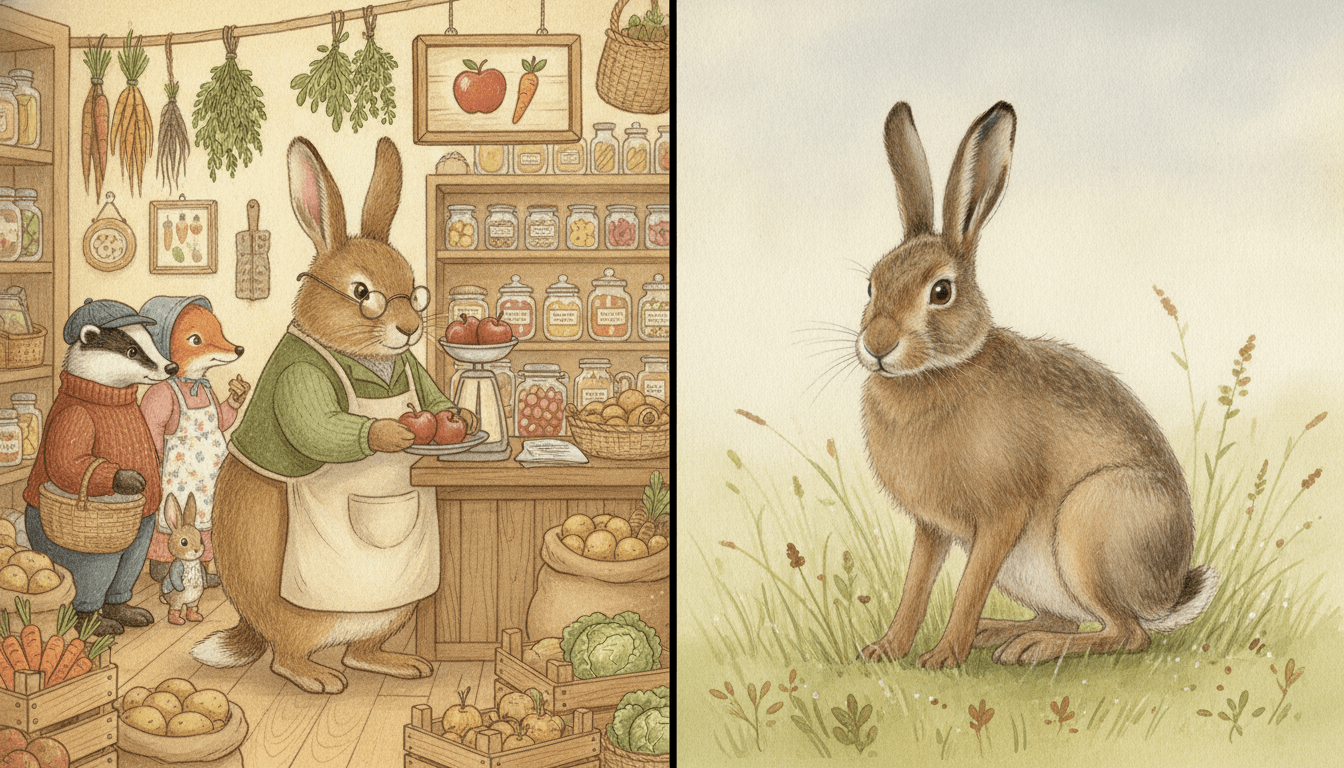
Both halves of that picture are the same species of hare, both are children’s picture book art, and anyone searching for animal illustration has to choose between them. The split is not the subject. It is whether the animal is a citizen or a specimen.
The right-hand look is the Naturalist Animal Watercolor style: carefully observed realistic animals in soft translucent washes, delicate fur and foliage, a fully painted natural setting. On four legs, unclothed, studied. The left is this page’s style — upright, aproned, behind a counter, with the shop filled in around it. Same animal, two completely different books.
There is a one-second test. Picture the animal in your story. If it is wearing something, you want anthropomorphic animals. If it is not, you want the naturalist look, and no amount of prompting will make one do the other’s job.
And a second test for the setting. Does your animal have a front door? A trade? A neighbour who disapproves? Then you need a town, not a habitat — and a town is what this brief builds.
Worth seeing side by side before you commit: the deadpan cartoon style, which also draws animals but refuses a busy background, the crayon style, whose animal is a child’s companion rather than a colleague, and the animal story generator if what you actually want is an animal story in any look at all.
Create an Anthropomorphic Animals Picture Book in 3 Steps
From a one-line idea to a finished book whose town stays busy all the way through, in under two minutes.
Describe the story
A sentence is enough. Give this look a street and a handful of trades — a shop, a delivery, a repair, a market day. Scenes with several animals all busy at once are the ones it draws best.
"A hedgehog postman carries one unaddressed parcel down the whole street"
Pick Busy Anthropomorphic Town
Choose it for dressed animals with jobs and a page filled to the edges. Choose Naturalist Animal Watercolor instead for animals observed as they really are, Deadpan Dialogue Cartoon for flat animals in a lot of white space, or Vintage Crayon Storybook for a child and their pet.
Warm cheerful hues, soft earthy tones, friendly pastels
Generate and export
C2Story writes the story, breaks it into pages and draws every one to the same brief. Read it on screen, share the link, or export the PDF and take that file to whichever printer or print service you already use.
Whole book drawn, PDF export, instant sharing
Anthropomorphic Animals and Their Nearest Neighbours
Four real styles that all put an animal on the page, sorted by the two things that actually separate them: whether the animal is dressed, and how full the page is allowed to get.
Busy Anthropomorphic Town
Warm anthropomorphic-animal picture book illustration: a busy little society of animals in occupational roles, rounded friendly contours, rich everyday actions and details filling a bustling town scene, soft cheerful colour and gentle storybook charm with lots of small narrative touches. Its palette is warm cheerful hues, soft earthy tones and friendly pastels; its light is warm soft daylight; its line is a soft rounded outline. It is one of eleven picture book styles enabled here, and one of the styles surfaced first in the picker.
Naturalist Animal Watercolor
The closest relative and the one people actually mean about half the time. Fine naturalist watercolour picture book work: carefully observed realistic animals, soft translucent washes, gentle paper texture, delicate detail in fur and foliage, a warm tender mood with the natural setting fully painted. Its animals are studied rather than employed — a hare in this style is a hare in a field, on four legs, with no waistcoat and no counter to stand behind. Pick it for the natural world. Pick this page’s style for a high street.
Deadpan Dialogue Cartoon
This one also has animals in it — the brief literally says simple flat animals — and it is built on the opposite instinct in every respect. Simple round-headed characters with blank expressionless faces, small blocks of grey-blue and beige, clean outlines set against airy white space, and dry absurd humour built from cool detached poses. Its fourth refusal is a busy background, where this page’s style refuses an empty one. Two styles, one library, mirror-image rules about how full a page is allowed to be.
Vintage Crayon Storybook
Warm retro hand-drawn picture book work in textured crayon and coloured-pencil grain, with loose rough ink outlines, expressive oversized eyes, a vintage paper border and a bright nostalgic European mood. Its own reference scene is a wide-eyed child hugging a quirky animal friend in a cosy room — which is the giveaway. The animal here is a companion to a human child, warm and beloved and entirely unemployed. Take it if your story is about a child and their animal rather than about a town of animals.
Three more relatives are worth knowing about. Folk Decorative Storybook also draws a crowded ensemble, but of quirky villagers among ornamental botanical motifs rather than animals at work. Mythic Bestiary Ink gives you creatures with real character and no clothes at all, in brush ink and muted vermillion. And Ornate Dark Fantasy is the one other style here whose brief asks for gorgeously dressed characters — in dark jewel tones and candlelit chiaroscuro, which is precisely the gritty, dramatic register this page’s style refuses. For where all of this sits among the wider families, browse everything on the illustration styles hub.
Animal Town Illustration Story Ideas to Get You Started
This look is better at busy, neighbourly and ordinary than at empty, grand or frightening. These six lean into that.
The Parcel Nobody Would Claim
A hedgehog postman carries one unaddressed parcel from door to door down the whole street. An anthropomorphic animals brief asking for a society in occupational roles gives you a different trade, a different shopfront and a different face on every single page.
Create this storyThursday Is Market Day
One ordinary market morning told from six stalls at once. This look refuses an empty background by name, so a crowd scene is the one thing you never have to fight it for — the hard part is usually the opposite.
Create this storyThe Cobbler Who Would Not Retire
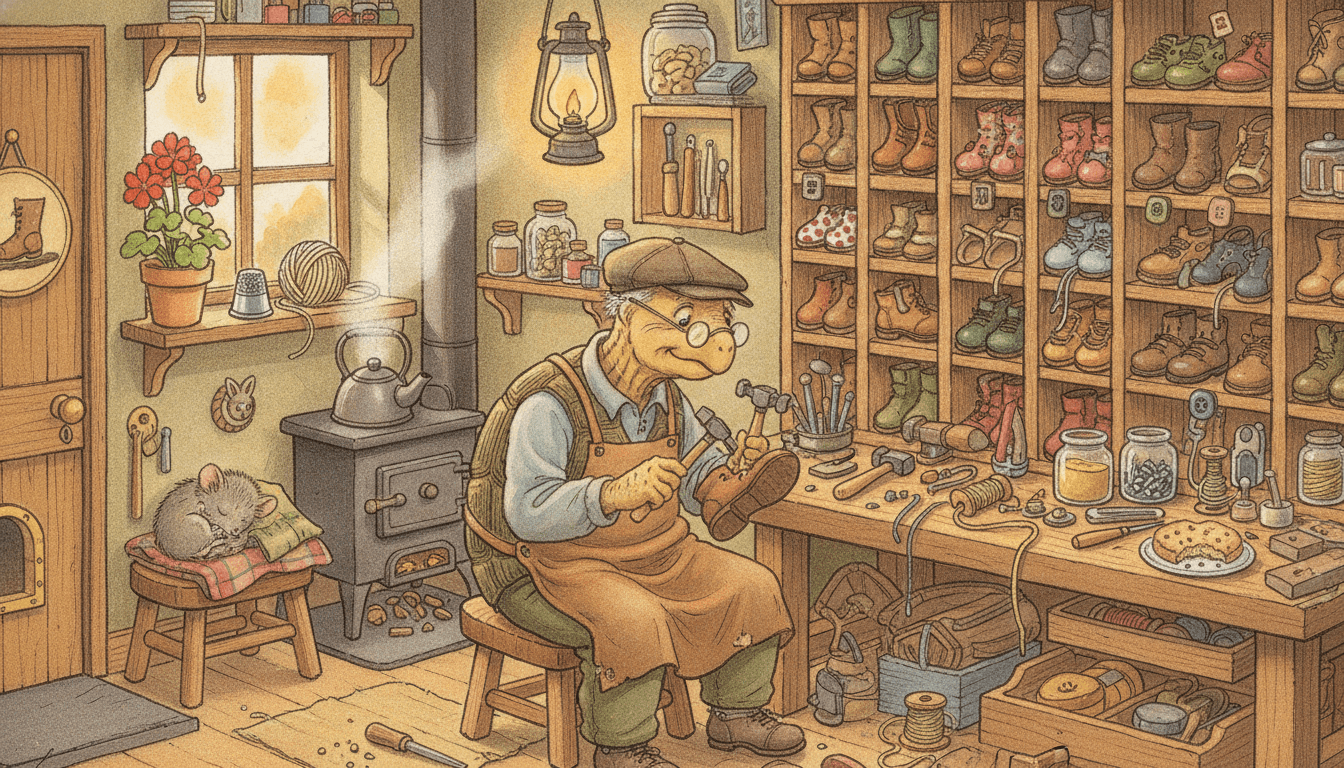
An elderly tortoise, a cramped workshop and a young apprentice who rearranges everything. Rich everyday actions and small narrative touches are built into the brief, so a story set entirely at one workbench still fills a page.
Create this storyFour Floors and One Staircase
A tall thin house and the four animal families who share it. Cutaway cross-sections of a whole busy building are exactly what a style with this much tolerance for detail was made to draw.
Create this storyThe Boat That Came Back Wrong
An otter boatwright, a borrowed rowing boat and a repair that will not hold. Warm soft daylight and no gritty dark tone means a story about a leaking boat stays an adventure rather than turning into a disaster.
Create this storyThe New Shop on the Corner
Somebody unfamiliar opens a shop and the street does not know what to make of it. An animal town illustration style with a kindly cast and no satire in it can carry a story about suspicion without ever making anyone the villain.
Create this storyAI-Generated Anthropomorphic Animal Illustrations
Try it on these anthropomorphic animal illustrations: pick any animal in frame and work out what its job is. There are no bystanders in a page drawn to this brief.
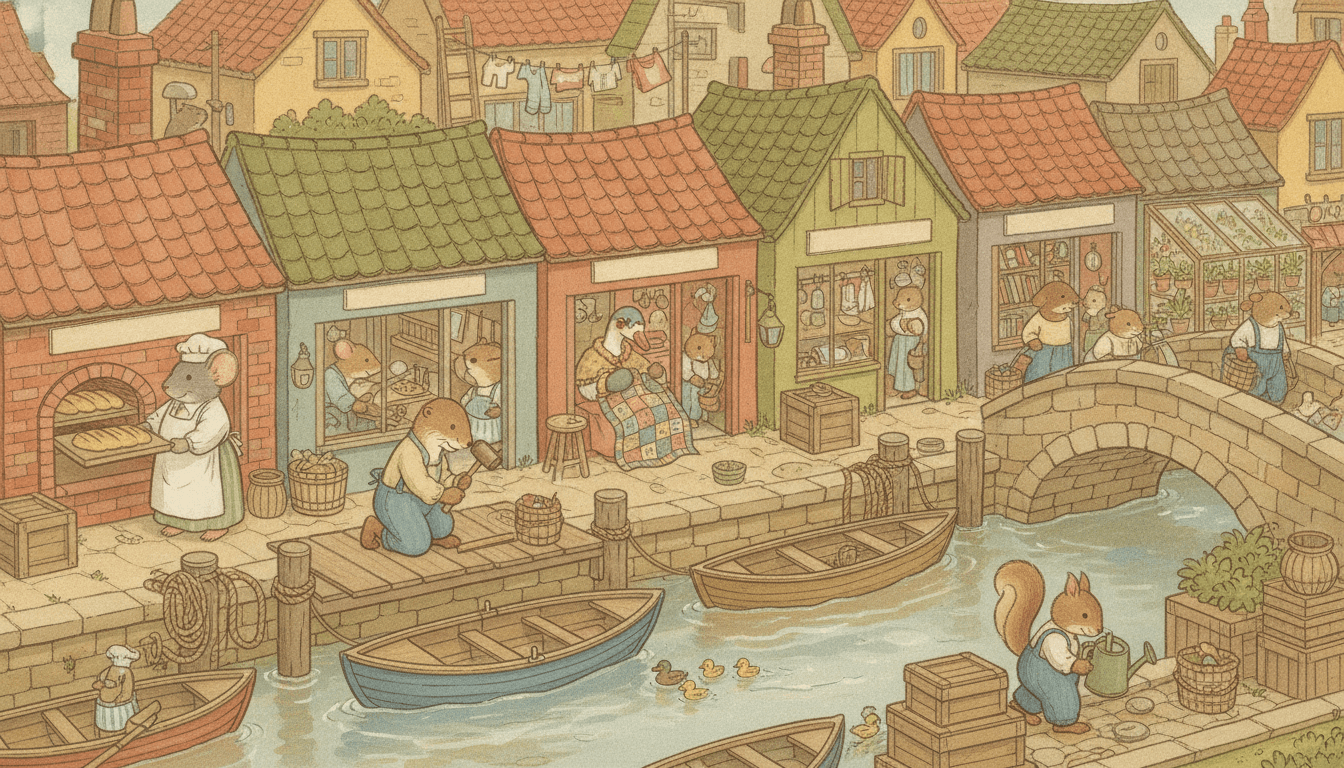
Dressed Animal Characters for Every Part of Your Story
Characters, faces, trades, the objects of a working town, a whole house in cross-section — the same waistcoats and the same warm earthy colour, spent on whatever your story is actually about.
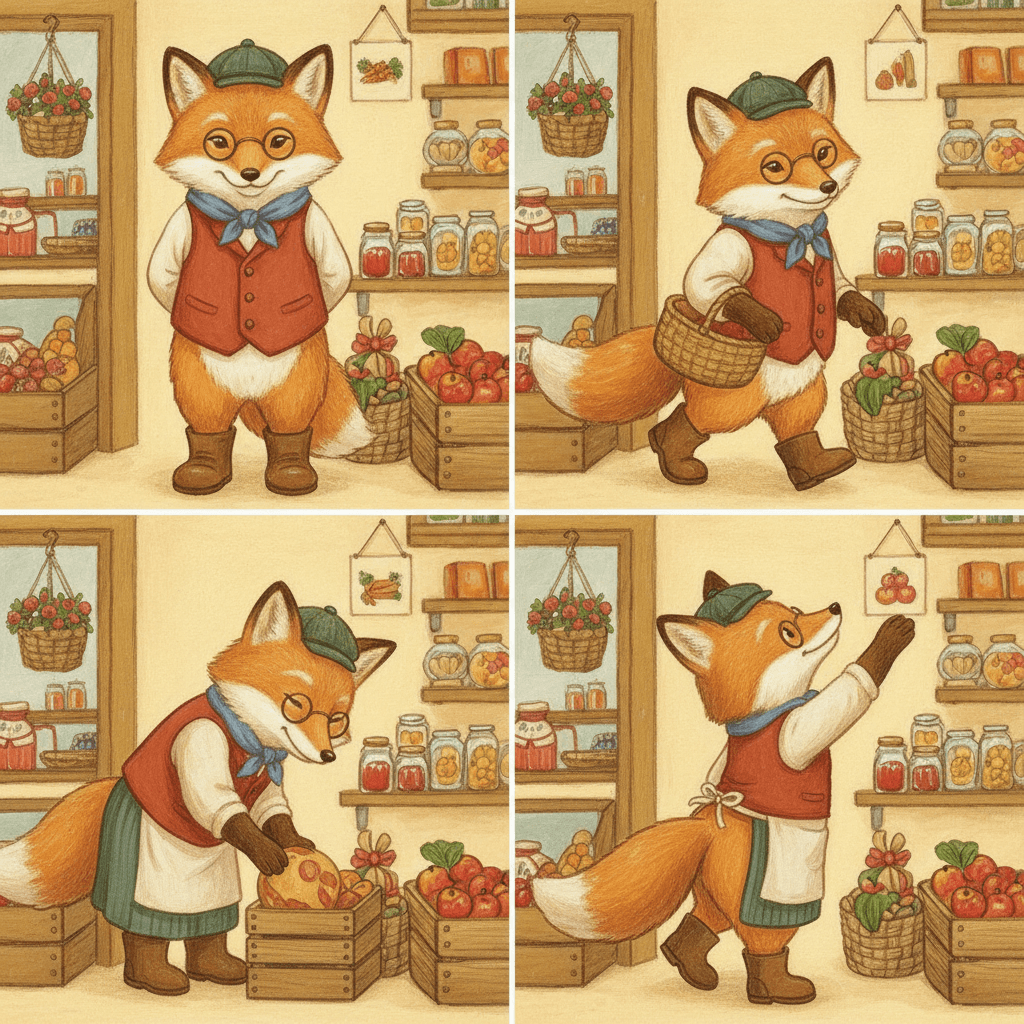
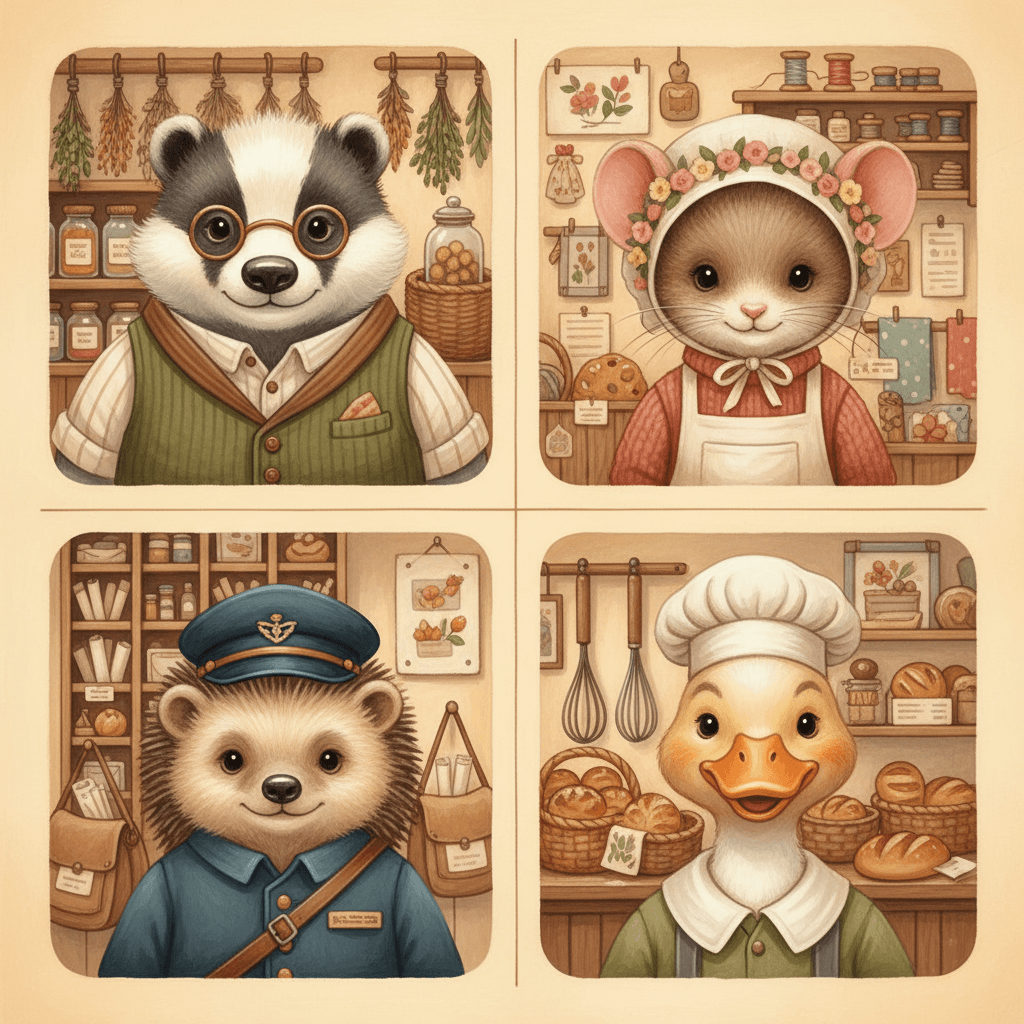
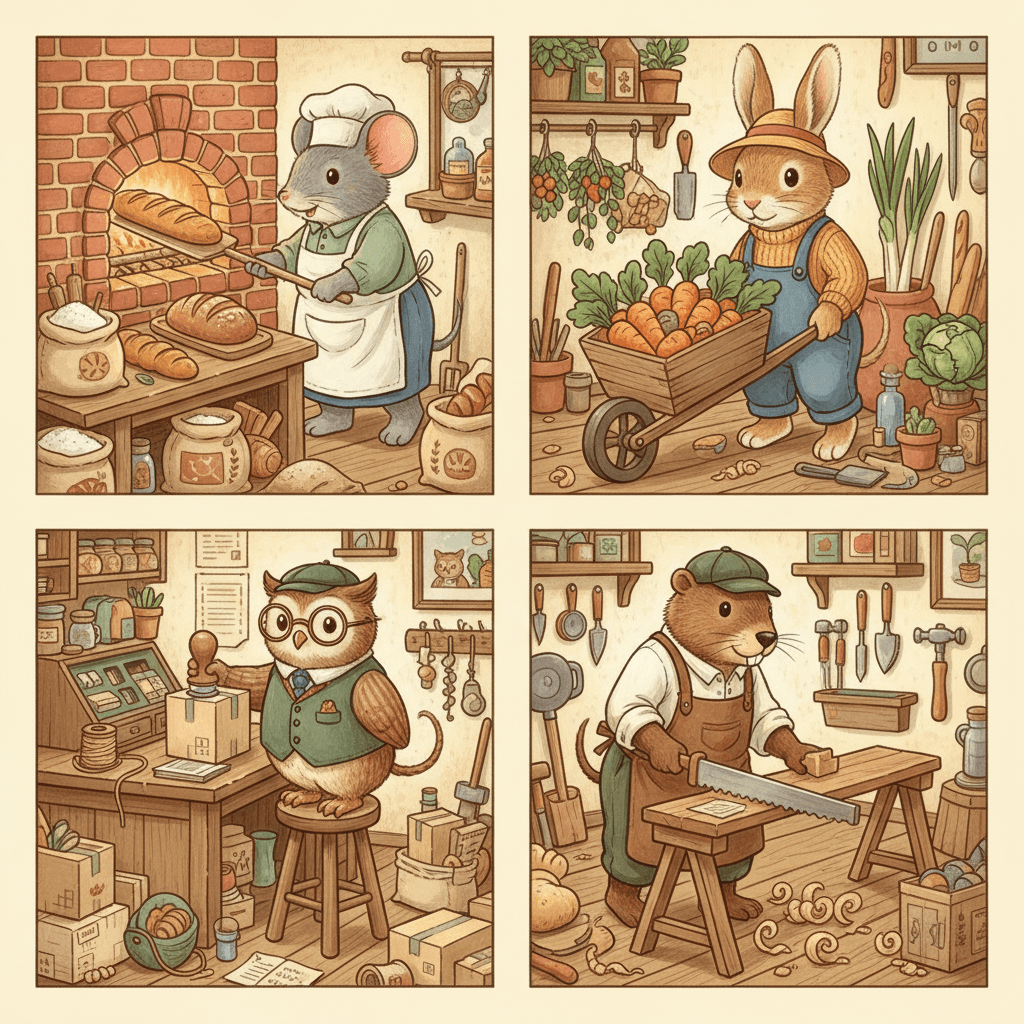
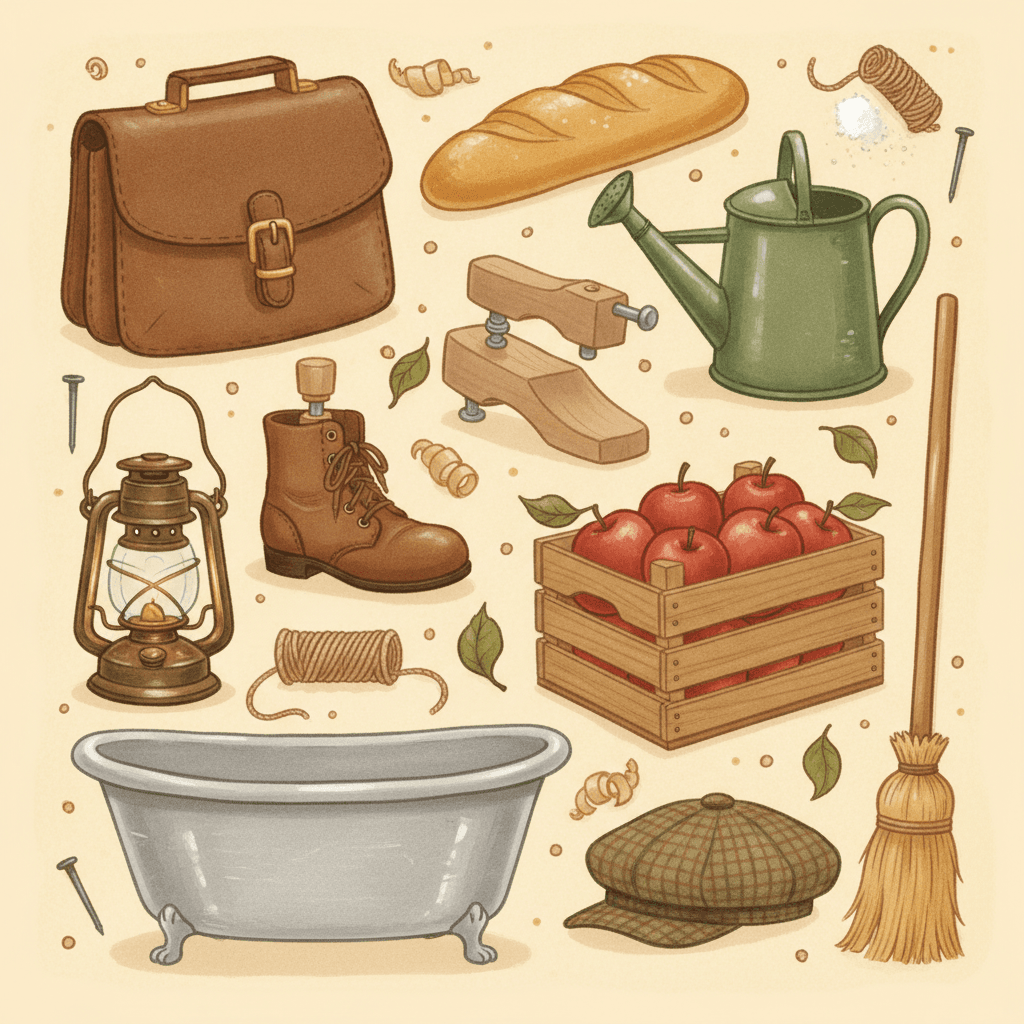
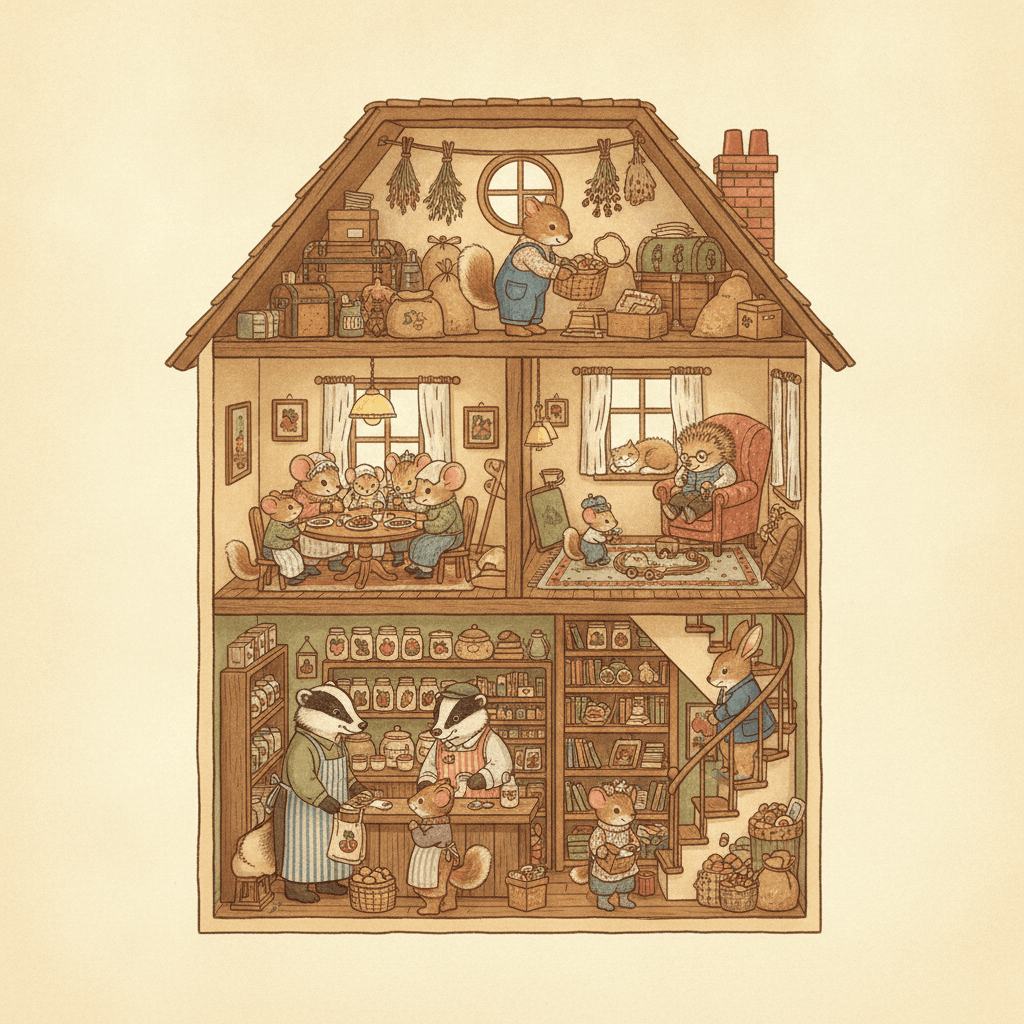
Everything You Need for Anthropomorphic Animal Picture Books
One busy shopfront is easy. Twenty-four of them, with the same cast in the same clothes on the same street, is the part that needs building.
The same town on page twenty
Density is the first thing an image model loses patience with. Ask for a crowded street twenty times and somewhere around page nine it starts quietly emptying the pavement, dropping the window boxes and simplifying the shopfronts to save effort. One fixed anthropomorphic animal brief — occupational roles, rounded contours, narrative detail filling the scene, no empty background — is carried into every page instead, so the last spread is as busy as the first.
Four refusals, and one of them is unusual
Photorealism, gritty dark tone, harsh outline, empty background. Three of those are housekeeping — almost every style here bans photorealism. The fourth is the one that defines the look, and it points the opposite way from most of the library. Where other styles protect the paper, this one protects the crowd.
A big cast that stays itself
Save your characters in the Character Library, with up to fourteen reference images each, and they carry into every page and into later books. It matters more here than almost anywhere, because anthropomorphic animal stories invite a large cast — a baker, a postman, a cobbler, two fox children, a cat at a window — and a town only feels like a town if the same badger is recognisably the same badger on page three and page twenty-one.
A palette that arrives with the look
There is no colour picker and no hex field. The range comes with the style — warm cheerful hues, soft earthy tones, friendly pastels — and the restriction is the feature. It is what stops forty objects on one page from turning into forty competing colours. Hand out an eyedropper and a busy street becomes a jumble sale within two spreads.
Whole books, not single drawings
You are not prompting for one pretty image. Describe the story and C2Story writes it, breaks it into pages, and draws every page in this style, matched to what that page actually says — so the town holds together across a narrative instead of being one lucky render of a shopfront.
Any language you read aloud in
The look carries no language of its own. Write in English, Chinese, Japanese, Spanish, French and more — the waistcoats, the rounded contours and the warm earthy palette do not change with the text. A busy animal high street reads the same in every alphabet.
Anthropomorphic Animals Picture Books — Questions
What people ask before committing a whole book to dressed animals, small trades and a page that is never allowed to be empty.
Explore More Story Ideas
Discover more styles, tools, and story types
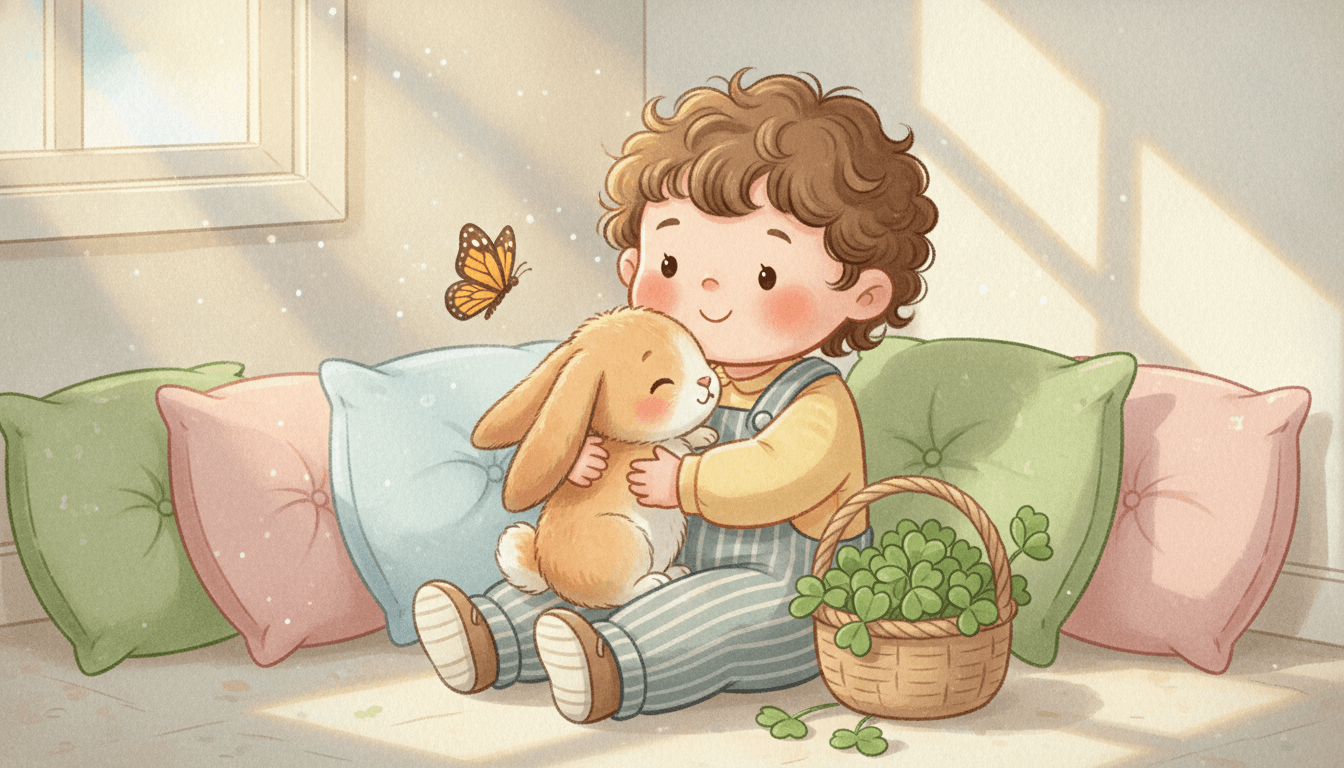
Bunny Stories
A new bunny comes home, first hops, carrot treats and lost-bunny rescues
Explore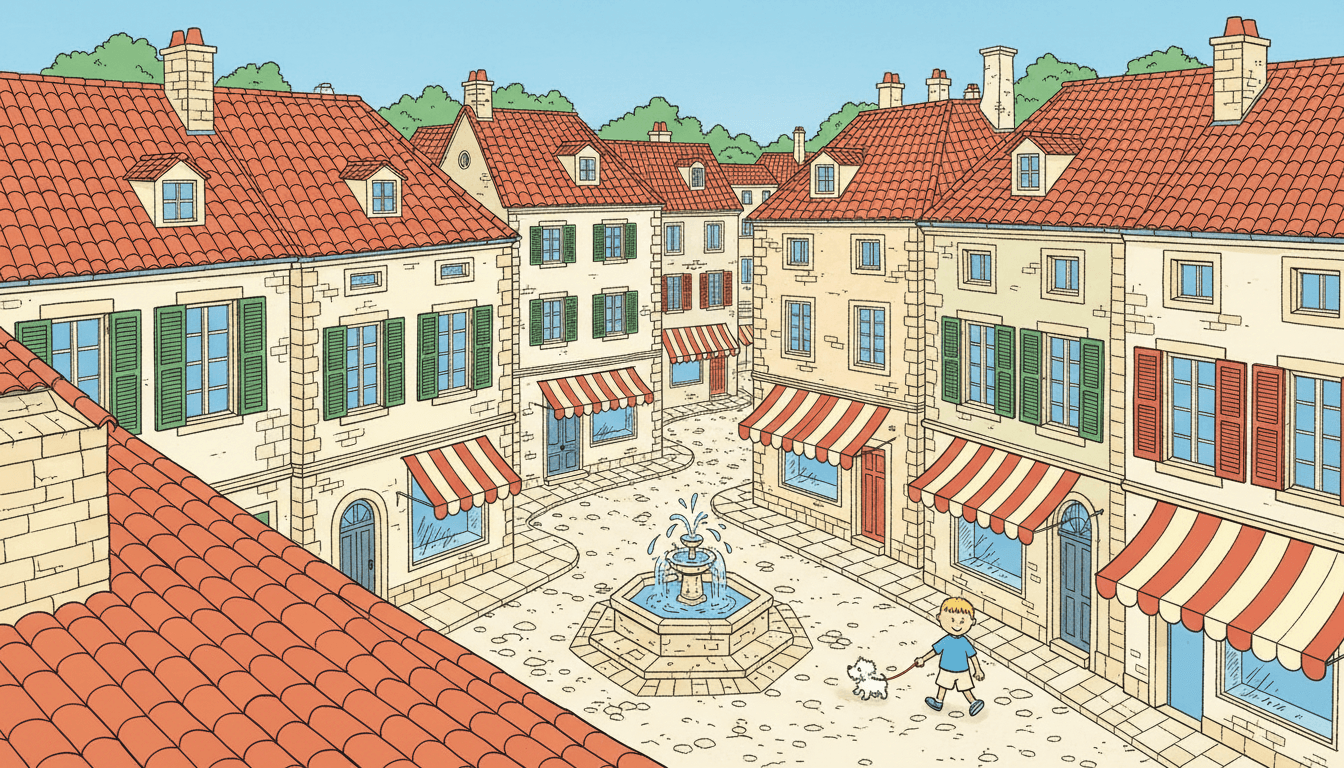
Ligne Claire Picture Books
One even ink line & flat unshaded colour
Explore
AI Story Generator
Generate complete stories with AI
Explore
Storybird Alternative
Better AI story creation
ExploreAnthropomorphic Animals in Picture Books — A Town With Jobs, Drawn Full to the Edges, with AI
Anthropomorphic animals are what people mean when they describe a book as the one with the badger who runs a shop. On C2Story this is the Busy Anthropomorphic Town style, and its brief is unusually specific about what it wants: warm anthropomorphic-animal picture book illustration, a busy little society of animals in occupational roles, rounded friendly contours, rich everyday actions and details filling a bustling town scene, soft cheerful colour, and gentle storybook charm with lots of small narrative touches. Its light is warm soft daylight. Its line is a soft rounded outline. Its palette is warm cheerful hues, soft earthy tones and friendly pastels. One brief, applied across an entire book, so the twentieth page is as busy as the first.
The thing worth understanding before you commit a book to it is that the clothes are not the point — the jobs are. Of the seventy-eight hand-drawn styles enabled here, exactly one asks for a society, and it asks for that society in occupational roles. That single word changes what gets drawn. An animal with an outfit is a costume; an animal with a trade needs a counter, a doorway, stock on the shelves, a customer and a street to open onto, and all of that arrives in the picture with it. Which is why this is the one animal town illustration style here rather than simply a style that happens to include animals, and why a page of it contains so much to look at. A pet belongs to somebody. A cobbler has a queue.
The second thing to know is where that density comes from, because it is written into the specification rather than left to chance. Every style in the library ends with four refusals, and this one refuses photorealism, a gritty dark tone, harsh outlines and — unusually — an empty background. Four other styles here ban a busy or cluttered background outright; only two ban an empty one, and this is the only picture book style among them. So while most of the restrained looks in this library are quietly protecting the paper, this one is protecting the crowd. The soft rounded outline is what makes that survivable: fill a frame with forty things and draw them all with hard contours and you get noise, but round the edges and the same forty things become a street a child can read. The ban on a gritty dark tone is doing similar work on the mood — a town of animals in waistcoats is one hard light away from satire, and warm soft daylight keeps it a children’s book instead of a comment on yours.
Two honest notes before you start. First, this style cannot do quiet. Empty background is refused by name, so a lone figure on a blank spread, a wide moor or a page that is mostly sky will keep filling itself in with crates, windows and passers-by — and your text has fewer quiet places to sit, so keep the sentences short. It is also poor at menace and grandeur, since there is no dramatic shadow in its lighting and no harsh edge available; for those, the fine line ink style and the minimalist style are built the opposite way round. Second, dressed animal characters need managing. This look invites a large cast, and the clothes are what identify everyone, so save each animal in the Character Library with up to fourteen reference images each — a fox who loses his spectacles between page four and page nine reads as a different fox. Write in any language you read aloud in, then export the finished book as a PDF, which is the handoff to whichever printer you already use, and the images you generate are licensed for commercial use. Start free: see our pricing plans, browse every option on the illustration styles hub, compare it with the deadpan cartoon style, the crayon style or the storybook style, try the animal story generator, or go straight to the AI Story Generator.