
Crayon & Ink Picture BooksTiny People, One Very Large Cat
Type your story idea and C2Story turns it into crayon and ink art: grainy wax crayon, brushed black ink, a gentle animal as big as the room and doll-sized people, on every page.
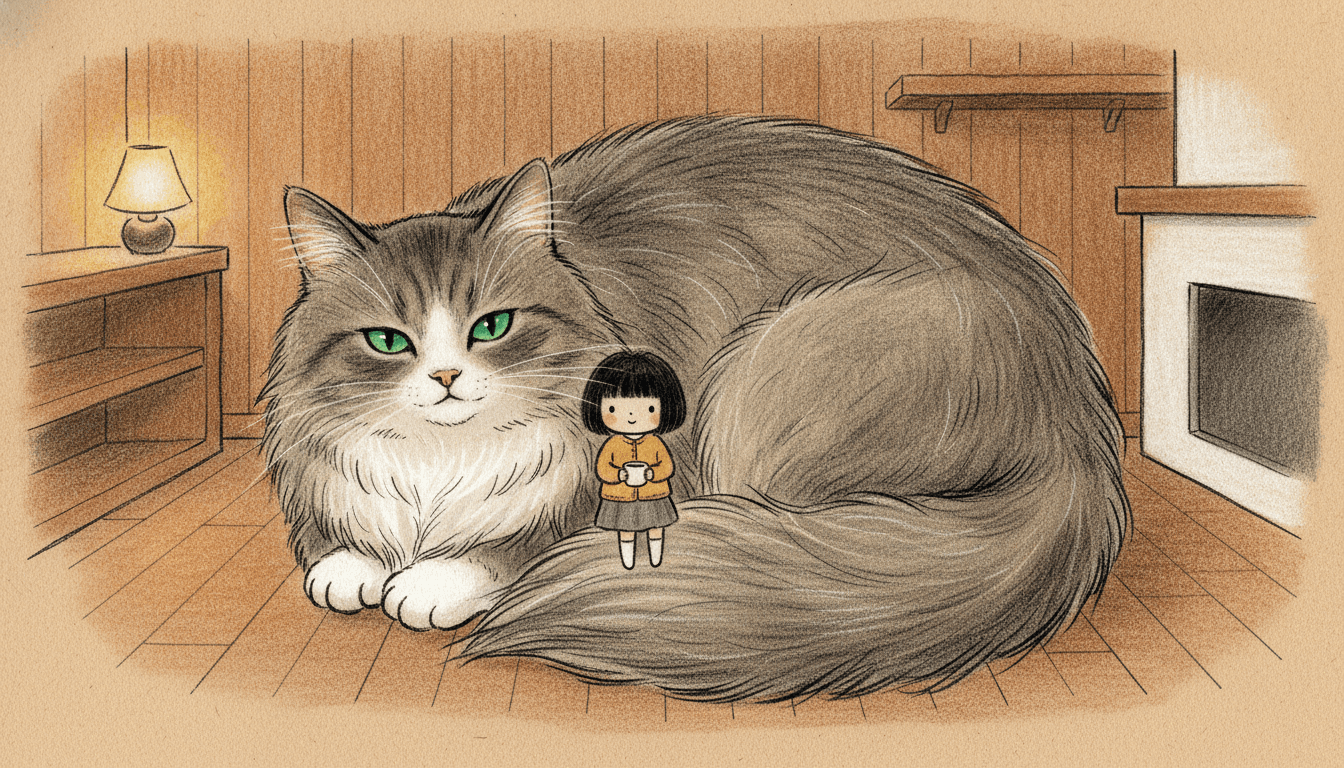
A smoky grey cat lies curled on the floorboards of a warm wooden room, so big that its tail sweeps across half the floor. A girl no taller than its paw stands against its chest holding a mug in both hands, and the cat looks down at her through half-closed emerald eyes. Every tuft of its coat is a separate crayon stroke; the outlines and the shadows are brushed ink. This is crayon and ink art as a quiet everyday picture book: soft, grainy, lamp-lit, and built on one very large difference in size.
- Grainy wax crayon and charcoal texture
- Loose brushed sumi ink for line and shadow
- A gentle giant animal, doll-sized people
- Emerald eyes on warm beige paper
What Makes Crayon and Ink Art Look This Way
Every style here is a written brief: a palette, a light, a line weight and a short list of refusals. Four things in this one decide the look, and each is rare or unique in the library of seventy-eight.
The only giant that is alive
Every style in C2Story is a short written brief. Four others mention something giant or oversized, and in each it is a thing or a feature: a moon, a scythe, and in two of them a pair of oversized eyes. This is the only brief whose giant is a living character, a cat, and the only one that asks for the people beside it to be tiny and doll-like.
Two media on one page
Two of the seventy-eight briefs ask for crayon. The other, Vintage Crayon Storybook, pairs it with coloured pencil. This is the only brief in the library that names sumi ink, and the only one that sets it against wax crayon: grainy crayon and charcoal for the soft parts, loose brushed ink for the outlines and the dark.
Fur drawn stroke by stroke
Two briefs mention fur. Naturalist Animal Watercolor paints it in soft blended washes. This one asks for fine fur flow, so the fur is drawn rather than painted: hundreds of separate crayon and ink strokes that follow the way the coat lies, which is what makes a cat this size feel soft rather than monstrous.
One green, one red
The palette is soft crayon tones, sumi black and warm paper beige, plus two accents that no other brief names: emerald green for the cat’s eyes and seal red. Everything else stays quiet, so the eyes are the brightest thing on the page. The light is soft warm indoor light, the light of a room in the evening.
The Size Is the Story in Crayon and Ink Art
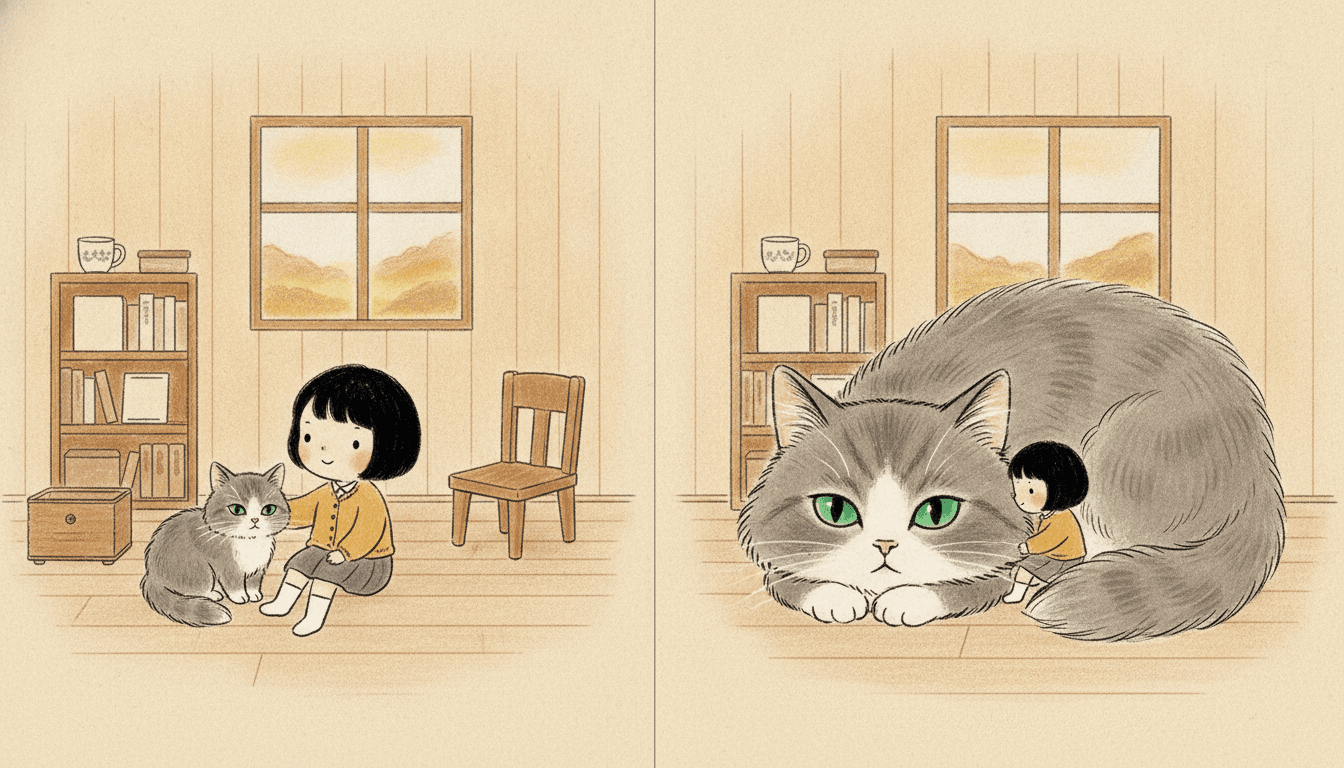
Look at one room twice. Same wooden walls, same window, same bookshelf, same girl with a black bob, same grey and white cat, same crayon and ink. On the left the cat is ordinary size: it sits beside her on the floorboards, a little smaller than she is, and she strokes its head. It is a nice picture of a girl and her cat.
On the right the only thing that changed is the size of the cat. Now it lies curled across the whole room with its chin on its paws, and the girl sits tucked against its side, small enough to disappear into the fur. Nothing else moved, but the picture is about something else now: shelter, comfort, a big warm thing that is on her side. That change is what the brief is built to make, and no other brief in the library asks for it.
Its four refusals keep the page hand-made: no slick gradients, no gloss, no neon, nothing photographic.
Write How Big It Feels
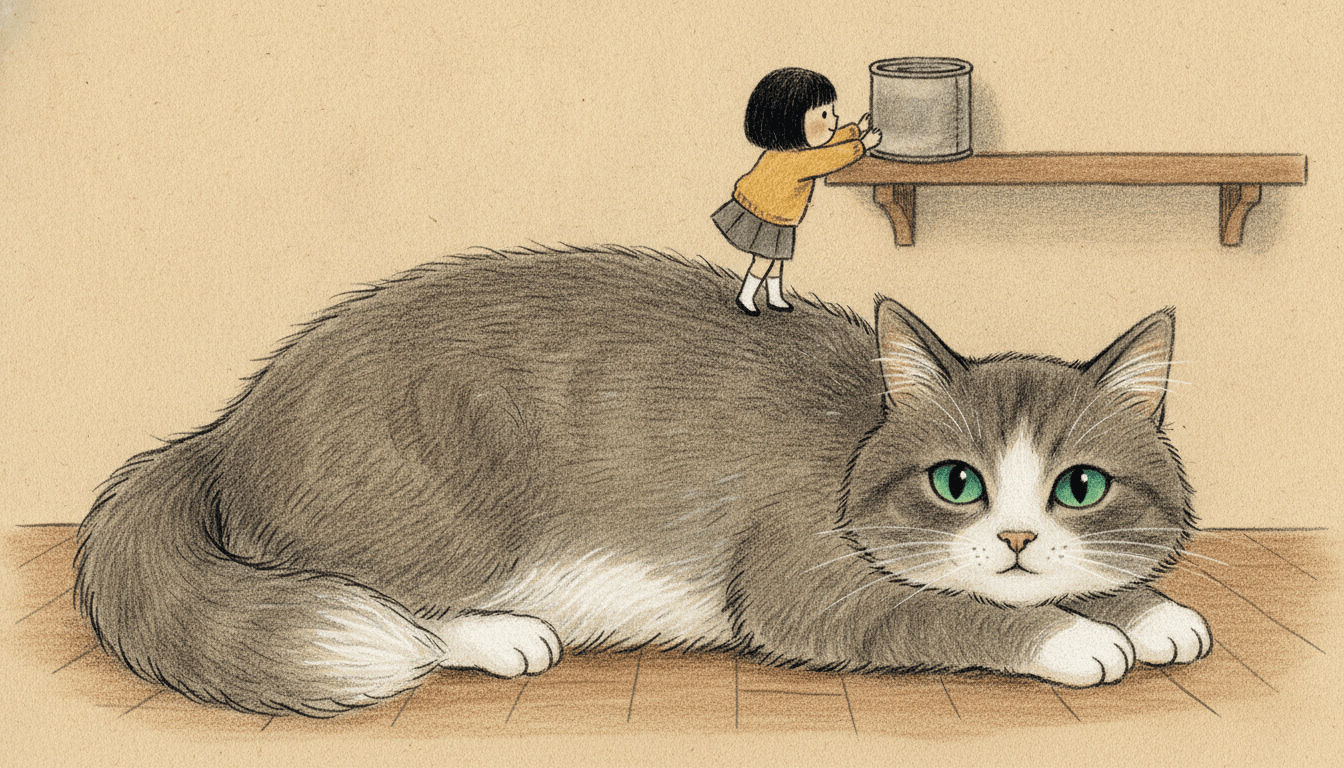
A giant grey cat lies stretched across the kitchen floor like a furry hill. A girl no bigger than its ear stands on its back, up on tiptoe, lifting a tin down from the top shelf, and the cat turns its head to watch with patient green eyes. Nobody has to explain the page. The cat is big because she needs it to be big, and today she needs a ladder.
A cat this size is not a monster and not a joke. It is how big a cat really is to a small child in a small flat on a long wet afternoon: the warmest, softest, most important thing in the room. The picture just draws the feeling at its true size. That makes size the one thing in this style that you, the writer, control, and it can change from page to page. The cat can be as big as the house on the night of the storm and small enough for a lap on the last page.
In a book you do not write image prompts; C2Story writes them from your story. A page that says “the cat sits with Hana” leaves the size to chance. A page that says “the cat, as big as the sofa now, curls around Hana while the thunder rolls” gets a size, a pose and a reason.
From One Sentence to Crayon & Ink Picture Books
You pick the look once. The brief is then applied to every page, so the crayon grain, the brushed ink and the emerald eyes never drift.
Describe the animal and its people
Write a sentence or two about the animal, the small people who live with it and what happens. Give the animal one coat, one marking and one eye colour, and say how big it is.
Choose Crayon & Sumi-e Tale
Pick the style from the style list in the editor. From then on every page uses the same crayon grain, the same brushed ink and the same warm paper.
Get a whole book
C2Story writes the story, splits it into pages and illustrates each one. Regenerate any page you want to change without touching the rest, read it online, share it, or buy the PDF download to hand to a printer.
This Style and Its Three Nearest Neighbours
One shares the crayon, one shares the ink, and one shares the fur. Here is what each actually asks for.
Crayon & Sumi-e Tale
The style on this page
Gentle crayon and sumi-e ink picture-book illustration: humble grainy charcoal-and-crayon texture, a giant cat with emerald-green eyes and finely drawn fur, tiny doll-like people, a small red seal stamp, and a warm playful everyday mood. It refuses slick digital gradients, glossy CGI, neon colours and photorealism.
Crayon
Same wax, louder
The base crayon style: bright primaries, blunt waxy fill and rough childlike strokes, with no ink at all. Its page also covers Vintage Crayon Storybook, which mixes crayon with coloured pencil, rough ink outlines, oversized eyes and an aged paper border. Choose either when you want the whole book to feel drawn by a child or a 1970s European picture book.
Sumi-e
Same ink, no crayon
Pure ink wash: loaded brush, wet bleeding edges, wide empty paper. It is about breath and space, and its characters are usually small in a big landscape. Choose it for quiet outdoor stories. Choose crayon and ink when you want the same black ink inside a warm, cluttered, lived-in room.
Naturalist Animal Watercolor
The other brief with fur
Carefully observed real animals at their real size, painted in soft translucent washes, and it refuses cartoon exaggeration. Choose it when the animal should look like a real hare or fox in a real wood. Choose crayon and ink when the animal is a member of the family and twenty times bigger than it should be.
Story Ideas for Crayon & Ink Picture Books
Each idea starts at home, with one small person, one very large animal and one ordinary problem.
A Mixed Media Picture Book, Page by Page
Pages generated to this one brief and not retouched. The two-up shows the whole idea in one frame; the rainy window keeps the cat inside and the weather outside; the rabbit page shows the brief will take an animal that is not a cat. Some first-pass pages have a soft paper vignette around the edge rather than a clean full bleed.
Same room, two sizes of cat
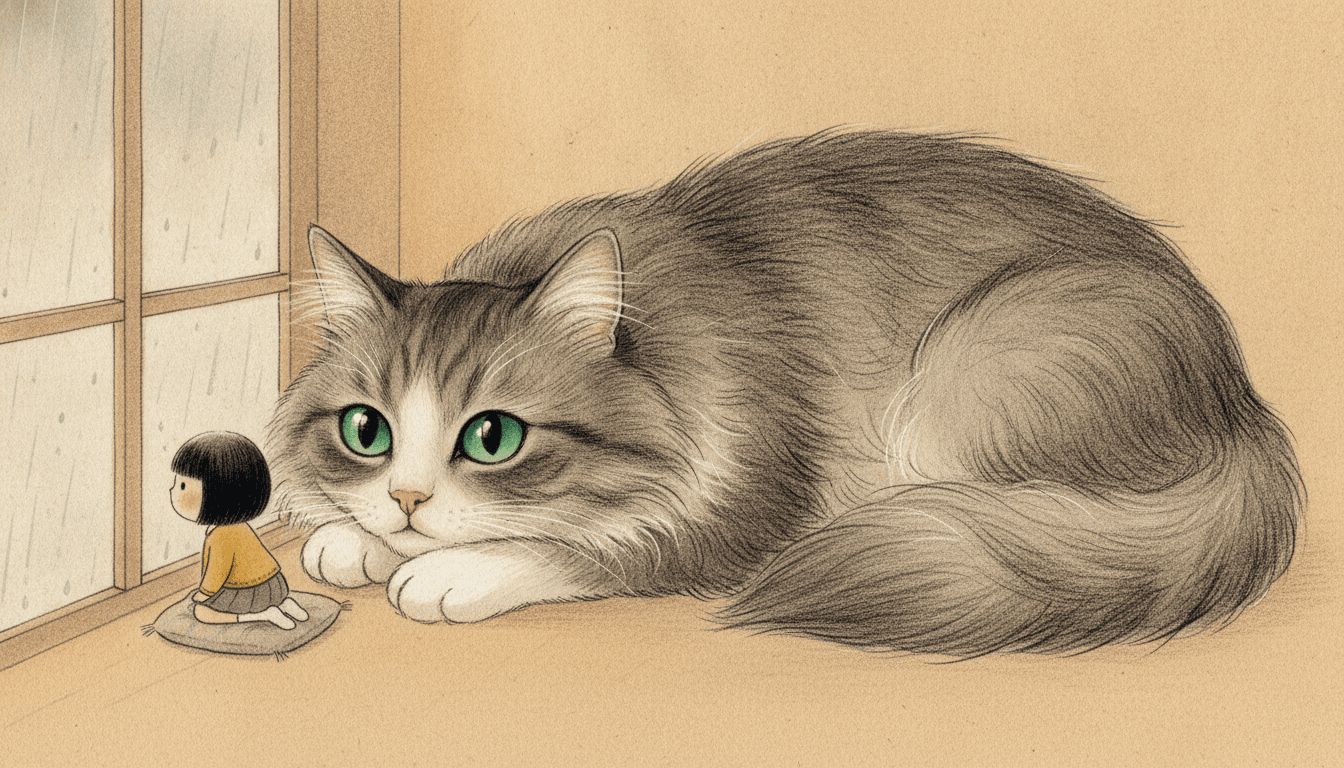
Rain all afternoon
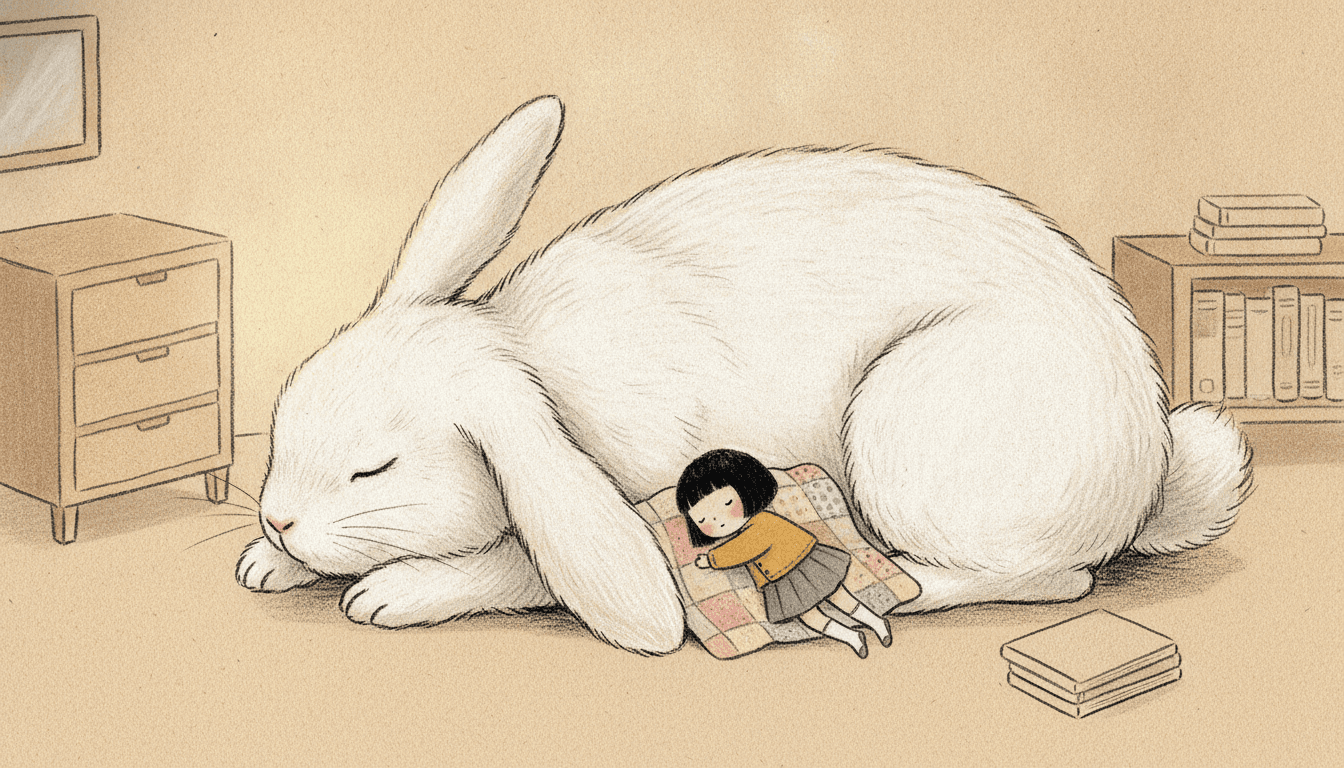
Not a cat, still giant
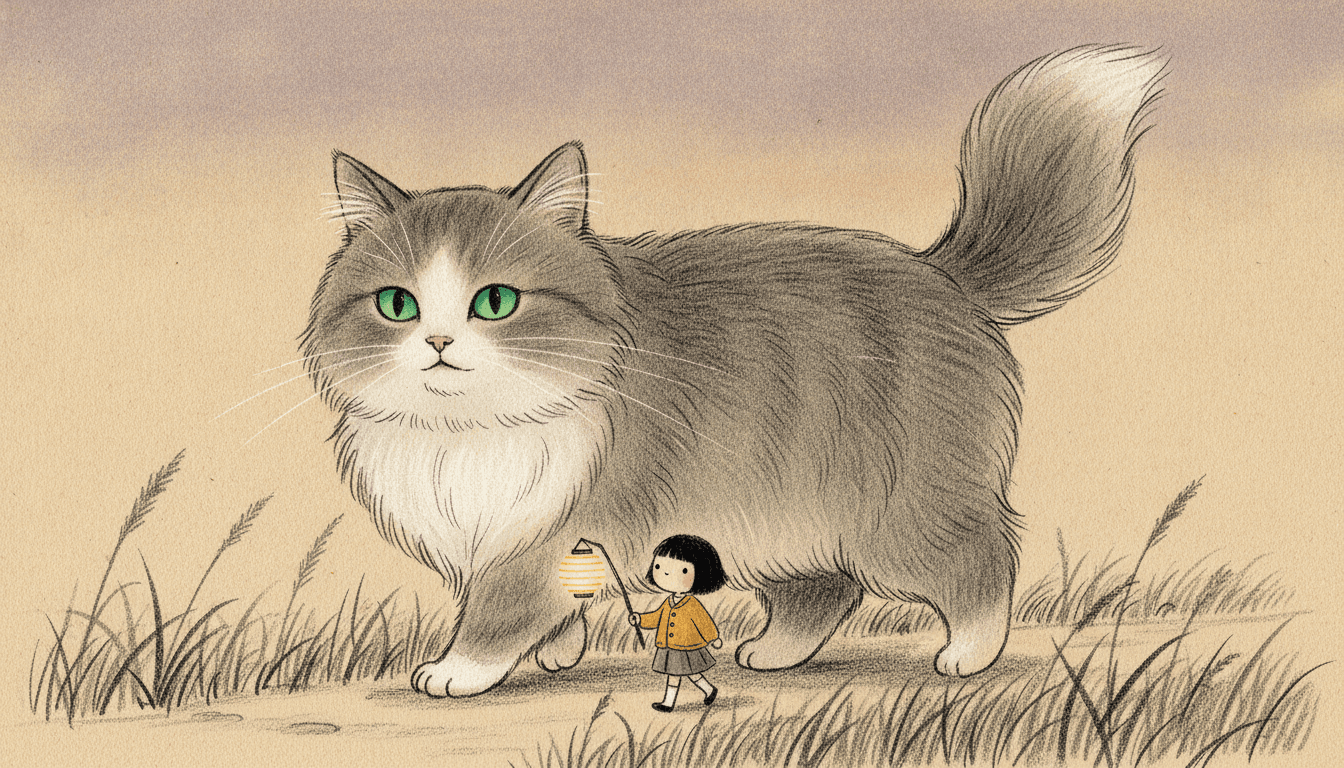
Outside at dusk: same grain, same emerald eyes, same cat, now as tall as the girl is small.
Crayon Brush Illustration, Stroke by Stroke
Five square pages, all from the first pass. One is a close-up study of a single eye and the fur around it, so you can see the strokes: grainy crayon for the soft grey, darker lines for the stripes, and the green as the one bright colour on the paper. The other four put the same cat beside the same tiny girl at bedtime, at tea, on grooming day and nose to chin.
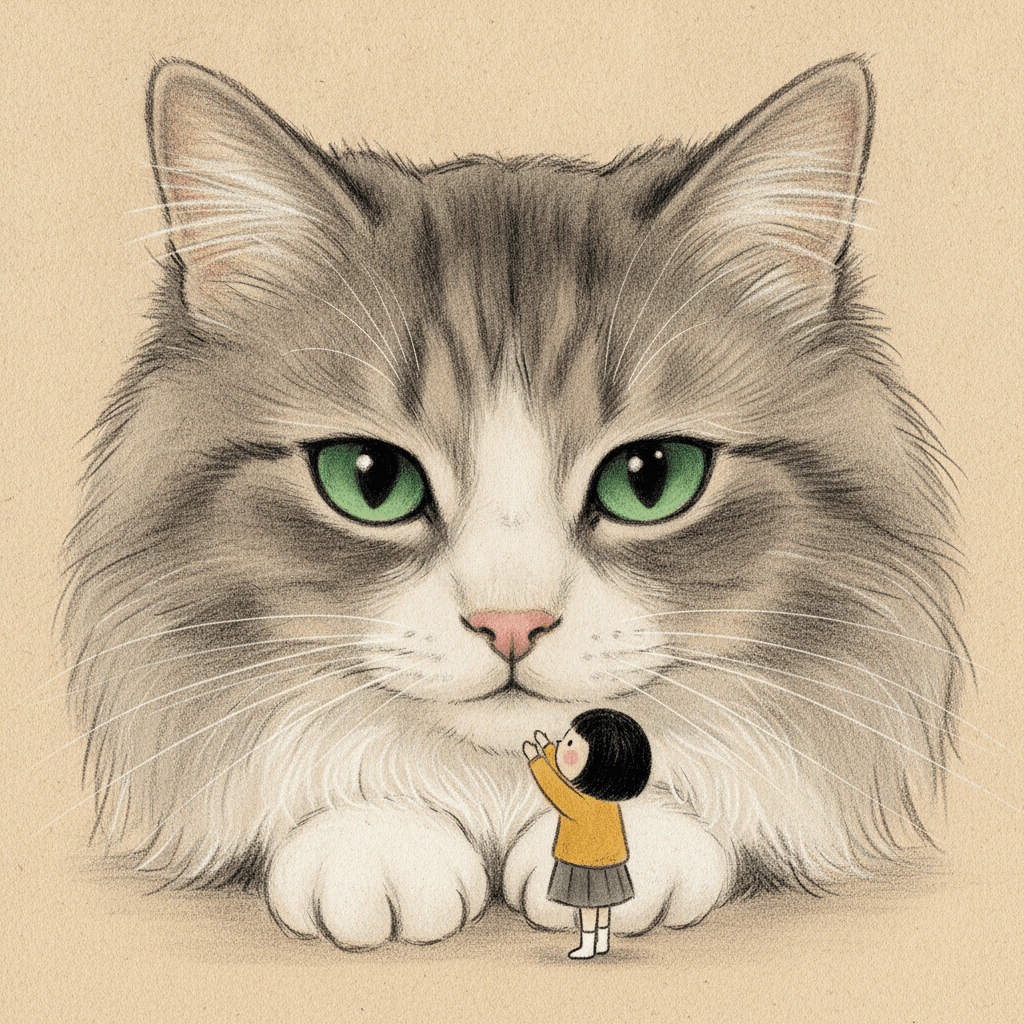
Reaching up
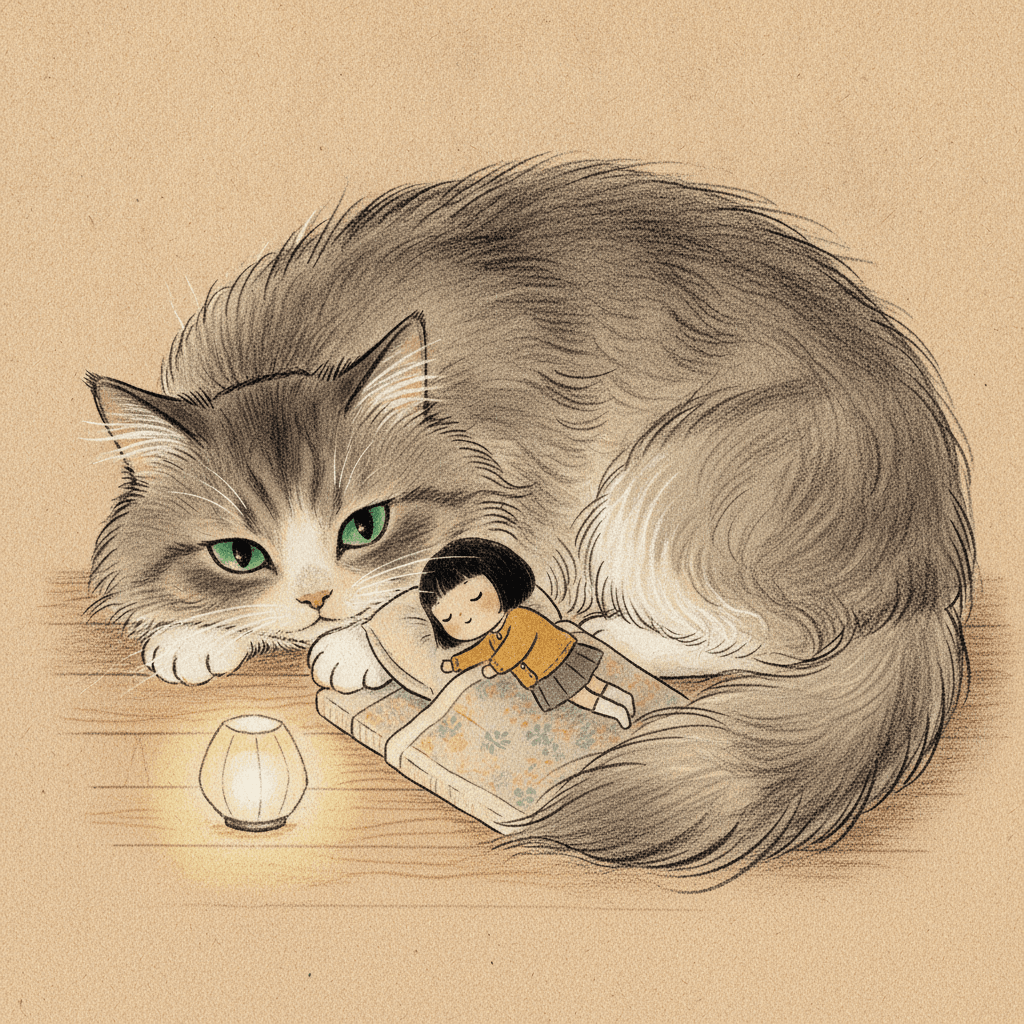
Keeping watch
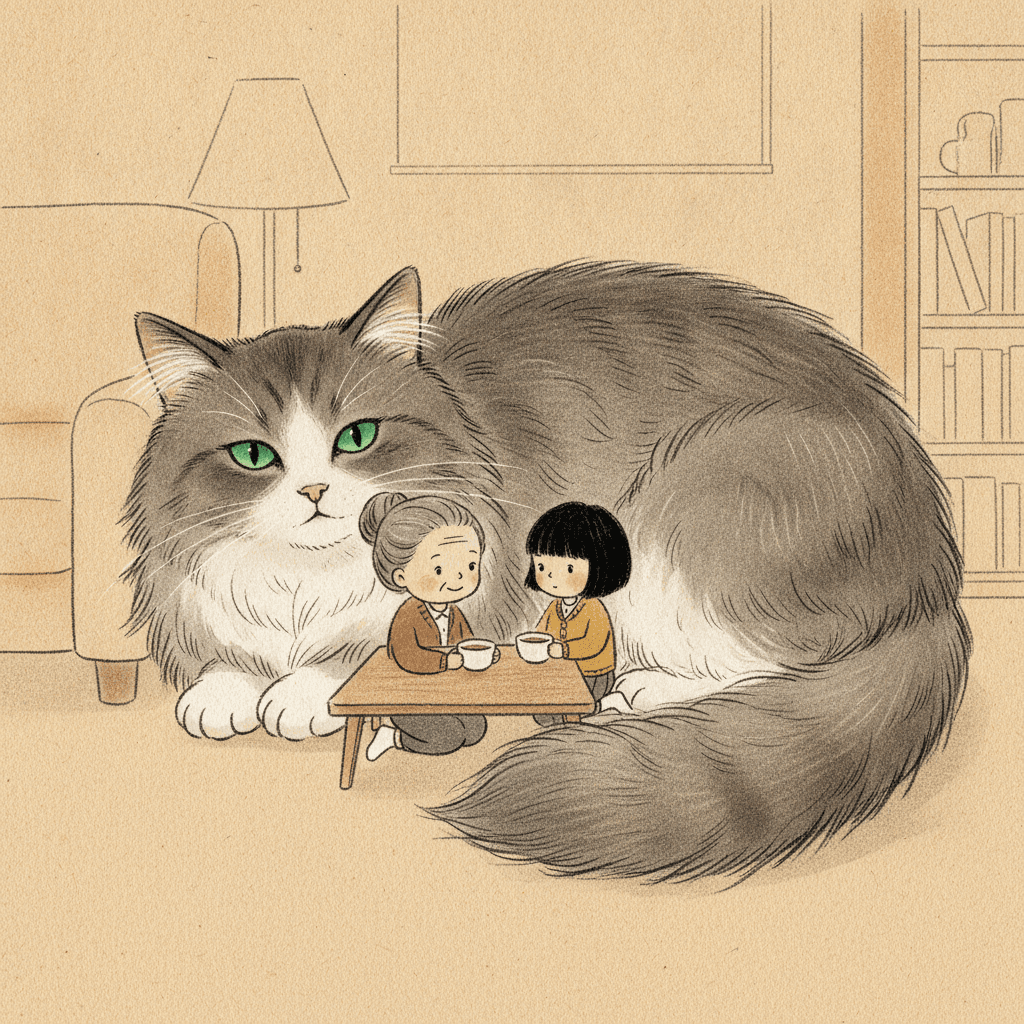
Tea with Grandma
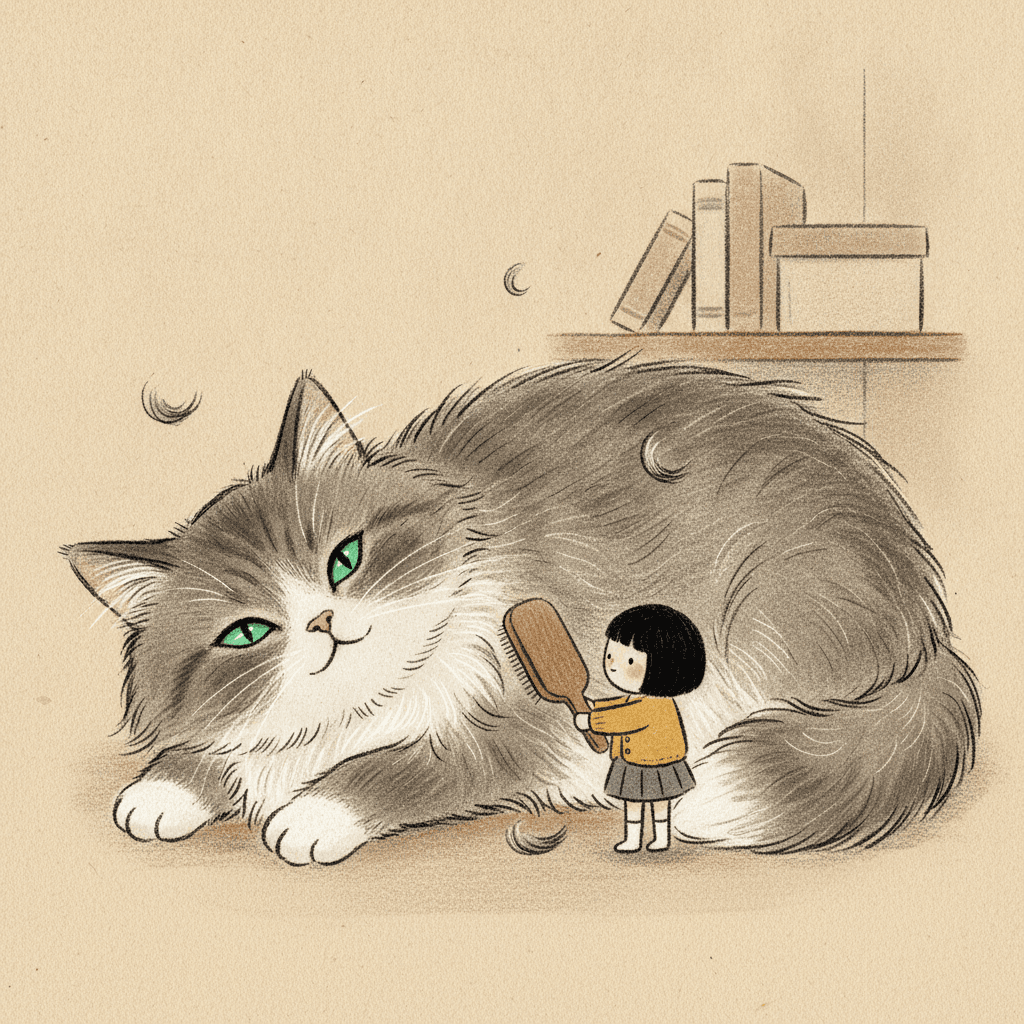
Grooming day
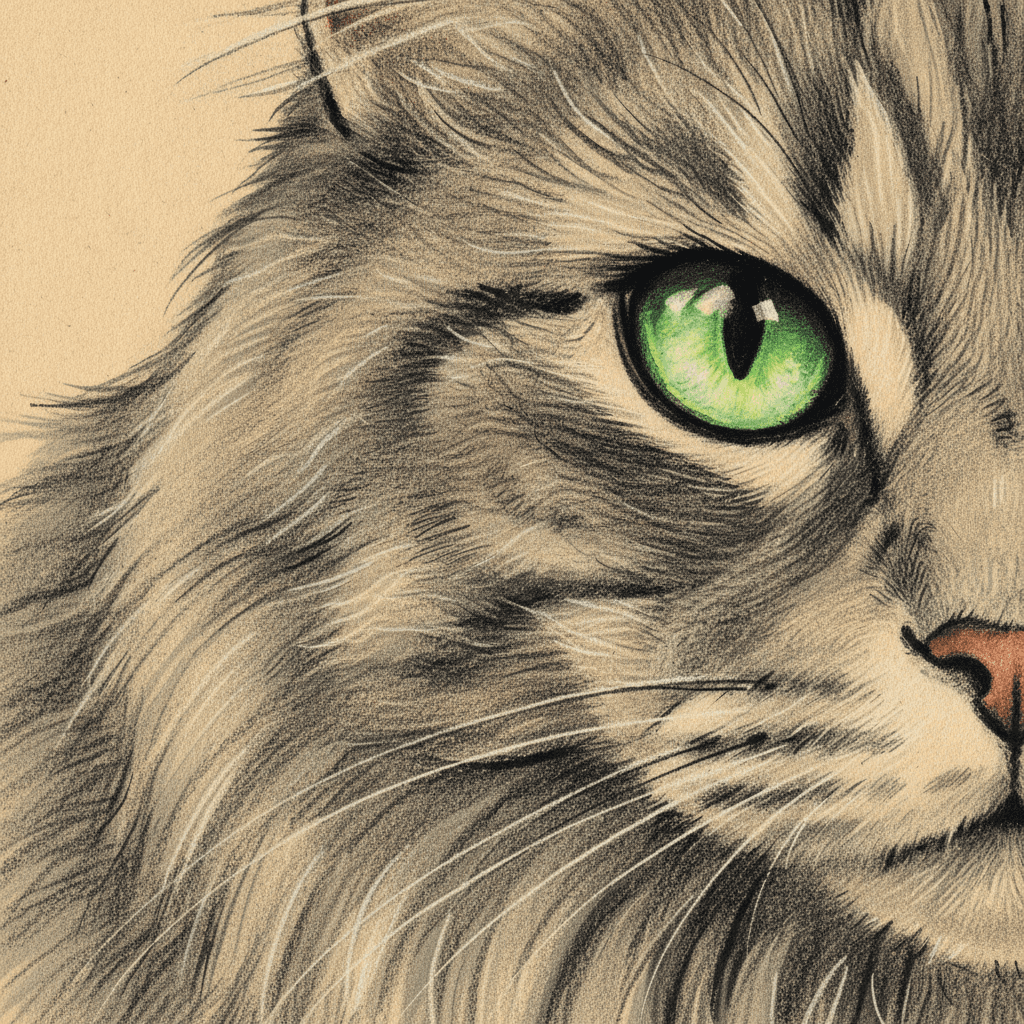
One eye, a thousand strokes
Making Whole Crayon & Ink Picture Books
What is useful in a book drawn this way and where the limits are, in the order you are likely to meet them.
The same cat on every page
A giant animal is the easiest thing in a book to keep on model and the most important. Give it one coat, one marking and one eye colour, or save it in the Character Library with up to fourteen reference images. Characters made from an uploaded photo stay private, so a book about your own cat stays yours.
Write how big it feels
Say how big the animal is on every page, and say it as a comparison: as big as the sofa, as tall as the house, small enough for a lap. The size is the feeling of the page. If you leave it out, you leave the feeling out too.
People come out as dolls
The brief asks for tiny doll-like people, so the humans get simple round heads, dot eyes and pink cheeks, whatever age they are. That is what makes the cat look huge. If your story needs detailed, expressive human faces, choose a different style.
About the red seal
The brief asks for a small red seal stamp, so expect one in a corner of some pages. Generated seals often contain made-up characters that are not real writing. Every example on this page was asked to leave it out, so none of them shows one. If a seal lands somewhere you do not want it, regenerate that page.
Best indoors
The light in the brief is soft warm indoor light and the mood is everyday and domestic. Kitchens, bedrooms, living rooms and windows are where this look is at home. It does go outside: our dusk walk through the long grass kept the same grain and the same cat. Busy streets, crowds and bright daylight action are where it is weaker.
A whole book from a sentence
Describe the story in a sentence and C2Story writes it, splits it into pages and draws every page to the same brief, in English, Chinese, Japanese, Spanish, French and more. Read online, share a link, or buy the PDF download as the handoff to your printer. Pages are licensed for commercial use under the terms of service.
Other styles with a soft hand-made surface: for bright waxy crayon on its own, crayon style picture books; for ink and empty paper, sumi-e picture books; for the other brief that names a cat, in thick buttery colour, oil pastel picture books; for real animals at real size, animal watercolor picture books; for pets as a story theme in any style, pet-themed storybooks; and for every style side by side, the children’s book illustration styles gallery.
Questions About Crayon & Ink Picture Books
Explore More Story Ideas
Discover more styles, tools, and story types
Camping Stories
Tents, campfires, hiking and starry nights
Explore
Guofeng Picture Books
Circles, squares & arcs with a tiny face
Explore
AI Story Generator
Generate complete stories with AI
Explore
Storybird Alternative
Better AI story creation
ExploreDraw the Cat as Big as It Feels
A rainy afternoon, a top shelf, a power cut, a walk home. Describe your story once and every page keeps the same crayon grain, the same brushed ink and the same emerald eyes.
Crayon & Ink Picture Books: Wax, Ink and a Cat as Big as the Room
Crayon & ink picture books rest on a brief built around a difference in size. C2Story runs seventy-eight hand-drawn style briefs, each a short written record of a palette, a light, a line weight and a few refusals. Four others mention something giant or oversized, and in all four it is an object or a pair of eyes. Only this one makes the giant a living character, a cat with emerald-green eyes, and asks for the people beside it to be tiny and doll-like.
The look is crayon and ink art on warm beige paper: humble grainy wax crayon and charcoal texture for the soft parts, loose brushed sumi ink for the outlines and the dark, fur drawn as many fine flowing strokes, and soft warm indoor light. It is the only brief in the library that names sumi ink and one of only two that ask for crayon. It refuses slick digital gradients, glossy CGI, neon colours and photorealism, so every page keeps its grain.
This mixed media picture book look suits small domestic stories: a rainy afternoon, a shelf too high to reach, a power cut, tea with a grandmother, a first walk outside. Write how big the animal feels on every page, and say it as a comparison. Save the animal in the Character Library with up to fourteen reference images and it stays on model. It is weaker for stories that need detailed human faces, bright saturated colour or big outdoor action.
The choice between neighbours is clear. Take crayon for bright waxy childlike pages, sumi-e for ink and open space, and animal watercolor for real animals at real size. Take this crayon brush illustration style for a warm room, a gentle giant and a small person who lives with it. Type your idea in the box at the top of the page and C2Story writes the story, splits it into pages and draws every page to the same brief, with the paid PDF download as the handoff to your printer.