
One Line Drawing Picture BooksOne Line, One Colour, Everything Touching
Seventy-eight style briefs run this library, and nearly all of them limit what a line may look like. One line drawing picture books come from the one that limits how many lines there are: one, unbroken, from the first page to the last — with one soft colour and characters who stay themselves throughout.
- One continuous line of even weight, never lifted
- A single soft accent colour on a warm cream ground
- The subject only — no busy setting to compete with it
- Free credits by request, no card
50,000+
Stories Created
10,000+
Active Creators
50+
Art Styles
4.9/5
User Rating
What Makes One Line Drawing Different From Any Minimal Sketch
Every style here is a written brief: a palette, a light, a line weight and a short list of refusals. Four things in this one decide the look, and the first is a number no other brief sets.
The only brief that refuses a number
Every style in C2Story runs on a short written brief: a palette, a lighting note, a line weight and a few things to avoid. Almost every refusal in the library is about a quality — too thick, too shaded, too busy, too glossy, too real. This brief refuses many separate lines. Of seventy-eight briefs, it is the only one whose refusal is a count. It does not care how the line looks nearly as much as it cares how many there are, and the answer it gives is one.
A subject, not a scene
Fifty-one of the seventy-eight briefs tell the generator to render the full scene the story describes — the street, the room, the weather. This is the only brief that says to render the story’s subject instead, as one graceful contour on a clean ground. The setting is allowed to drop away. What is left on the page is the person, the animal or the gesture the sentence is about, with warm empty cream around it.
One colour, counted too
The palette opens with a single line colour and black on white — a phrase no other brief uses — and then allows exactly one soft accent fill on a warm neutral ground. A handful of briefs mention a spot of colour; this is the only one that makes the accent a fill, a single soft shape laid in behind part of the drawing. The examples on this page use dusty blue. The budget is the same as for the line: one.
Almost nothing inside the shapes
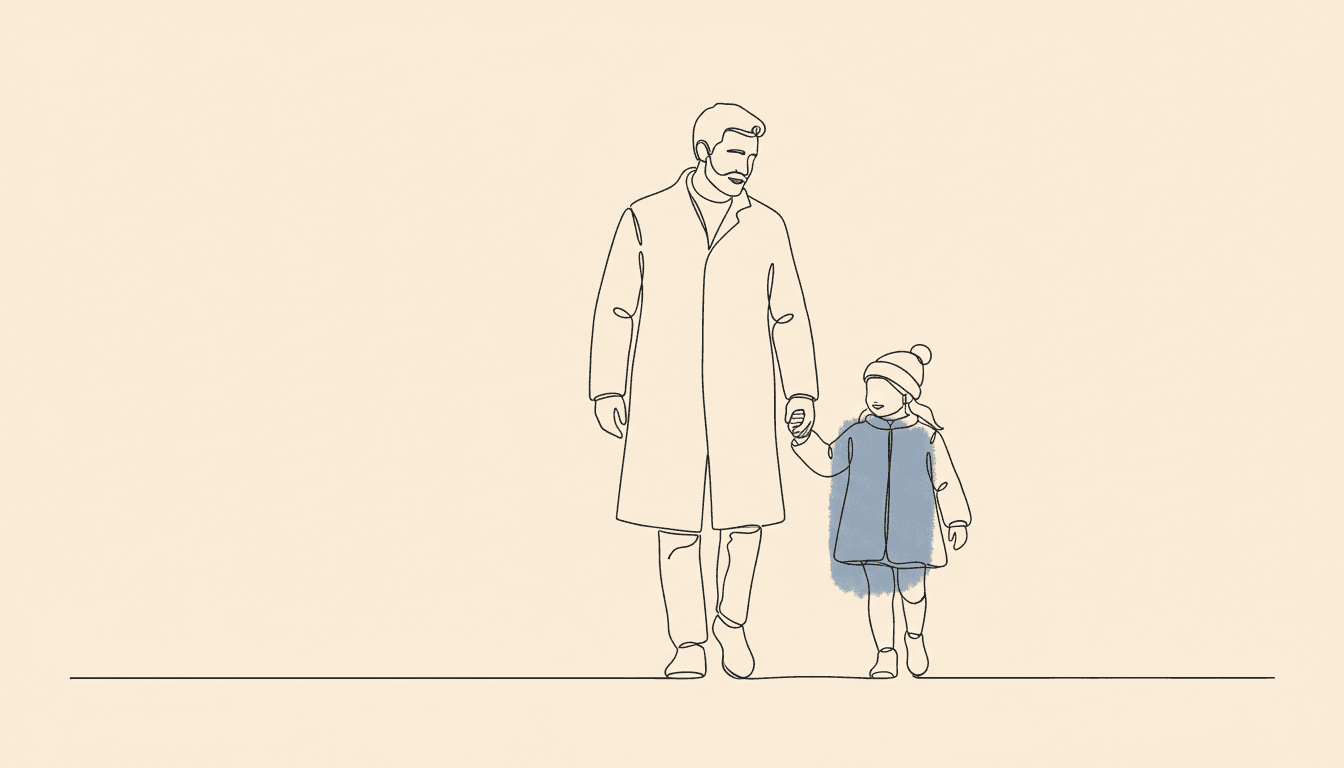
The brief asks for minimal internal structure, and it is the only one in the library to put it that way. Faces get the line, not features: the curve of a brow running into a nose, a short arc for a closed eye. There are no pupils, no strands of hair and no folds in a coat, because each of those would be another line. The outside of a shape does all the work, which is why one line can still say father, daughter, hat and coat.
The Same Hug, in Hundreds of Lines or One
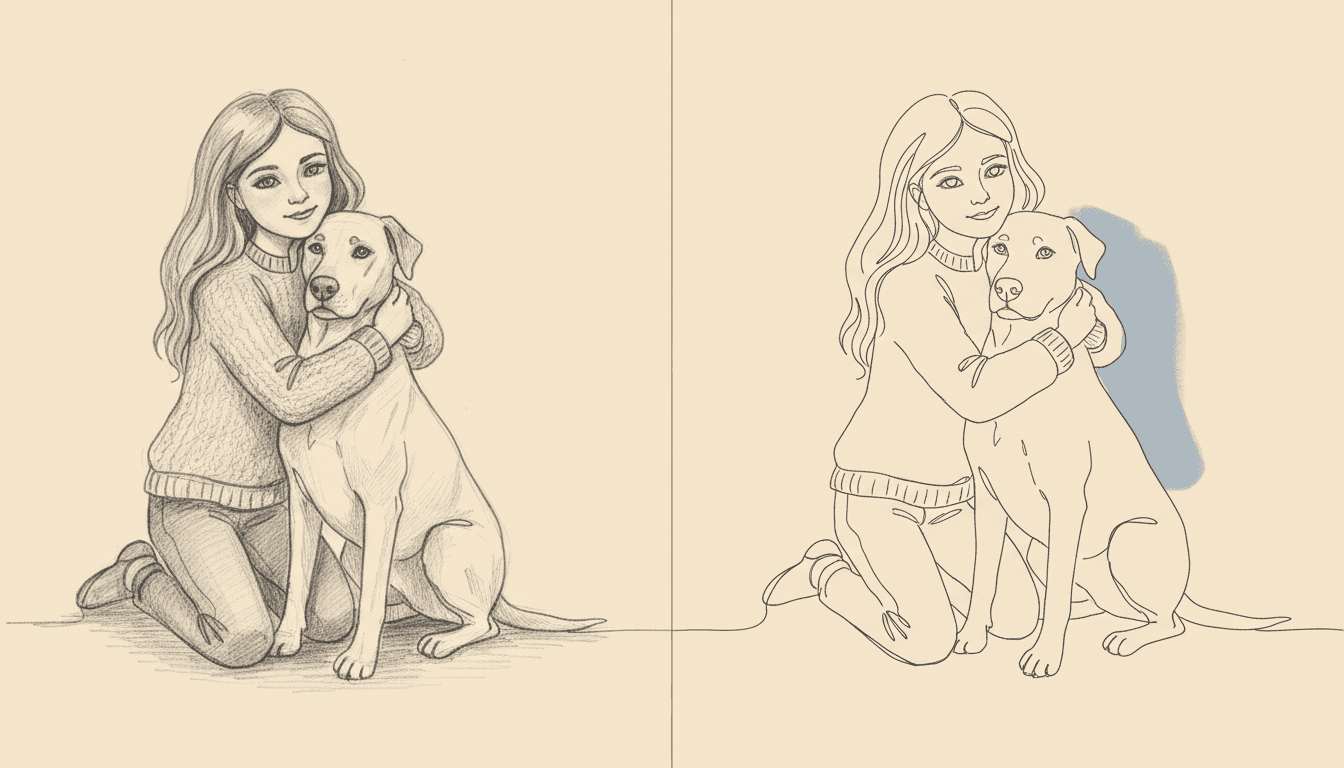
Look at the same girl hugging the same dog twice. On the left it is a pencil drawing built from hundreds of separate strokes: every lock of her long hair, the cable knit of her jumper, shading down the dog’s chest and a shadow on the floor under them both. It is accomplished, and your eye spends its time on the surfaces — the hair, the knit, the shading.
On the right the same pose is drawn with one thin line and the inside of every shape left empty. The hair is one outline, the jumper is one outline, the dog is one outline, and the only colour is a single soft patch of dusty blue behind the dog. With nothing to look at inside the shapes, your eye goes straight to where the two shapes meet: her arms around its neck.
That is the job the refusal of many lines does. Detail is not wrong, but every extra stroke is somewhere else for the reader to look. Take them all away and a one line drawing can only show the thing the story is about.
Write Things That Touch
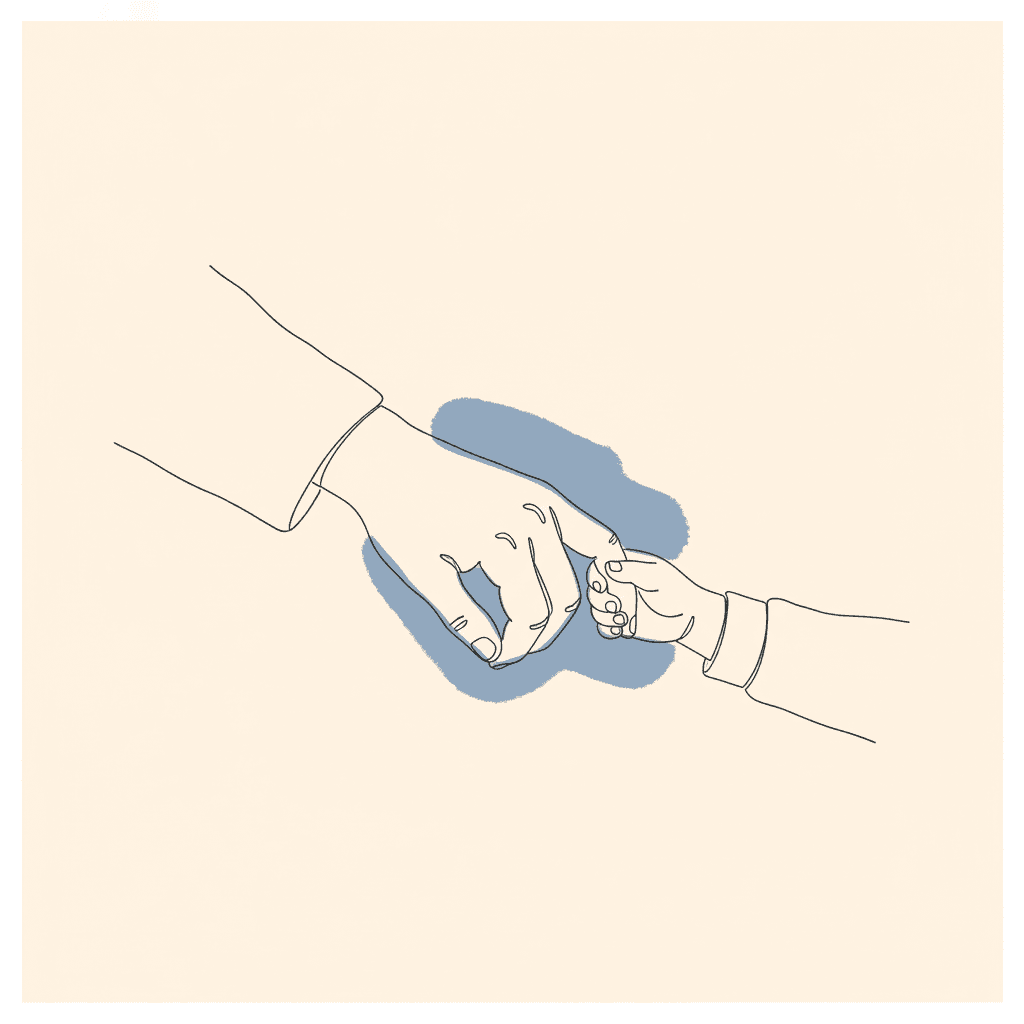
A line that never lifts has one practical consequence for a writer: it cannot jump a gap. Two people standing apart on a page need the line to run along the ground between them, or to stop and start again, which is exactly what this brief refuses. Two people holding hands need nothing. The line runs down one arm, through the clasp and up the other, and the drawing is finished.
The picture beside this paragraph is the whole idea at its smallest: a large hand reaches in from one side, a small hand from the other, and the small one has closed around a finger. There is no face, no room and no story drawn at all, and it still says who these two are to each other. The kite on this page works the same way — the string is simply the line, running from the boy’s hands all the way up to the kite.
So the most useful thing you can write for continuous line art is contact. Not “they were close”, but a hand around a finger, a cheek on a shoulder, a child on a lap, a dog pulled into a hug, a kite on a string. Every one of those is two shapes that the line can make into one.
From One Sentence to a One Line Drawing Book
You pick the look once. The brief is then applied to every page, so the line, the single colour and your characters’ outlines never drift.
Describe who touches whom
Write a sentence or two: who the story is about and who they hold on to. Name the gestures — holding hands, a hug, a lap, a shared umbrella. This style draws a connection better than a place, so give it connections.
Choose One-Line Figure
Pick the style from the Styles Library. From then on every page uses the same uniform continuous line, the same single accent fill and the same flat clean light, and your saved characters keep their outlines.
Get a whole book
C2Story writes the story, splits it into pages and illustrates each one. Regenerate any page you want to change without touching the rest, read it online, share it, or buy the PDF download to hand to a printer.
This Style and Its Three Nearest Neighbours
One shares its spare contour, one shares the word continuous and one shares the empty page. Here is what each actually asks for.
One-Line Figure
The style on this page
A continuous one-line illustration: a single unbroken flowing line describing the whole figure, minimal internal structure, a modern minimalist sensibility, elegant and spare. It renders the story’s subject as one graceful contour on a clean ground. The palette is a single line colour, black on white, one soft accent fill and a warm neutral ground; the light is flat and clean; the line is uniform and continuous. The refusals are heavy shading, many lines, dense detail and photorealism.
Minimal Fashion Line
Same spare contour, a different budget
The nearest relative. It also uses a clean even line, no shading, a big white ground and one accent hue, so the two look alike at a glance. The difference is what each one rations. Fashion line rations weight — one single-weight line, as many strokes as a garment needs — and spends them on the clothes. One line rations the number of strokes itself. Choose fashion line when the wardrobe is the subject; choose this when the connection between two figures is.
Bold Street Pictogram
The only other “continuous” brief
The only other brief in the library to use the word continuous, and it means something quite different: thick continuous black outlines round every running figure, so that no shape has a gap in it. It also asks for the full lively street scene, bright primary colours and high energy, and it refuses thin lines. Same word, opposite picture. If you want a crowd mid-sprint, take the pictogram. If you want two people and one quiet gesture, take this.
Fine-Line Ink
Also mostly empty, for another reason
Fine line also leaves most of the page bare, but it keeps the world: the setting is drawn small and detailed, and zooming in finds the kettle on the stove four floors up. One line drops the world and keeps only the subject, so zooming in finds nothing more. Fine line is a long shot of a place your character is small inside. One line is a close-up of what your character is holding.
Single Line Illustration Story Ideas That Suit the Brief
Each idea plays to the same strength: a small cast, a clear gesture, and something that holds them together.
Hold My Hand
A first day of school told as a walk: house, gate, crossing, door. On every page the same two hands stay joined, so the line never has to break until the very last spread, when the child lets go and goes in.
The Kite String
A boy, a hill and a kite that keeps pulling away. The string is the line that joins them, and it gets longer on every page. A story about letting something go without losing hold of it.
A Book of Hugs
One hug per page: a dog, a grandad, a sister, a tree. Every hug is two shapes becoming one, which is exactly what this style draws best. A natural bedtime read for small children.
Grandma’s Lap
All the books a child heard sitting in one armchair, from baby to schoolchild. The chair, the grandmother and the child are drawn together on every spread, and only the child grows.
Under One Umbrella
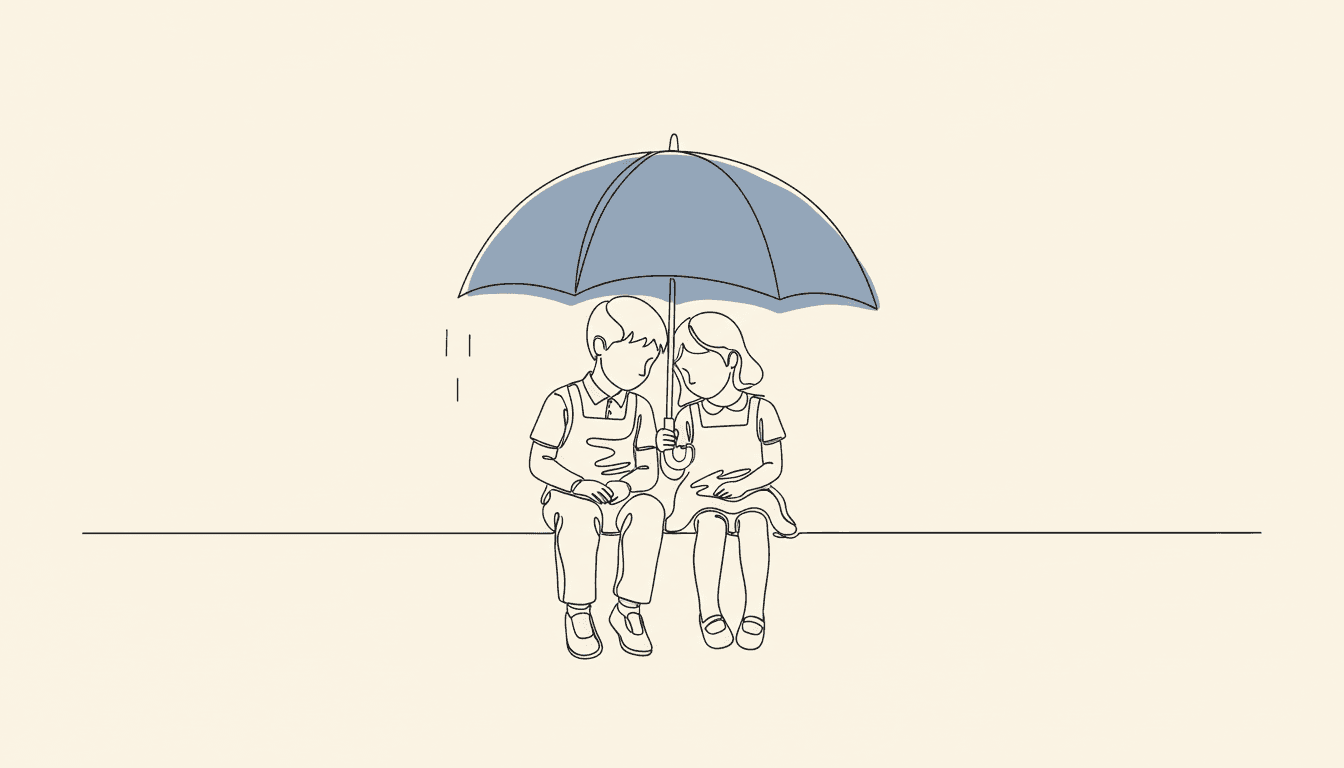
Two friends caught in the rain with one umbrella between them. Sharing is easy to draw in one line, because the line has to share too — it runs from one friend, over the canopy and down into the other.
You Fit Here
A new-baby book for parents: a hand around a finger, a cheek on a shoulder, a baby asleep on a chest. Quiet, spare and warm, with the single accent colour as the baby’s blanket on every page.
What Continuous Line Art Looks Like Across a Book
Pages generated to this one brief, with nothing retouched afterwards.
Hundreds of strokes, or one line
Under one umbrella
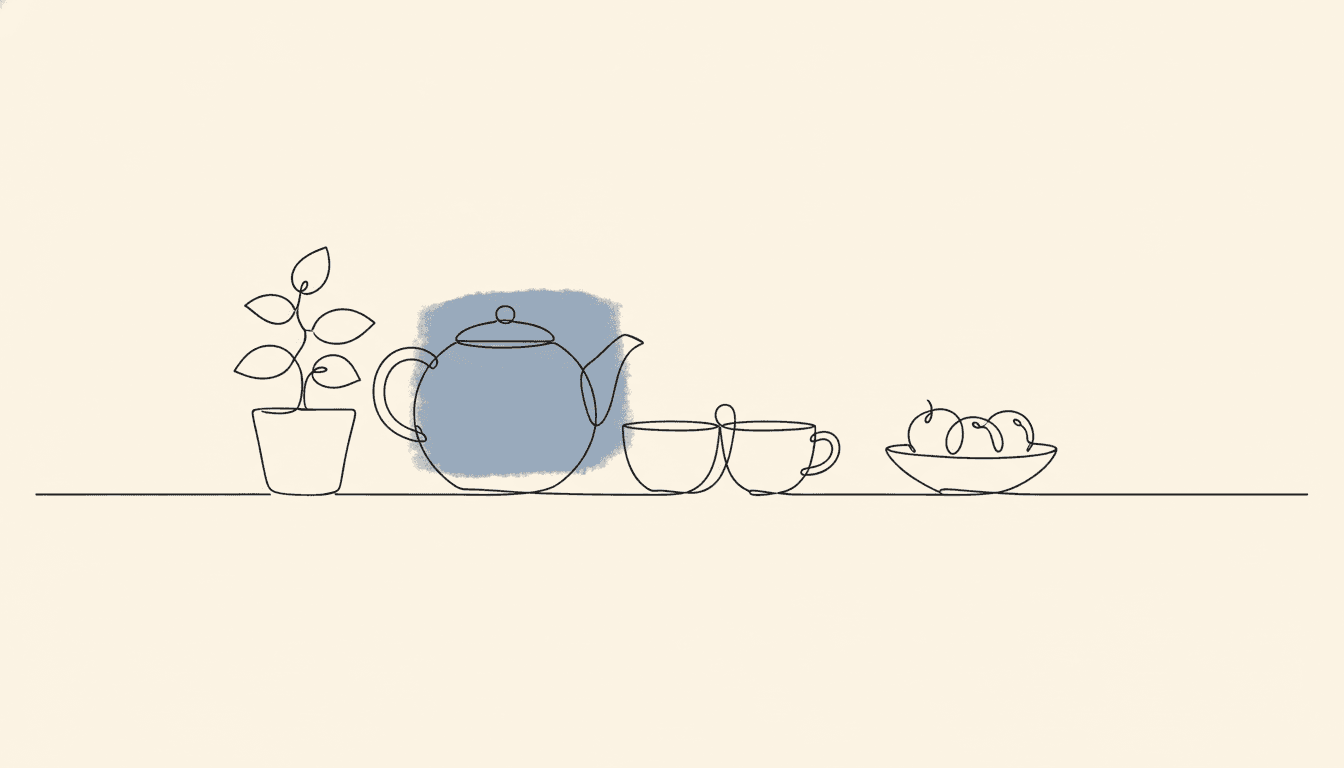
Two cups, touching
A Small Cast, Held Together by One Line
With nothing drawn inside the shapes, characters are known by their outlines, and the best pages are the ones where two of them meet.
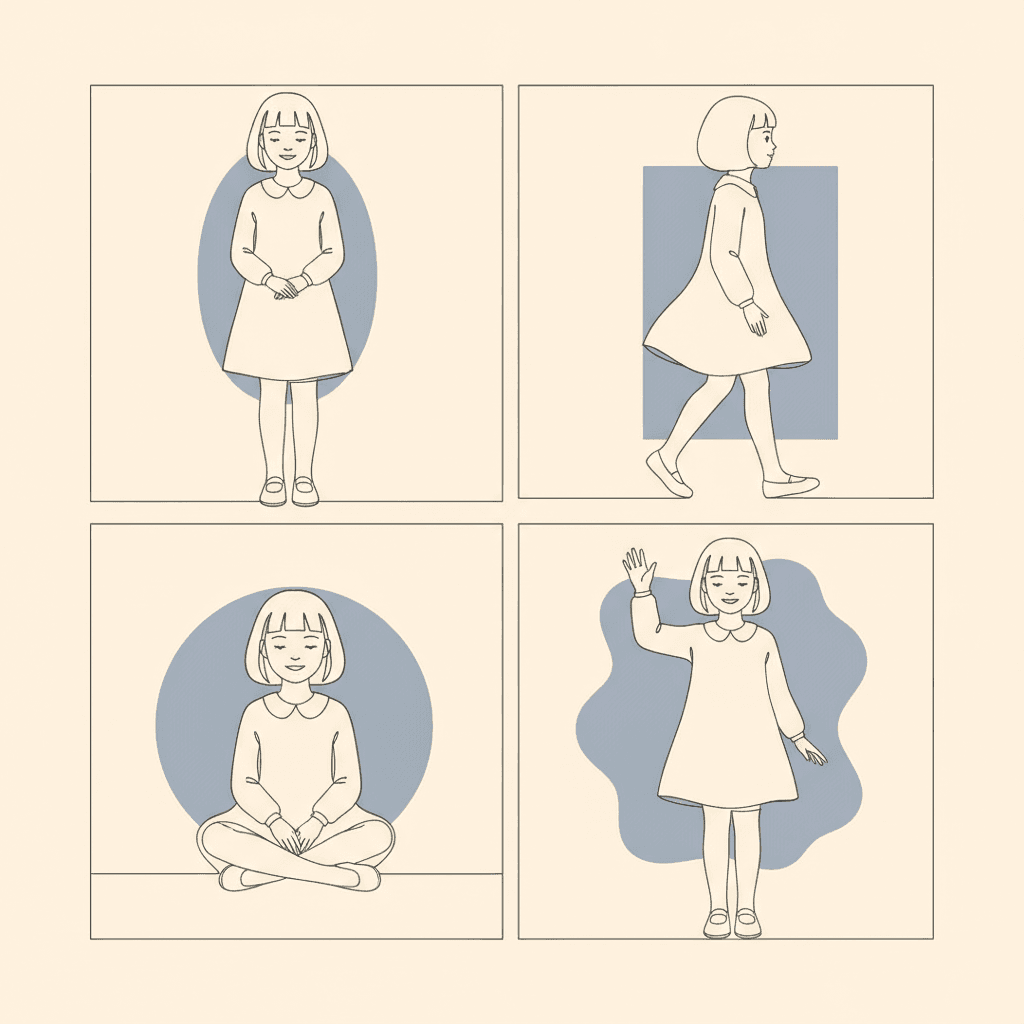
One girl, four poses
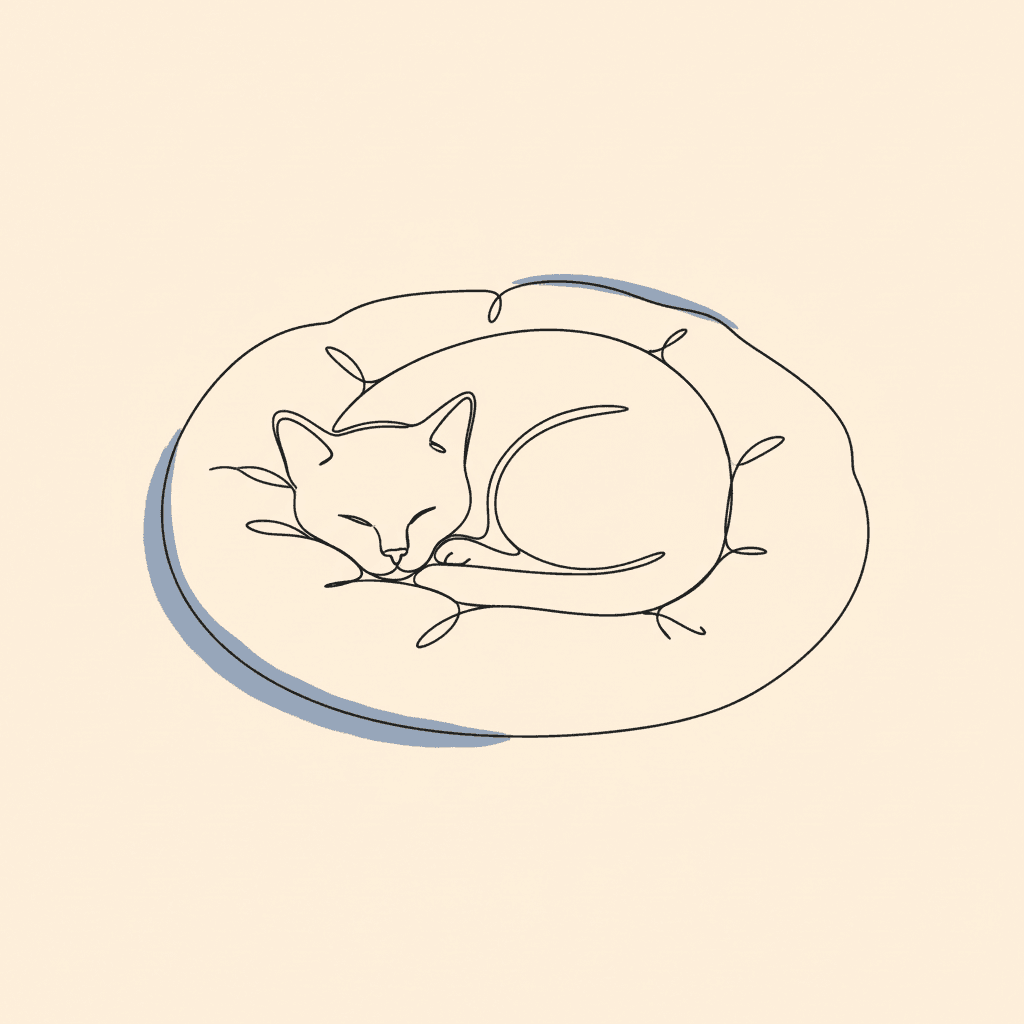
A cat, asleep
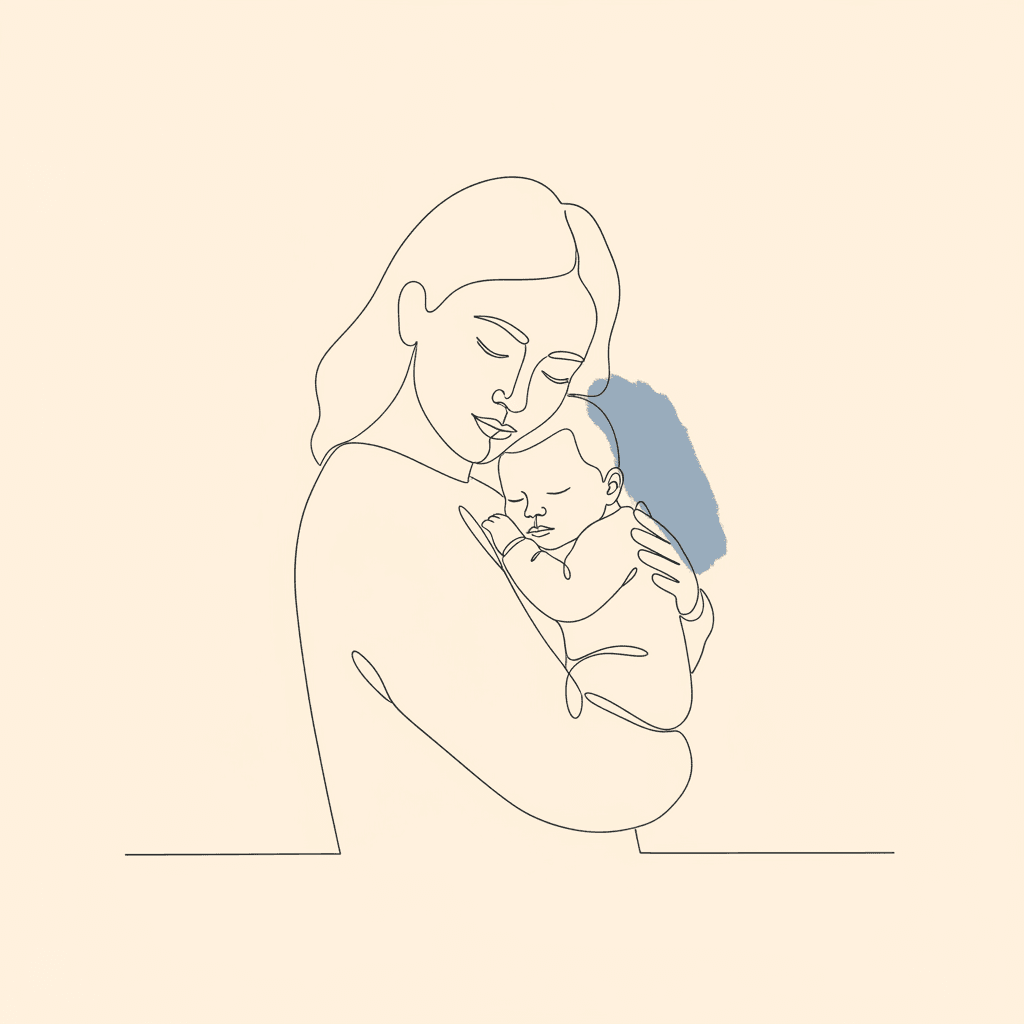
Cheek to cheek
A hand around a finger
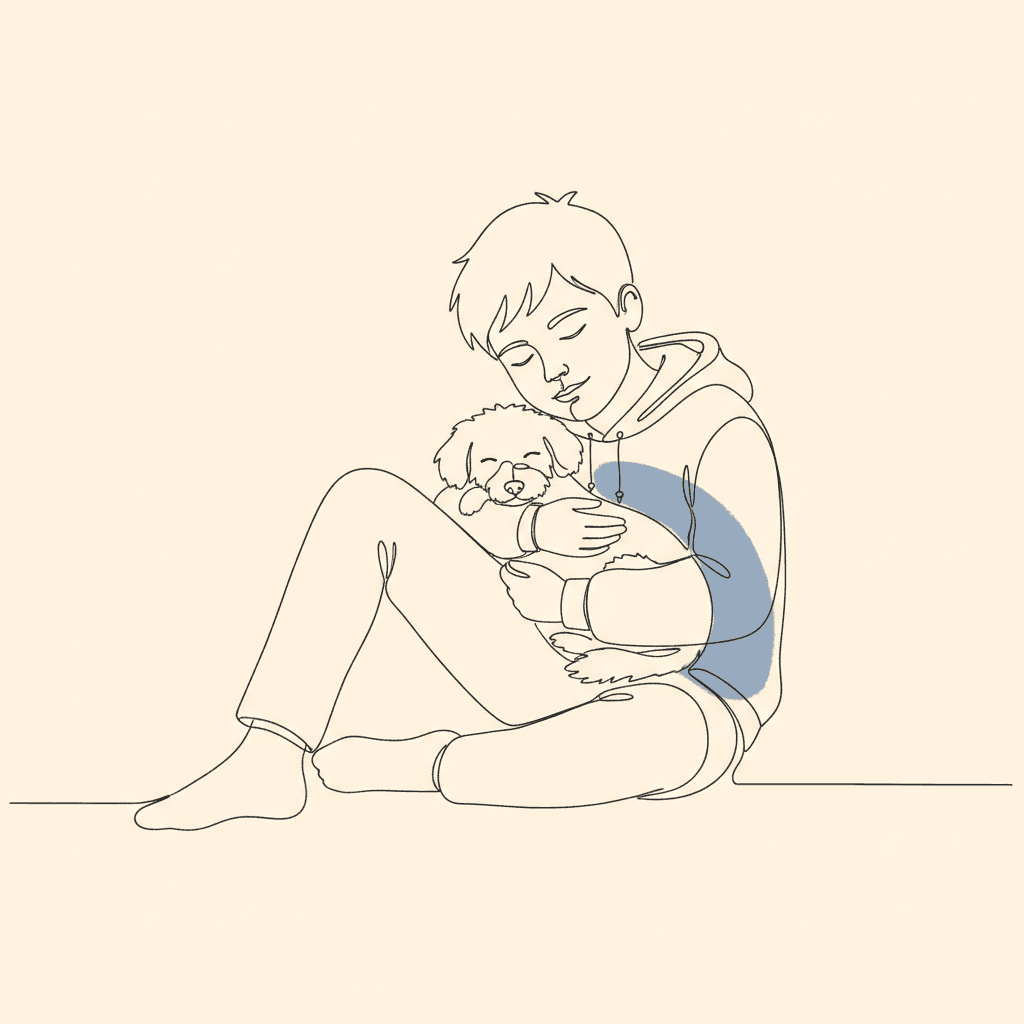
A dog pulled into a hug
Making Whole One Line Drawing Picture Books
What is useful in a book drawn this way and where the limits are, in the order you are likely to meet them.
Keeping one figure the same across a book
With almost nothing inside the shapes, a character is recognised by outline alone: the coat’s length, a bobble hat, a bob with a fringe. C2Story carries one fixed brief into every page — uniform continuous line, one accent fill, flat clean light and the four refusals — and you can save each character in the Character Library with up to fourteen reference images. Characters built from an uploaded photo stay private to your account.
Give every character a silhouette
Faces cannot carry identity in a style that draws no pupils, so the outside of the figure has to. Give each recurring character one shape nobody else has: a long coat, a hat, a ponytail, a walking stick. Two children in the same jumper and the same haircut will read as one child drawn twice.
Two or three figures, not a crowd
One line can hold a pair beautifully and a trio comfortably. Past that, a single path running through a whole class of children turns into a tangle, and the brief asks for no dense detail anyway. If a page needs a crowd, write it as one or two people in front of it and let the words say the rest.
One line is the aim — look closely and judge
The brief asks for one unbroken line, and most pages read that way. The image model is drawing in a style, though, not plotting a single pen path, so a close look will sometimes find a stroke that starts again — in a hand, a hat brim or the ground. If your project needs a mathematically single line on every page, check each one and regenerate the page that breaks it; the rest of the book is untouched.
No night, no weather, no mood lighting
The light is flat and clean and heavy shading is refused, so there is no lamp glow, no dusk and no dark. Rain can be a few short strokes round an umbrella; night has to be in the words. That makes the style a poor fit for a spooky story and a very good one for a gentle, close one.
Pages that leave room for words
With the setting dropped and the subject on warm empty ground, every page has space for a line of text without a box behind it. Describe the story in a sentence and C2Story writes it, splits it into pages and draws every page in the same style, in English, Chinese, Japanese, Spanish, French and more. The paid PDF download is the handoff to your printer.
For the same spare contour spent on clothes rather than connection, see fashion illustration picture books. For a mostly empty page that still keeps the whole world drawn small, fine line picture books; for emptiness made by taking things out, minimalist picture books; and for an empty shape that turns out to be a second picture, negative space picture books.
Questions About One Line Drawing Picture Books
Explore More Story Ideas
Discover more styles, tools, and story types
Sports Stories
The big game, sports day and the championship trophy
Explore
Mid-Century Modern Books
Flat colour blocks & hard-edged geometry
Explore
Picture Book Maker
Create illustrated picture books
Explore
Storybird Alternative
Better AI story creation
ExploreOne Line Drawing Picture Books: One Unbroken Line, One Colour, One Subject
One line drawing picture books rest on a decision no other brief in the library makes: the number of lines is fixed. C2Story runs seventy-eight hand-drawn style briefs, each a short written record of a palette, a light, a line weight and a few refusals. Almost all of those refusals describe a quality. The One-Line Figure brief is the only one that refuses many lines, and it asks for a single unbroken flowing line describing the whole figure.
The rest of the brief follows the same arithmetic. It is the only one that renders the story’s subject rather than the full scene, the only one to ask for minimal internal structure, and the only one to pair black on white with a single soft accent fill on a warm neutral ground. A single line illustration page here has one subject, one line and one colour, and the cream around them does the rest.
Because the line cannot lift, continuous line art is at its best when the things on the page touch: hands held, a hug, a lap, a shared umbrella, a kite string. That makes it a natural fit for first-day books, new-baby keepsakes, bedtime stories and gifts for grandparents. It is a poor fit for crowds, busy settings, night scenes and drama, which need a fuller style.
The choice between neighbours is clear. Take fashion line when the clothes are the subject, the street pictogram for a crowd in motion, and fine line when the place matters as much as the person. Take the one line drawing style when what matters is what joins two characters. Describe the story in a sentence and C2Story writes it, splits it into pages and draws every page to the same brief, keeping your characters on model, with the paid PDF download as the handoff to your printer.