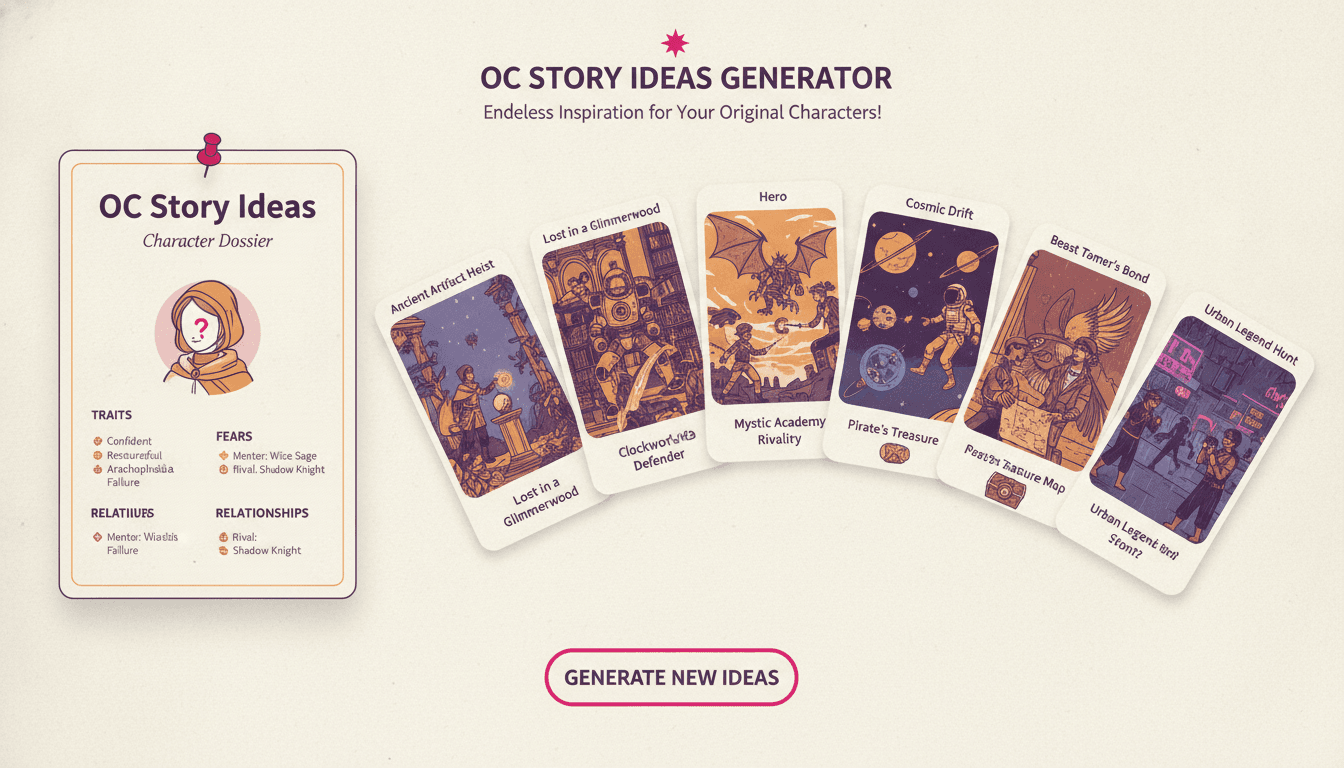
OC Story Ideas GeneratorIdeas Only Your OC Could Be In.
Not writing prompts with your character pasted on top. C2Story reads who your OC is, what they are bad at and who they cannot let down — then hands you twenty story ideas built out of exactly that, and draws the one you keep.
- Twenty ideas a batch, generated from your character sheet
- Every idea passes the swap test — nobody else fits it
- A mix of sizes: a quiet afternoon up to a whole arc
- Keep the good ones, and see one illustrated
250,000+
Stories Created
80,000+
Characters Saved
45+
Art Styles
4.9/5
Creator Rating
How the OC Story Ideas Generator Works
Three steps, and the first one is just handing over the character you already spent months on.
Bring Your OC
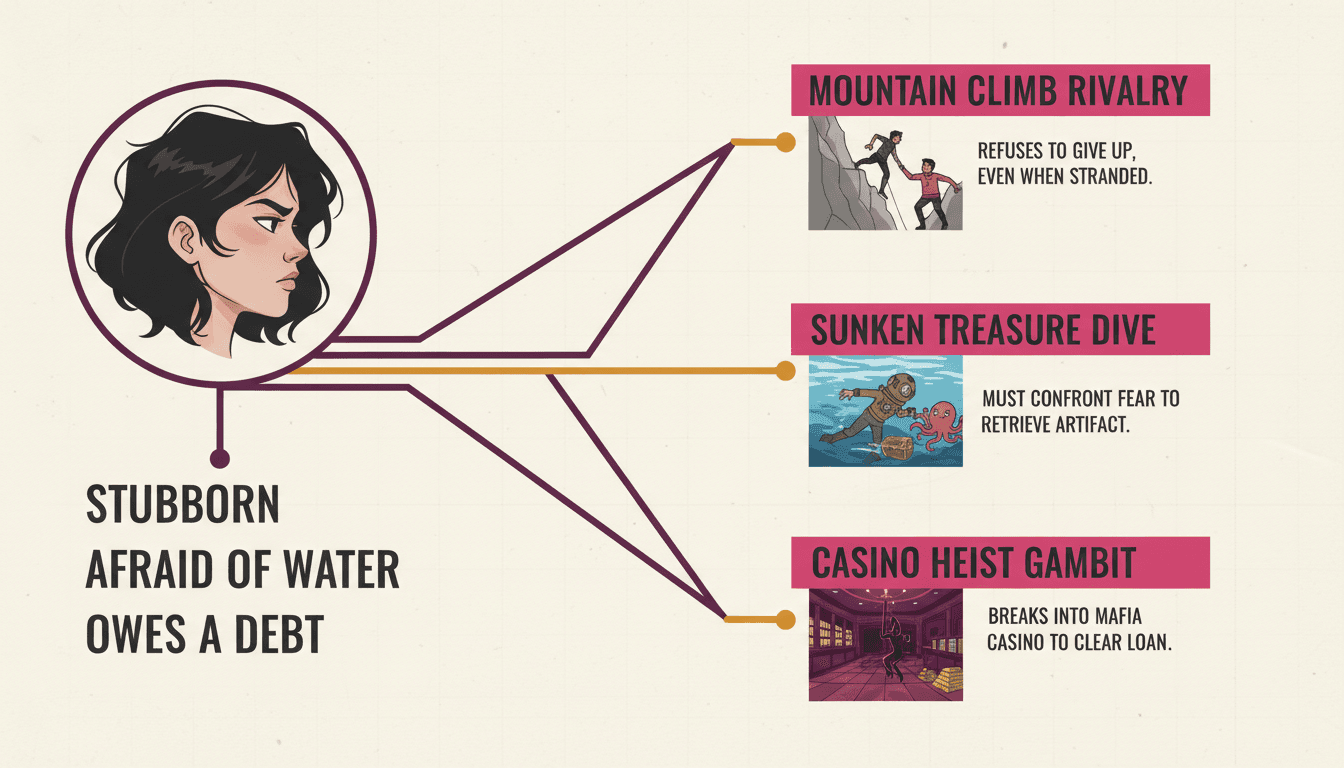
A saved profile, a Toyhouse bio or three sentences. The three fields that matter most are something they want, something they are bad at, and one person they cannot let down — every good idea comes out of those.
“Lies to protect people. Owes her brother a year.”
Get a Batch, Not an Answer
Twenty story ideas arrive at once in a mix of sizes and tones. Rule out the ones that feel wrong and re-roll — the batch narrows towards what you actually want instead of reshuffling the same deck.
Eighteen rejections tell you what you were after
Keep One, See It Drawn
Shortlist the keepers onto your character so they stay, then hand one to C2Story and get an illustrated short, comic or picture book back — your OC on-model in every frame.
An idea you can post, not a note you lose
Where Your OC’s Story Ideas Actually Come From
Not from genres. From five fields your character sheet probably already has — and the richest one is almost never their powers.
The Flaw
The thing they do that makes everything worse. Put them somewhere it is the only tool they have and the idea writes itself — a character who lies to protect people, in a room where the truth would have saved everyone.
What they get wrongThe Attachment
One person they would rearrange their life for. Threaten it, complicate it, or simply let it go quiet for a year, and you have a story that matters without anything exploding.
Who they cannot loseThe Unpaid Thing
A debt, a promise, an apology never made. Backstory is only decoration until something in the present comes to collect on it — that collection is a story idea every single time.
What is still owedThe Contradiction
Two things about them that cannot both be honoured at once. A healer who cannot forgive; a coward with one person they will always stand in front of. Ideas built on a contradiction end up being about character rather than plot.
Where they splitThe Ordinary Day
What their life looks like when nothing is happening — the job, the commute, the person at the counter who knows their order. Quiet ideas come from here, and quiet ideas are the ones that actually get finished.
The life around themNot: The Powers
A power set is the least generative field on a character sheet, because it describes capability rather than pressure. It tells you how a scene ends, not why anyone is in it. Good ideas use the powers; almost none of them start there.
The common trapAn idea is not a plot
Worth separating so you know which page you need. An idea is the seed: “someone from the village my OC abandoned turns up at her door.” That is enough to be excited about and not enough to write. A plot is what happens next in order, with causes and a cost and an ending. This page is deliberately the first of the two — it is for when you have a character and no idea what to do with them. Once an idea gets its hooks in you, the OC plot generator is where it becomes a structure.
The Swap Test: Real OC Story Ideas vs Generic Prompts
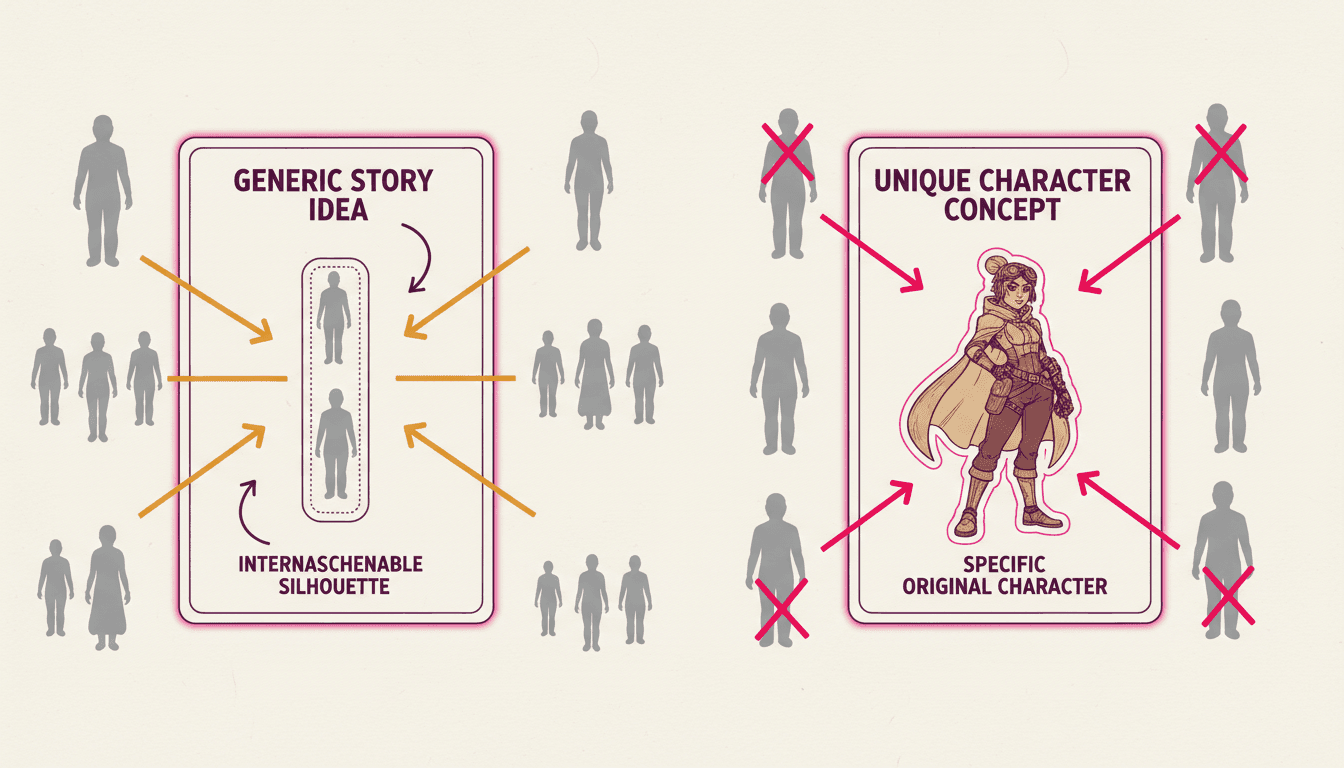
Take the idea and put somebody else’s character in it. If it still works just as well, it was never about your OC — it was a costume.
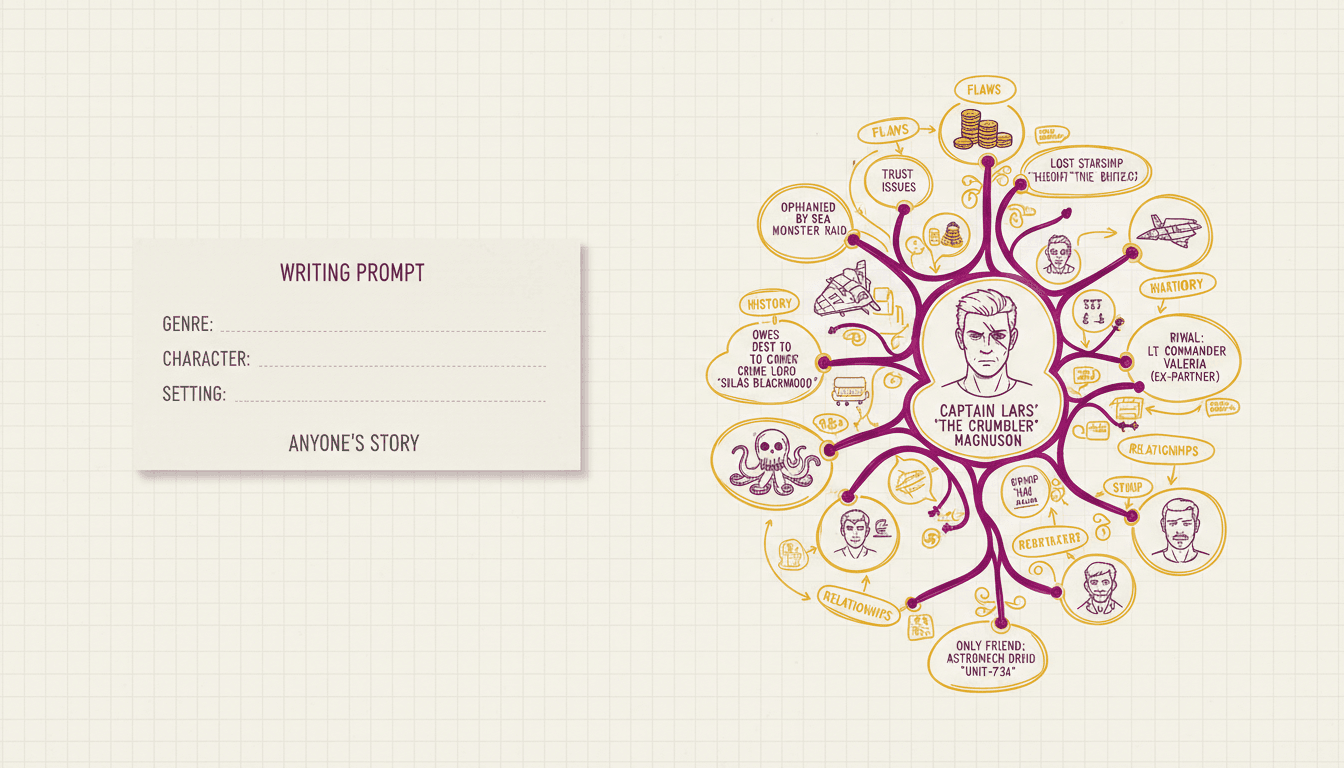
A Prompt Wearing Your OC
- ✕ “Your OC finds a mysterious door”
- ✕ Works identically for any character alive
- ✕ Nothing in their bio is used at all
- ✕ Exciting for a day, abandoned by Friday
An Idea Only They Fit
- “The door is her old house, and she has the key”
- Breaks the moment you swap the character out
- Built on a flaw, a bond or an unpaid debt
- Still interesting to you three months later
Every idea generated here is checked against the swap test, which is why a batch tends to be shorter on mysterious doors and longer on things your particular OC cannot walk away from.
Twenty at a Time, Then a Shortlist You Keep
Ideas arrive as cards you can browse, reject and save — not as one block of text you skim once and close.
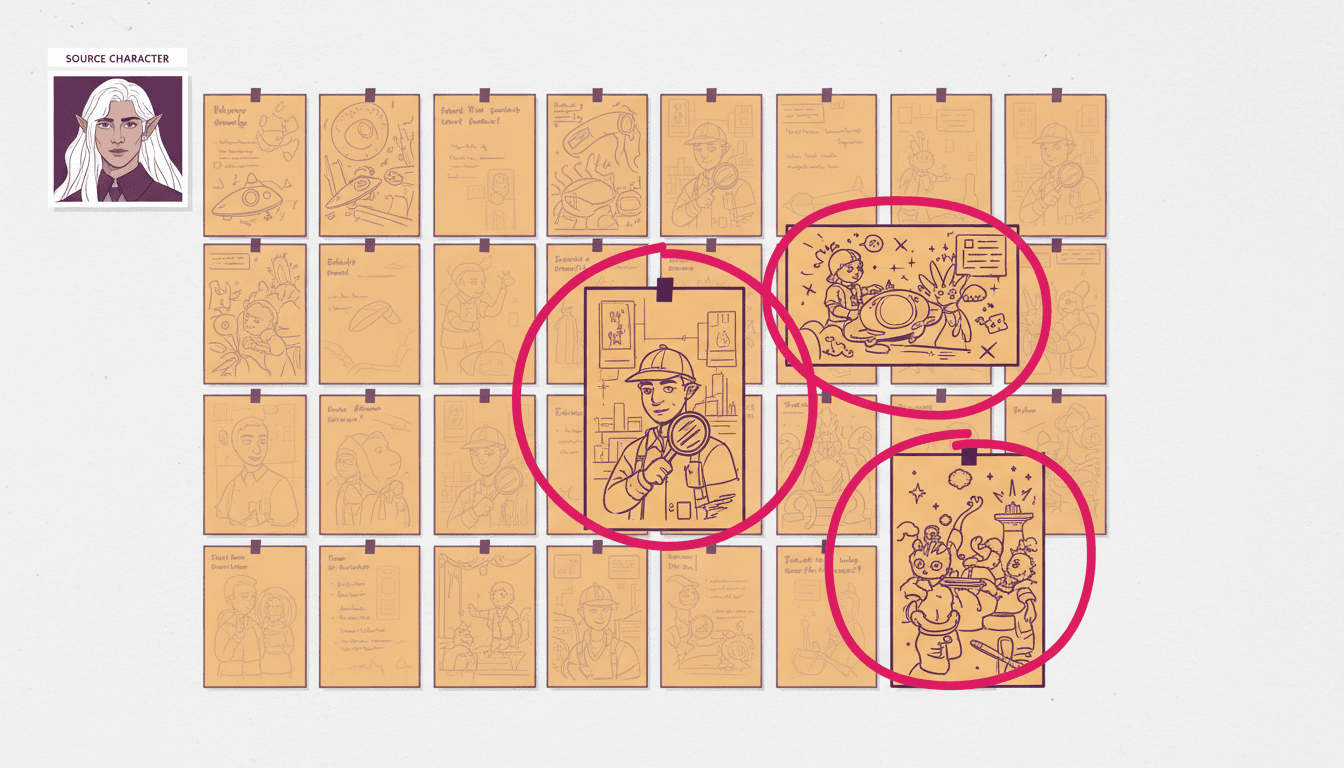
The Shortlist
Trait to Idea
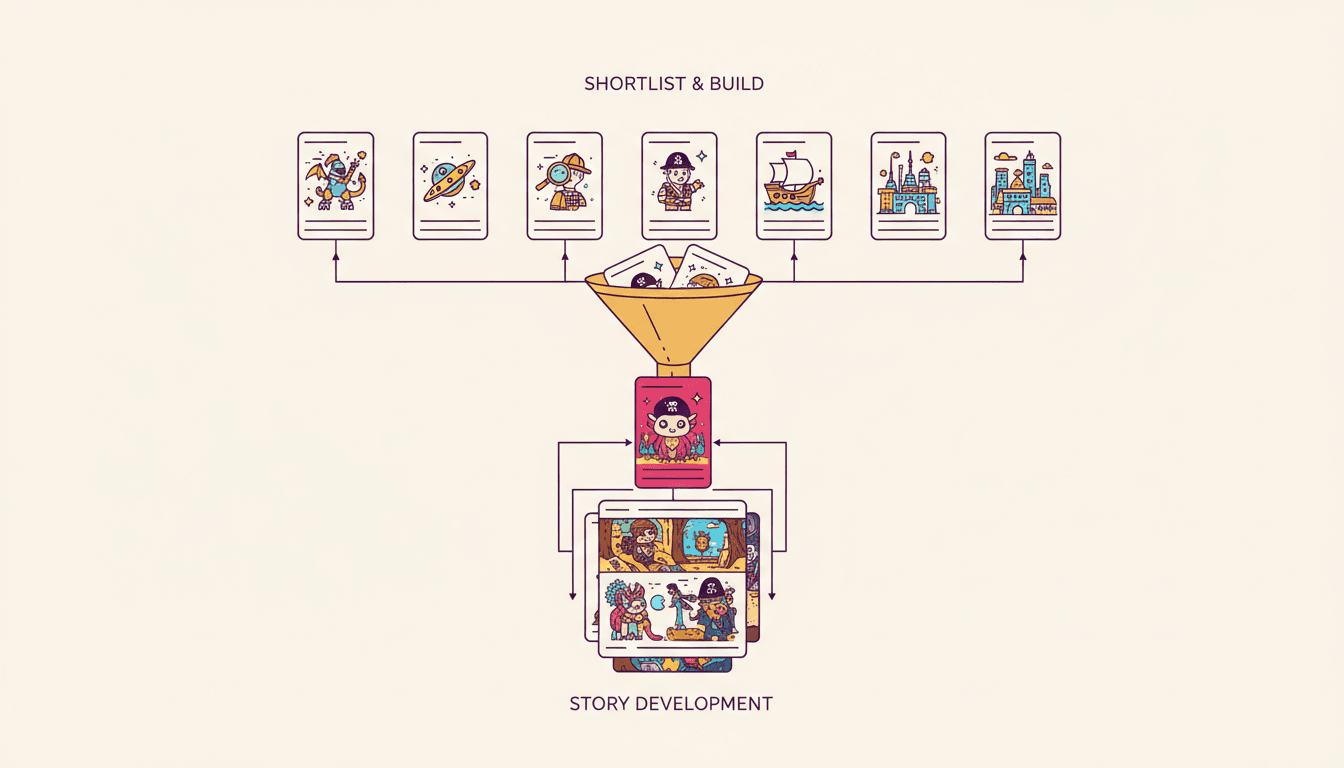
Keep One, Build It
“Give me story ideas for my OC who lies to protect people”
“Ideas for my OC that use their fear of open water”
“Story ideas where my two OCs finally have to disagree”
“Something quiet for my OC — no fighting, just a bad day”
“Anime story ideas for my OC that fit a school setting”
“Illustrate the idea I saved as a six-page short”
Idea Shapes That Work for Almost Any OC
Not premises — shapes. Each one becomes a different story depending on whose flaws and history get poured into it.
Dossier, Spread, Swap Test, Keeper, Character
Whichever idea you keep can be illustrated in any of 45+ art styles — and your OC stays on-model through all of it.
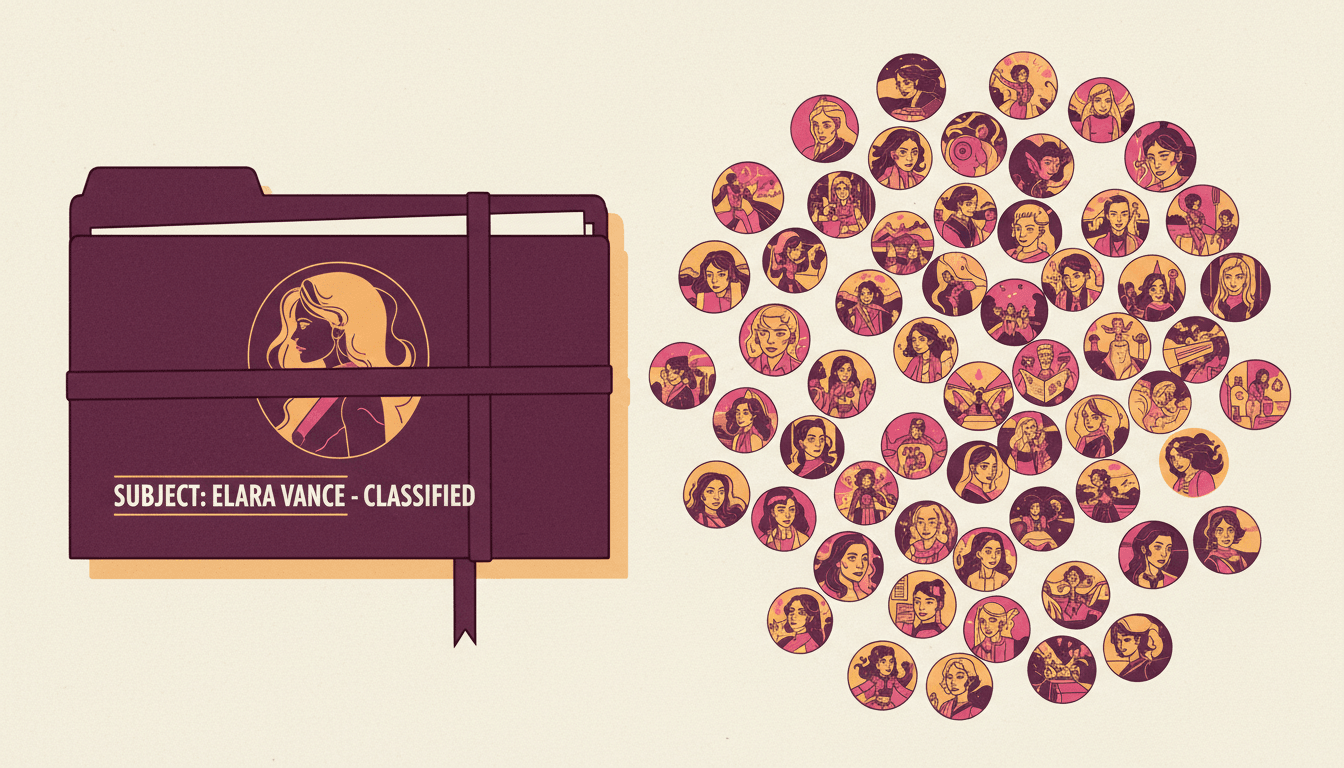
The Dossier
Where Ideas Start
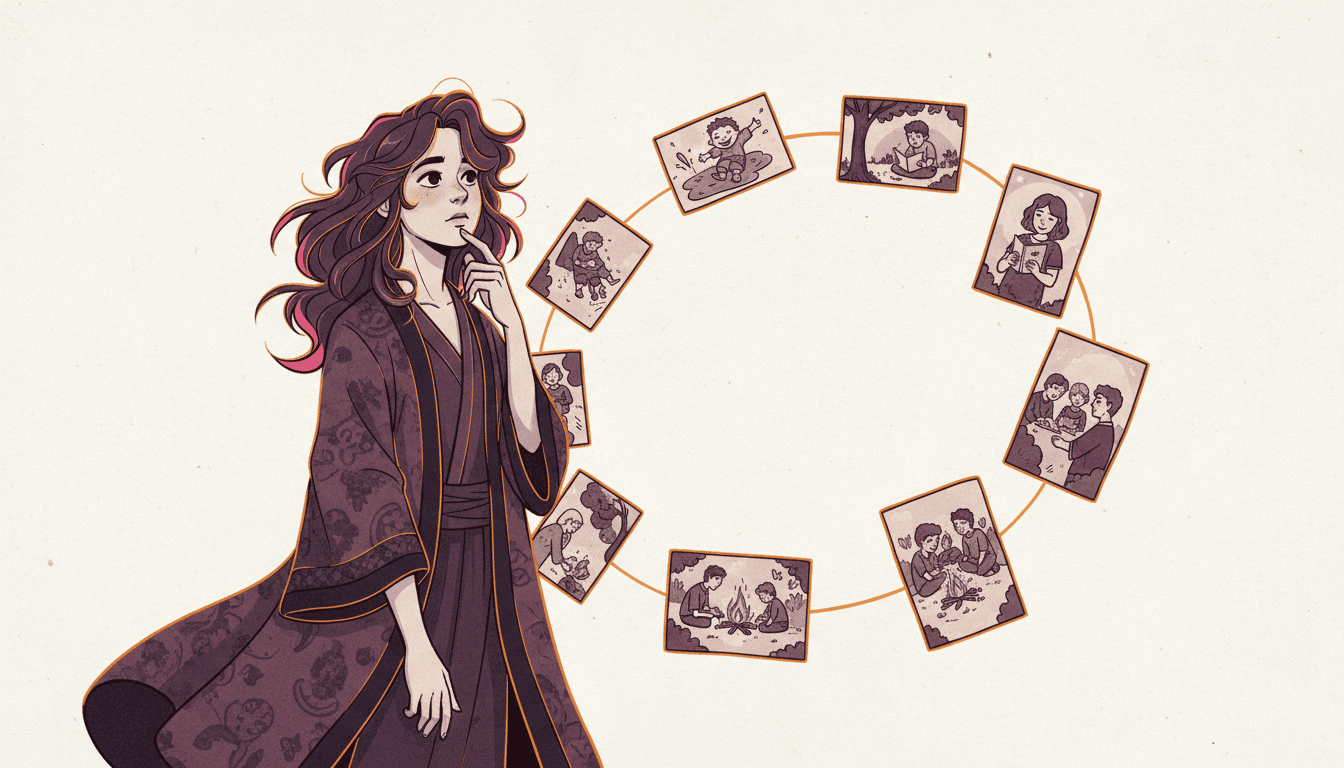
The Spread
Twenty at Once
The Swap Test
Only Them
The Keeper
Three You Save
The Character
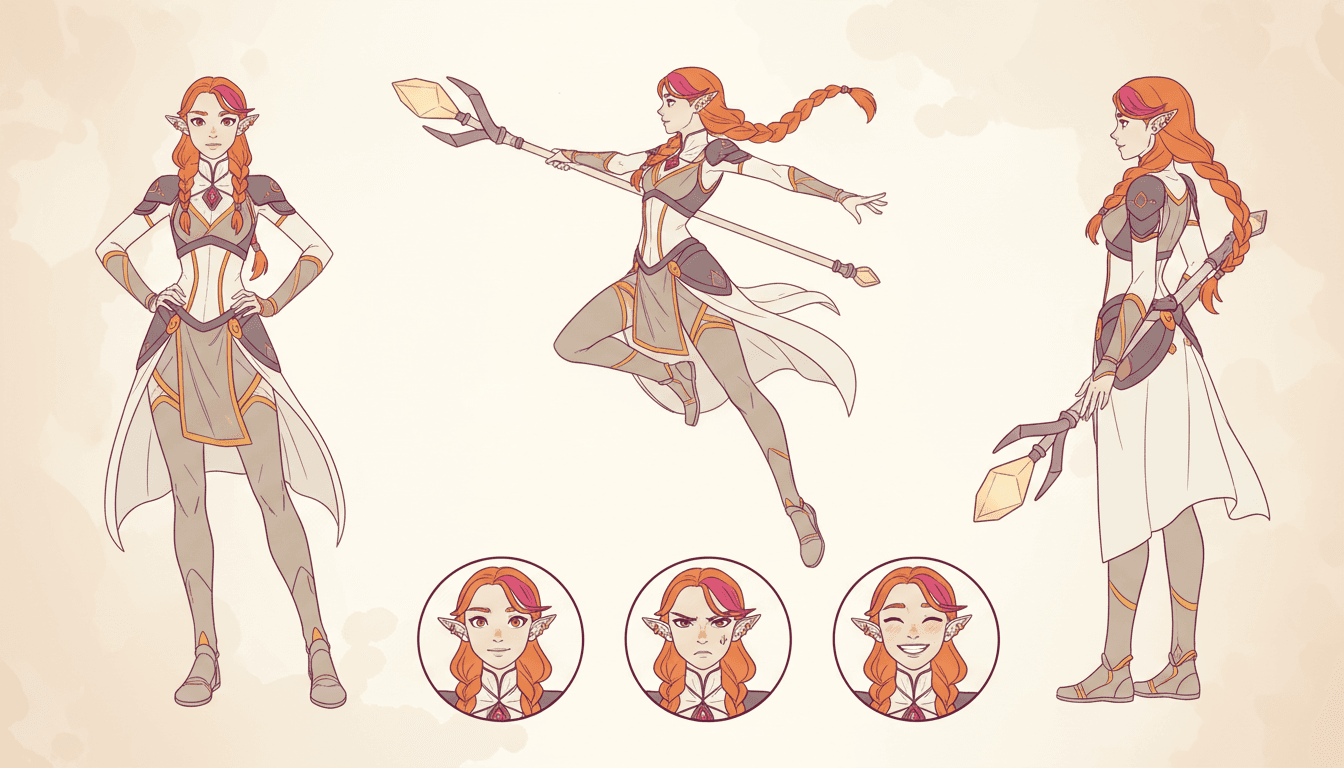
Locked and On-Model
Match your idea’s tone with 45+ art styles including Anime, Manga, Fantasy, Cinematic and Watercolor.
What Changes When Story Ideas Are Built From Your OC
Six things a general prompt generator cannot do, because it has never read your character sheet.
Ideas That Fit One Character
A prompt generator hands you a situation and hopes a character fits. This reads your OC first — their traits, their history, who they are attached to — and every idea comes out shaped around those, so it would fall apart if you swapped anybody else in.
Twenty at a Time, Not One
One idea is a decision you have to make immediately. Twenty is a menu you can browse, react to and rule out. Choosing gets much easier when you can see what the alternatives were — and the eighteen you reject tell you what you actually want.
A Range of Sizes, Not All Epics
Every batch mixes registers on purpose: a quiet afternoon, a four-page comic, a whole arc. Most OC idea lists are wall-to-wall catastrophe, and small ideas are usually the ones that actually get finished.
A Keep Pile That Stays
Save any idea to your character and it lives with them, not in a note app you will lose. Come back in three months and the shortlist is still there, still attached to the OC it was written for, ready to build.
Re-roll Against What You Rejected
Rule out a card and the next batch adjusts. Too dark, too many swords, too much talking — say so and regenerate. It narrows towards what you like rather than reshuffling the same deck.
And Then You Can See It
An idea you can only read stays in the folder with all the others. Pick one and C2Story draws it — an illustrated short, a comic, a full picture book — with your OC on-model in every panel, which is what turns an idea into something you can post.
Who Uses an OC Story Ideas Generator?
OC Creators & Toyhouse Users
You have twelve characters with immaculate palettes and nothing written under any of them. This is the fastest way to find the one thing each of them should actually do.
Fanfic & Original Fiction Writers
You can write scenes well and still open the document with no idea what today is about. A batch of ideas anchored to your own cast beats a general prompt list every time.
Roleplayers & RP Partners
Long-running RP goes quiet when nobody has a new hook. Pulling ideas from both characters at once gives you something to open with that neither partner has to invent on the spot.
Comic & Webtoon Creators
A short strip needs a small, sharp idea far more often than a grand one. Batches mix registers deliberately, so there is always something you could draw this week.
Is the Idea the Part You Are Missing?
This page is for creators whose OC exists and who do not know what to do with them. If your gap is somewhere else, one of these is a better door — they all share the same character library.
Yes — I have the OC and no idea what happens
Start here. Bring the character, get a batch of ideas built from their traits, keep the ones worth building.
I do not have the OC yet
Design the character first — appearance, personality, signature outfit — and lock the look before you brainstorm anything around them.
I have an idea, it just does not go anywhere
Turn a premise into a structure: the want, the obstacle, the turning point and the ending that changes them.
I want one situation, not a whole premise
A scenario is scene-sized: drop your OC into a moment with two doors in it and see which one they take.
My OC has nowhere to be from
Build the world behind them — regions, factions, history and bloodline. Lore full of tension hands you ideas for free.
I know the idea, I want the finished story
Turn your OC and their idea into a full illustrated story, fanfic or comic starring them.
I do not have a character — just need ideas
The general story idea generator rolls premises from a one-line prompt, with no cast required.
Many characters, many connected stories
A shared universe with crossing casts is a bigger container than one character’s ideas. That page handles it.
I keep losing my own canon
A character bible pins looks, voices and details as a reusable record so nothing drifts between ideas.
Frequently Asked Questions
Explore More Story Ideas
Discover more styles, tools, and story types
Ninja Stories
Dojo training, stealth missions and the secret scroll
Explore
Ligne Claire Picture Books
One even ink line & flat unshaded colour
Explore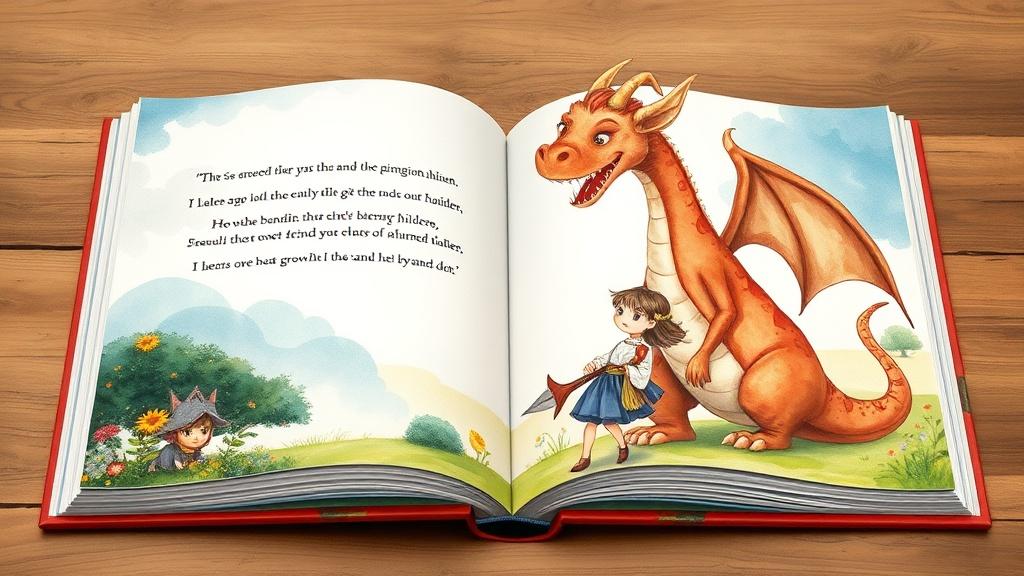
AI Story Generator
Generate complete stories with AI
Explore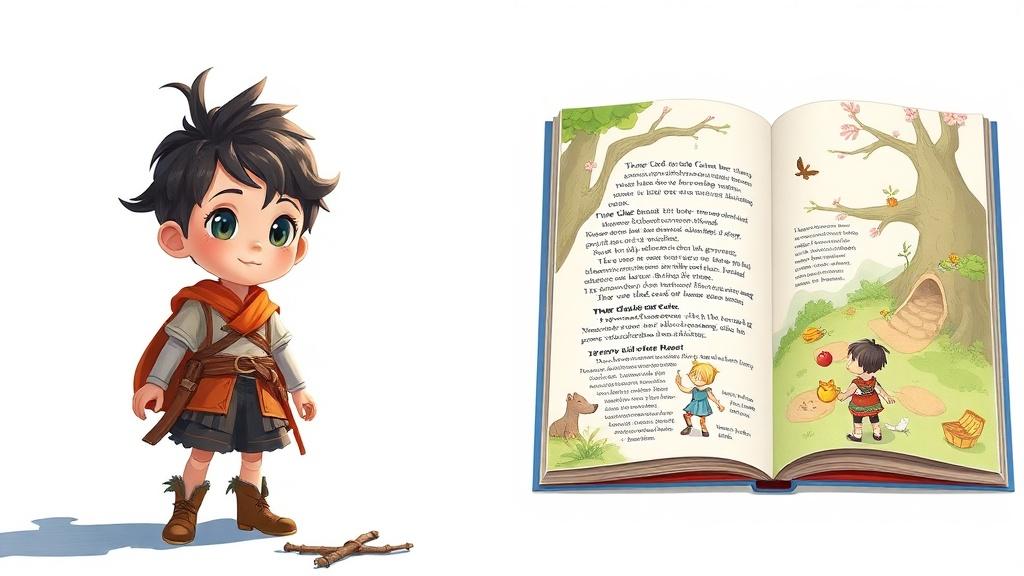
Midjourney vs C2Story
Stories, not just images
ExploreOC Story Ideas Generator — Finding the Story a Finished Character Deserves
An OC story ideas generator exists to solve a very specific and very common stall: the character is done and the story field is empty. You have the face, the palette, the signature coat, a personality you could defend in an argument — and under all of it, a blank space that has said “coming soon” for two years. The gap is not talent and it is not effort. It is that designing a character and inventing a situation for them are two genuinely different skills, and almost every tool in the OC world is built for the first one.
The thing that makes story ideas for your OC different from writing prompts is the direction of travel. A prompt generator starts from a genre or a mood and works outward: a mysterious door, a letter arriving at midnight, a rival appearing at a tournament. Those are situations looking for an occupant, and any character can be slotted into them, which is exactly the problem — if anyone fits, nobody fits especially well. An OC-first generator reverses it. It starts from your character sheet and works inward, so the situation comes out already shaped around one person’s flaw, history and attachments. The door is not mysterious; it is her old house, and she still has the key.
The quickest way to tell the two apart is the swap test. Take the idea and mentally drop somebody else’s OC into it. If the idea survives unchanged, it was never about your character — it was a costume, which is why those ideas are thrilling on Tuesday and abandoned by Friday. If swapping the character out breaks the idea entirely, because the whole thing turns on a debt only they owe or a fear only they carry, then you have a real one. Every idea generated here is checked that way before it reaches you, which is why a batch tends to be shorter on dragons and longer on the specific thing your OC cannot walk away from.
Knowing where ideas come from also makes the process repeatable rather than mystical. Five fields on a character sheet generate almost everything worth writing. The flaw: the thing they do that makes situations worse, which becomes a story the moment it is the only tool available. The attachment: one person they would rearrange their life for, who can be threatened, complicated, or simply left unspoken to for a year. The unpaid thing: a debt, a promise, an apology never made, because backstory is decoration until something in the present arrives to collect. The contradiction: two truths about them that cannot both be honoured at once. And the ordinary day: the job, the commute, the person at the counter who knows their order. Notably absent from that list is the power set, which is the field most people reach for first and the least generative of all — it tells you how a scene ends, not why anyone is in the room.
It also matters that ideas arrive in batches rather than one at a time. A single suggestion is a decision you have to make on the spot, and the honest response to most single suggestions is a shrug. Twenty is a menu: you browse, you react, you rule things out, and the eighteen you reject turn out to be the most useful part, because rejecting them tells you what you were actually looking for. Batches here deliberately mix registers too — a quiet afternoon, a four-page comic, a whole arc — since most OC idea lists are wall-to-wall catastrophe, and small ideas are overwhelmingly the ones that get finished. A story about your character having a genuinely bad Tuesday will be drawn; the war epic will sit in the folder.
Worth being clear about what this page is not, so you do not end up on the wrong tool. An idea is not a plot. “Someone from the village she abandoned turns up at her door” is enough to be excited about and nowhere near enough to write — there is no want yet, no cost, no reason the second half is different from the first. This page is deliberately the earlier of the two steps: it is for the moment when you have a character and no notion what to do with them. When an idea gets its hooks in, structure is the next thing it needs, and the OC plot generator is where a premise turns into an arc.
What separates this from a text brainstorming tool is that ideas do not have to stay written down. Keep one and C2Story can draw it — an illustrated short, a comic, a full picture book — with your OC’s design saved once from reference images so the same face, hair and outfit appear in the opening panel and the last one. That is normally the hardest part of drawing a long story, and it is also what converts a private idea into something postable on Toyhouse, Tumblr or DeviantArt. Ideas you keep are saved onto the character rather than into a note app you will lose, so a shortlist built tonight is still attached to the right OC in three months. Everything generated is yours outright, with full rights to publish, post, print and sell.
Ready to start? Bring your OC and find out what they should be doing. Still designing the character? The OC creator covers appearance and personality, and the original character generator rolls a brand-new one on demand. No world for the ideas to happen in? The OC lore generator builds the factions and history around them. Once you have picked an idea, the OC story generator turns it into a finished illustrated story. No character at all and just want premises? Try the general AI story idea generator. Running many characters across connected stories? See the story universe builder, keep an AI character bible, or open your character library.