OC Scenario GeneratorWhat Would They Actually Do?
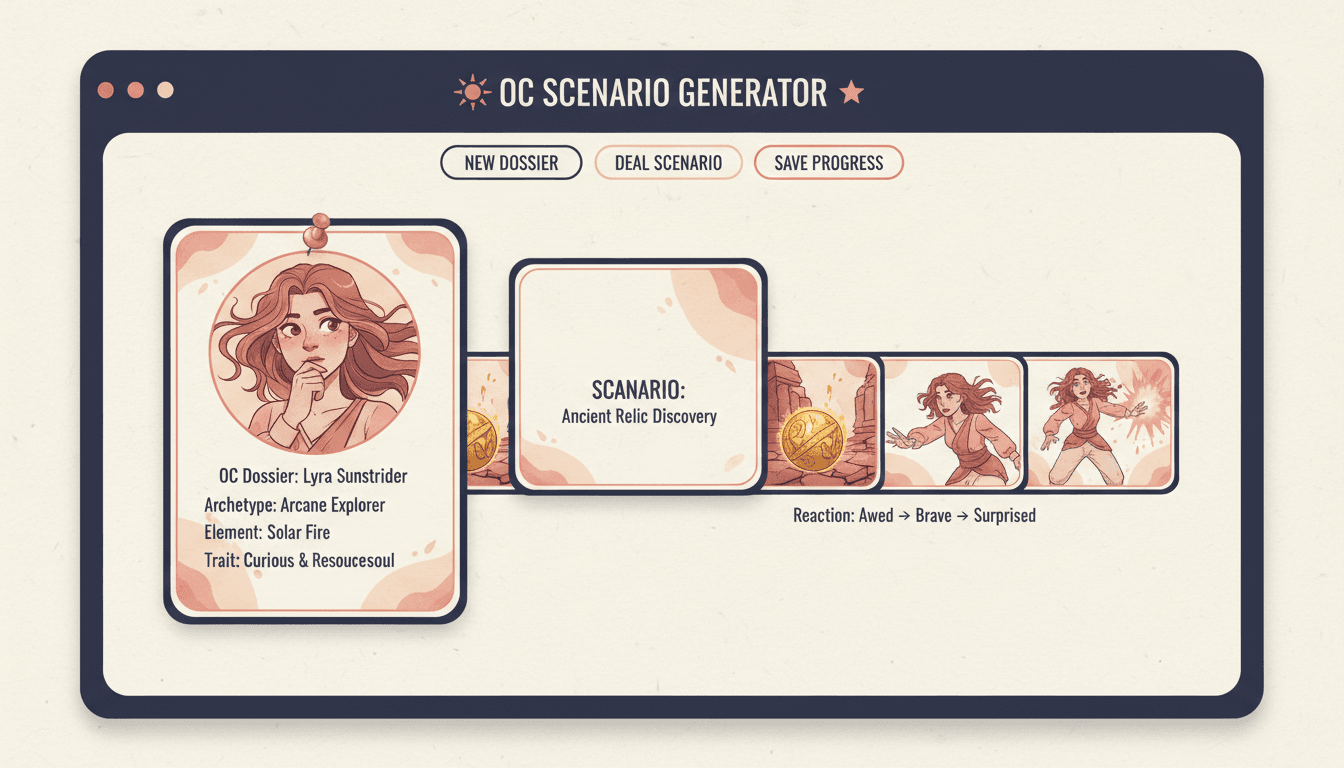
Not story ideas — situations. The C2Story OC scenario generator drops your original character into a moment with two things they could plausibly do, then draws the one they choose.
- Situations aimed at your OC’s specific flaw, not a random list
- Every scenario has two doors — and both cost something
- A pressure dial from ordinary Tuesday to full crisis
- Play it out as illustrated panels, on-model every frame
250,000+
Stories Created
80,000+
Characters Saved
45+
Art Styles
4.9/5
Creator Rating
How the OC Scenario Generator Works
Three steps, and none of them require you to have a plot, a world or even a plan.
Bring the OC and One Flaw
A saved profile, a Toyhouse bio or three sentences. The single most useful thing you can add is something they are bad at or afraid of, because that is what every good situation is aimed at. A character with no weak point cannot be put under pressure.
“Fixes everyone else’s problems. Cannot accept help.”
Deal a Situation
A batch of scenarios comes back, each one a specific moment rather than a premise, each with a fork your OC genuinely could go either way on. Set the pressure dial, re-roll individual cards, and lock the ones that make you uneasy — those are the good ones.
Someone offers to carry it for her. Everyone is watching.
Watch It Play Out
Choose a scenario and C2Story runs it as an illustrated scene — a handful of panels, a short comic, a whole chapter — with your OC the same person in every frame. Save the outcome to the character so the decision becomes part of who they are.
The moment she decides, as a six-panel scene
What Actually Goes Into a Scenario
A scenario is not a setting and it is not a prompt. It is a situation with a fork in it, and a price on both sides of the fork.
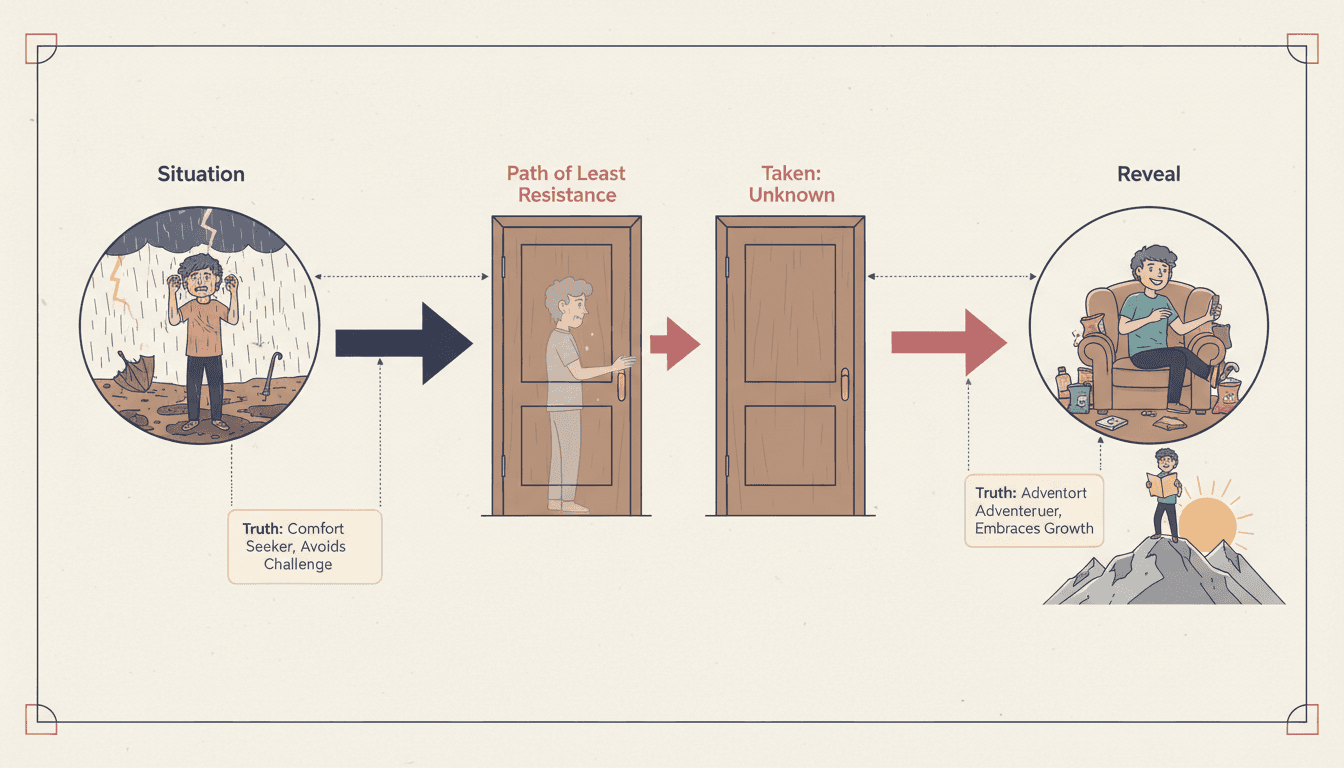
The Situation
One moment, not a month. “She is on a long journey” is a setting; “the last seat is taken and the person who took it is asleep” is a situation. Specificity is what makes a scenario playable instead of something you have to develop first.
Where they areThe Pressure
What makes the moment cost something — a deadline, an audience, a person whose opinion they care about. Pressure is a dial, not a switch: being watched by one colleague is a different scenario from being watched by nobody.
What makes it hardThe Two Doors
At least two things your OC could plausibly do, both defensible. This is the load-bearing part and the one missing from almost every scenario list online. If you already know what they would do, there is nothing here to find out.
The real choiceThe Cost
What each door takes from them. A choice between something good and something bad is not a choice; a choice between being honest and being kind is. Cost is what turns a preference into a decision worth illustrating.
What it takesThe Reveal
The small true thing the reader learns about your OC once they pick. This is the entire output of a scenario — not what happened, but what it exposed. A situation that reveals nothing was decoration.
What we find outNot: The Vibe
“Your OC at a rainy bus stop” is an image, not a scenario. It is pleasant and it goes nowhere, because nothing is being asked of them. Atmosphere is the most common thing mistaken for a situation, and the reason so many prompt lists feel empty.
The common trapA scenario is not an idea, and it is not a plot
Worth separating so you land on the right tool. A story idea is a premise you might write later — “she finds out her mentor lied for years” — and the OC story ideas generator deals in those. A plot is the structure that carries a whole story, which the OC plot generator builds. A scenario is smaller and more immediate than either: one moment, one decision, no arc required. An idea is for planning, a plot is for building, a scenario is for finding out who your character is right now. This page does the last one.
The Two-Door Test: Scenario vs Cutscene
Look at any situation and ask: could my OC plausibly do two different things here? If there is only one door, it is not a scenario — it is a corridor.
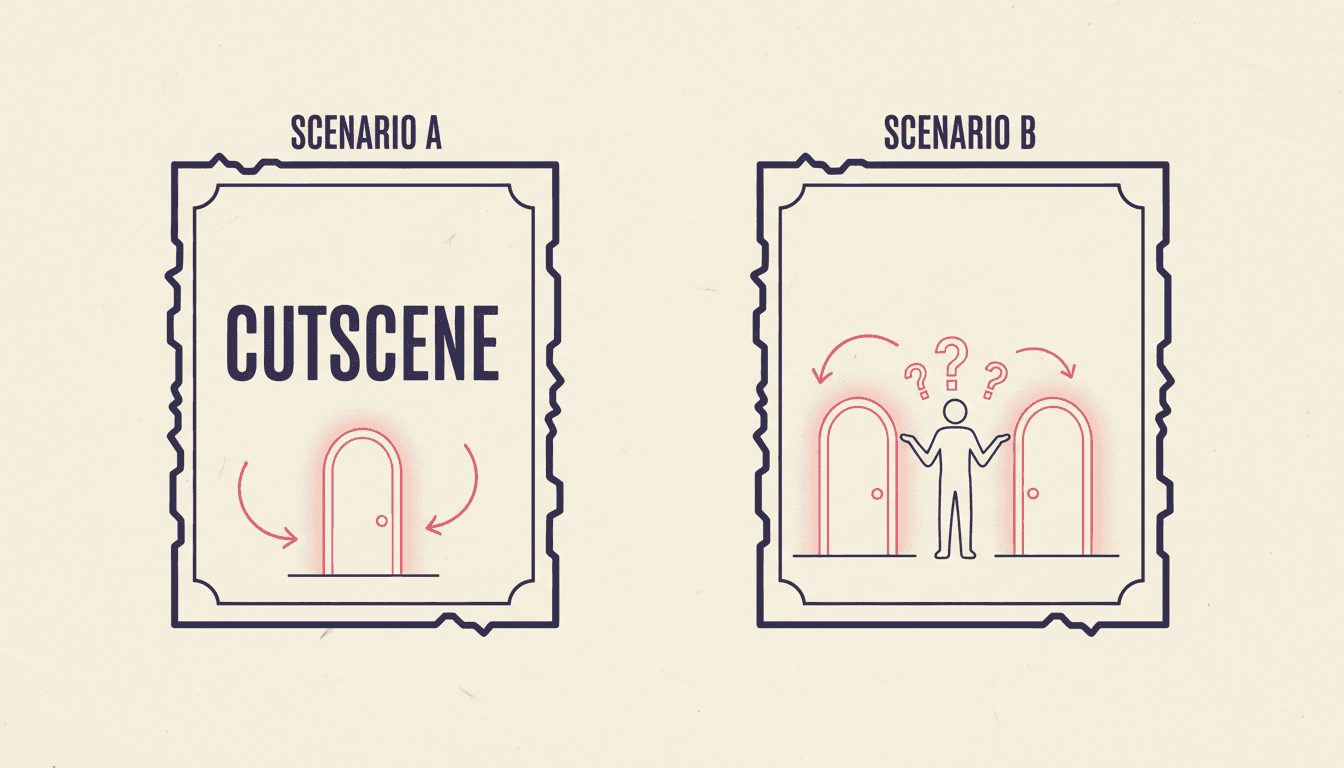
A Cutscene
- ✕ “Your OC is attacked by bandits on the road”
- ✕ One obvious response — they fight, and so would anyone
- ✕ Would play out identically with a different character in it
- ✕ Summarisable in a line, which is why it never gets written
A Scenario
- “The bandit who stops them is someone they trained”
- Two doors: hand them over, or let them run
- Both cost something, and both are defensible
- Whichever they pick tells you something new about them
Every situation this OC scenario generator produces has to survive the two-door test before it reaches you — which is why the batches tend to be shorter on spectacle and longer on the awkward, specific moments your character would rather avoid.
What an OC Scenario Generator Actually Gives You
A dealt hand of situations you can re-roll card by card — and a way to play any of them out as an illustrated scene.
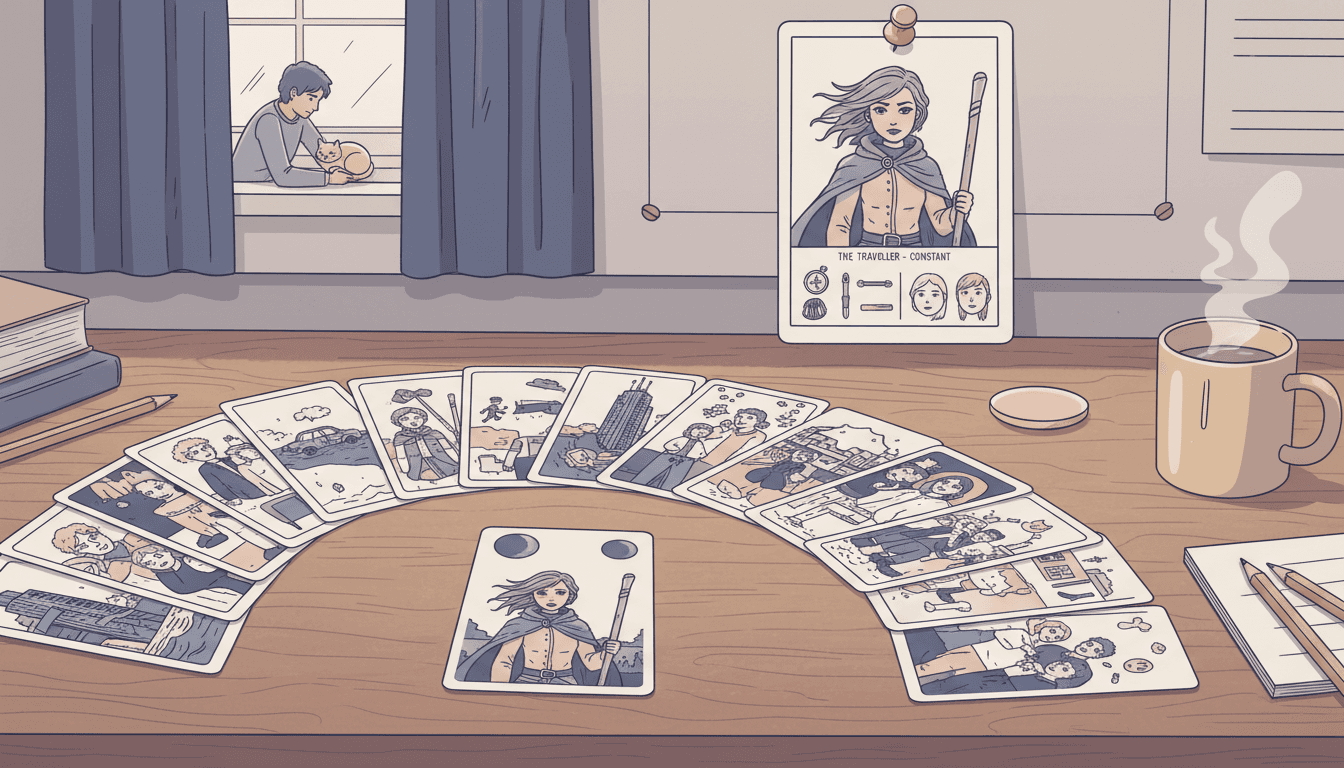
The Deck
Situation → Choice → Reveal
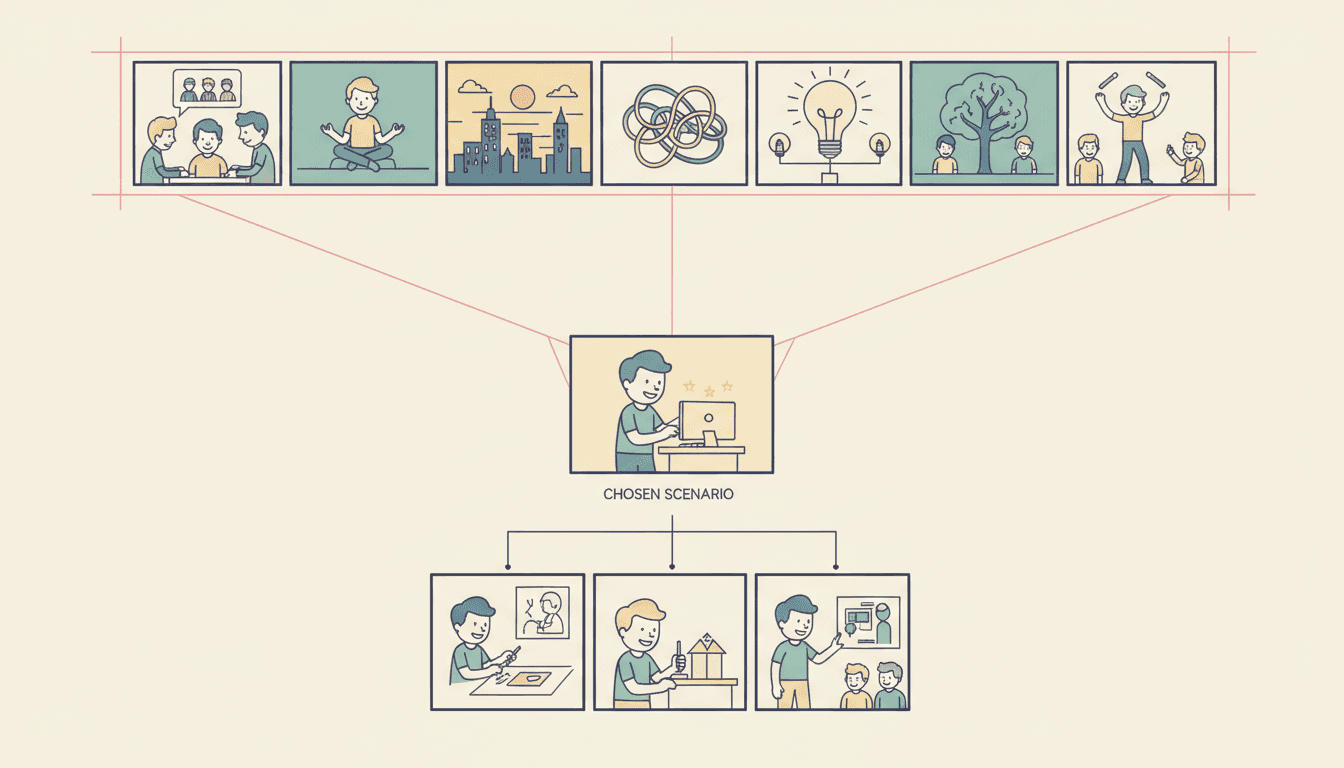
Play the One You Like
“Put my OC in a situation where being honest costs her something”
“A low-stakes everyday scenario — no fighting, no crisis, just a Tuesday”
“How would my OC react if someone thanked him for something he did not do”
“An angst scenario for my OC that does not involve anyone dying”
“First meeting scenario for my OC and my friend’s OC, neither in control”
“Draw the moment she decides, as a six-panel scene”
Angst, Comfort, Everyday and AU Scenarios
The same method under every flavour — a fork and a cost — which is why these hold up better than a random scenario list that only knows how to escalate.
Angst Scenarios
An angst scenario generator that reaches for a death has taken the easy route. The version that lands is built on something your OC cannot fix and did not cause — being believed about the wrong thing, arriving slightly too late, being forgiven when they would rather be blamed.
Unfixable, not fatalComfort & Hurt/Comfort
These turn on a question most characters find harder than danger: can your OC accept help? Being looked after is a pressure like any other, and for a self-sufficient character it is usually the most revealing situation you can hand them.
Can they be helpedEveryday & Low-Stakes
A queue, a misdelivered parcel, a compliment they did not earn. Nothing is burning and that is the point — under catastrophe most people behave alike, while a slow ordinary Tuesday makes a character give themselves away in detail.
The quiet endAU & What-If
Keep the personality fixed and change everything around it — the era, the job, the world, the one fact that went differently. AU scenarios are the fastest way to learn which of your OC’s traits are essential and which were only costume.
Same person, new worldDuo & Group Scenarios
Two characters, one situation neither controls, and incompatible things they each want out of it. That is the engine behind first meetings, forced proximity and every argument where both sides are partly right. Bring a friend’s OC or a canon cast.
Nobody in chargeGenre Scenarios
Anime, fantasy, horror, modern, superhero — the furniture changes and the fork stays. A horror scenario is not scarier because of the monster; it is scarier because of what your character has to leave behind to get out of the room.
Furniture, not methodScenario Shapes Worth Stealing
Not situations — shapes. Each one becomes a completely different scene depending on which character has to stand in it.
Deck, Dial, Two Doors, Duo
Any scenario can be illustrated in 45+ art styles — and your OC stays recognisably the same person no matter how far the situation moves them from home.
The Deck
Deal a Situation
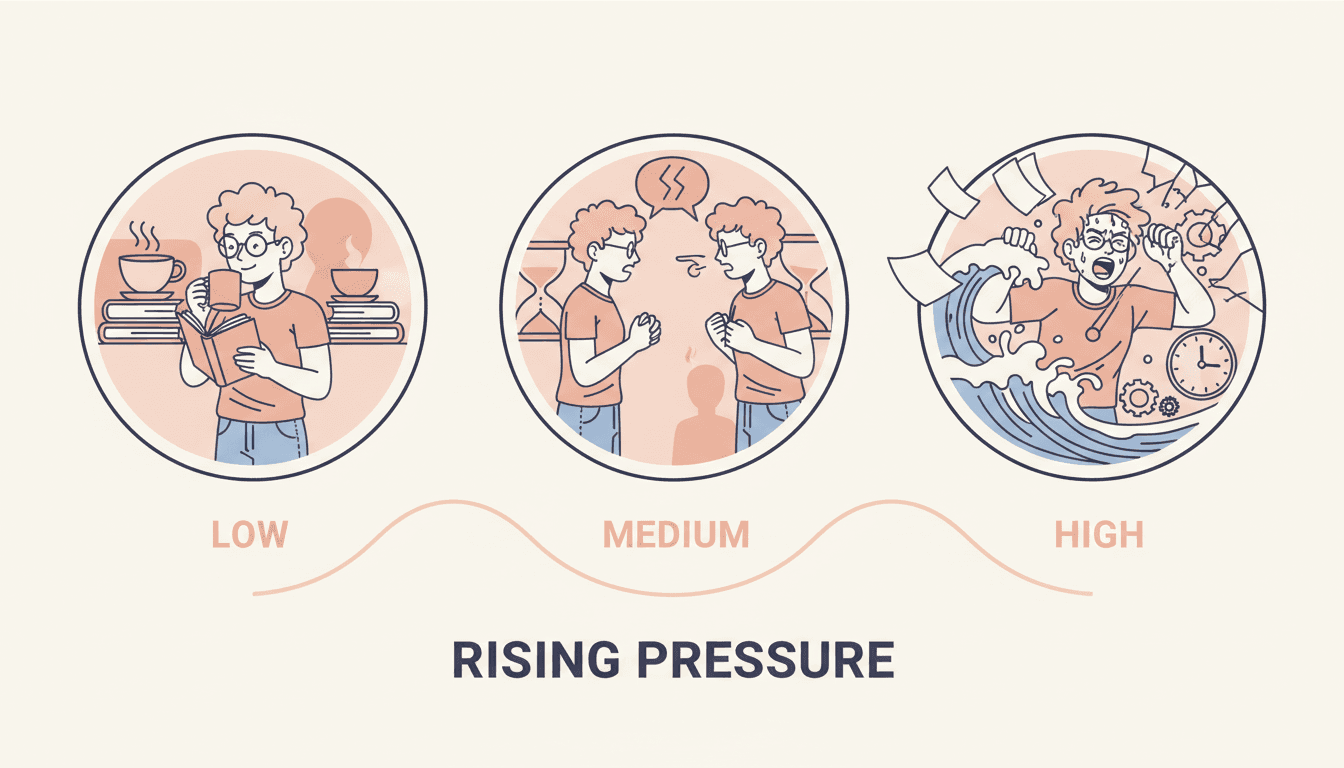
The Dial
Quiet to Crisis
Two Doors
A Real Choice
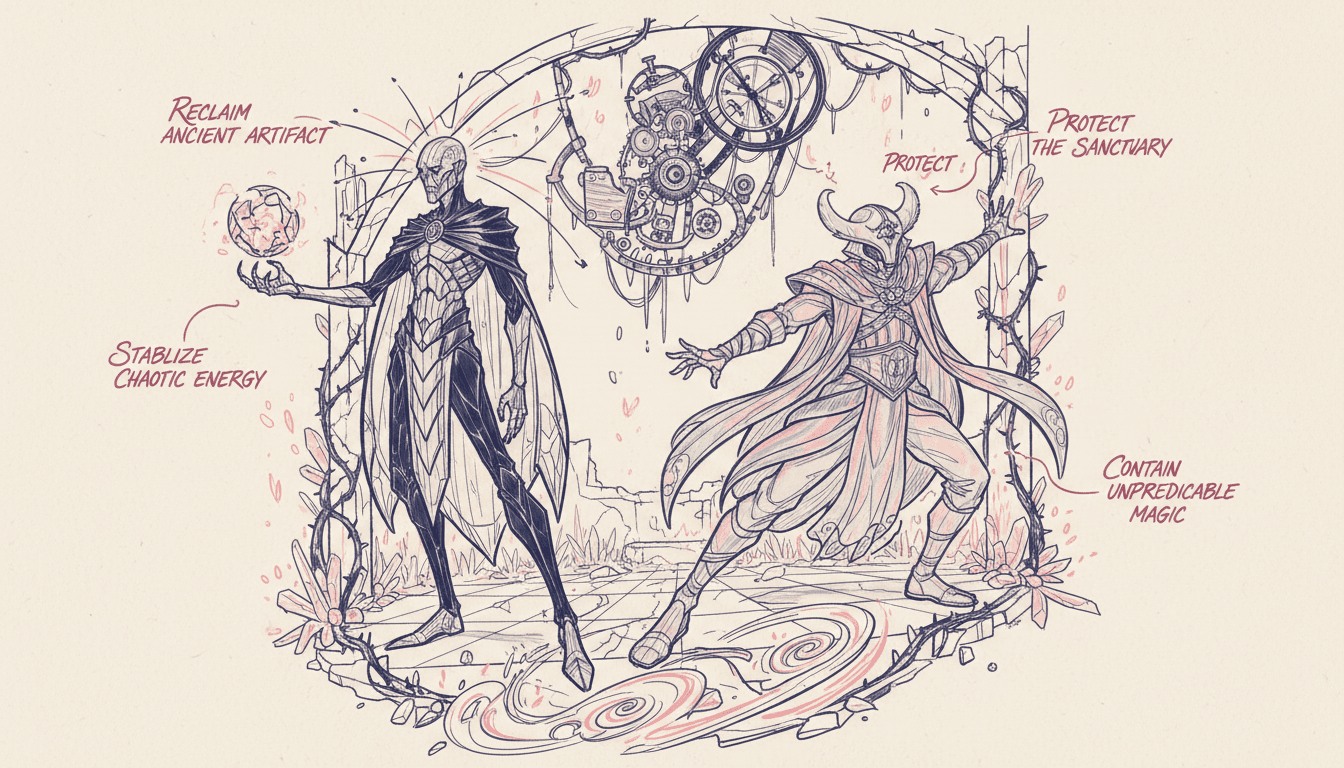
The Duo
Two OCs, One Room
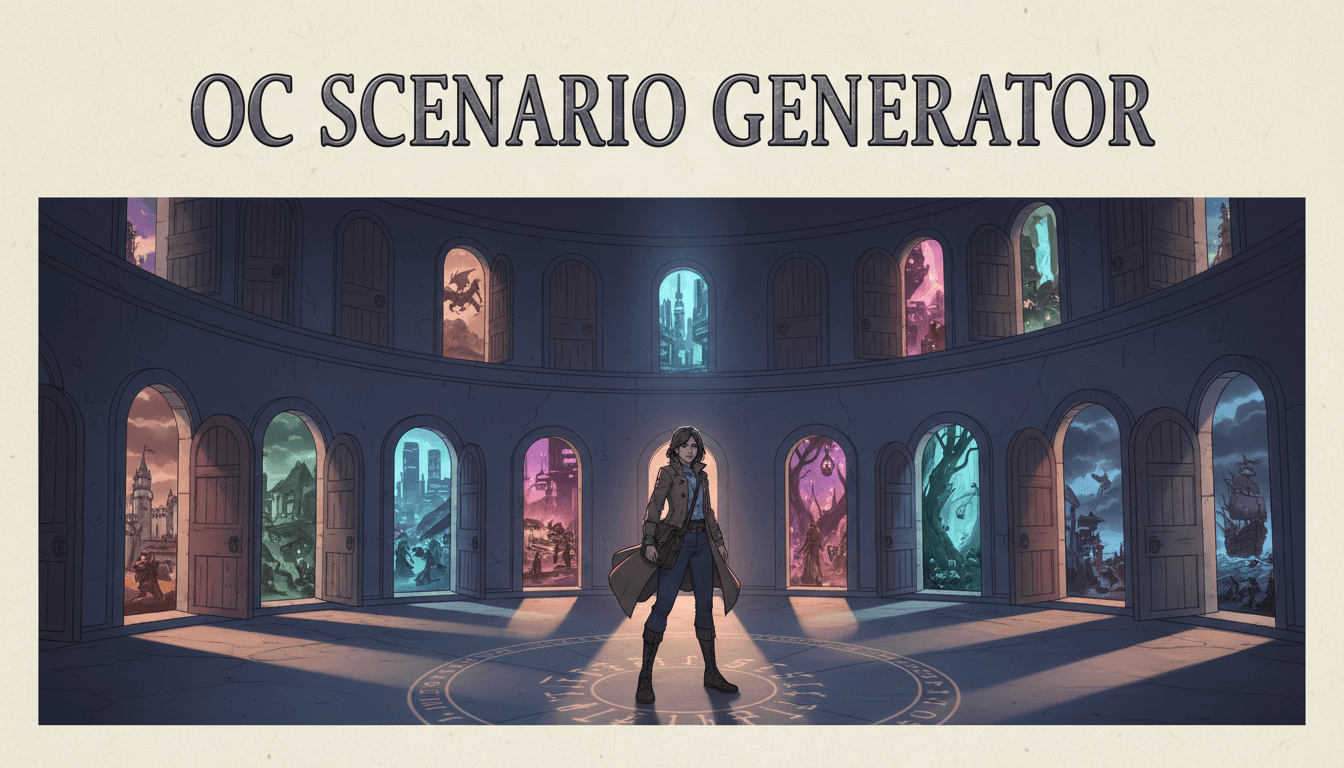
The Doors
Every Way It Goes
Match the tone of the situation with 45+ art styles including Anime, Manga, Fantasy, Cinematic and Watercolor.
What Changes When the Situation Is Built For Your Character
Six things a random scenario list cannot do, because it has never read who your OC is.
Every Scenario Has Two Doors
The OC scenario generator will not hand you a situation where the response is obvious. Each one is built so your character could plausibly do at least two different things, because a situation with one exit is not a scenario — it is a cutscene your OC walks through without revealing anything.
A Pressure Dial, Not Just Disasters
Most generators only know catastrophe. This one runs from an ordinary Tuesday through an awkward social moment to a full crisis, and the quiet end is where characters usually give themselves away. You set the dial; the same OC comes out differently at each setting.
Built From Your Character, Not a Random List
It reads the traits, flaws and relationships already on your OC and generates situations aimed precisely at them. A scenario that pressures somebody else’s weak point is just a prompt. The good ones are uncomfortable for your specific character and nobody else.
The Choice Comes With a Cost
Each option carries something your OC has to give up to take it, which is the difference between a decision and a preference. No cost means no tension, and no tension means the scene can be summarised in one line instead of being worth reading.
Re-Roll One Card, Keep the Rest
Deal a batch, throw back the ones that do not fit, lock the keepers. You can re-roll just the setting, just the pressure, or just the other person in the room, so a scenario that is nearly right does not have to be regenerated from scratch.
And Then You Can Watch It Happen
Pick a scenario and C2Story plays it out as an illustrated scene — a few panels, a short comic, a full chapter — with your OC on-model throughout. The point of a scenario is the reaction, and a reaction you can actually see beats one described in a paragraph.
Who Uses an OC Scenario Generator?
OC Creators & Toyhouse Users
The design is finished and the personality section is three adjectives. Scenarios convert adjectives into evidence — run “loyal” through a situation where loyalty costs something and you find out what kind of loyal they are.
Roleplayers & RP Partners
Starters and prompts run out long before enthusiasm does. A dealt situation with a fork in it gives both partners something to push against, instead of another scene where everyone politely agrees.
Fanfic & Original Fiction Writers
You can write the prose; you are stuck on what happens in the middle chapter. A scenario is a scene-sized unit of story, which is usually the exact size of the gap you are trying to fill.
Comic & Webtoon Creators
Panels need moments, not summaries. Every situation here comes out shaped like something drawable — a room, two people, one decision — and can be illustrated straight into a sequence.
Is the Situation the Part You Are Missing?
This page is for creators with a finished OC and no idea what to put them through. If your gap is somewhere else, one of these is a better door — they all share the same character library.
Yes — give me a situation and see what they do
Start here. Bring the character, set the pressure, and get scenarios aimed at their specific weak point.
I do not have the OC yet
Design the character first — appearance, personality, signature look — and lock it before you start testing them.
I want premises, not single moments
Story ideas are whole-story shaped. A batch built from your OC’s traits and relationships, then a shortlist you keep.
I have the scene, I need the whole structure
The want, the obstacle, the turning point and an ending. Use this when a scenario turns out to be the start of something.
I need the past, not the present
The event, the belief it left and the behaviour it produces today — the history that explains how they react at all.
It is the world that is blank
Regions, factions, history and bloodlines. Lore is the ground your scenarios have to happen somewhere on.
I want to talk to them, not read a scene
A live in-character conversation rather than a generated situation. Different thing, and sometimes the one you actually want.
I already played it out in an RP
Turn a roleplay you have already written into a finished illustrated story instead of generating a new situation.
I need what changes them over time
A scenario reveals who they are; an arc is who they become. Map the flaw, the turning point and the transformation.
I want the finished illustrated story
Turn your OC and everything around them into a full illustrated story, fanfic or comic starring them.
I keep losing my own canon
A character bible pins looks, voices, history and decisions as a reusable record so nothing drifts between chapters.
Many characters, tangled together
A shared universe with crossing casts is a bigger container than one character in one room. That page handles it.
Frequently Asked Questions
Explore More Story Ideas
Discover more styles, tools, and story types
Bear Stories
A new bear friend, woodland picnics, honey treats and great bear hunts
Explore
Ligne Claire Picture Books
One even ink line & flat unshaded colour
Explore
Bedtime Stories for Anxious Kids
Calming tales that soothe worries
Explore
Midjourney vs C2Story
Stories, not just images
ExploreOC Scenario Generator — Situations That Reveal Who Your Character Is
An OC scenario generator answers a question that design tools never get to. You know what your original character looks like. You know the palette, the coat, the hair, the way they stand. What you do not know — and cannot know from a reference sheet — is what they would do if someone offered to carry something for them in front of other people. Appearance is settled early and behaviour almost never is, and the gap between the two is why so many finished OCs still feel like illustrations rather than people.
The fix is to stop describing and start testing. A scenario is a situation you drop your character into specifically to find out how they behave, and it works because behaviour is the only real evidence of personality. A flat OC is nearly always one described entirely in adjectives — loyal, guarded, sarcastic — which are claims, not proof. Run “loyal” through a situation where loyalty costs something and you find out what kind of loyal they are, which is precisely the part that makes a character specific. Six scenarios will teach you more about your OC than another six hours spent refining their outfit.
What separates a real situation from a prompt is the two-door test, and it is the single most useful thing on this page. Look at any scenario and ask whether your character could plausibly do two different things in it. “Your OC is attacked by bandits” fails: they fight, and so would anyone, which means the scene reveals nothing and would play out identically with a different character standing in it. “The bandit who stops them is someone they trained” passes: hand them over or let them run, both defensible, both expensive. A situation with one exit is not a scenario at all — it is a corridor, and corridors are why so many prompt lists feel strangely empty when you sit down to use them.
Underneath every scenario worth playing are five parts. The situation is one moment rather than a month — “she is on a long journey” is a setting, while “the last seat is taken and the person in it is asleep” is something you can start writing immediately. The pressure is what makes the moment cost anything: a deadline, an audience, one person whose opinion they care about. The two doors are the options. The cost is what each door takes from them, because a choice between something good and something bad is not a choice, while a choice between being honest and being kind is. And the reveal is the small true thing you learn once they pick, which is the actual output — not what happened, but what it exposed.
Scenarios also do not have to be catastrophic, and the quiet ones are frequently better. Under a collapsing building almost everyone behaves the same few ways, which is why disaster tends to flatten characters rather than distinguish them. An ordinary Tuesday does the opposite. Who your OC lets go ahead of them in a queue, what they do with a compliment they did not earn, whether they correct a stranger who is slightly wrong about something unimportant — these produce sharper and stranger evidence than another fight scene. That is why this tool has a pressure dial rather than a disaster button, and why asking an OC situation generator for low-stakes, everyday or slice-of-life material is a legitimate and often more productive request.
Flavour changes the furniture, not the method. Angst scenarios land hardest when they are built on something your character cannot fix and did not cause — being believed about the wrong thing, arriving slightly too late, being forgiven when they would rather be blamed — rather than on a death, which is the version everyone reaches for first. Comfort and hurt/comfort turn on whether your OC is able to accept help, usually a harder question for them than danger. AU and what-if scenarios hold the personality fixed and change everything around it, which is the quickest way to discover which traits are essential to your character and which were only costume. And duo scenarios, where two OCs want incompatible things out of a situation neither controls, are the engine behind first meetings, forced proximity and every argument in which both sides are partly right.
It is worth keeping the neighbouring tools straight so you land on the right one. A story idea is a premise you might write later — whole-story shaped, something the OC story ideas generator deals in. A plot is the structure that carries a full story from want to obstacle to ending, which the OC plot generator builds. A backstory is what happened before page one, handled by the OC backstory generator, and lore is the world it all sits on, from the OC lore generator. A scenario is smaller and more immediate than any of them: one moment, one decision, no arc required. Ideas are for planning, plots are for building, and scenarios are for finding out. Plenty of them are worth exactly one scene, and that is a result rather than a failure.
What makes this different from a text tool is that the situation does not have to stay written down. Choose a scenario and C2Story plays it out as an illustrated scene — a handful of panels, a short comic, a full chapter — with your character’s design saved once from reference images so they are unmistakably the same person in every frame, however far the situation moves them from home. Nine scenarios can look like nine different worlds with one recognisable person standing in them, and that consistency is exactly what turns a private what-if into something worth posting on Toyhouse, Tumblr or DeviantArt. Outcomes are saved onto the character rather than into a notes app you will lose, so a decision made in one scenario stays true in the next. Everything you make is yours outright, with full rights to publish, post, print and sell.
Ready to start? Bring your OC and find out what they would actually do. Still designing the character? The OC creator covers appearance and personality, and the OC generator rolls a brand-new one on demand. Want a live conversation instead of a generated scene? Try AI character chat, or turn an RP you have already played into a finished story with the AI roleplay story generator. Need what changes them over time? The character arc builder maps it. Ready for the finished thing? The OC story generator turns it all into an illustrated story. Running a large cast? Keep an AI character bible, build a story universe, or open your character library.