Web Novel to Comic DramaChapters In, Episodes Out.
You do not have a story — you have a run. Hundreds of chapters, arcs with shapes, a weekly drop and readers who already picture your cast. C2Story adapts the whole thing into watchable episodes without you drawing a panel.
- Episodes cut on arc beats, not on chapter numbers
- One locked cast that still looks right in arc five
- Dialogue spoken aloud, monologue kept as narration
- Work a finished backlog while you keep publishing ahead of it
250,000+
Stories Created
80,000+
Characters Saved
45+
Art Styles
4.9/5
Creator Rating
How to Adapt a Web Novel Into a Comic Drama
Three steps, starting from chapters you already wrote and readers who are already waiting.
Lock the Cast
Before a single episode, save your leads to the character library with reference images. Do this first and every episode after it — arc one or arc nine — draws the same faces.
Your series bible, once
Cut an Arc Into Episodes
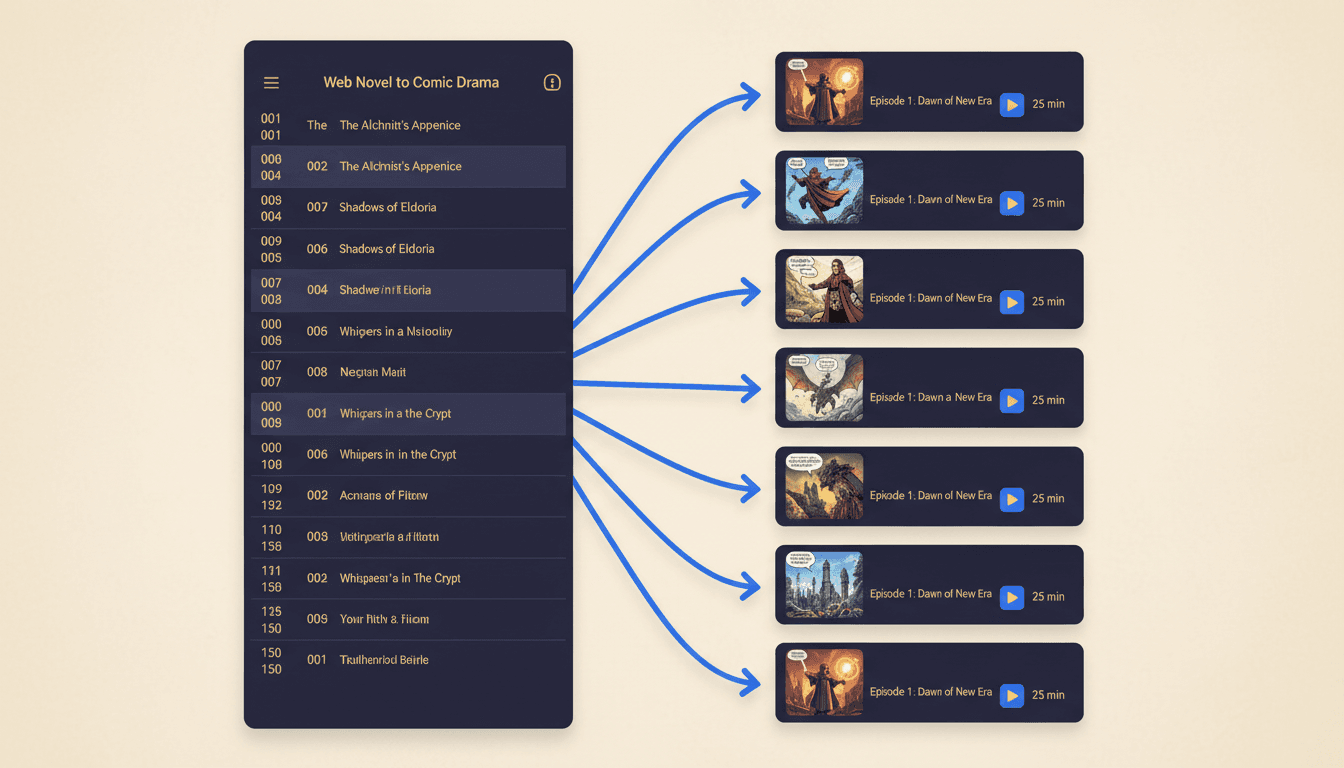
Paste in an arc and it gets broken into scene beats, then grouped into episodes that end on turns rather than on chapter boundaries. Each beat becomes an illustrated panel with balloons.
Arc beats, not chapter counts
Render and Drop
Motion, per-character voices, narration, sound and music get layered over the panels, and each episode renders as a real MP4 — vertical for the feed, widescreen for a channel.
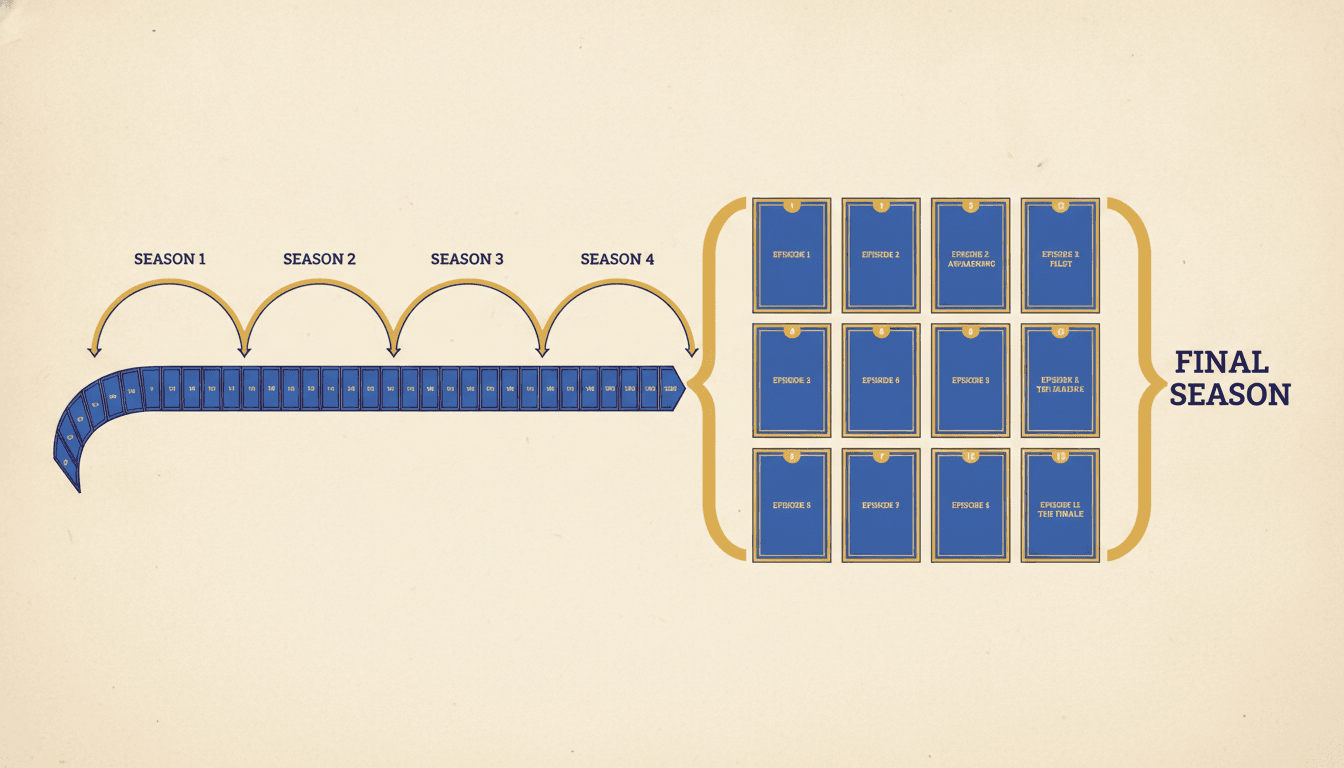
A season you can schedule
A Chapter Is Not an Episode
Web novel chapters are sized by a posting schedule — 1,500 to 3,000 words, often ending mid-scene because a daily deadline arrived. Episodes are sized by attention, and they need a shape. Mapping one to one is the fastest way to make a good serial feel flat.
Cut on Turns, Not Numbers
An episode should end where something changes — a reveal, a loss, a decision. Sometimes that is the end of chapter 12, and sometimes it is two thirds of the way through chapter 47. Follow the beat.
Arc beats decide the boundary
The Ratio Moves by Genre
A slow-burn romance serial often folds three or four chapters into one episode. A progression-fantasy chapter carrying a full fight can need two. There is no universal number, and any tool that claims one is guessing.
Three-to-one, or one-to-two
Monologue Has to Go Somewhere
Web novels live inside a head — system notifications, cultivation logic, the narrator being funny. Cut it and the voice dies. It moves to narration and captions instead of quietly disappearing.
Narration keeps the voice
What this is not
This is not a button that swallows a 200-chapter novel and returns a finished season while you make coffee. Adaptation is a set of decisions — where episodes end, which subplots compress, what gets narrated instead of shown — and you make them, arc by arc. What C2Story removes is the part that normally needs an artist, a letterer, a voice cast and an editor. It will not tell you which of your subplots is expendable, and any tool that says it can is selling you a shortcut through the one part that is actually yours.
Your Serial Is Hidden Behind a Wall of Text
Chapter one is asking a stranger to read three thousand words on a hosting site they have never opened. Episode one asks them to watch for ninety seconds, in a feed they are already scrolling — and it sends them back to the text.
Your Serial as Chapters
- ✕ Discovery depends on a front-page slot you do not control
- ✕ Chapter one asks for 10 minutes before it earns any trust
- ✕ Every reader pictures a different cast
- ✕ Nothing to post that is not a link to more text
The Same Serial as Comic Drama
- Autoplays to people who never searched for you
- Episode one earns attention in the first ten seconds
- One canon cast your readers can finally point at
- A weekly drop that is not another 3,000 words to write
Prose In, Arcs Kept, Season Out
Follow an arc through the pipeline: text becomes beats, beats become panels, episodes end on cliffhangers, and the whole thing lands on a schedule you can actually hold.
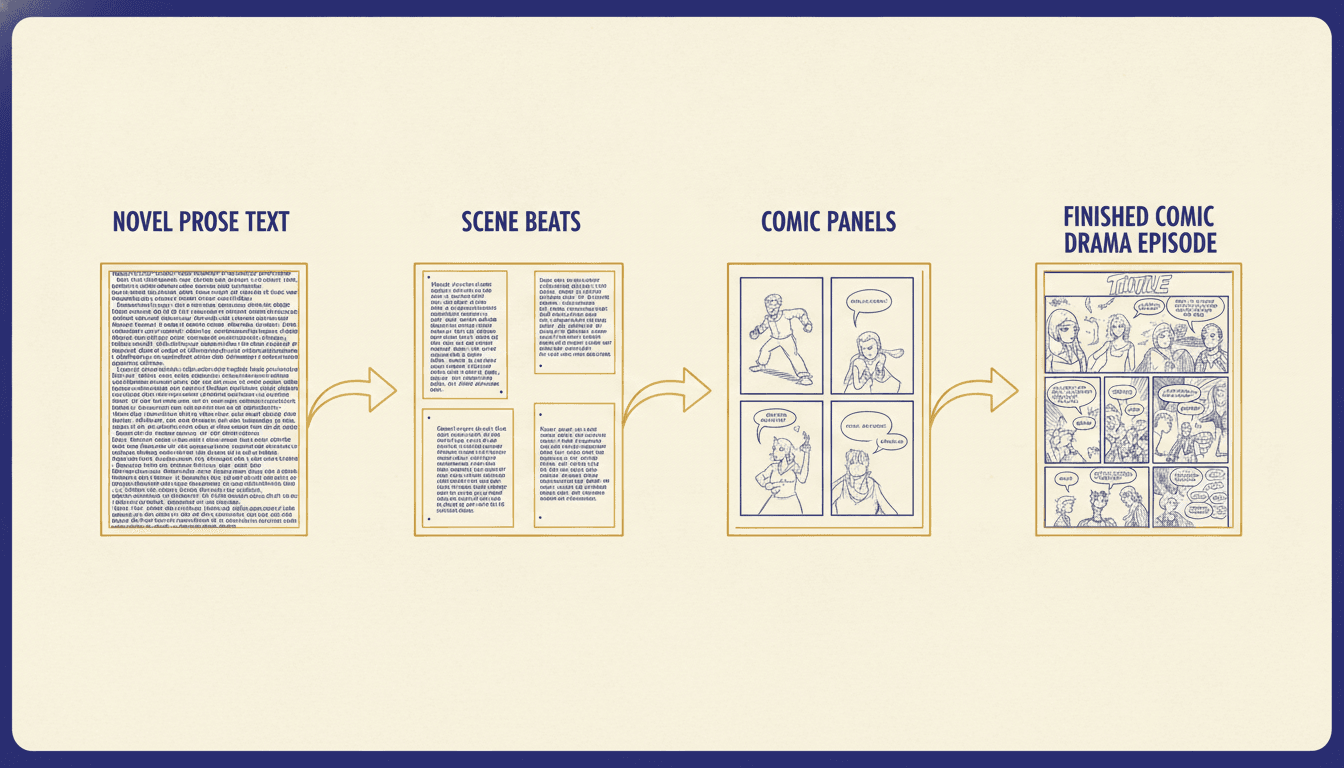
Prose → Beats → Panels → Episode
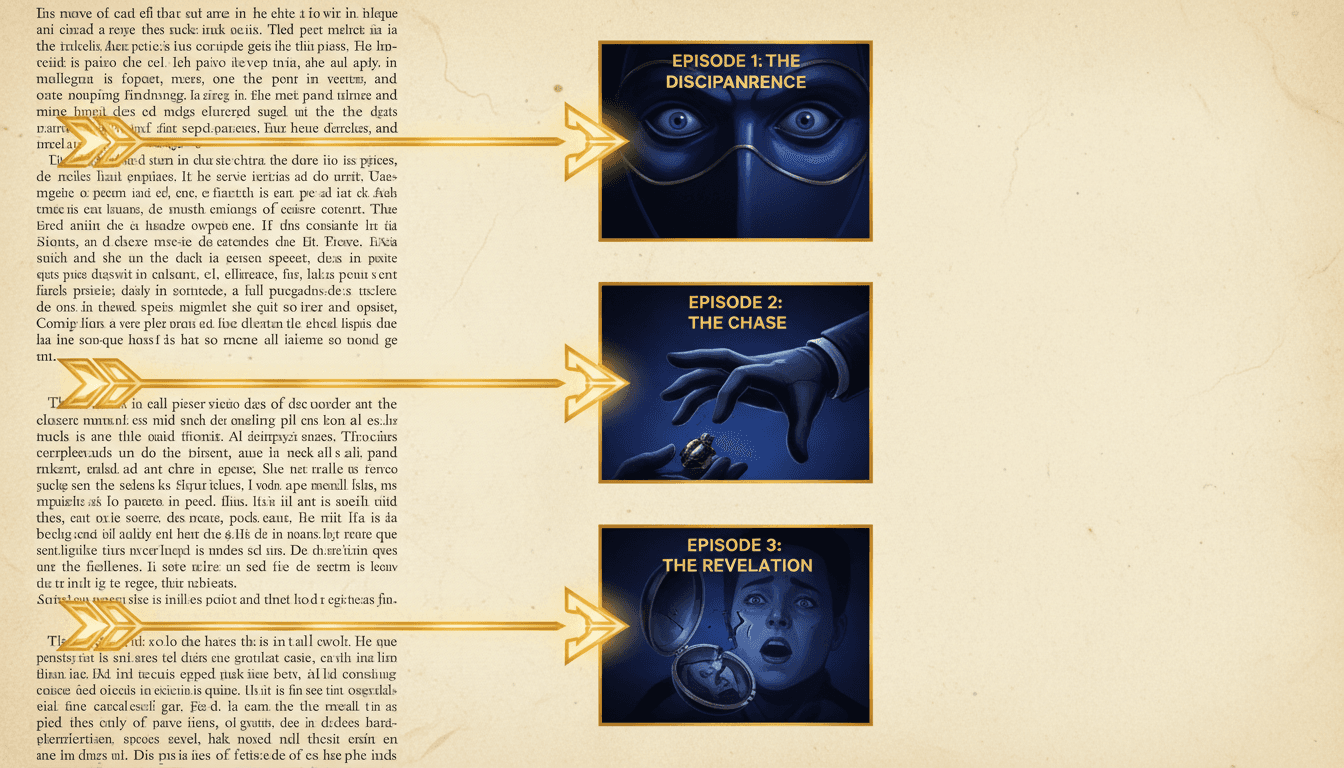
Where the Episode Ends
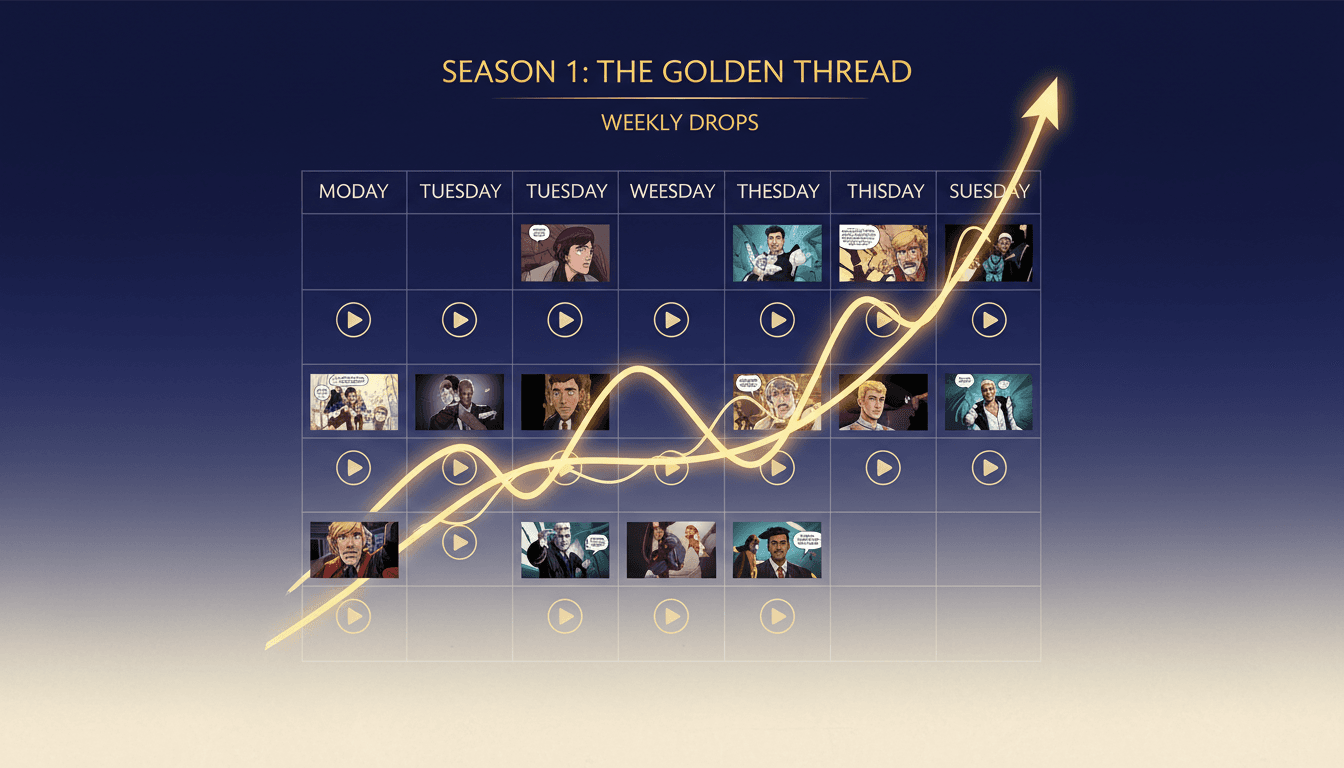
A Cadence You Can Keep
“Turn arc one of my cultivation novel into six comic drama episodes”
“Adapt my Wattpad romance — one episode per three chapters”
“Make episode one of my LitRPG serial as a hook for new readers”
“Cut my Royal Road backlog into a first season of ten episodes”
“A vertical episode from my system novel cliffhanger for TikTok”
“Keep my four leads identical from arc one through arc five”
Every Kind of Serial Adapts
Cultivation epics, progression fantasy, Wattpad romance, a LitRPG with a system window every other page — a finished backlog or a run still updating on Fridays. The adaptation is the same shape.
Backlog, Cut, Cast, Voice, Drop
What you already have, where the episodes end, who stays locked, what gets spoken, and how often it lands — rendered in whichever of 45+ art styles fits your genre.
The Backlog
200 Chapters In
The Cut
Arc-Aware Episodes
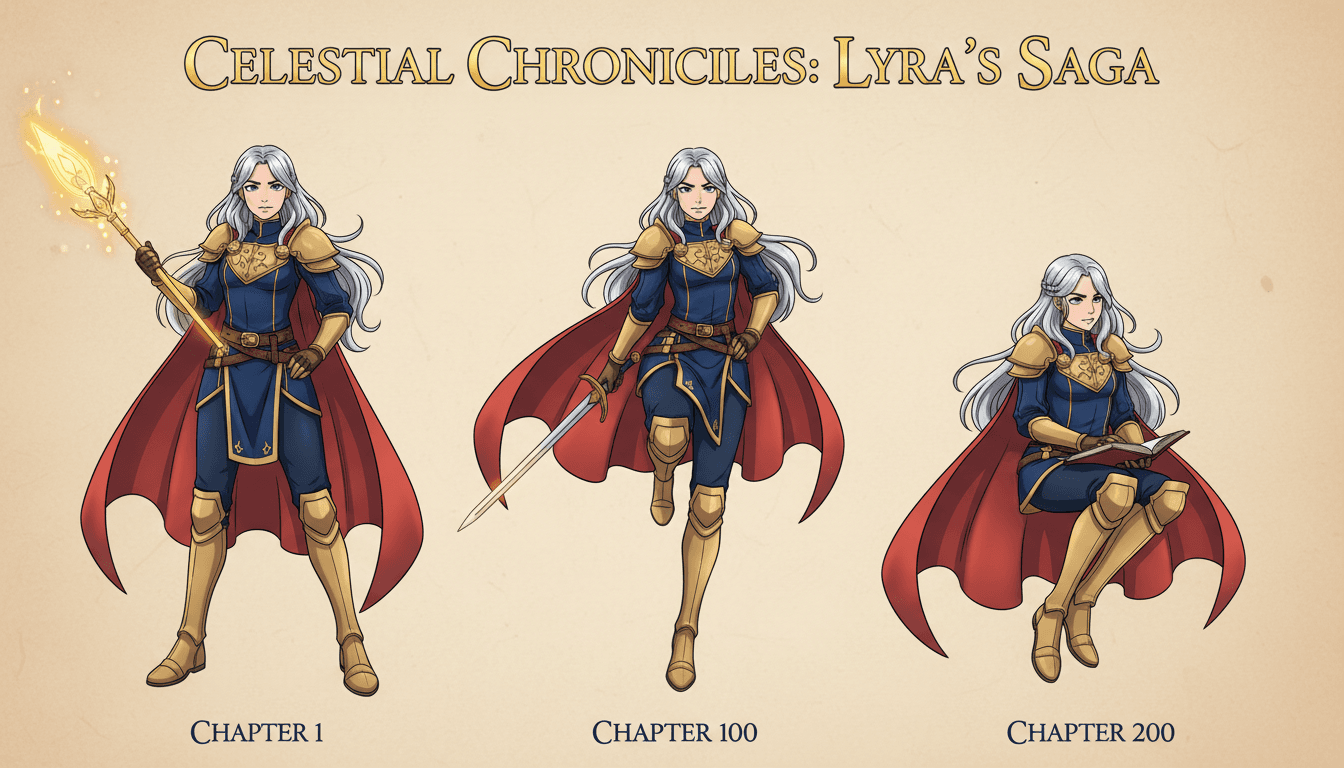
The Cast
Locked for the Run
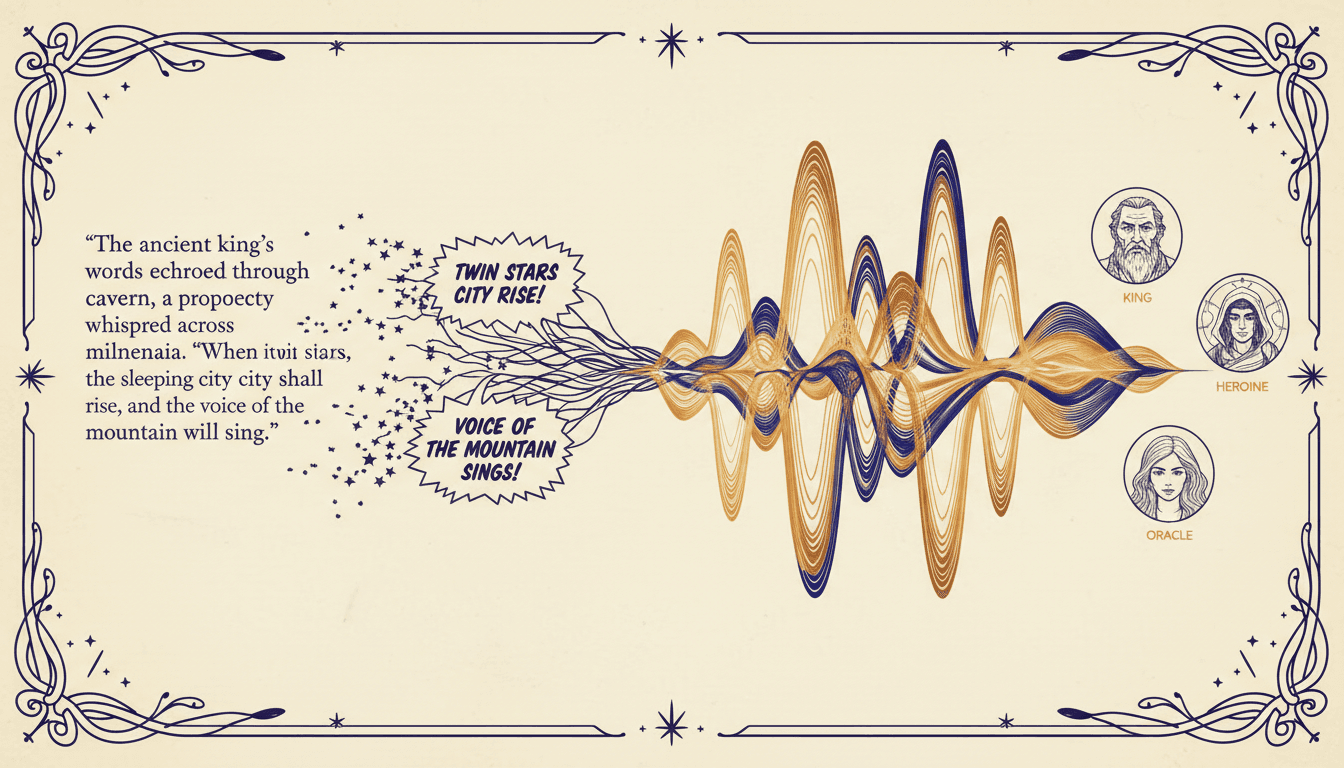
The Voice
Dialogue Spoken
The Drop
Weekly, On Time
Match your genre with 45+ art styles including Manhwa, Anime, Comic, Cinematic and Watercolor.
What the Adapter Handles For You
The six things that stand between a published serial and a watchable season — each one handled without hiring an artist or opening a timeline editor.
Chapters Do Not Equal Episodes
A web novel chapter is sized for a reading session, not a watch. Episodes are cut on arc beats instead — sometimes three chapters collapse into one episode, sometimes a single long chapter splits in two.
A Cast That Survives the Run
Save each lead once with reference images, and every episode generates against that locked design. Arc five looks like arc one, which is the whole ballgame for a serial audience.
Dialogue Gets Spoken
Your quoted lines become voiced performance, one voice per character, with narration carrying the prose between them. Internal monologue — the lifeblood of web novels — stays as narration rather than vanishing.
Built for a Backlog
You do not have one story, you have a run. Work through a finished backlog episode by episode while still publishing new chapters, without the two drifting into different-looking shows.
Arcs Stay Intact
Novel arcs have shapes — a setup, a turn, a payoff. Episodes are grouped so an arc ends when the arc ends, and a season finale lands on the beat you actually wrote as one.
Real Files, Not a Player
Each episode renders as a downloadable MP4 in widescreen or vertical, so you can post it to YouTube, TikTok, Reels or Shorts, or hand it to a platform as a pitch reel.
Mine the Backlog, or Chase the New Chapters?
A standalone novel gets adapted once and it is done. A serial is two jobs at the same time — there is a finished archive behind you and a chapter due Friday. Both directions work, and they cost different things.
Adapt From Behind
Build episodes from arcs you finished months ago while new chapters publish ahead of them. The plot is settled, so nothing has to be guessed, and you can quietly fix a setup the raw chapters fumbled. Readers who catch up on episodes still have a backlog of text waiting for them.
The default for an ongoing run
Adapt in Step
Ship an episode alongside each new arc so text and video land together. It is the stronger launch moment and it keeps one conversation going — but you are committing to two deadlines, and a plot twist you change later is already drawn.
Best once the run is stable
Who Adapts a Web Novel Into Comic Drama?
Serial Authors
You have written half a million words and your readership is the same size it was at chapter 60. A first episode travels through feeds that will never surface a link to a text chapter — and points every viewer back at the archive.
Web Novel Publishers
You hold rights to a catalogue and no animation budget for any of it. Adapting arc one of several titles gives every serial on your list a trailer-shaped asset that costs a session instead of a studio.
Patreon & Newsletter Writers
Paid tiers need something that is not just earlier chapters. An episode of the arc your subscribers already read is a genuine bonus rather than a scheduling trick.
Translators & Localisers
A serial that landed in one language stalls in the next because nobody discovers it. Episodes carry across languages far better than a wall of untranslated prose ever will.
Is Your Source a Serialized Novel?
This page is for authors adapting a web novel that already exists as text, into episodes. If your starting point or your destination is different, one of these is a better door — and they all share the same character library.
Yes — I have chapters written
Bring an arc and your cast, and get voiced, timed episodes back. You’re in the right place.
I only have a story idea
The comic drama generator writes the story first, then draws and stages it. Start there if there is no manuscript yet.
I want a comic book, not episodes
A bound, readable volume with pages and panels instead of something that plays. That converter is the fit.
I want a vertical-scroll webtoon
Long-canvas episodes readers scroll rather than watch, with no timing or voices involved.
My comic is already drawn
If the panels exist, you are converting artwork rather than adapting prose. Use the comic converter.
My cast drifts between arcs
Pin every design so your leads are identical from arc one to the finale, across every episode you ever build.
Prose Has No Shape — So You Get to Choose
A webtoon arrives shaped like a phone and a manga page arrives shaped like print. Your source is text, which inherits nothing — so the frame is a pure distribution decision.
Vertical 9:16
The discovery format. Comic drama grew up in vertical feeds, and TikTok, Reels and Shorts are where someone who has never heard of your serial will meet it. Best for episode one of each arc, and for cliffhanger cuts that send people to the text.
The default for finding readers
Widescreen 16:9
For a YouTube channel where a season lives as a playlist, a series landing page, or a pitch reel for a platform or publisher. Choose it before rendering rather than cropping later — the panels get composed wide from the start.
Best for a season and a pitch
Frequently Asked Questions
Explore More Story Ideas
Discover more styles, tools, and story types
Bug Stories
Ladybugs, butterflies, busy bees and glowing fireflies
Explore
Pixel Art Picture Books
A fixed grid, a rationed 16-bit palette
Explore
Bedtime Story Generator
Cozy goodnight stories for kids
Explore
Midjourney vs C2Story
Stories, not just images
ExploreWeb Novel to Comic Drama — Adapting a Run, Not a Story
Adapting a web novel to comic drama is a different job from adapting a standalone book, and the difference is structural rather than stylistic. A novel is one artifact with one ending. A web serial is a run: hundreds of chapters posted over years, grouped into arcs, still updating, with a readership that has been picturing the same cast since chapter 40. Everything that makes the adaptation hard comes from that shape — and so does everything that makes it worth doing.
The first problem is the cut. Web novel chapters are sized by a posting schedule, not by dramatic shape: 1,500 to 3,000 words, often ending mid-scene because a daily deadline arrived. Episodes are sized by attention and need an arc of their own — a hook, a middle, a reason to come back. Mapping one chapter to one episode is the fastest way to make a strong serial feel flat, because you inherit every arbitrary break your posting calendar imposed. Cut on arc beats instead. A slow-burn romance serial often folds three or four chapters into an episode; a progression-fantasy chapter carrying a full fight can split across two. Let an episode end where something changes, even if that is two thirds of the way through chapter 47.
The second is interiority. Web novels live inside a head — system notifications, cultivation logic, a narrator who is funnier than anyone in the scene. That voice is frequently the reason people read you, and a naive adaptation drops it on the floor because nobody is saying it out loud. Here it moves into narration and caption boxes rather than disappearing, so the prose voice survives into a visual medium that has no native place for it.
The third is cast continuity across a run, and this is where serials are unforgiving. Your readers have spent hundreds of chapters building a mental image of these people. A lead whose hairline or eye shape shifts between episodes does not read as a stylistic wobble — it reads as a recast. Save each character once to the character library with up to fourteen reference images, and every panel in every episode generates against that locked design, whether you build it today or a year from now when you finally reach arc nine. Designs can evolve deliberately too: a character who levels up, changes outfits or ages gets new references while staying recognisably the same person.
Then there is the question of where to start, and the answer for a 200-chapter backlog is almost never chapter one of 200. Treat arc one as a season. Build a short run of episodes, publish it, and see what lands before committing months to the archive. It also settles the art style, the designs and the voices while you are six episodes in rather than sixty. Meanwhile, if your serial is still updating, adapt from behind: the episodes cover arcs you finished months ago while new chapters publish ahead of them. The plot is settled, nothing has to be guessed, and readers who catch up on episodes still find a backlog of text waiting.
On format, prose inherits no shape — unlike a webtoon that arrives phone-shaped or a manga page drawn for print — so the frame is purely a distribution decision. Vertical 9:16 is the discovery format, because comic drama grew up in vertical feeds and that is where someone who has never heard of your serial will meet it. Widescreen 16:9 suits a YouTube channel where a season lives as a playlist, or a pitch reel for a platform. Choose before rendering rather than cropping afterwards.
Be clear about what is automated and what is not. C2Story removes the artist, the letterer, the voice cast and the editor: beats become illustrated panels with balloons, dialogue becomes voiced performance one voice per character, motion and sound get layered on, and each episode renders as a downloadable MP4. What it does not do is decide which of your subplots is expendable or where your season should end. Those are adaptation decisions, they are yours, and any tool promising to make them for you is selling a shortcut through the only part of this that is actually authorship.
Ready to adapt? Start with a single arc. No manuscript yet? The AI comic drama generator writes the story before drawing it. Want a readable volume instead of episodes? Novel to comic book is the fit, or the webtoon generator for vertical scroll. Already drawn the comic? Comic to video converts finished panels, and webtoon to video handles long-canvas episodes. And if your cast is what keeps breaking between arcs, pin every design with the character consistency tool or open your character library.