
Dunhuang Picture BooksWhere People Fly Without Wings
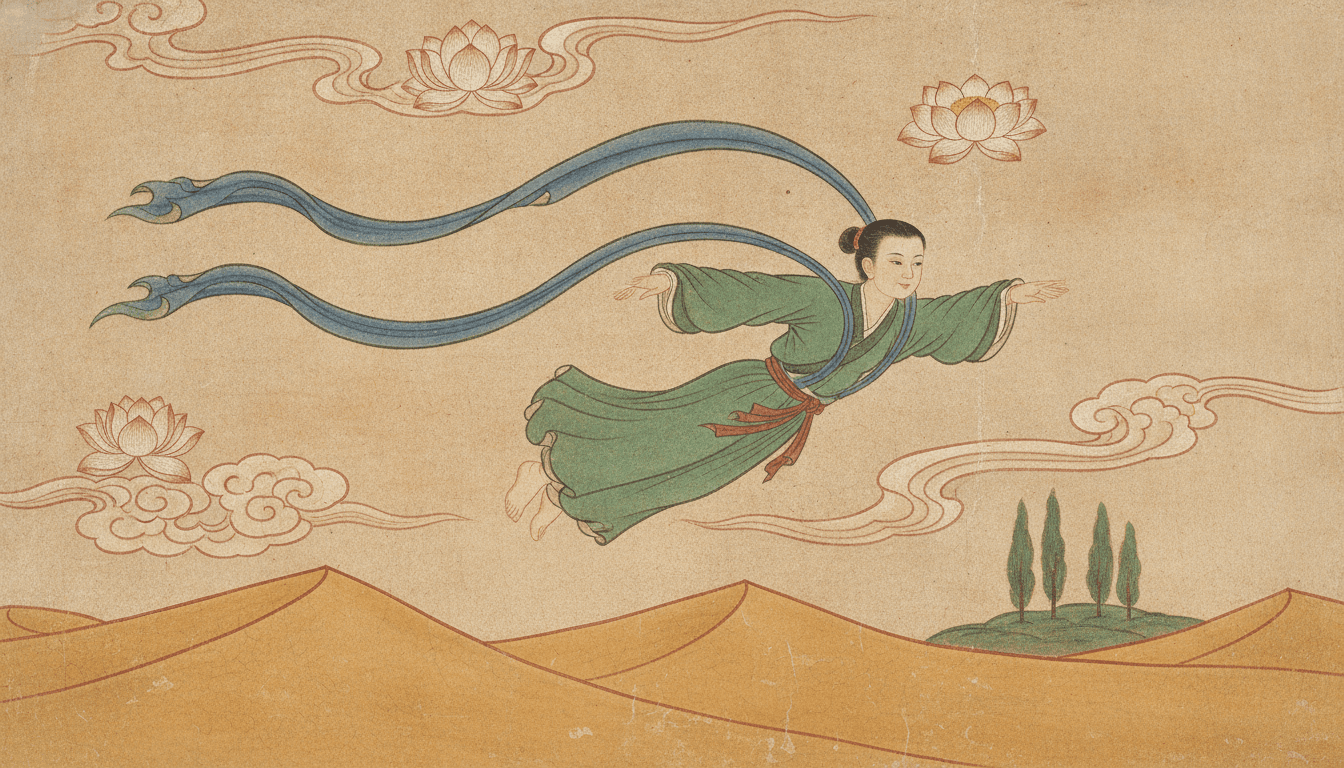
Of the seventy-eight style briefs in this library, one lets its people fly, and one is painted on a wall. They are the same brief. Dunhuang picture books come from it — figures carried on long ribbons, lotus and cloud scrolls in the air around them, ochre, malachite and lapis on a weathered surface.
- Figures that float and fly on long ribbons
- A grainy, weathered mural surface on every page
- Warm ochre, malachite green and lapis blue
- Free credits by request, no card
50,000+
Stories Created
10,000+
Active Creators
50+
Art Styles
4.9/5
User Rating
What Makes the Dunhuang Art Style Different
Every style here is a written brief: a palette, a light, a line weight and a short list of refusals. Four things in this one decide the look, and most of the words that carry them appear in no other brief.
The only people in the library who fly
Every style in C2Story runs on a short written brief: a palette, a lighting note, a line weight and a few things to avoid. This one asks for floating, flying figures, and no other brief of the seventy-eight does. One other brief uses the word flying, but for a dry-brush texture, not a person. A handful of others let something drift — hair, mist, blossoms, a robe. Only here does a whole person leave the ground, and the brief’s own sample subject is a figure in the air, trailing ribbons.
Painted on a wall, not on paper
Twenty-two briefs mention paper. This is the only one painted on a wall: mural, fresco, grotto and weathered appear in no other brief, and the colour sits on aged wall tones. Even the light is named after it — soft flat mural lighting. So the grain here is not a tool’s texture. It is the age of the surface, as if the picture had been there a long time before you found it.
Colours that were dug out of the ground
The palette is warm ochre, malachite green and lapis blue on aged wall beige — the colours of ground stone. Three briefs in the library ask for mineral pigment; this is the only one that names lapis. The four refusals all point the same way, away from a new surface: glossy gradients, photorealism, neon colours and anything smooth and clean.
The decoration is in the air
Lotus blossoms and stylized cloud scrollwork appear in no other brief, and it asks for rich decorative motifs. Most decorated styles put the pattern on a robe or a building. Here it fills the sky around whoever is flying: a curl of cloud under a foot, a lotus beside a hand. The ornament is the air a figure moves through, and it is how you can tell they are moving.
The Same Flying Girl, Painted Twice
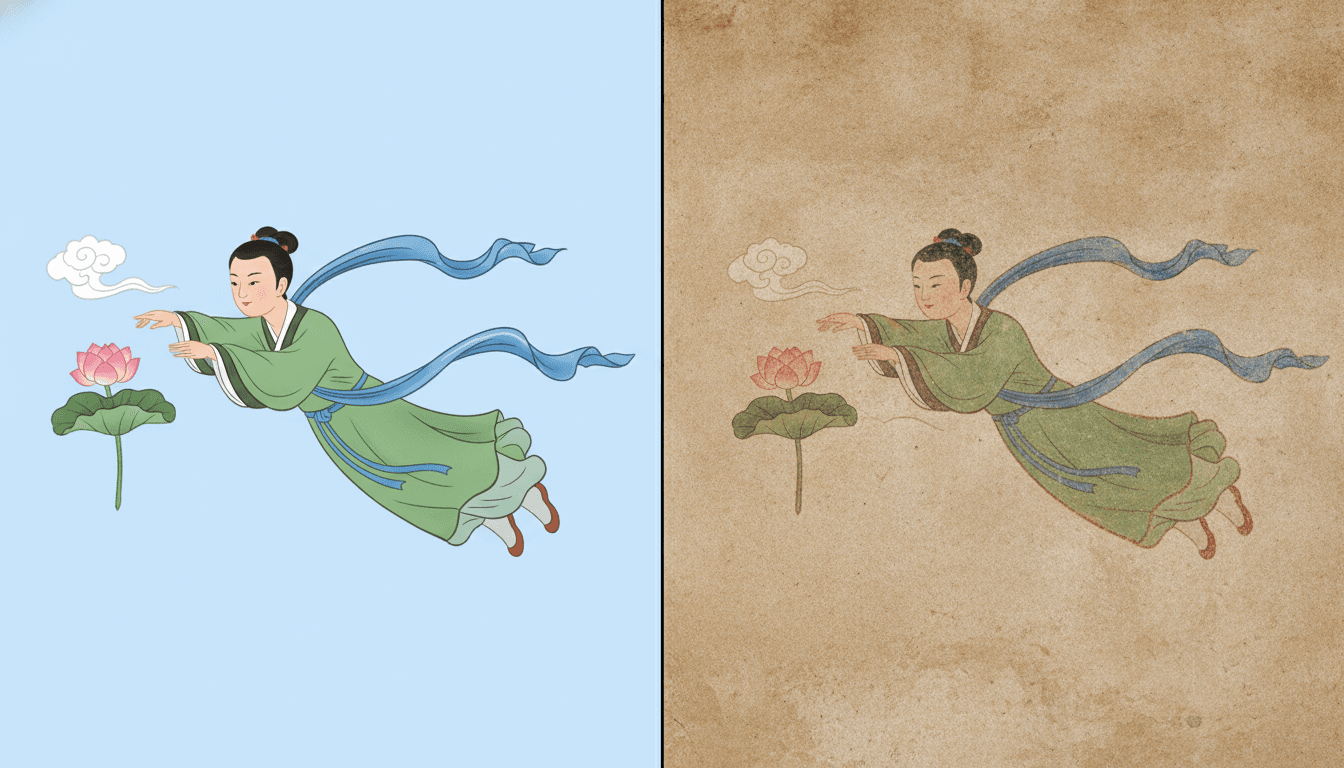
Look at the same girl twice: the same green robe, the same two blue scarves, the same reach towards the same lotus and the same little cloud. On the left she has been made the way most illustration is made now — clean edges, even colour, a flat pale-blue sky. It is perfectly pleasant, and it could be anywhere.
On the right nothing has changed except the surface. The sky has become an old wall, mottled and stained, and the colour has sunk into it and softened. The girl is no less clear, but she now seems to have been there for a long time — which is the feeling a cave mural art style is for.
That is why the brief’s refusals matter as much as its requests. It does not ask for an old look in general; it turns away the four things that make the left-hand picture: glossy gradients, photorealism, neon colour and a smooth clean surface. Take those away and the wall is what is left.
Write the Moment the Feet Leave the Ground
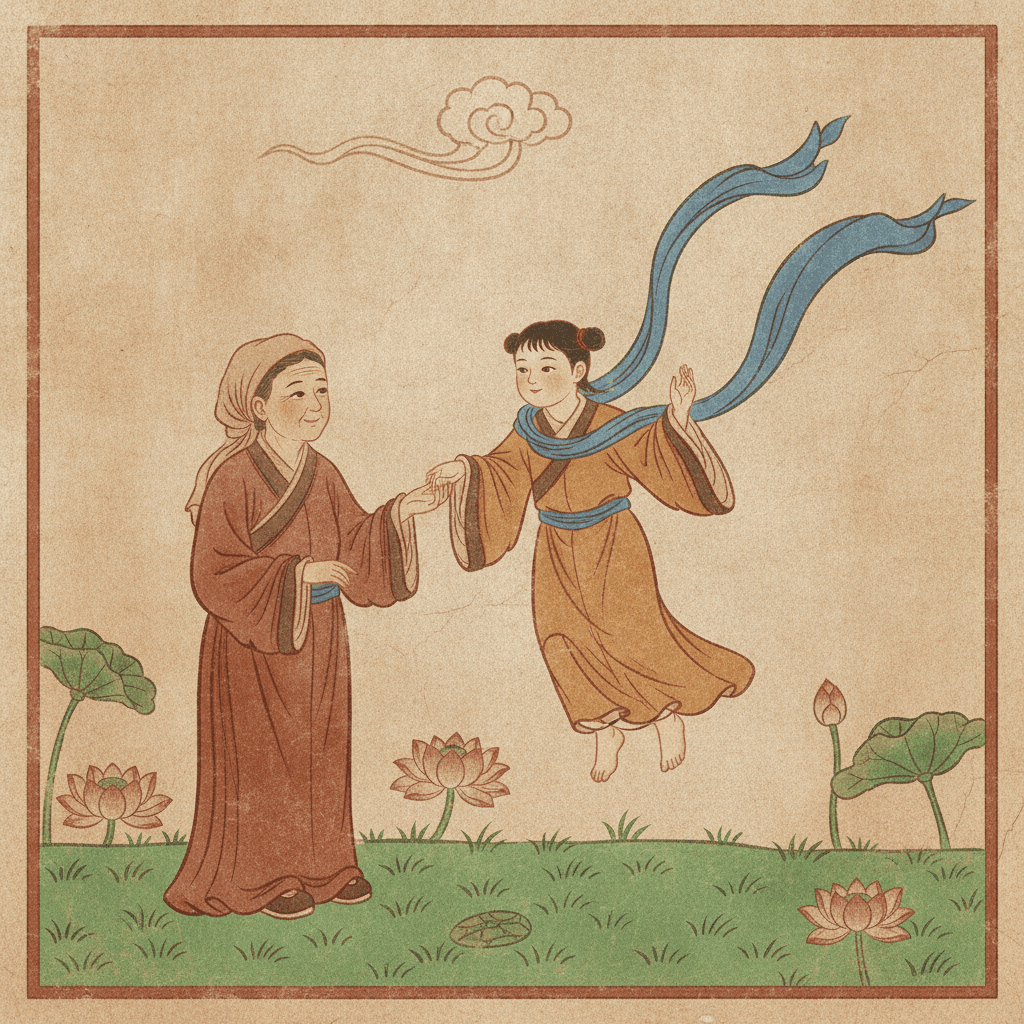
The brief’s own sample subject is a flying figure trailing ribbons among lotus blossoms and clouds. The page beside this paragraph catches the moment before that. A grandmother stands on the grass in a long red-brown robe. Her granddaughter is still holding her hand, but her bare feet are already a little above the ground, and her blue scarf has started to lift behind her.
The flying figures in a Chinese mural illustration have no wings. Nothing in the picture explains how they stay up except the line: the long curve of the body and the scarves streaming behind, which show where they are going and how fast. So a story in this style does not need a reason for flight, only a moment for it. A dream, a wish, a piece of music, a hand let go — somebody who was on the ground, and then is not.
When you write the story, write the rising. Say who is standing, what happens, and which way they go when they lift. Put at least one page on the ground, so the reader feels the difference. The ribbons will do the rest.
From One Sentence to a Dunhuang Picture Book
You pick the look once. The brief is then applied to every page, so the wall, the minerals and each character’s robe and scarf never drift.
Describe somebody who rises
Write a sentence or two about who the story is about and the moment they leave the ground — a dream, a song, a hand let go. Note each character’s robe and scarf colour, so they can be recognised in the air.
Choose Modern Dunhuang Mural
Pick the style from the Styles Library. From then on every page uses the same weathered wall, the same ochre, malachite and lapis, the same flowing curved line and the same soft flat light.
Get a whole book
C2Story writes the story, splits it into pages and illustrates each one. Regenerate any page you want to change without touching the rest, read it online, share it, or buy the PDF download to hand to a printer.
This Style and Its Three Nearest Neighbours
Two share its mineral colour and one shares its clouds. Here is what each actually asks for.
Modern Dunhuang Mural
The style on this page
A modern grotto-mural illustration with flowing celestial curves and floating flying figures, mineral pigment colour, lotus blossoms and stylized cloud scrollwork, and a grainy weathered fresco texture. Warm ochre, malachite green and lapis blue on aged wall tones, a flat layered composition, a sacred serene mood, soft flat mural lighting and graceful flowing curved lines. It refuses glossy gradients, photorealism, neon colours and smooth clean surfaces.
Song Blue-Green Landscape
Same minerals, on paper, with the people small
The nearest relative shares the malachite, the ochre and the serene mood. But it is painted on rice paper with generous white space, in delicate thin lines, and it refuses crowded compositions. Its figures are tiny against layered mountains and mist. The Dunhuang brief fills its wall with decoration and puts the figure in the middle of the air. One is about the world being large; the other is about somebody moving through it.
Gongbi Vintage Fantasy
Mineral colour too — but it wants the gradient
The fine-brush court-painting brief also uses mineral pigment and a serene, ethereal mood. It asks for warm gradient washes and fine iron-wire outlines, and it refuses flat digital fills. The Dunhuang brief refuses glossy gradients and asks for a flat layered composition. Same minerals, opposite treatment: gongbi blends them into silk; the mural lays them flat on a wall and lets the wall wear them.
Guochao Fantasy Architecture
Clouds and walls — but the wall is the subject
The only other brief that asks for clouds. Its clouds float around tiled palaces, red walls and an enormous glowing moon, in a clean flat finish. In that brief the wall is in the picture; in this one the picture is on the wall. Choose it when the story is about a place, and the Dunhuang mural when it is about somebody in the air above one.
Dunhuang Art Style Story Ideas That Suit the Brief
Each idea has a moment where somebody — or something — leaves the ground, which is the one thing this brief draws that no other does.
The Night I Flew Home
A child far from home falls asleep and flies back over the dunes, the rivers and the rooftops to the house they miss. Every page is a different stretch of the journey, seen from the air.
Grandfather’s Caravan Road
A boy rides a camel along an old trade road while his grandfather walks ahead. The ground is long and slow; the sky above them is full of clouds that seem to point the way.
The Deer Who Ran Through the Sky
A girl and a spotted deer find out they can run straight up into the air. A friendship story where the two of them share one long scarf and one direction.
A Song Over the Lotus Pond
A boy plays a flute over a pond until he rises gently off the bank. A quiet book about practising something until it lifts you.
When Grandma Let Go
A grandmother holds a child’s hand on the grass, and then, on the right page, lets go. A first-day, first-step, growing-up story told as the moment the feet leave the ground.
The Cat Who Slept on a Cloud
A sleepy cat takes a nap and wakes up somewhere much higher than it lay down. A bedtime story for the youngest readers, all curls and soft colour.
What Cave Mural Art Looks Like Across a Book
Pages generated to this one brief, with nothing retouched afterwards.
On a screen, on a wall
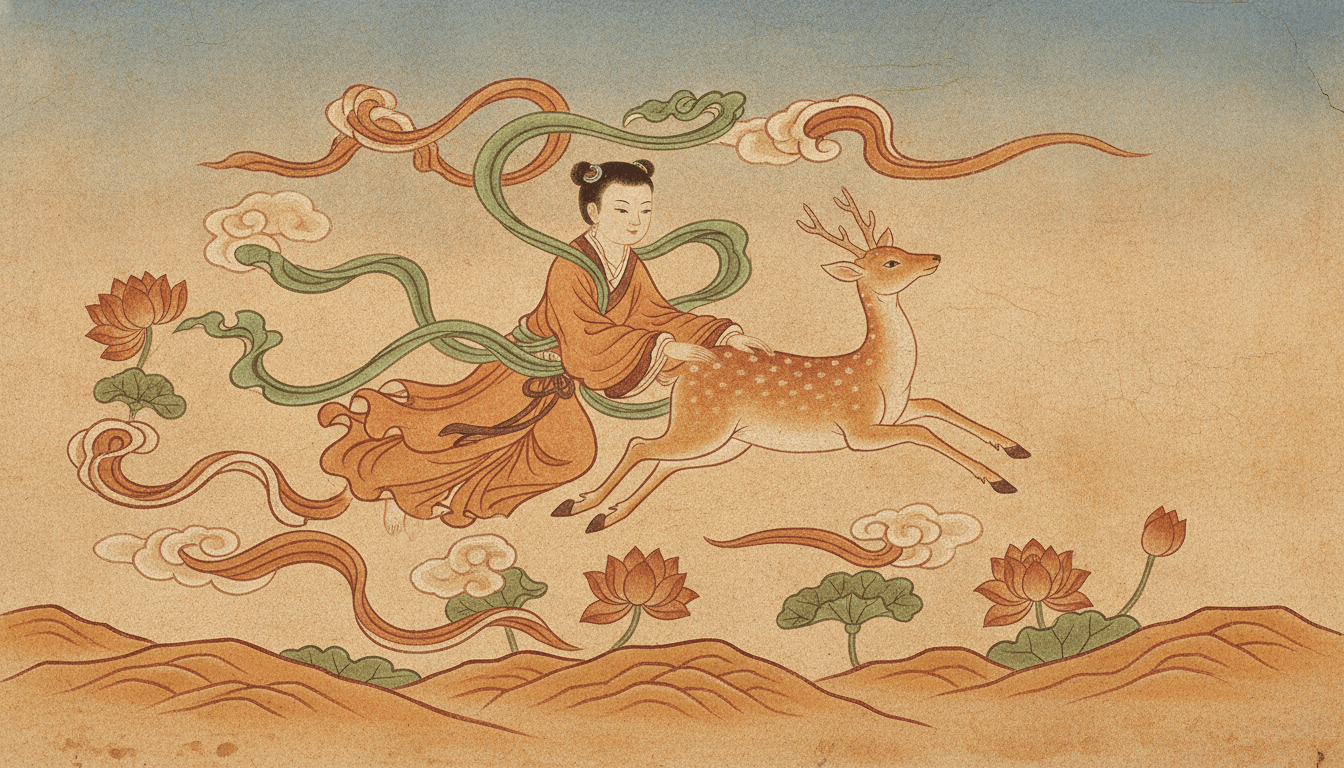
The deer who ran through the sky
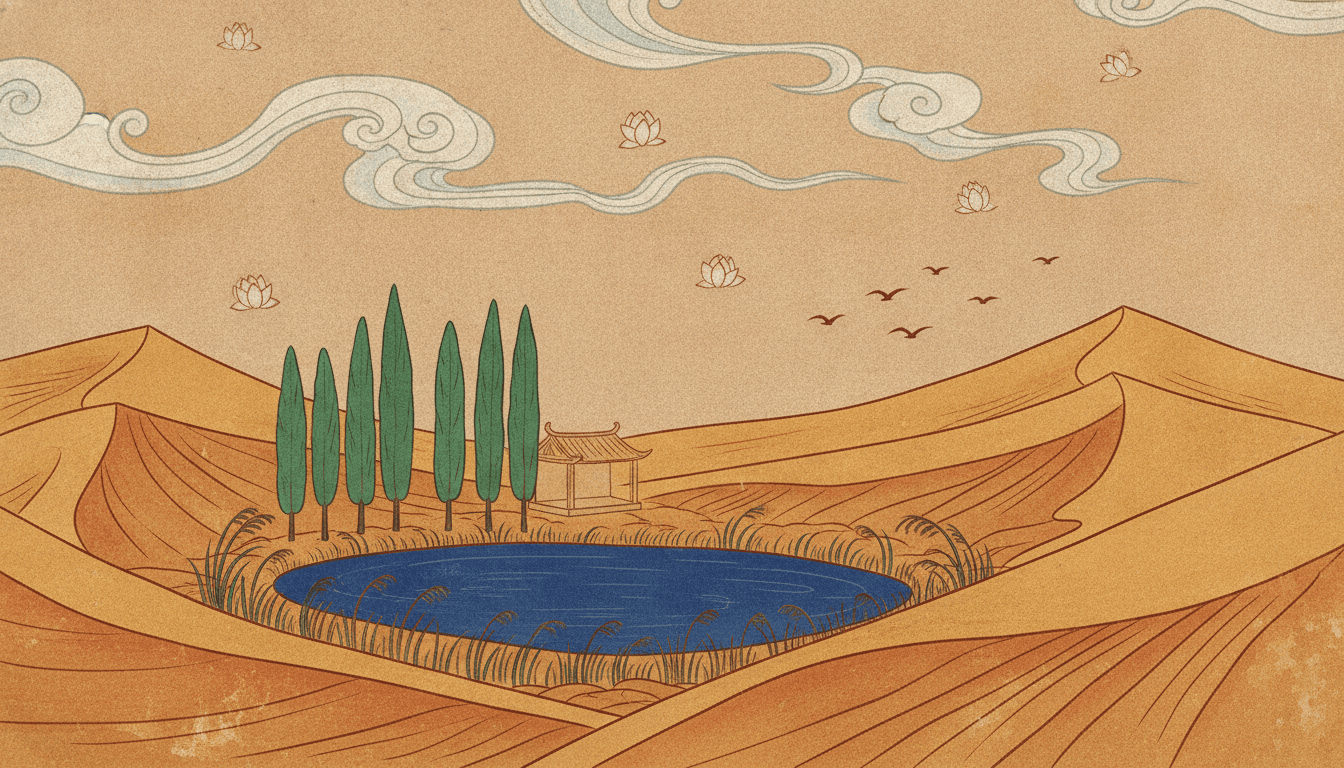
An oasis among the dunes
A Cast You Recognise by Their Scarves
In the air, a flying character is often seen small and from the side, so the colour streaming behind them does the work a face does on the ground. Give everyone one scarf colour and keep it. A few of these pages came back with a thin painted border the brief did not ask for; regenerate a page if that bothers you.
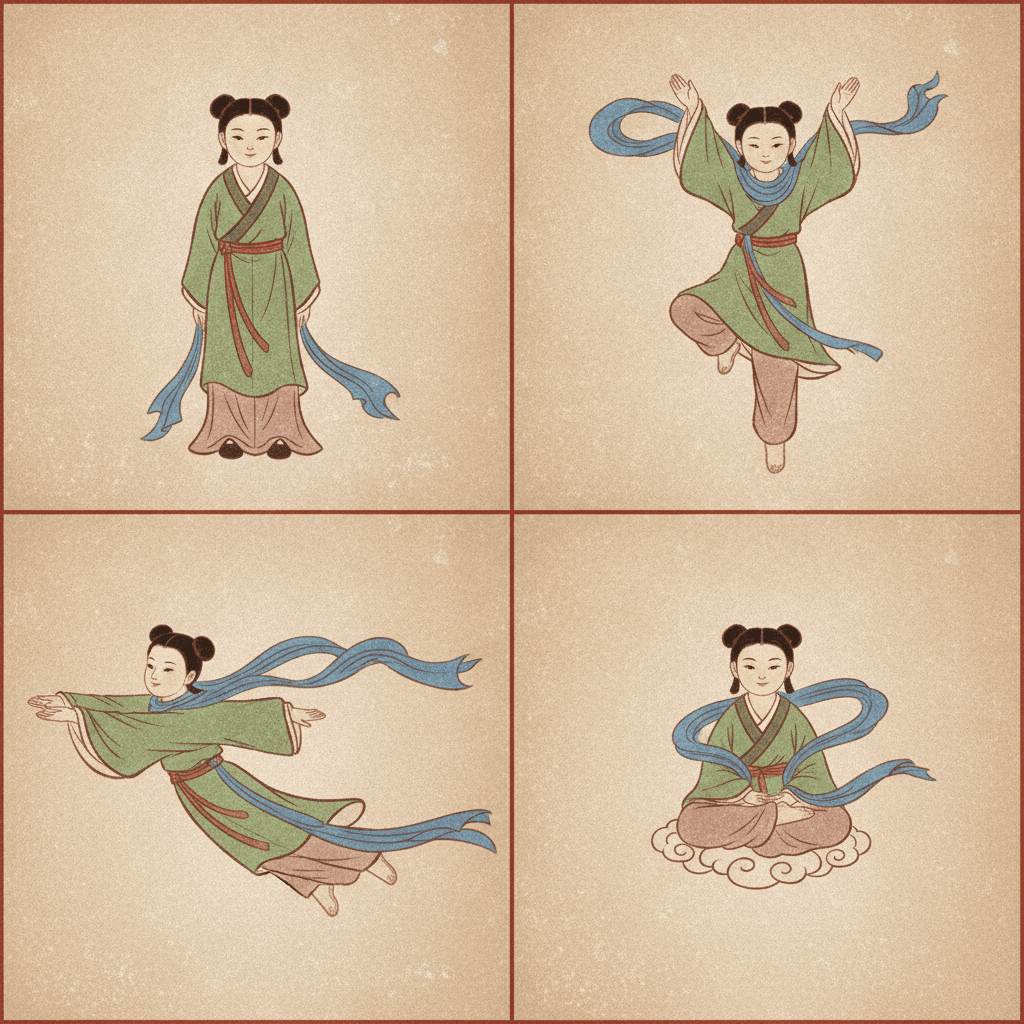
One girl, from ground to air
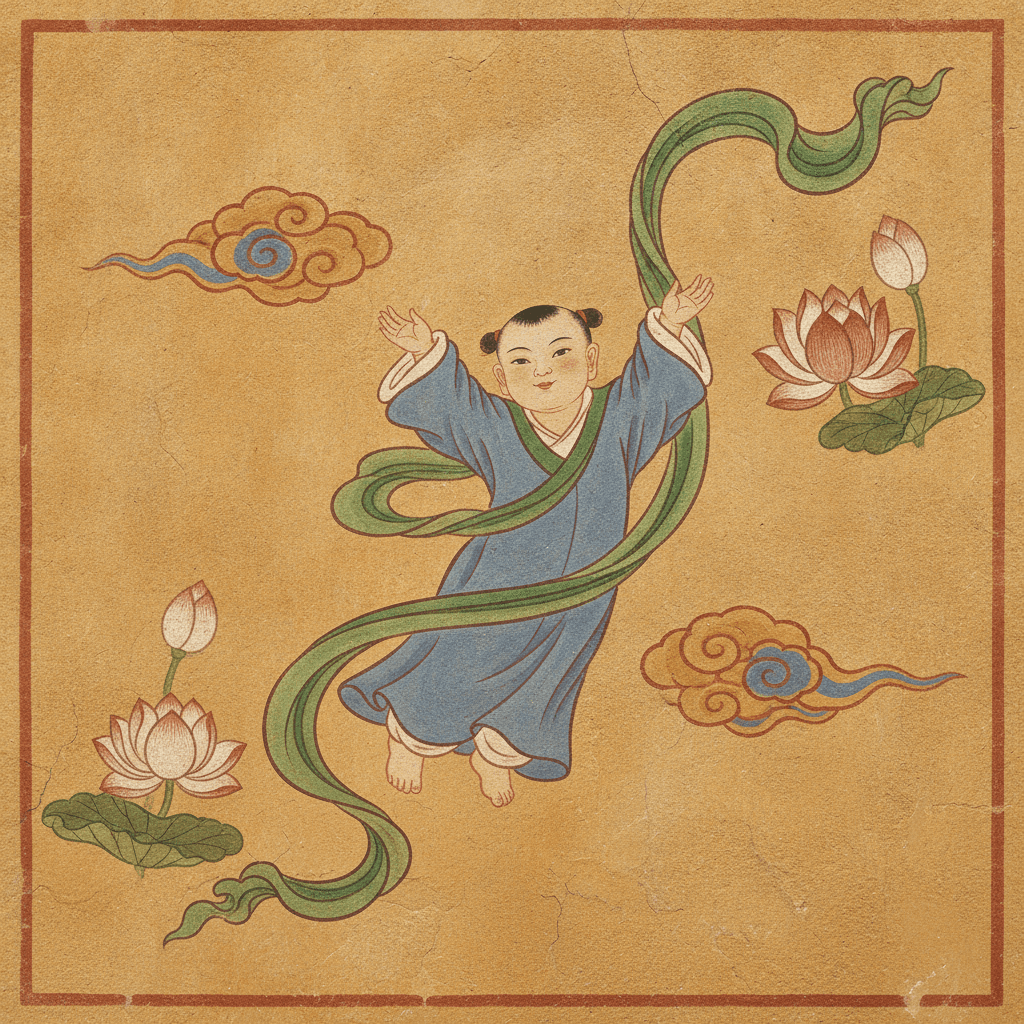
Rising, both arms up
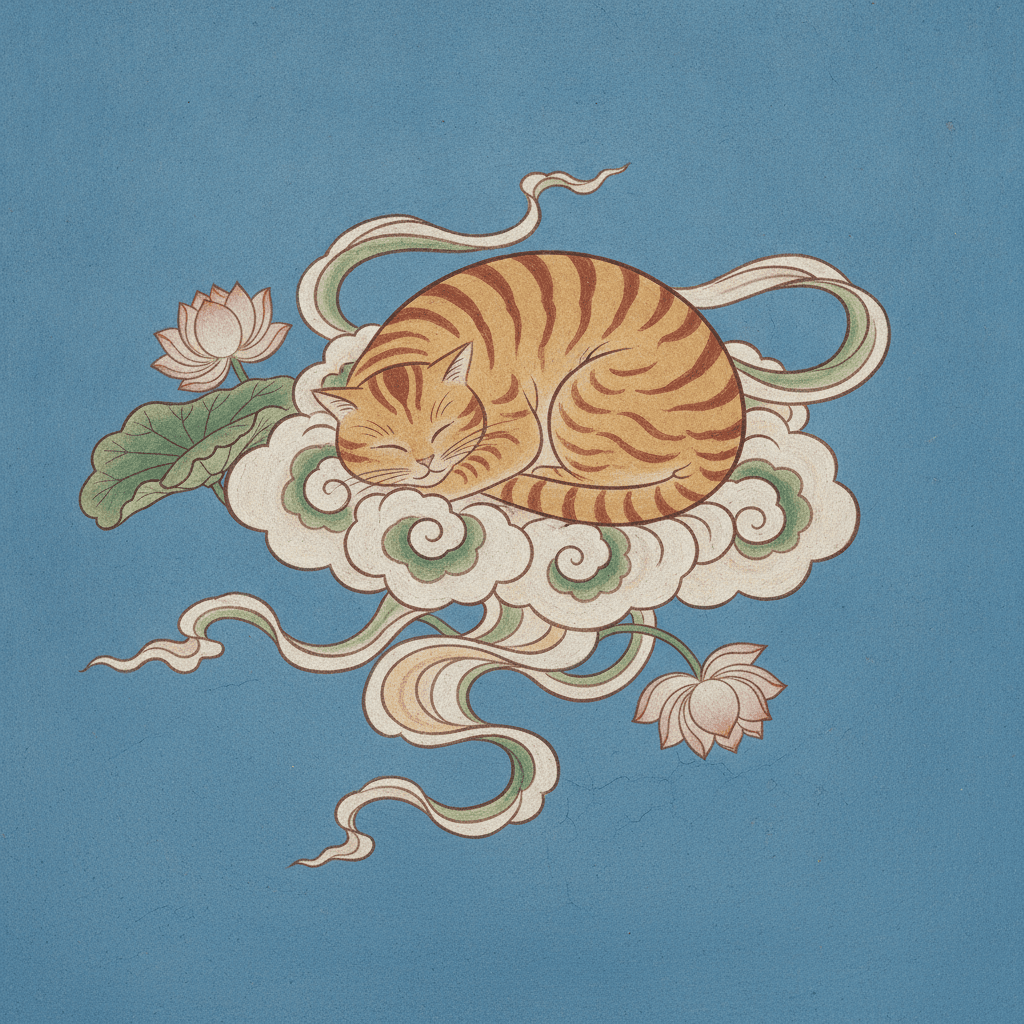
A nap on a cloud
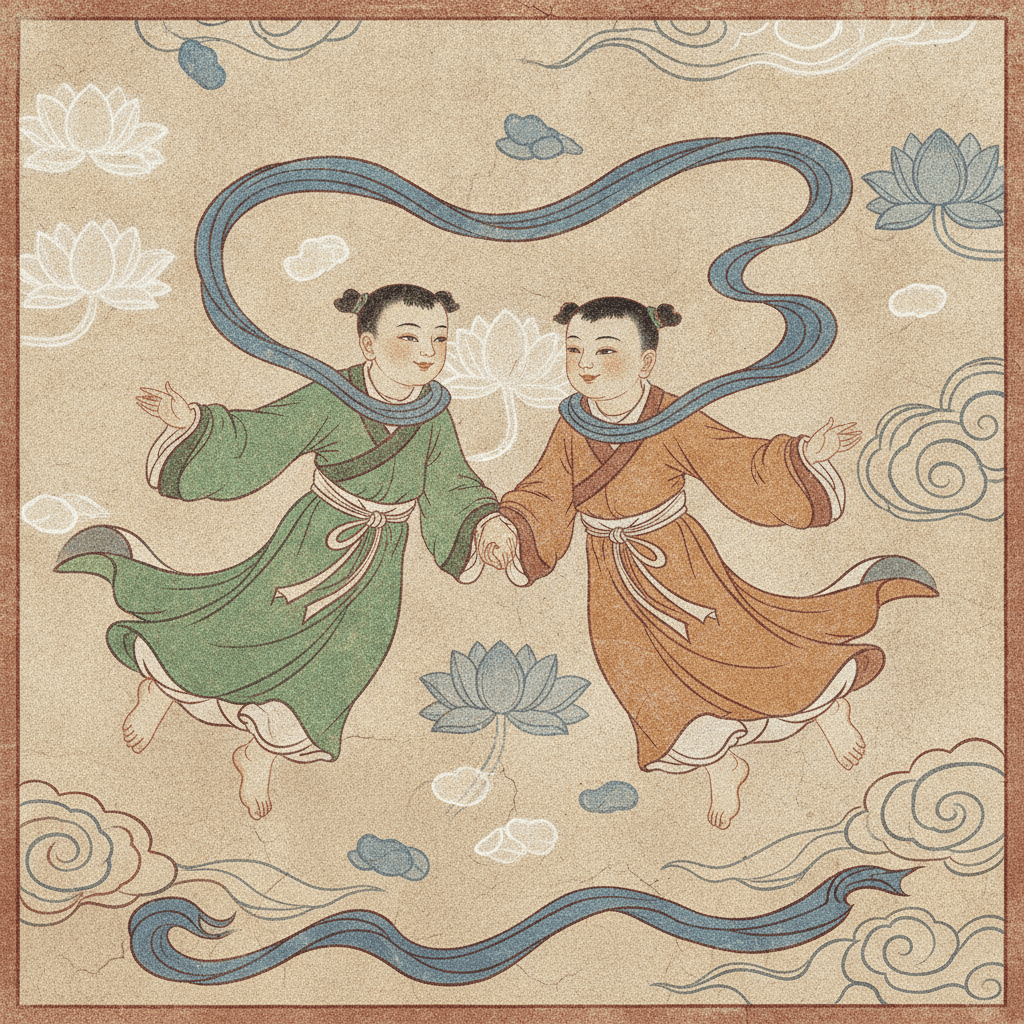
One scarf, two friends
The feet leave the ground
Making Whole Dunhuang Picture Books
What is useful in a book drawn this way and where the limits are, in the order you are likely to meet them.
Write the scarf into the character
In a book where people fly, the scarf does the work of a face at a distance: you know who it is by the colour streaming behind them. Save each character in the Character Library with up to fourteen reference images and note the robe and scarf colours in plain words — “green robe, red sash, one long blue scarf”. C2Story carries the same brief into every page. Characters built from an uploaded photo stay private to your account.
The look comes from a Buddhist tradition; your story does not have to
The real cave paintings at Dunhuang are Buddhist art, and their flying figures belong to that world. The brief borrows the look — the curves, the minerals, the ribbons — and the mood word sacred serene. It does not ask for any religious subject, and the samples on this page use ordinary children, grown-ups and animals. Write whatever story you like.
The brief never says desert
The dunes on this page came from our stories, not from the style. No brief in the library mentions a desert, this one included. The setting is whatever you write: a city at night, a garden, a classroom. The wall texture, the minerals and the flowing figures come with the style; the place comes from you.
Even light, every hour
Soft flat mural lighting means nothing casts a shadow and nothing glows. Night is a deeper blue wall, not a dark one; a lantern is a shape, not a light. A story that depends on suspense, storms or a single lamp in the dark will lose that here. A story that depends on movement and wonder will not.
The weathering varies — check the page
The brief asks for a grainy weathered surface, and the image model reads that with some freedom: one page may look freshly painted on old plaster, another may come back stained and faded like an old print. Most pages sit in between. If a page wears too much or too little, regenerate it; the rest of the book is untouched.
A whole book from a sentence
Describe the story in a sentence and C2Story writes it, splits it into pages and draws every page to the same brief, in English, Chinese, Japanese, Spanish, French and more. Read it online, share a link, or buy the PDF download as the handoff to your printer. Pages are licensed for commercial use under the terms of service.
Other styles from the same tradition, each built on a different idea: for clean even lines and bright flat colour on cream, guofeng picture books; for dense crafted ornament on streets and buildings, guochao picture books; for quiet faceless figures drawn with a calligraphic brush, new Chinese minimal picture books; for legendary beasts in ink and mist, mythic bestiary picture books; and for black ink and breath on paper, sumi-e picture books.
Questions About Dunhuang Picture Books
Explore More Story Ideas
Discover more styles, tools, and story types
Safari Stories
Jeep rides, giraffes, elephants and lions on the savanna
Explore
Gouache Picture Books
Flat opaque paint & matte brush edges
Explore
Bedtime Story Generator
Cozy goodnight stories for kids
Explore
Storybee Alternative
More styles & features
ExploreDunhuang Picture Books: Flying Figures, Mineral Colour and an Old Wall
Dunhuang picture books rest on a brief that asks for two things no other style in the library asks for: people who fly, and a wall to paint them on. C2Story runs seventy-eight hand-drawn style briefs, each a short written record of a palette, a light, a line weight and a few refusals. The Modern Dunhuang Mural brief is the only one with flying figures, and the only one whose surface is a weathered fresco rather than paper.
The look is named after the cave paintings near Dunhuang, on the old Silk Road, made over roughly a thousand years and famous for their flying figures carried on long scarves. The brief is a modern illustration in that manner. Its palette — warm ochre, malachite green and lapis blue on aged wall beige — is the colour of ground stone, and its decoration is lotus blossoms and stylized cloud scrollwork filling the air. That is what the Dunhuang art style means here: curves, minerals and flight, on a surface that has aged.
The style suits stories with a moment of rising in them: a dream of flying home, a child and a deer running into the sky, a song that lifts somebody off the bank, a grandmother letting go of a hand. It is a poor fit for suspense, storms and night scenes that depend on a single light, because the light is soft, flat and even on every page. A Chinese mural illustration style also asks for a full, decorated page; it is not the right choice for a spare, quiet book with lots of white space.
The choice between neighbours is clear. Take the Song blue-green landscape for the same minerals on paper with tiny figures, gongbi for mineral colour blended into fine gradients, and guochao architecture when the story is about a place. Take this cave mural art style when somebody in the story leaves the ground. Describe the story in a sentence and C2Story writes it, splits it into pages and draws every page to the same brief, keeping your characters on model, with the paid PDF download as the handoff to your printer.