
Fantasy Architecture Picture BooksThe Palace Is the Main Character
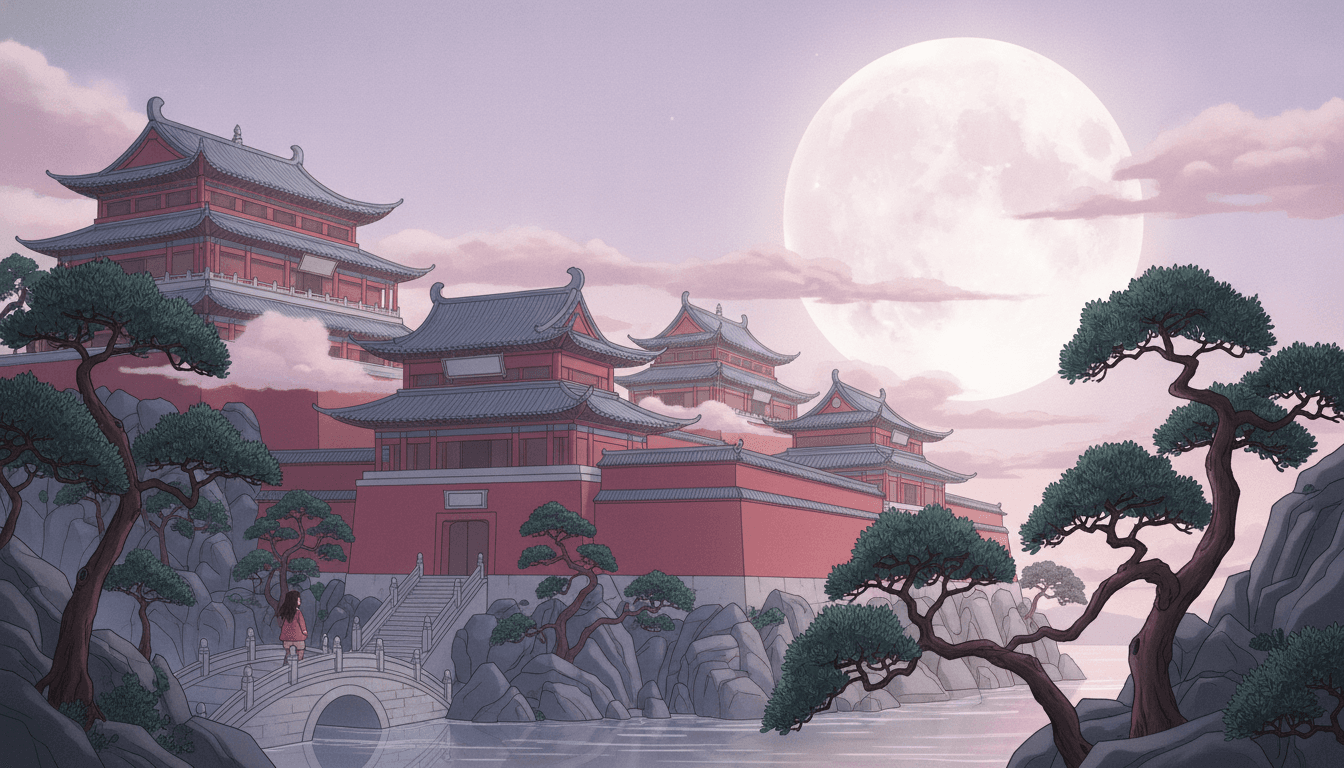
Red walls and grey roofs on high rocks, pines leaning out over the water, pink clouds between the towers and a moon so big it fills a corner of the sky. Fantasy architecture picture books are drawn flat, clean and calm, with an imaginary palace as the hero of every page and the people small enough to show you how big it is.
- Imaginary palaces, pavilions, bridges and gates
- Lit by an enormous moon that is in the picture
- Vermillion, slate grey, pink-purple, silver
- Free credits by request, no card
50,000+
Stories Created
10,000+
Active Creators
50+
Art Styles
4.9/5
User Rating
What Makes Fantasy Architecture Art Look This Way
Every style here is a written brief: a palette, a light, a line weight and a short list of refusals. Four things in this one decide the look, and the first two are found in no other brief in the library.
The building is the subject
Every style in C2Story is a short written brief, and nearly every one ends by asking for the scene the story describes. This one asks for the full fantastical architectural scene. Three of the seventy-eight briefs mention architecture at all; in the other two it is a backdrop for a character or a street seen from the air. Here the palace is the picture.
Lit by the moon, and the moon is in it
Each brief has one line about light. Ten of the seventy-eight say daylight and three say studio; none of the others says night. This one asks for a soft dreamy moonlit glow, and the moon is also in the picture, enormous, so every page shows you its own lamp.
Flat and clean, not a draughtsman’s drawing
This is not a technical drawing and it does not count roof tiles. The brief asks for a flat, clean and delicate finish with clean delicate outlines and layered depth: rocks and pines in front, buildings in the middle, clouds and the moon behind. Its four refusals are photorealism, gritty realism, muddy dark colours and clutter.
Vermillion, slate, pink and silver
Vermillion walls and pillars, slate-grey roof tiles, soft pink-purple clouds and moonlit silver, with the dark green of the pines that grow among the rocks (pines and auspicious clouds each appear in no other brief). It is a night that never goes dark: lavender, not black.
Why Architectural Fantasy Needs Empty Sky
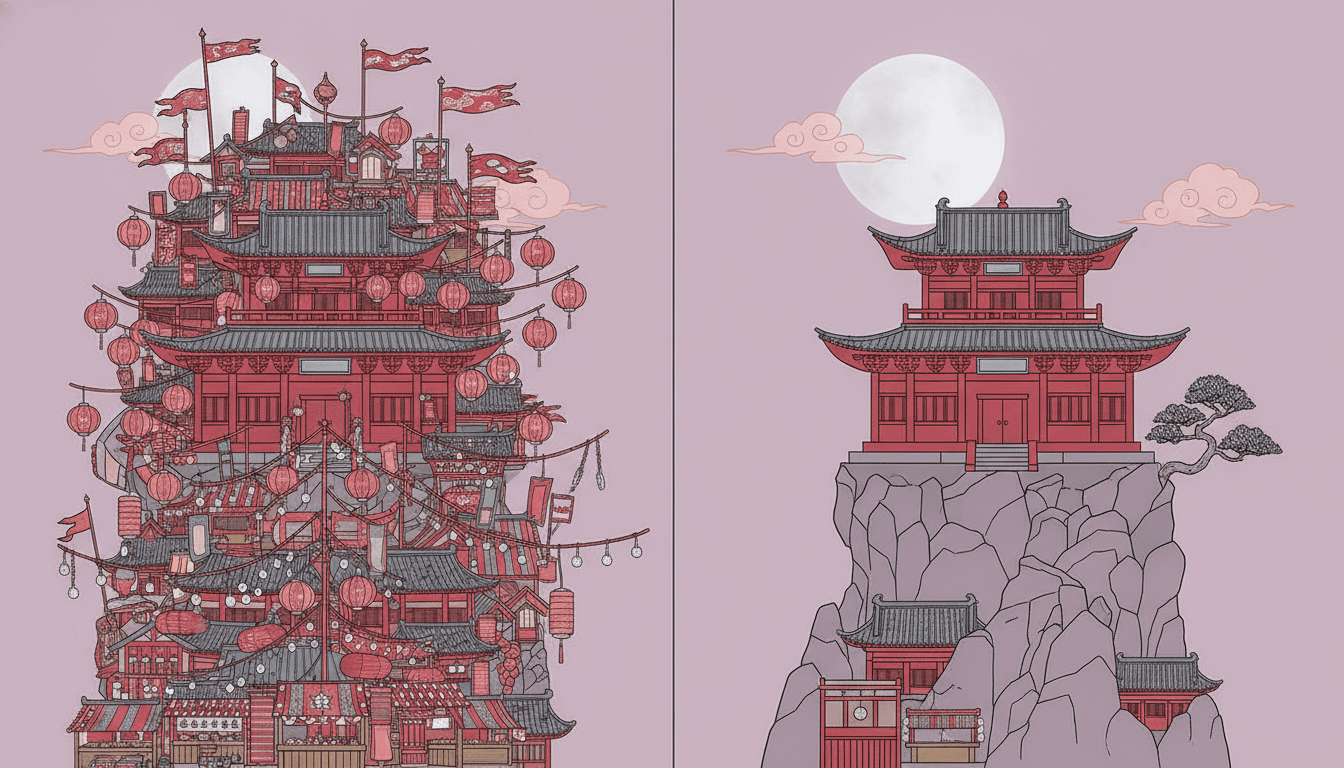
Look at one red hall twice. On the left it has been given everything a festival could hang on it: dozens of lanterns, flags on poles, rope lines, market stalls and more buildings stacked on top until there is no sky left. Every piece is nicely drawn, and you cannot find the hall.
On the right it stands on its rock with one pine, a moon and two small clouds. A few little outbuildings crept in at the foot of the rock, but the hall now has room to be grand. That is the whole brief: clutter is one of its four refusals, and the open lavender sky does as much work as the roofs.
Its four refusals keep the page calm and keep it out of the real world.
Write What the Building Is For
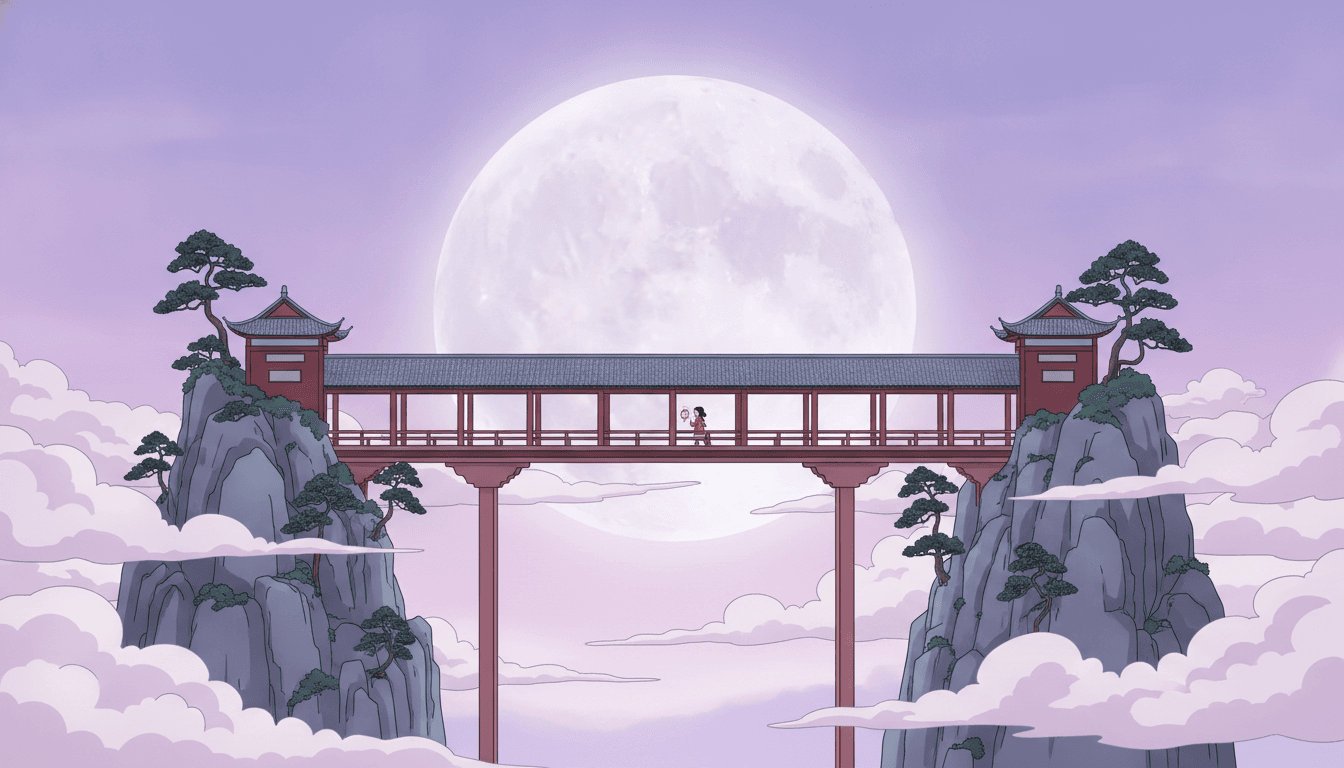
A long covered bridge runs between two rock peaks, each with its own little pavilion, and the moon sits right behind it. Halfway across, one tiny girl carries a lantern. You do not need to know her name to know the story: there is something on the other side, and the bridge is the only way to get there.
In a style where the building is the subject, the building has to do something. A palace is only a look. A pavilion built at the edge of a cliff for watching the moon, a gate at the top of a thousand stairs for arriving, a courtyard pond for feeding fish: each of those is a reason for somebody to be there, and it tells the brief where to put them.
In a book you do not write image prompts; C2Story writes them from your story. A page that says “Mei goes to the palace” gets red walls and a moon. A page that says “Mei crosses the covered bridge to the school on the other peak” gets this picture.
From One Sentence to Fantasy Architecture Picture Books
You pick the look once. The brief is then applied to every page, so the red walls, the grey roofs, the pines and the moon never drift.
Describe the place and who uses it
Write a sentence or two about where your story happens and what the buildings are for. Give each character an age and one strong colour, so they read clearly at a small size.
Choose Guochao Fantasy Architecture
Pick the style from the Styles Library. From then on every page uses the same flat clean finish, the same moonlit glow and the same vermillion, slate grey and pink-purple.
Get a whole book
C2Story writes the story, splits it into pages and illustrates each one. Regenerate any page you want to change without touching the rest, read it online, share it, or buy the PDF download to hand to a printer.
This Style and Its Three Nearest Neighbours
One shares the red walls, one shares the pavilions and one shares the love of buildings. Here is what each actually asks for.
Guochao Fantasy Architecture
The style on this page
Beautiful fantasy architectural illustration in a Chinese style: pink-purple auspicious clouds and an enormous glowing moon, grey-tiled, vermillion-walled, multi-eaved palaces and pavilions among rocks and ancient pines. Flat, clean and delicate, with layered depth and serene grandeur. It refuses photorealism, gritty realism, muddy dark colours and clutter.
Guochao
Same red walls, the person in front
A proud character posed in front of an ornate temple gate, with dense patterns on every surface. It is the only other Chinese brief with architecture in it, and it puts a figure first and fills the space with carved ornament. Choose fantasy architecture when the building should be the hero and the sky should be mostly empty.
Song Landscape
A pavilion, but tiny
Blue-green mountains and mist on rice-paper white, with a pavilion small enough to miss. Its subject is the mountains and the weather; its light is misty daylight. Here the buildings are big, close and red, and the light is the moon.
Ligne Claire
Buildings, but real ones
A real old town seen from above in crisp uniform ink, every cobblestone and chimney in place, in bright daylight. It is the other brief that loves buildings, and it loves them because they are real and walkable. This one invents them, and floats them on clouds.
Story Ideas for Fantasy Architecture Picture Books
Each idea starts with a building that is for something, and somebody who uses it.
The Pavilion at the Edge
Every full moon Grandmother walks to the little pavilion on the cliff. This year she takes the boy, and tells him why it was built there.
The Bridge Between Two Peaks
One peak has the bakery and the other has the school. The covered bridge between them is the only way across, and tonight a girl crosses it alone for the first time.
The Gate at the Top of the Stairs
A boy and a fox have walked for three days to reach the gate. Now there are a thousand stairs left, and the gate is still a long way up.
The Palace Without a Floor
The cloud palace has towers, halls and gardens, but nothing underneath. The cranes who deliver the post have opinions about it.
The Cat Who Owned the Roof
The emperor owns the palace. The white cat owns the roof, and comes down only when somebody is sad.
Counting the Koi
Two children are told there are nine fish in the courtyard pond. They count every night, and every night there are ten.
Moonlit Palace Art Across a Book
Pages generated to this one brief. One honest note: we asked for the grandmother and the boy to sit on a bench in the pavilion, and they came back standing at the rail. The brief cares more about where people are than what they are doing, so say the pose twice if it matters.
Crowded, then calm
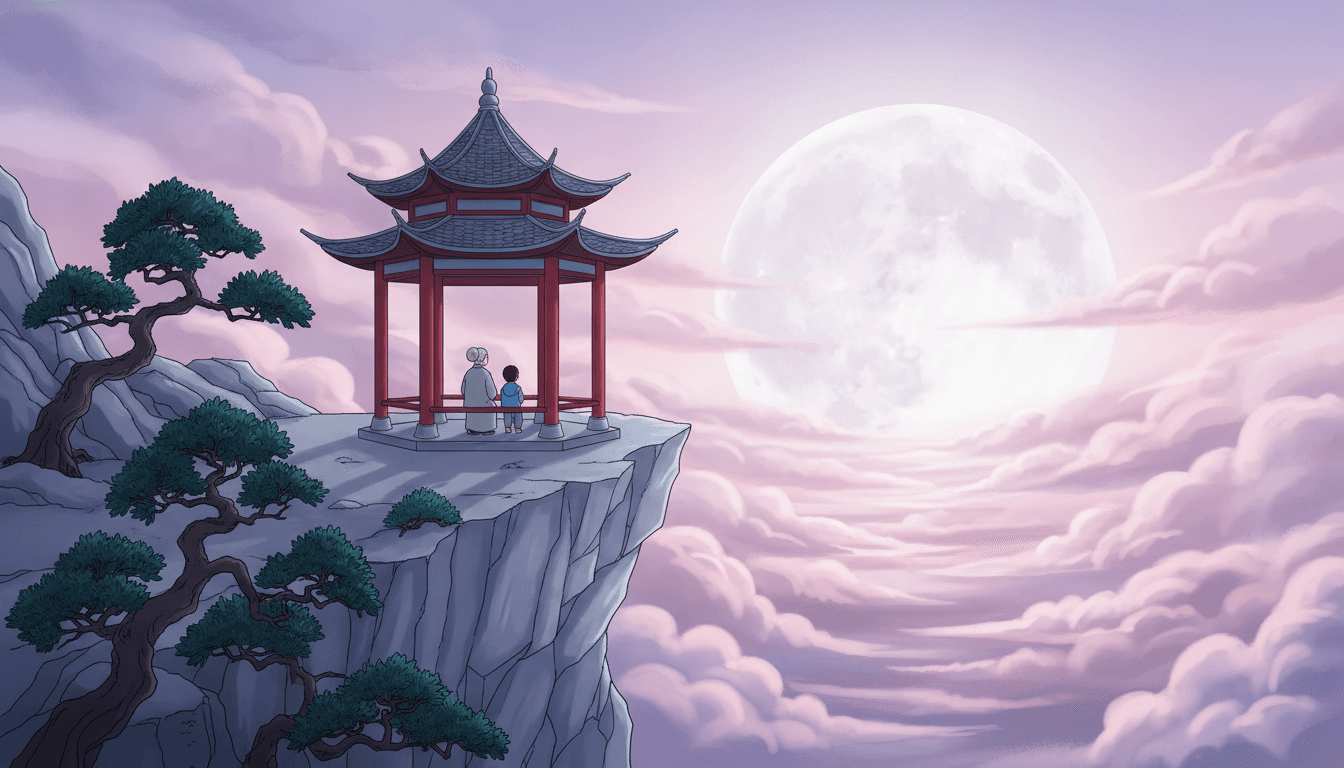
A building for watching
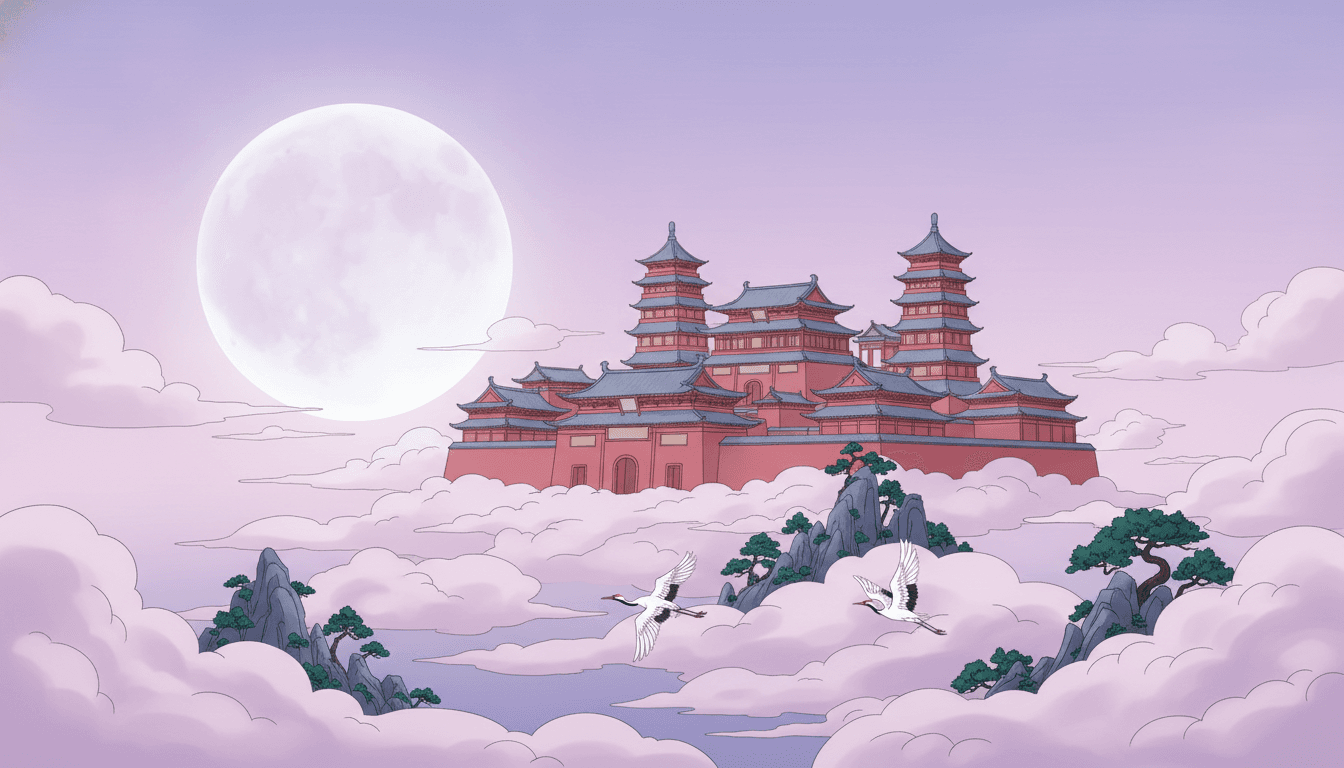
A palace with no ground
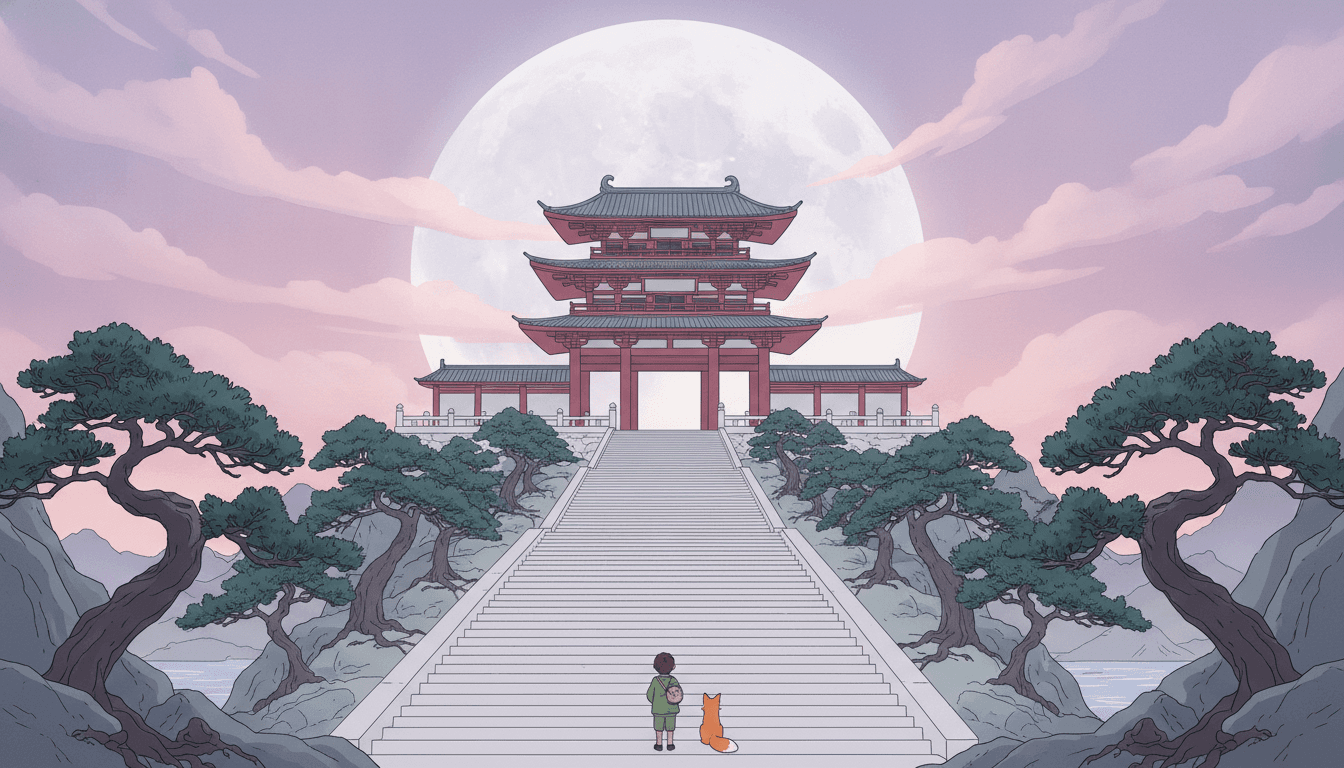
A thousand stairs, one boy, one fox
Small People, Big Walls, Held Steady
The character sheet is plain on purpose, so you can see the design: two buns, a buttoned red jacket, grey trousers, black shoes. On a page she shrinks and the red is what you find her by. The tower came with a second hall we did not ask for, and the cat turned its back to us to look at the moon. Nothing here was retouched.
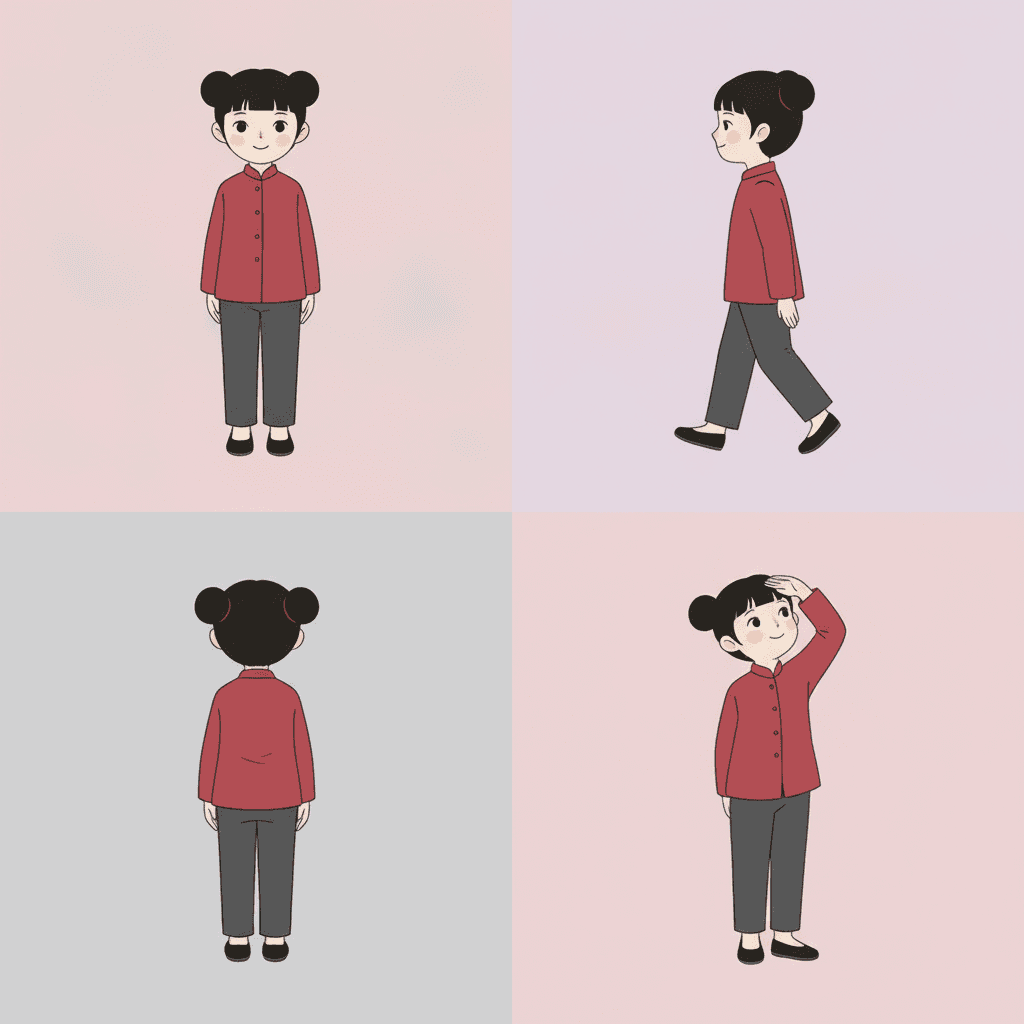
One girl, four views
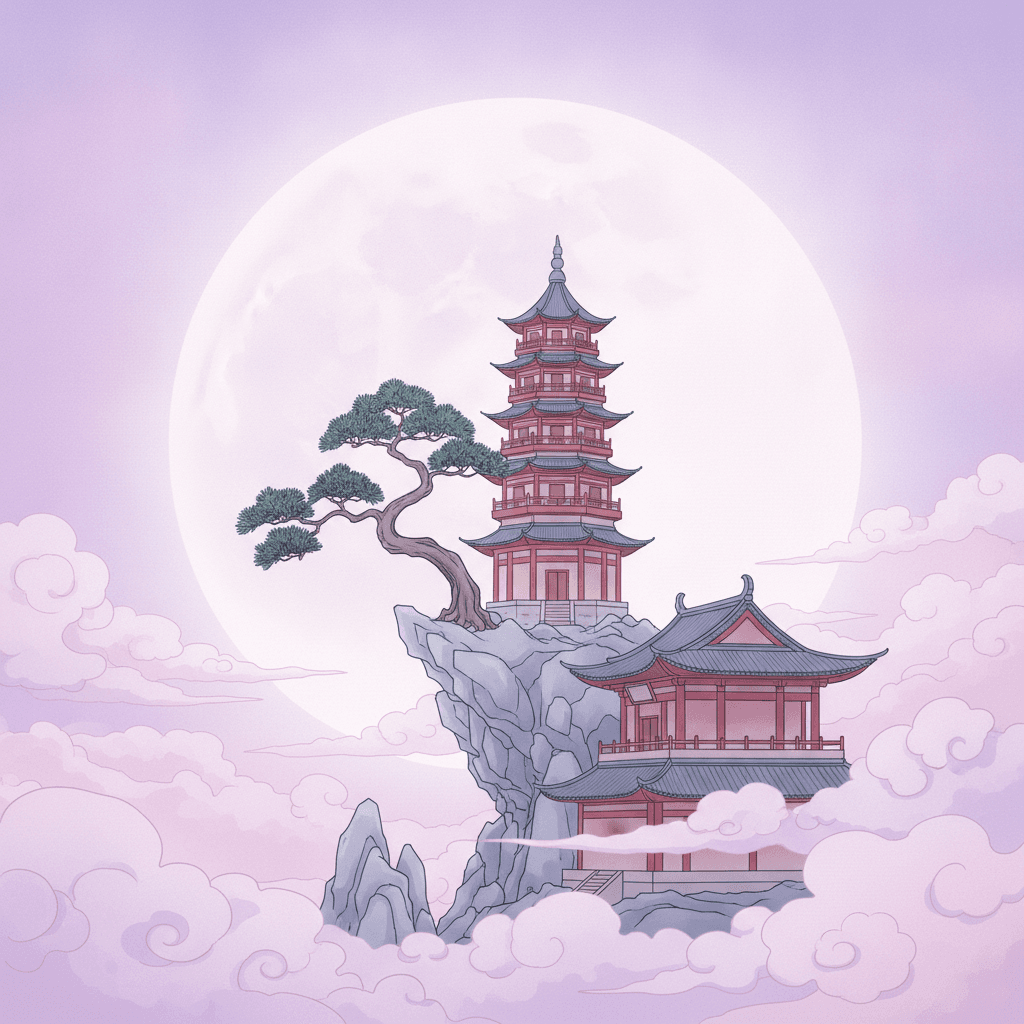
The tower and the moon
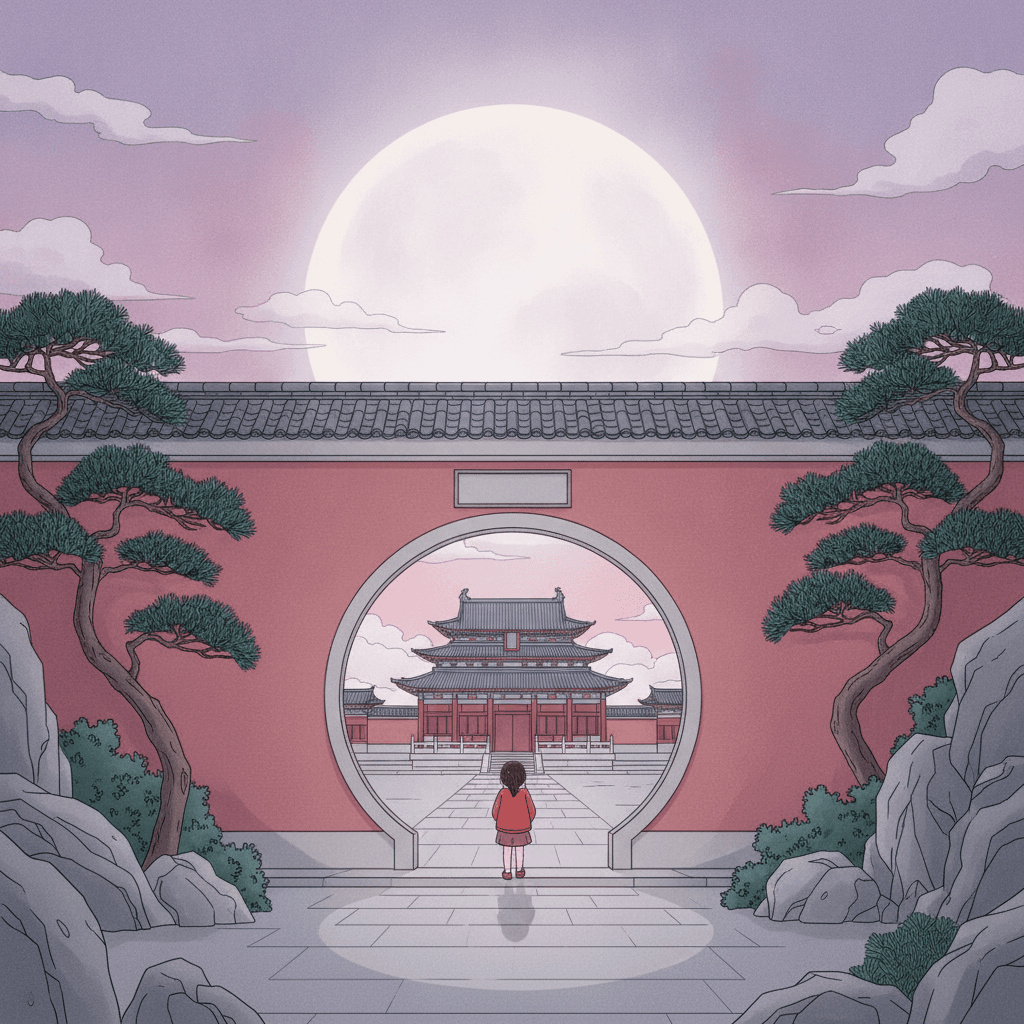
Through the round door
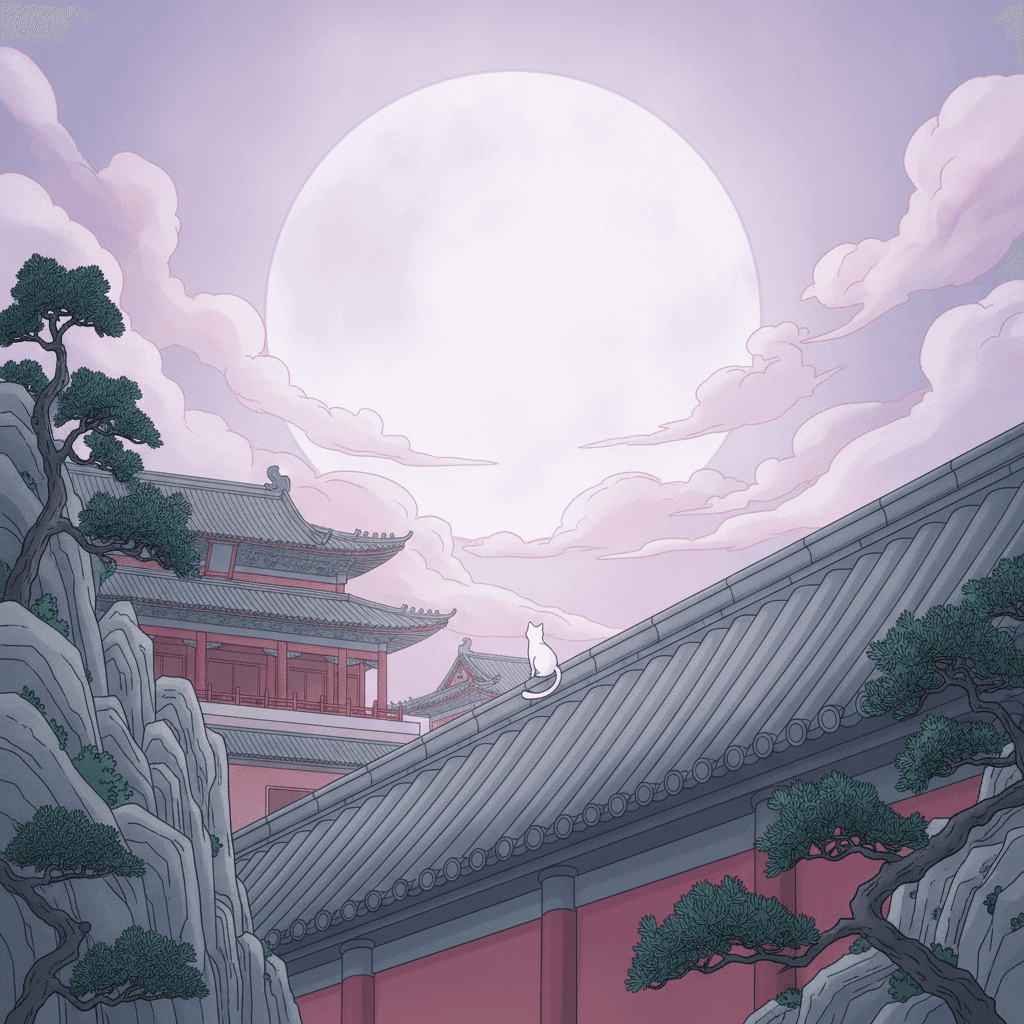
Somebody lives on the roof
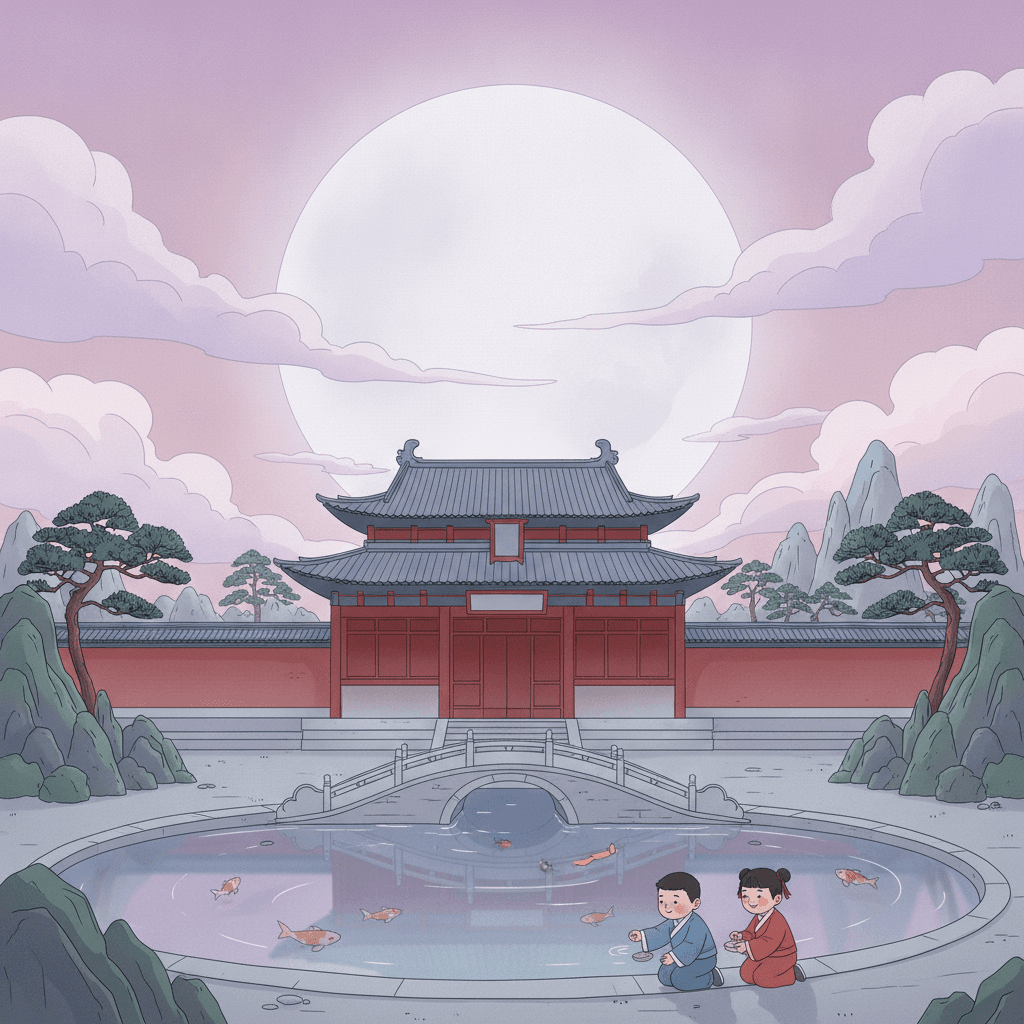
Feeding the fish
Making Whole Fantasy Architecture Picture Books
What is useful in a book drawn this way and where the limits are, in the order you are likely to meet them.
Small figures, kept on model
People are drawn small here, so give each character one strong colour, like the red jacket on this page, and save them in the Character Library with up to fourteen reference images and a short description. The girl kept her two buns, red jacket and black shoes through four views. Characters made from an uploaded photo stay private.
Write what the building is for
A palace is a look. A pavilion built for watching the moon is a story. Tell the brief what each building does, for watching, crossing, arriving, waiting, keeping fish, and it chooses the shape, the place and where the people go.
Leave the sky empty
The brief refuses clutter, and its best pages are mostly sky. A page that lists twenty things in the courtyard will get them, and lose what makes the style calm. One building, one person, one moon is plenty.
Not for close-up faces
The sample has nobody in it, and every page here puts people small against big walls. Faces stay simple and sweet. If your story is mostly two people talking at a table, a character-first style will serve it better.
Expect the moon
The moon is part of the light, so it turns up on nearly every page, enormous. That suits bedtime and festival stories. If a scene must be in daytime, say so plainly, and expect it to feel less like this style.
A whole book from a sentence
Describe the story in a sentence and C2Story writes it, splits it into pages and draws every page to the same brief, in English, Chinese, Japanese, Spanish, French and more. Read online, share a link, or buy the PDF download as the handoff to your printer. Pages are licensed for commercial use under the terms of service.
Other styles built on a different idea of place: for a proud character in front of a patterned gate, guochao picture books; for mountains and mist with a pavilion too small to notice, Song landscape picture books; for flying figures in a sky full of ribbons, Dunhuang picture books; for real old towns in crisp ink, ligne claire picture books; for castles lit by fire and moon at once, heroic fantasy cel picture books; and for every style side by side, the children’s book illustration styles gallery.
Questions About Fantasy Architecture Picture Books
Explore More Story Ideas
Discover more styles, tools, and story types

Circus Stories
Big-top clowns, acrobats and parades
Explore
3D Animation Books
Cinematic Pixar-quality renders
Explore
Children's Book Creator
Design beautiful kids books
Explore
Midjourney vs C2Story
Stories, not just images
ExploreFantasy Architecture Picture Books: Imaginary Palaces Under a Real-Looking Moon
Fantasy architecture picture books rest on a brief whose subject is a building. C2Story runs seventy-eight hand-drawn style briefs, each a short written record of a palette, a light, a line weight and a few refusals. Three of them mention architecture, and only this one asks for the full fantastical architectural scene. It is also the only brief lit by the moon: ten light lines in the library say daylight, and this one asks for a soft dreamy moonlit glow, from a moon that sits enormous in the picture.
The look is fantasy architecture art in a Chinese style, an imaginary building illustration of grey-tiled, multi-eaved palaces and pavilions with vermillion walls, among rocks and ancient pines, under pink-purple auspicious clouds. The finish is flat, clean and delicate, with clean delicate outlines and layered depth. It refuses photorealism, gritty realism, muddy dark colours and clutter, so the night stays lavender and the sky stays mostly empty.
This architectural fantasy suits stories that happen somewhere: a pavilion on a cliff for watching the moon, a covered bridge between two peaks, a gate at the top of a thousand stairs, a palace resting on clouds, a courtyard pond full of koi. Write what each building is for and who is using it. People are drawn small, so give each character one strong colour; they stay on model through the Character Library, with up to fourteen reference images each. It is weaker for close-up conversations and for daytime scenes.
The choice between neighbours is clear. Take guochao for a character in front of a patterned gate, Song landscape for mountains and mist with a tiny pavilion, and ligne claire for real towns in crisp ink. Take this style when the palace is the main character. Describe the story in a sentence and C2Story writes it, splits it into pages and draws every page to the same brief, with the paid PDF download as the handoff to your printer.