
Song Landscape Picture BooksWhere the Place Comes First
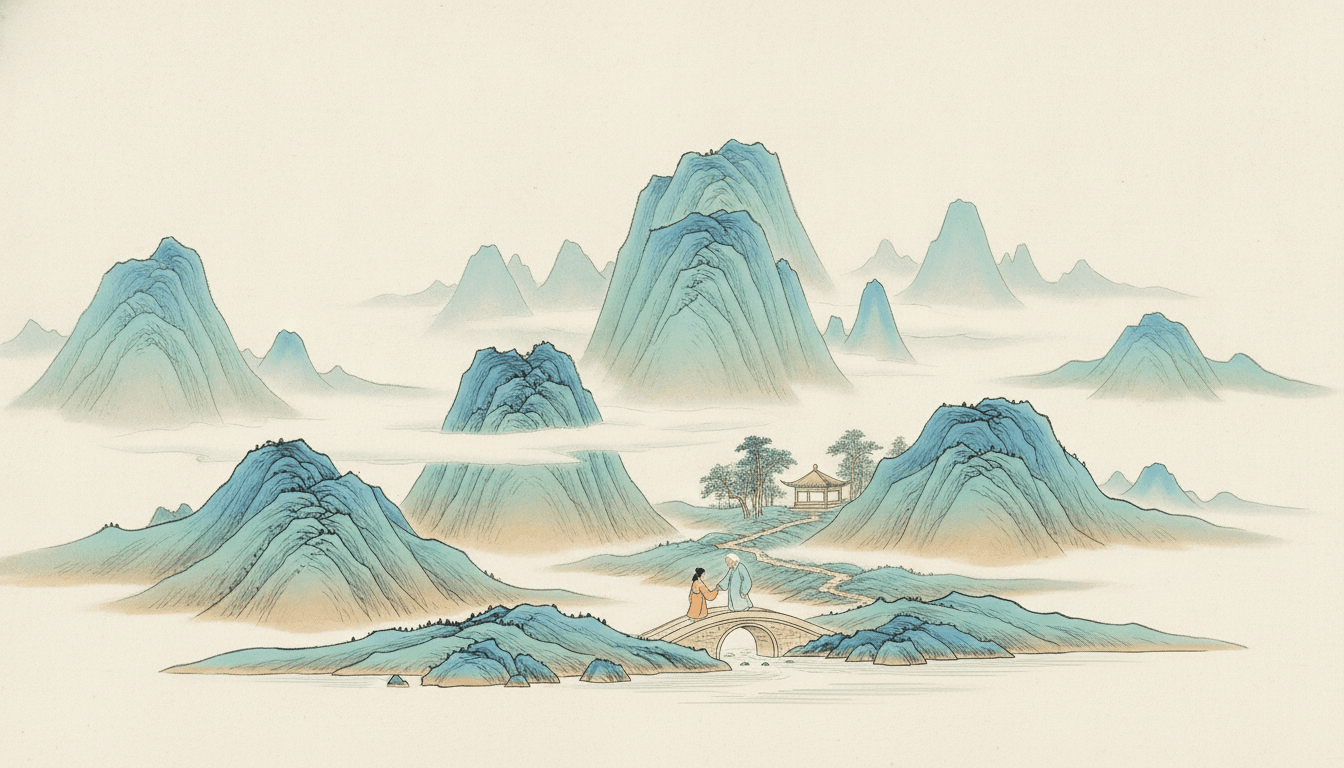
Of the seventy-eight style briefs in this library, one asks for mountains and mist, and its own sample picture has nobody in it. Song landscape picture books come from that brief — blue-green ranges fading into white, a small roof on a ledge, and your characters arriving small into a world that was there first.
- Layered blue-green mountains and bands of mist
- Generous rice-paper white on every page
- Azurite, malachite and soft ochre, kept quiet
- Free credits by request, no card
50,000+
Stories Created
10,000+
Active Creators
50+
Art Styles
4.9/5
User Rating
What Makes This Chinese Landscape Painting Style Different
Every style here is a written brief: a palette, a light, a line weight and a short list of refusals. Four things in this one decide the look, and most of the words that carry them appear in no other brief.
The only brief with mountains in it
Every style in C2Story runs on a short written brief: a palette, a lighting note, a line weight and a few things to avoid. Mountain and mist appear in this brief and in no other of the seventy-eight. Only one other brief uses the word landscape at all, and it means a map seen from above.
Its own sample picture has nobody in it
Each brief carries a sample subject used to draw its preview. Seventy-four of the seventy-eight put a person or an animal at the centre. Four have no character at all, and three of those are built places — a town street, a map, a palace. This is the fourth: a tiny pavilion among misty blue-green mountains under a vast pale sky. Our own one-line description says the figures are small against the world. The brief never mentions a figure.
The white space is weather
Twenty briefs ask for white space or negative space. In most of them it is room — around a figure, a joke, a single line. Here it is mist, and the light is named after it: soft misty daylight is the only lighting note in the library that is a kind of weather. The white is a thing in the picture. It hides the foot of each range and separates it from the next, so the depth comes from what you cannot see.
A quieter blue-green than the famous scroll
The palette is rice-paper white, azurite blue-green, malachite green and soft ochre, and azurite is in no other brief. Then it holds them back. It refuses heavy saturation, thick outlines, photorealism and crowded compositions — and only one other brief in the library refuses crowding. The best-known blue-green paintings are vivid, almost jewelled. This brief asks for the same minerals, used lightly, on a mostly empty page.
The Same Mountains, With and Without the Mist
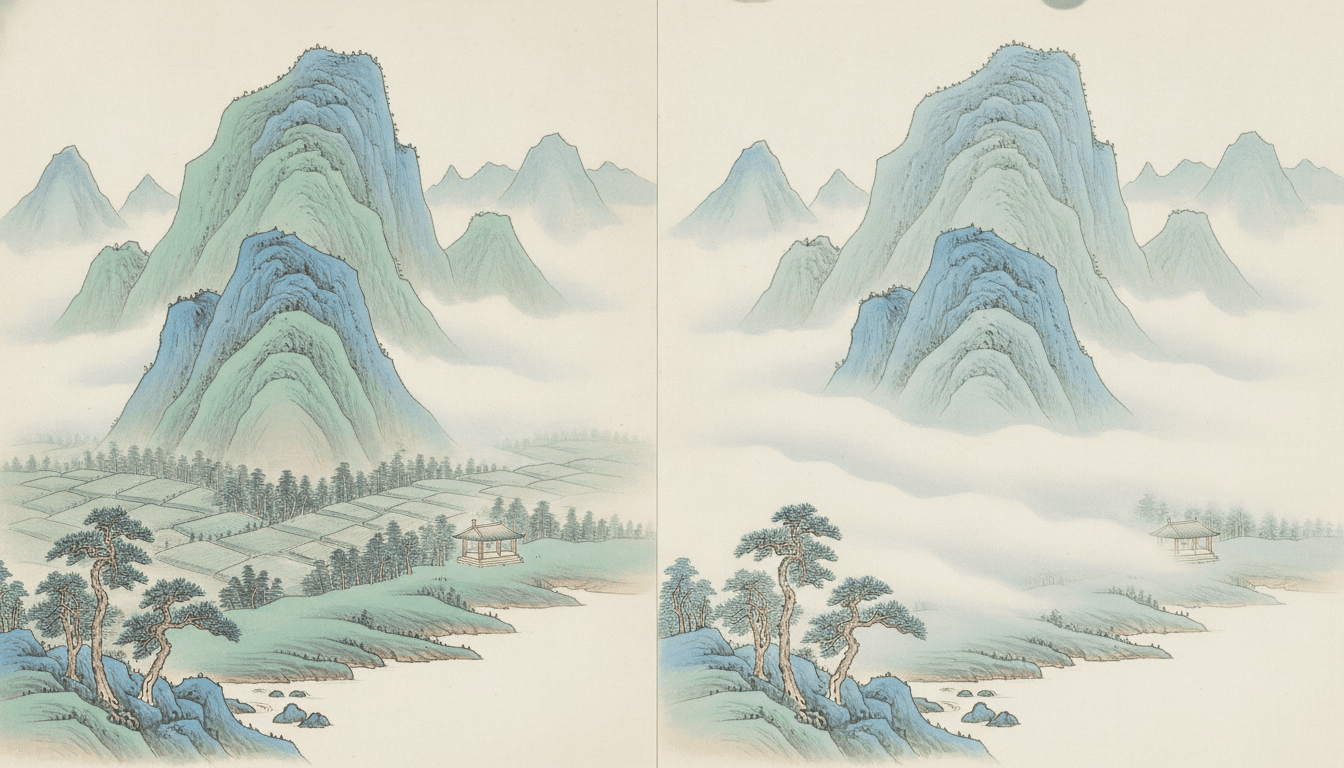
Look at the same view twice: the same tall blue-green mountain, the same pines on the rocks at the bottom, the same small pavilion on the same green bank. On the left the day is clear. The valley has filled up with what a clear day lets you see — terraced fields, rows of trees, slope after slope — and it is all perfectly drawn and a little tiring to look at. There is nowhere for the eye to rest.
On the right the only thing that has changed is the weather. A band of white mist has come into the valley, and the fields are simply gone. The mountain now stands on nothing, the far ranges have gone pale, and the pavilion is half hidden, which makes you want to find it. That is how a blue green landscape gets its depth: not by drawing more of the distance, but by hiding the part between.
The left half is not quite clear — even when told to leave the mist out, the image model kept a little of it high up, which shows how deep the habit runs in this style. It is also why the brief’s refusals matter. Heavy saturation, thick outlines, photorealism and crowded compositions are the four things that would fill the white back in.
Write the Place First
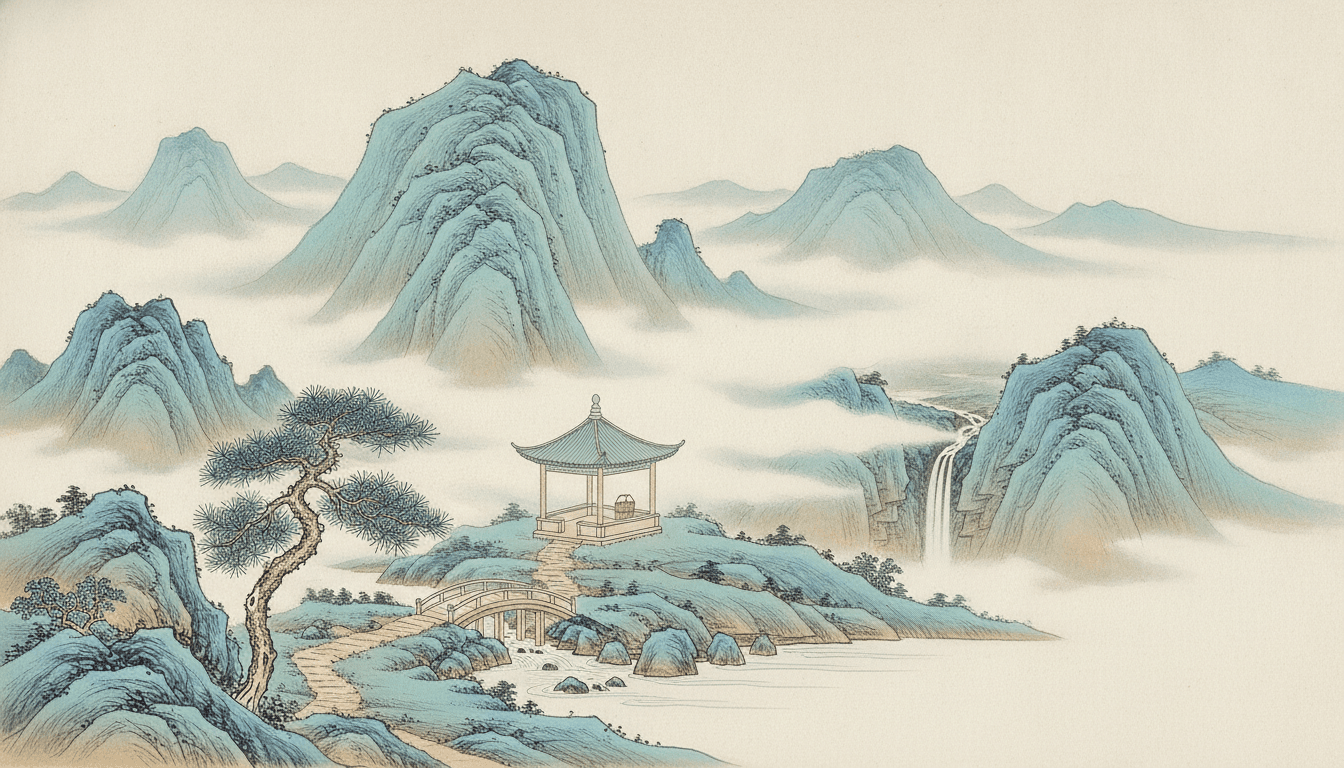
The brief’s own sample subject is a tiny pavilion among misty mountains under a vast pale sky — no traveller, no host, nobody. The page beside this paragraph does the same. A stone path winds past a twisted pine, over a little arched bridge, up to an empty pavilion on a ledge. There is a small basket on the bench. Somebody has been here, or is coming.
Most picture books start with a person and put a place around them. Chinese landscape painting goes the other way: the mountain is there first, and a person is something that happens to it for a while. In this style that order is not a mood you can switch off. Whatever you write, the camera pulls back until the land is the size of the page.
So write the place before the people. Say where the path starts and where it ends, what the weather is doing, what the mist is hiding. Then let somebody walk in — and give them a colour the reader can find from a long way off. The book becomes the distance between the first page and the pavilion.
From One Sentence to a Song Landscape Picture Book
You pick the look once. The brief is then applied to every page, so the mist, the blue-greens and each character’s colours never drift.
Describe the place, then who comes
Write a sentence or two about where the story happens — a mountain, a river, a path to a pavilion — and then who travels through it. Give each character one clothing colour that stands out against green and white.
Choose Song Blue-Green Landscape
Pick the style from the Styles Library. From then on every page uses the same rice-paper white, the same azurite and malachite, the same fine brush line and the same soft misty daylight.
Get a whole book
C2Story writes the story, splits it into pages and illustrates each one. Regenerate any page you want to change without touching the rest, read it online, share it, or buy the PDF download to hand to a printer.
This Style and Its Three Nearest Neighbours
One shares its emptiness, one its pavilions and pines, and one is the only other landscape in the library. Here is what each actually asks for.
Song Blue-Green Landscape
The style on this page
A modernized classical blue-green landscape painting with generous rice-paper white space, delicate fine brush lines, mineral azurite and malachite greens with ochre earth accents, layered mountains and mist, and a restrained, understated composition. The light is soft misty daylight and the line is delicate and thin. It refuses heavy saturation, thick outlines, photorealism and crowded compositions.
Fine-Line Urban Wit
The same emptiness — but it asks for the people
The nearest relative by its refusals: the only other brief that turns away crowding, and one of the few that also refuses thick outlines and saturated colour. It asks outright for tiny figures inside large airy environments, in hairline pen, with a gentle urban joke. Its white space is distance between somebody and the city. In the Song brief the white is mist between mountains, and nobody is asked for at all.
Guochao Fantasy Architecture
Pavilions and pines too — but the buildings are the subject
This brief also has pavilions among rocks and ancient pines, layered depth and a serene mood. Its pavilions multiply into whole palaces with vermillion walls and grey tiles, its clouds are pink-purple and its light is an enormous glowing moon. Choose it for a place people built; choose the Song brief for a place nobody did, with one small roof in it.
Isometric Fantasy Map
The other landscape — seen from above
The only other brief that names a landscape. It draws the world tilted and top-down, in fine hatched ink and watercolour, like a map for a tabletop adventure, so you can read every path at once. The Song brief stands at the side and lets the mist hide the paths you have not walked yet. One shows where everything is; the other shows how far it is.
Blue-Green Landscape Story Ideas That Suit the Brief
Each idea begins with a place and lets somebody travel through it — which is the order this brief draws things in.
The Pavilion at the Top
A girl and her grandmother set out across a bridge for a small roof they can see far up the mountain. Each page is one stretch of the path, and the pavilion grows a little larger every time.
The River Between the Cliffs
A boy and his father pole a small boat downriver for a day. Waterfalls, pines on ledges, birds overhead — a quiet travel book where the scenery changes and the boat does not.
What the Mist Was Hiding
Every morning a different peak comes out of the fog. A child keeps a list of what each one turns out to have on it: a pine, a goat path, a house, a waterfall.
Two Cranes Going South
A pair of cranes cross range after range of mountains on their way to winter. A book with no people in it at all, which this brief is unusually good at.
The Basket on the Bench
Somebody has left a basket in an empty pavilion. Page by page, a girl and her dog climb up to find out whose it is. The place is on the first page; the people take the rest of the book to arrive.
The Old Pine Remembers
A pine on a cliff edge tells what it has watched for a hundred years — travellers, kites, snow, a boy who came every evening to sit under it. Told from the place’s point of view.
What Song Dynasty Art Looks Like Across a Book
Pages generated to this one brief, with nothing retouched afterwards.
A clear day, a misty day
The place, before anyone arrives
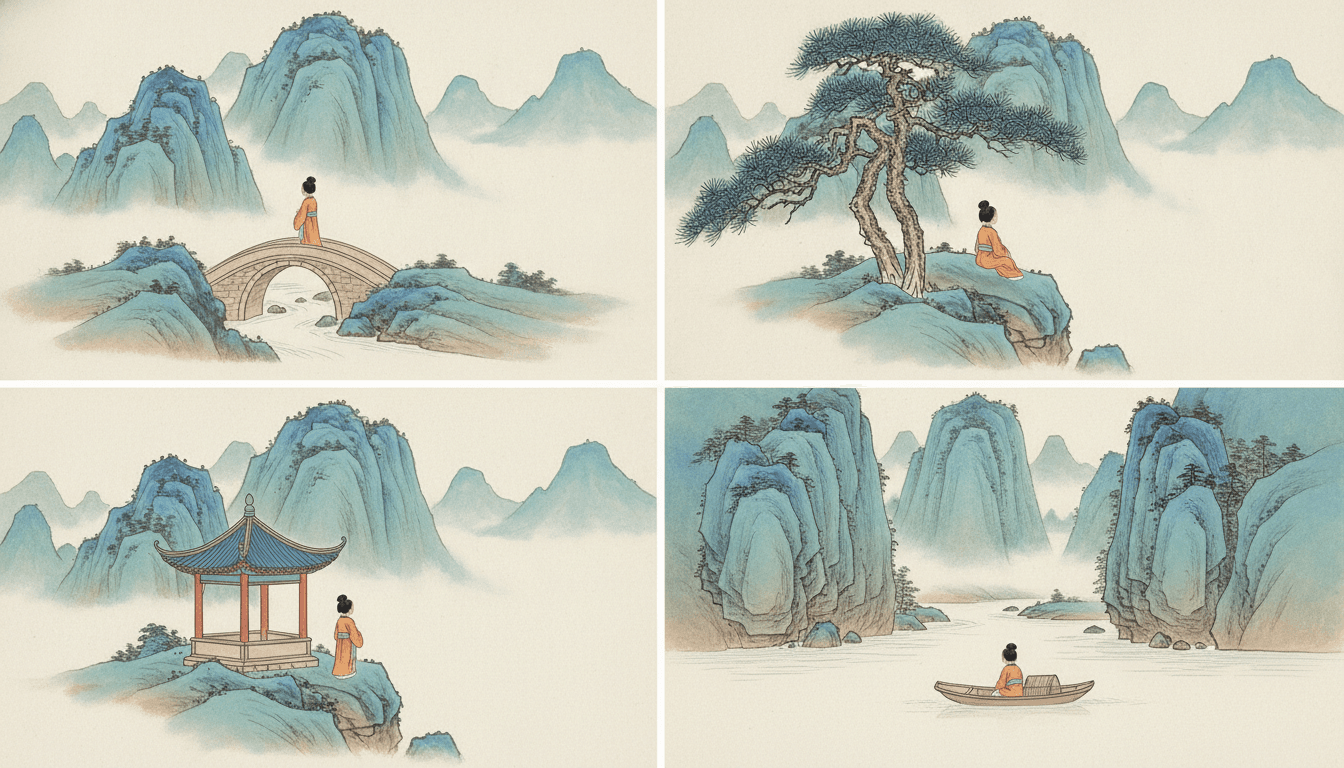
One girl, four places
A Cast You Recognise by Their Colour
In a landscape this large, a character is often the size of a fingernail, so the colour of their clothes does the work a face does elsewhere. Give everyone one colour and keep it. Several of these squares came back on a warmer, cream-to-beige paper than the brief’s rice-paper white; regenerate a page if it matters to you.
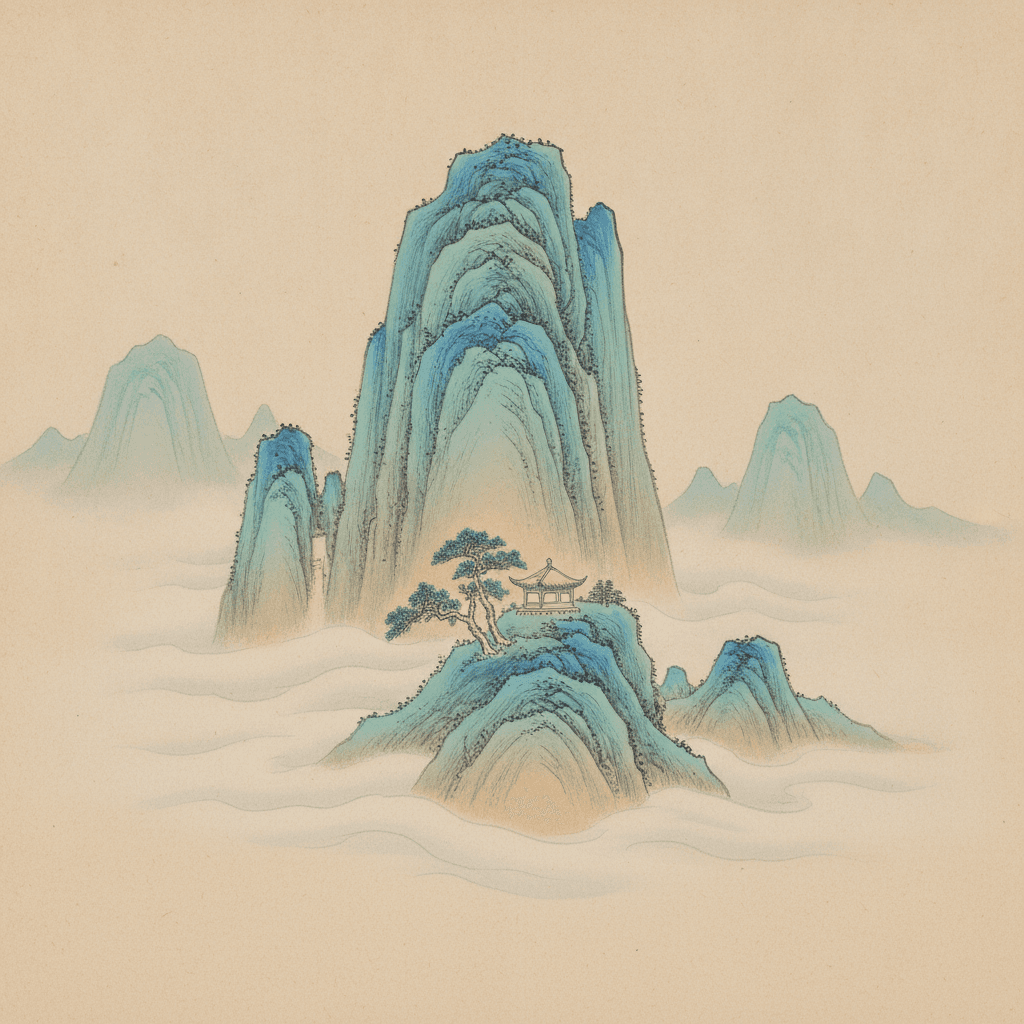
One peak, one pavilion
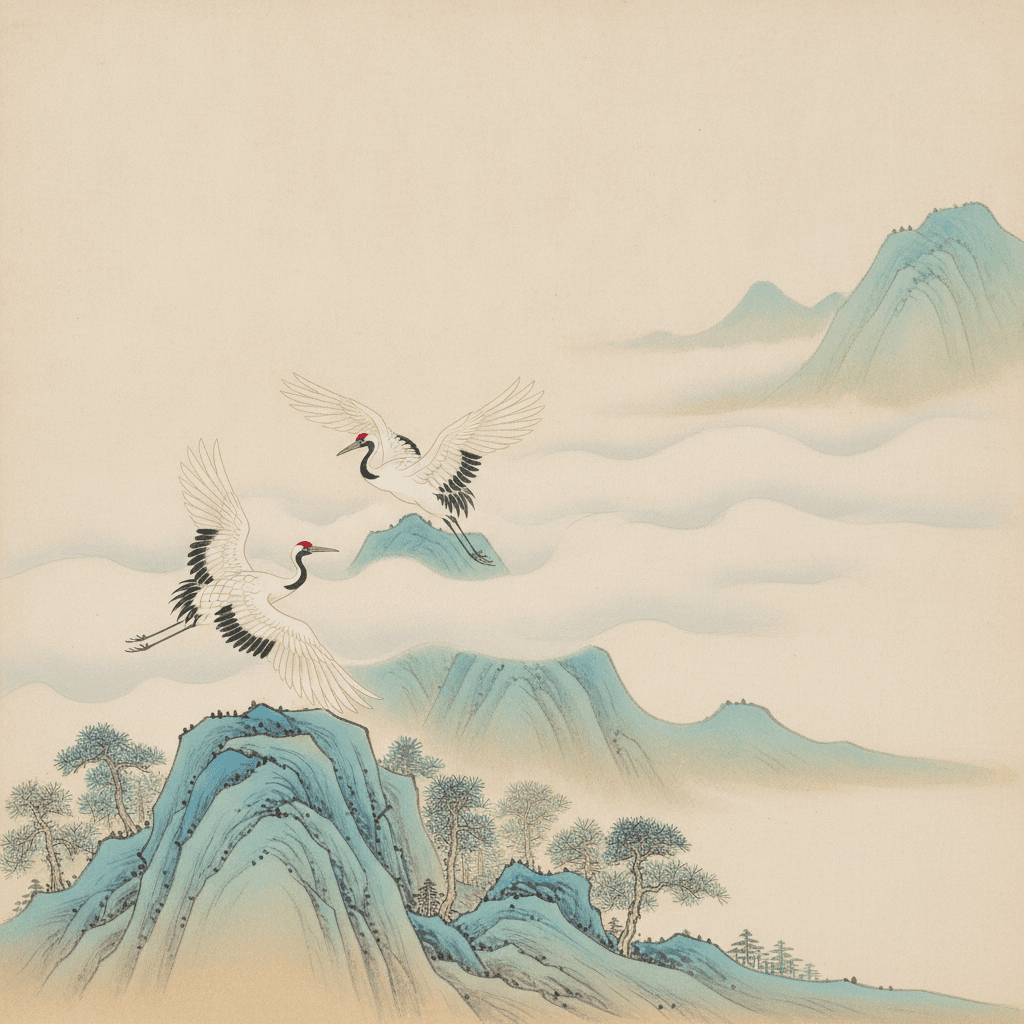
Two cranes over the mist
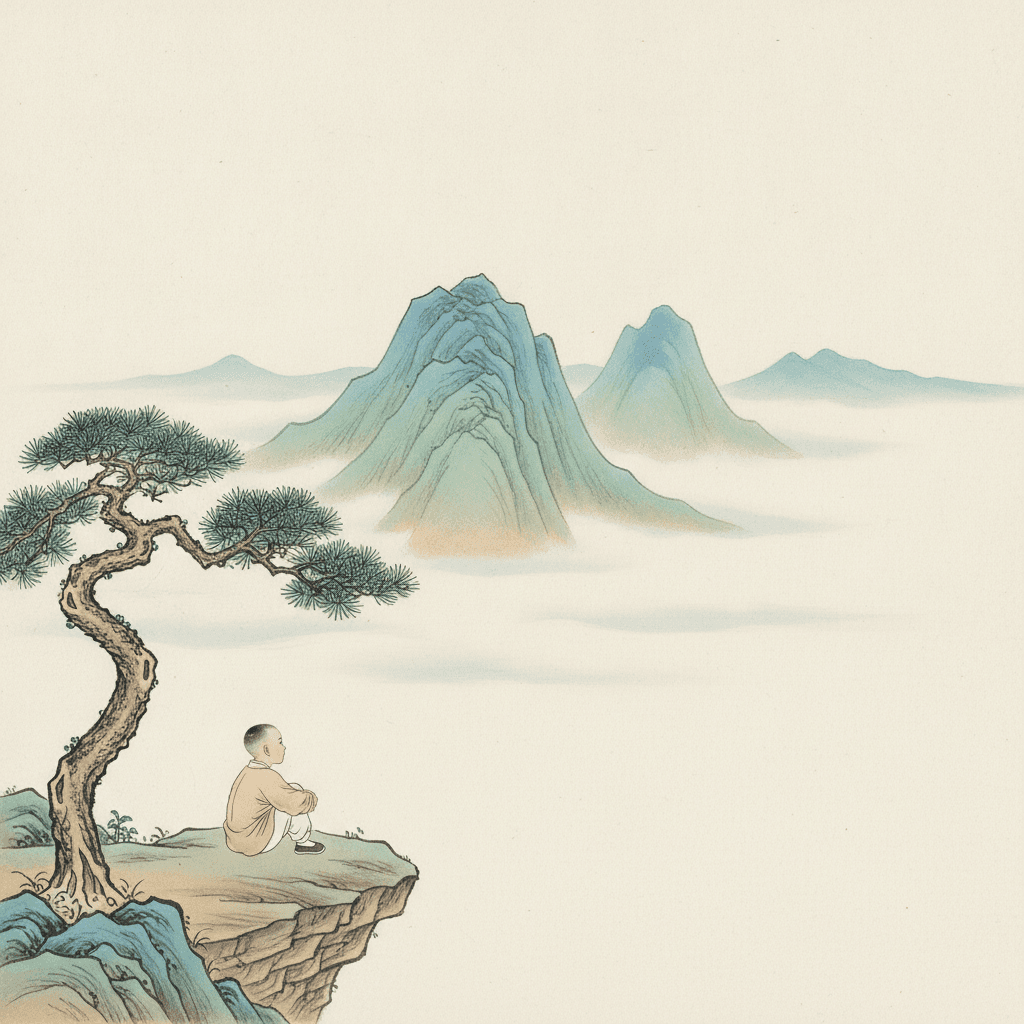
Sitting under the pine
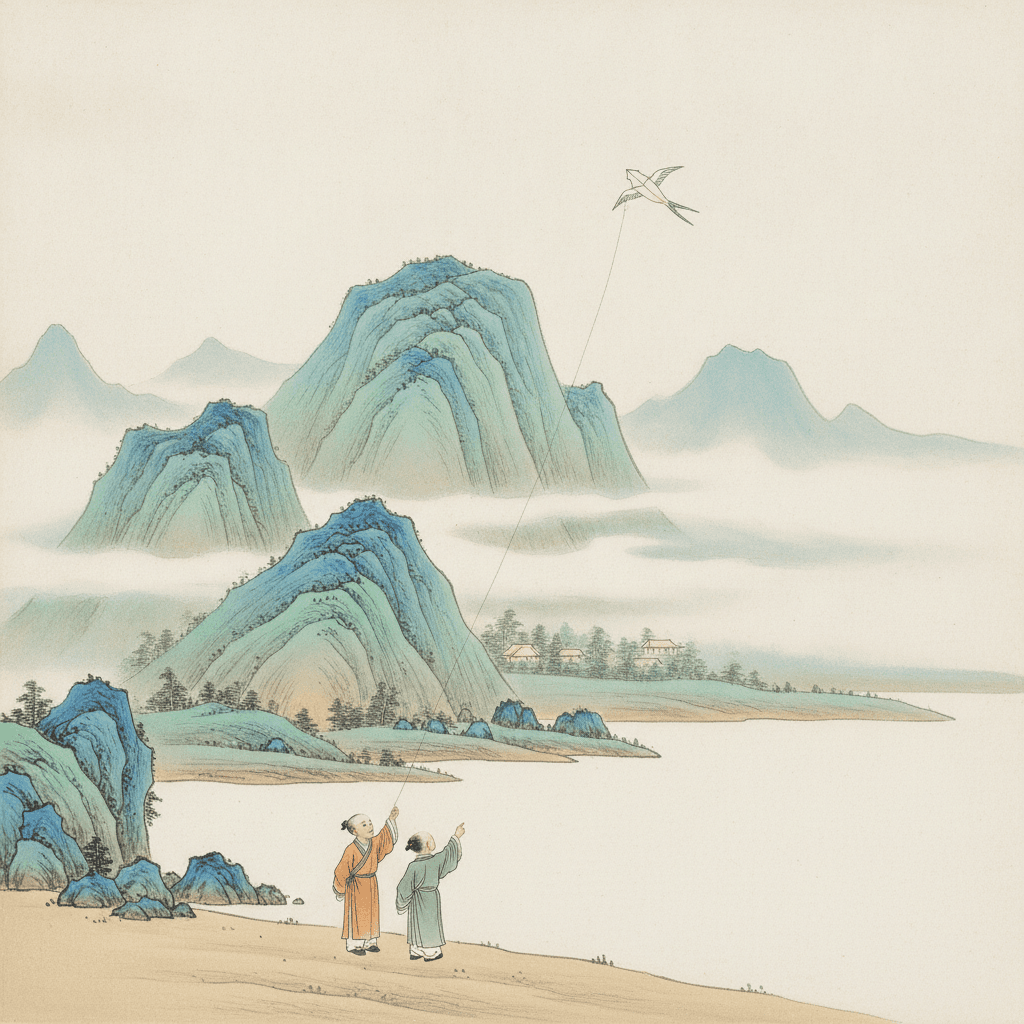
A kite by the lake
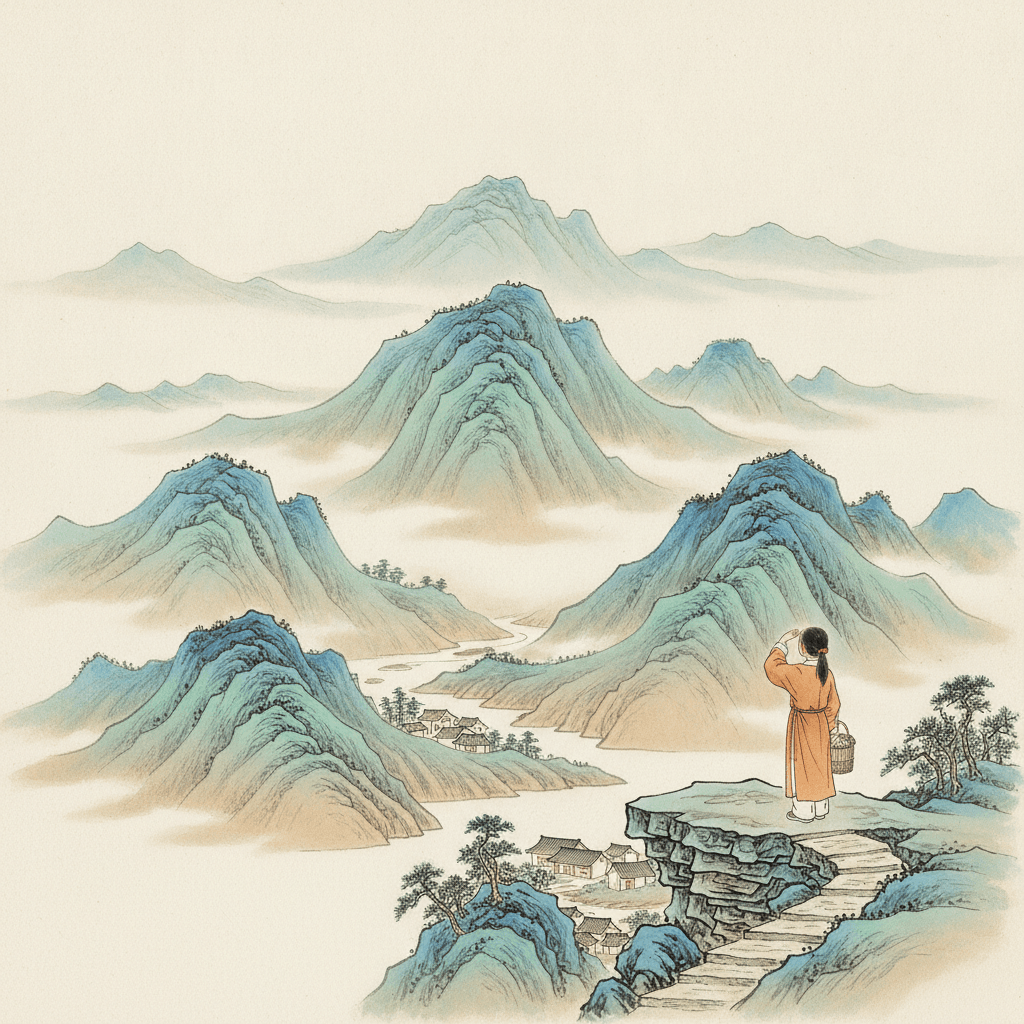
At the top of the path
Making Whole Song Landscape Picture Books
What is useful in a book drawn this way and where the limits are, in the order you are likely to meet them.
At this size, the coat is the character
In a book where the land is the size of the page, your character is often a few millimetres tall. Faces will not carry them; one strong colour will. Save each character in the Character Library with up to fourteen reference images and note the robe colour in plain words — “bright ochre-orange robe, green sash” — and choose something that stands out against green and white. Characters built from an uploaded photo stay private to your account.
The people are yours to add
The brief draws the land and leaves the cast to you. If your story has people, they arrive in it — small, because the mountains are large, but there. If you want a book where the characters fill the page and the scenery is a backdrop, this is the wrong brief; the style will keep pulling the camera back.
Daylight, and only daylight
Soft misty daylight is the only light this brief knows. There are no sunsets, no lamps in the dark and no storm skies; night comes out as a paler, bluer day. A story that turns on a dramatic change of light will lose that turn here. A story that turns on distance, weather and arriving somewhere will not.
The paper can come back warm
The brief asks for rice-paper white, and the image model sometimes reads that as a soft cream rather than a bright white, as on several pages here. That is within the style and it stays fairly consistent through a book. If one page comes back noticeably warmer than its neighbours, regenerate that page; the rest of the book is untouched.
No seals, no poems in the sky
A classical landscape painting usually carries writing — a poem in a column, a red seal or two in the corner. The brief asks for none of that, and none of the pages on this page has any. Your story text sits beside or below the picture, in your language, not inside the painting.
A whole book from a sentence
Describe the story in a sentence and C2Story writes it, splits it into pages and draws every page to the same brief, in English, Chinese, Japanese, Spanish, French and more. Read it online, share a link, or buy the PDF download as the handoff to your printer. Pages are licensed for commercial use under the terms of service.
Other styles from the same tradition, each built on a different idea: for figures that fly on ribbons across a weathered wall, Dunhuang picture books; for quiet faceless figures drawn with a calligraphic brush, new Chinese minimal picture books; for clean even lines and bright flat colour, guofeng picture books; for black ink and breath on paper, sumi-e picture books; and for tiny people in a big airy city, fine-line ink picture books.
Questions About Song Landscape Picture Books
Explore More Story Ideas
Discover more styles, tools, and story types

Camping Stories
Tents, campfires, hiking and starry nights
Explore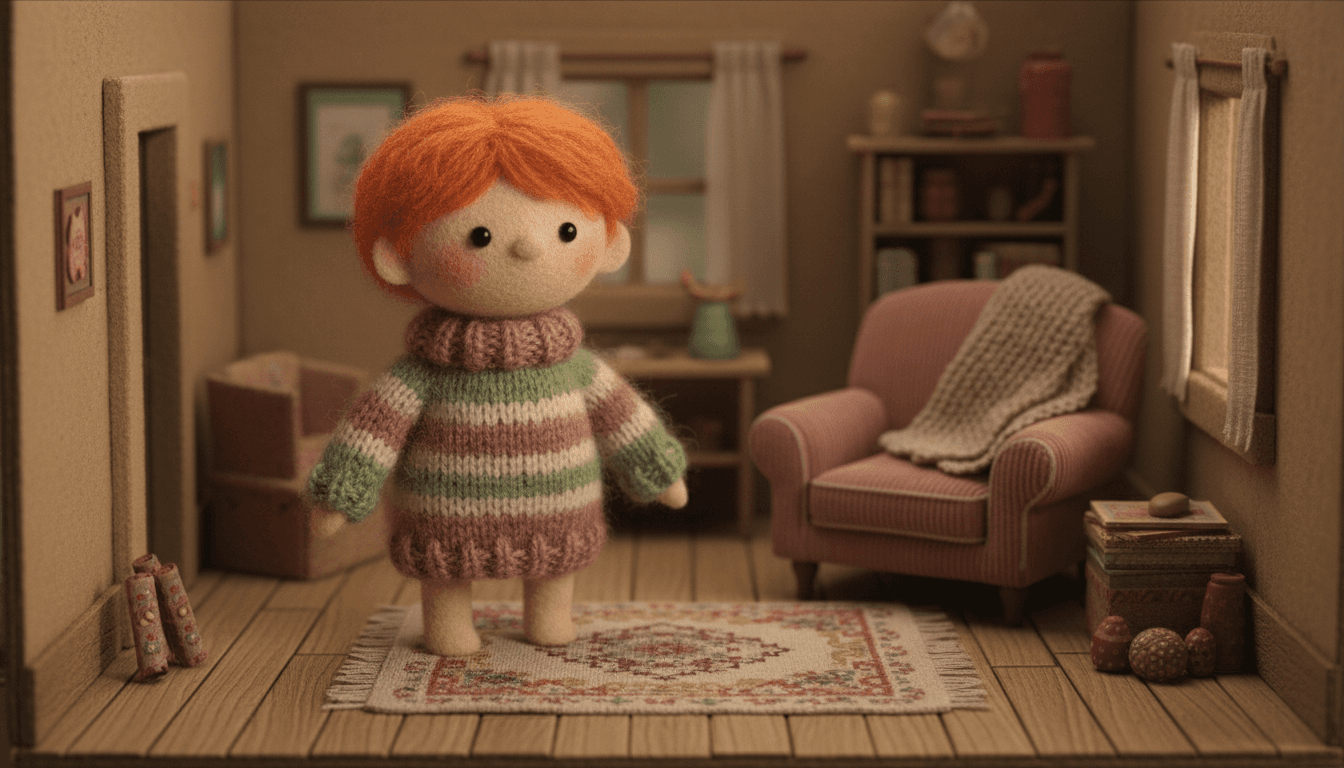
Felt & Knit Picture Books
Fuzzy yarn, real stitching & button eyes
Explore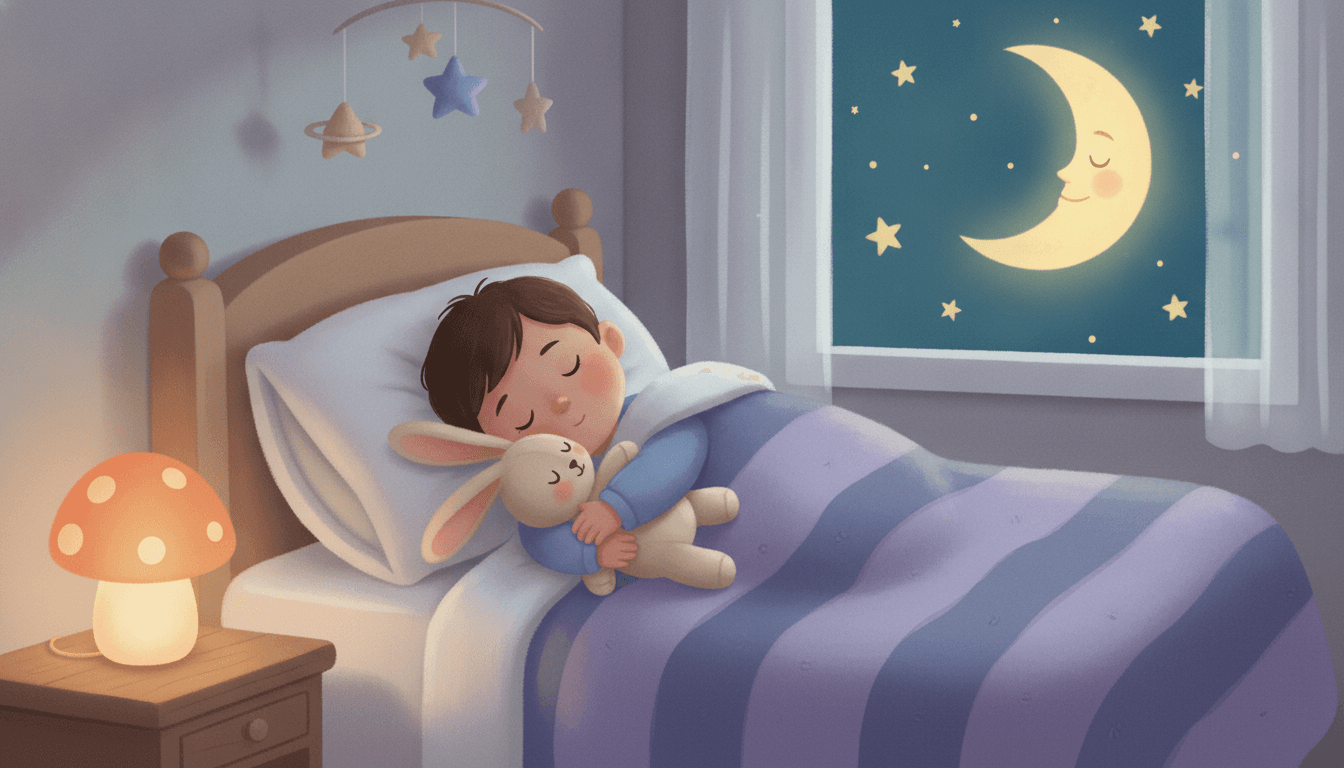
Bedtime Stories for Anxious Kids
Calming tales that soothe worries
Explore
Storybird Alternative
Better AI story creation
ExploreSong Landscape Picture Books: Mountains, Mist and a Small Roof
Song landscape picture books rest on a brief that is unusual in one plain way: it is about a place. C2Story runs seventy-eight hand-drawn style briefs, each a short written record of a palette, a light, a line weight and a few refusals. The Song Blue-Green Landscape brief is the only one that asks for mountains and mist, the only one whose light is a kind of weather, and one of just four whose sample picture contains no character at all.
The look comes from Chinese landscape painting — in Chinese, shan shui, mountain and water — and from its blue-green manner in particular, in which ranges are coloured with ground azurite and malachite. The Song dynasty, from 960 to 1279, is often seen as the high point of the tradition. The brief is a modern illustration in that manner, and a quieter one than the famous scrolls: it asks for generous rice-paper white, delicate fine brush lines and soft ochre earth, and it refuses heavy saturation, thick outlines and crowded compositions.
The blue green landscape style suits stories that travel: a journey up a mountain, a river trip, migrating birds, weather that hides and shows things, a place telling its own story. It is a poor fit for a large cast who need to fill the page, and for stories that depend on a dramatic change of light, because every page is lit by the same soft misty daylight. Characters still appear when your story has them, small against the land, and the colour you give their clothes is what keeps them recognisable.
The choice between neighbours is clear. Take fine-line ink for tiny people with an urban joke, guochao architecture for palaces under a moon, the isometric map when the reader should see every path at once, and Dunhuang when someone is flying. Take this Song dynasty art style when the place comes first. Describe the story in a sentence and C2Story writes it, splits it into pages and draws every page to the same brief, keeping your characters on model, with the paid PDF download as the handoff to your printer.