
New Chinese Minimal Picture BooksThe Face Is Left Out
Of the seventy-eight style briefs here, exactly one will not draw a face. A new chinese minimal picture book is built from that one — so the feeling has to be in the posture, the sleeve and the hair.
- Thin fluid calligraphic strokes — a line made, not plotted
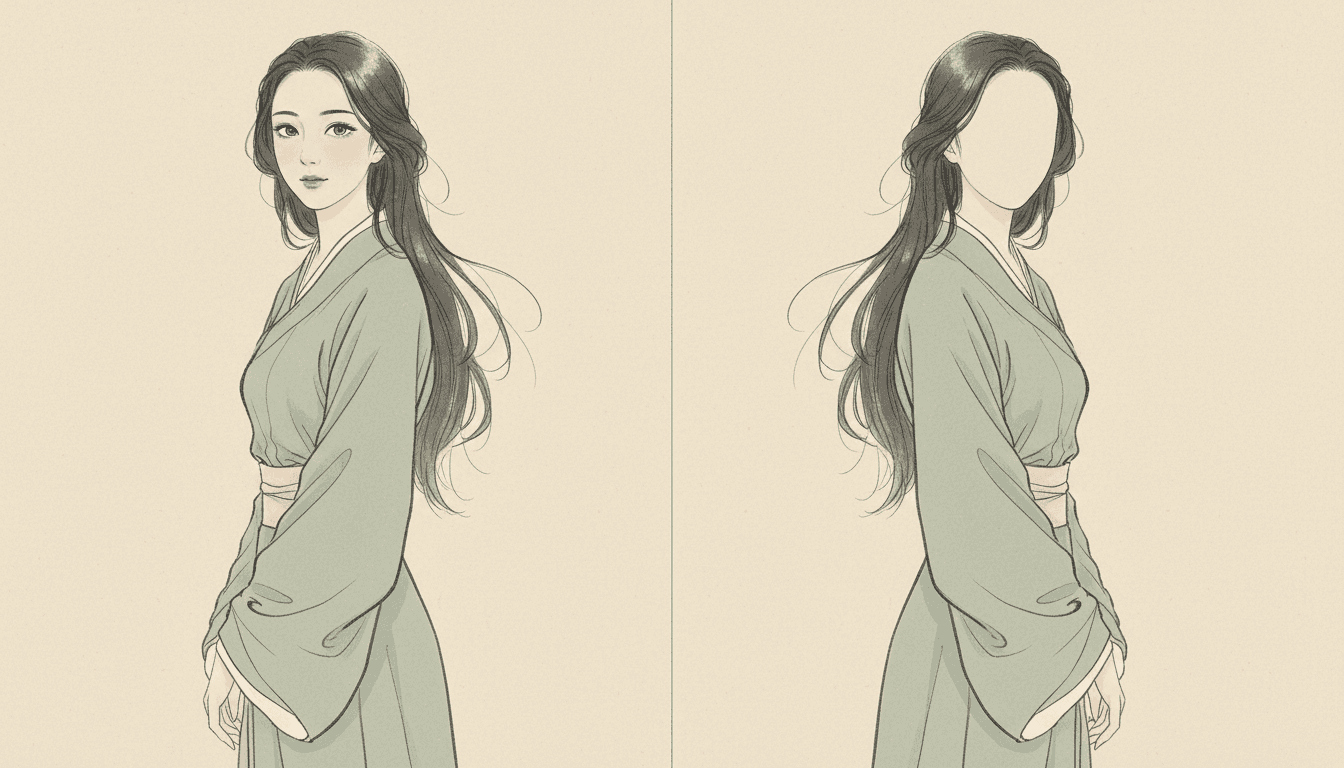
- Faces left as bare paper, identity carried by silhouette
- Muted ivory, ink grey, dusty jade and pale earth
- Free credits by request — no card
50,000+
Stories Created
10,000+
Active Creators
50+
Art Styles
4.9/5
User Rating
What Makes New Chinese Minimal Different From Any Other Quiet Style
Every style here is a written brief — a palette, a light, a line weight, a short list of refusals. Four lines in this one decide everything, and the first two appear in no other brief in the library.
The only brief in the library that will not draw a face
Every style in C2Story runs on a short written brief recording a palette, a lighting note, a line weight and a few things to avoid. Read all seventy-eight hand-drawn briefs and exactly one of them says faceless: this one asks for faceless or barely-suggested features. Run the synonyms — blank, expressionless, featureless, no facial features — and only one other brief registers at all, the deadpan cartoon, and it is doing something different. A blank face is still a face: it is drawn, and in that style the blankness is the joke. Only two of the seventy-eight refuse a detailed face in the first place, and the other one, the minimal fashion line, still keeps the eyes and the mouth. This is the only brief in the library where the face is allowed to be absent, and that single permission decides everything else about how a page works.
The only line in the library named after handwriting
Each brief records a line weight in one short phrase, and reading all seventy-eight of those phrases in a column is the quickest way to tell the styles apart. Nearly all of them name a tool or a quality: clean even thin outlines, thick continuous black lines, crisp defined outlines, delicate relaxed pen lines, clean uniform confident lines. Four briefs ask for a fluid line. Only this one says calligraphic — thin fluid calligraphic lines — and calligraphy is not a quality a line can have, it is a way of making one. A stroke has a beginning, a direction and a release. The consequence is that no line here is the same width twice, and the long lines of the picture — a robe hem, a sleeve, a single strand of hair — have to be laid down in one movement and cannot be corrected. Which is exactly why they look as though they are still moving.
The hair is the most heavily drawn thing on the page
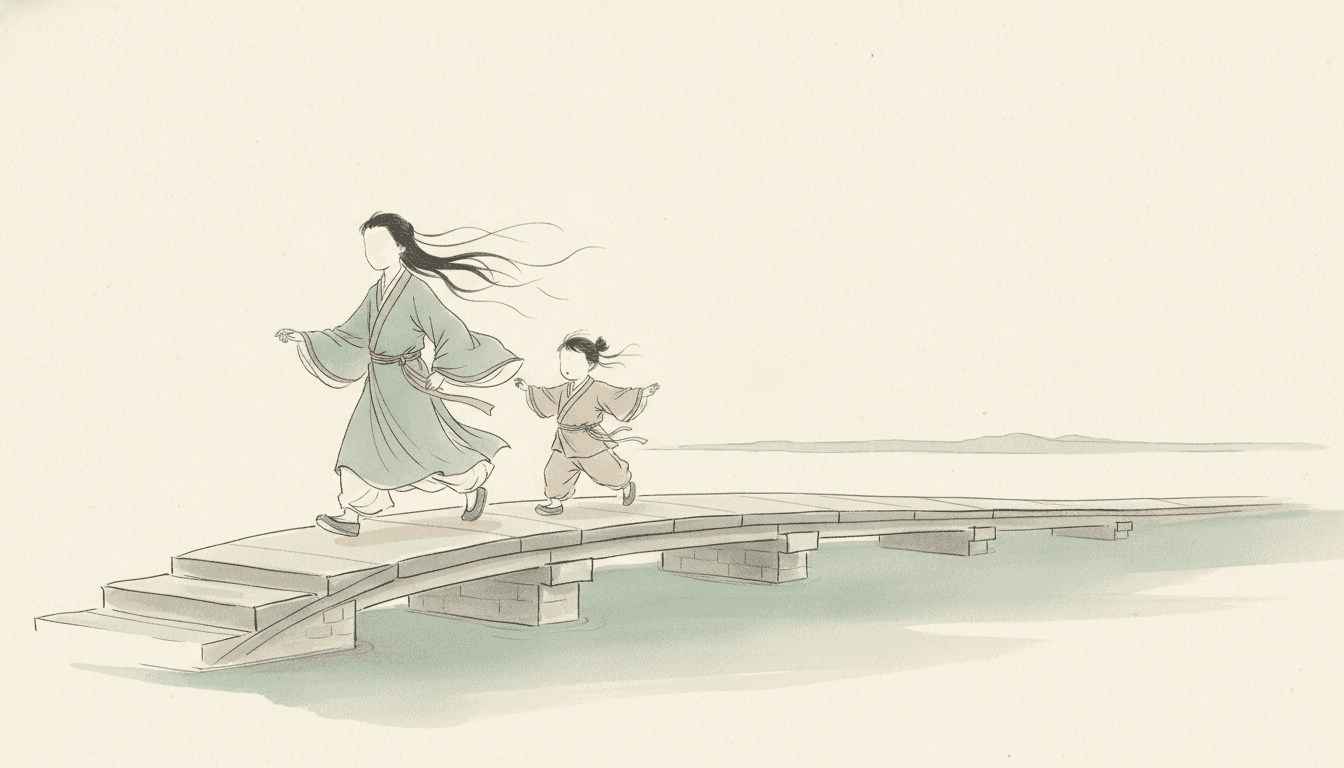
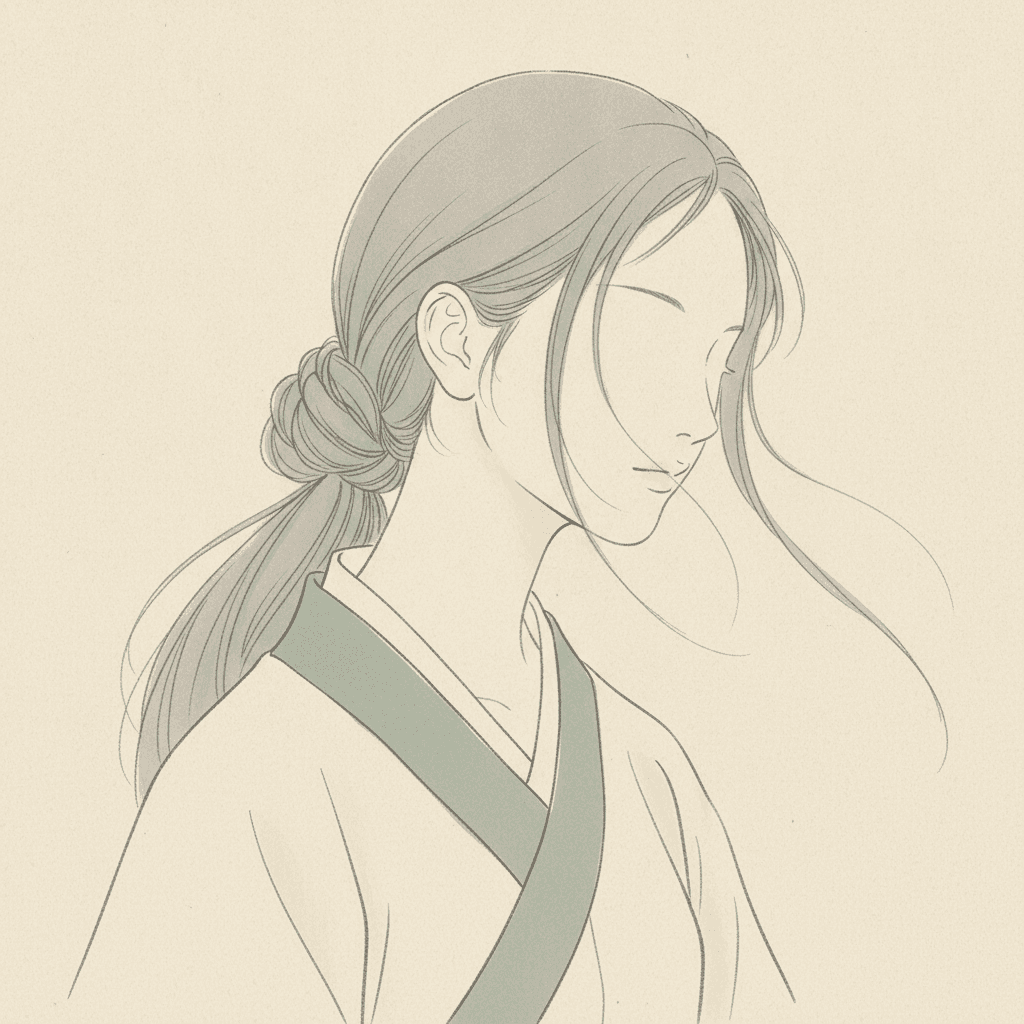
The brief names three things that drift with rhythm: robe folds, hair strands and poses. Hair strands is the surprise — it is the only mention of hair in any of the seventy-eight briefs. Every other style treats hair as part of a character description, something the drawing contains; this is the only brief that treats it as a line element, something the drawing is made of. Once you notice it, the reason is obvious. The face has been given away, so the feeling has nowhere to live except the things that move: a sleeve swinging out behind a running child, a hem tapering to the floor, forty strands of hair all leaning the same way. The head is still drawn with complete care — the skull, the hairline, the ear, the jaw, every strand. It is only the face inside it that is left as paper.
Nothing on this page can be made emphatic
Worth understanding before you pick it rather than after. The lighting note is soft even ambient light, which this brief shares with two others, so that part is not unusual on its own — but look at what it sits beside. No face means no expression to point with. No thick outline means nothing can be ringed. A muted palette of ivory, ink grey, dusty jade and pale earth means no colour can shout. An ambient light casts nothing, so nothing can be lifted off the ground by a shadow. Four separate ways of emphasising something, all given away in the same brief. What the style has left as its only hierarchy is direction: which way a figure is turned, which way the cloth is trailing, which way the one drawn stroke on the floor is running. A page here is read by following where things point.
A New Chinese Minimal Page Is Defined By What It Will Not Do
Each brief ends with a short list of things to avoid, and reading that list is usually the fastest way to understand a style. This one refuses four: detailed faces, thick outlines, photorealism and a cluttered background.
The first and the second are the ones to read together, because they take away the two halves of the same thing. Only two briefs in the library refuse a detailed face at all, and the other one keeps the eyes and the mouth; this one goes on to say the features may be absent entirely. Refusing a thick outline then removes the fallback: there is no heavy contour to hold the figure together instead. What is left to carry a person is the silhouette, the hair and the direction they are turned.
Which is why the new chinese minimal brief reads like a style with a disability until you notice what the disability buys. Nothing on the page can tell the reader how to feel — so the reader fills the face in, and brings their own.
Every Quiet Style Here Leaves The Page Empty For A Different Reason
Nine other styles in C2Story leave a great deal of the page bare, and they are easy to mistake for one shelf. They are not, because the emptiness is doing a different job in each.
In fine-line ink the white space is distance. In minimalist it is subtraction. In the deadpan cartoon it is the beat before the joke lands. In sumi-e it is breath. In negative space the gap is a second picture. In muted editorial it is headroom. In fashion line it is room for one contour. In city pop it is clearance for a colour clash. In youth emotion it is the unfinished edge.
Here it is none of those, and the difference is not how much paper is left but where it is. Every other style in the library leaves the paper bare around a figure. This is the only one that leaves it bare in the middle of a face — the empty face, an emptiness inside the character rather than behind them.
From One Sentence to a Book of Postures
You pick the look once. The brief is then applied to every page of the story, so a gesture on page one can be answered by a gesture on page nine.
Describe what the body is doing
A sentence is enough, and the more physical it is the better this style works. Not she was afraid to go in — she stopped in the gateway with one foot still behind her. Not he was glad to see her — he let go of the basket and both arms came up.
Choose the New-Chinese Minimal Figure style
Picking it fixes the whole brief at once: thin fluid calligraphic lines, flowing robe folds and drifting hair, muted ivory, soft ink grey, dusty jade and pale earth under a soft even ambient light, and the four refusals. Save your characters first and their silhouettes stay theirs.
Get a book, not one lovely picture
C2Story writes the story, splits it into pages and builds each page to the brief according to what that page says. Your words are set as type rather than lettered into the art. Read it on the web, share it, or buy the PDF to hand to a printer.
This Style and Its Three Nearest Neighbours
Four looks in the library sit close to this one. Here is what each actually asks for, so you can take the right one rather than the first one.
New-Chinese Minimal Figure
The style on this page
A new-Chinese minimal figure illustration: slightly tall, slender characters with faceless or barely-suggested features, their identity carried by a clean silhouette, a hint of an eye and a mouth and a few key shapes. The linework is calligraphic and flowing with a strong sense of negative space, and the robe folds, the hair strands and the poses all drift with rhythm. Its palette is muted ivory, soft ink grey, dusty jade and pale earth tones; its light is soft and evenly ambient; its line is thin, fluid and calligraphic; and the four things it refuses are detailed faces, thick outlines, photorealism and a cluttered background. It will render whatever scene your story actually describes in that same quiet, moving hand.
Minimal Fashion Line
The sharpest rival — the other brief that refuses a detailed face
These two are the only briefs in the library that refuse a detailed face, which makes this the comparison worth reading carefully. The fashion line stops well short of facelessness: it keeps the eyes and the mouth, and it spends everything it saves on the garment. It is black and white with no shading at all, drawn with one clean confident single-weight line on a clean white ground, and the figure is relaxed and still so the clothes can be read. This brief gives the face away entirely, keeps a palette, and lets the line vary from a press to a hair-thin release — and its figures are moving. Take the fashion line when the subject is what somebody is wearing. Take this one when the subject is what somebody is doing.
New-Guofeng Flat Line
Nearest in tradition, opposite in method
The library holds several looks drawn from Chinese illustration and they are not interchangeable, so it helps to know what the nearest one asks for. The new-guofeng brief builds its characters from bold simple shapes — circles, squares and arcs — with iconified minimal features, and that word matters: iconified features are present and simplified into icons, not absent. It fills them with flat clean colour in bright yellow-orange and blue-green under a flat even graphic light, and its line is clean, uniform and confident. Graphic, bright and certain. This brief is the quiet one: a varying written stroke, a muted palette and a face left out rather than reduced. Same tradition, almost no shared machinery.
Sumi-e Ink Wash
Same brush, used on a different part of the picture
The closest relative on tooling, and the distinction is genuinely useful when you are choosing. Both styles are brush-made, both leave a great deal of the page bare on purpose, and both think in a single confident movement rather than in correction. Sumi-e works in one pigment at different strengths, so it thinks in value — near and far, dark and light — and it spends the brush on mass, laying down a whole rock or a whole bird in one loaded stroke. This brief keeps a colour palette and spends the brush on contour instead: the stroke is a hem, a sleeve, a jaw, a strand. Take sumi-e when the subject is a place and the stillness in it. Take this one when the subject is a person and the way they are standing.
New Chinese Minimal Story Ideas That Suit the Brief
Each of these plays to the same strength: a small physical event, and a feeling that lives in the body rather than on a face.
The Long Walk to the Well
A whole book in which a child simply goes somewhere and comes back carrying something heavy. A walk is one posture repeated twenty times, which is exactly what a style with no faces is built to draw.
My Sister Would Not Let Go
The entire story told in two small hands closed on the end of somebody else’s sleeve. When the feeling has to be in the body, give the body something to hold.
The Year I Learned to Stand Still
A restless child, a patient grandmother, and a lesson that is entirely about posture. A brief whose only hierarchy is direction can show the difference between standing and standing properly.
The Sleeve That Caught the Wind
Weather told through cloth alone — nothing in the sky, everything in the hem. Robe folds and hair strands are the two things this brief names as drifting with rhythm.
We Waited at the Round Gate
Four people, one gateway, and an afternoon of nobody arriving. Four figures turned four different ways is a page of information in a style read by following where things point.
Nobody Was Home
A courtyard, a stone table, one stool pushed out and turned aside. This brief renders an empty room better than almost anything else in the library, because the emptiness was never a background.
What a Calligraphic Stroke Actually Looks Like
Three pages generated to this one brief, with nothing retouched afterwards.
The One Thing It Takes Away
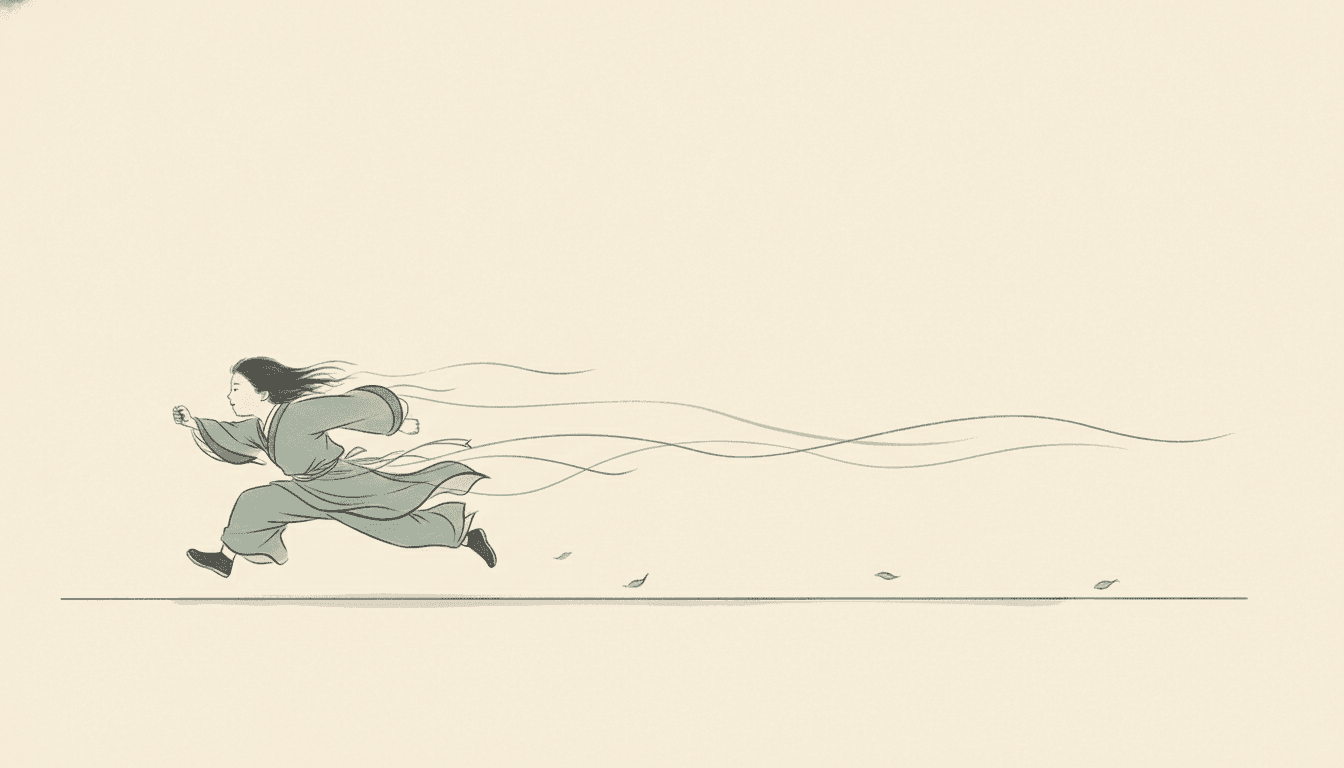
The Hem Keeps Going
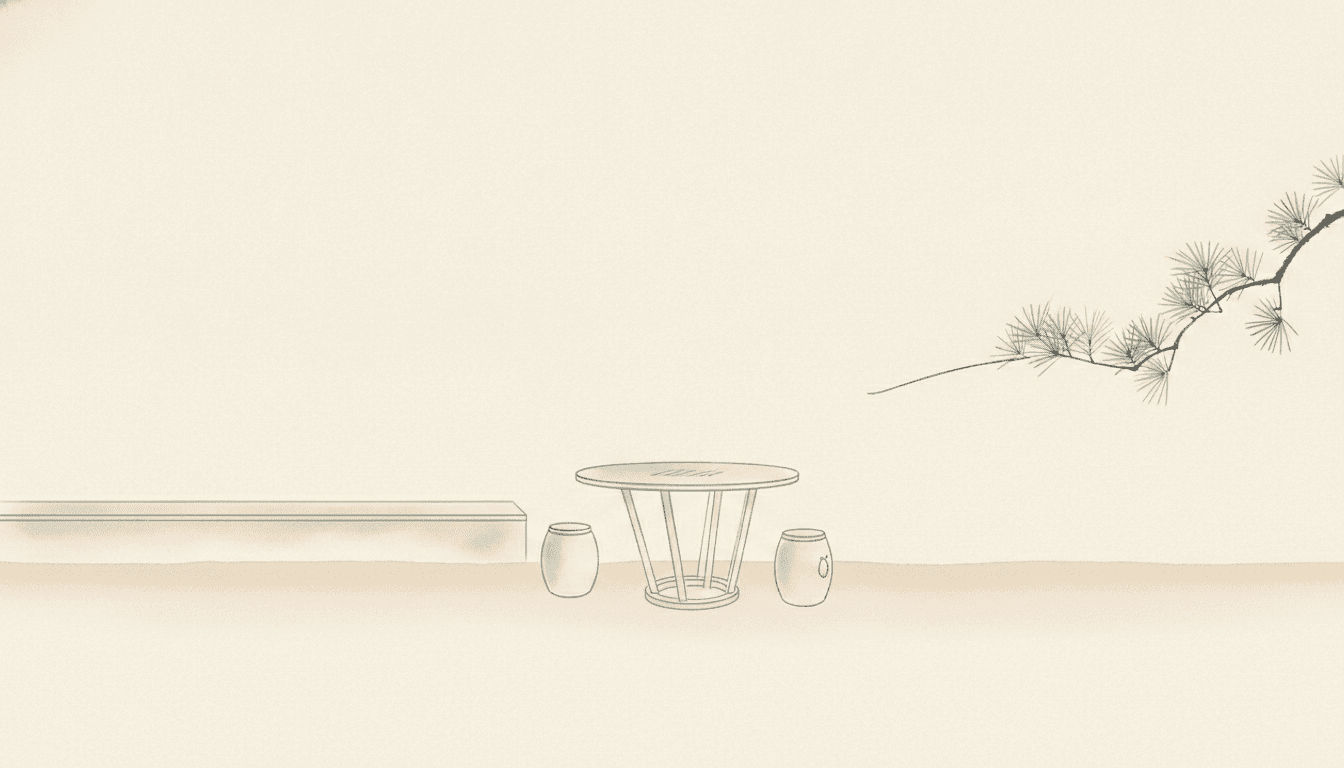
Somebody Got Up
Five Pages Where the Face Is Paper and the Hair Is the Drawing
The brief gives the face away and spends everything it saves on the silhouette, the robe and the hair — which is how four people with no faces still read as four different people.
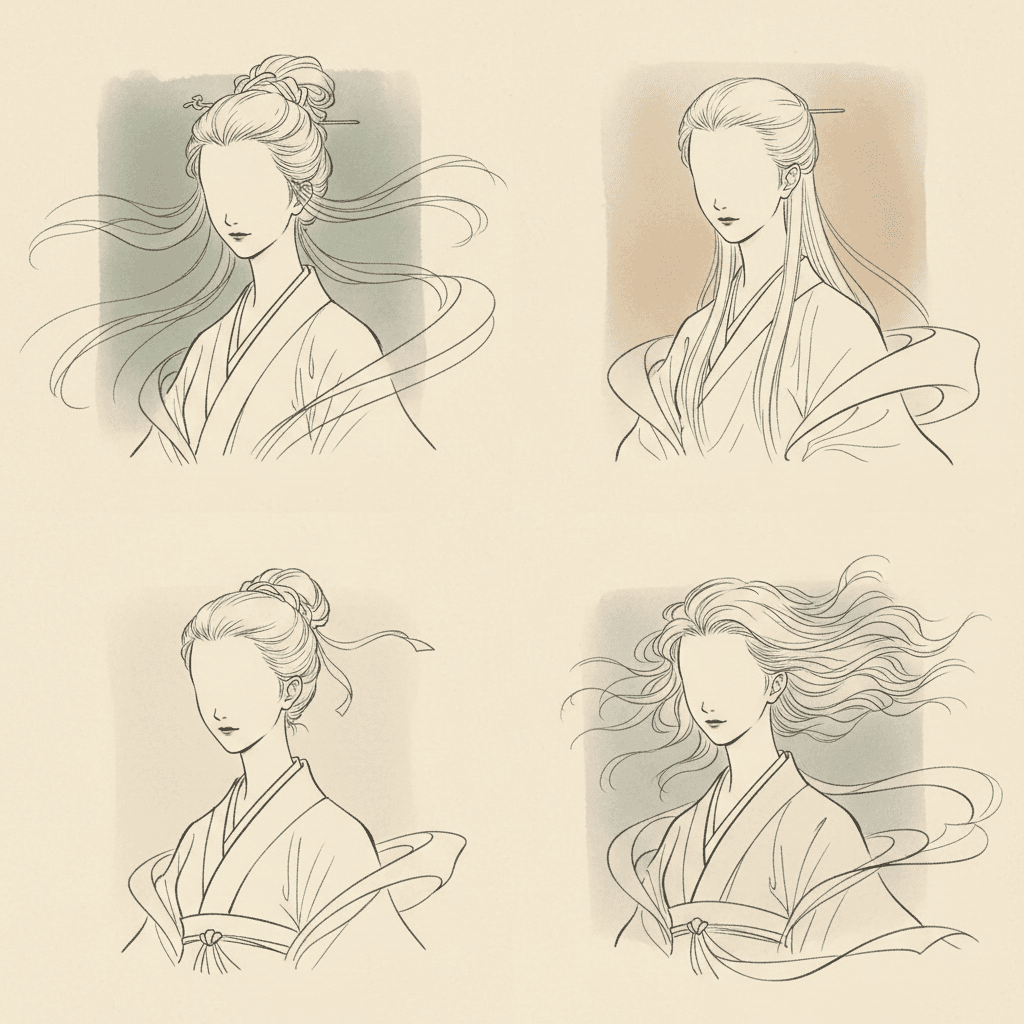
Told Apart By The Hair
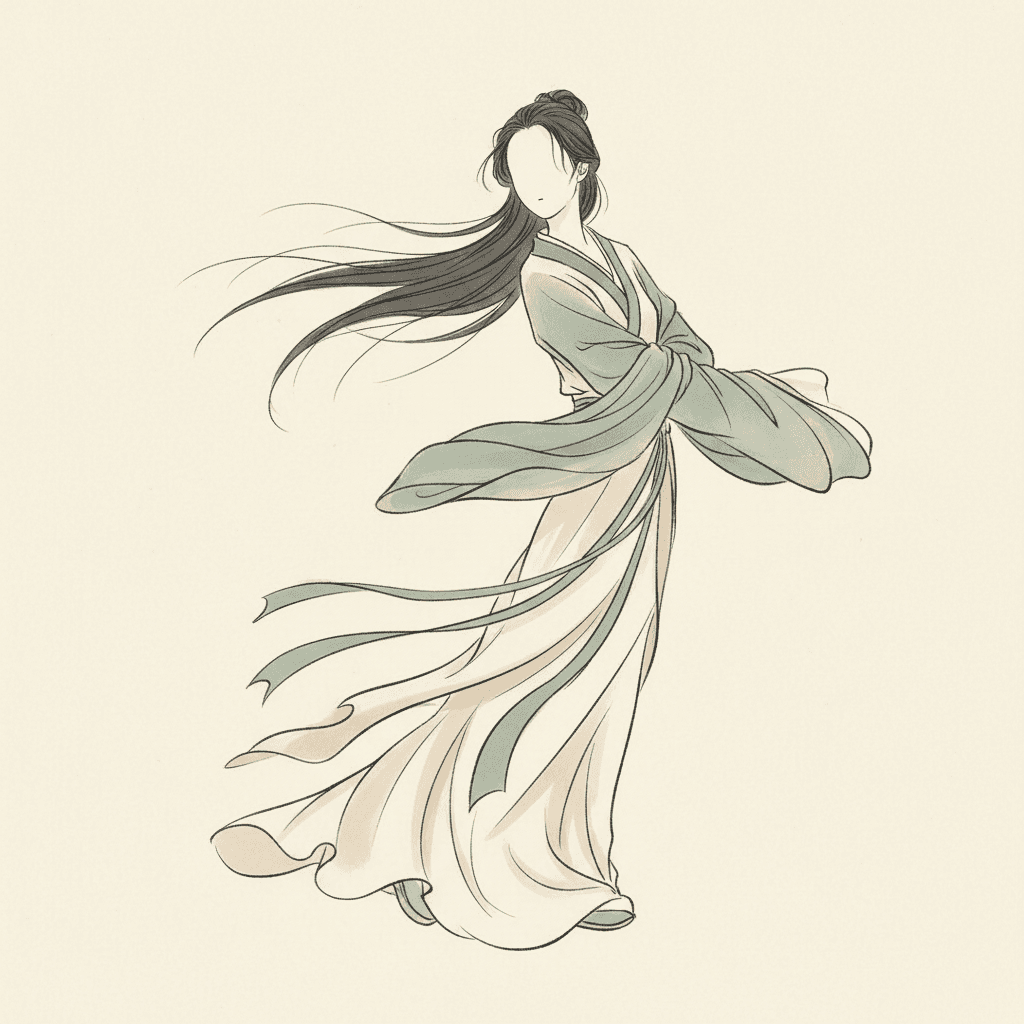
Everything Is In The Turn
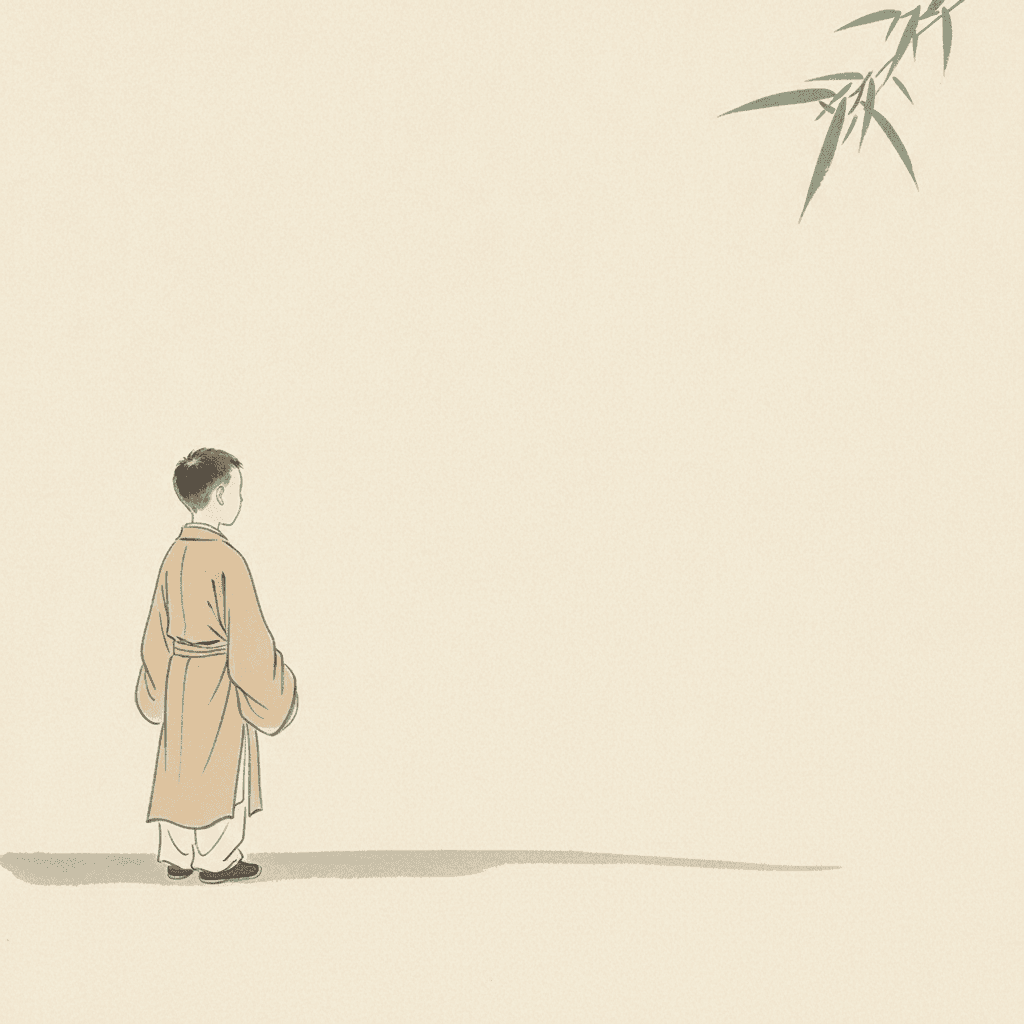
Mostly Paper
A Few Marks, and All That Hair
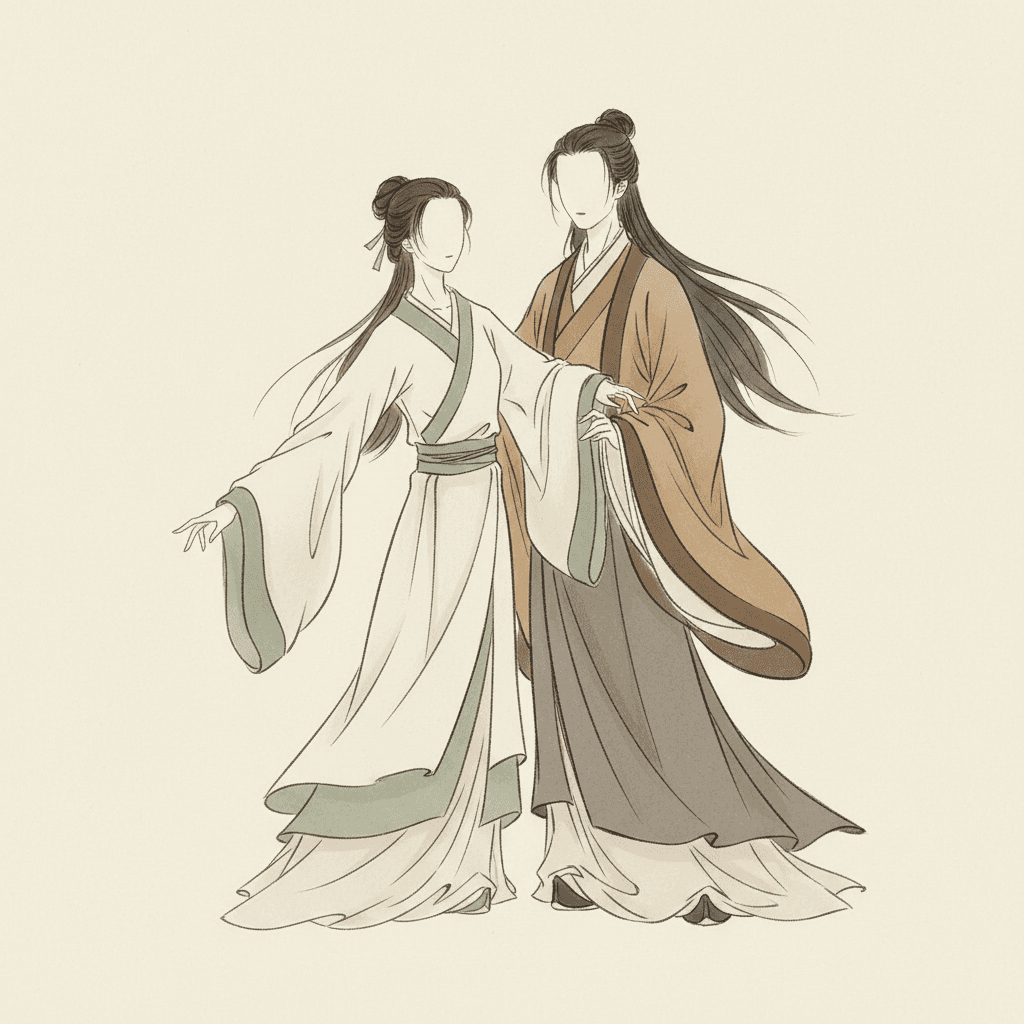
The Hands Do The Talking
Making a Whole New Chinese Minimal Picture Book, Not One Image
The useful things and the honest limits, in the order they are likely to matter to you.
Keeping the same character when there is no face to match
This is the thing that breaks first when pages are generated one at a time, and here it breaks in an unusual place. For every other style the face is the anchor — match the eyes and the nose across eleven pages and the reader accepts the rest. This brief has removed the anchor, so a character has to be held together by head shape, hair arrangement, height, build and the cut of the robe, and a system drawing each page fresh will drift on all five at once. By page nine the small one is taller than the big one. One fixed brief is carried into every page instead: thin fluid calligraphic lines, flowing robe folds and drifting hair, muted ivory, soft ink grey, dusty jade and pale earth under a soft even ambient light, and the same four refusals. Save each character in the Character Library with up to fourteen reference images and they stay recognisably themselves. Characters built from an uploaded photo stay private to your account.
Four colours that are quiet rather than drained
The palette is recorded as muted ivory, soft ink grey, dusty jade and pale earth tones, and the practical note is that a palette written like that slides towards grey the moment it is pushed. The brief wants it quiet, not drained: the jade is a real green and the earth tones are real warm colour, laid thinly over bare ivory paper with the grain showing, and the page is not sepia, not brown and not monochrome. What it will not give you is anything loud. There is no red, no gold and no saturated accent available here, which also means no night, no weather and no drama — the cinematic and grainy cinematic styles exist for pages that need those. There is also no global greyscale switch in C2Story, so a genuinely monochrome book means choosing a style that is monochrome by design.
What you are giving up, said plainly
You are giving up the expression, and it is the single most useful tool in a picture book. A page whose job is she was delighted, he was terrified, nobody believed her or they finally understood each other has no mechanism here, because the one place a reader looks first for all four of those has been left as bare paper. There is no workaround and it is better to know it in advance than to fight the style for eleven pages. What you get in exchange is that the reader does the work: a face left out is a face the reader fills in, which is why this look travels so well and why a small figure turned away reads as more private than any drawn expression could. If a book of yours needs faces, the storybook, cartoon and anime styles are built around them.
Empty space, and the slot this one occupies
Nine other styles in C2Story leave a great deal of the page bare, and each leaves it for a different reason, which is the only honest way to tell them apart. Fine-line ink leaves space to mean distance. Minimalist leaves it by subtraction. The deadpan cartoon leaves it for the beat before the joke. Sumi-e leaves it for breath. Negative space makes the gap a second picture. Muted editorial leaves headroom. Fashion line leaves room for one contour. City pop leaves clearance for a colour clash. Youth emotion leaves the unfinished edge. This brief asks for a strong sense of negative space too, and what is new is where the emptiness sits: it is inside the character. Every other style here leaves the paper bare around a figure. This is the only one that leaves it bare in the middle of a face.
A whole book, not one admired single image
This look lives almost entirely as single posted images — one tall figure, one branch, a great deal of cream — and a single image is the easy part. You are not prompting for one. Describe the story and C2Story writes it, splits it into pages and builds each page to this brief according to what that page actually says, so a gesture in chapter one can be answered by a gesture in chapter three. You get picture-book pages with your words set as type rather than lettered into the art, which suits a style that keeps so much bare paper and which also keeps the page clear of any drawn writing. Write in English, Chinese, Japanese, Spanish, French and more. When you want it on paper, the paid PDF download is the handoff to your printer, and everything you make is licensed for commercial use.
Honest about the age this one suits
Most styles in the library serve a three-year-old perfectly well. This one is harder work for the very youngest, and it is better to say so. A toddler reads a picture book by reading the faces in it, copying the smile and finding the eyes, and there are no eyes here to find. There is no bold outline to follow either, and a great deal of paper where a small child expects something to look at. Where it is genuinely good starts around six or seven, once a reader can take meaning from a posture, and it keeps getting better from there — it suits older children, teenagers and adults equally well, which is unusual for a picture-book style, and it makes a notably good keepsake or gift book. For a first picture book or a bedtime read, the watercolour, cartoon and storybook styles are built for it and this one is not.
A note on where this one sits in the wider map. For the other brief that refuses a detailed face — but keeps the eyes and the mouth and spends everything on the clothes — see fashion illustration picture books. For the same brush used on mass rather than contour, see sumi-e ink wash picture books, and for white space that means distance instead of an empty face, fine line ink picture books. If what you actually want is the drawn-but-blank face rather than no face at all, that is deadpan cartoon picture books.
Questions About New Chinese Minimal Picture Books
Explore More Story Ideas
Discover more styles, tools, and story types
Beach Stories
Sandcastles, seashells, tide pools and splashing waves
Explore
Gouache Picture Books
Flat opaque paint & matte brush edges
Explore
Bedtime Stories for Anxious Kids
Calming tales that soothe worries
Explore
Storybee Alternative
More styles & features
ExploreNew Chinese Minimal Picture Books — A Written Line, a Flowing Robe and a Face Left as Paper
A new chinese minimal picture book is built on one unusual permission. C2Story runs seventy-eight hand-drawn style briefs, each a short written record of a palette, a light, a line weight and a few refusals, and exactly one of them says faceless: this brief asks for faceless or barely-suggested features, with identity carried instead by a clean silhouette, a hint of an eye and a mouth and a few key shapes. Run the synonyms — blank, expressionless, featureless, no facial features — and only one other brief in the library registers at all, the deadpan cartoon, and it is doing something else entirely, because a blank face is still a drawn face and in that style the blankness is the joke. Only two of the seventy-eight refuse a detailed face in the first place, and the other one, the minimal fashion line, still keeps the eyes and the mouth. That single line in one brief is what makes everything else on the page necessary.
The line is the second decision, and it is the other thing no other brief in the library asks for. Every style records a line weight in a short phrase, and read in a column those phrases almost all name a tool or a quality: clean even thin outlines, thick continuous black lines, crisp defined outlines, delicate relaxed pen lines, clean uniform confident lines. Four ask for a fluid line. This is the only brief that says calligraphic — thin fluid calligraphic lines — and calligraphy is not a quality a line can have, it is a way of making one. A stroke begins with a press, travels in a direction and releases to nothing at its end. So in new chinese style illustration drawn to this brief no line is the same width twice, and the long lines of a page — a robe hem, a wide sleeve, one strand of hair — are single movements that cannot be corrected, which is exactly why a hem tapers to a point at the floor instead of closing like an outline and why the figures look as though they have not finished moving.
Those two decisions together explain the third, which is where all the drawing effort goes. The brief names three things that drift with rhythm — robe folds, hair strands and poses — and hair strands is the surprise, because it is the only mention of hair in any of the seventy-eight briefs. Every other style treats hair as something a drawing contains; this is the only one that treats it as something a drawing is made of. The head is still drawn with complete care, the skull and the hairline and the ear and the jaw and every strand, and it is only the face inside it that stays as bare paper. That is also why nothing on a page of minimal chinese art can be made emphatic: with no face to point with, no thick outline to ring a figure, a muted palette of ivory, ink grey, dusty jade and pale earth that cannot shout, and a soft even ambient light that casts no shadow at all, four separate ways of emphasising something have been given away in the same brief. The only hierarchy left is direction — which way a figure is turned, which way the cloth is trailing — so a page here is read by following where things point.
Which makes the choice between the quiet styles reasonably clear. Take the minimal fashion line when the subject is what somebody is wearing rather than what they are doing, since it is the other brief that refuses a detailed face and it spends the saving on the garment. Take new-guofeng flat line or guochao decorative when you want the same tradition rendered bright, graphic and certain, with features iconified rather than left out. Take sumi-e when the brush should describe mass rather than contour and the subject is a place and the stillness in it, fine-line ink when the white space should mean distance, and the watercolour, cartoon or storybook styles for a first picture book or a bedtime read — this brief asks a reader to take meaning from a posture and suits six or seven and upward, including teenagers and adults, far better than the very youngest. Choose faceless figure illustration in this brief when the page is a person in a place with a clear piece of body language, and accept the limits: no expression, no emphasis, no night, no weather and no drama. Describe the story in a sentence and C2Story writes it, splits it into pages and builds every page to the same brief, holding your characters together by silhouette, hair and height with up to fourteen reference images each — in English, Chinese, Japanese, Spanish, French and more, with the paid PDF download as the handoff to your printer and everything you make licensed for commercial use.