
Retro OVA Cel Picture BooksSomebody Left the Light On
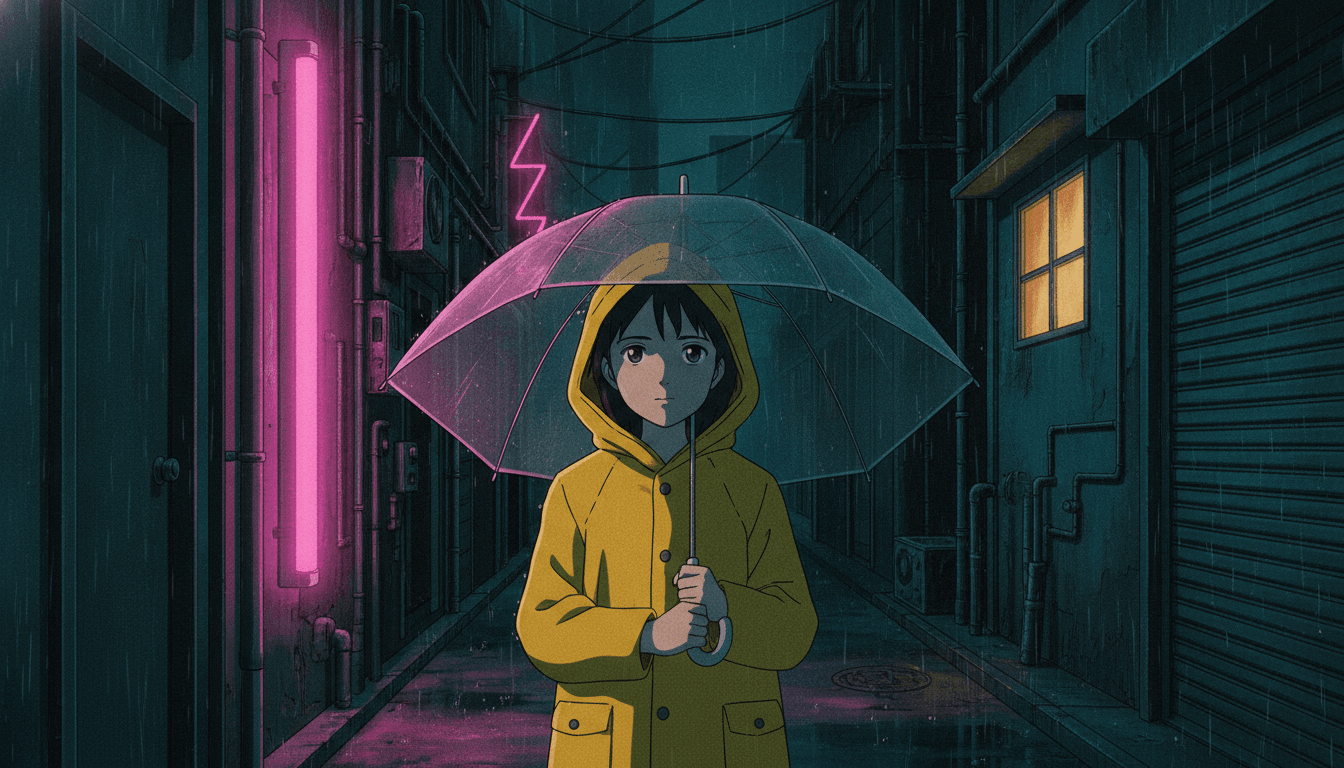
A wet alley, one neon tube, a girl in a yellow raincoat. Retro OVA cel picture books are drawn like a paused frame of a late-1980s anime made for video: sharp inked outlines, flat cel colour, dense painted night streets, film grain, and a hard light that always comes from something switched on.
- Hand-inked cels on painted acrylic streets
- Hard light with one cut shadow
- Deep teal, neon magenta, amber
- Free credits by request, no card
50,000+
Stories Created
10,000+
Active Creators
50+
Art Styles
4.9/5
User Rating
What Makes Retro Anime Cel Art Different
Every style here is a written brief: a palette, a light, a line weight and a short list of refusals. Four things in this one decide the look, and each of them appears in no other brief among the seventy-eight.
The light is something switched on
Every style in C2Story is a short written brief. Most describe the quality of their light: soft, flat, warm, dramatic. Only three name the thing it comes from, a candle, a torch and a neon tube, and this is the only one that plugs in. Neon, rain, acrylic and cyberpunk each appear in no other brief among the seventy-eight. So in this style the light is never weather. It is an object in the picture that somebody turned on.
Hard light, cut shadow
Its light is the only one in the library described as hard: high-contrast, hard and directional. On a cel that means the shadow is not blended in. It is one flat shape of darker colour, cut with a clean edge straight across a face or a coat, as if someone painted it on the back of the plastic. And flat lighting is one of the four things the brief refuses outright.
A frame, not an illustration
It is the only brief that asks for a still: a single paused frame of a late-1980s animated film made straight for video, with a fine analog film grain laid over it. Characters are flat cel colour inside sharp hand-inked outlines; the world behind them is dense, moody acrylic paint. The page feels like the moment before something moves.
Darkness listed as a colour
Other dark palettes list a black ink or a deep hue. This is the only one that lists darkness itself: moody dark tones, then neon magenta, deep teal shadow and amber highlight. Most of each page is teal shadow, and the colour lives only where a light falls. It refuses digital vector art, soft pastel shading, modern CGI gloss and flat lighting, so nothing is pale and nothing is smooth.
What “Avoid Flat Lighting” Looks Like
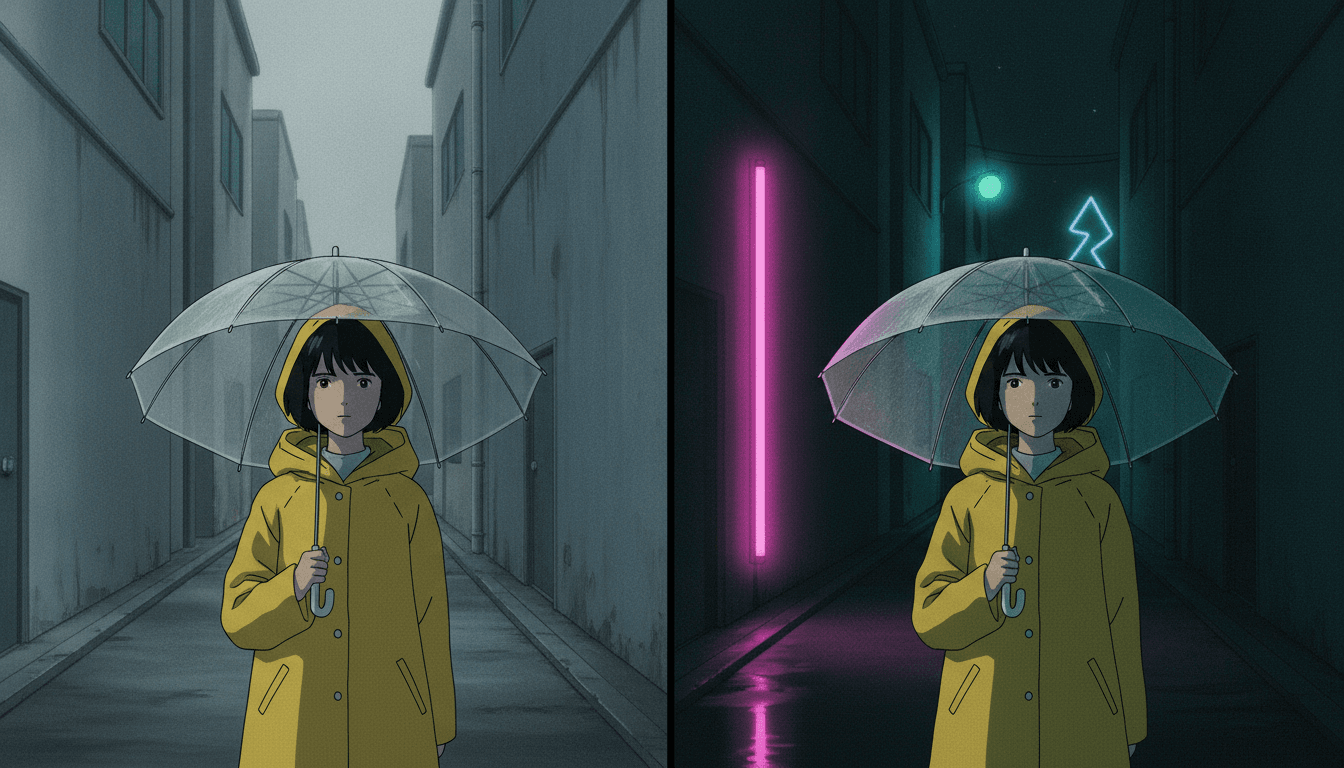
Look at one girl twice. Same black bob, same yellow raincoat, same clear umbrella, same alley. On the left it is a grey afternoon and nothing is switched on: the walls are flat grey, her coat is one even yellow, and the wet ground reflects nothing at all. It is a perfectly good drawing, and it could be any day.
On the right one magenta tube is switched on beside her. The alley falls away into deep teal, a lamp and a small blue zigzag come on behind, and a long magenta streak runs down the wet ground towards the viewer. To be honest about this render, the hard shadow we asked for down the middle of her face did not come back on this half; you can see that cut on the close-up further down. But the whole page now belongs to a light that somebody turned on. That is what this retro anime cel brief asks for, and the left half is what it refuses.
Its four refusals all keep the page away from anything soft or even.
Write Where the Light Comes From
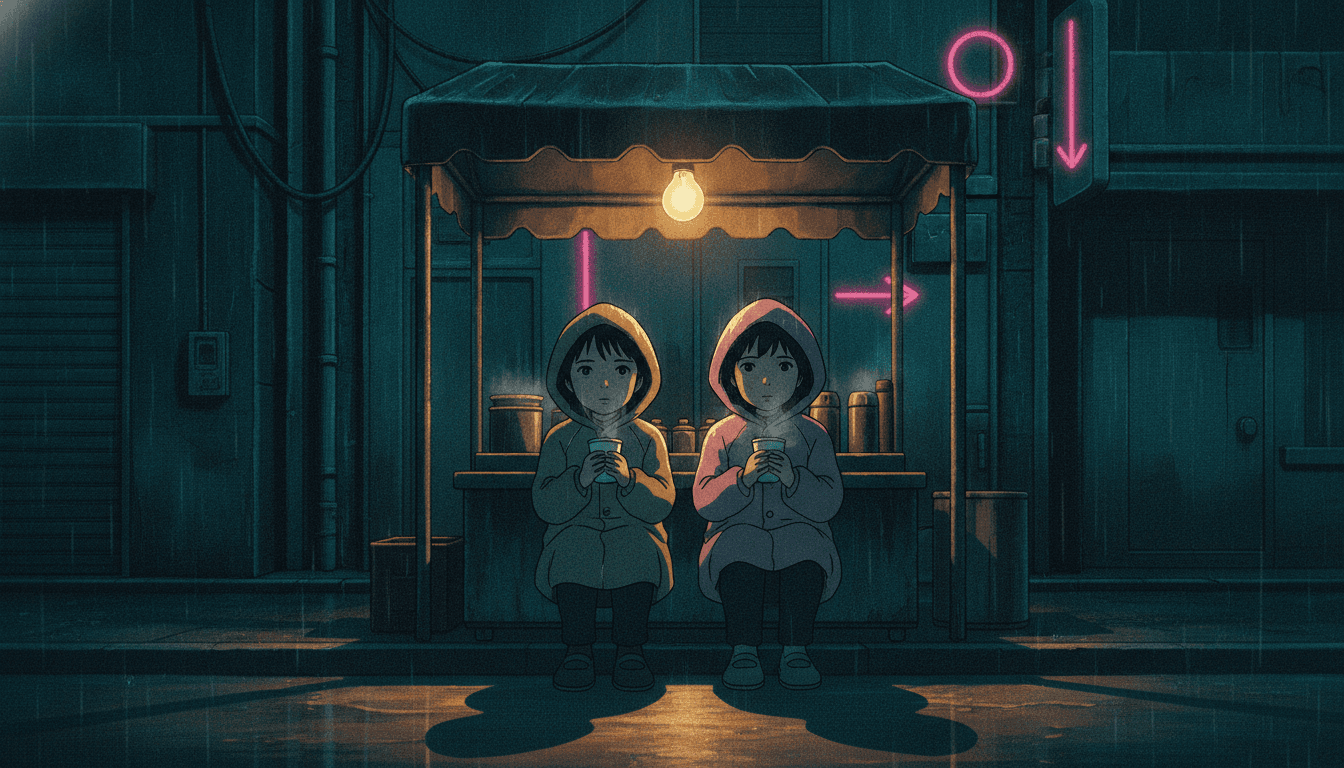
Two children sit in front of a closed food stall with steaming cups. The one bare bulb under the awning lights their hoods and their faces amber and throws their two shadows hard and forward across the wet street. Everything the bulb does not reach is teal. You can tell where the light is without seeing the night around it.
That is where the writing goes in this style. The brief insists on a hard light and gives you no daylight to fall back on, so every page needs a lamp of some kind, and if your story does not name one the picture will invent it, usually as a neon sign. Name it instead. “Under the one bulb at the food stall.” “In the glow of her grandmother’s old monitor.” “Caught in the scooter’s headlight.” The object tells the picture where the light stands, which side of the face goes dark, and what colour the whole page is.
In a book you do not write image prompts; C2Story writes them from your story, and a named light is the strongest thing it has to go on. A page that says “it was night” gets a dark street. A page that says “the tram’s one ceiling light” gets a mother and a sleeping child in a pool of amber.
From One Sentence to Retro OVA Cel Picture Books
You pick the look once. The brief is then applied to every page, so the cels, the painted streets and the grain never drift.
Describe the cast and the lights
Write a sentence or two about who is in the story and what happens, and decide what is switched on in each scene. Give each character one clear colour and say plainly if they are a child.
Choose Retro Cyberpunk OVA Cel
Pick the style from the Styles Library. From then on every page uses the same inked cel outlines, the same teal, magenta and amber, and the same painted night.
Get a whole book
C2Story writes the story, splits it into pages and illustrates each one. Regenerate any page you want to change without touching the rest, read it online, share it, or buy the PDF download to hand to a printer.
This Style and Its Three Nearest Neighbours
One shares the colours, one shares the decade and one shares the hard light and the grain. Here is what each actually asks for.
Retro Cyberpunk OVA Cel
The style on this page
A late-1980s dark cyberpunk cel animation still with sharp hand-inked outlines, moody dense acrylic-painted backgrounds, high-contrast hard light and shadow and golden-age analog film grain, with neon-lit urban interiors and rain-slick streets as the story requires. It refuses digital vector art, soft pastel shading, modern CGI gloss and flat lighting.
Saturated Cinematic
The same three colours, a different light
Its palette names deep teal, warm amber and vivid magenta, almost exactly the colours on this page. But its light is cinematic and dramatic without saying where it comes from, its colour is rich everywhere, and it cares most about where the camera stands. Choose it for a bright, full-colour film moment; choose the OVA cel when most of the page should be dark and the colour has to be switched on.
City Pop
Same decade, opposite light
Also the 1980s, also a city, also from Japan. City pop is flat, even pop lighting, clashing colour and generous white space: the city at noon, on a poster. The OVA cel is the same decade after dark, on a film. If your story happens on a sunny shopping street, that is the one.
Grainy Cinematic
The other hard light with grain
It also asks for a strong directional light and a film grain, but it has no outline at all and its light is the sun, so its shadows are slabs on the ground at a time of day. The OVA cel keeps a sharp inked line and moves the light indoors and under awnings, where somebody has to turn it on.
Story Ideas for Retro OVA Cel Picture Books
Each idea happens after dark in a city, and each one has a light somebody turned on, which is what this brief draws best. The brief also remembers the future as 1988 imagined it: boxy screens, cables, scooters and rain.
The Girl Who Fixed the Sign
One neon tube on her street has gone dark, and the whole alley feels wrong. A girl in a yellow raincoat sets out to find who can switch it back on.
Grandmother’s Repair Shop
Every broken radio in the city ends up on one workbench, and each one still holds the last song somebody heard on it.
The Night Delivery
A teenage rider has one last parcel to deliver before the rain gets worse, and the address keeps moving. A chase story with no villain and a lot of puddles.
Up on the Roof
A boy and his dog count the lights of the city from the roof every night, and one night a new one comes on that nobody can explain.
The Last Tram
A mother and her sleepy son ride the last tram across the city, and every stop they pass is lit by something different.
The City in 1999
A class of kids in 1988 draws what they think their city will look like in the future, then one rainy night they step into the drawing.
What Vintage Anime Cel Art Looks Like Across a Book
Pages generated to this one brief, with nothing retouched afterwards. Two honest notes: the food stall page asked for no neon at all, only the bulb, and the brief added a magenta circle and two arrows on the wall anyway. And the rider on the scooter was meant to be small in a wide street and came back much closer.
Nothing switched on, then one tube
One bulb under the awning
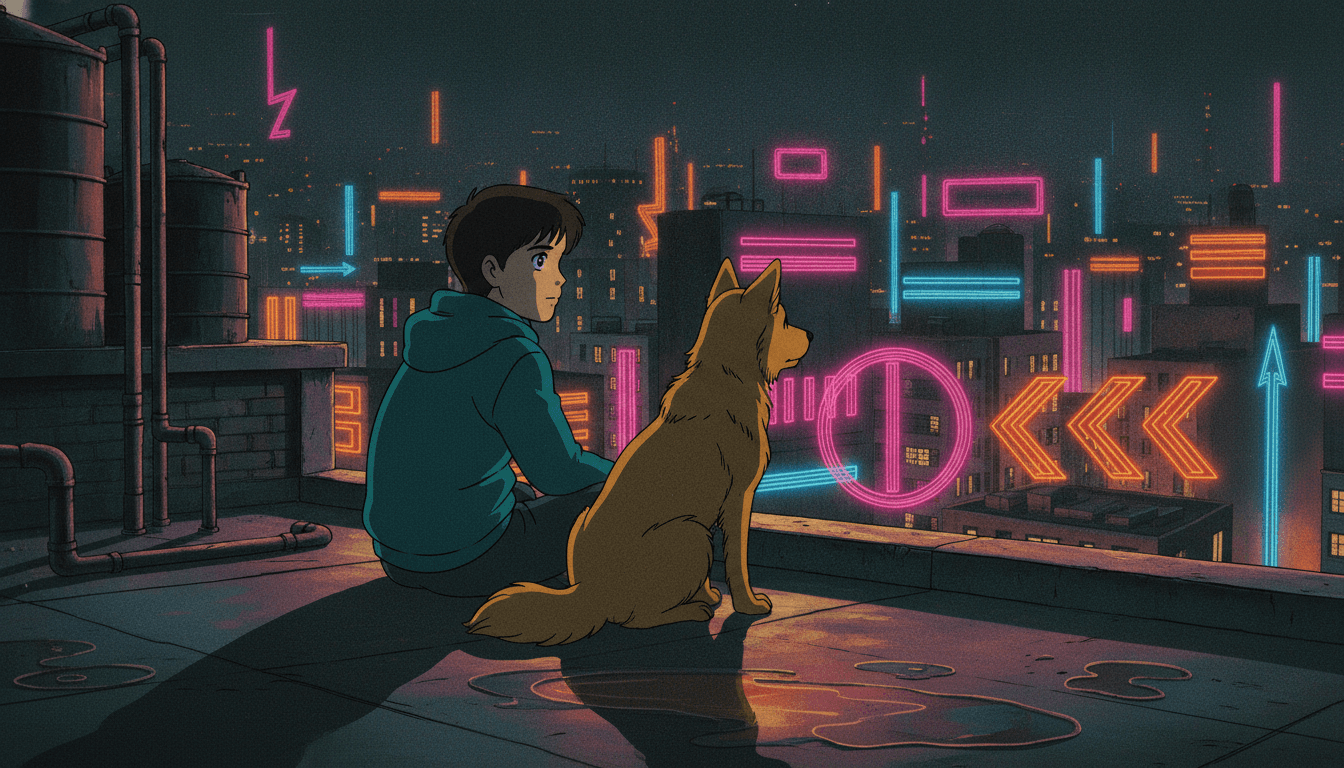
The whole city, switched on
A Night Cast, Held Steady
Here is where the design held and where it wandered. The girl keeps her bob, yellow raincoat, teal scarf and red boots through four views, but the turnaround came back evenly lit on a flat teal ground, with none of the hard light of the story pages. The boy at the window was meant to press his nose to the glass and kneels a little way back with his hands raised instead, and the bedside lamp lights him more than the neon does. The close-up shows the cut shadow at its clearest.
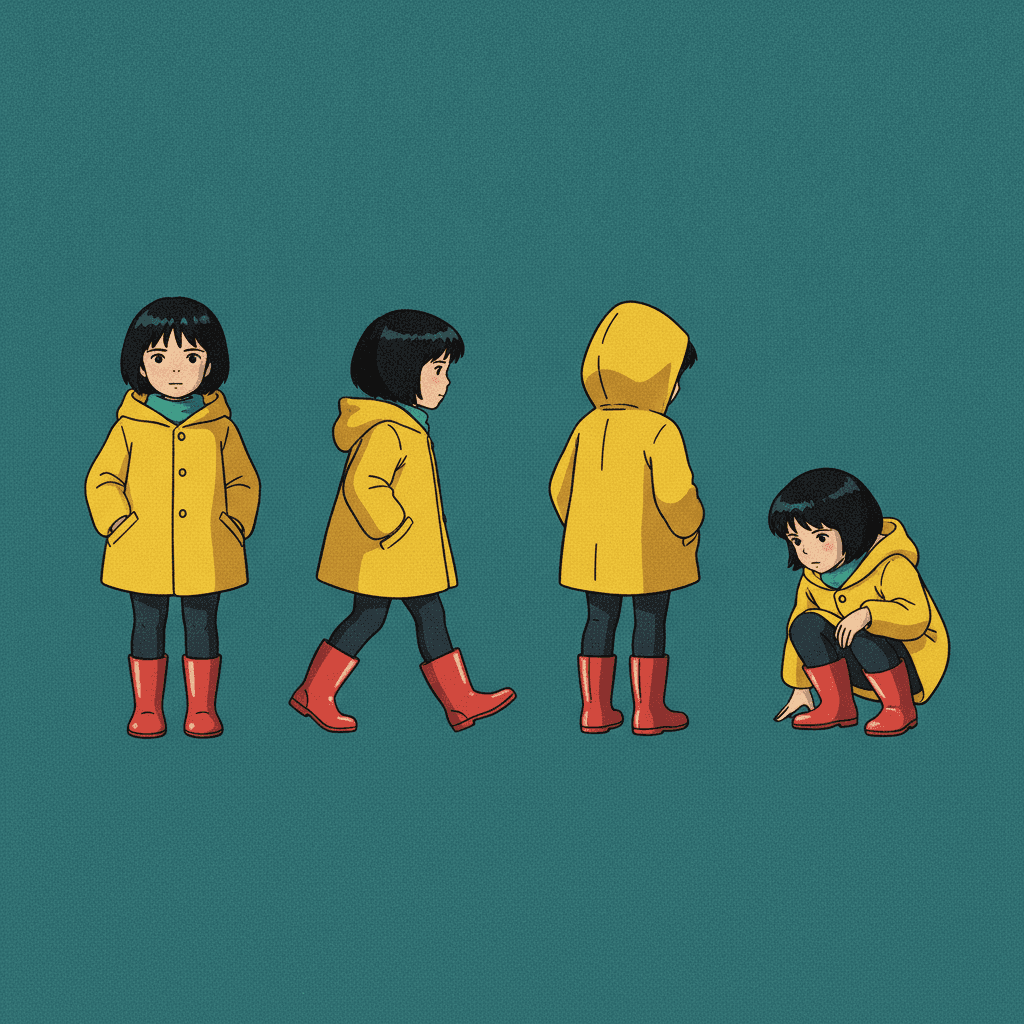
One girl, four views
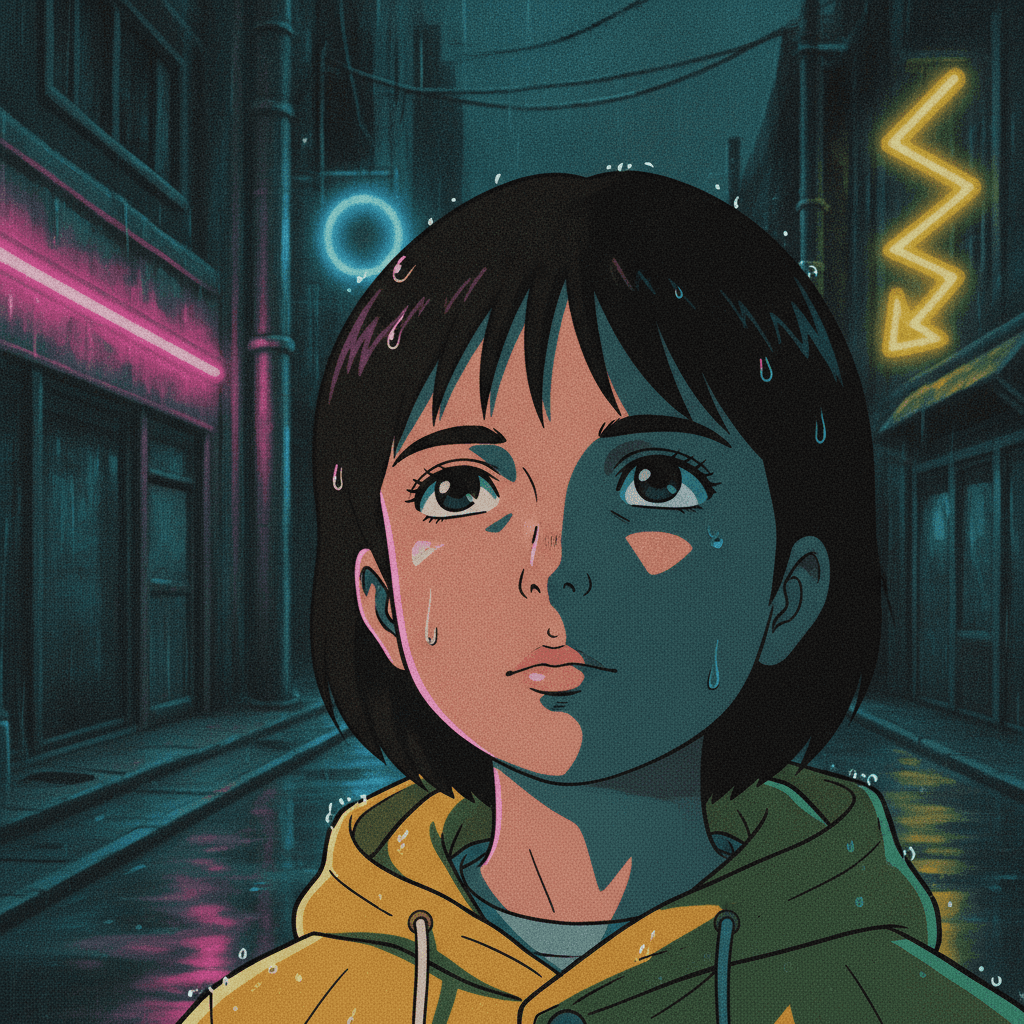
Half-lit, up close
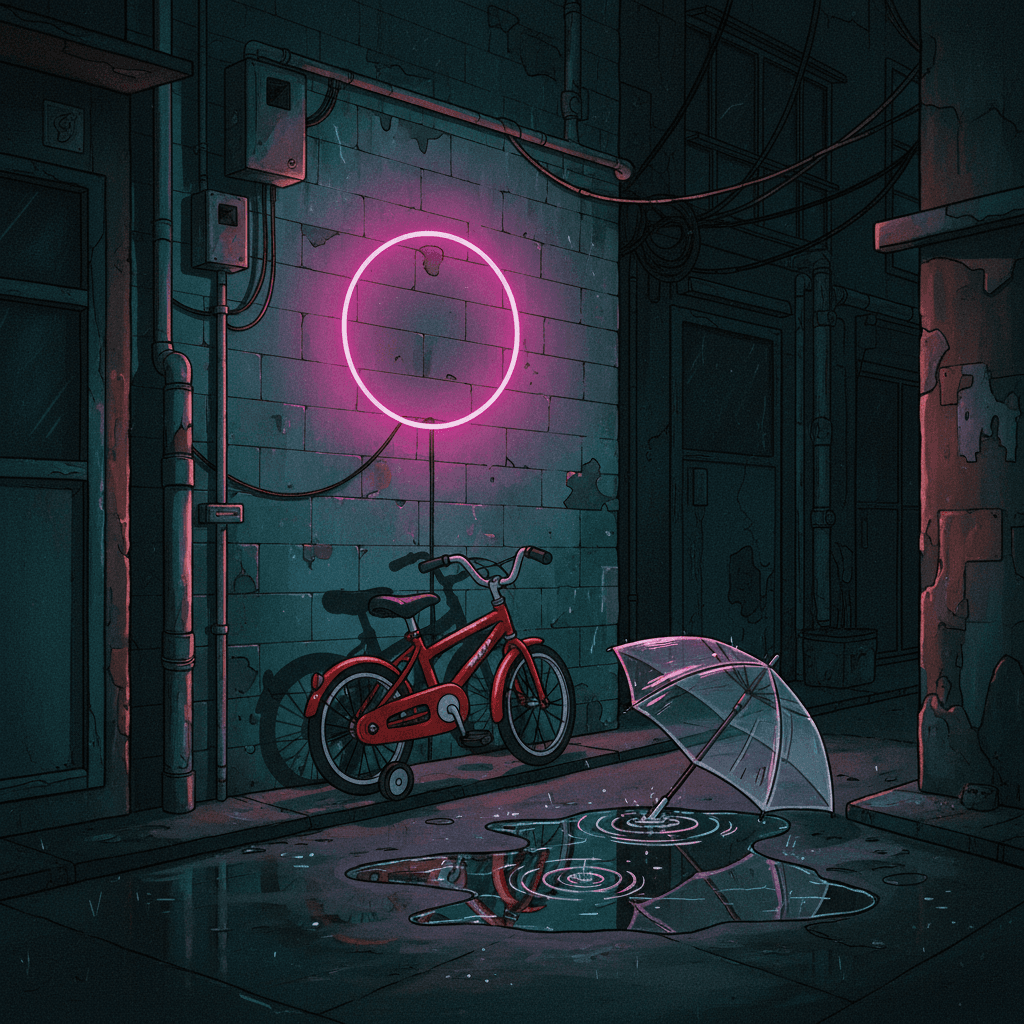
Left under the circle
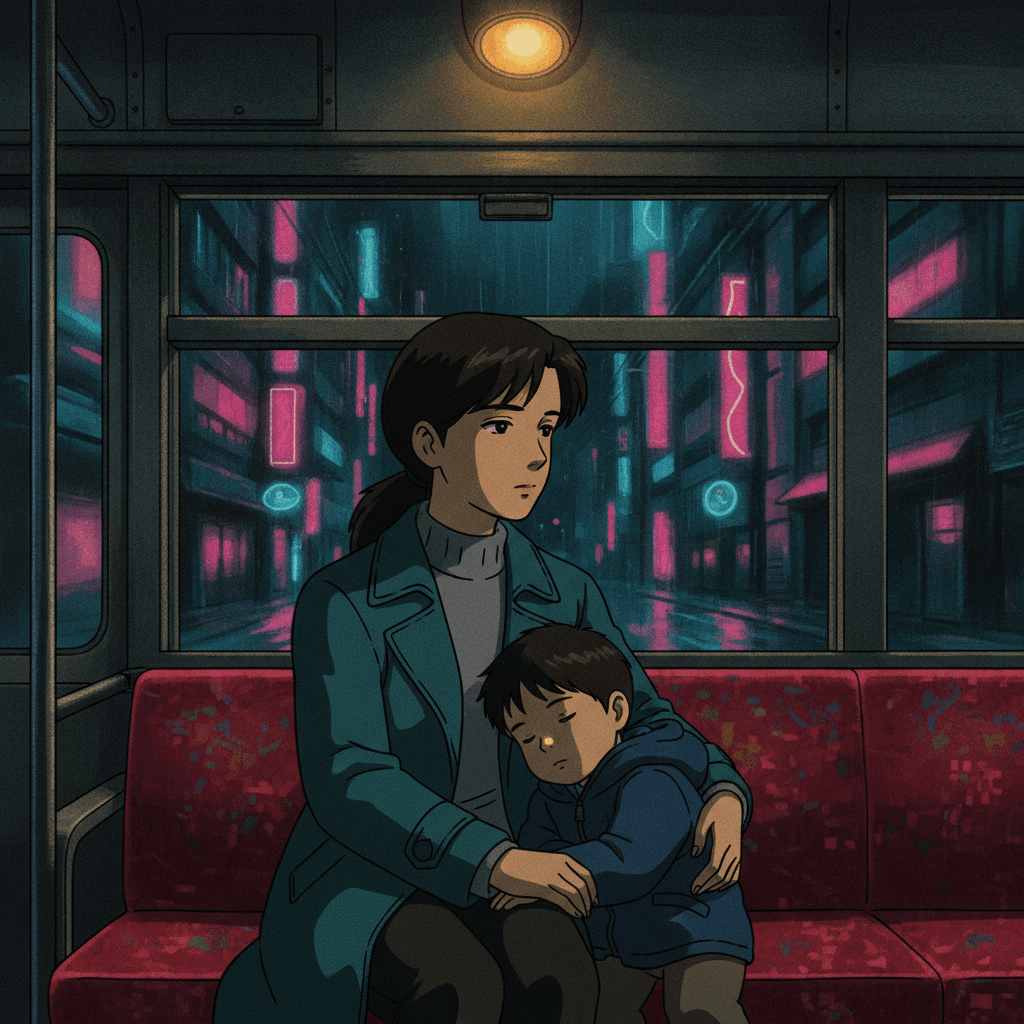
The last tram home
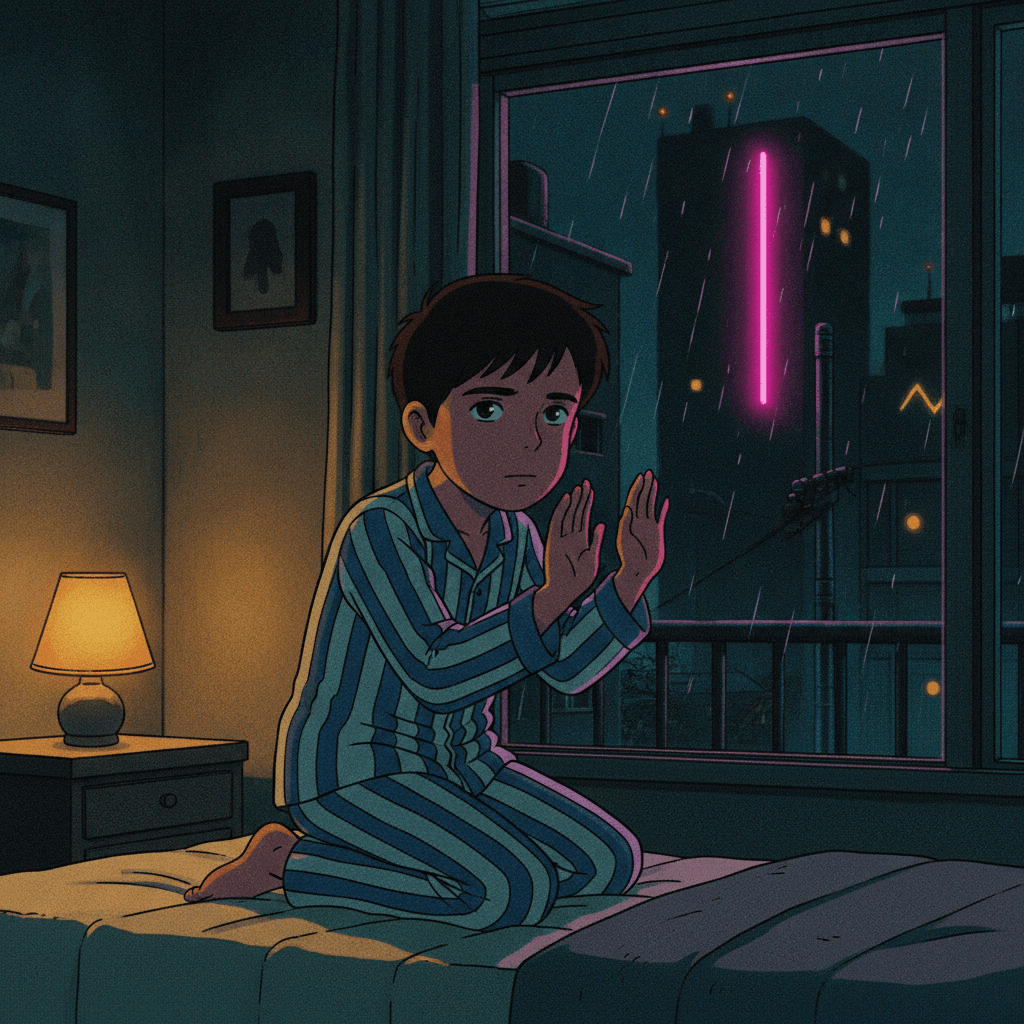
A lamp inside, a tube outside
Making Whole Retro OVA Cel Picture Books
What is useful in a book drawn this way and where the limits are, in the order you are likely to meet them.
One character, kept on model
Save each character in the Character Library with up to fourteen reference images and a short written description. One strong colour helps under neon: the girl on this page kept her black bob, yellow raincoat, teal scarf and red boots across four views. Characters made from an uploaded photo stay private to your account.
Write where the light comes from
The brief demands a hard light and will invent one if you do not. Name it in the story: a bulb under an awning, a headlight, a screen, a bedside lamp. The page is then built around that one object, and the shadows fall the right way.
Say who your hero is
The brief’s own sample is a cool, composed grown woman half-lit by neon, so the cast leans that way. If your hero is a child, a grandfather or a dog, say so plainly in their description. Every child on this page was described as a child and came back as one.
Neon wants to be writing
A neon sign usually spells something, so this style can drift towards letter-shaped tubes. Story text always sits beside the picture, never inside it, but if a background sign looks like a word, regenerate that one page. Naming a plain light source, like a bulb or a lamp, avoids it.
Night, by design
The brief refuses flat light and starts its palette with dark, so every page is evening or later and most are wet. That suits a city story, a mystery, a long ride home. It is the wrong brief for a beach day, a bright birthday party or very young readers at bedtime.
A whole book from a sentence
Describe the story in a sentence and C2Story writes it, splits it into pages and draws every page to the same brief, in English, Chinese, Japanese, Spanish, French and more. Read online, share a link, or buy the PDF download as the handoff to your printer. Pages are licensed for commercial use under the terms of service.
Other anime and night styles, each built on a different idea: for clean modern anime with screentone, anime picture books; for the same 1980s city in daylight, city pop picture books; for rich teal, amber and magenta with the camera placed on purpose, saturated cinematic picture books; for a hard sun and film grain with no outline, grainy illustration picture books; and for jewel tones by candlelight, dark fantasy picture books.
Questions About Retro OVA Cel Picture Books
Explore More Story Ideas
Discover more styles, tools, and story types
Pirate Stories
Treasure hunts on the high seas
Explore
Anime Picture Books
Dynamic anime-style illustrations
Explore
Bedtime Story Generator
Cozy goodnight stories for kids
Explore
ChatGPT vs C2Story
Purpose-built for picture books
ExploreRetro OVA Cel Picture Books: Inked Cels, Painted Night, Hard Light
Retro OVA cel picture books rest on a brief that knows where its light comes from. C2Story runs seventy-eight hand-drawn style briefs, each a short written record of a palette, a light, a line weight and a few refusals. Three of them name the source of their light, a candle, a torch and a neon tube, and the Retro Cyberpunk OVA Cel brief is the only one that plugs in. It is also the only brief that asks for neon, rain, acrylic backgrounds, a hard light and a single animation still.
The look is retro anime cel art in the 90s OVA style, though the brief itself names the late 1980s: sharp hand-inked outlines around flat cel colour, one hard-edged shadow per face, dense moody acrylic-painted streets and interiors, golden-age analog film grain, and a palette of moody dark tones, neon magenta, deep teal shadow and amber highlight. It refuses digital vector art, soft pastel shading, modern CGI gloss and flat lighting.
This vintage anime cel art suits city stories told after dark: a girl and a broken neon tube, a grandmother’s repair shop, a night delivery, a boy and his dog on a roof, the last tram home. Name the light on every page, give each character one clear colour, and say plainly who your hero is, because the brief’s own sample is a grown woman. It is a weaker fit for daytime scenes and very young readers. Characters stay on model through the Character Library, with up to fourteen reference images each.
The choice between neighbours is clear. Take saturated cinematic for the same colours in full light, city pop for the same decade at noon, and grainy cinematic for a hard sun with no outline. Take this style when most of the page should be dark and the colour should come from something switched on. Describe the story in a sentence and C2Story writes it, splits it into pages and draws every page to the same brief, with the paid PDF download as the handoff to your printer.