
Dark Fantasy Picture BooksThe Dark Is Where the Jewels Show
Of the seventy-eight style briefs here, only one names its palette after jewels — and it is the one that asks for the dark. A dark fantasy picture book comes from that brief: gorgeously dressed characters in burgundy, midnight blue, violet and old gold, lit by a single candle in a room you can still make out. Beautiful, never horror.
- Gorgeously dressed characters with worn ornament
- A jewel-toned palette with antique gold
- Dramatic chiaroscuro in a furnished dark
- Free credits by request — no card
50,000+
Stories Created
10,000+
Active Creators
50+
Art Styles
4.9/5
User Rating
What Makes Dark Fantasy Illustration Different From Every Other Dark Style
Every style here is a written brief — a palette, a light, a line weight, a short list of refusals. Four lines in this one decide everything, and the most revealing of them is a single adjective in the palette.
The only palette in the library named after jewels
Every style in C2Story runs on a short written brief — a palette, a light, a line weight and four things to avoid. Seventy-eight of them are live, and exactly one describes its colour as jewel-toned. The palette is deep burgundy, midnight blue, dusky violet and antique gold: garnet, sapphire, amethyst and old gold thread. That word is doing real work, because a jewel is the one kind of colour that needs darkness around it to look rich. Lay a garnet on a white tablecloth and it reads as a dull red stone; hold it up beside a candle in a dim room and it glows. The rest of the brief is built to give these colours that room.
Gothic, and meant to be beautiful
Only two briefs out of seventy-eight use the word gothic, and they mean opposite things by it. The crosshatch gothic brief is cold, understated and macabre, built for black humour, and it refuses colour altogether. This one asks for a beautiful gothic mood. Its characters are gorgeously dressed — a phrase no other brief uses — and its finish is described as refined and aesthetic. It is worth saying what is not in it, too: not one of the seventy-eight briefs asks for anything scary, sinister or grim. Dark fantasy here means candlelit halls and velvet, not monsters.
It refuses a flat light and an empty background — both
Two briefs refuse flat lighting: this one and a dark cyberpunk cel style. Three refuse a plain background: this one, a busy animal-town brief and the guochao brief. This is the only brief on both lists. Put together, the two refusals describe exactly what kind of dark it wants. The darkness must be lit — one strong source, falling hard on a face and a sleeve — and the darkness must be furnished, with pillars, drapes, a staircase or a bookshelf just visible in it. A black void behind a character breaks the brief as surely as a sunny noon does.
The ornament is worn, not built
Plenty of briefs ask for ornament. What matters is where it goes. The guochao brief puts its pattern on the place — carved railings, tiled roofs, painted beams. This brief puts it on the person: elaborate ornamentation on gorgeously dressed figures, embroidered cuffs, braided fastenings, lace collars, a thin circlet. It also asks for a silhouette-first figure whose face shape, proportions and hands form a distinct visual language, with expression and body language driven by real personality rather than a generic chibi face. So the costume is never a uniform. Each character wears their own outline and their own temper.
In a Dark Fantasy Picture Book, the Shadow Is a Display Case
Most dark styles use their darkness to hide something. A shape in a doorway, a figure half lost in mist, a face lit from below — the reader fills in what the picture holds back. That is how a gothic picture usually gets its shiver.
This brief uses it the other way round. Its light is recorded as dramatic moody chiaroscuro — one of only two chiaroscuro lighting fields in the library — but what the light falls on is a costume. A velvet coat, a gold-embroidered cuff, a lace collar. The dark around it is a deep blue and violet room with drapes and pillars in it, there to make the burgundy look like a garnet and the gold thread catch.
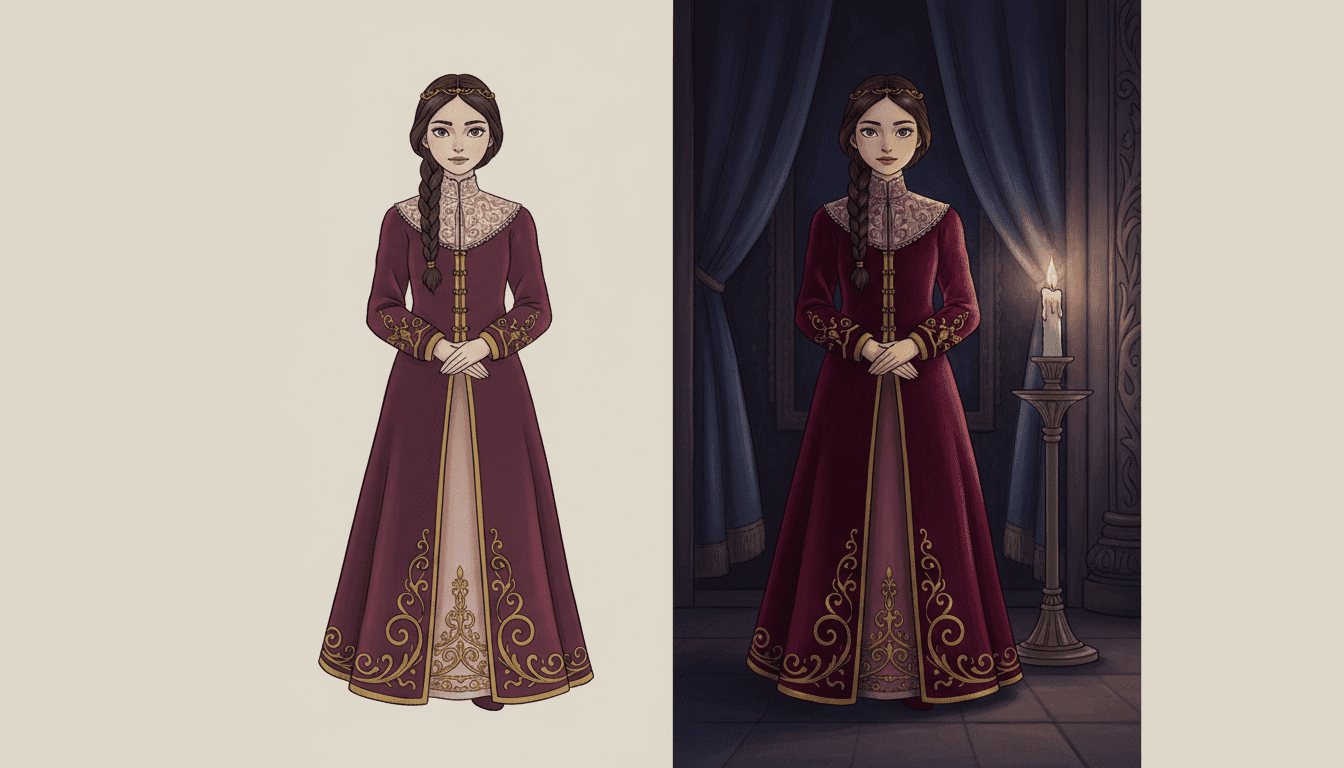
The picture beside this shows the thesis of dark fantasy illustration in one go: the same girl in the same dress, once in flat light against nothing, once beside a candle in a dark room hung with drapes. The costume does not change. Whether it looks precious does.
Write the Night Somebody Dressed Up For
Here is the practical consequence of a brief that dresses its characters gorgeously and then puts them in the dark. Nobody in this style is ever in their everyday clothes, and nobody is ever simply out at night. Every page reads as an occasion: a ball, a coronation, a midnight visit, a story told in somebody's best lace. The pictures assume that tonight matters and that someone got ready for it.
So write the occasion. Tell the story what the evening is and who put on what for it — the burgundy coat that was her grandmother's, the cloak that is slightly too big, the circlet she is not sure she is allowed to wear. Because the brief asks for personality in every face and a distinct silhouette for every figure, the costume and the character arrive together: what someone chose to wear into the dark is the first thing a reader learns about them.
Which changes what you should leave out. For most dark styles the useful note is the threat: the cold, the noise, the thing behind the door. For this one it is the reason to be up so late — and the test of a page is whether it looks like someone is expected.
From One Sentence to a Candlelit Book
You pick the look once. The brief is then applied to every page of the story, so the coat on page one is the same coat on page thirty.
Describe the occasion and the clothes
A sentence is enough, and a costume in it goes a long way. Not a girl walked through a dark castle — a girl in her grandmother’s burgundy coat went down to the midnight ball. The style supplies the shadow; you supply the reason to be dressed.
Choose Ornate Dark Fantasy
Picking it fixes the whole brief at once: gorgeously dressed silhouette-first figures, fine ornate outlines, deep burgundy, midnight blue, dusky violet and antique gold, dramatic moody chiaroscuro, a furnished background, and the four refusals.
Get a book, not one portrait
C2Story writes the story, splits it into pages and builds each page to the brief according to what that page says. Your words are set as type rather than painted into the art. Read it on the web, share it, or buy the PDF to hand to a printer.
This Style and Its Three Nearest Neighbours
Four looks in the library sit close to this one. Here is what each actually asks for, so you can take the right one rather than the first one.
Ornate Dark Fantasy
The style on this page
An ornate dark-fantasy figure illustration: gorgeously dressed characters in a beautiful gothic mood with intricate decorative detail. Silhouette-first design where face shape, head-to-body ratio and hand and foot forms make a distinct visual language, and expression driven by real personality rather than a cute default. Its palette is deep burgundy, midnight blue, dusky violet and antique gold, its line is fine ornate outlines, and its light is dramatic moody chiaroscuro. It refuses photorealism, generic chibi faces, flat lighting and plain backgrounds.
Crosshatch Gothic Ink
The other gothic brief — same light, opposite mood
The comparison to make first. These are the only two briefs that say gothic and the only two whose light is chiaroscuro. Then they split completely. Crosshatch gothic is black ink on white paper, refuses colour, builds its shadow out of thousands of fine hatched strokes, and points its mood at quirky macabre characters and cold black humour. This brief paints its shadow in deep blue and violet, keeps full jewel colour, and points its mood at beauty. Take crosshatch for a darkly funny story; take this for a darkly lovely one.
Guochao Decorative Character
Just as dense, just as ornate — the ornament is on the walls
The other brief that refuses an empty background, and its closest relative in appetite. Both crowd the frame, both draw silhouette-first characters, both use a lot of gold. The difference is where the ornament lives. Guochao builds it into architecture and street furniture under flat decorative light in crimson and gold; this brief stitches it into clothing under candlelight in burgundy and violet. If the place is the point of your story, take guochao. If the person in the costume is, take this.
Gongbi Vintage Fantasy
Finery and graceful figures — lit evenly instead
The brief that shares this one’s love of dress. Gongbi vintage fantasy draws elegant mythic figures in traditional costume with delicate ornamental detail and muted gold, and calls its mood refined and luxurious. But its light is soft luminous even light, and its mood is ethereal and serene. Nothing falls into shadow. The two make a neat pair: the same appetite for beautiful clothes, shown once in a bright calm room and once by a single candle. Take gongbi for serenity; take this for drama.
Dark Fantasy Story Ideas That Suit the Brief
Each of these plays to the same strength: an evening that matters, a character dressed for it, and one good light to see them by.
The Midnight Coronation
A small prince has one night to learn how to wear a crown before morning. A story about dressing up into a role, in a style that draws every button of the costume.
An Invitation to the Moon Queen’s Ball
The card arrives at bedtime and the dress is already laid out on the chair. Every page is an occasion, which is exactly what this brief is built to light.
Grandmother Tells It by Candlelight
A story inside a story, told in a dark sitting room by somebody in her best lace. One candle, two faces, and a room full of furniture listening in the shadows.
The Library That Opens After Dark
Once the house is asleep the shelves go on for ever. Furnished darkness — tall cases, a ladder, a reading lamp — is what the brief asks for in place of a plain background.
The Key in the Velvet Cuff
Someone sewed a key into a coat sleeve a hundred years ago. A mystery that begins with embroidery, in a style whose detail lives on the clothes.
The Winter Garden Rose
A girl in a violet cloak looks after the one rose that blooms at night. Moonlight, lantern light and jewel colour, with nothing frightening anywhere in the dark.
What Jewel Tones and Chiaroscuro Actually Look Like
Three images generated to this one brief, with nothing retouched afterwards.
The Same Dress, With and Without the Dark
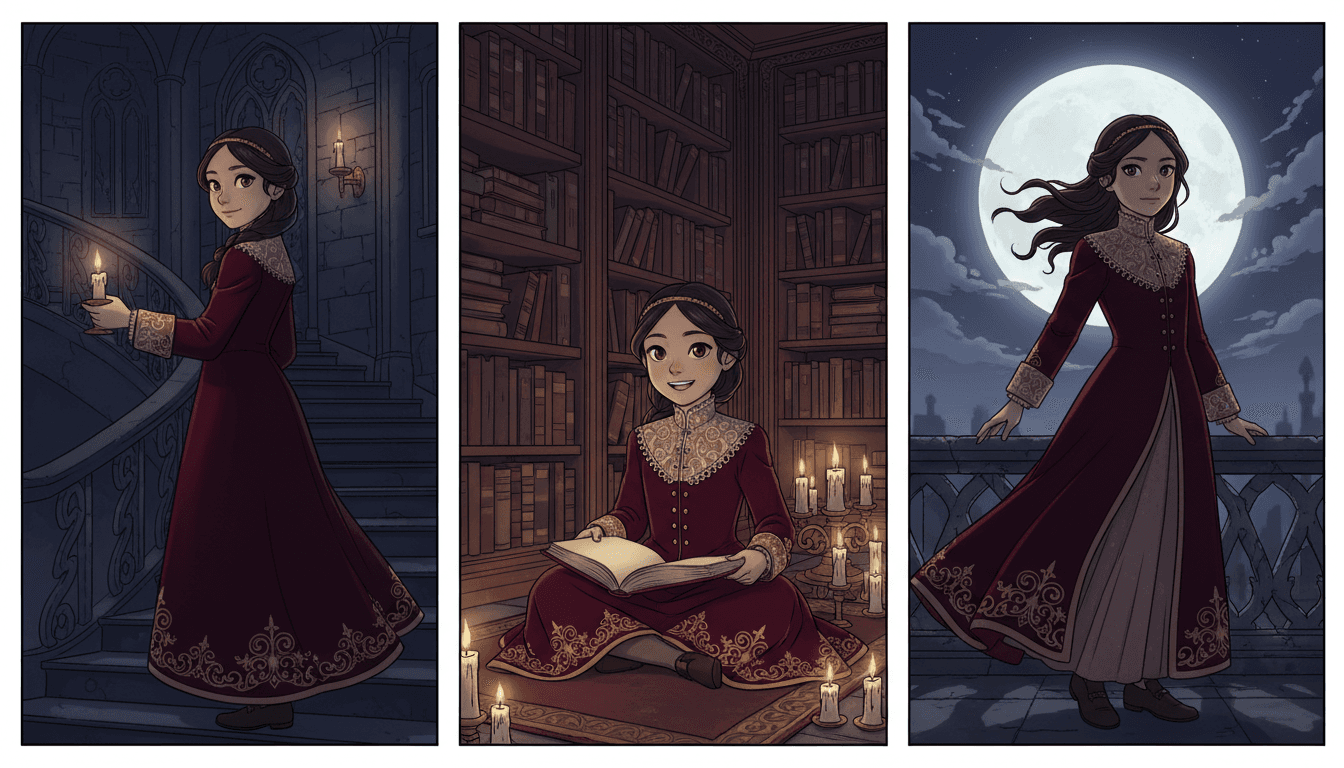
The Same Coat, Three Rooms
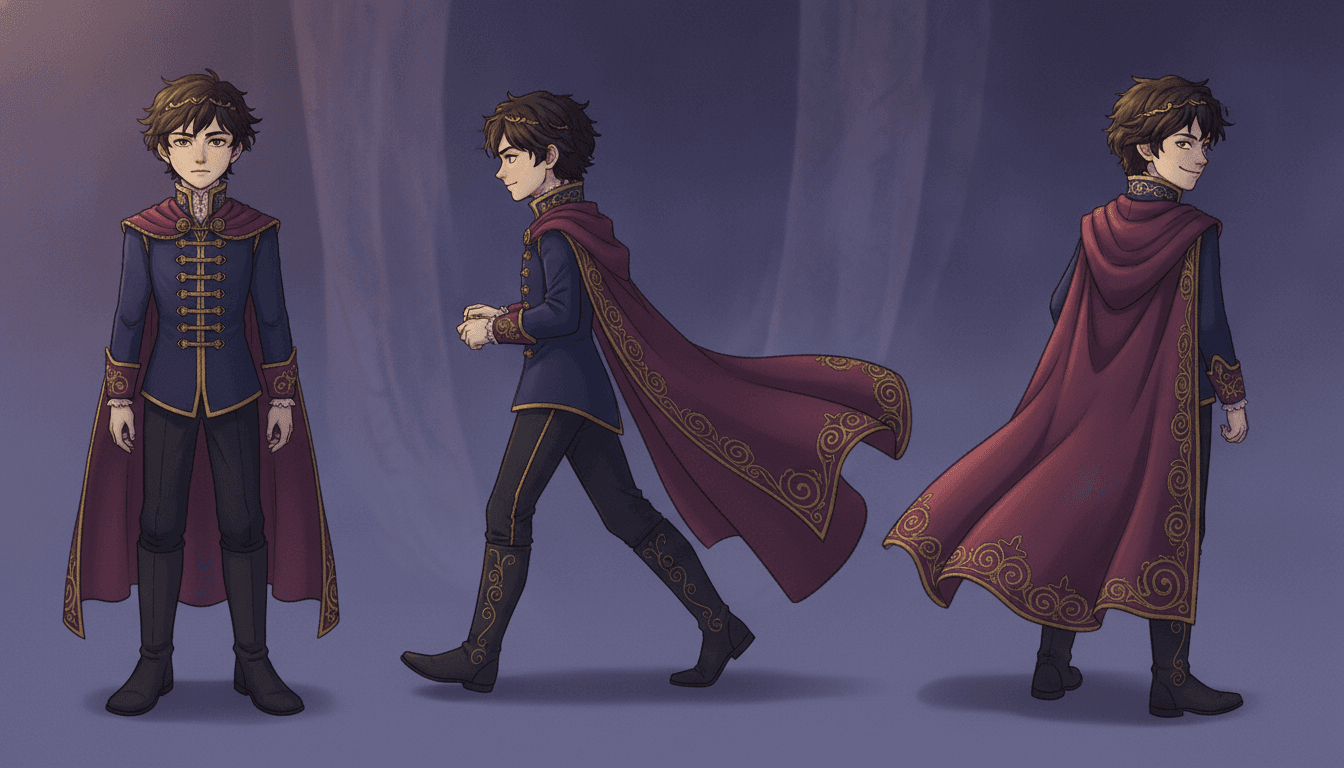
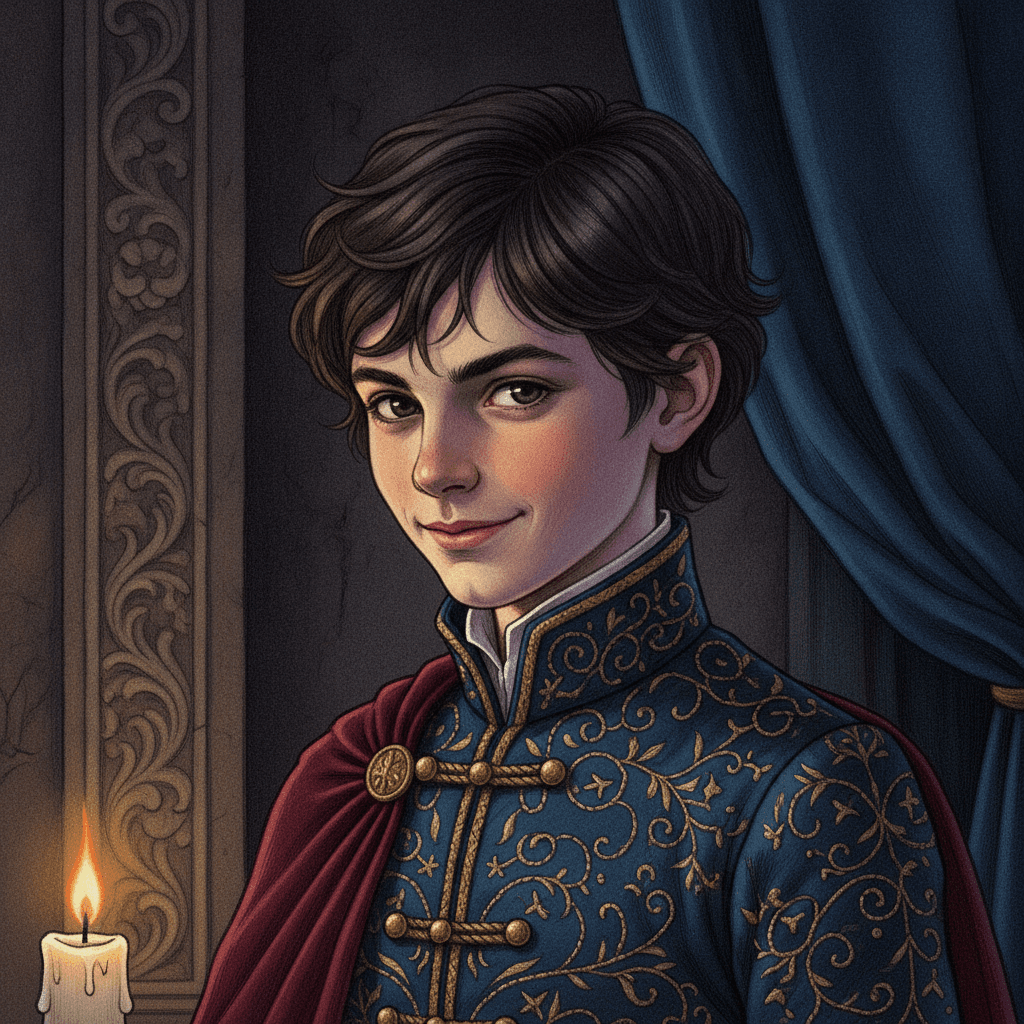
One Boy, Three Turns of the Cape
Five Pages Where Somebody Is Expected
Same brief, same four colours, same single light — and a different reason to be up late each time.
He Knows Something You Do Not
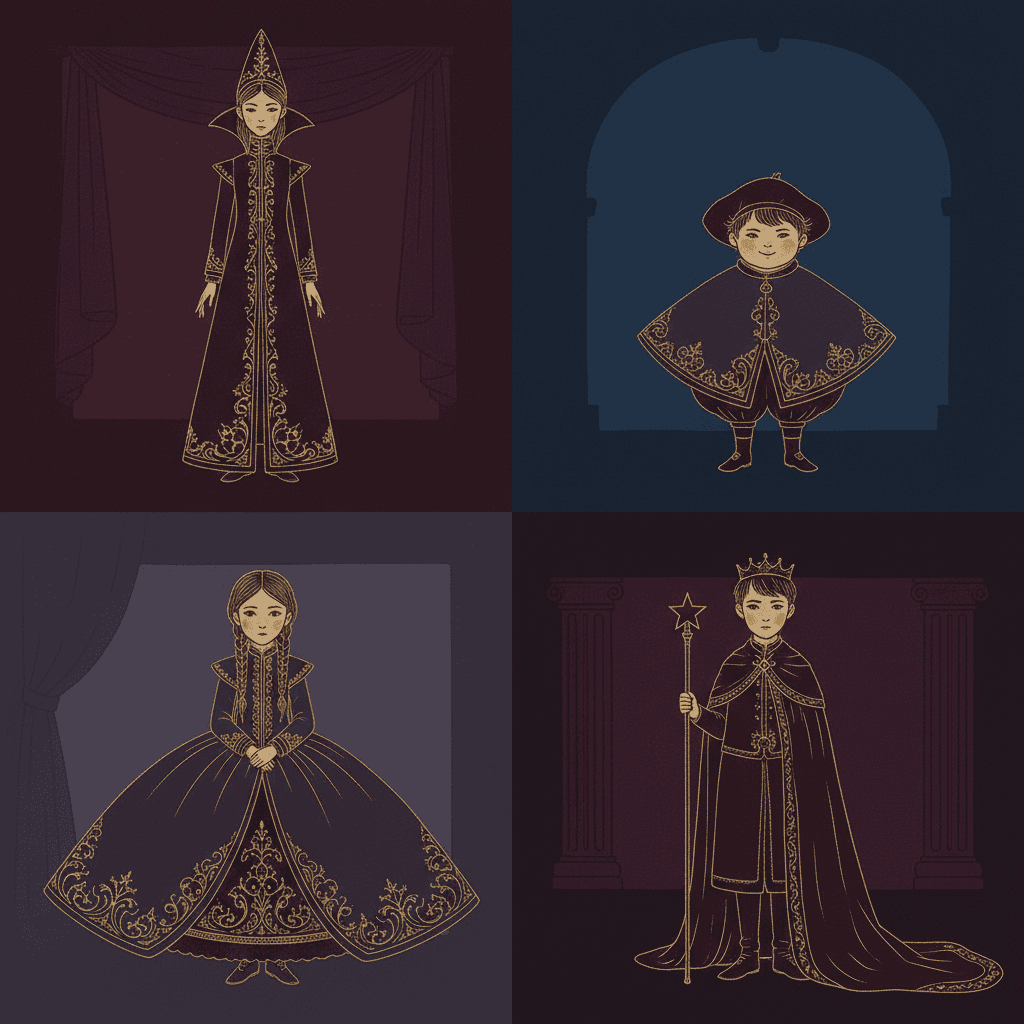
Four Children, Four Silhouettes
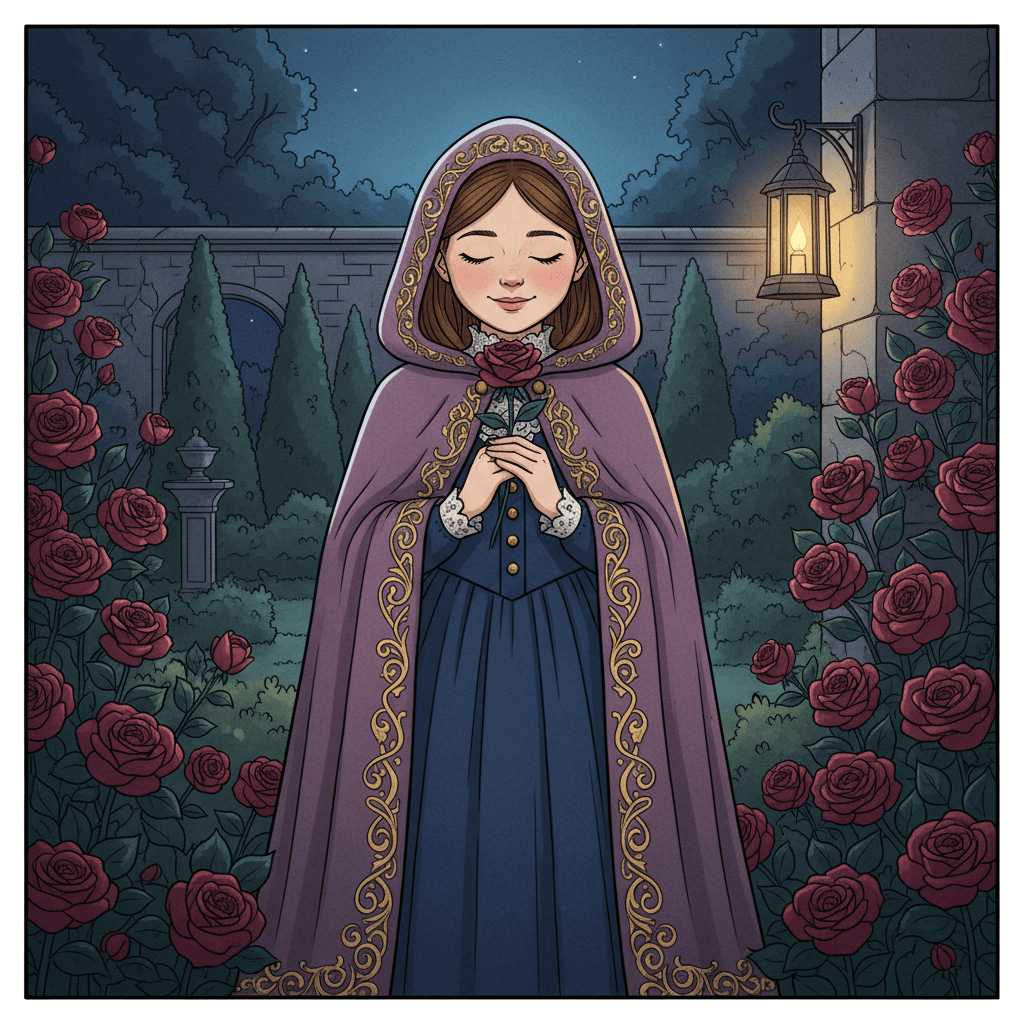
The Rose That Opens at Night
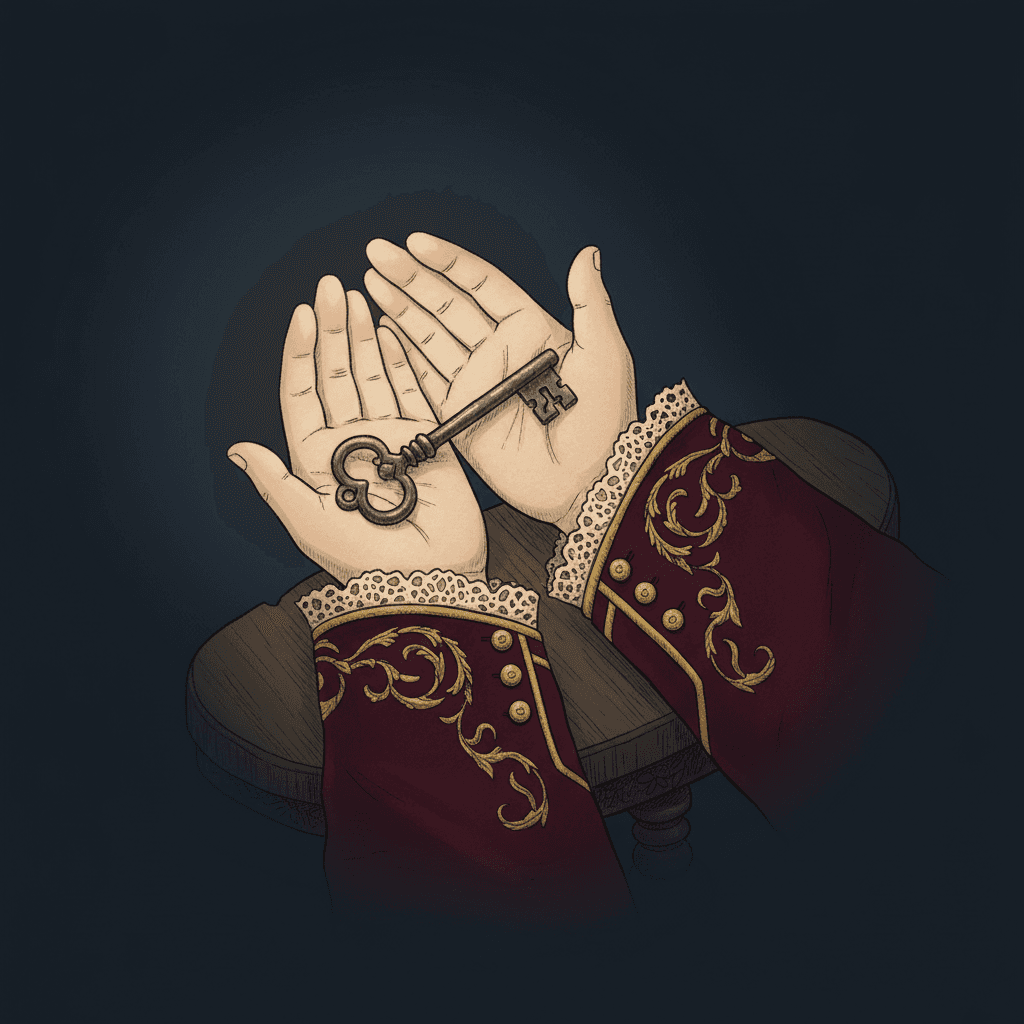
The Key Was Sewn Into the Cuff
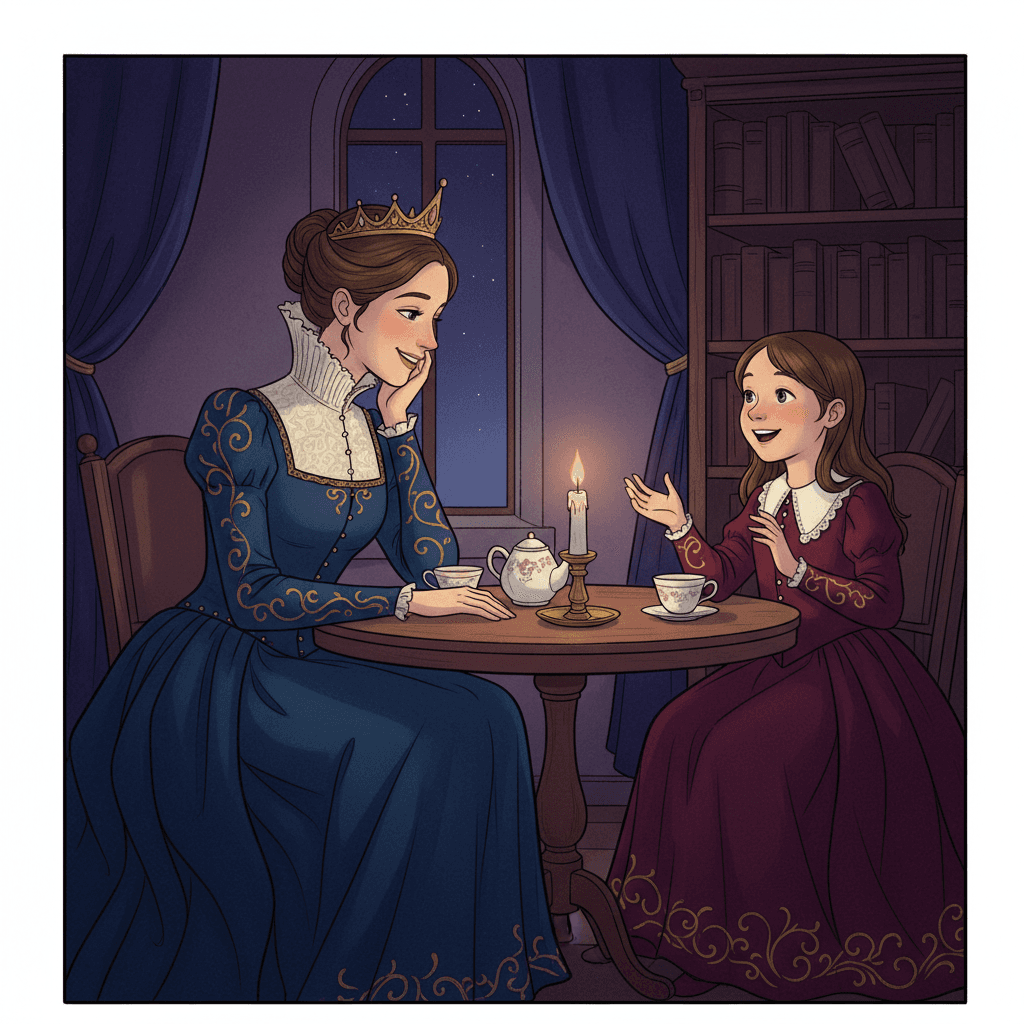
Tea at Midnight, and She Is Listening
Making a Whole Dark Fantasy Picture Book, Not One Image
The useful things and the honest limits, in the order they are likely to matter to you.
A costume that survives forty pages
Ornate clothing is the first thing to drift when images are generated one at a time: the embroidery moves from the cuff to the collar, the buttons multiply, the cloak changes colour. C2Story carries one fixed brief into every page so the palette, the line and the light hold steady, and each character can be saved in the Character Library with up to fourteen reference images — enough to pin down a particular burgundy coat with a particular gold hem. Characters built from an uploaded photo stay private to your account.
Four colours, written down
The palette is part of the brief rather than left to taste: deep burgundy, midnight blue, dusky violet and antique gold, under a dramatic moody chiaroscuro and drawn with fine ornate outlines. That is why the pages of one book look like they belong together even when the scenes change from a hall to a garden to a tower. One honest note: there is no global greyscale switch in C2Story, so if you want a gothic story in pure black and white, pick a brief that is monochrome by design — crosshatch is the obvious one.
What you are giving up, said plainly
You are giving up the daytime. Flat lighting is one of the brief’s four refusals, and its palette has no sky blue, no grass green and no white, so a sunny picnic, a beach or a bright classroom will fight the style at every page. You are also giving up simplicity: a plain background is refused, so an empty page for one quiet figure is not on offer. If your story lives outdoors at noon, look elsewhere. If it lives indoors after dark, this is built for it.
Dark without being frightening
The reasonable worry about a dark fantasy style in a children’s book is that it will scare someone. This brief is unusually safe for the genre because of what it uses the dark for. The shadows are a backdrop for finery, not a hiding place: the light always falls on a face and a costume, and the room behind is a furnished room you can make out. Nothing in the brief asks for a monster, and its mood words are beautiful, refined and gorgeous. Children who are wary of the dark usually find candlelight and velvet more inviting than alarming.
A whole book, not one portrait
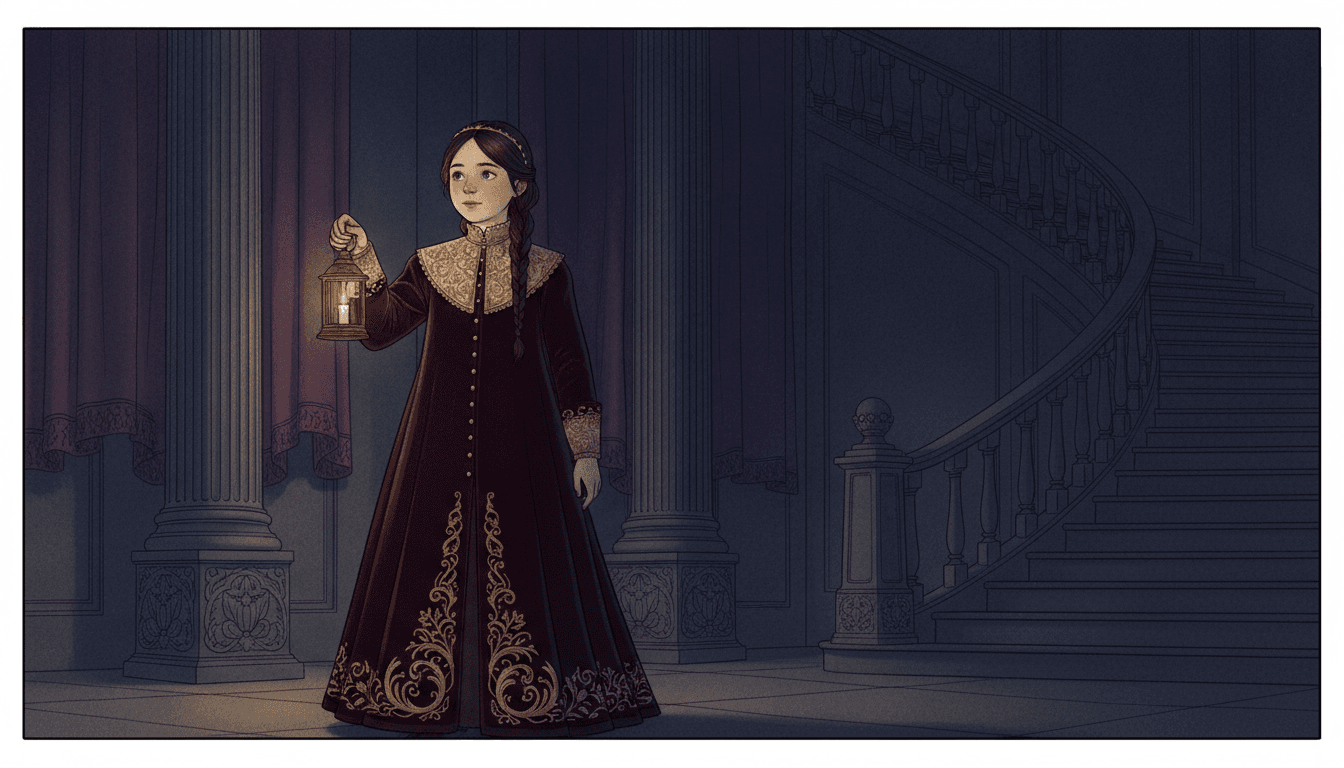
A girl in a velvet gown holding a lantern is exactly the kind of image that looks finished on its own and tells you nothing about a thirty-page story. You are not prompting for one picture. Describe the story and C2Story writes it, splits it into pages and builds each page to this brief according to what that page says. Your words are set as type rather than painted into the art. Write in English, Chinese, Japanese, Spanish, French and more. The paid PDF download is the handoff to your printer, and everything you make is licensed for commercial use.
Honest about the age this one suits
This is not a toddler style. Very young children read one big friendly shape on a clear ground, and a brief that refuses plain backgrounds and asks for deep shadow will not give them that. It comes into its own from around five, when children start to love dressing up and the idea of a story that happens after bedtime, and it carries on comfortably into the early teens and for adult readers of fairy tales. For younger readers who want a castle story in daylight, a brighter storybook style is the better choice.
A note on where this one sits in the wider map. For the other gothic brief — black ink, hatched shadow and a dry sense of humour — see crosshatch picture books, and for the same density of ornament built into walls and roofs instead of clothes, guochao picture books. For strangeness with no darkness at all, wild ink picture books; for hard theatrical light on a modern scene, saturated cinematic picture books. And if the clothes are the whole point but you want them on a white page with no light at all, fashion illustration picture books draw the garment in a single unvarying line instead.
Questions About Dark Fantasy Picture Books
Explore More Story Ideas
Discover more styles, tools, and story types
Animal Stories
Charming tales with cute creatures
Explore
Graffiti Picture Books
Crude marker strokes, crowns & scrawled symbols
Explore
Bedtime Story Generator
Cozy goodnight stories for kids
Explore
Storybird Alternative
Better AI story creation
ExploreWrite the Night Somebody Dressed Up For
A burgundy coat. A gold-stitched cuff. One candle and a hall full of shadows that are only there to make it shine. This is the only style here with a jewel-toned palette — so decide what the evening is, and who got ready for it.
Free credits by request · No credit card required
Dark Fantasy Picture Books — Jewel Tones, Worn Ornament and a Light That Shows Them Off
A dark fantasy picture book on C2Story is built on one unusual instruction. The library runs seventy-eight hand-drawn style briefs, each a short written record of a palette, a light, a line weight and four things to avoid, and exactly one describes its palette as jewel-toned: deep burgundy, midnight blue, dusky violet and antique gold. Jewel colours only look rich with darkness around them, and the rest of the brief is arranged to provide it — a dramatic moody chiaroscuro light, a refusal of flat lighting, and a refusal of plain backgrounds, a pair of refusals no other brief makes together. The result is dark fantasy illustration in which the dark is a furnished, candlelit room and the light falls on a costume.
It is also the beautiful branch of the gothic. Only two briefs use the word gothic and only two are lit by chiaroscuro, and they are the same two. Crosshatch gothic takes that light into black ink and macabre black humour; this one keeps full colour and asks for a beautiful gothic mood with gorgeously dressed characters and a refined finish. That makes it a genuine ornate gothic art style for children's books rather than a horror one — none of the seventy-eight briefs asks for anything scary — and a natural dark fairytale style for stories of balls, coronations, night gardens and towers.
The ornament is the other half of the look. Where the guochao brief builds its decoration into roofs and railings, this one stitches it into clothing: embroidered cuffs, braid, lace collars, small circlets, all drawn with fine ornate outlines. The figures are silhouette-first, with a face shape, proportions and hands that form a distinct visual language, and the brief refuses generic chibi faces so that expression comes from personality. It refuses photorealism too, which keeps the finish painted rather than photographic. The honest limits follow from the same choices: no bright daytime, no empty background for a quiet single figure, and not a style for toddlers, though it suits roughly five and up very well.
The practical payoff is a change in what you write. Because the pictures dress everyone up and then light them in the dark, every page reads as an occasion — so write the evening and what each character put on for it, rather than what is lurking. Describe your story in a sentence and C2Story writes it, splits it into pages and builds every page to the same brief, holding each character and costume steady with up to fourteen reference images — in English, Chinese, Japanese, Spanish, French and more, with the paid PDF download as the handoff to your printer and everything you make licensed for commercial use.