
Single Panel Cartoon BooksThe Joke Is the Situation
Seventy-eight style briefs run this library, and only one is built around a situation. Single panel cartoon books come from that one: an ordinary room drawn in full, people with perfectly straight faces, and one thing in the picture that should not be there.
- The setting and props drawn in full, because they are the setup
- Deadpan, straight-faced people who never give the joke away
- Clean black pen line and a soft grey wash, no colour
- Free credits by request, no card
50,000+
Stories Created
10,000+
Active Creators
50+
Art Styles
4.9/5
User Rating
What Makes Single Panel Cartoon Books Different From a Funny Drawing
Every style here is a written brief: a palette, a light, a line weight and a short list of refusals. Four lines in this one decide everything, and the first is the one no other brief contains.
The only brief built around a situation
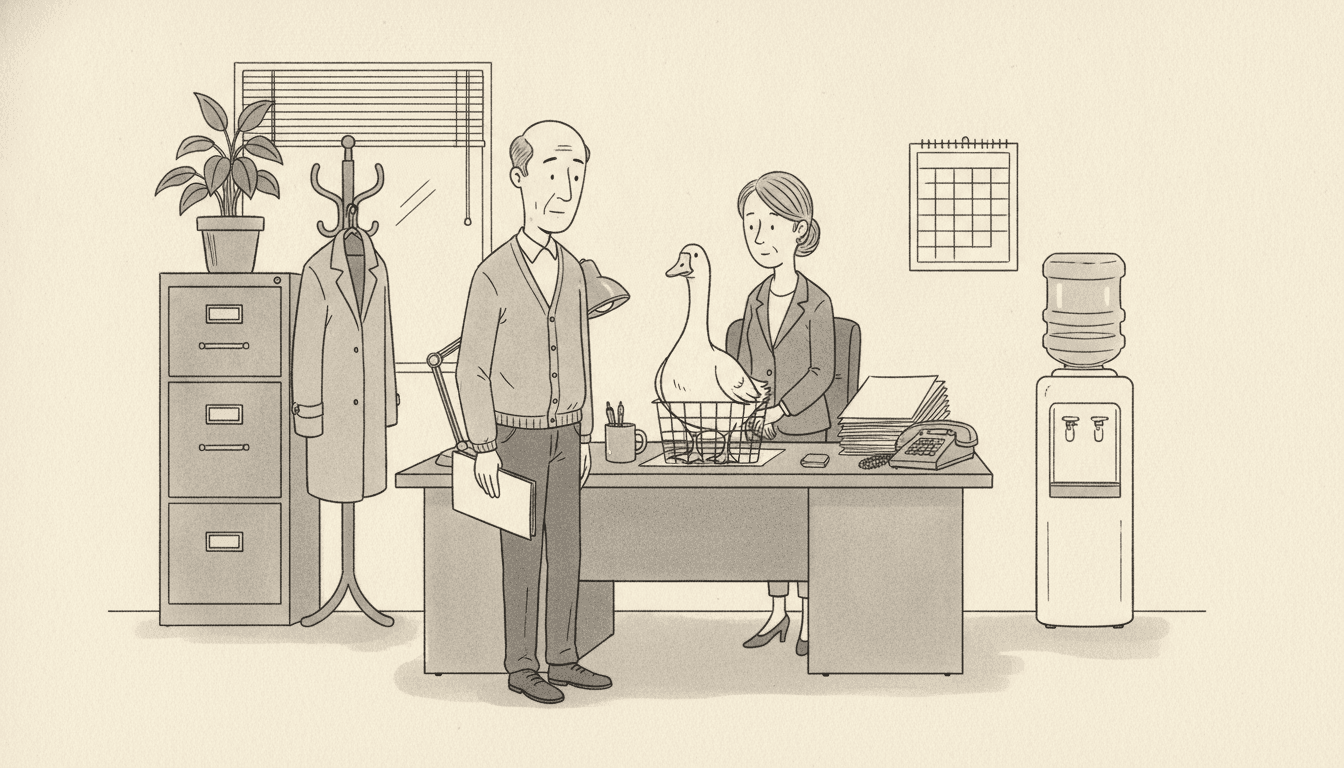
Every style in C2Story runs on a short written brief: a palette, a lighting note, a line weight and a few things to avoid. Seven of the seventy-eight hand-drawn briefs touch comedy, and each puts the joke somewhere different. This one asks for dry situational humour built around one visual gag. It is the only brief in the library that uses the word situation, and the only one that asks for one visual gag. The joke is not a face, a pose or a person. It is a state of affairs: a goose in the in-tray, a knight in the waiting room.
So the room is drawn in full
A situation needs a setting, because a goose is only funny if you can see that it is standing in an office. The brief says so outright: an adult everyday scene rendered fully with its setting and props. Only one other brief in the library mentions props at all. That puts it at the opposite end from its straight-faced relatives. The deadpan cartoon and the deadpan ink mascot both list a busy background among their refusals. This one wants the filing cabinet, the coat stand and the water cooler, because they are the setup.
Straight faces, so nobody gives the joke away
The people in the picture are deadpan and straight-faced. That is not the same job a blank face does in the deadpan cartoon, where nobody notices anything. Here the people often can see the odd thing perfectly well. They just do not react to it, and that is what makes the room feel normal enough for the odd thing to stand out. The brief’s own preview line is two straight-faced office workers reacting to an absurd object on a desk. They react the way people react at work: politely, and not much.
Black pen, paper white and a grey wash
The palette is recorded as black ink, warm paper white and a soft grey wash, and the first thing the brief refuses is heavy colour. Only three of the seventy-eight palettes name no hue at all, and this is the only one of the three whose grey is a wash rather than hatching or an occasional accent. The line is a clean, consistent black pen line, and the light is flat and even. With no colour to point at the gag, the drawing cannot highlight it. The composition has to, which is why the brief asks for generous framing.
You Can Only See What Is Wrong if the Rest Is Drawn Right
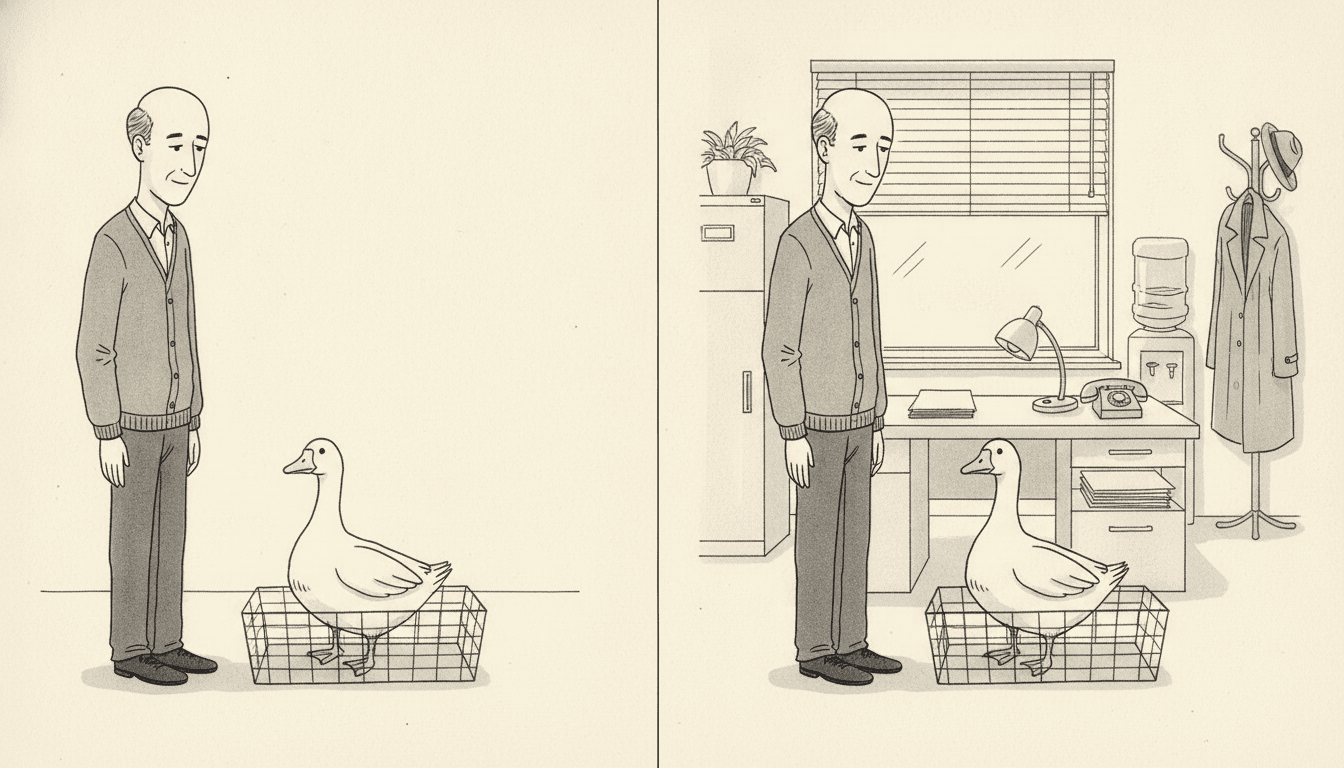
Look at the same man and the same goose twice. On a bare white ground they are just a man and a goose in a wire tray, and nothing about it is odd. Draw the office in around them, with the blinds, the desk lamp, the telephone, the water cooler and the coat stand, and the goose is suddenly in the wrong place. The goose did not change. The room is what made it a joke.
That is why the brief asks for the setting and the props rendered fully, and why its four refusals are heavy colour, chibi cuteness, manga screentone and photorealism. Each would change what kind of room it is. Colour adds mood, chibi faces make the room a nursery, screentone makes it a comic page, and photorealism makes it a real office where a real goose is just an animal problem.
So an editorial cartoon style page here is not busy because busy looks good. It is busy because a full, ordinary, believable room is the only thing that makes one wrong thing in it funny.
Every Funny Style Here Aims Its Joke Somewhere Different
Seven of the seventy-eight briefs touch comedy, and each puts the joke in a different place. In the deadpan cartoon it is nobody noticing. In whimsical absurd it is the world itself. In bold flat satire it is a verdict on modern life. In heta-uma it is the drawing being wrong. In gag manga it is the response. In relationship satire it is the other person.
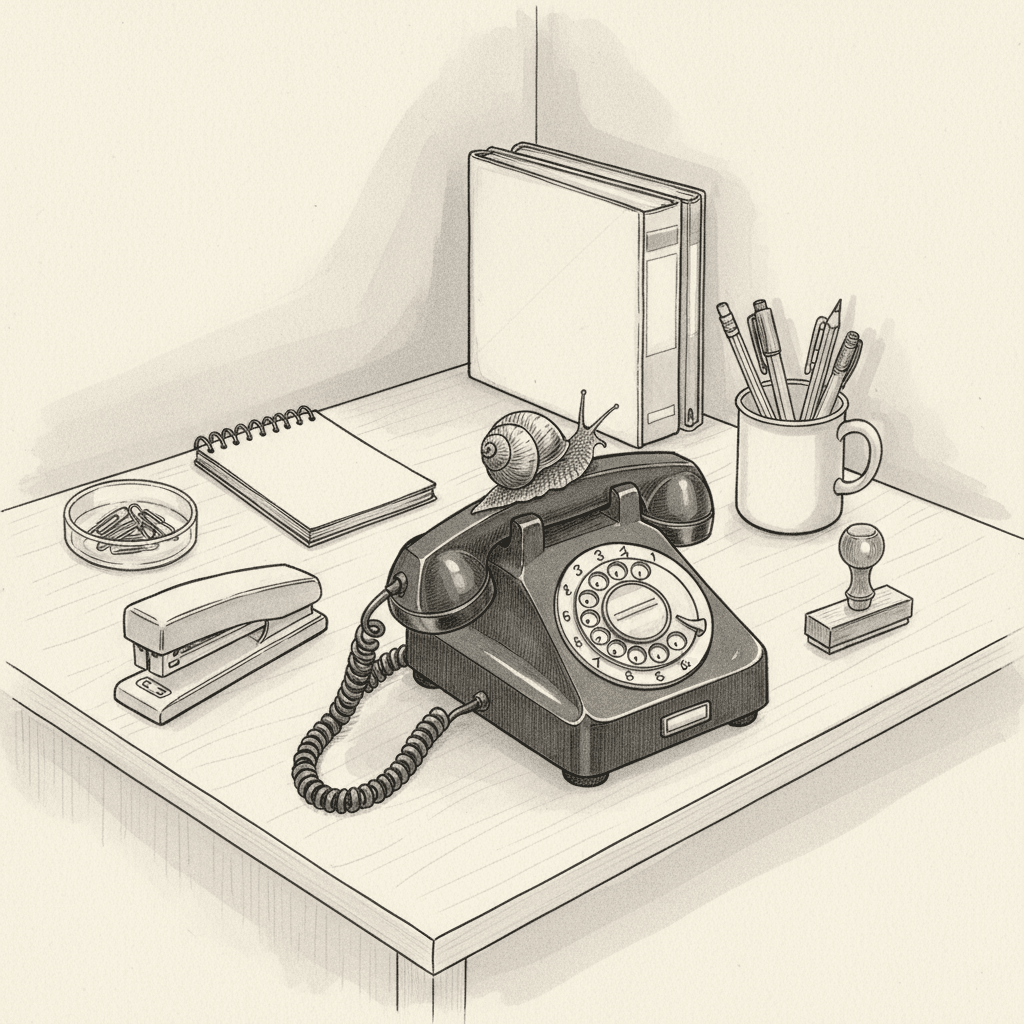
In a single panel cartoon it is the situation. Not one person and not one face, but the whole arrangement: this place, these people, and this one thing among them. The picture beside this paragraph has nobody in it at all, and it still works: a stapler, a pen pot, a notepad, a rubber stamp, two box files and an old telephone, all drawn plainly, and a snail on the receiver. The props do the job a face would do in another style. Every one of them says office, so the one thing that does not is the joke.
From One Sentence to a Book of Single Panels
You pick the single panel look once. The brief is then applied to every page, so the line, the wash and the faces never drift.
Describe a place and one wrong thing
A sentence is enough. A goose turns up at the office. The museum statue wants a sit-down. You do not need a plot, just an ordinary place your reader knows and a series of things that do not belong in it.
Choose Single-Panel Editorial Cartoon
That fixes the whole brief at once: clean black pen line, soft grey wash, flat even lighting, a fully drawn setting, straight faces and the four refusals. Save your recurring characters first and give them clearly different outlines.
Get a book, not a cartoon
C2Story writes the story, splits it into pages and builds each one to the brief. Your words are set as type rather than lettered into the art. Read it on the web, share it, or buy the PDF to hand to a printer.
This Style and Its Three Nearest Neighbours
One shares its straight faces, one shares its grown-up cast and one shares the word gag. Here is what each actually asks for.
Single-Panel Editorial Cartoon
The style on this page
A classic single-panel magazine cartoon in clean black pen linework. An adult everyday scene is rendered fully with its setting and props, with deadpan, straight-faced characters and dry situational humour built around one visual gag. Light grey wash shading, a sophisticated, understated tone and generous framing. The palette is black ink, warm paper white and a soft grey wash, the light is flat and even, and the line is a clean consistent black pen line. The four refusals are heavy colour, chibi cuteness, manga screentone and photorealism.
Deadpan Dialogue Cartoon
Also straight-faced, but the room is gone
The relative people confuse it with most, since both are dry and neither lets a face perform. But the deadpan cartoon refuses a busy background and sets small blank round-headed figures in airy white space, so the joke is in a beat that never lands. Here the joke is in a room that is drawn completely. Choose the deadpan cartoon when the point is that nobody notices. Choose this one when the point is what everybody has noticed and decided not to mention.
Minimal Relationship Satire
A pair of people, the setting only suggested
Another funny brief that strips the room back to a sofa and a floor line, so the only thing left for a face to react to is the other person. This one goes the other way: the room is full and the faces stay level. Relationship satire is about two particular people. A single panel cartoon is about a situation, and anybody standing in it will do. Take relationship satire for an anniversary book, and this style for the day the goose turned up at the office.
Gag-Manga Reaction
Also a full scene, but loud
The only other brief to use the word gag, and the only other one that talks about reacting at all. It also asks to render the full comedic scene. Everything else is opposite. Gag manga is a rough, sketchy line, flat colour with a bold accent, and faces that go suddenly over the top. The single-panel cartoon is a clean pen line, no colour, and faces that refuse to go anywhere. In gag manga the joke is the response. Here the joke is that there is no response.
One Panel Humour Story Ideas That Suit the Brief
Each idea plays to the same strength: a place the reader knows, drawn in full, and something in it that should not be.
The Goose Was Here First
An office that carries on exactly as normal, page after page, with one goose somewhere in it. Each page is a full room and a new place for the goose, and nobody ever mentions it.
Mr Hale Retires
A leaving book for a colleague, made of the small odd situations everybody in the office will recognise. The brief asks for adult everyday scenes, and nothing is more everyday than the stapler nobody else is allowed to use.
The Very Large Marrow
A gardener who will not discuss it. A full allotment, a shed, a wheelbarrow, and a vegetable that has quietly become bigger than all three. A good shape for this brief because the setting is the setup.
Waiting for the Number 12
One bus stop, the same queue every morning, and a different thing waiting in it each day. The bus stop is drawn in full on every page, so the reader can always spot what has changed.
Closing Time at the Museum
The attendant has seen everything and is not going to start reacting now. Big quiet rooms, plinths and benches, and exhibits that do not stay where they were put.
What Is in the Drawer
A book that never shows you. Each page is two colleagues looking calmly into a drawer, and your words describe what they found. The picture supplies the situation; the sentence supplies the gag.
What a Full Room and One Wrong Thing Look Like
Single panel cartoon pages generated to this one brief, with nothing retouched afterwards.
Same goose, with and without the room
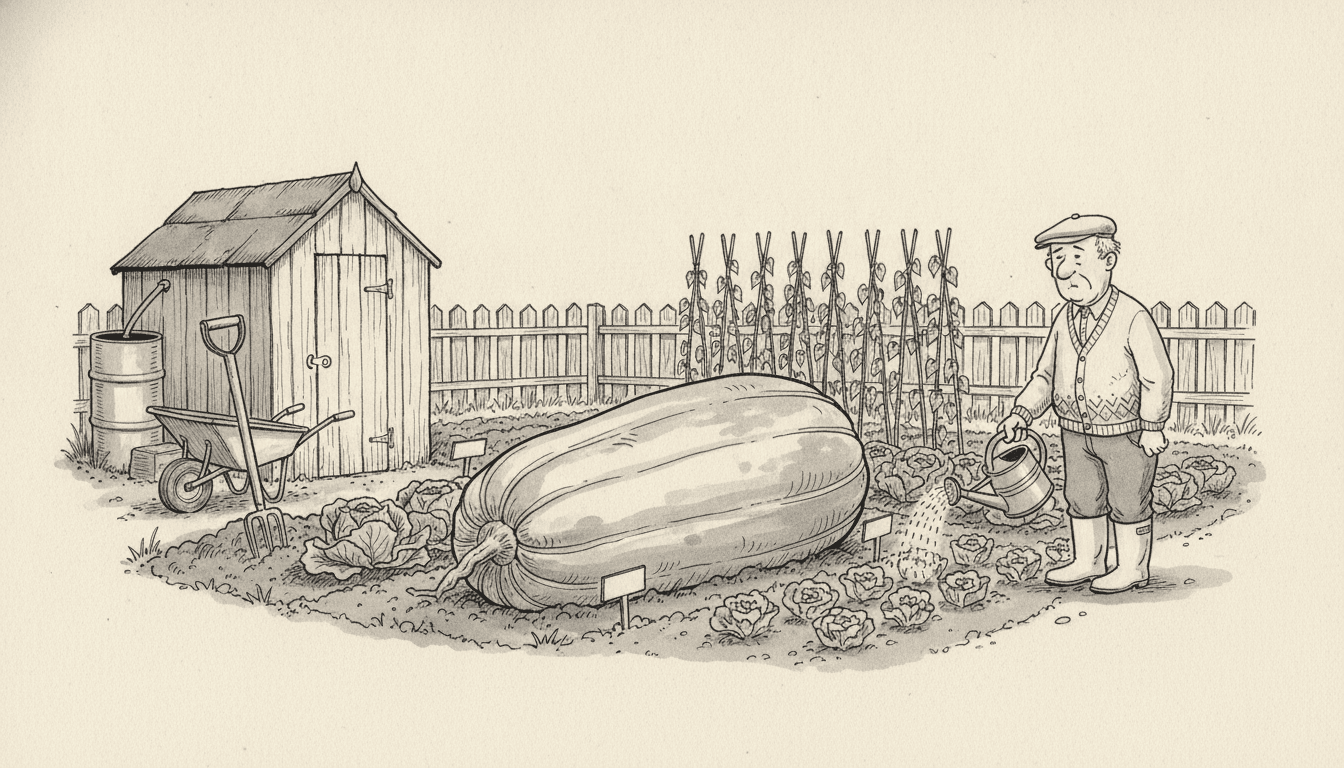
The marrow nobody mentions
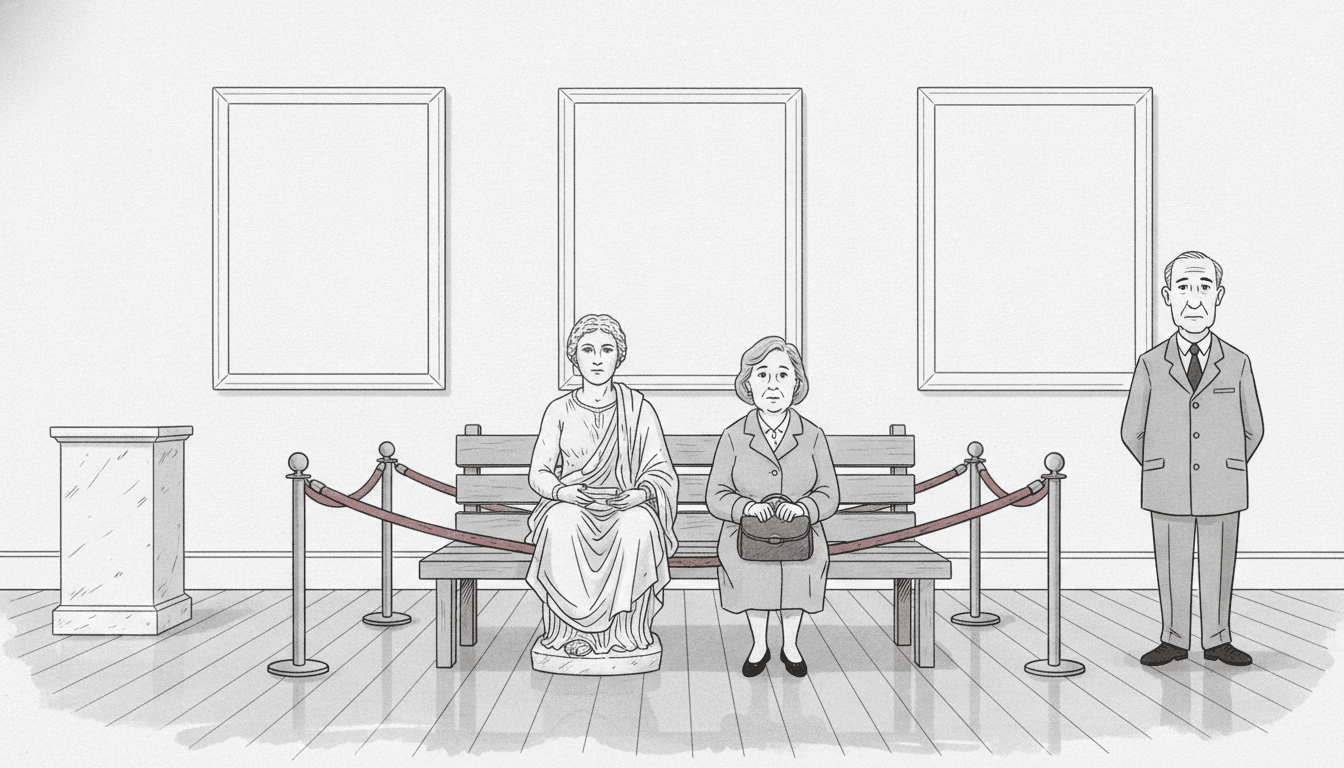
The statue taking a seat
A Recurring Cast, a Desk Full of Props and Rooms That Stay Calm
With no colour, characters are known by their outline, and the rooms are drawn plainly so the odd thing has somewhere to stand out.
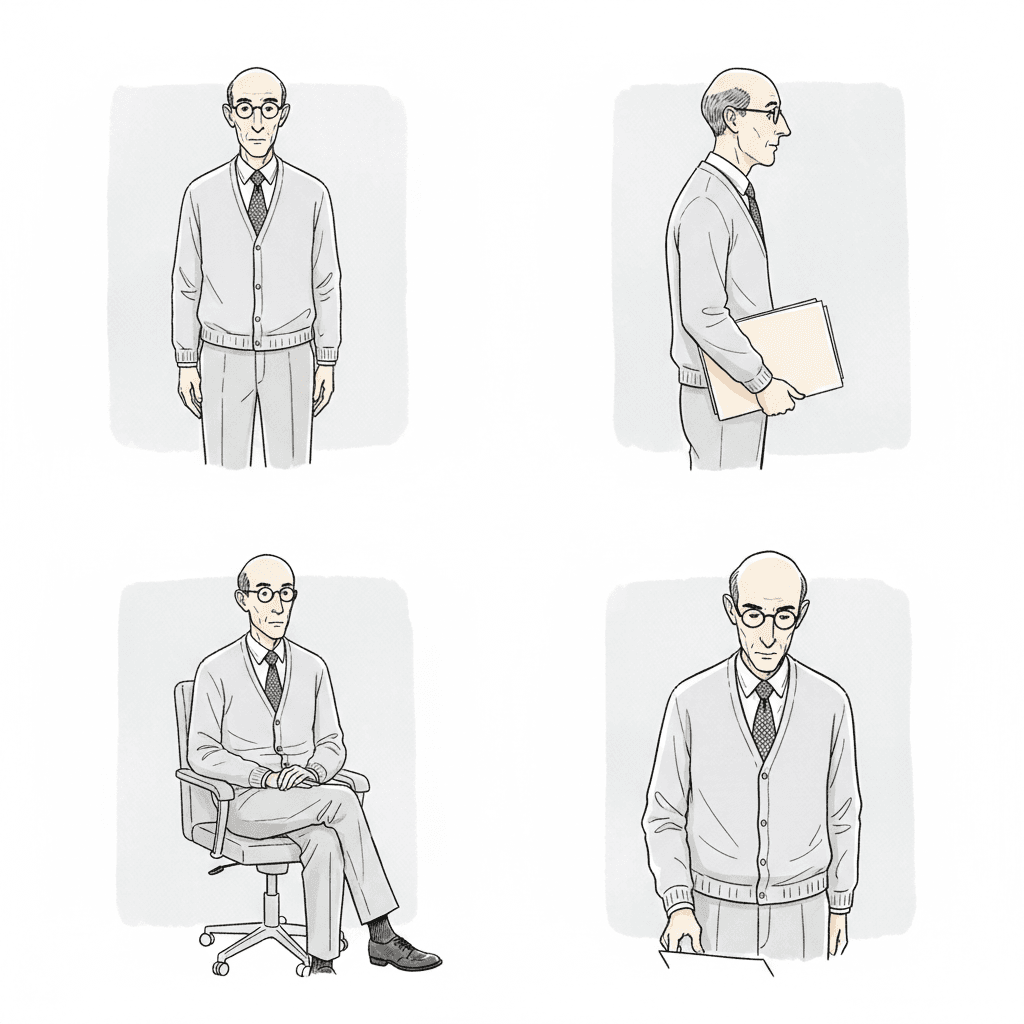
One character, four poses
A snail on the phone
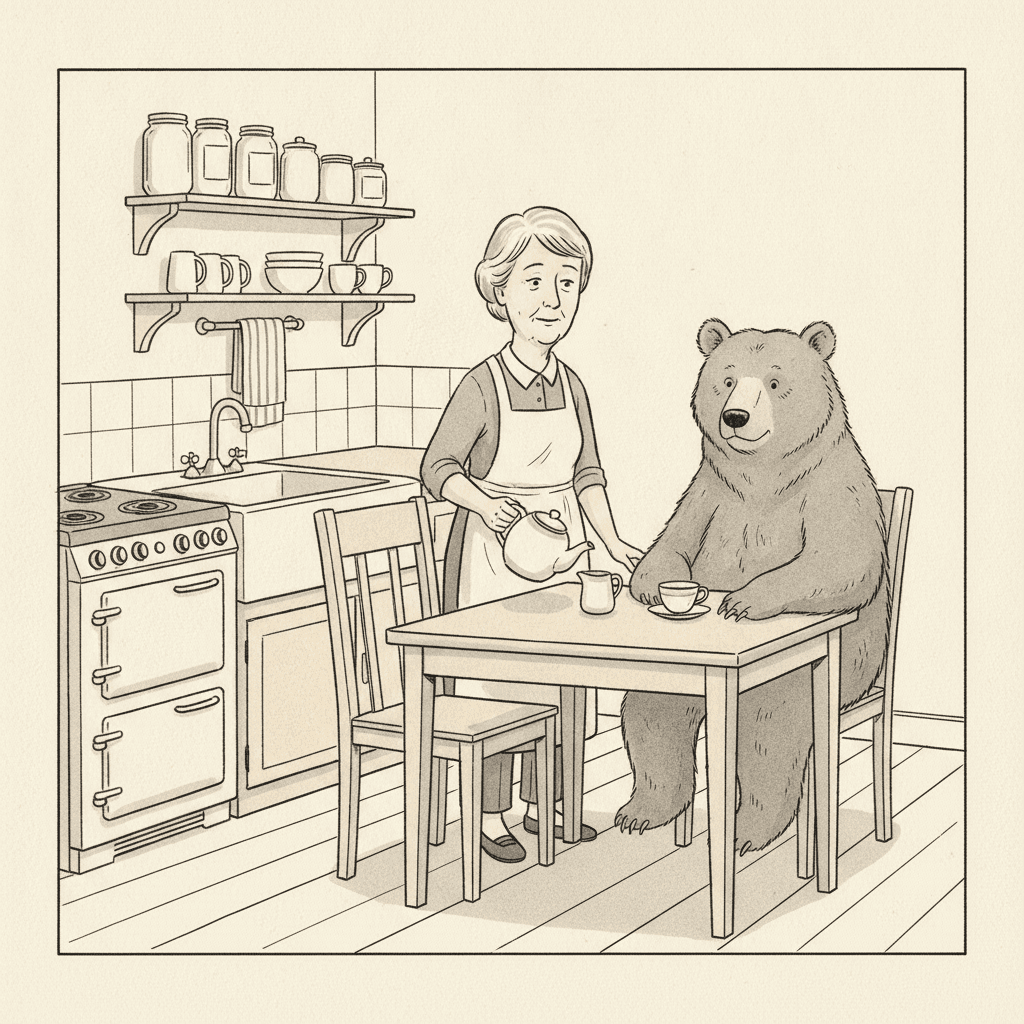
Tea for the bear
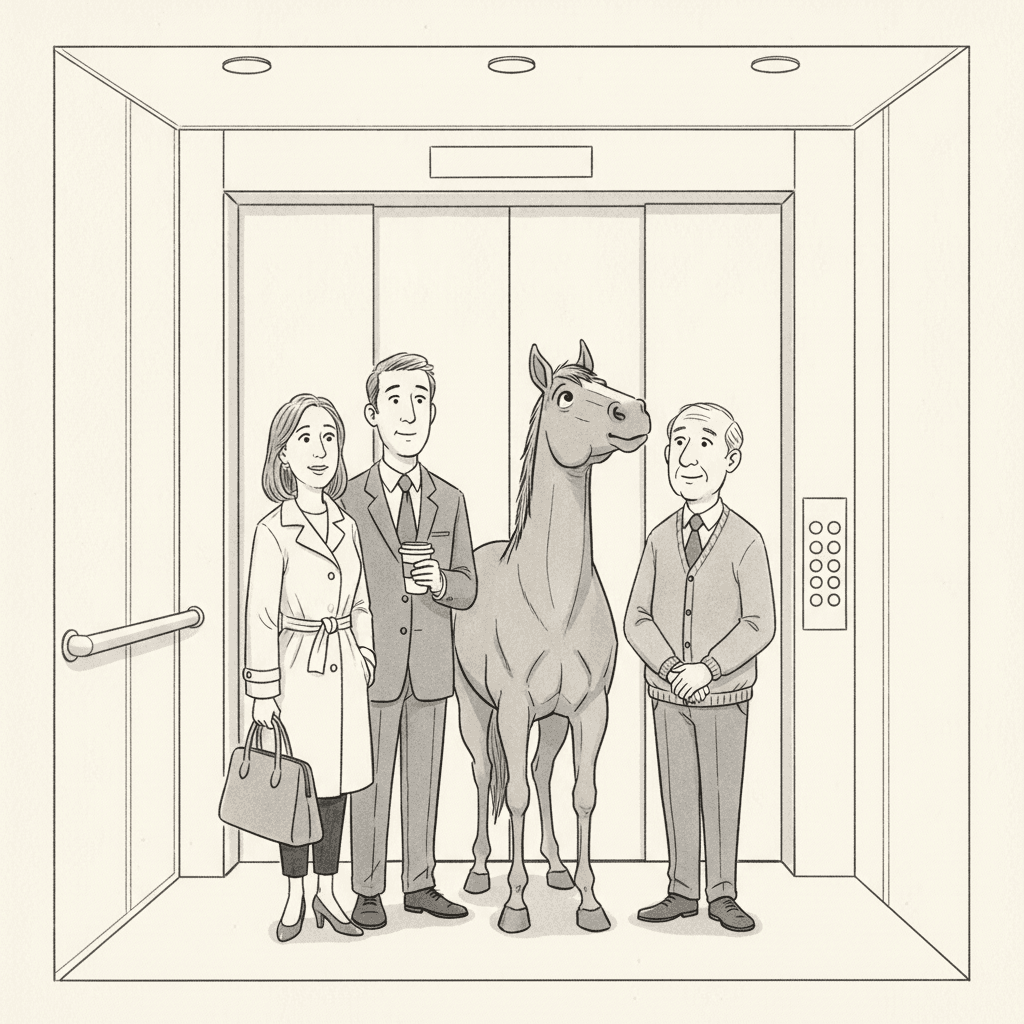
A horse in the lift
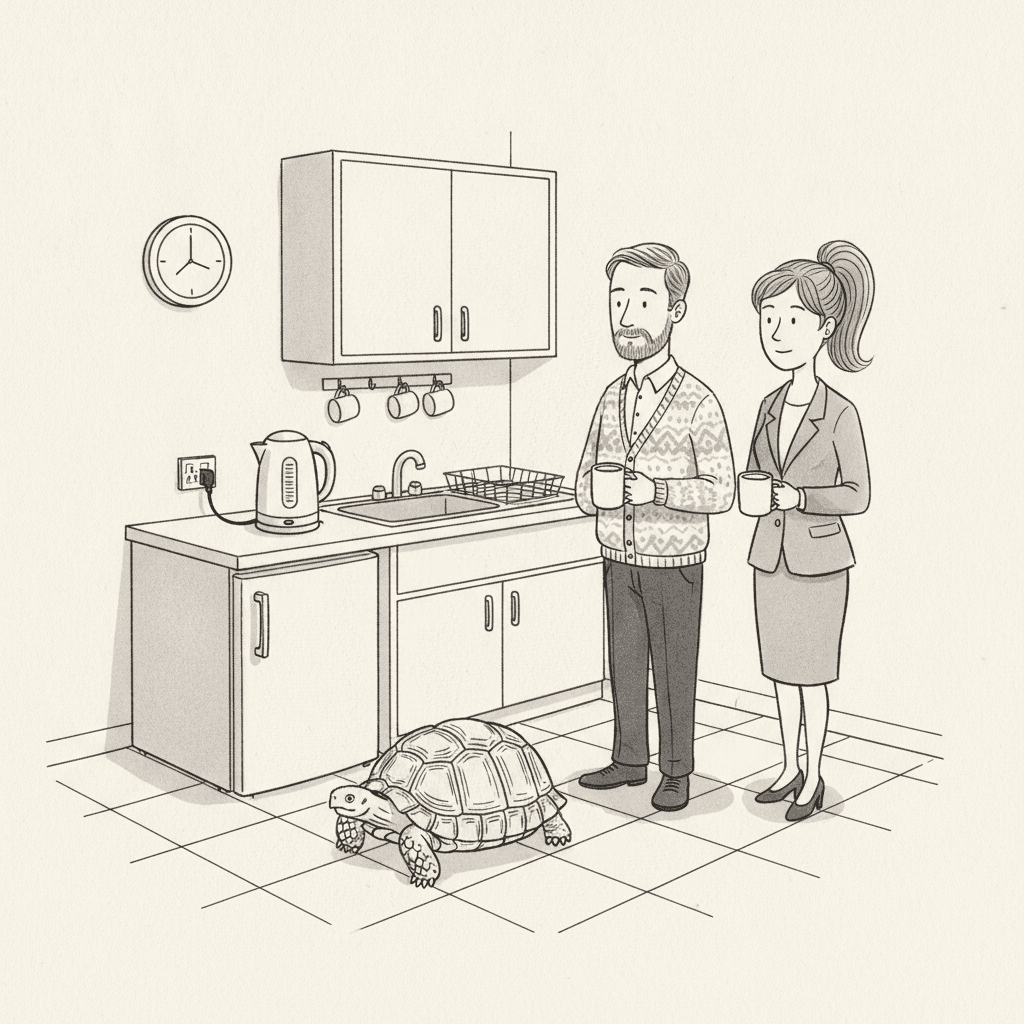
The tortoise in the kettle queue
Making Whole Single Panel Cartoon Books
What is useful in a book of single panels and where the limits are, in the order you are likely to run into them.
The same people in a different situation every page
A single panel cartoon usually gets one outing. A book needs the same attendant, the same office manager or the same gardener in twenty situations in a row, and the reader has to know them at once. C2Story carries one fixed brief into every page: clean black pen line, soft grey wash, flat even lighting and the four refusals of heavy colour, chibi cuteness, manga screentone and photorealism. Save each person in the Character Library with up to fourteen reference images and they stay themselves. Characters built from an uploaded photo stay private to your account.
With no colour, people are known by shape
There is no red coat or yellow hat to find a character by. In black and grey, a person is their outline: tall and bald, short with a bun, a cardigan, a moustache, a flat cap. Give your recurring characters shapes that differ from each other and from the furniture, and they stay findable in a fully drawn room. Two people of the same height in the same grey suit become hard to tell apart in any style. In a busy grey office they disappear.
Monochrome by design, not by a switch
The palette is black ink, warm paper white and a soft grey wash, and heavy colour is the first refusal. That makes this one of the few briefs that is genuinely monochrome on every page, which matters because C2Story has no global greyscale toggle. The honest cost is warmth and night. The light is flat and even, so there is no sunset, no lamplight and no candle glow, and a tender page has to get there on the words.
The room is busy, so the odd thing must be big
The real constraint. A full room means a lot of things on the page, and the gag has to win against all of them with no colour to help. A goose works. A small spoon in the wrong place does not. When you describe a page, say what the odd thing is and roughly how big it is, and keep it bigger than the ordinary props around it. If your joke depends on something tiny, the deadpan cartoon or relationship satire, which strip the room back, will land it better.
Each page is one panel, and the book is many
You are not making a single cartoon. Describe the story and C2Story writes it, splits it into pages and builds each one to this brief based on what that page says, so every page behaves like one panel and the page turn brings the next. Your words are set as type rather than lettered into the art, so there are no speech balloons and no hand-lettered captions. When you want it on paper, the paid PDF download is the handoff to your printer, and everything you make is licensed for commercial use.
Grown-up rooms, readable by anyone
The brief asks for adult everyday scenes and a sophisticated, understated tone, so the natural home is a book one adult makes for another: a leaving gift, an office in-joke, a retirement. But a horse in a lift is funny at any age, and children are very good at spotting what does not belong. You can write in English, Chinese, Japanese, Spanish, French and more, and the look does not change with the language.
If the book is for a workplace, our company story book page covers writing for colleagues who did not ask for a book. For straight faces with the room taken away, see deadpan cartoon picture books; for the loud version of a full comic scene, gag manga picture books; and for another style with no colour at all, where the shadow is drawn line by line, crosshatch illustration picture books.
Questions About Single Panel Cartoon Books
Explore More Story Ideas
Discover more styles, tools, and story types
Zoo Stories
Lions, giraffes, the zoo train and a kind zookeeper
Explore
Gag Manga Picture Books
Big reactions, rough line & comic timing
Explore
Children's Book Creator
Design beautiful kids books
Explore
Storybird Alternative
Better AI story creation
ExploreSingle Panel Cartoon Books: A Full Room, a Straight Face and One Visual Gag
Single panel cartoon books rest on one decision the other funny styles here do not make: the joke is a situation. C2Story runs seventy-eight hand-drawn style briefs, each a short written record of a palette, a light, a line weight and a few refusals. Seven of them touch comedy. This one, the Single-Panel Editorial Cartoon style, is the only brief in the library to use the word situation and the only one to ask for one visual gag. Everything else in it follows from that.
A situation needs a place, so the brief asks for an adult everyday scene rendered fully with its setting and props. The two other straight-faced drawn briefs, the deadpan cartoon and the deadpan ink mascot, both refuse a busy background. This one wants the filing cabinet and the water cooler, because they are what make the goose in the in-tray wrong. The people are deadpan and straight-faced, not blank, and they often can see the odd thing perfectly well. They simply decline to react, which keeps the room believable and the gag intact.
The palette is black ink, warm paper white and a soft grey wash, with heavy colour as the first refusal. It is one of three palettes out of seventy-eight that name no hue, and the only one of those three shaded with a wash. The line is a clean, consistent black pen line and the light is flat and even. With no colour to point at the gag, the composition has to do it, so the odd thing needs to be big and well placed. That makes an editorial cartoon style book well suited to a leaving gift, an office in-joke or a retirement, and poorly suited to a page about a feeling or a tiny detail.
The choice between the funny styles here is reasonably clear. Take the deadpan cartoon if nobody should notice anything. Take relationship satire if the joke is between two particular people. Take gag manga if something happens and somebody reacts loudly. Take this style for one panel humour, when the joke is the whole arrangement of a place and the one thing in it that does not belong. Describe the story in a sentence and C2Story writes it, splits it into pages and builds every page to the same brief, keeping your characters on model, in English, Chinese, Japanese, Spanish, French and more, with the paid PDF download as the handoff to your printer.