
Visual Development Art Picture BooksDesigned, Not Average
Before an animated film draws a single frame, someone decides exactly what shape each character is. Visual development art picture books keep that decision on every page: 2D characters built from clean geometric silhouettes, painted in bold flat colour, with long limbs, strong faces and one detail, often a pair of glasses, that makes them unmistakable.
- Exaggerated, slender, designed proportions
- Bold flat colour with a fine grain of light
- Clean teal, warm coral and crisp cream
- Free credits by request, no card
50,000+
Stories Created
10,000+
Active Creators
50+
Art Styles
4.9/5
User Rating
What Makes Visual Development Art Different
Every style here is a written brief: a palette, a light, a line weight and a short list of refusals. Four things in this one decide the look, and two of them appear in no other brief of the seventy-eight.
The only brief that refuses the average
Every style in C2Story runs on a short written brief: a palette, a lighting note, a line weight and a few things to avoid. Twelve briefs refuse something generic, and eleven of those mean a face: generic chibi faces, a generic cute default. This one refuses generic proportions. Four other briefs refuse a body shape, but each names one: realistic, chibi, rounded cute, stiff. This brief refuses no particular shape. It refuses the ordinary one.
A prop written into the face
The brief asks for strong characterful facial shapes and distinctive glasses. Only one other brief in the library names glasses at all, and those are sunglasses worn with a hairstyle. Here the glasses sit inside the sentence about the face. It is a brief that expects each character to come with one thing that makes them them.
Geometric silhouettes, flat colour
Characters are built from crisp clean geometric silhouettes and painted in bold flat colour blocks, with crisp confident shape edges instead of an ink outline. The proportions are exaggerated and slender. Seven briefs ask for geometric shapes; this is the only one that pairs them with a refusal of generic proportions, so the shapes are chosen per character rather than handed out to everyone.
Light with a texture
The lighting note is clean stylized graphic light, the only one of the seventy-eight with the word stylized in it, and the brief is the only one that asks for subtle textured light. In practice that means each flat colour has a fine grain in it and light arrives as one slightly lighter shape on the lit side. The palette is bright graphic colour, clean teal, warm coral and crisp cream.
What “Generic Proportions” Looks Like
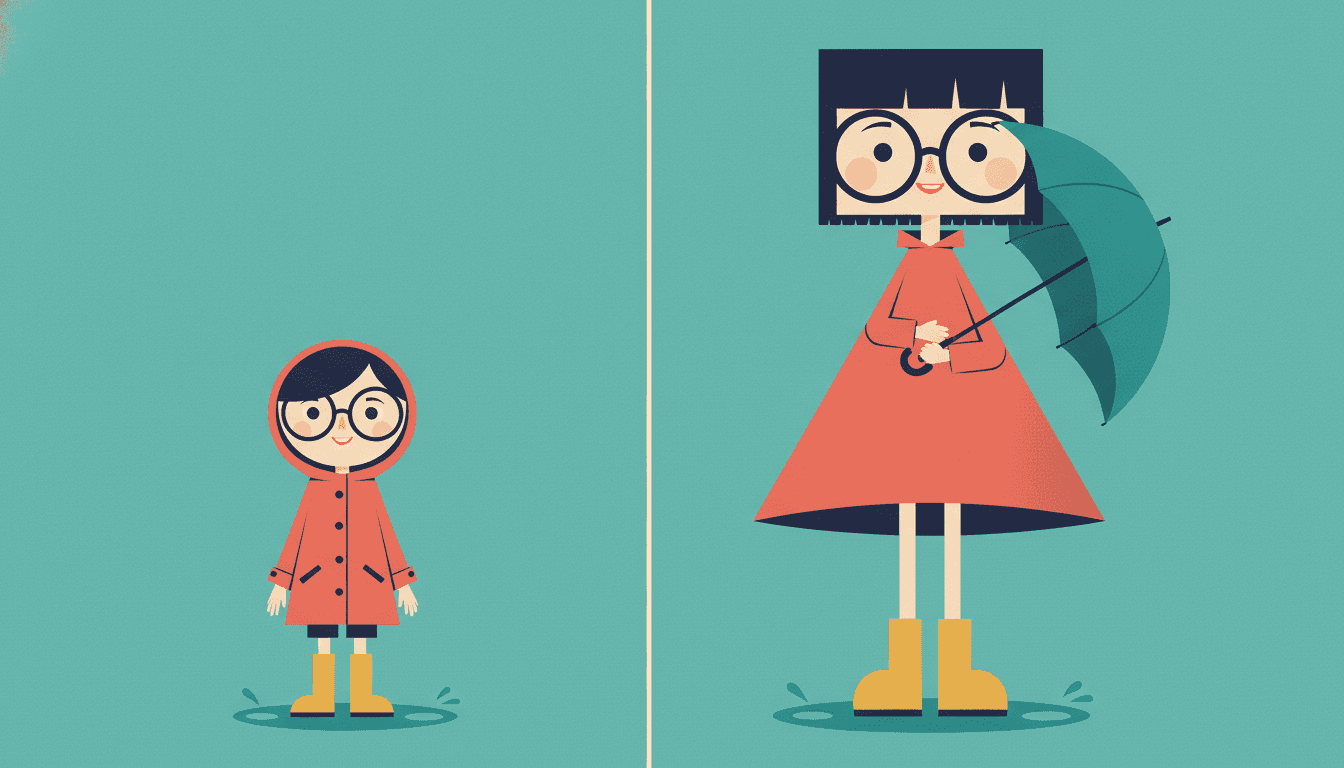
Look at one girl twice. The same round glasses, the same coral raincoat, the same yellow boots, the same flat teal. On the left she is drawn the ordinary way: a medium round head, a medium body, short legs, a hood. She is perfectly nice, and she looks like most children in most picture books.
On the right she has been designed. Her head is a square with a dead-straight fringe, her raincoat is one tall coral triangle, and her legs are long thin stilts into round yellow boots. Nothing about her is average, and you would know her from her outline alone. That is what this visual development art brief means when it refuses generic proportions: not a particular body, but the default one.
Its four refusals all protect the same thing, a clean, deliberate shape in flat colour.
Write the One Thing They’re Never Without
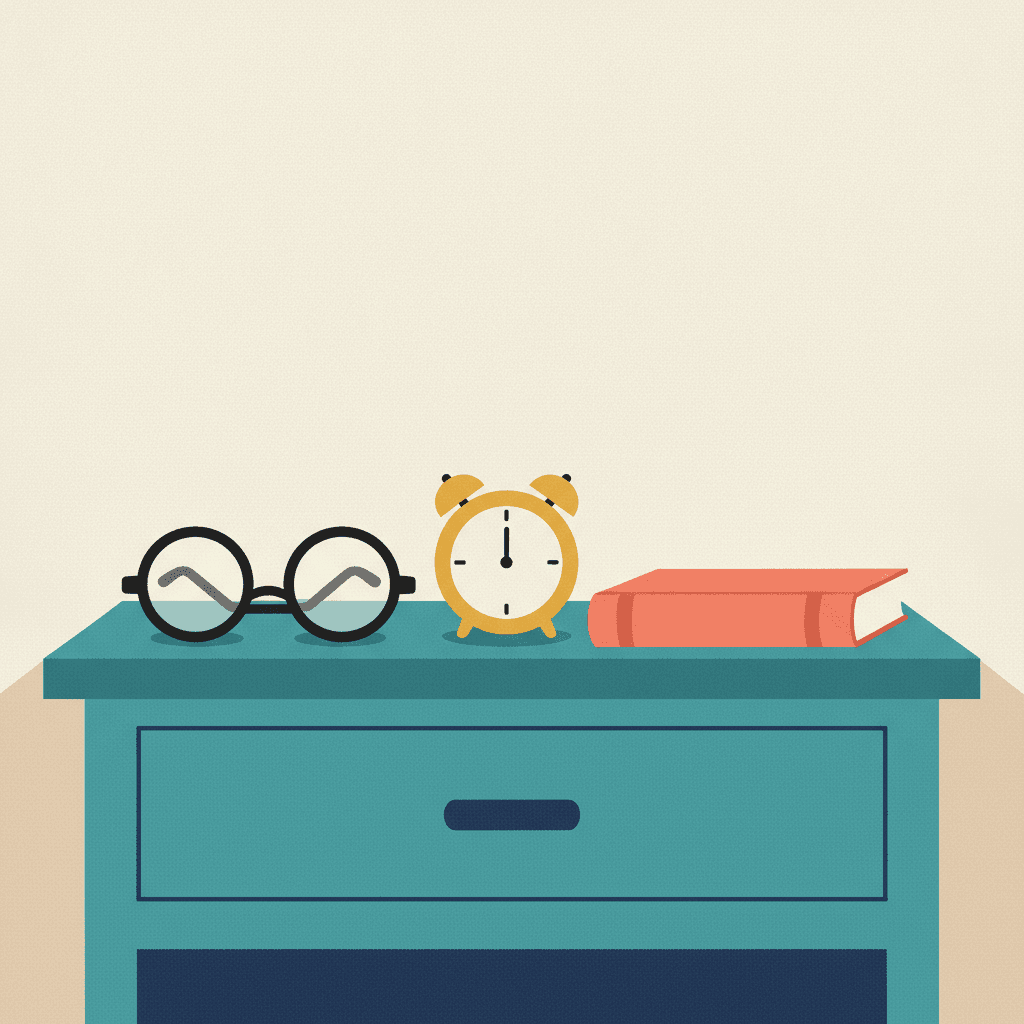
The square beside this paragraph has nobody in it: a bedside table, an alarm clock, a coral book and a pair of round black glasses. You already know something about who sleeps there. That is how this brief thinks about a character. It asks for a strong face and a distinctive pair of glasses in the same breath, as if the object were part of the anatomy.
So when you write the story, give each character one thing that is only theirs, and use it. The bookseller’s glasses slide down her nose when she reaches for the top shelf. The boy’s scarf is so long it trails out of every page. The grandmother’s umbrella is never once opened. Name the thing in the character description and let it do something in the plot, and this visdev character design will draw it the same way every time.
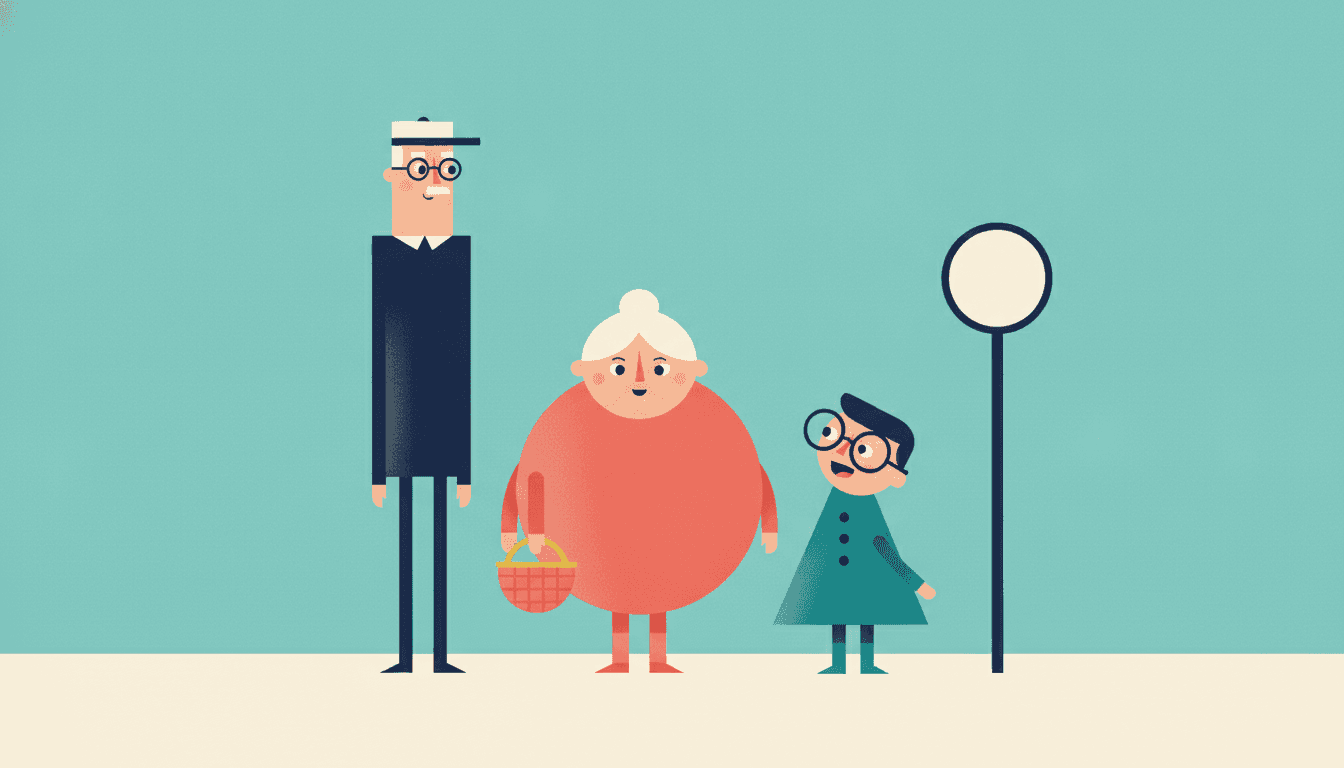
Then give each of them a different shape. A cast where one is long, one is round and one is a triangle can be told apart from across the room, before anyone reads a word.
From One Sentence to Visual Development Art Picture Books
You pick the look once. The brief is then applied to every page, so the flat colour, the shapes and each character’s proportions never drift.
Describe the cast by shape
Write a sentence or two about who is in the story and what happens. Give each character a body shape and one thing they are never without: round glasses, a long scarf, a tall bun.
Choose Stylized 2D Visdev Character
Pick the style from the Styles Library. From then on every page uses the same geometric silhouettes, the same flat teal, coral and cream, and the same exaggerated proportions.
Get a whole book
C2Story writes the story, splits it into pages and illustrates each one. Regenerate any page you want to change without touching the rest, read it online, share it, or buy the PDF download to hand to a printer.
This Style and Its Three Nearest Neighbours
One shares its concept-art origin, one shares its flat geometric shapes, and one shares its feature-animation polish and its glasses. Here is what each actually asks for.
Stylized 2D Visdev Character
The style on this page
Modern 2D animation visual-development character art: crisp clean geometric silhouettes, bold flat colour blocks with subtle textured light, exaggerated slender proportions, strong characterful facial shapes and distinctive glasses, and a fresh graphic concept-art feel, rendered as polished concept art of the story’s scene. It refuses photorealism, muddy gradients, generic proportions and heavy painterly rendering.
Fantasy Sketchbook Concept
Also concept art, but the unfinished kind
Fantasy animation concept sketches in loose fine pen and rustic watercolour washes on grainy paper, with a character-sheet, art-book feel. It refuses exactly what this brief asks for: clean vector art and flat digital fills. Take it for the working sketch. Take this one for the finished design the sketches lead to.
Bold Geometric Picturebook
Also built from shapes, but reduced, not designed
Forms built from clean geometric blocks in a few clashing high-chroma colours, with characters reduced to essentials and identity carried by clear outlines and a few key shapes. It simplifies everyone toward the same small set of blocks. This brief pushes each person away from the average instead, with longer limbs, a distinct head shape and their own pair of glasses.
Modern Cinematic 2D
The other brief with glasses, lit softly
A polished contemporary 2D feature-film finish with large deep expressive eyes, curled pinned-up hair, sunglasses, clean crisp animation line work and delicate soft interior lighting. It shares the feature-animation polish. It differs in drawing with a line and in its light: soft and interior there, flat and graphic here, with shape edges instead of lines.
Story Ideas for Visual Development Art Picture Books
Each idea has a small cast of distinctly shaped characters and one object that belongs to one of them, which is what this brief draws best.
The Girl Who Read the Top Shelf
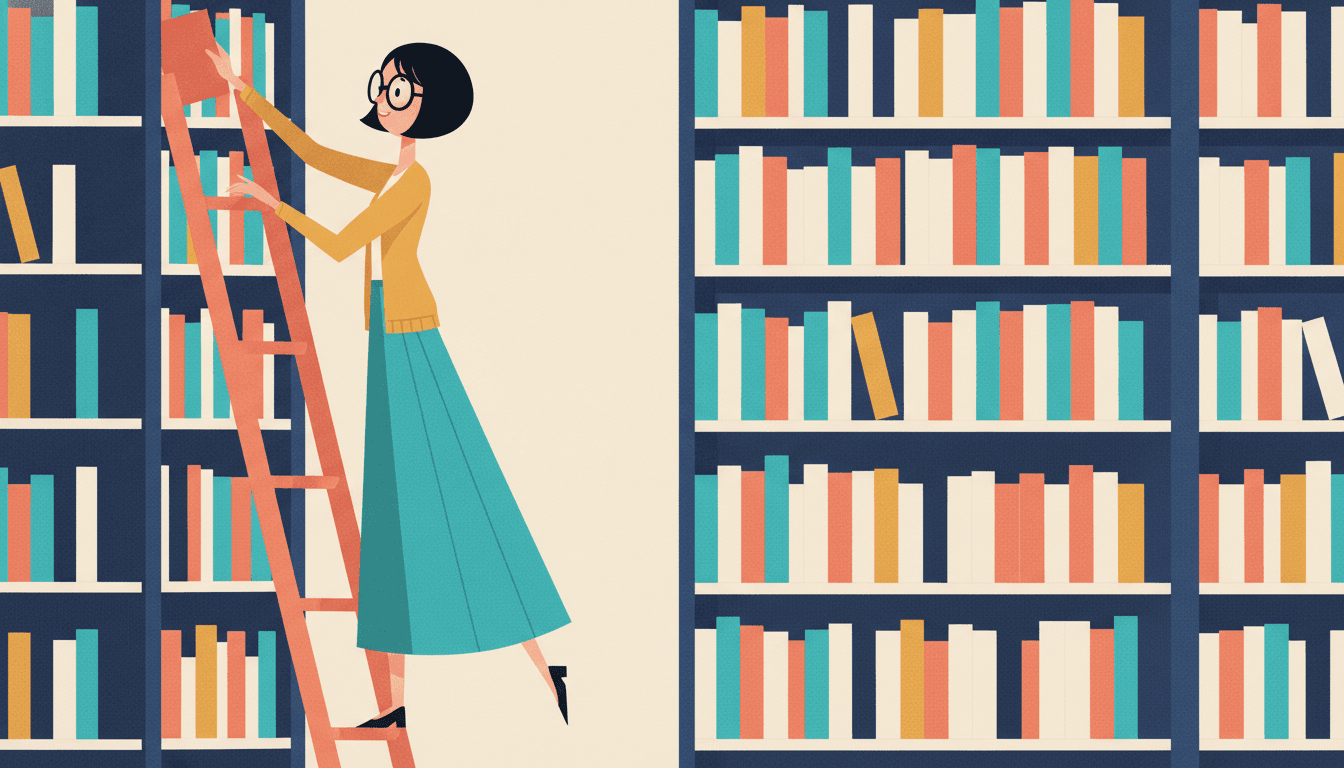
A very tall bookseller with very round glasses can reach every book in the shop but one. A whole town tries to help her get it down.
Three Shapes at the Bus Stop
A long thin grandfather, a round grandmother and a small triangular boy wait for a bus that never comes. Each page, a different shape solves a different problem.
The Scarf That Was Too Long
A boy cycles across the city with a coral scarf so long it catches everything on the way. By the last page it is holding half the town together.
Dad Bakes Badly
A tall father and a small daughter make one cake together, and every page is one more step where his bowl is too high and her stool is too low.
Grandma’s Umbrella Is a Walking Stick
A slender grandmother with a tall grey bun walks her round dog through the park, and her folded umbrella turns out to be useful for everything except rain.
Where Are My Glasses?
Every page hides one pair of round glasses somewhere in a flat, bright room, and the reader has to spot them before the character does.
What 2D Concept Style Looks Like Across a Book
Pages generated to this one brief, with nothing retouched afterwards. One honest note on the two-up: the first attempt was too timid, and this is the second pass, with the exaggeration spelled out. The ordinary girl also lost her umbrella along the way, which we left in.
Ordinary, then designed
Told apart by shape alone
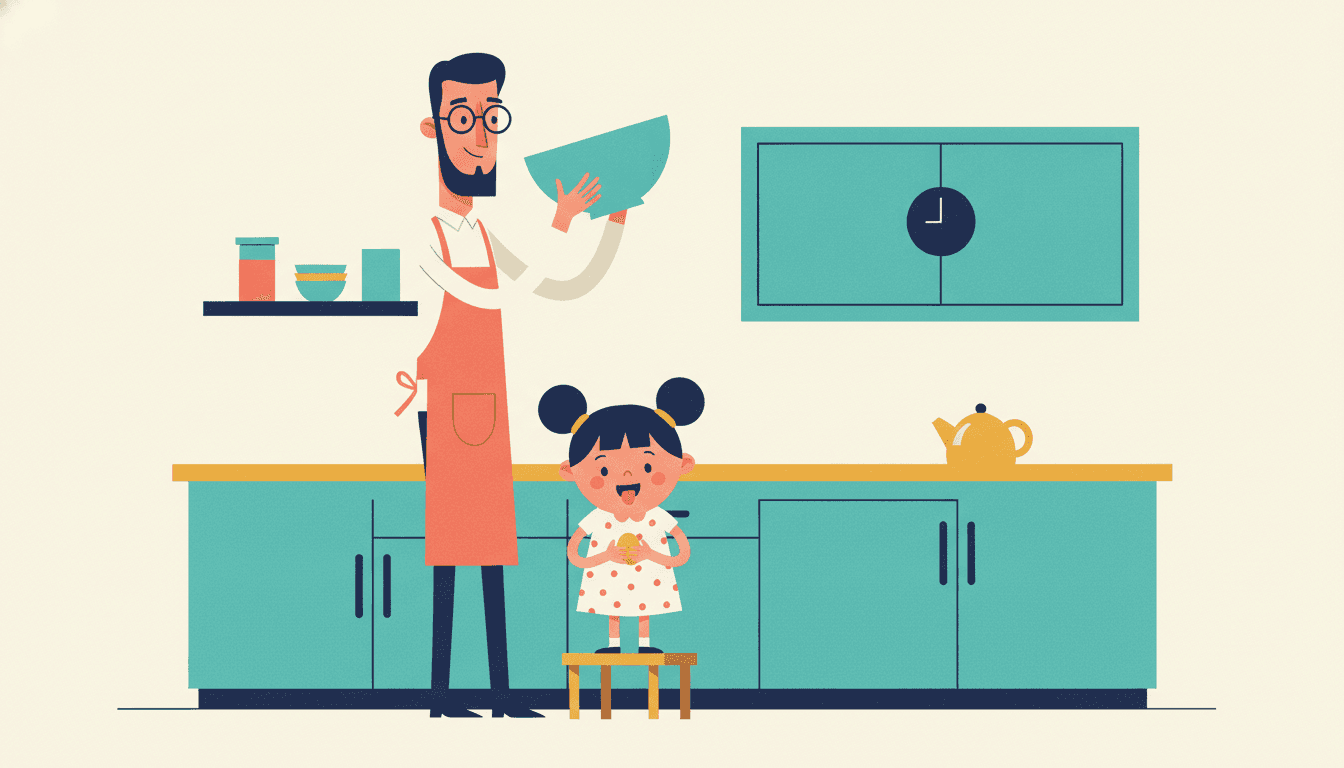
Two shapes, one kitchen
A Cast Designed to Be Told Apart
A character sheet is only useful if the design holds, so here is where it held and where it slipped. The same girl keeps her bob, glasses, jumper and skirt across four views, though the third view grows a short ponytail the others do not have. The boy keeps his square frames through four expressions. And the tall man under the umbrella arrived with a pointed hat nobody asked for. Check a sheet before you build a book on it.
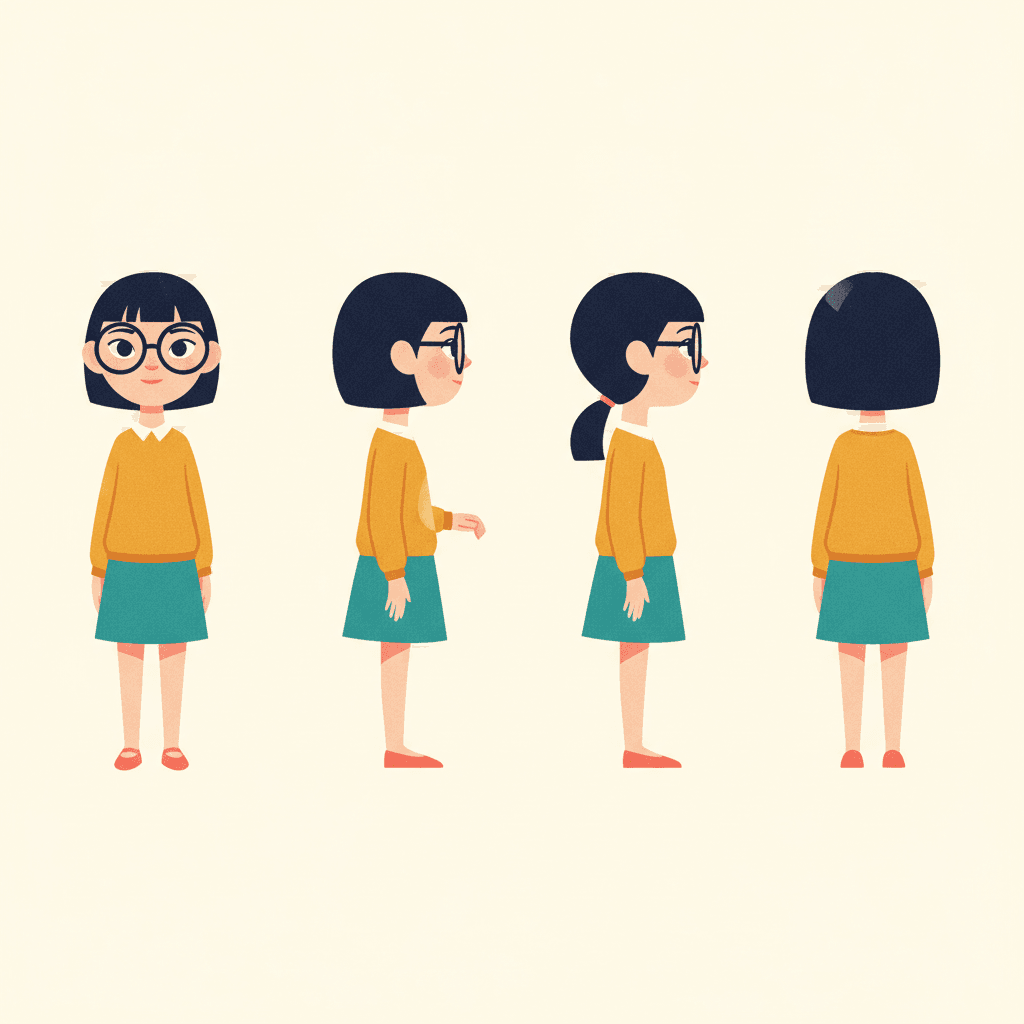
Turnaround, four views
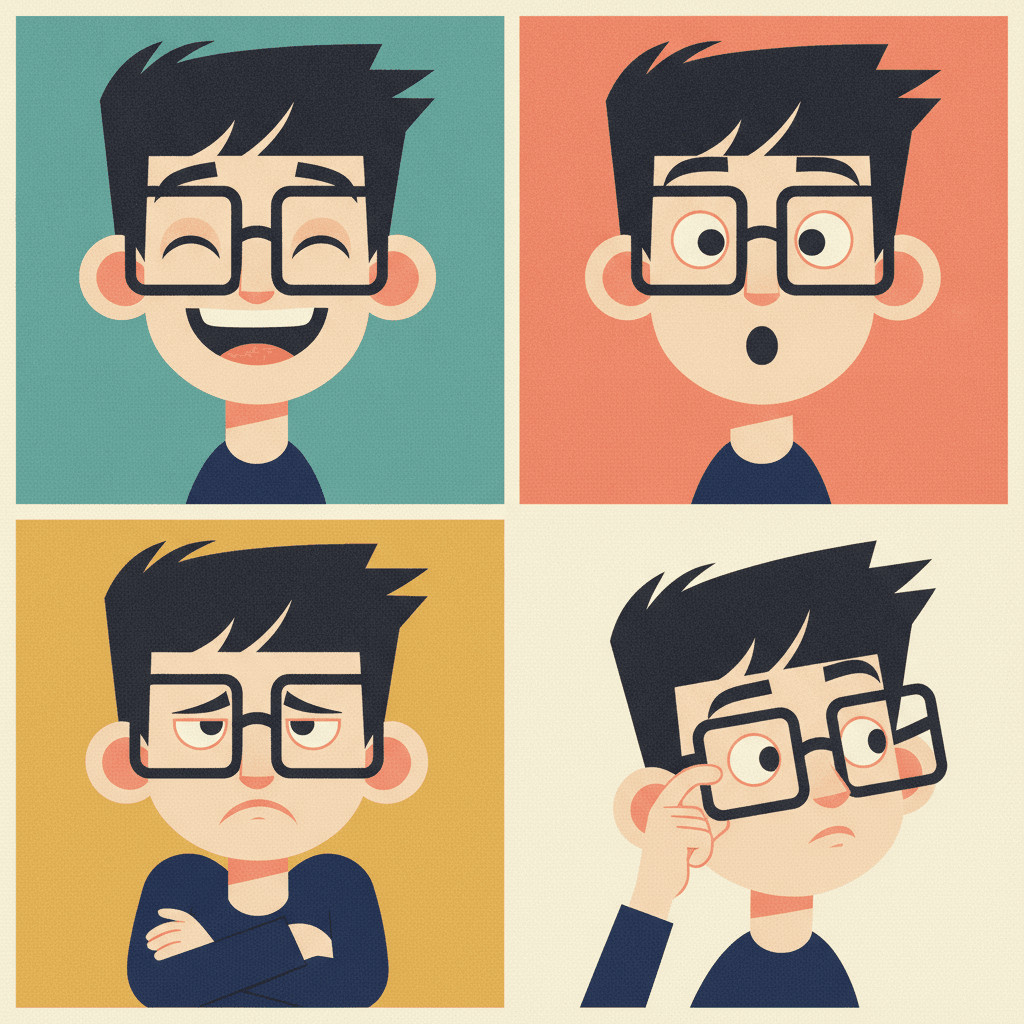
Four expressions, one pair of glasses
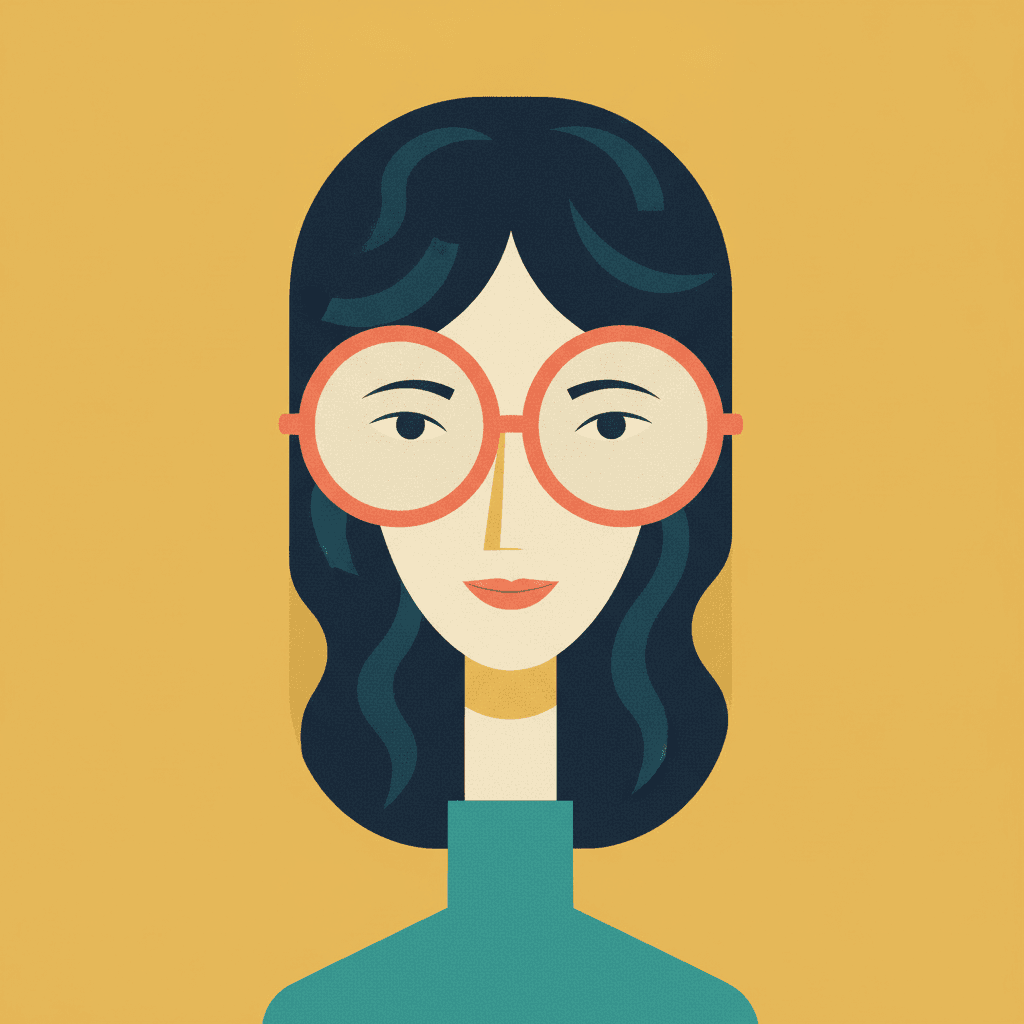
The glasses are the face
Who sleeps here?

One long, one round
Making Whole Visual Development Art Picture Books
What is useful in a book drawn this way and where the limits are, in the order you are likely to meet them.
A character sheet before page one
Inside a project, each character can get a character sheet on the Design tab: a turnaround across the top, in-character poses in the middle and a row of expressions, drawn in your book’s style on a plain backdrop, for one credit. It is the same move a visual development artist makes before anything is animated, and the sheet then serves as a reference for the pages.
One character, kept on model
Save each character in the Character Library with up to fourteen reference images and a plain written description. In this style, describe the shape as well as the clothes: “very tall, very thin, square head, big round black glasses”. The brief exaggerates whatever you give it, so give it the thing to exaggerate. Characters made from an uploaded photo stay private to your account.
Ask for the exaggeration by name
The brief exaggerates, but the image model still pulls towards an average body. Our first pass at the two-up on this page came back with two nearly identical girls; it took a second pass that said “legs twice as long, a square head, a raincoat shaped like a triangle” to get the right half. Write the exaggeration into the character description in plain measurements, not adjectives.
Glasses arrive unless you say otherwise
Distinctive glasses are written into the brief, so a character with no description of their eyes may come back wearing a pair. If your character does not wear glasses, say so in their description. If they do, name the shape and the colour of the frames, because two round pairs in black will make two characters harder to tell apart.
Flat, not painted
The brief refuses muddy gradients and heavy painterly rendering. You get clean shapes, a fine grain and one lighter shape for the light, not brushwork, mist or a glowing sunset. A story that needs weather, firelight or a moody night is better served by the cinematic styles; this one is daylight and clarity.
A whole book from a sentence
Describe the story in a sentence and C2Story writes it, splits it into pages and draws every page to the same brief, in English, Chinese, Japanese, Spanish, French and more. Story text sits beside the picture, not inside it. Read online, share a link, or buy the PDF download as the handoff to your printer. Pages are licensed for commercial use under the terms of service.
Other flat, shape-led styles, each built on a different idea: for everyone simplified into clashing blocks, geometric picture books; for flat shapes under real film grain and hard side light, grainy illustration picture books; for tall characters in black ink who never react, ink mascot picture books; for long bodies drawn in sharp expressive lines, angular line picture books; and for a 1960s palette of flat shapes, mid-century picture books.
Questions About Visual Development Art Picture Books
Explore More Story Ideas
Discover more styles, tools, and story types
Fairy Stories
Enchanted worlds and magic spells
Explore
Crosshatch Ink Picture Books
Dense hatched shadow & engraved ink texture
Explore
Bedtime Story Generator
Cozy goodnight stories for kids
Explore
Midjourney vs C2Story
Stories, not just images
ExploreVisual Development Art Picture Books: Designed Shapes, Flat Colour, One Distinctive Detail
Visual development art picture books rest on a brief with an unusual refusal. C2Story runs seventy-eight hand-drawn style briefs, each a short written record of a palette, a light, a line weight and a few refusals. Twelve refuse something generic, and eleven of those mean a face. The Stylized 2D Visdev Character brief is the only one that refuses generic proportions, the only one asking for subtle textured light, and the only one whose lighting note is called stylized.
The look is modern 2D visual development art: crisp clean geometric silhouettes, bold flat colour blocks with a fine grain of light, exaggerated slender proportions, strong characterful faces and distinctive glasses, in bright graphic teal, warm coral and crisp cream. Shapes meet at crisp confident edges rather than an ink outline. It refuses photorealism, muddy gradients, generic proportions and heavy painterly rendering, and it renders each scene of the story as finished concept art.
This visdev character design suits character-led stories with a small cast that readers should recognise at a glance: a family of different shapes, a neighbourhood of specialists, a seek-and-find built around one pair of glasses. It is a poor fit for weather, firelight, moody nights or painterly atmosphere. Characters stay on model through the Character Library, and any project can generate a character sheet with a turnaround, poses and expressions before the pages are drawn.
The choice between neighbours is clear. Take fantasy sketchbook concept for the loose, washy working sketch, bold geometric for everyone simplified into clashing blocks, and modern cinematic 2D for soft interior light and a drawn line. Take this 2D concept style when each character should look designed and unlike the rest. Describe the story in a sentence and C2Story writes it, splits it into pages and draws every page to the same brief, with the paid PDF download as the handoff to your printer.