Whimsical AbsurdPicture Books
Absurd illustration is not a funny story drawn normally. It is a world that will not stand up straight — bendy towers, stretched legs, invented creatures — held across every page of your book.
- Nothing plumb, level or square in the frame
- Strange invented creatures with no real species
- Bright inventive colour, dull palettes refused
- Free credits by request — no card
50,000+
Stories Created
10,000+
Active Creators
50+
Art Styles
4.9/5
User Rating
What Makes Absurd Illustration More Than a Funny Drawing
Plenty of looks in this library can be funny. Only one of them has declared war on the straight line, and the other three decisions all follow from that.
Two of its four refusals are about straightness
Every style in this library ends with four refusals, and most of them ban a technique or a mood. This one bans rigid geometry and stiff proportions — half its list, pointed at the same enemy. Of the seventy-eight hand-drawn styles switched on in C2Story, five refuse something rigid or stiff, but the others are protecting a soft edge, a loose pose or a non-plastic surface. Only this brief refuses straight geometry and correct proportion together, which is a decision about the whole picture rather than about the linework. The practical effect: nothing in frame is allowed to be plumb, level or square. Not the walls, not the horizon, not the legs.
The absurdity is in the building, not in the plot
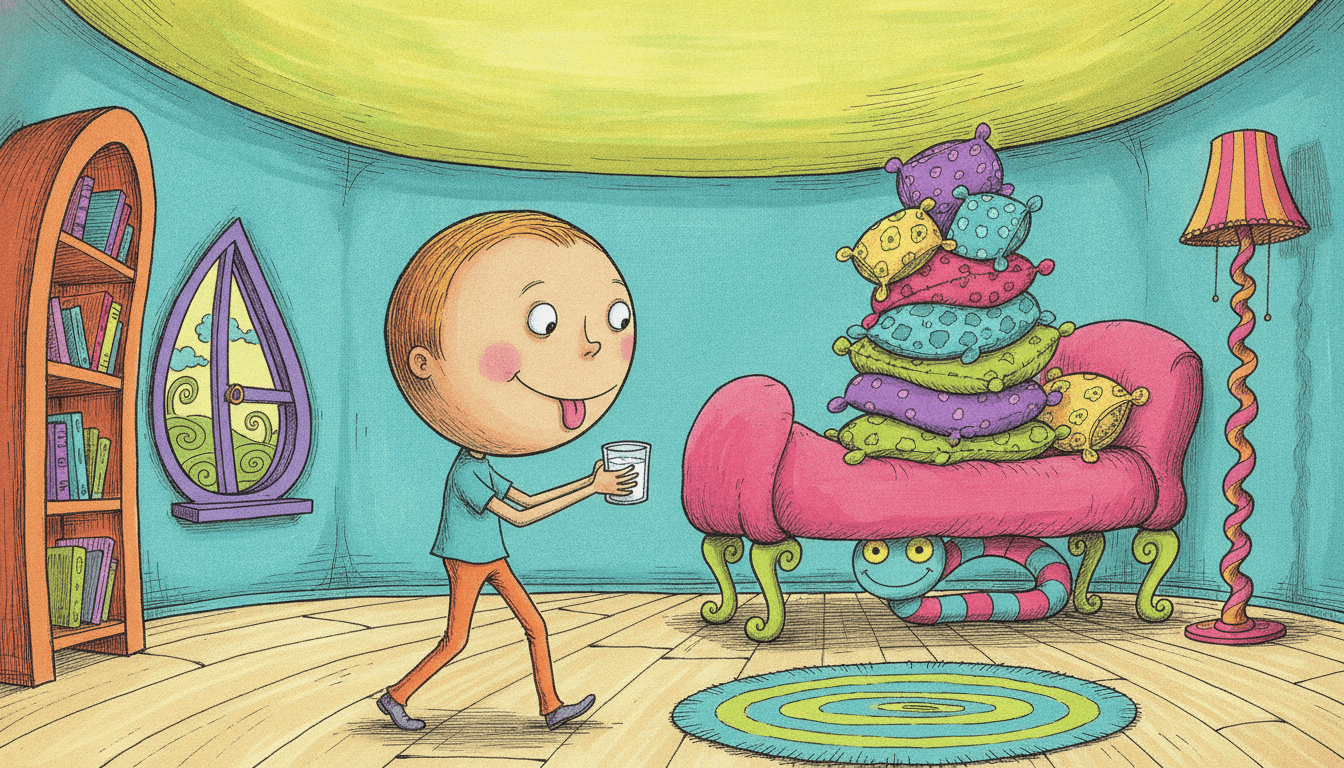
Four enabled styles here use the word absurd, and three of them are comedy formats — a deadpan cartoon, a gag manga reaction panel and a single-panel editorial cartoon. In all three the absurdity lives in the situation and gets delivered as a punchline, while the drawing itself stays perfectly upright. This is the only one of the four filed as a picture book style, and it works the other way round. The situation can be completely ordinary — a child carries a cup of milk across a room — and the page is already absurd, because the room bends and the child is mostly legs.
Strange invented creatures — asked for nowhere else
The brief says strange invented creatures, and that exact instruction appears in exactly one of the seventy-eight enabled styles. Plenty of looks here will draw you a dragon or a fox or a spirit. This is the only one whose specification asks for an animal that belongs to no species at all, and the only one asking for a wildly imaginative composition by name. It matters more than it sounds: an invented creature has no reference in the world, so the style has to supply the whole logic of the thing — how many legs, how the neck works, what it does when it is pleased.
Dull colour is forbidden, which is unusual here
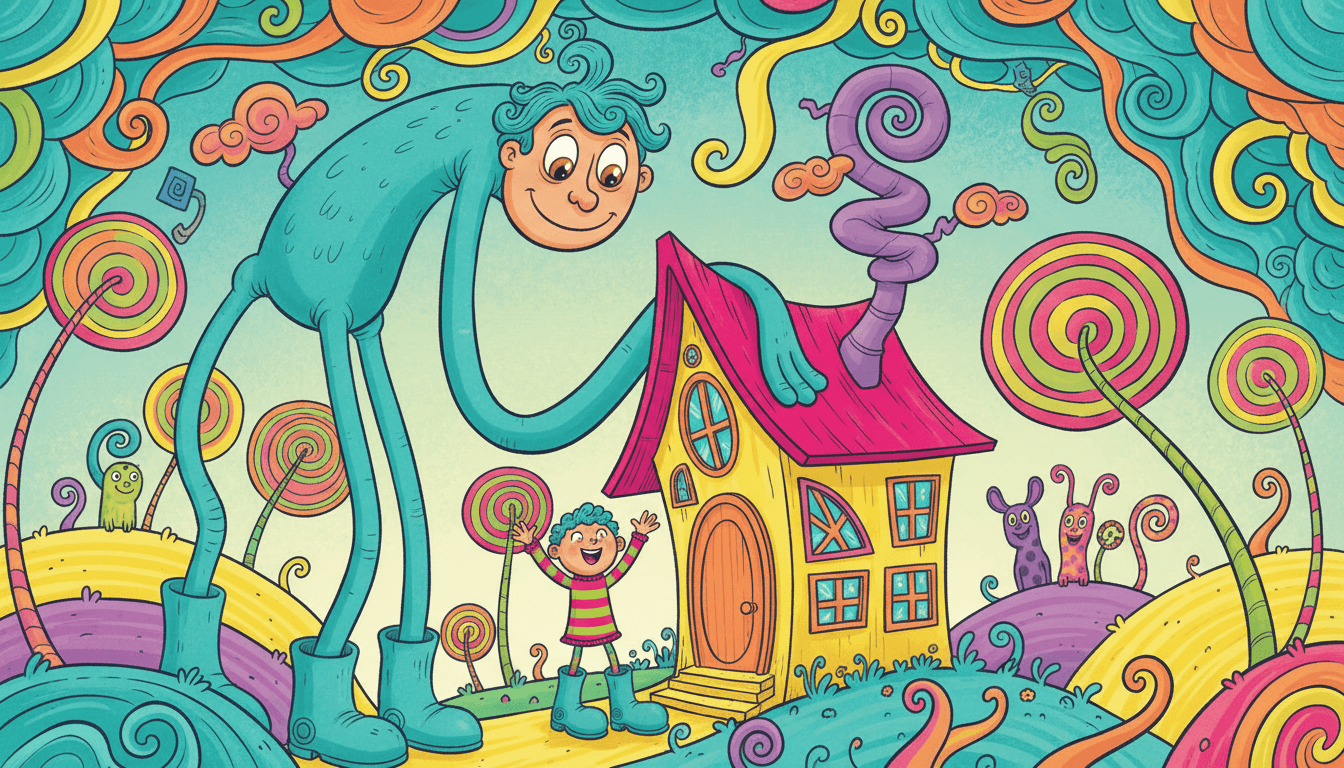
Most colour clauses in this library are about restraint — muted, limited, soft, cool, earthy. This brief bans restraint outright: dull flat colour is its fourth refusal, and only two of the seventy-eight enabled styles refuse that. What it asks for instead is bright inventive colour, and inventive is the operative word rather than bright. The palette is not a mood board of agreeable brights; it is permission to give an invented creature an invented colour. Turquoise fur, a magenta roof, a violet chimney. There is no eyedropper and no hex field — the range arrives with the look.
Three Other Styles Here Tell a Joke. This One Bends the Building.
Four enabled styles in this library use the word absurd. Three are comedy formats — a deadpan cartoon, a gag manga reaction panel, a single-panel editorial cartoon. In each of those the absurdity is a situation, delivered as a punchline, and the drawing around it stays perfectly upright so the joke has something steady to land on.
This is the only one of the four filed as a picture book style, and it inverts the arrangement. Here the drawing is the absurd part. Which has a consequence most people do not expect, and it is the single most useful thing to know before you pick it: your story does not have to be strange. The style is already supplying that.
So write small. An errand, a spilled thing, a queue, a bedtime. Ordinary events in a bent world read as delightful. Wild events in a bent world read as noise, because nothing is holding still long enough to be surprising.
And give it structures to ruin. Houses, towers, staircases, furniture, bridges. Bendy curving structures are named in the brief, so architecture is where this look is most obviously itself.
Its four refusals, in the order the brief states them:
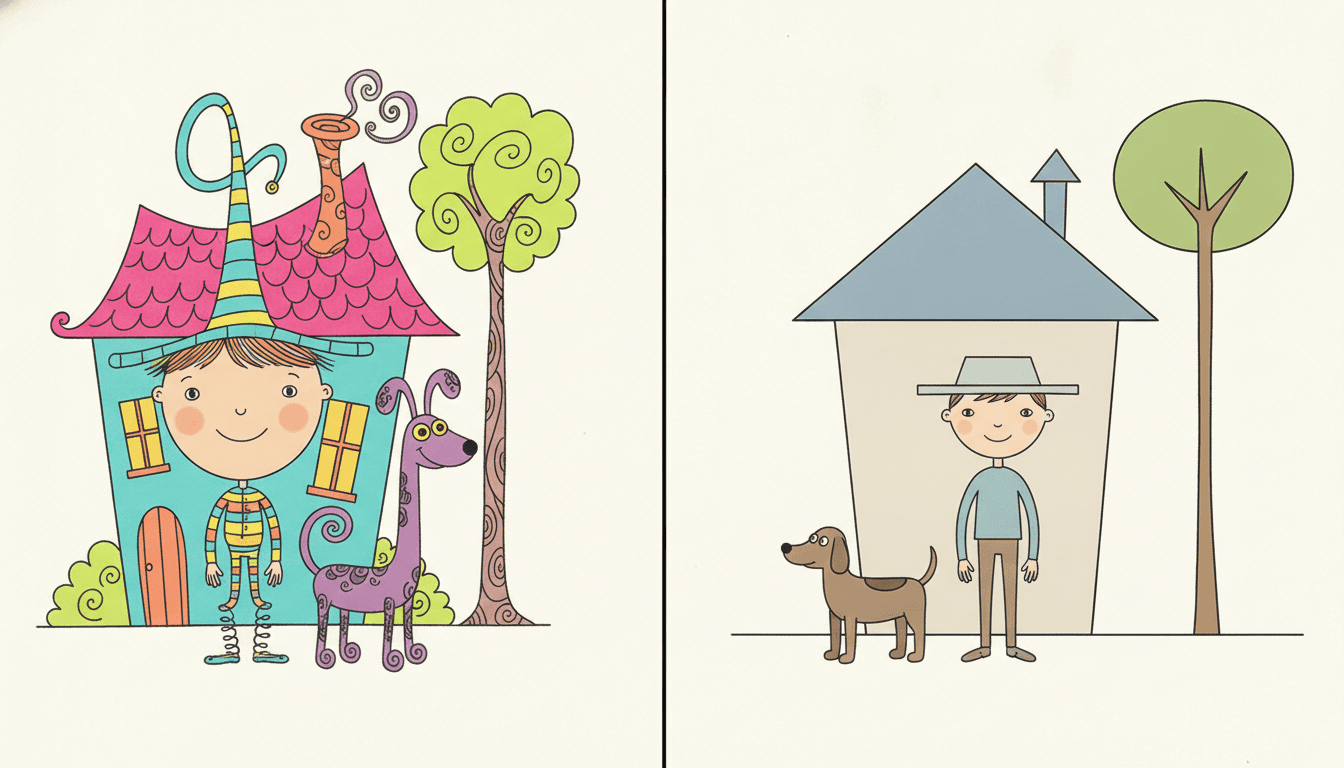
Same Scene, Straightened Out. This Is What the Style Actually Buys You.
One child, one house, one tree, one companion — drawn twice. The right-hand version is not a worse drawing. It is the same content with the two refusals lifted: straight geometry allowed back in, correct proportions allowed back in, and the palette permitted to go quiet.
Everything that makes the left-hand picture feel like a children’s book comes from things the brief forbids. That is the clearest way to understand absurd illustration as a specification rather than a mood: it is defined almost entirely by subtraction, and what it subtracts is the right angle.
One-second test for the look. Picture the house in your story. If it could be drawn with a ruler, you probably want a different style — this one will bend it anyway, and fighting that is a bad use of a book.
And one for the cast. Is your animal a real animal? Then say so clearly, because this brief leans towards inventing one. Strange invented creatures is written into it, and left to itself it will happily give your dog an extra set of legs.
Worth seeing side by side before you commit: the deadpan cartoon style, which is absurd in the opposite direction, the nordic whimsy style, which is the other thing people mean by whimsical, and the bold flat style, where the straight confident outline is the whole point.
Create a Whimsical Absurd Picture Book in 3 Steps
From a one-line idea to a finished book whose world stays bent all the way through, in under two minutes.
Describe the story
A sentence is enough, and a small sentence is better. Give this look an ordinary event and something built — a room, a tower, a staircase, a kitchen. It supplies the strangeness; you supply the thing to happen.
"A child carries one full cup of milk across one room"
Pick Bendy Absurd Storybook
Choose it for stretched proportions, buildings that lean and creatures with no species. Choose Nordic Fine-Line Whimsy instead for the quiet kind of whimsy, Deadpan Dialogue Cartoon for absurdity held completely still, or Heta-Uma Bad-Good for a wobble that is scruffy rather than bouncy.
Bright inventive hues, playful contrasts, whimsical brights
Generate and export
C2Story writes the story, breaks it into pages and draws every one to the same brief. Read it on screen, share the link, or export the PDF and take that file to whichever printer or print service you already use.
Whole book drawn, PDF export, instant sharing
Whimsical Absurd and Its Nearest Neighbours
Four real styles that all distort something, sorted by the two things that actually separate them: whether the distortion is exuberant or awkward, and whether the page is loud or quiet.
Bendy Absurd Storybook
Whimsical absurd storybook illustration: extreme exaggerated proportions, bendy curving structures, strange invented creatures, fluid flowing lines, a wildly imaginative composition and playful hand-drawn energy filling the whole fantastical scene in bright inventive colour. Its light is a playful even storybook light and its line is a fluid springy one of varying thickness. It refuses rigid geometry, photorealism, stiff proportions and dull flat colour. One of eleven picture book styles enabled here.
Nordic Fine-Line Whimsy
The word whimsical appears in four enabled styles and they agree on almost nothing. This is the one people most often mean by it: Nordic fine-line ink with dense delicate hatching, whimsical quirky characters, a tender lonely mood and vast white space framing the subject, in fine black ink, cool grey wash and a single soft red. Both briefs say whimsical. One of them means a small figure alone on a wide quiet page; the other means a tower that bends like a banana. Pick by volume, not by the word.
Deadpan Dialogue Cartoon
Minimal deadpan cartoon: simple round-headed characters with blank expressionless faces, small blocks of grey-blue and beige, clean outlines set against airy white space, and dry absurd humour built from cool detached poses. It is the clearest demonstration that absurd is not one thing. There the drawing stays plain and upright so that the strange situation lands on the reader; here the drawing does all the work and the situation can be nothing at all. It also bans exaggerated expression, which this page’s brief is built on.
Heta-Uma Bad-Good
Deliberately clumsy yet charming illustration: intentionally crude wobbly proportions, awkward naive linework that is oddly appealing, a quirky offbeat adult sensibility and raw hand-drawn energy, in a flat quirky palette of muddy mustard, faded red and dull blue. The closest relative in the library by shape and the furthest away by intent. Its distortion is roughness pretending to be unskilled; this page’s distortion is exuberance, drawn with a confident springy line in saturated colour. If the wobble in your head is scruffy rather than bouncy, that is the one you want.
Three more relatives are worth knowing about. Bold Geometric Picturebook is the exact photographic negative of this page — circles, triangles and blocks assembled with deliberate precision, where this brief refuses geometry outright. Wild Ink Weirdness also wants creatures that do not exist, but eerie spirit-creatures in wild brush ink and muted vermillion, with an uncanny edge rather than a friendly one. And Stylized 3D Personality is the third style here to pair the word whimsical with exaggerated proportions, except it does so in rendered 3D with soft studio shading — a different medium entirely. Browse everything on the illustration styles hub.
Surreal Picture Book Story Ideas to Get You Started
This look is better at small, ordinary and built than at epic, accurate or frightening. These six lean into that — notice how little actually happens in most of them.
The Cup of Milk
A child carries one full cup across one room without spilling it. That is the entire plot. In an absurd illustration brief where the floor ripples and the ceiling droops, an errand that short is already a whole spread.
Create this storyThe House That Leans a Bit More Each Day
Nobody in the family will admit the house is tilting. Bendy curving structures are written into the specification, so a building that slowly gives up on being vertical is the one thing you never have to argue the style into.
Create this storySomething Has Moved Into the Pond
A creature nobody can name, with too many legs and a very friendly face. Strange invented creatures appear in no other brief here, so this is the page where the style is doing something nothing else in the library can.
Create this storyNine Hundred Stairs
A small character climbs a tower of rooms stacked by somebody who was not paying attention. A surreal picture book with looping staircases and a horizon that refuses to sit level turns a simple climb into a different drawing every page.
Create this storyThe Soup That Would Not Stay in the Pot
A recipe goes wrong in an increasingly unreasonable way. Extreme exaggerated proportions mean the ladle can be longer than the kitchen, and the brief will not flinch at a pot the size of a bed.
Create this storyThe Colour That Was Not Allowed
A grey town, one child, and a tin of something luminous. Dull flat colour is the one thing this look refuses outright, so a story about colour arriving somewhere is a story the style is already arguing for.
Create this storyAI-Generated Absurd Illustrations
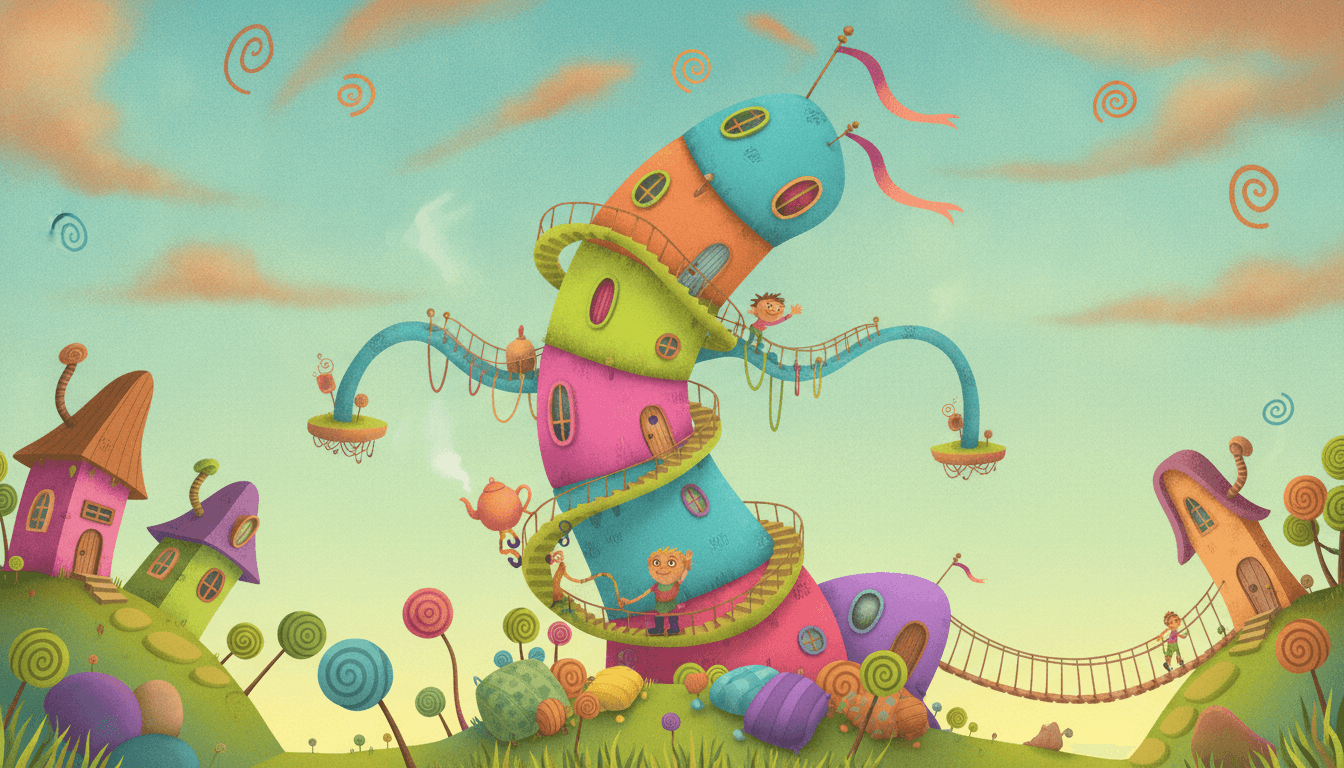
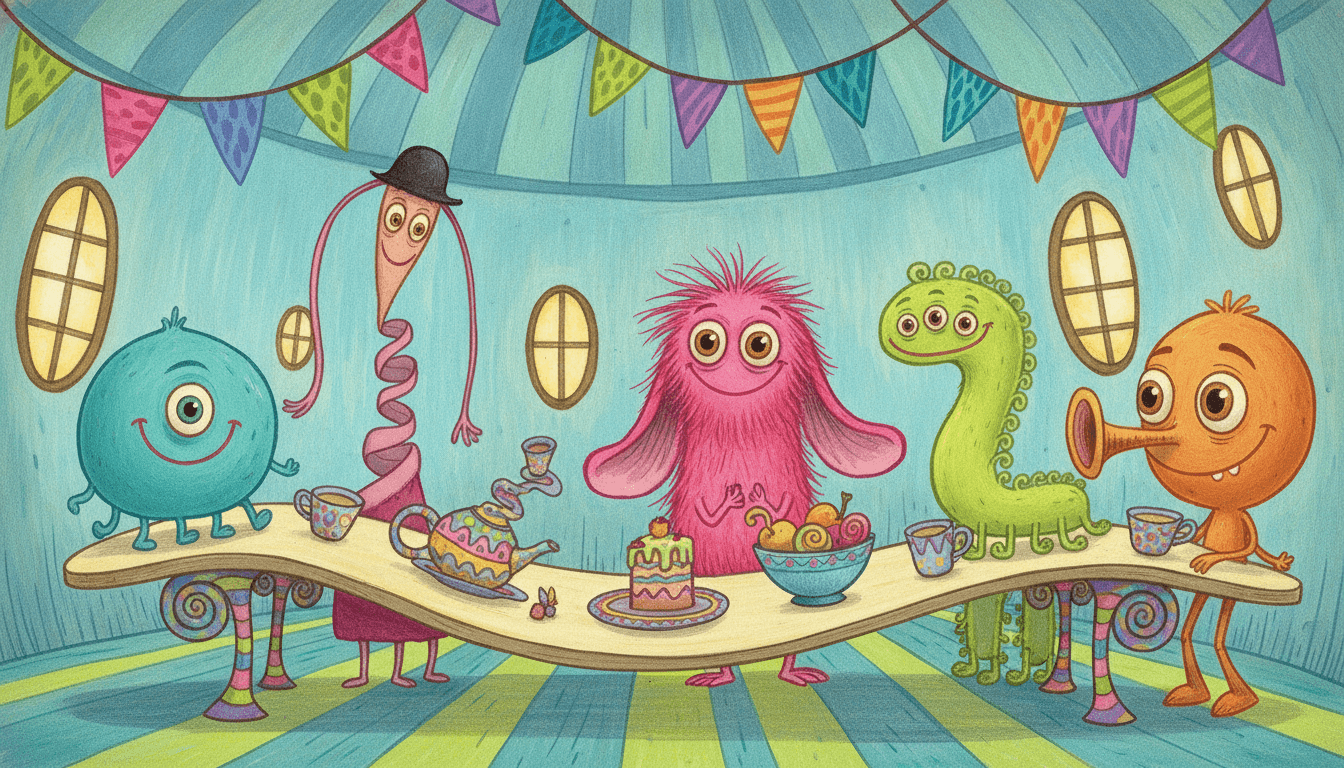
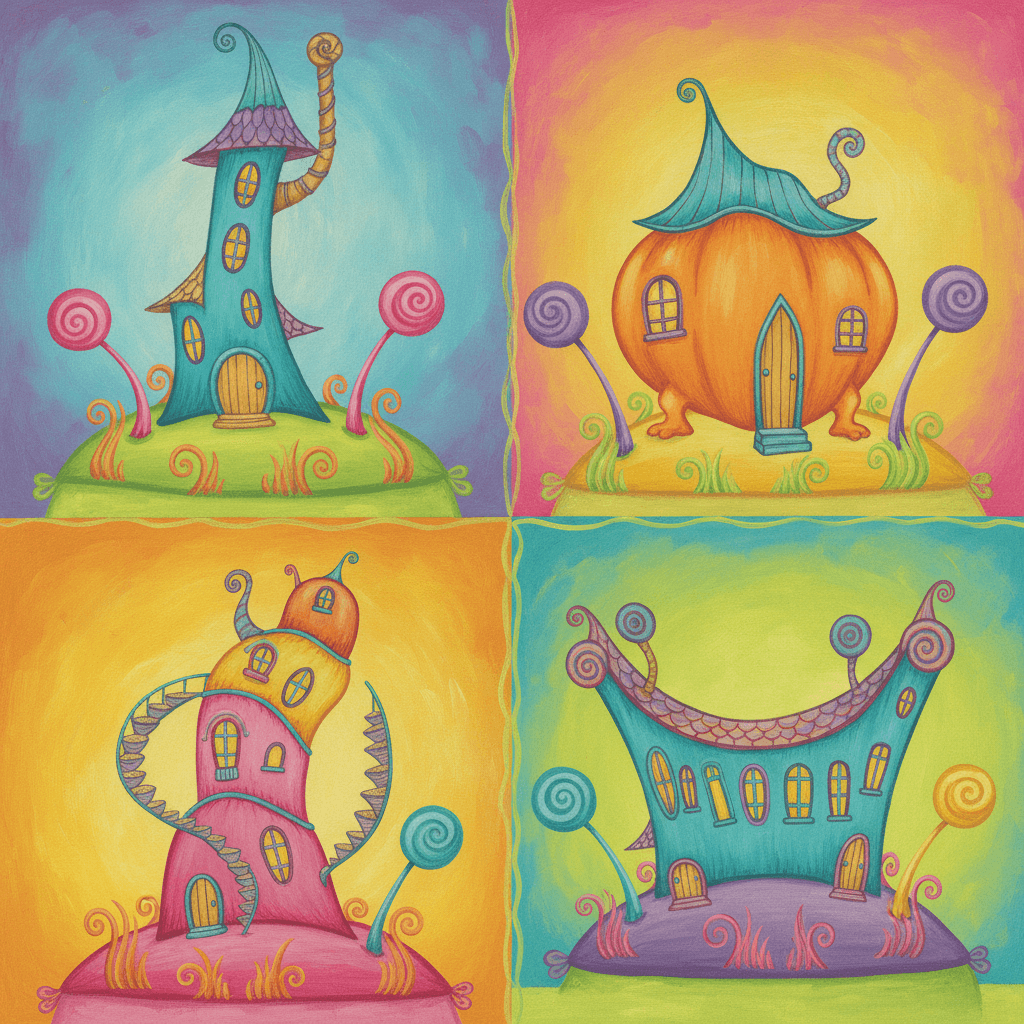
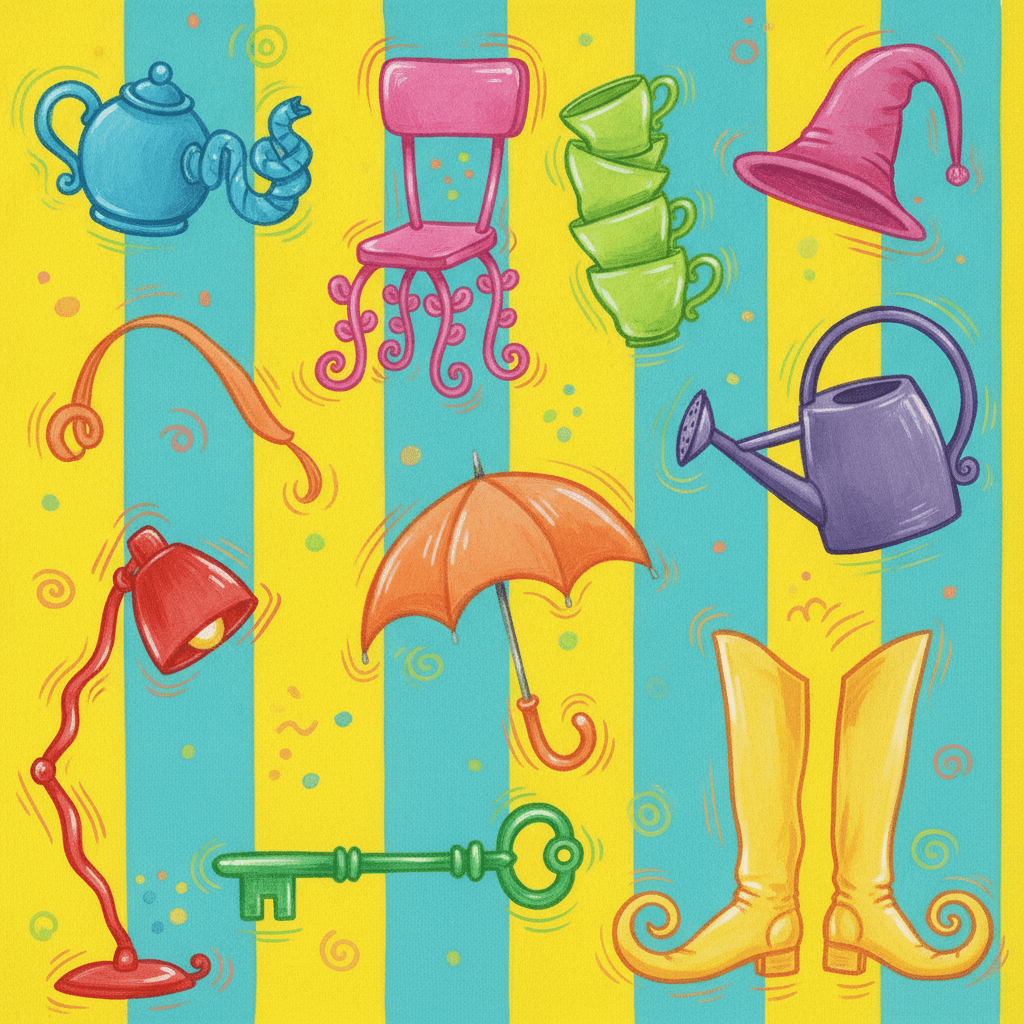
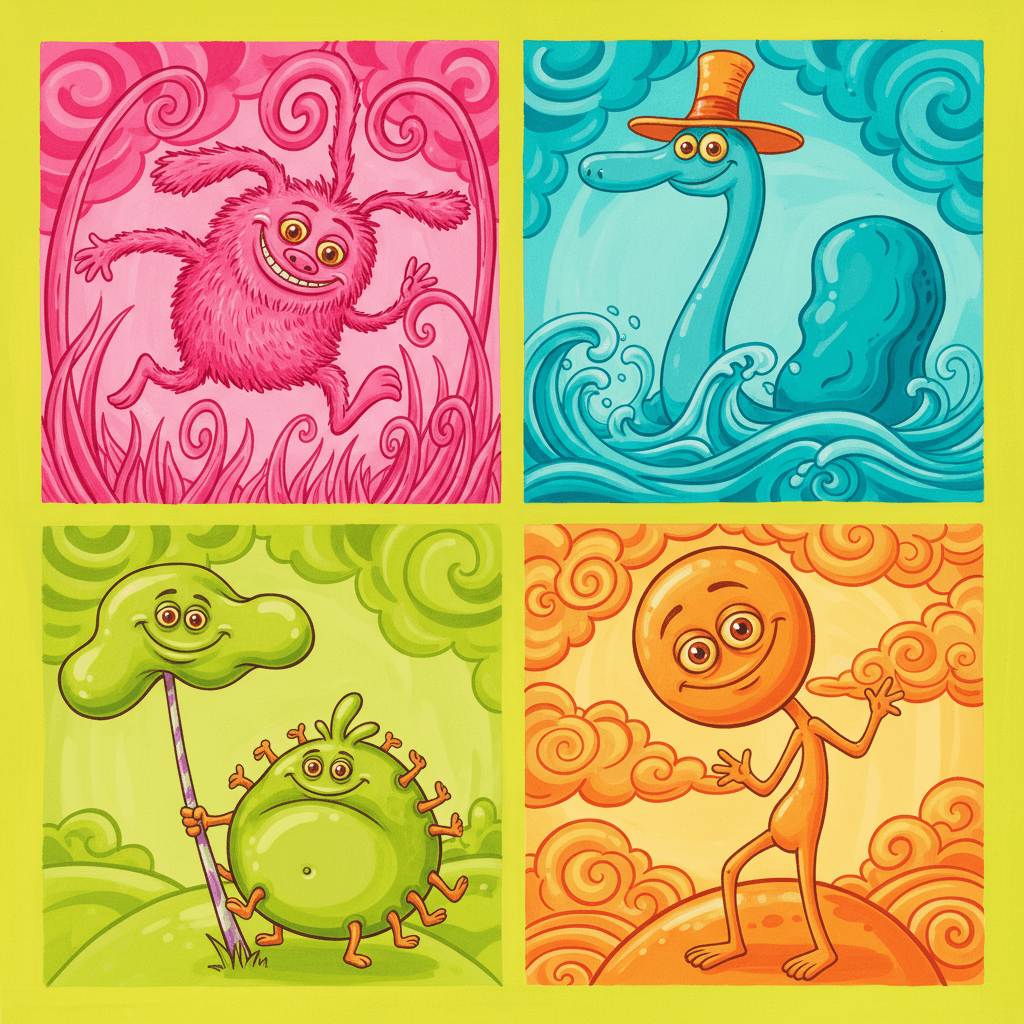
Try it on these absurd illustrations: look for one edge anywhere that is genuinely straight, level or square. There is a reason you will struggle.
Invented Creatures for Every Part of Your Story
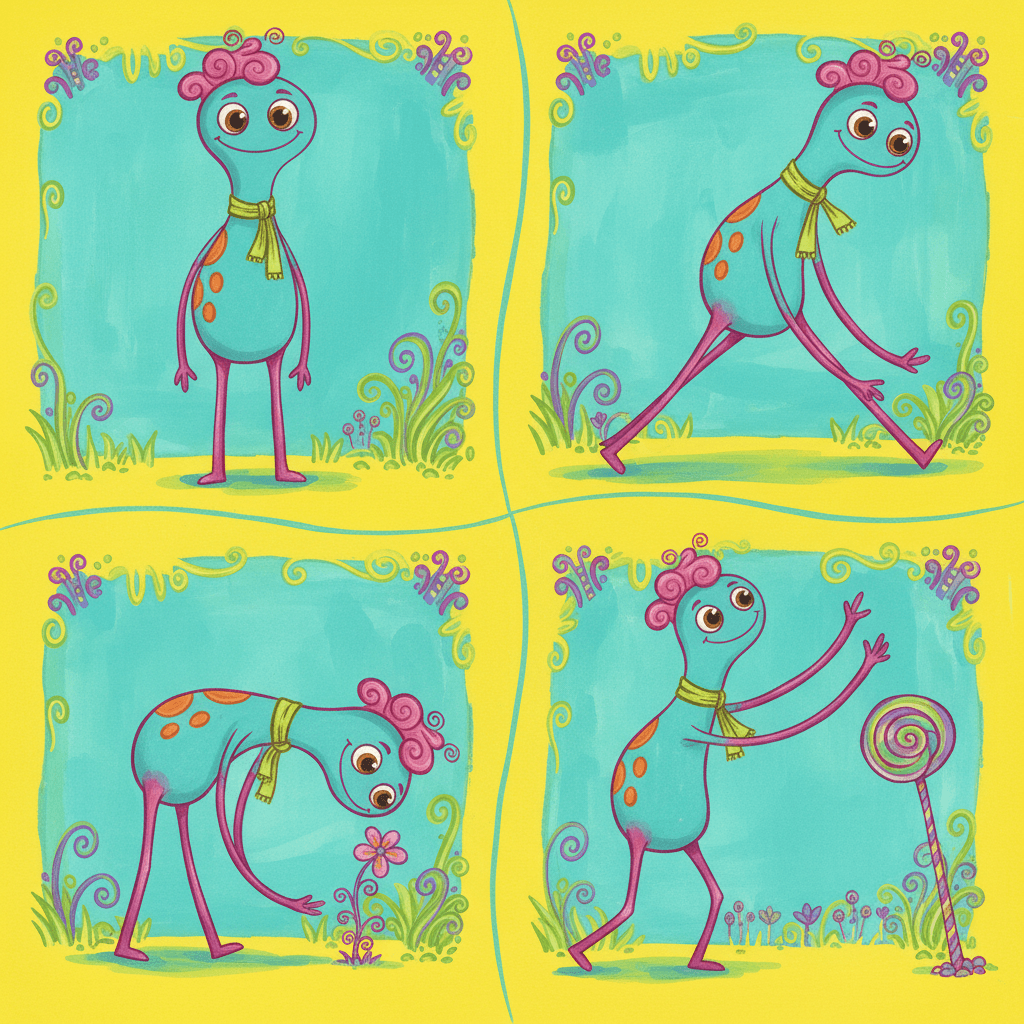
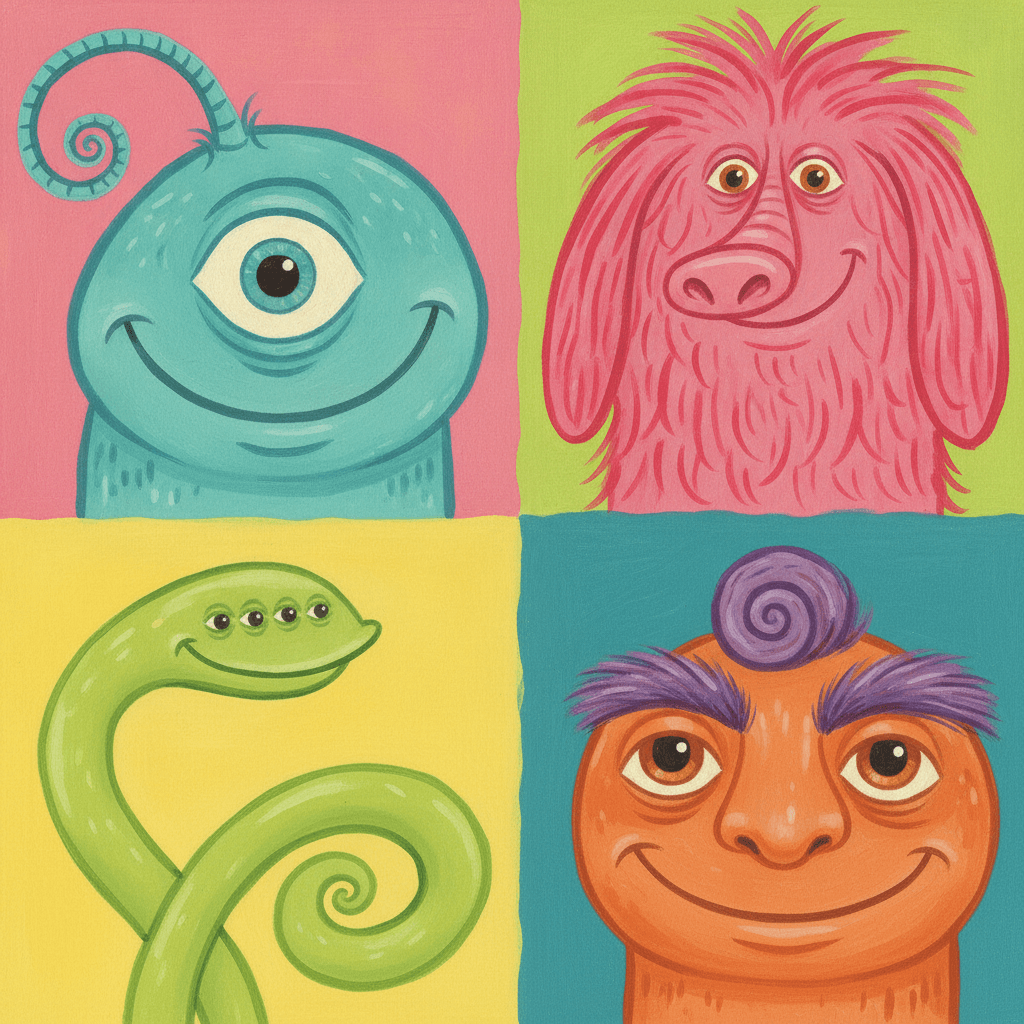
Characters, faces, buildings, the warped objects of an ordinary house, a page of pure colour — the same springy line and the same clashing palette, spent on whatever your story is actually about.
Everything You Need for Whimsical Absurd Picture Books
One wonderfully bent drawing is easy. Twenty-four of them, bent the same way, with the same invented creature in all of them, is the part that needs building.
The same bend on page twenty
Distortion is the first thing an image model quietly abandons. Ask for impossible proportions twenty times and somewhere around page eight the legs start getting sensible again, the walls remember how to be vertical and the creature drifts back towards a dog. One fixed brief — extreme exaggerated proportions, bendy curving structures, fluid flowing lines, no rigid geometry — is carried into every page instead, so the last spread is as unreasonable as the first.
Four refusals, two of them aimed at the ruler
Rigid geometry, photorealism, stiff proportions, dull flat colour. Photorealism is housekeeping — nearly every style here bans it. The other three are the look: no straight structures, no correct bodies, no muted palette. Read as a list, it is less a style than a set of things the page is not permitted to do.
An invented creature that stays invented
Save your characters in the Character Library, with up to fourteen reference images each, and they carry into every page and into later books. It carries more weight in this style than almost anywhere else, because a made-up creature has no fallback. A fox that drifts is still a fox; a creature with one huge eye, a corkscrew neck and six bouncy legs that drifts is simply a different creature, and your reader will know. Characters built from an uploaded photo stay private to your account.
A palette with permission built in
The colour range comes with the style rather than from a picker, and here the restriction is unusually generous: bright inventive colour, playful contrasts, whimsical brights, with dull flat colour refused by name. That is the opposite instruction from most of the library, and it is what keeps a bent world from turning into a muddy one — the clashes are chosen, not accidental.
Whole books, not single drawings
You are not prompting for one lucky render of a curly tower. Describe the story and C2Story writes it, breaks it into pages, and draws every page in this style, matched to what that page actually says — so the invented world holds its own rules across a narrative instead of reinventing itself every spread.
Any language you read aloud in
The look carries no language of its own. Write in English, Chinese, Japanese, Spanish, French and more — the bendy architecture, the springy line and the bright clashing palette do not change with the text. A corkscrew chimney reads the same in every alphabet.
Whimsical Absurd Picture Books — Questions
What people ask before committing a whole book to bendy structures, stretched proportions and creatures that do not exist.
Explore More Story Ideas
Discover more styles, tools, and story types
Pirate Stories
Treasure hunts on the high seas
Explore
Anthropomorphic Animal Books
Dressed animals with jobs & a busy little town
Explore
Bedtime Story Generator
Cozy goodnight stories for kids
Explore
Storybird Alternative
Better AI story creation
ExploreAbsurd Illustration in Picture Books — A World That Will Not Stand Up Straight, with AI
Absurd illustration is what people mean when they describe a book as the one where the house leans and the creature has far too many legs. On C2Story this is the Bendy Absurd Storybook style, and its brief is unusually direct about what it wants: whimsical absurd storybook illustration, extreme exaggerated proportions, bendy curving structures, strange invented creatures, fluid flowing lines, a wildly imaginative composition and playful hand-drawn energy filling the whole fantastical scene in bright inventive colour. Its light is a playful even storybook light. Its line is a fluid springy one. One brief, applied across an entire book, so the twentieth page is as bent as the first.
The thing worth understanding before you commit a book to it is where the strangeness is coming from. Four of the seventy-eight hand-drawn styles enabled here use the word absurd, and three of them are comedy formats — a deadpan cartoon, a gag manga reaction panel and a single-panel editorial cartoon — in which the absurdity is a situation and the drawing stays upright underneath it. This is the only one of the four filed as a picture book style, and it reverses that. The absurdity is structural: it is in the architecture, the limbs and the colour rather than in the plot. Which means the single most useful piece of advice for whimsical story art in this look is counter-intuitive — write a smaller story than you think you need. An errand, a spilled cup, a queue. The style has already made the world unreasonable, and a wild plot layered on top of a wild drawing stops reading as funny and starts reading as noise.
The second thing to know is how specifically it is defined, because it is defined by subtraction. Every style in the library ends with four refusals, and this one refuses rigid geometry, photorealism, stiff proportions and dull flat colour. Photorealism is housekeeping — nearly every style here bans it. The other three are the look itself, and two of them are aimed at the same target: straightness. Five enabled styles here refuse something rigid or stiff, but the rest are protecting a soft edge or a loose pose; this is the only brief that refuses straight geometry and correct proportion together, which is a rule about the whole picture rather than about the linework. The fourth refusal runs against the grain of the library in a different way: most colour clauses here ask for restraint, and only two of the seventy-eight enabled styles forbid dull colour outright. What this one asks for instead is bright inventive colour — inventive being the operative word, since an invented creature is entitled to an invented colour. And strange invented creatures is itself a phrase that appears in exactly one brief in the whole library, which is this one.
Two honest notes before you start. First, this style cannot be accurate. Rigid geometry and stiff proportions are refused by name, so anything whose meaning depends on being correctly shaped — a real skyline, a recognisable landmark, a classroom grid, a map, a working diagram — will bend, lean and stretch no matter how you ask. It is also poor at menace and melancholy, because its light is flat and playful with no dramatic shadow available; for stillness and open paper the fine line ink style and the minimalist style are built the opposite way round. Second, invented characters need managing more than real ones do. A rabbit that drifts between pages is still a rabbit; a creature you made up has nothing to drift back towards, so save each one in the Character Library with up to fourteen reference images each before you begin. Characters built from an uploaded photo stay private to your account. Write in any language you read aloud in, then export the finished book as a PDF, which is the handoff to whichever printer you already use, and the images you generate are licensed for commercial use. Start free: see our pricing plans, browse every option on the illustration styles hub, compare it with the deadpan cartoon style, the nordic whimsy style or the storybook style, or go straight to the AI Story Generator.