OC Backstory GeneratorA Past That Shows Up on Page One.
Not a list of sad events. The C2Story OC backstory generator builds a history where every moment leaves a belief, and every belief leaves a behaviour you can see them doing today — then draws the one that still matters.
- Written backwards from the character you already have
- Every event traced forward into present-tense behaviour
- Ordinary pasts too — no burned village required
- Illustrate the moment that changed them, on-model at any age
250,000+
Stories Created
80,000+
Characters Saved
45+
Art Styles
4.9/5
Creator Rating
How the OC Backstory Generator Works
Three steps, and the first one is handing over the character you already know how to draw.
Bring Them As They Are Now
A saved profile, a Toyhouse bio or three sentences. The most useful things you can give it are not facts about the past at all — they are the present-day details you cannot explain yet. The flinch, the rule they never break, the skill nobody asked them to learn.
“Never asks for help. Weirdly good at fixing radios.”
Get a History That Explains Them
A timeline comes back built backwards from those details, every event carrying the belief it left behind and the behaviour it produces today. Re-roll individual moments, mark ones as canon, and ask for something smaller when a version arrives too loud.
Every event answers: so what does it make them do?
Draw the Moment That Matters
Save the backstory to your character so it stays with them, then hand the single most load-bearing moment to C2Story and get it back illustrated — a flashback, a short comic, a whole origin book with your OC the same person at every age.
The day it happened, as a six-page short
What Actually Goes Into an OC Backstory
A backstory is not a chronology. It is a chain: something happened, they concluded something from it, and they have been acting on that conclusion ever since.
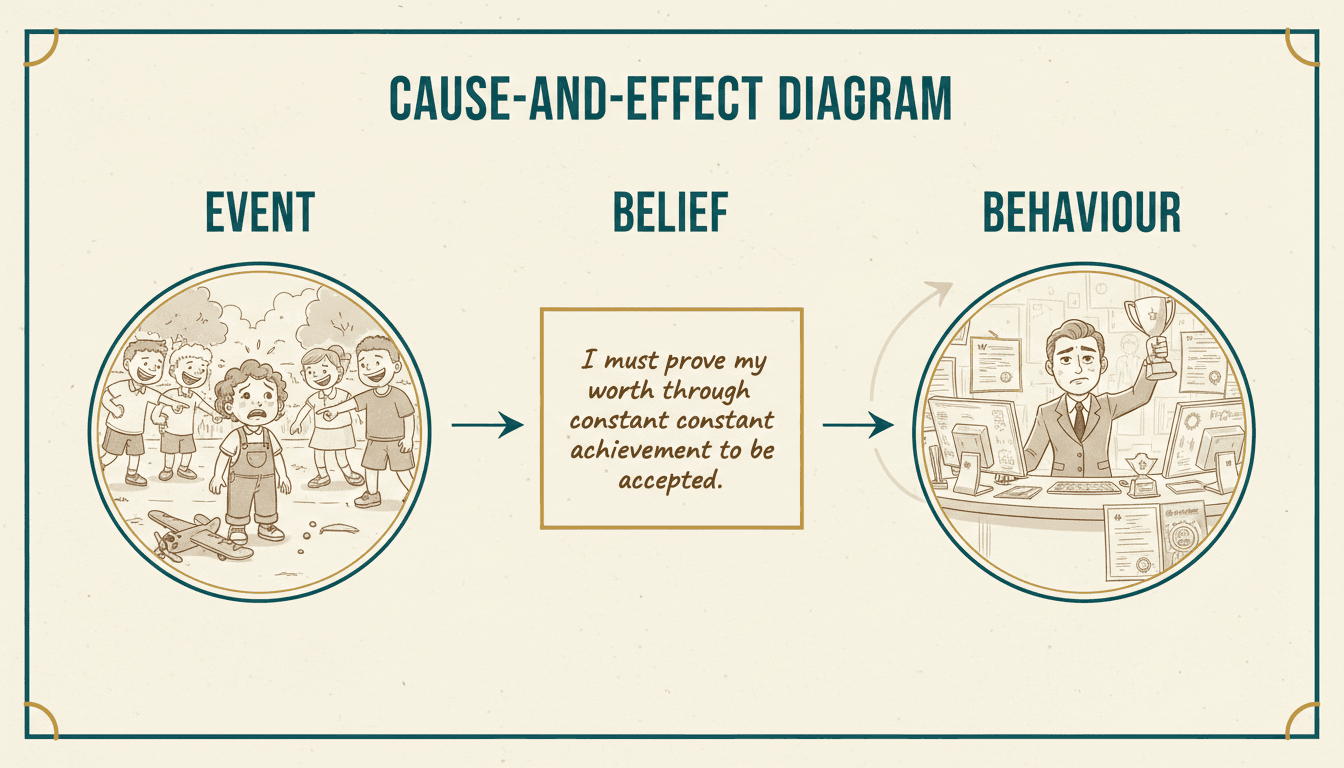
The Event
One specific afternoon, not a decade. “Her village burned” is a setting; “she was the one sent to fetch help, and she ran the wrong way” is an event. Specificity is what makes a past feel remembered rather than summarised.
What happenedThe Belief
The wrong lesson they took away from it, stated in their own words. “Asking for help gets people hurt.” This is the single most load-bearing line in any backstory, and the one almost every OC bio is missing entirely.
What they concludedThe Behaviour
What the belief makes them do on an ordinary Tuesday with nothing at stake. Carrying too much alone. Arriving early. Not answering a question they could easily answer. This is the part the reader actually sees.
What we watch them doThe Person Who Was There
Backstory without a second person is weather. Someone taught them, failed them, stayed, or left — and that person can still be alive, still be around, and still be owed something. One named relationship is worth ten historical events.
Who shaped itThe Unfinished Business
A debt, an apology never made, a question never asked. This is the hook the present story hangs on: a past is only dramatic once something in the now comes to collect on it. Give the generator this and plots fall out for free.
What is still openNot: The Body Count
Piling on losses is the most common way an OC backstory gets worse. Each additional tragedy dilutes the last one and none of them get room to produce behaviour. One event fully worked through beats five listed. Restraint reads as depth.
The common trapBackstory is not lore, and it is not an arc
Worth separating so you land on the right tool. Lore is the world — the war, the factions, the era — and it belongs to everyone in the setting; that is the OC lore generator. Backstory is what happened to your one specific person inside that world, before page one. An arc is the change that happens after page one, and the character arc builder maps that. Lore is the ground, backstory is where they are standing when we meet them, and the arc is the walk. This page builds the standing position.
The Present-Tense Test: Real Backstory vs Tragic Trivia
Take any event in the past and ask: what does my OC do today because of it? If you cannot name one thing, the event is not backstory — no matter how sad it was.
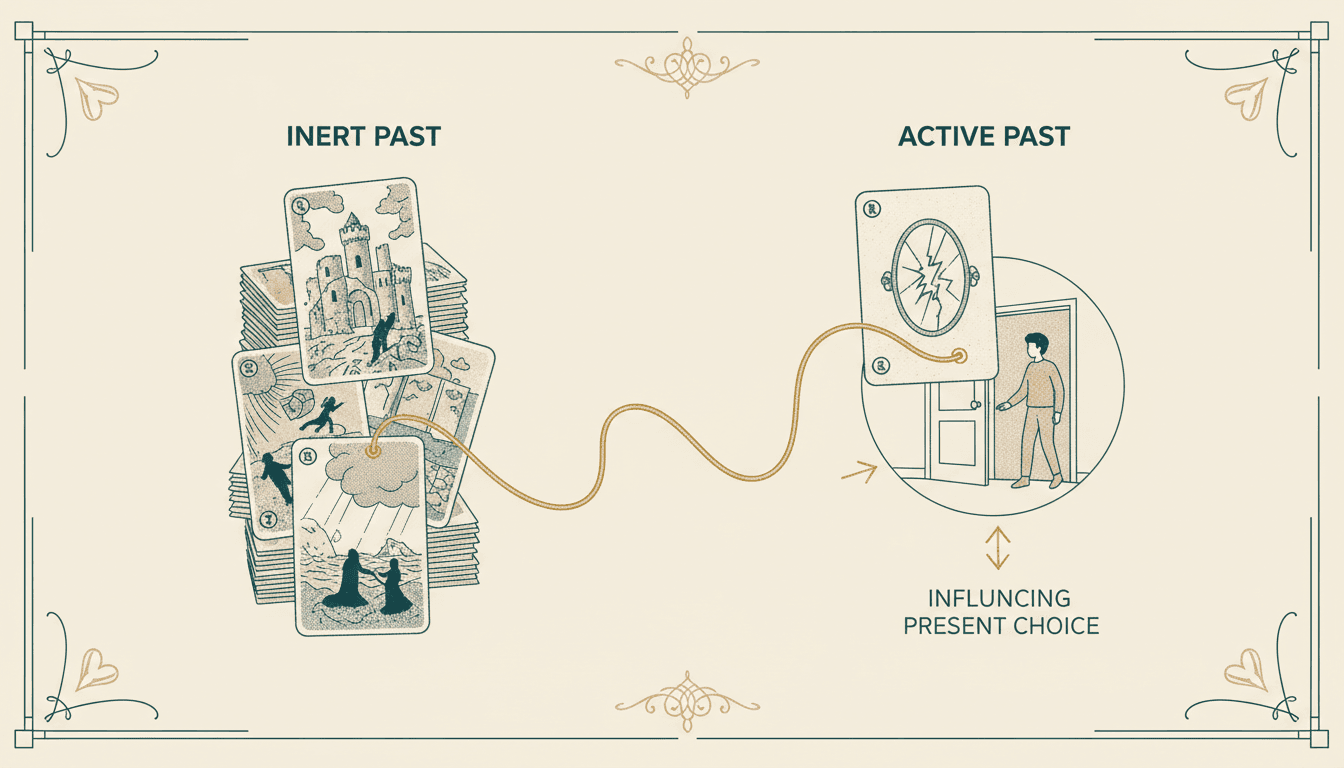
A List of Sad Things
- ✕ “Orphaned young, raised by strangers, lost everything”
- ✕ Could be pasted onto a hundred other OCs
- ✕ Nothing in it predicts a single line of dialogue
- ✕ Delivered as one paragraph of exposition, then never again
A Past With Fingerprints On Today
- “She was sent for help and ran the wrong way”
- Leaves a belief: asking for help gets people hurt
- Which leaves a behaviour you can watch in any scene
- Surfaces gradually, and re-reads differently at the end
Every event this OC backstory generator writes has to survive that question before it reaches you, which is why a generated history tends to be shorter on catastrophes and longer on the small things your character is still doing about them.
A Timeline You Keep, and a Reveal Order
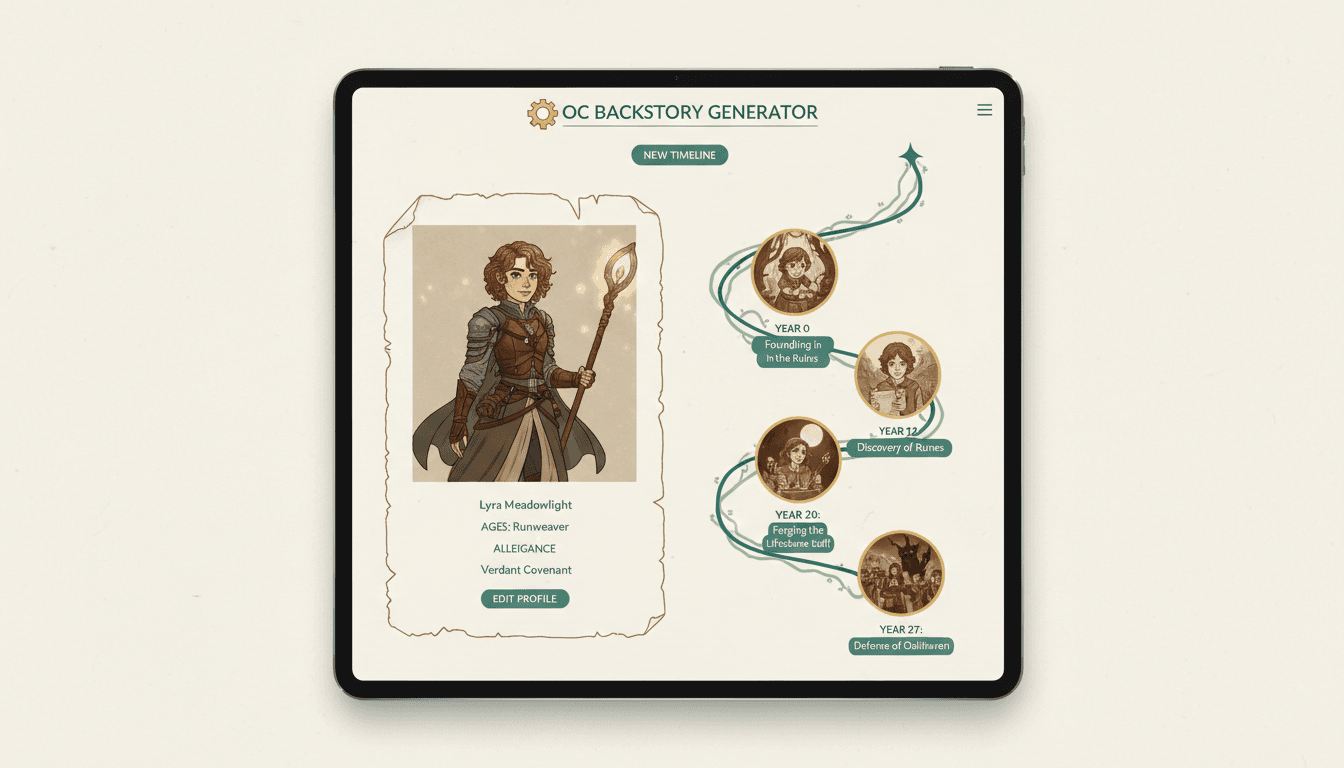
The history arrives as dated moments you can re-roll one at a time — plus a suggested order for letting the reader find out.
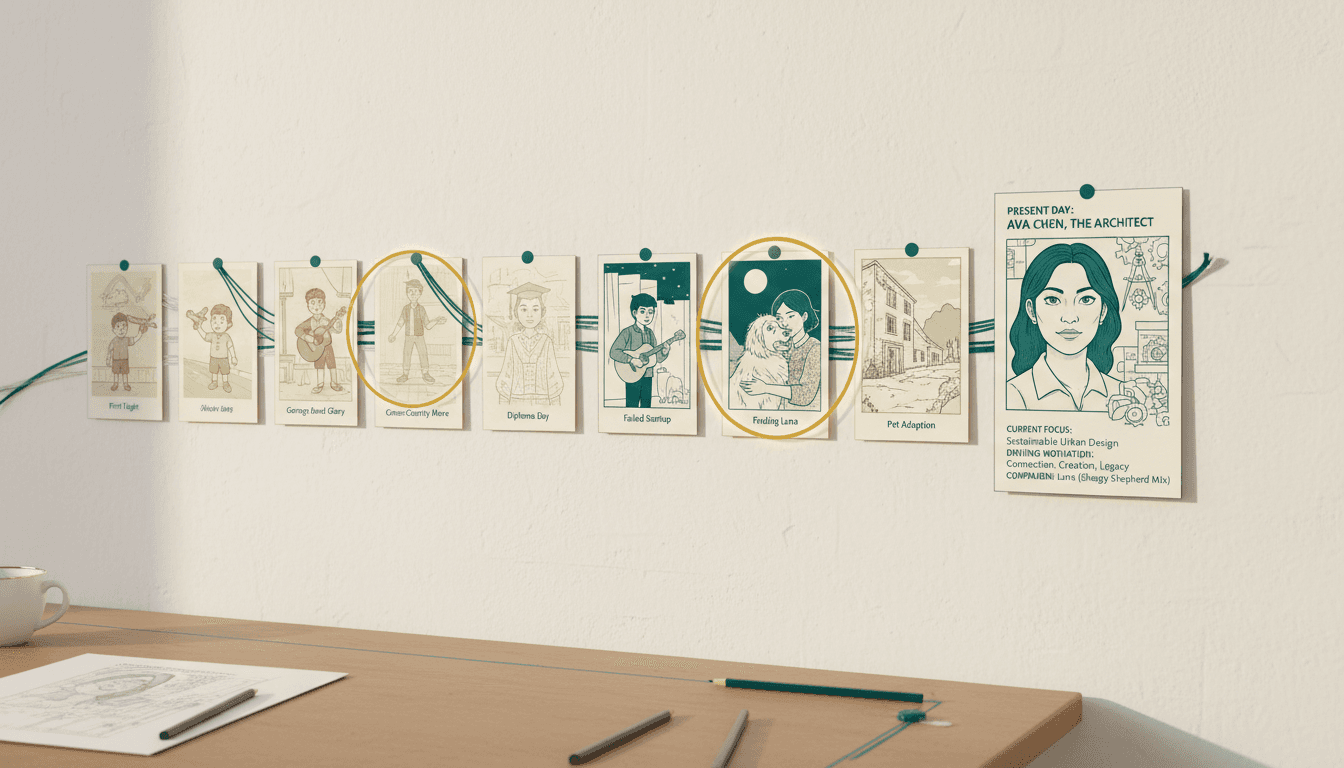
The Timeline
Event → Belief → Behaviour
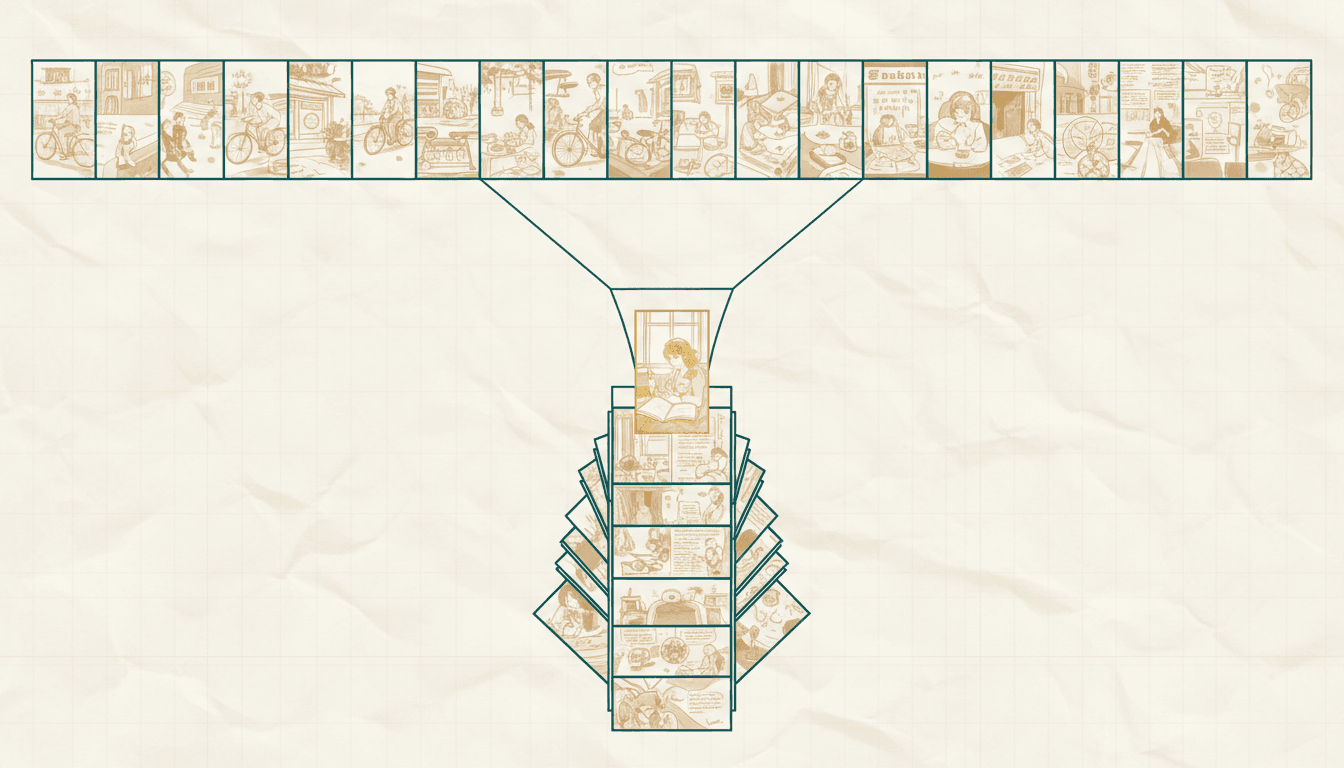
Draw the One That Matters
“Write a backstory for my OC that explains why she never asks for help”
“Give my OC a past that does not involve losing their parents”
“A superhero backstory generator that explains the mask, not the powers”
“Anime backstory for my OC — school setting, one thing they never told anyone”
“What happened between my two OCs before the story starts”
“Illustrate the day everything changed as a six-page short”
Superhero, Anime and Fantasy Backstory Generators
Set a genre alongside your OC and the conventions come with it — but the chain underneath stays the same, which is why these read better than a genre-only backstory maker.
Superhero Backstory
A superhero backstory generator that only explains the powers has done the easy half. The interesting question is the mask: what made an otherwise reasonable person decide the answer was to go out at night, who they are quietly making it up to, and what they were before the accident. Origin, not radiation.
Explain the maskAnime Backstory
The genre has its own furniture and it works when it is used honestly: the school year that went sideways, the promise made to someone who moved away, the mentor whose approval never quite arrived, the thing they have never told the friend group. Anime backstory lives in what goes unsaid.
The thing unsaidFantasy & Original Worlds
Here backstory and lore sit closest together, so the generator keeps them separate deliberately: the bloodline and the war belong to the world, while what your OC personally did during it belongs to them. A character who was merely present at a great event has no backstory yet.
Personal, not historicalBackstory Shapes Worth Stealing
Not histories — shapes. Each one becomes a different past depending on whose present-day behaviour it has to explain.
Dossier, Timeline, Thread, Three Ages, Corridor
Any moment from the backstory can be illustrated in 45+ art styles — and your OC stays recognisably the same person at every age they appear.
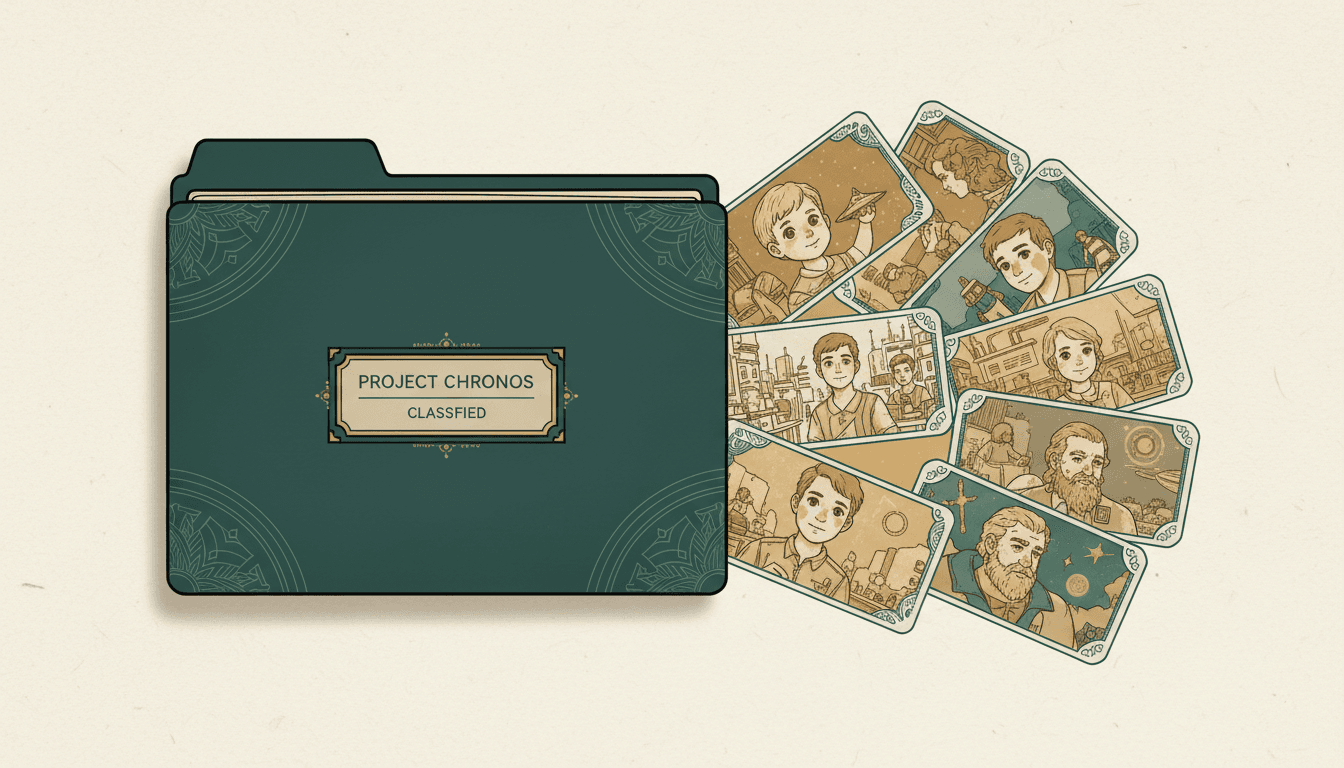
The Dossier
Where the Past Lives
The Timeline
Earliest to Now
The Thread
Then Into Today
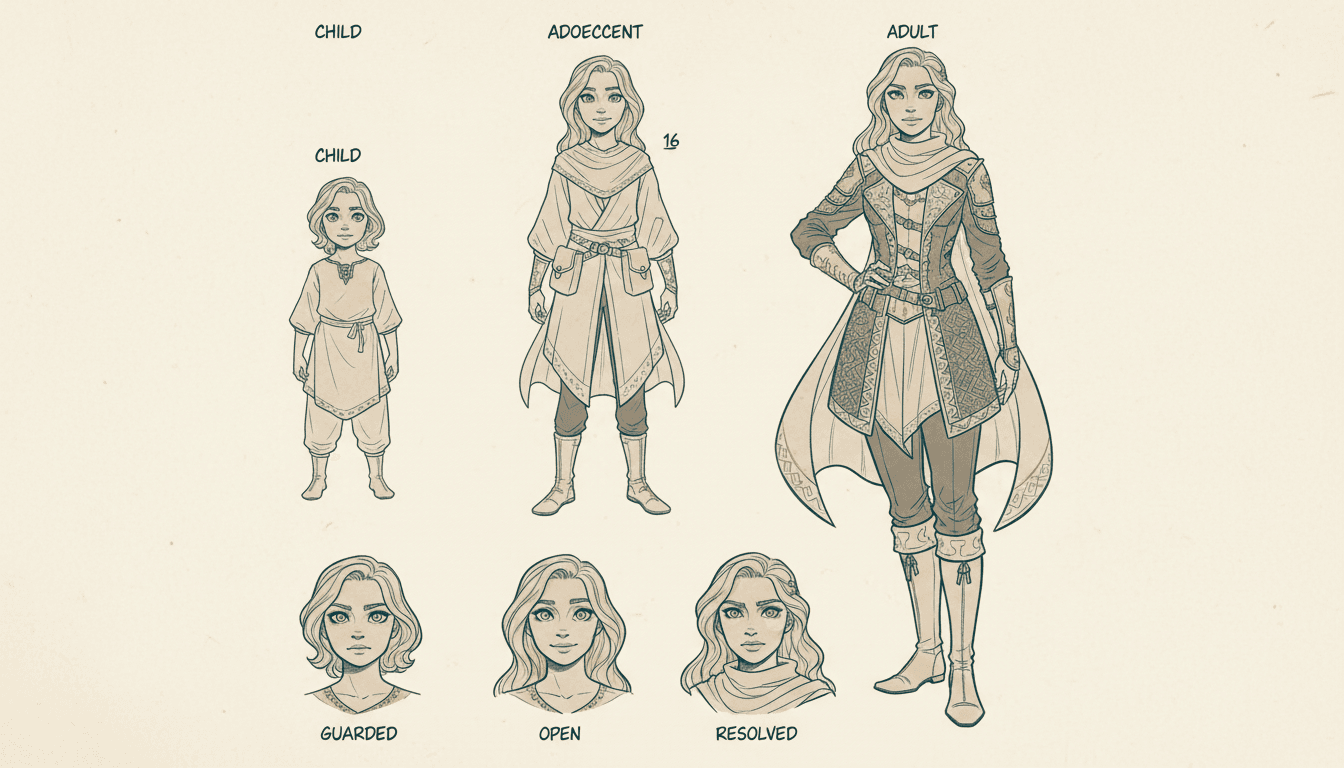
Three Ages
Same Face, Every Era
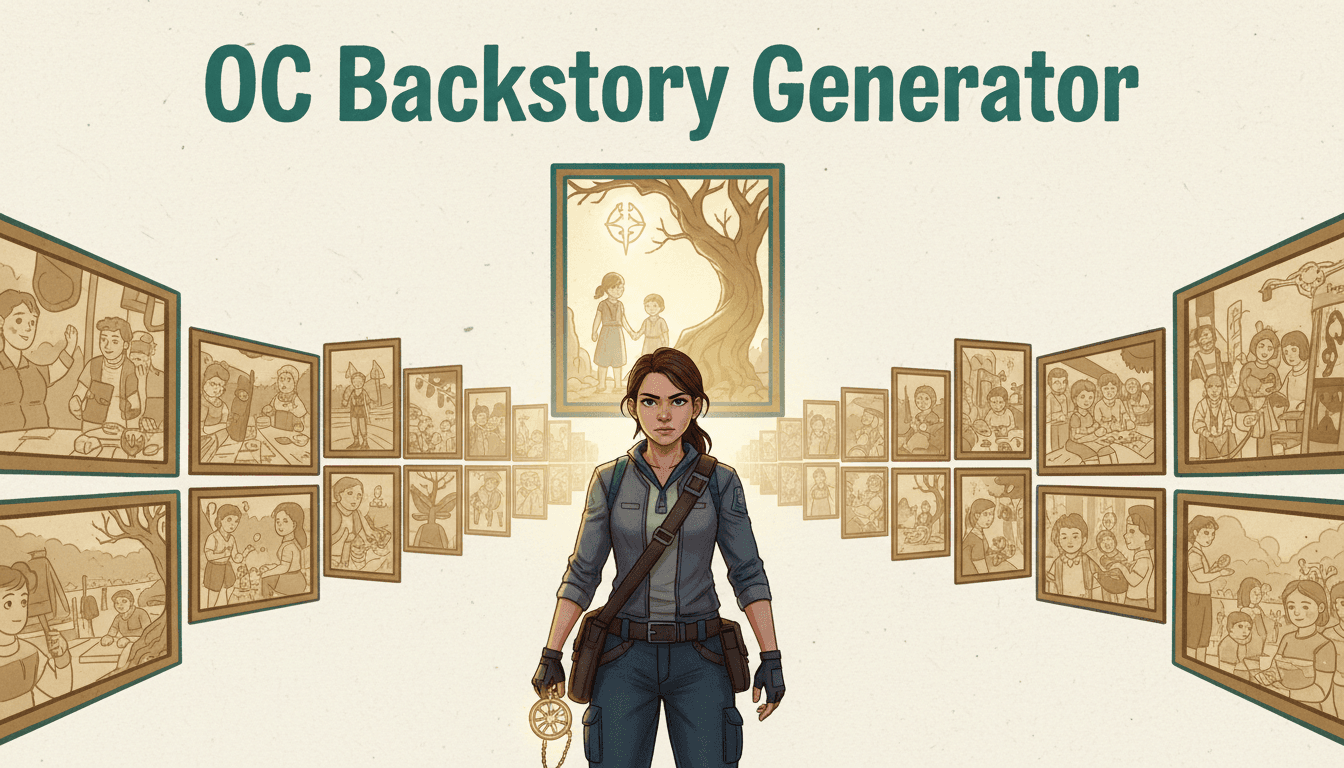
The Corridor
Everything Behind Them
Match the tone of your OC’s past with 45+ art styles including Anime, Manga, Fantasy, Cinematic and Watercolor.
What Changes When the Backstory Is Built From the Character
Six things a random backstory maker cannot do, because it has never read who your OC already is.
Every Event Earns Its Place
Each moment the OC backstory generator writes comes attached to a consequence you can point at today — a habit, a fear, a line they will not cross. Anything that cannot be traced forward into present-tense behaviour gets cut, because it was trivia wearing a tragedy costume.
Built Backwards From Who They Are Now
Most tools hand you a past and hope a person falls out of it. This starts from the character you already have — the way they flinch, the thing they are weirdly good at — and reverse-engineers a history that would actually produce them.
Ordinary Pasts, Not Only Catastrophes
A backstory does not need a burned village. Being the reliable sibling, moving school four times, being quietly the second-best at one thing for a decade — small pasts produce more specific behaviour than dramatic ones, so every batch includes them.
It Checks Itself Against the Sheet
If your OC is described as trusting and the generated past would leave anyone suspicious, that is a contradiction, and you get told rather than left to find it in chapter nine. Backstory and personality are reconciled instead of written independently.
Withheld, Not Dumped
You get the full history for yourself plus a suggested reveal order — what the reader learns on page one, what surfaces halfway, what lands at the end. Knowing everything is the point; telling everything immediately is the mistake.
And Then You Can See It
The moments that matter do not have to stay as notes. Pick one and C2Story draws it — an illustrated flashback, a short comic, a whole origin book — with your OC recognisably the same person at every age they appear.
Who Uses an OC Backstory Generator?
OC Creators & Toyhouse Users
The design is finished, the personality section is three adjectives, and the history box has said “TBA” since last year. This fills it with something that actually explains the adjectives.
Fanfic & Original Fiction Writers
You can write the scene; you just do not yet know why she refuses the offer on page four. A worked-out past makes those decisions for you instead of leaving them to mood.
Roleplayers & D&D Players
A session-one backstory needs to be short, specific and full of hooks a GM can pull on. Unfinished business is exactly what makes a character easy to write adventures for.
Comic & Webtoon Creators
Flashback panels are where backstory earns its keep, and they only work if the past can be drawn as a scene rather than narrated. Every moment here comes out illustratable.
Is the Past the Part You Are Missing?
This page is for creators whose OC exists in the present and has no explanation behind them. If your gap is somewhere else, one of these is a better door — they all share the same character library.
Yes — I have the OC and no history for them
Start here. Bring the character as they are now and get a past built to explain exactly that person.
I do not have the OC yet
Design the character first — appearance, personality, signature outfit — and lock the look before you write a past for it.
It is the world that is blank, not the person
Regions, factions, history and bloodlines. Lore is the ground your OC’s backstory happens on top of.
I need what changes, not what happened
Backstory is the starting position; an arc is the walk. Map the flaw, the turning point and the transformation ahead of them.
The past is set, the present goes nowhere
Turn the unfinished business into a structure: the want, the obstacle, the turning point and an ending.
I want a situation, not a history
Drop your OC into a moment with a real choice in it and find out what the past you just wrote makes them do.
I want the finished illustrated story
Turn your OC and everything behind them into a full illustrated story, fanfic or comic starring them.
I keep losing my own canon
A character bible pins looks, voices, history and details as a reusable record so nothing drifts between chapters.
Many characters with tangled histories
A shared universe with crossing casts and overlapping pasts is a bigger container than one character. That page handles it.
Frequently Asked Questions
Explore More Story Ideas
Discover more styles, tools, and story types
Kitten Stories
A new kitten comes home, first explores, lost kittens and playful yarn fun
Explore
Comic Book Stories
Action-packed panel layouts
Explore
Bedtime Story Generator
Cozy goodnight stories for kids
Explore
Storybee Alternative
More styles & features
ExploreOC Backstory Generator — Writing the Past a Finished Character Deserves
An OC backstory generator solves a stall almost every original character creator recognises. The design is finished and defensible — the palette, the coat, the way they hold themselves — and underneath it the history field says “TBA”, as it has for a year. The gap is not laziness. Designing a person and explaining how they got that way are two different skills, and the OC world is overwhelmingly tooled for the first one. What usually gets written instead is a list of sad events, which feels like backstory, reads like a summary, and never once changes a line of dialogue.
The fix is a change of direction. A generic backstory maker rolls a random history — orphaned, exiled, betrayed — and leaves you to bolt a character onto it. A character backstory generator that works starts from the person you already have and reasons backwards: given that this OC never asks for help, is unaccountably good at fixing radios and always arrives twenty minutes early, what would have had to happen to produce them? That question is answerable, and the answers are specific in a way random history generation never is. The past comes out fitted to the character instead of the character being fitted to the past.
Underneath every backstory worth keeping is a three-link chain: event, belief, behaviour. The event is one afternoon, not a decade — “her village burned” is a setting, while “she was the one sent to fetch help, and she ran the wrong way” is an event. The belief is the wrong lesson she took from it, phrased in her own words: asking for help gets people hurt. And the behaviour is what that belief makes her do on an ordinary Tuesday with nothing at stake — carrying too much alone, arriving early, not answering a question she could easily answer. That last link is the only one the reader ever actually sees, which is why a backstory with no behaviour attached is invisible no matter how much of it you wrote.
Hence the present-tense test, which is the fastest way to audit a history you already have. Go down the list of events and, for each, name one thing your OC does today because of it. If you can name it, the event is load-bearing, keep it. If you cannot name anything, that event is trivia wearing a tragedy costume — delete it, however dramatic it was. Most OC backstories fail this test on every line, and that is precisely why a page of terrible things that happened to a character can still leave them feeling blank. One event fully worked through will always outperform five listed, because each additional loss dilutes the previous one and none of them get the room to produce anything.
Which leads to the most useful permission in this whole subject: your OC does not need a tragic past. Tragedy is a shortcut to sympathy that skips over the thing readers actually respond to, which is specificity. Being the family’s reliable one. Moving towns every eighteen months. Being gently and consistently the second-best at the single thing you cared about. Ordinary pasts generate stranger and sharper behaviour than catastrophic ones, and they are enormously less crowded — you can ask this generator outright for a backstory with no dead parents in it, and the result is usually the better character. Two other ingredients matter more than volume of suffering: one named person who was there, because backstory without a second human in it is just weather, and one piece of unfinished business — a debt, an apology never made, a question never asked — since a past only becomes dramatic when something in the present arrives to collect on it.
It is worth keeping three neighbouring things apart so you end up on the right tool. Lore is the world: the war, the factions, the era, the bloodlines, all of which belong to everyone in the setting rather than to your character, and the OC lore generator builds that. Backstory is what happened to your one specific person inside that world, before page one. An arc is the change that happens after page one, going forward, which is what the character arc builder maps. Lore is the ground, backstory is where your OC is standing when the reader meets them, and the arc is the walk. This page is only about the standing position — but getting it right makes the other two considerably easier, because a character with real unfinished business hands you plot for free.
Genre changes the vocabulary and not the method. A superhero backstory generator that explains only the powers has done the easy half; the interesting question is the mask — what made an otherwise reasonable person decide the answer was to go out at night, and who they are quietly making it up to. An anime backstory generator works with the genre’s own furniture used honestly: the school year that went sideways, the promise made to someone who moved away, the thing never told to the friend group. Fantasy sits closest to lore and therefore needs the sharpest separation, because a character who was merely present at a great historical event does not have a backstory yet. In all three the chain underneath is identical.
What makes this different from a text tool is that the past does not have to stay written down. Take the single most load-bearing moment and C2Story will draw it — an illustrated flashback, a short comic, an entire origin book — with your OC’s design saved once from reference images so they are recognisably the same person at eight, at sixteen and today. Consistency across ages is normally the hardest thing to hold in a flashback, and it is also what turns a private history into something postable on Toyhouse, Tumblr or DeviantArt. Everything you generate is saved onto the character rather than into a note app you will lose, and everything you make is yours outright, with full rights to publish, post, print and sell.
Ready to start? Bring your OC and find out what happened to them. Still designing the character? The OC creator covers appearance and personality, and the original character generator rolls a brand-new one on demand. Need the world around them? Use the OC lore generator. Want the present-day story that the past sets up? The OC plot generator builds the structure and the OC story ideas generator hands you scenarios. Ready for the finished thing? The OC story generator turns it all into an illustrated story. Running a large cast? Keep an AI character bible, build a story universe, or open your character library.