
Pointillist Picture BooksQuiet Fables Made of Dots
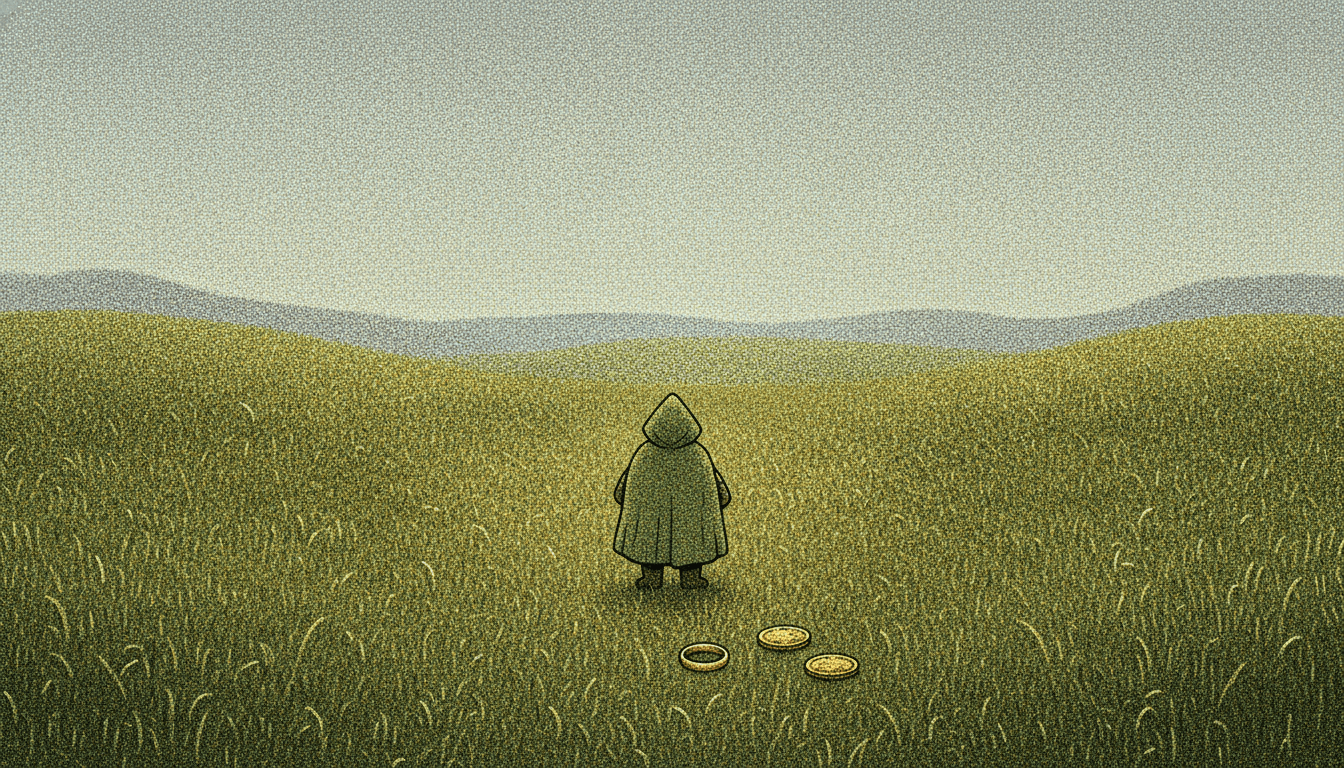
A wanderer in a green hood, seen from behind, standing in a field that goes on for ever. A gold ring and two coins in the grass a few steps ahead. Every blade, every cloud and every fold of the cloak is built from tiny dots. Pointillist picture books are quiet, muted and a little mysterious, and the only thing that shines is the thing somebody has found.
- A stippled dot texture all the way through
- No outlines, only where the dots stop
- Mossy green, soft grey and antique gold
- Free credits by request, no card
50,000+
Stories Created
10,000+
Active Creators
50+
Art Styles
4.9/5
User Rating
What Makes Pointillist Illustration Look This Way
Every style here is a written brief: a palette, a light, a line weight and a short list of refusals. Four things in this one decide the look, and three of them are found in no other brief in the library.
Everything is made of dots
Every style in C2Story is a short written brief. This one asks for a dense stippled dot texture, like knitted, grainy grassland, and it is the only brief of the seventy-eight that mentions dots or stippling at all. The grass is dots, the sky is dots, the cloak is dots. Thirteen other briefs ask for grain; none of them builds the picture out of it.
No outlines, only where the dots stop
The line-weight entry reads “no outlines, stippled dot edges”. Only two briefs in the library refuse outlines, and in the other one, a painted gouache look, the paint does the job. Here an edge is simply the place where green dots give way to grey ones, which is why everything looks soft from across the room and grainy up close.
The hero is seen from behind
The brief’s own sample is a hooded wanderer seen from behind, and no other brief in the library turns its character away. You do not meet this hero, you follow them. You stand where they stand and look where they look.
Muted, with one glint of gold
Muted fantasy tones, mossy green and soft grey, lit by soft muted ambient light. The one accent is antique gold, and the sample scatters it as a ring and a few coins in the grass. It is the only brief that calls its mood a fable, and the only one that calls it mysterious.
Why a Dot Painting Style Feels Quieter
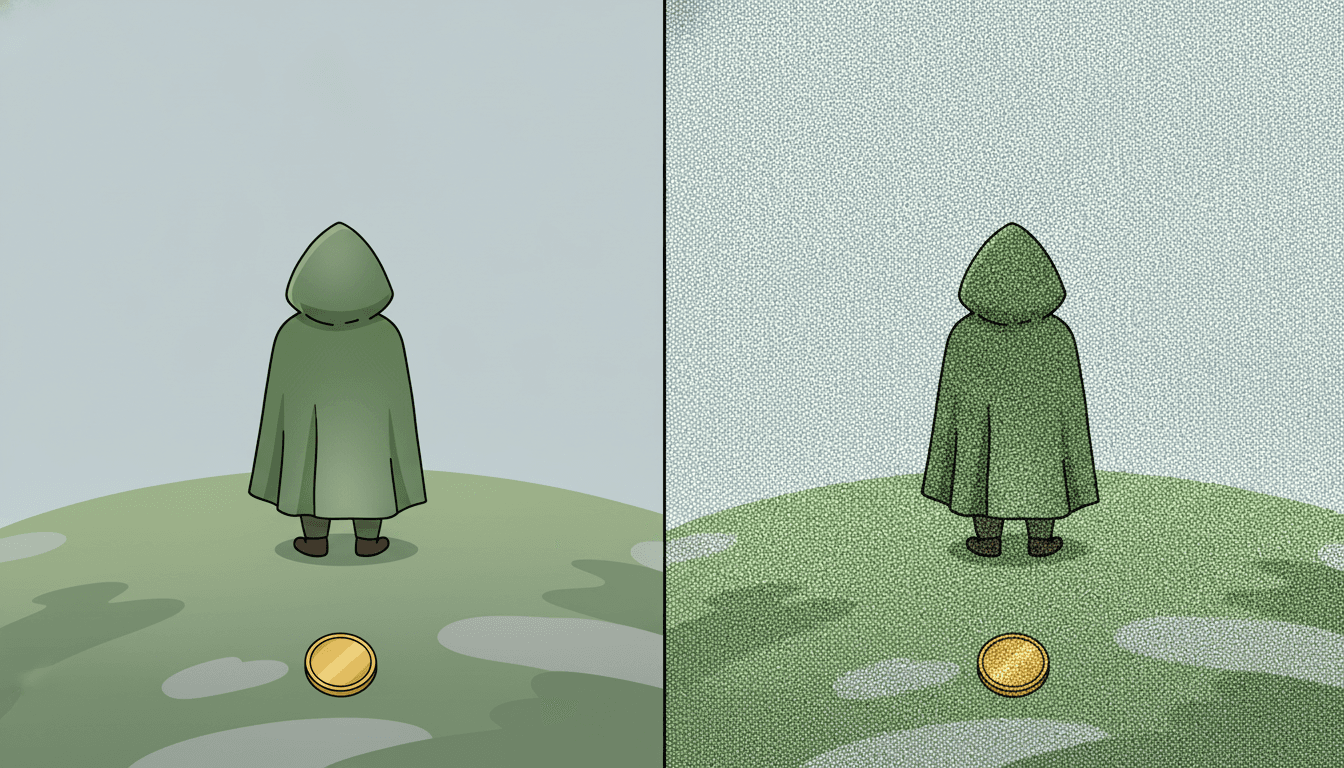
Look at one hill twice. On the left the hooded wanderer and the coin are drawn in smooth flat colour with crisp dark outlines: clear, friendly and a little ordinary. Every edge is sharp, and the eye goes straight from the figure to the coin and stops.
On the right it is the same wanderer, the same hill and the same coin, built from dots. The sky becomes a fine speckle, the grass turns woolly and the shadows soften, and the picture asks you to look for longer. The figure even kept a faint outline here, which the brief does not ask for, but everything around it has gone grainy, and that is what makes the page feel like a fable instead of a sticker.
Its four refusals keep the page soft, grainy and out of the real world.
Write the Thing They Find
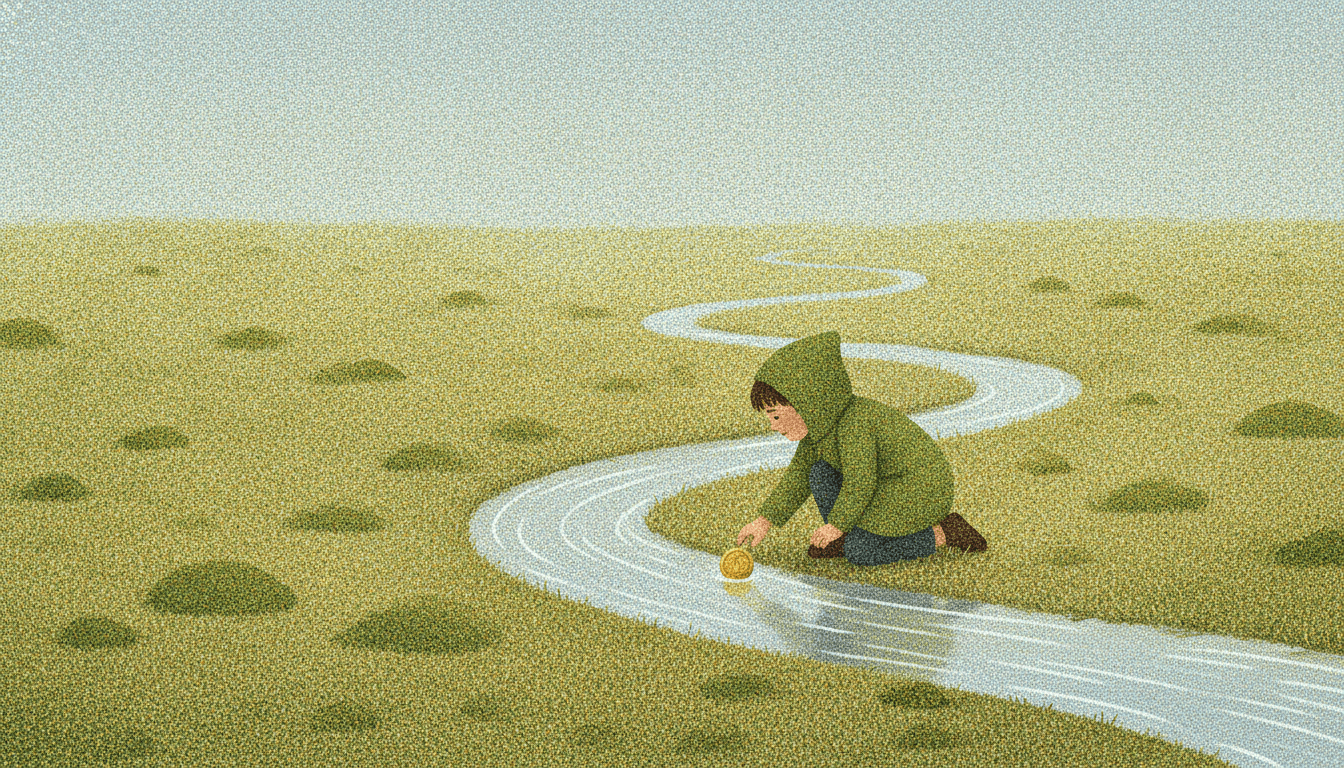
A child in a green hood kneels at the edge of a winding stream and reaches for one gold coin at the water’s edge. Nothing else is happening on the page. You do not need to know her name to know the story: something has been lost here, and this child is the one who noticed.
In a style whose hero is seen from behind, you never get the face that tells you how they feel. What you get is what they are looking at. So the found thing has to carry the feeling: a ring nobody should have dropped, a coin at the bottom of a stream, a key hung on a tree where only somebody tall could reach. And because the palette is muted, that one small thing is also the only place the gold can go.
In a book you do not write image prompts; C2Story writes them from your story. A page that says “Ada walks across the field” gets grass and a hood. A page that says “Ada finds a gold coin at the bottom of the stream” gets a reason to stop.
From One Sentence to Pointillist Picture Books
You pick the look once. The brief is then applied to every page, so the dots, the muted greens and the glint of gold never drift.
Describe the journey and the find
Write a sentence or two about who is walking, where, and what they come across. Give the hero one cloak colour and one thing to carry, so they are recognisable from behind.
Choose Pointillist Pixel Fantasy
Pick the style from the Styles Library. From then on every page uses the same stippled texture, the same soft muted light and the same mossy green, soft grey and antique gold.
Get a whole book
C2Story writes the story, splits it into pages and illustrates each one. Regenerate any page you want to change without touching the rest, read it online, share it, or buy the PDF download to hand to a printer.
This Style and Its Three Nearest Neighbours
One shares a word in the name, one shares the grain and one shares a hero you cannot read. Here is what each actually asks for.
Pointillist Pixel Fantasy
The style on this page
Retro pointillist fantasy illustration with a dense stippled dot texture like knitted, grainy grassland, a scattered golden ring and coins glinting, a hooded green-cloaked wanderer seen from behind, and a spare, minimal, mysterious fable mood with quiet empty space. No outlines. It refuses smooth gradients, crisp vector shapes, bright cartoon flatness and photorealism.
Pixel Art
Same word in the name, a different texture
The 16-bit grid: square pixels, hard steps and a rationed palette. The catalog name of this style says “pixel”, but nothing here sits on a grid. Its texture is round and grainy, like wool. Choose pixel art for a game-like world you can map; choose this when you want the edges to dissolve.
Grainy Cinematic
Grain on top, not grain all the way down
Bold flat colour shapes under visible film grain, with strong dramatic light and shadow. The grain sits on top of the shapes like a print. Here the dots are the shapes, and the light is soft and muted with no drama at all.
New Chinese Minimal
Another hero you cannot read
Tall figures whose faces are left empty on purpose, drawn in a calligraphic line on bare paper. There the face is blank. Here it is simply turned away, and the hero is looking at something you can see too. Choose new Chinese minimal for posture; choose this for a journey.
Story Ideas for Pointillist Picture Books
Each idea starts with somebody walking, and one small thing they find.
The Ring in the Grass
A wanderer stops in the middle of a field. Three gold things lie in the grass ahead. The story is about whose they were.
The Valley Grandmother Knows
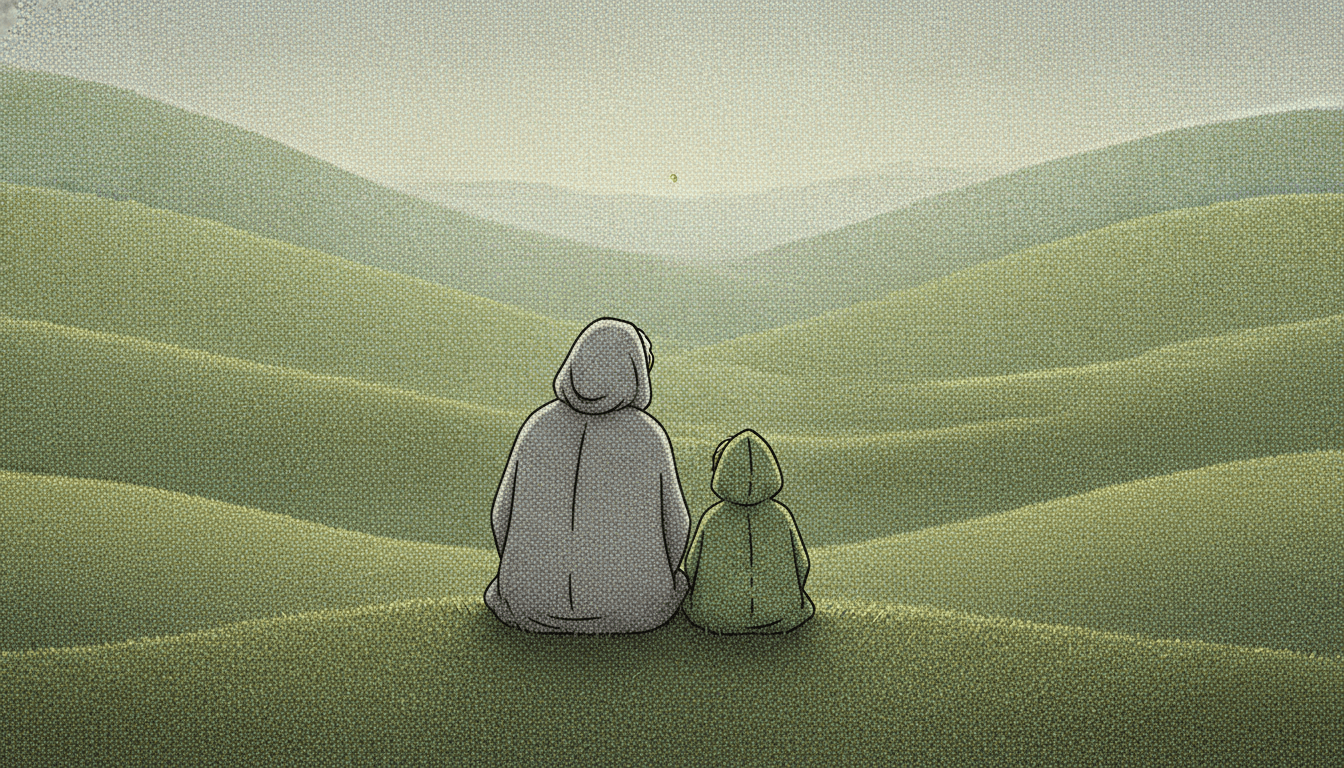
Every autumn Grandmother sits on the same ridge. This year she brings the child, and points at one far-off speck of gold.
The Coin in the Stream
Something is shining at the bottom of the water. Getting it out means getting wet, and finding out who dropped it means walking upstream.
The Key on the Bare Tree
Two friends walk for a whole day toward a tree with a gold key on it. Neither of them knows what it opens, and neither will say so first.
The Hare Who Found It First
A hare finds a gold coin on a stone and has no idea what it is for. Every animal on the moor has a different theory.
The Coin on the Doorstep
Every morning there is one gold coin on the step of the stone hut. One night a child stays up to see who leaves it.
Stippled Art Across a Book
Pages generated to this one brief. Two honest notes: the figures came back with a thin dark contour on several pages, though the brief asks for no outlines, so expect a little line around your characters; and the child at the stream turned to profile when we asked for a back view. Nothing here was retouched.
Smooth, then stippled
Two people looking the same way
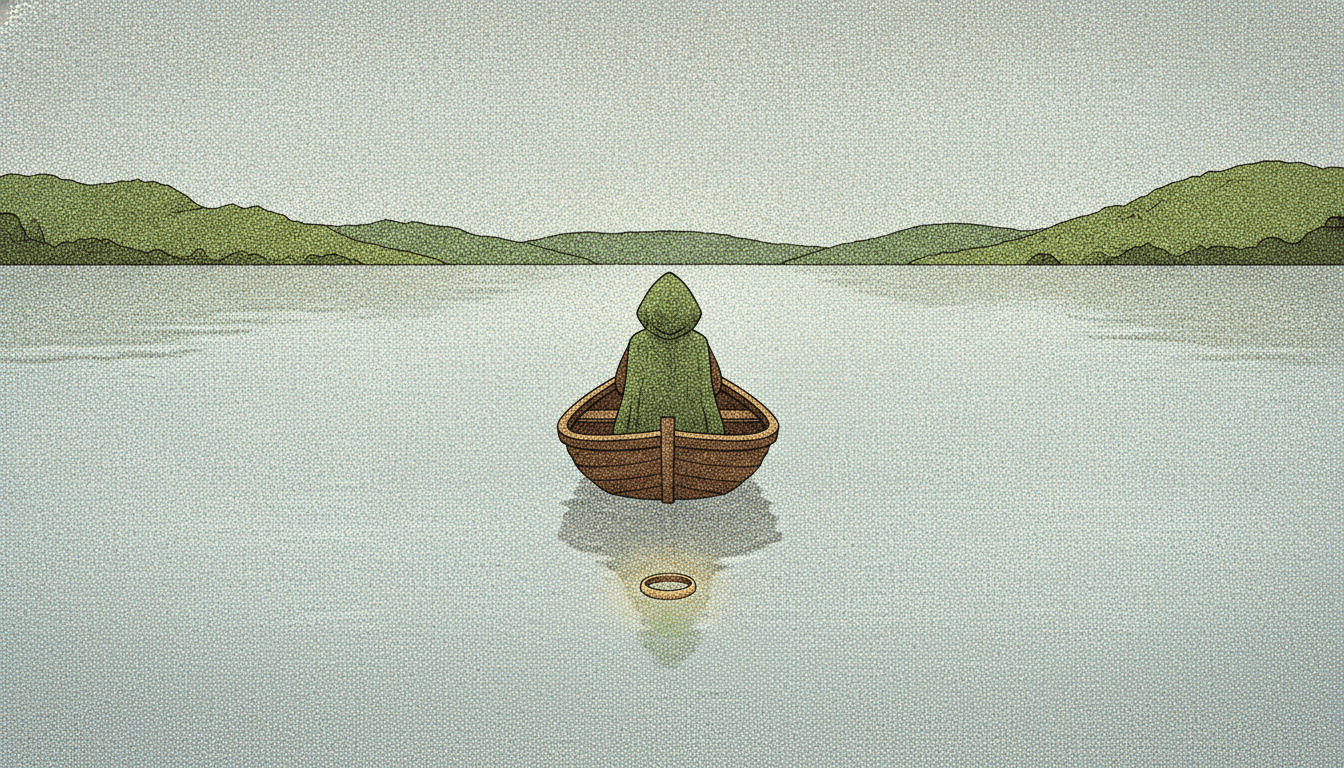
A ring under the water
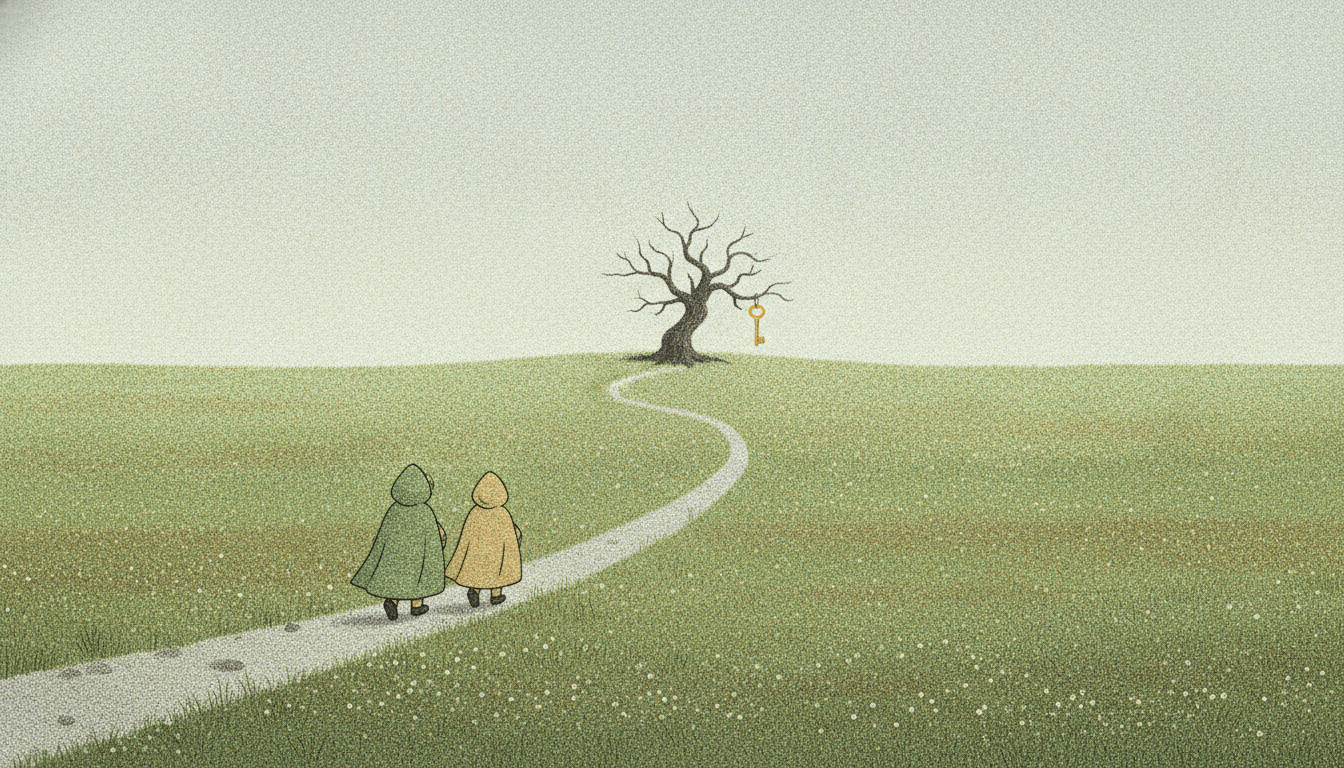
A key on a tree, a day’s walk away
Seen From Behind, Held Steady
The character sheet is plain on purpose, so you can see the design: green hood, brown tunic, grey leggings, brown boots, and a face that only shows up when the child turns round. On the pages the child is mostly a green hood, and that is how you find them. Two things came back differently from what we asked: the two coins in the grass came back as round gold balls, and the hare sits in profile instead of with its back to us.
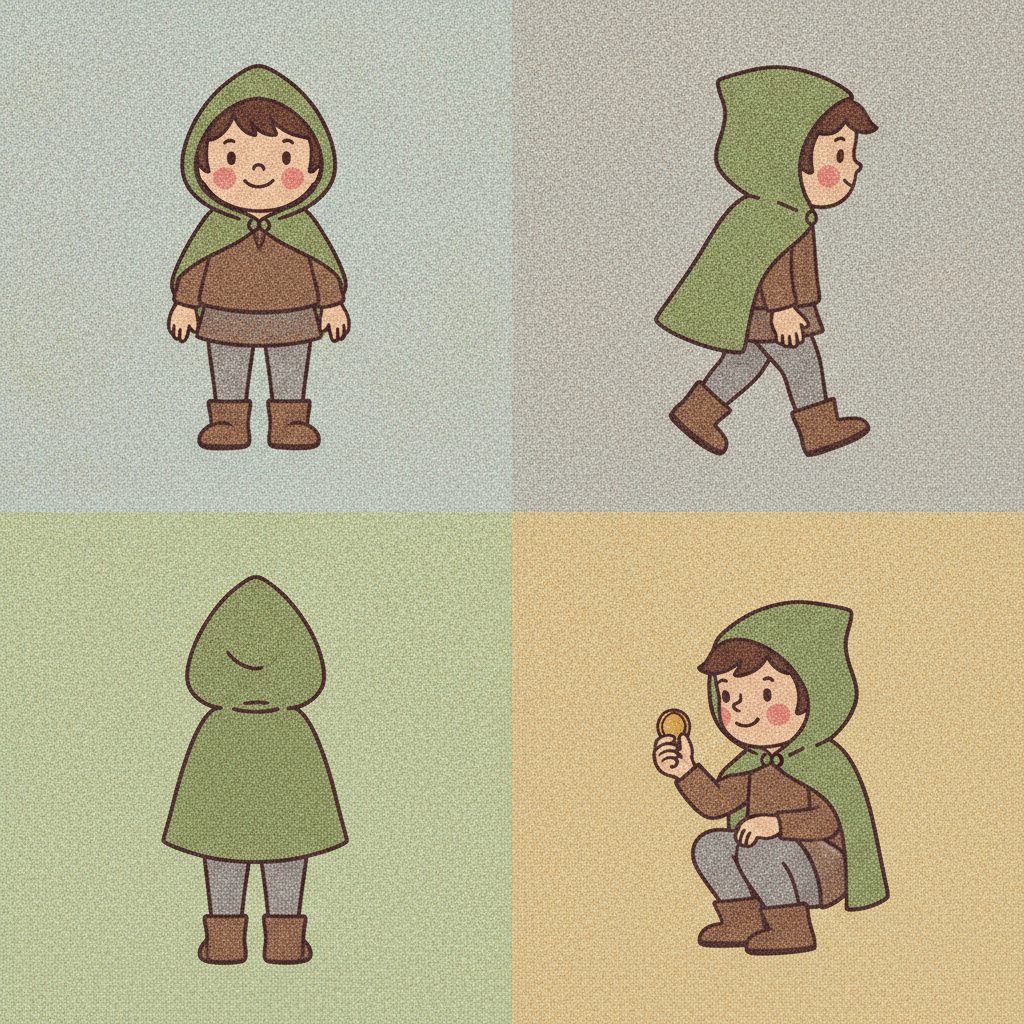
One child, four views
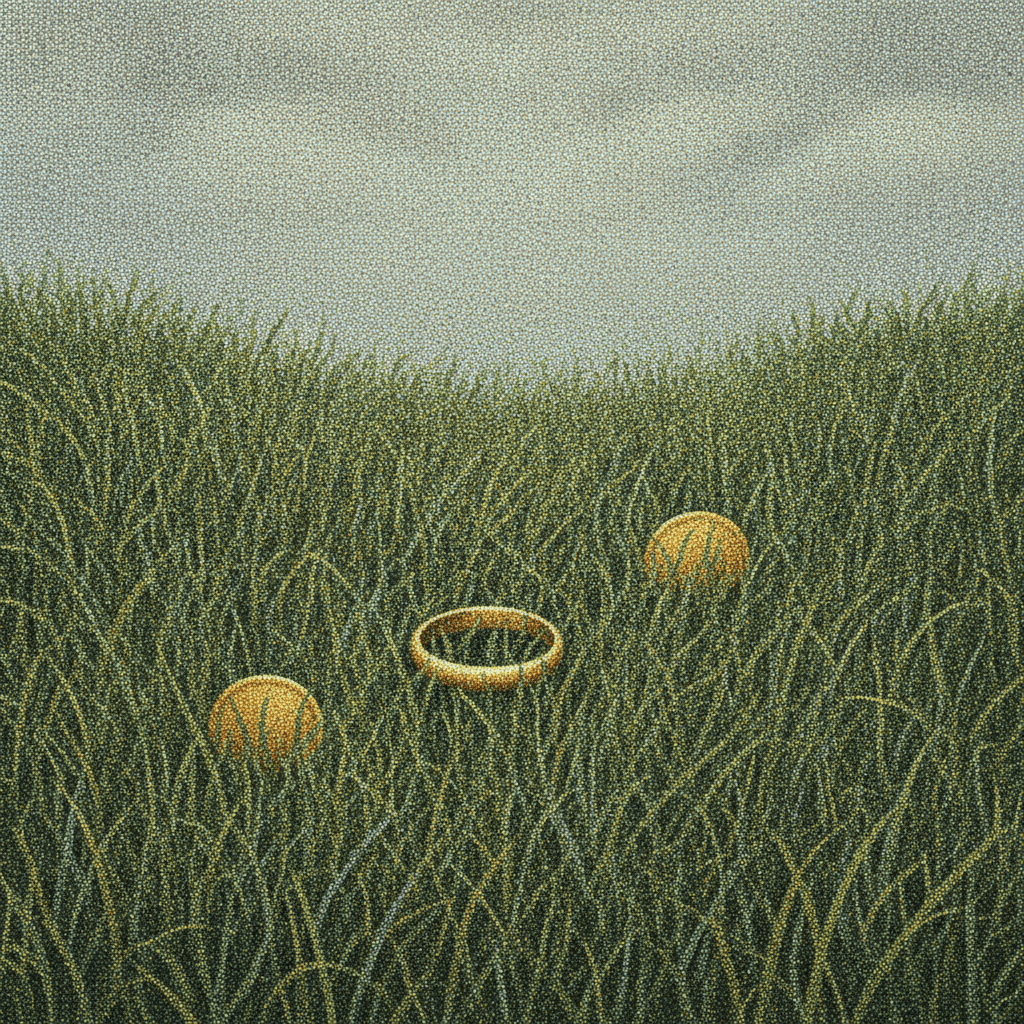
What the grass was hiding
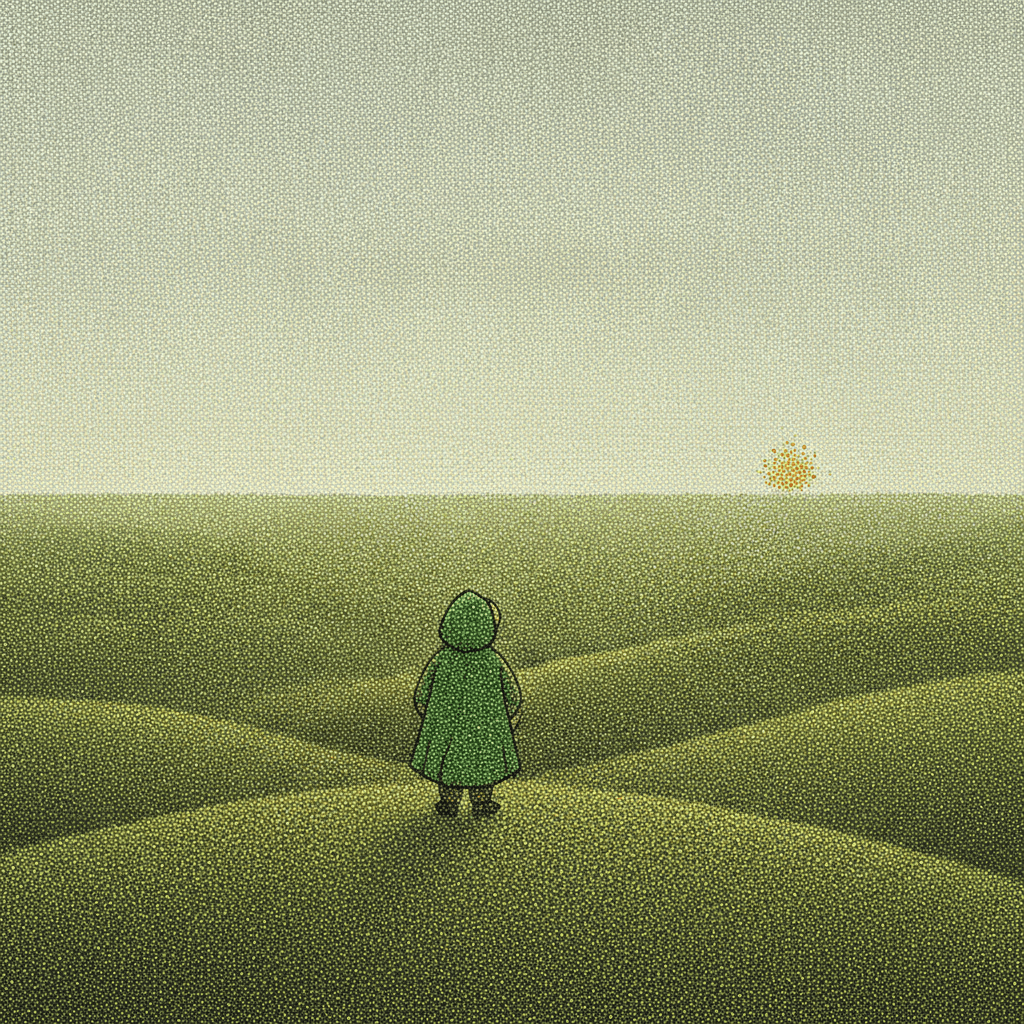
A field that goes on for ever
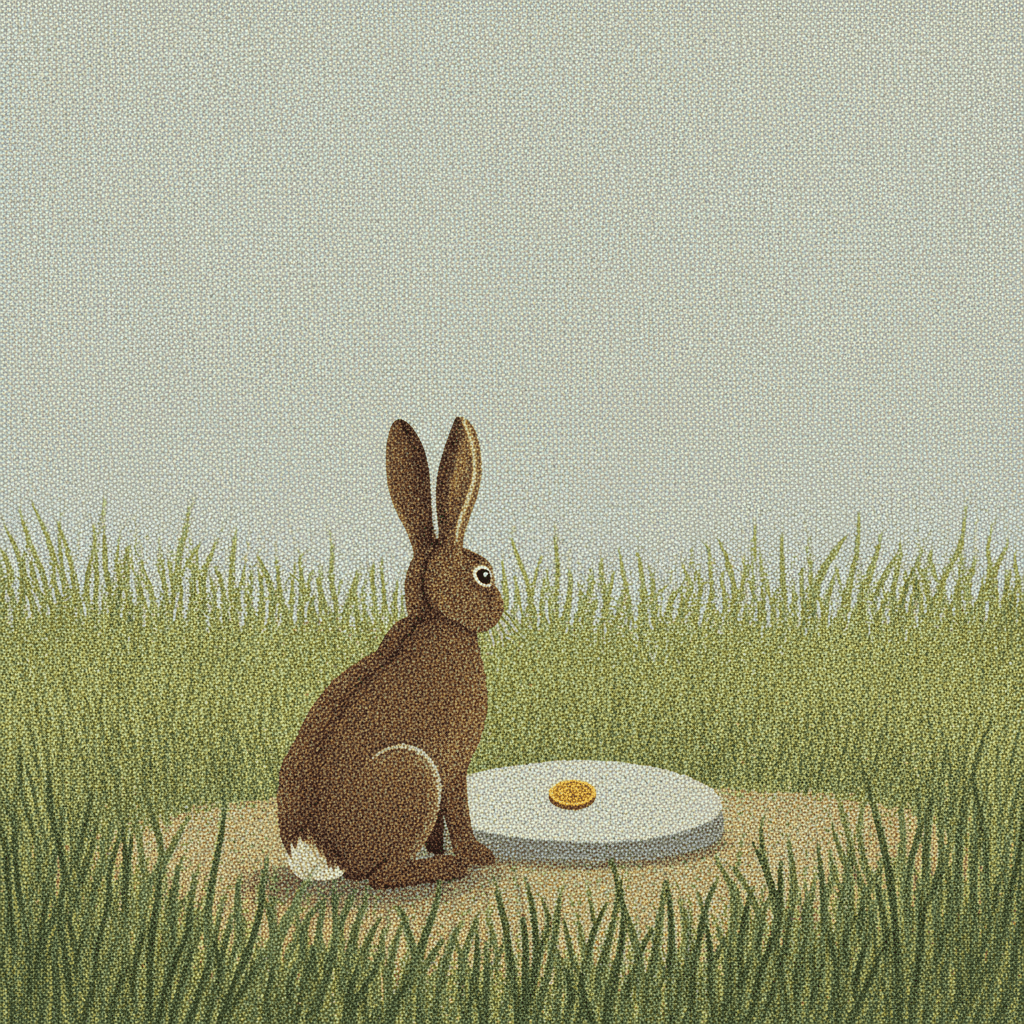
The hare found it first
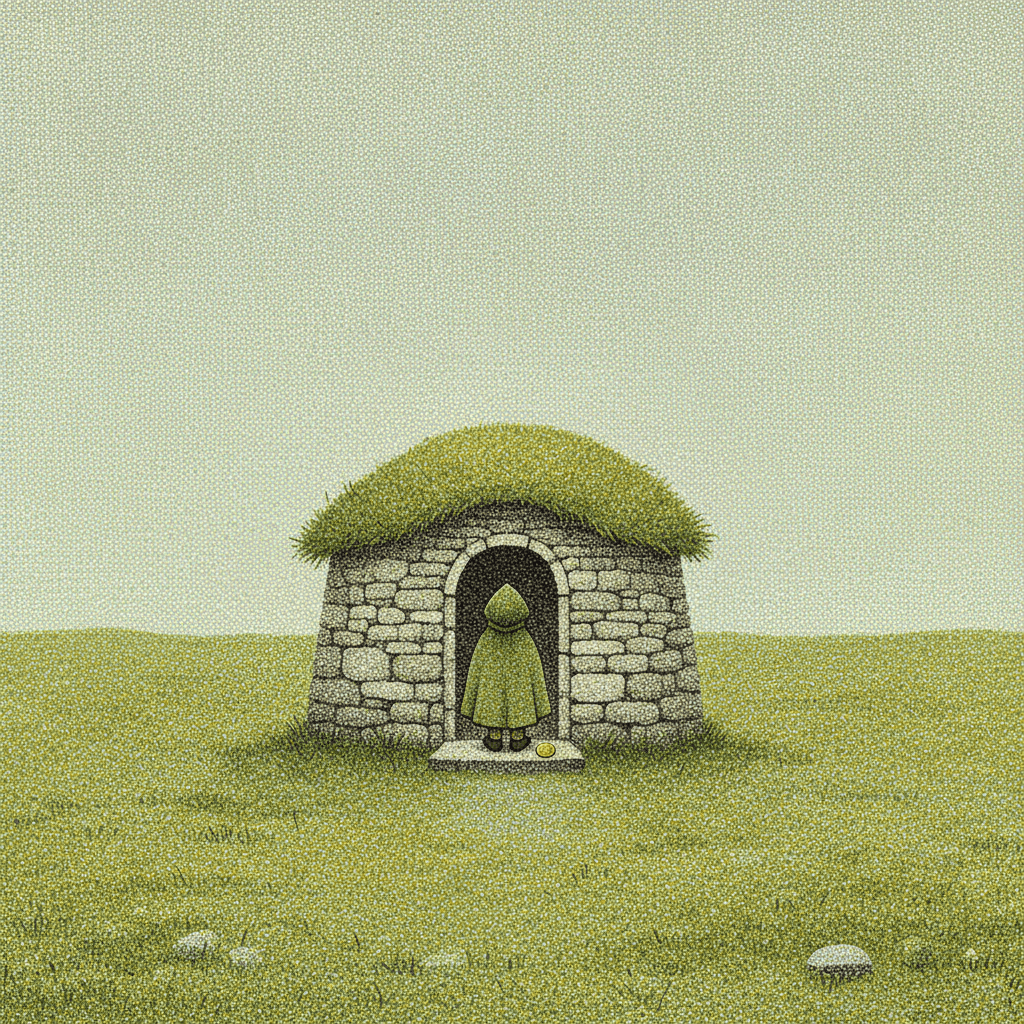
Somebody left a coin on the step
Making Whole Pointillist Picture Books
What is useful in a book drawn this way and where the limits are, in the order you are likely to meet them.
A hero you know by their back
If the hero spends most pages turned away, the back has to be recognisable: one cloak colour, one hood shape, one thing they carry. Save them in the Character Library with up to fourteen reference images and a short description. Characters made from an uploaded photo stay private.
Write the thing they find
The face is turned away, so the found thing does the acting. A ring in the grass, a coin in a stream, a key on a tree. Name one small thing per page and say where it lies, and the picture has somewhere to put its only gold.
Leave the field empty
The brief asks for spare, minimal pages with quiet empty space. A page with one person, one field and one glint is the style at its best. A page that lists a market, a crowd and a parade will dissolve into texture.
Not for close-up faces
Dots blur small features, and the house hero has no face on show at all. Characters can turn round, as the character sheet on this page shows, but a story that lives on facial expressions or two people talking across a table will be better in a character-first style.
Expect gold
Antique gold is the brief’s only accent, so a small golden thing tends to turn up even when you did not ask for treasure. If that is wrong for your story, name a different small thing to carry the colour, like a yellow flower or a brass button.
A whole book from a sentence
Describe the story in a sentence and C2Story writes it, splits it into pages and draws every page to the same brief, in English, Chinese, Japanese, Spanish, French and more. Read online, share a link, or buy the PDF download as the handoff to your printer. Pages are licensed for commercial use under the terms of service.
Other styles built on a different kind of texture: for the 16-bit grid, pixel art picture books; for flat shapes under film grain and dramatic light, grainy cinematic picture books; for faces left empty on purpose, new Chinese minimal picture books; for shading built from crossed lines instead of dots, crosshatch picture books; for real knitted wool and felt, felt puppet picture books; and for every style side by side, the children’s book illustration styles gallery.
Questions About Pointillist Picture Books
Explore More Story Ideas
Discover more styles, tools, and story types
Garden Stories
Planting seeds, sunflowers, butterflies and the veggie patch
Explore
Oil Pastel Picture Books
Thick waxy colour rubbed together at the edges, with cosy warmth at full strength instead of turned down
Explore
Picture Book Maker
Create illustrated picture books
Explore
ChatGPT vs C2Story
Purpose-built for picture books
ExplorePointillist Picture Books: Stippled Fables With One Glint of Gold
Pointillist picture books rest on a brief that builds the whole picture from dots. C2Story runs seventy-eight hand-drawn style briefs, each a short written record of a palette, a light, a line weight and a few refusals. Fourteen of them ask for some kind of grain, and only this one asks for a dense stippled dot texture, with no outlines at all. It is also the only brief whose character is seen from behind, and the only one that calls its mood a fable.
The look is pointillist illustration in a retro fantasy key, a dot painting style where the grass, the sky and the cloaks are the same grainy, woolly stipple, and an edge is only where one colour of dots stops. The palette is muted mossy green and soft grey under soft muted ambient light, and the one accent is antique gold. It refuses smooth gradients, crisp vector shapes, bright cartoon flatness and photorealism, so it stays soft, quiet and a little mysterious.
This stippled art suits stories about walking and finding: a ring in a field, a coin in a stream, a key on a tree, a grandmother pointing at something far away. Write the thing your hero finds, because the hero’s face is usually turned away and the found thing has to carry the feeling. Give the hero one cloak colour and one thing to carry; they stay on model through the Character Library, with up to fourteen reference images each. It is weaker for close-up faces, busy crowds and loud, bright, fast stories.
The choice between neighbours is clear. Take pixel art for a grid, grainy cinematic for film grain over flat shapes and dramatic light, and new Chinese minimal for faces left empty on purpose. Take this style for a quiet fable made of dots. Describe the story in a sentence and C2Story writes it, splits it into pages and draws every page to the same brief, with the paid PDF download as the handoff to your printer.