
Shanghai Poster Picture BooksYour Whole Cast, Dressed for 1930
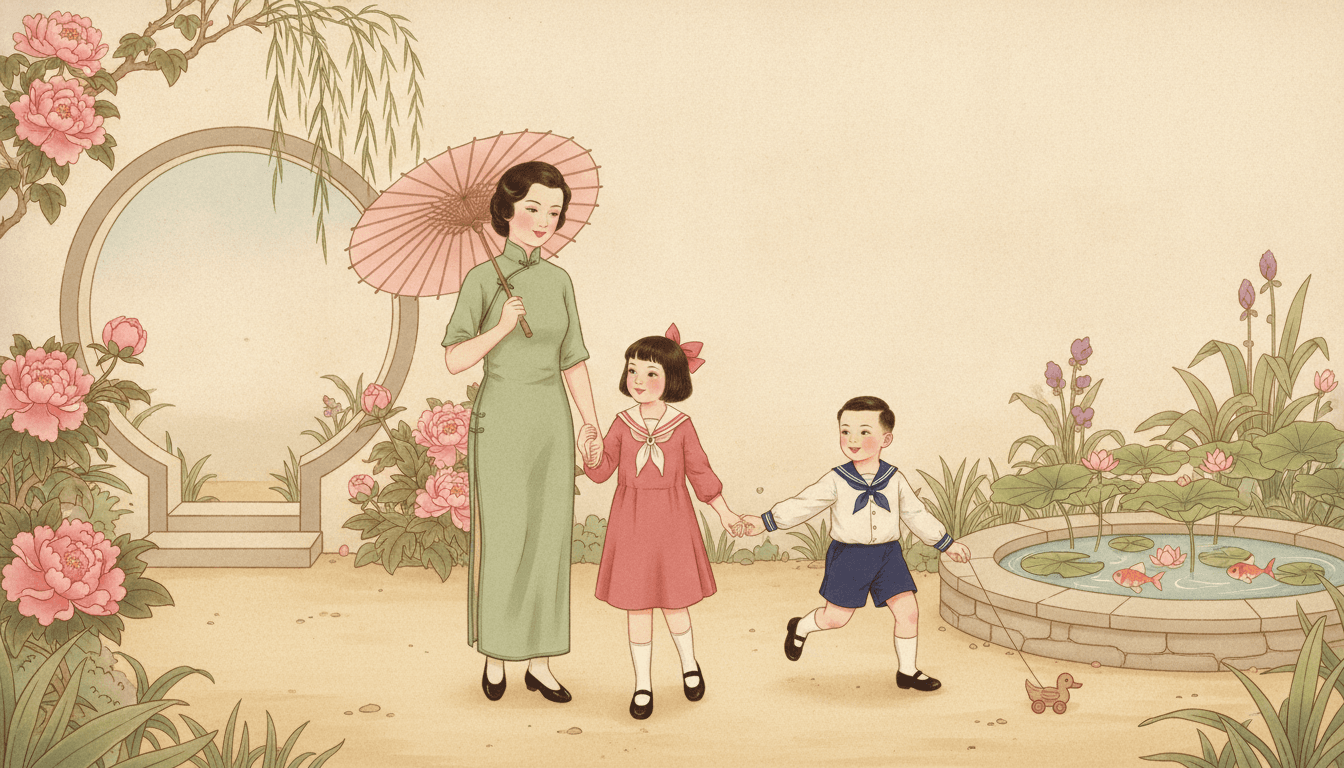
Seven of the seventy-eight style briefs in this library refuse something modern. Six mean a modern technique. One means modern clothes. Shanghai poster picture books come from that one — soft airbrushed colour, rosy cheeks in a flattering glow, and every character in the story dressed for the year the old calendar posters were painted.
- Rouge pink, jade green and creamy gold
- Soft airbrushed shading and a glow on every face
- Period clothes and props on every page
- Free credits by request, no card
50,000+
Stories Created
10,000+
Active Creators
50+
Art Styles
4.9/5
User Rating
What Makes Shanghai Poster Art Different
Every style here is a written brief: a palette, a light, a line weight and a short list of refusals. Four things in this one decide the look, and most of the words that carry them appear in no other brief.
The only brief that refuses a wardrobe
Every style in C2Story runs on a short written brief: a palette, a lighting note, a line weight and a few things to avoid. Seven of the seventy-eight refuse something modern. Six of those mean a modern technique — CGI gloss, slick digital linework, vector cleanliness, modern anime shading, saturated modern colour. This one means modern clothing. It is the only refusal in the library about what the people in the picture are wearing.
It names a date, and asks for the props
The brief opens with 1920s–30s and asks for period fashion and era-appropriate props. Period and era-appropriate appear in no other brief, and only one other brief asks for props at all — a single-panel magazine cartoon that wants its everyday setting complete. Here the props are for the calendar. A story drawn in this style is set in a year, whether or not your text says which.
A light whose job is to flatter
Three lighting notes in the library say studio. One shows off the surface of a 3D character; one throws sharp highlights off a glossy doll. This brief asks for a soft flattering studio glow — the only light named for what it does to the person standing in it. Faces are lit from the front, cheeks come out softly rosy, and nothing carries a hard shadow.
Airbrushed, and the only brief that is
Soft airbrushed rendering, smooth blended skin, soft blended edges: airbrush is in this brief and in no other, and one other brief — a mid-century geometric fable — refuses it by name. The palette is rouge pink, jade green, creamy gold and faded cream, and rouge appears nowhere else either. It refuses modern clothing, harsh digital lines, photorealism and a contemporary look.
The Same Girl, Only the Clothes Change
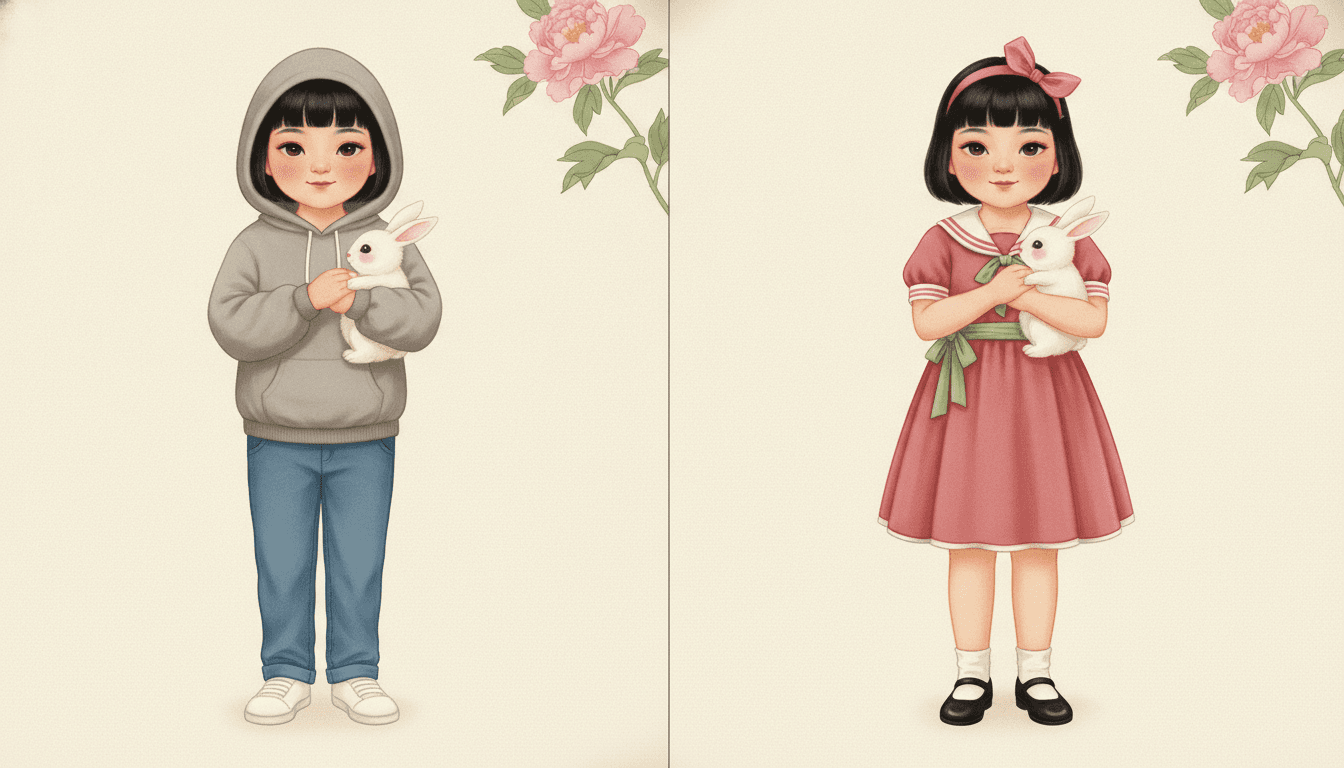
Look at one girl twice. The same round face, the same rosy cheeks, the same black bob, the same white rabbit held in the same arms, against the same cream ground and the same pink peony. Both halves are painted in the same soft calendar-poster manner. On the left she is in a grey hoodie, jeans and white trainers.
On the right she is in a rouge-pink dress with a sailor collar and a green sash, a ribbon in her hair, white socks and black strap shoes — and she suddenly belongs to the picture. The light, the colour and the shading did not change. The year did. That is the whole difference between vintage Shanghai illustration and a modern drawing with a retro filter on it: the airbrush makes it look old, but the clothes are what put the girl in 1930.
Most styles in this library are a look you can lay over any story. This one has an opinion about when the story happens, and it is the only brief that says so. Its four refusals are all about keeping the present out.
Date the Story With What People Hold
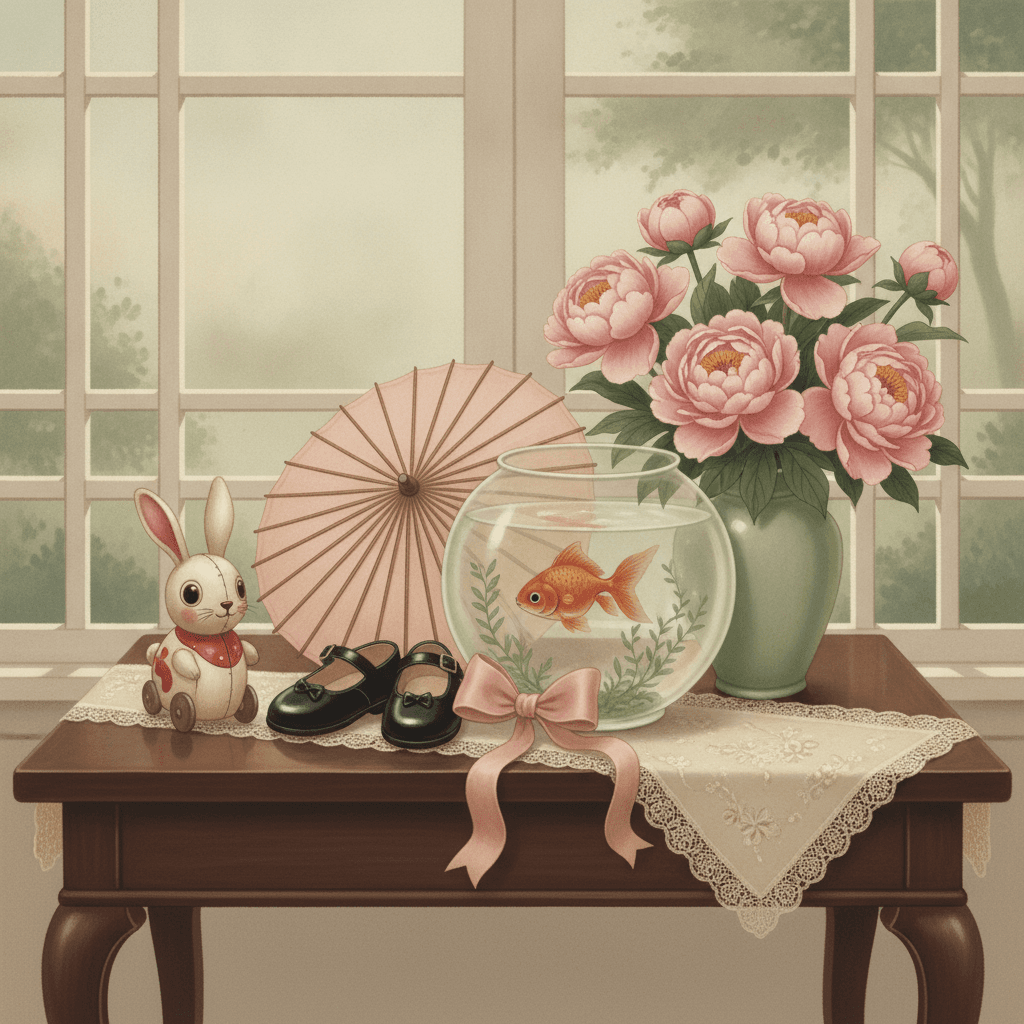
The brief asks for the full scene the story describes with era-appropriate props, and it is the only brief that puts it that way. So the props are your strongest tool. The square beside this paragraph has nobody in it: a wooden toy rabbit on wheels, a pink paper parasol, a pair of small strap shoes, a ribbon, a goldfish in a round bowl, peonies in a jade vase. You can tell who lives there, and roughly when.
Write your story the same way. Instead of saying it is long ago, put a gramophone in the parlour, a toy sailboat on the park pond, a parasol on a windy morning, a rattan chair, a goldfish bowl on the sill. Give each page one object a child of 1930 would have owned, and the Chinese calendar poster look does the rest: the light makes it warm, the clothes make it right, and the object makes it a story.
What it will not do well is a mix. A phone or a car in the text pulls against the brief, and the pages can end up disagreeing with each other about what year it is.
From One Sentence to a Shanghai Poster Picture Book
You pick the look once. The brief is then applied to every page, so the palette, the glow and each character’s outfit never drift.
Describe the family and the year
Write a sentence or two about who is in the story and what happens. Give each character one period outfit, and name a few things they own — a parasol, a toy boat, a gramophone.
Choose Shanghai Calendar Poster
Pick the style from the Styles Library. From then on every page uses the same rouge pink, jade green and creamy gold, the same airbrushed shading and the same flattering glow.
Get a whole book
C2Story writes the story, splits it into pages and illustrates each one. Regenerate any page you want to change without touching the rest, read it online, share it, or buy the PDF download to hand to a printer.
This Style and Its Three Nearest Neighbours
One shares its calendar nostalgia, one its advertising history, and one its interest in old clothes. Here is what each actually asks for.
Shanghai Calendar Poster
The style on this page
A 1920s–30s vintage Shanghai advertising-poster illustration: elegant figures in period fashion, soft airbrushed rendering, retro commercial colour in rouge pink, jade green and creamy gold, smooth blended skin, decorative period backgrounds and ornamental borders, with era-appropriate props. The light is a soft flattering studio glow and the edges are soft and blended.
Gongbi Vintage Fantasy
The same calendar nostalgia — drawn in fine wire line
The only other brief that mentions calendar posters, and it shares the jade and the graceful women. But it is built on gongbi: precise iron-wire outlines and mineral-pigment washes, with mythic figures in traditional dress. It never refuses modern clothes, because its people were never in the twentieth century. Choose it for a court or a legend; choose this one for a family in 1930.
Showa Commercial Cartoon
The other advertising brief — printed, not painted
Advertising appears in two briefs: this one and the Showa retro cartoon. That one is printed — flat bright poster lighting, halftone dots, plump mascots and an upbeat mood. This one is painted — airbrushed gradients, rosy skin and a glow on every face. One is the cheerful flat sheet off the press; the other is the soft portrait somebody kept on the wall all year.
Vintage Ink Fashion Plate
Period clothes too — as line drawings
The other brief that cares about clothes from an earlier time — Edwardian top hats and long gowns. It draws them in crisp pen hatching with two flat spot colours, and its refusal of modernity is about colour — saturated modern colour — not about clothing. Choose it when the outfit is the subject. Choose the Shanghai brief when the outfit is simply what everybody in the story happens to be wearing, because of the year it is.
Story Ideas for Shanghai Poster Picture Books
Each idea is a warm family story built around one object from the period — which is the thing this brief draws best.
The Gramophone Record
Grandfather has one record and plays it every Sunday. One week it breaks, and the children set out across the city to find another copy before he notices.
The Toy Boat
A boy launches a little sailboat on the park pond and it drifts out of reach. His grandmother, a pigeon and half the park help bring it back to the stone edge.
The Parasol That Flew
On a windy morning a girl’s pink paper parasol takes off down the street. Every page is one more grown-up who almost catches it.
The Goldfish Who Wanted the Pond
A goldfish in a round bowl on the windowsill can see the pond in the garden. The two children who own it decide to give it a day out.
A Ribbon for the Cat
Two children try every ribbon in the house on a very patient cat, who has opinions. A short book for reading aloud, with one ribbon per page.
The New Year Picture
Every family on the lane gets a new picture for the wall at the turn of the year. This year a girl decides to paint her family’s herself — and keeps changing who stands where.
What Vintage Poster Illustration Looks Like Across a Book
Pages generated to this one brief, with nothing retouched afterwards. The sisters on the bench are the brief’s flattering glow at its plainest: two faces turned to the viewer, lit from the front, nothing in shadow.
Only the clothes change
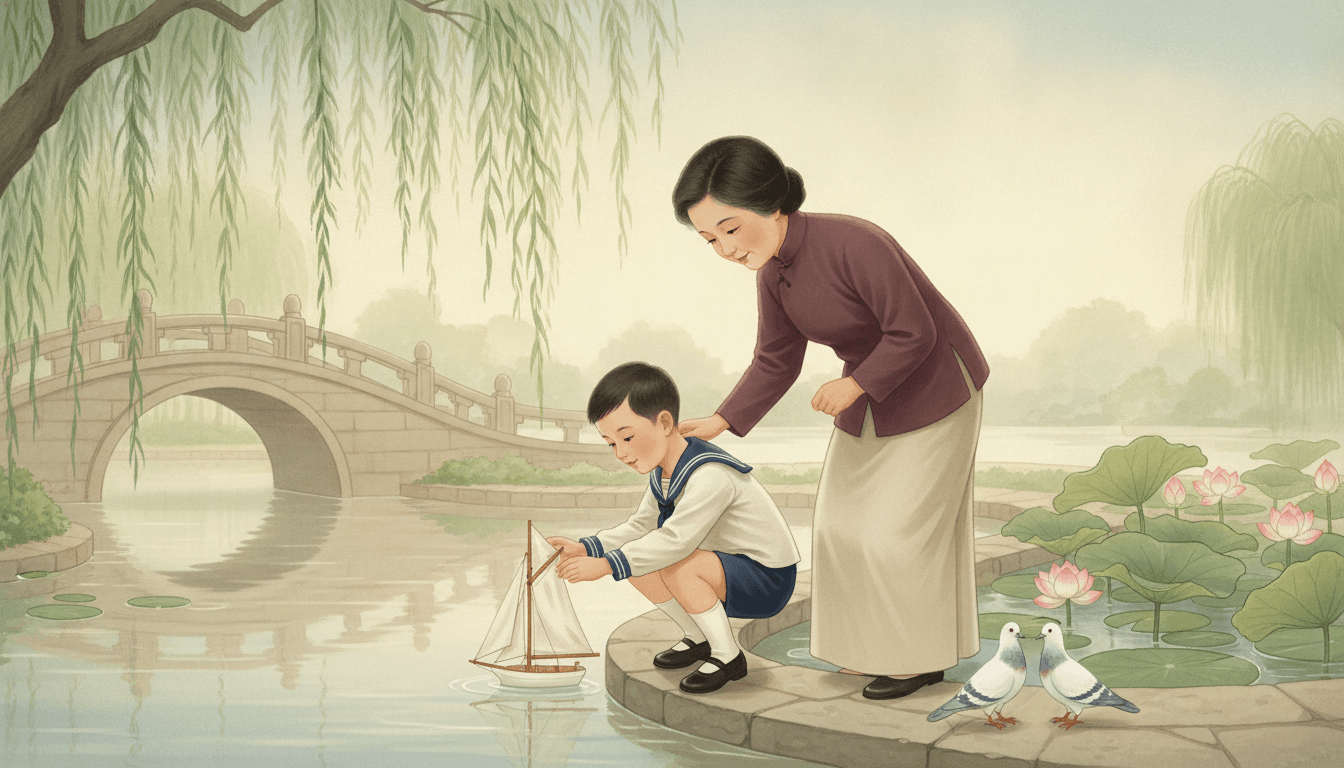
The toy boat on the pond
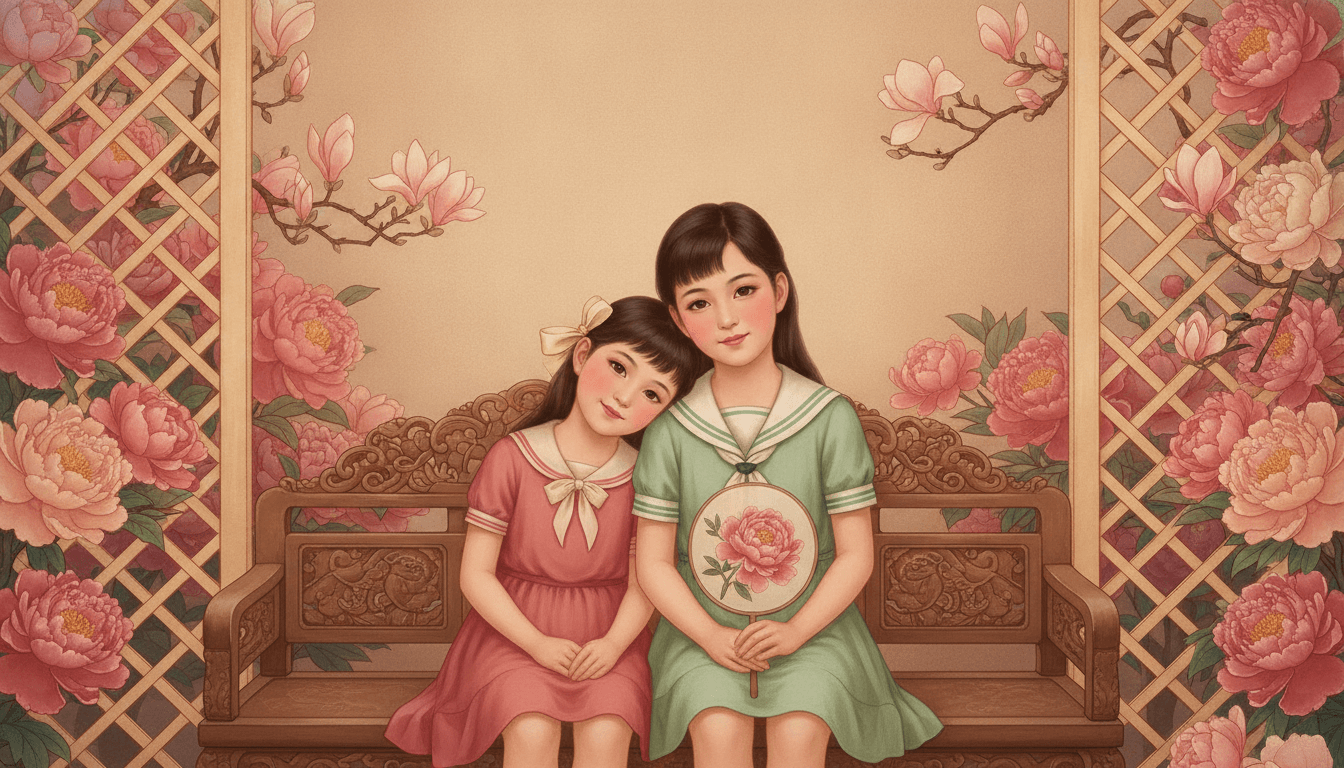
Two sisters, looking out
A Cast You Recognise by Their Clothes
The brief asks for decorative borders, and one portrait here shows one: a painted band of peonies and leaves around a girl and her rabbit. In the character sheet the same girl keeps the same dress, collar, socks and shoes across four colours. One small honesty: the mother tying the ribbon was asked to tie it in her daughter’s hair, and the ribbon ended up in their hands instead.
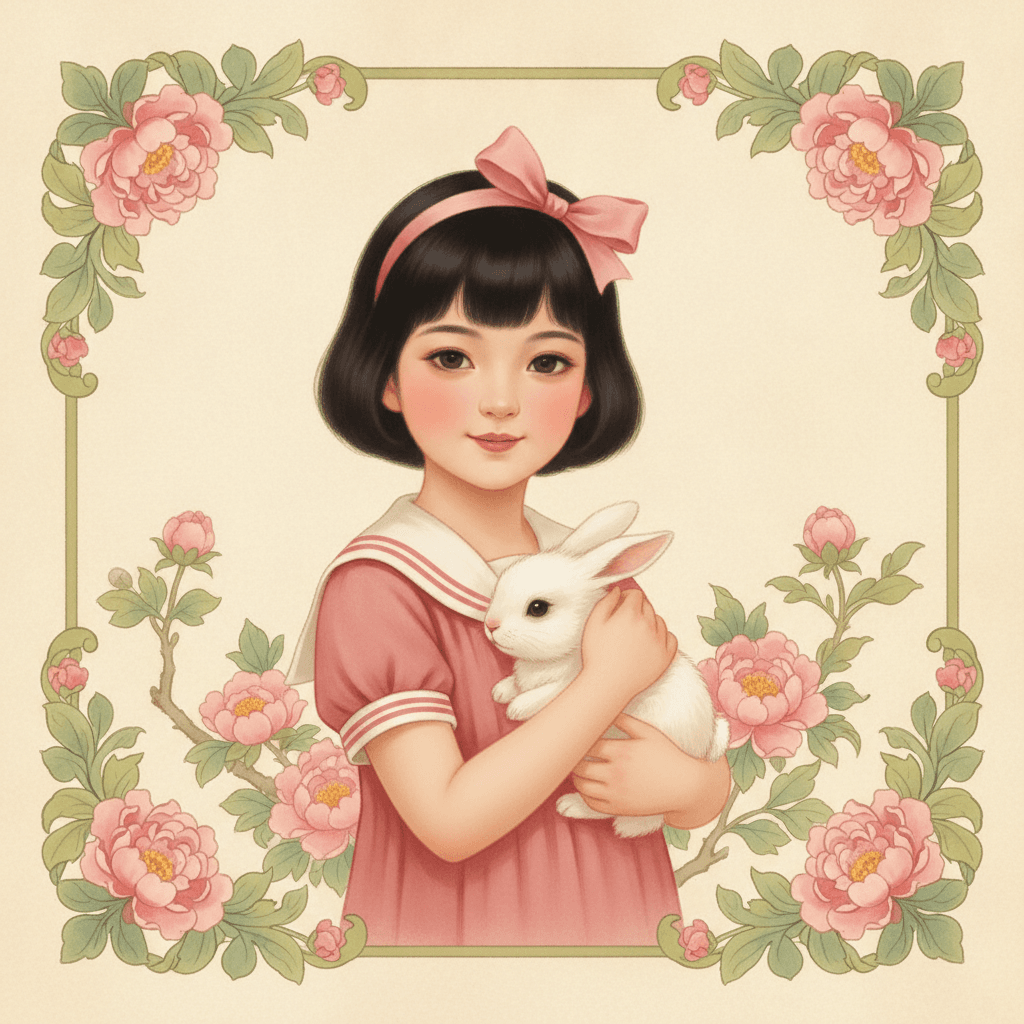
The painted border
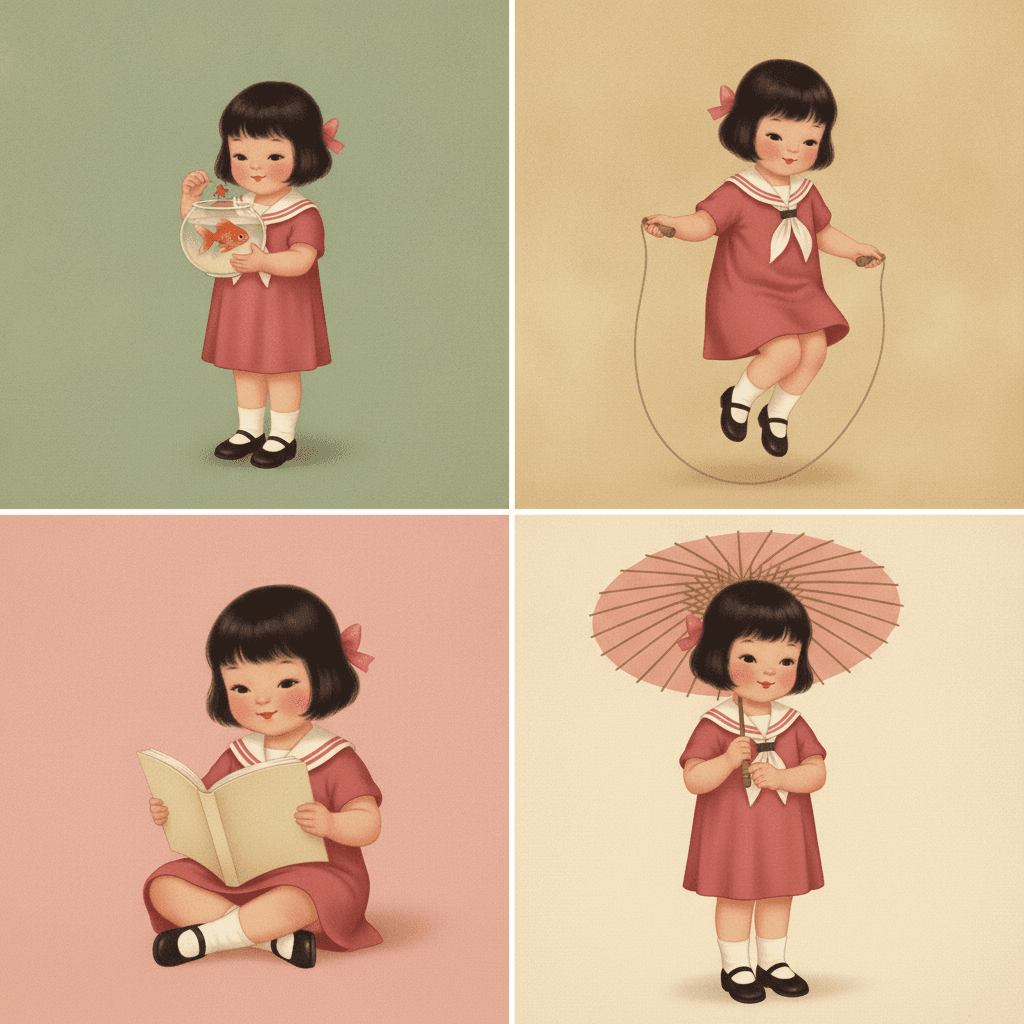
One girl, four colours
Her things, before she arrives
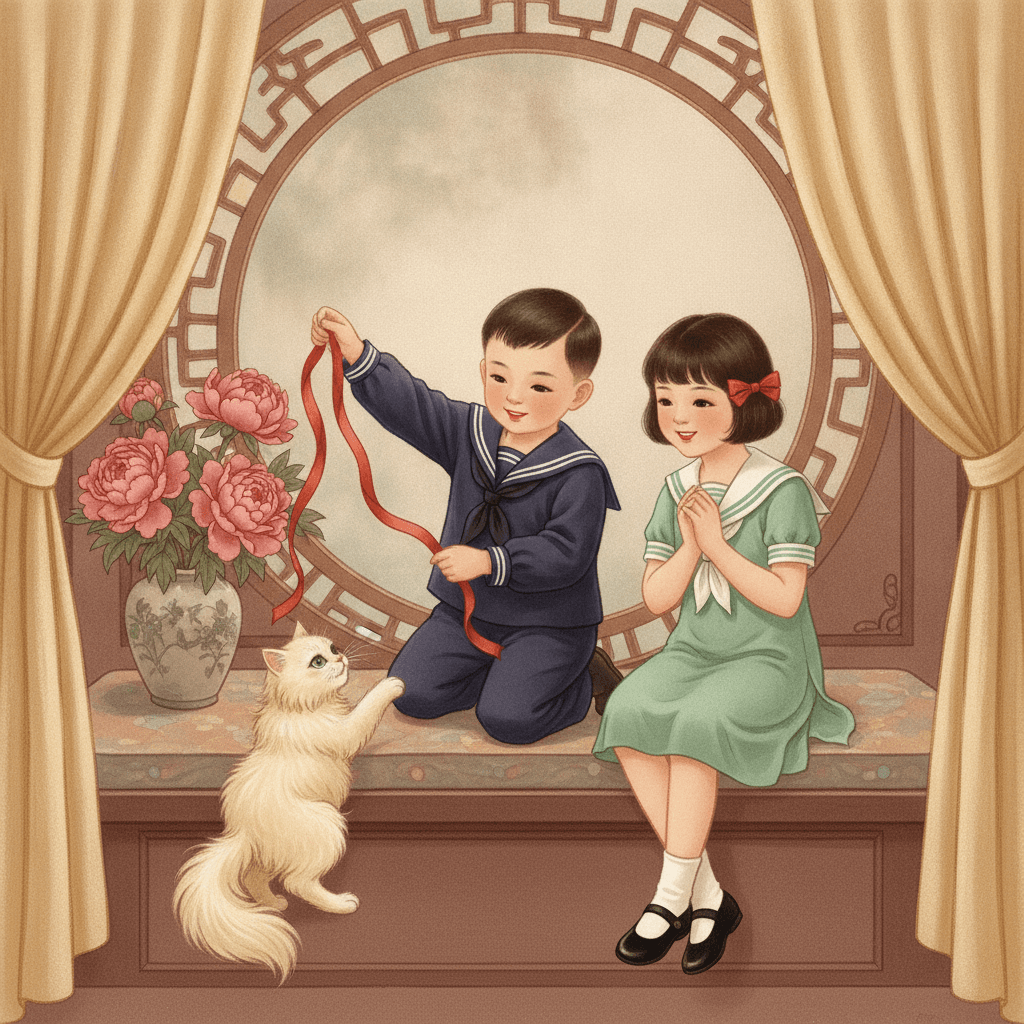
A ribbon for the cat
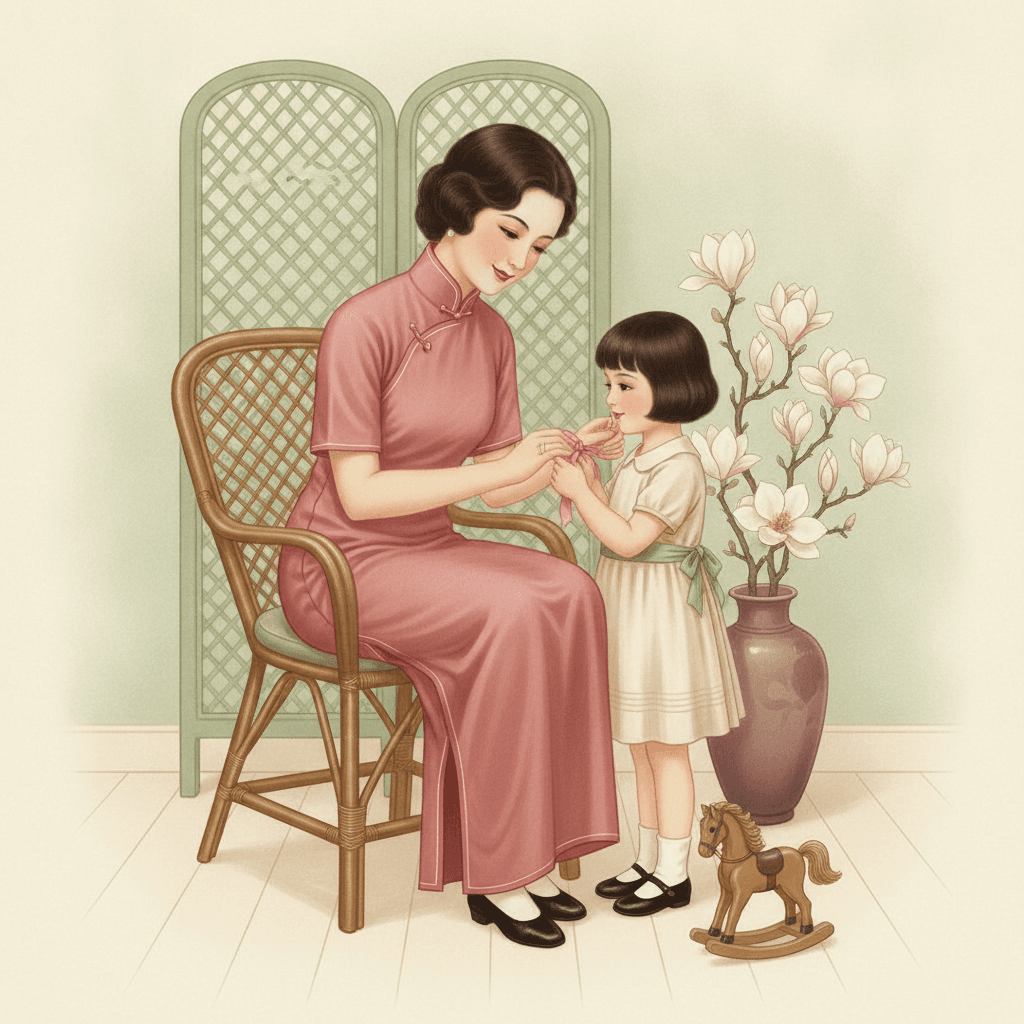
The pink ribbon
Making Whole Shanghai Poster Picture Books
What is useful in a book drawn this way and where the limits are, in the order you are likely to meet them.
Write the outfit once, keep it
In this style the clothes carry the period, so they are worth fixing. Save each character in the Character Library with up to fourteen reference images and describe the outfit in plain words — “rouge-pink dress with a white sailor collar, pink hair bow, black strap shoes”. It is then carried into every page and later books. Characters built from an uploaded photo stay private to your account.
A modern story will fight it
The brief refuses modern clothing and a contemporary look. If your story needs a phone, a car, a school bus or a child in jeans, you are asking for the one thing this style was told to avoid, and the result can go either way from page to page. Set the story in its own time, or choose a style that has no opinion about the year.
The brief was written about grown women
Its own sample subject is an elegant woman in a period silk dress, and if a page leaves its cast loose, a graceful grown-up is what tends to arrive. Children come out well when the story names them, as every page here does. Write who is in the scene and how old they are.
Every page is a good day
A flattering studio glow has no night in it, no storm and no dark corner. Faces are always lit and always kind. That suits warm family stories and gentle comedy; it does not suit a frightening chapter, a power cut or a goodbye at dusk. Those pages will come out pleasant whatever the text says.
Softer than airbrush, but not quite
The brief asks for airbrushed gradients and soft blended edges. The image model gets the smooth shading and the rosy skin, and it usually keeps a fine soft outline as well, as you can see on the pages here. It reads as a gentle illustration rather than a print. If a page comes out with harder lines than its neighbours, regenerate that page alone.
A whole book from a sentence
Describe the story in a sentence and C2Story writes it, splits it into pages and draws every page to the same brief, in English, Chinese, Japanese, Spanish, French and more. Story text sits beside the picture, not painted into it. Read online, share a link, or buy the PDF download as the handoff to your printer. Pages are licensed for commercial use under the terms of service.
Other period and poster styles, each built on a different idea: for flat, bright, printed advertising cheer, Showa retro picture books; for a Paris café poster with no depth at all, Belle Époque poster picture books; for 1980s city colour and one person going somewhere, city pop picture books; for classical Chinese figures with the face left as bare paper, new Chinese minimal picture books; and for a garment drawn as a single outline, fashion line picture books.
Questions About Shanghai Poster Picture Books
Explore More Story Ideas
Discover more styles, tools, and story types

Puppy Stories
A new puppy comes home, first walks, lost puppies and puppy school
Explore
Art Brut Picture Books
Thick wobbly outlines & off-kilter figures
Explore
Bedtime Story Generator
Cozy goodnight stories for kids
Explore
Storybird Alternative
Better AI story creation
ExploreShanghai Poster Picture Books: Calendar Colour and Period Clothes
Shanghai poster picture books rest on a brief that does something no other brief in the library does: it decides when the story happens. C2Story runs seventy-eight hand-drawn style briefs, each a short written record of a palette, a light, a line weight and a few refusals. The Shanghai Calendar Poster brief is the only one that refuses modern clothing, the only one that names its period and asks for era-appropriate props, the only one rendered with an airbrush, and the only one whose light is named for flattering the person in it.
The look comes from Shanghai poster art of the 1920s and 1930s — the calendar posters companies gave away so that their picture would hang on a family’s wall for a year. The C2Story brief keeps the painted picture: rouge pink, jade green, creamy gold and faded cream, smooth blended skin, soft blended edges, decorative backgrounds and ornamental borders. It leaves out the calendar, the brand and the product, and the pages carry no writing.
This vintage poster illustration style suits warm family stories set in their own time: a gramophone on a Sunday, a toy boat on a pond, a parasol on a windy day, a picnic by a lake. It is a poor fit for a story set today, because it was told to keep modern clothes out, and for anything dark, because its glow has no night in it. Characters stay on model through the Character Library, and the period outfit you give them is what the reader recognises first.
The choice between neighbours is clear. Take gongbi for classical and mythic figures in fine wire line, Showa retro for flat printed cheer, the vintage fashion plate when the garment is the subject, and Belle Époque for a flat Paris poster. Take this Chinese calendar poster style when the story belongs to a year. Describe it in a sentence and C2Story writes it, splits it into pages and draws every page to the same brief, with the paid PDF download as the handoff to your printer.