
Urban Editorial Picture BooksThe Coat Is Still Moving
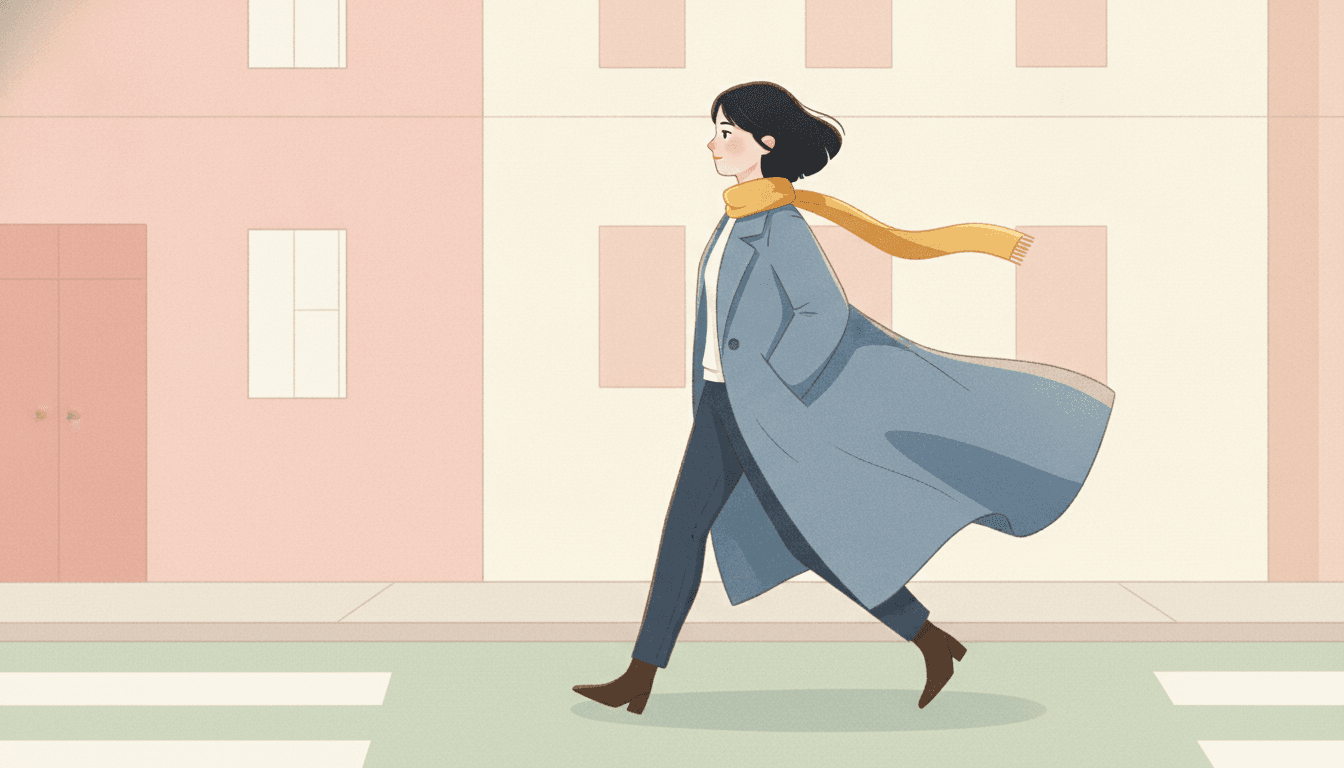
A body stops; a coat keeps going for a moment longer. Urban editorial picture books are drawn in that moment: chic city people in matte pastels and soft pencil grain, mid-stride, mid-turn, mid-jump, their coats flaring and scarves trailing behind them. The fabric shows where they have just been.
- Graceful figures, always in motion
- Coats, scarves and skirts that swing
- Matte blush, slate and a mustard clash
- Free credits by request, no card
50,000+
Stories Created
10,000+
Active Creators
50+
Art Styles
4.9/5
User Rating
What Makes Urban Editorial Illustration Different
Every style here is a written brief: a palette, a light, a line weight and a short list of refusals. Four things in this one decide the look, and two of them appear in no other brief of the seventy-eight.
Clothes that drape and swing
Every style in C2Story runs on a short written brief: a palette, a light, a line weight and a few things to avoid. Thirteen of the seventy-eight mention clothing or fashion. This is the only one that uses the word drape: a relaxed, flowing drape of clothing on an extended, dynamic silhouette. The other fashion briefs describe how a garment looks. This one describes what it does.
The only refusal of a stiff pose
Across the seventy-eight briefs there are 312 refusals. Four mention stiffness, and three of those are about something else: stiff proportions, stiff vector lines, a stiff plastic finish. Only this brief refuses a stiff, static pose. It is the one style in the library where standing still for the picture is the mistake.
Matte pastels and one clash
The palette is matte pastels, warm blush and soft slate blue, with an accent of mustard and what the brief calls a playful colour clash. Slate appears in only three briefs and blush in only two. The mustard is the clash: on almost every page it lands on a scarf, a coat or a jacket, the thing that moves.
A light line, a warm accent
The contour is light and graceful, with a soft pencil grain in the colour, and heavy outlines are refused. The light is a soft warm accent, the only brief to call its light that, which in practice means a warm edge along the hem of a coat rather than a lamp or a sunset. The finish sits between high-fashion polish and clean animated character design.
What “Avoid Stiff Static Poses” Looks Like
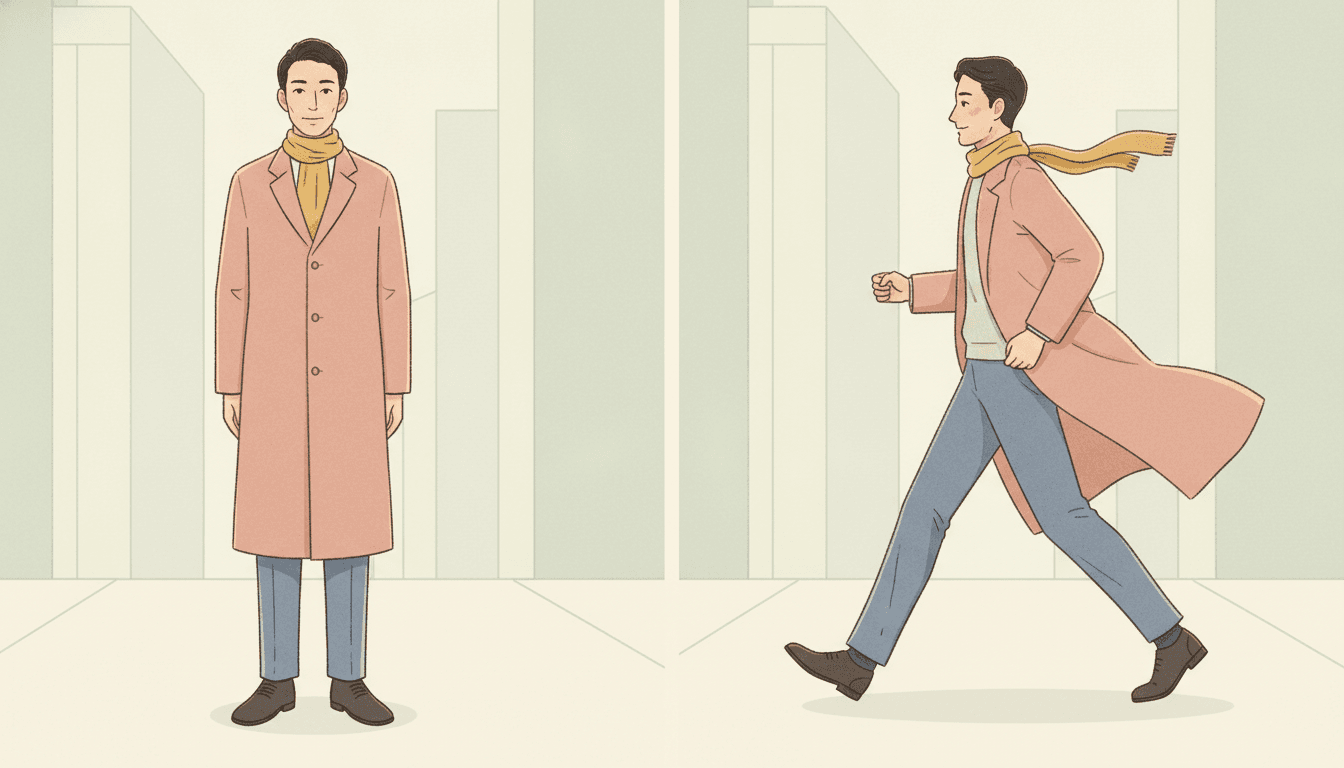
Look at one man twice. The same black hair, the same blush coat, the same mustard scarf, the same pale city blocks behind him. On the left he stands facing you, arms at his sides, feet together, and the coat hangs straight to his shins. Nothing is wrong with the drawing. It is a fitting, not a story.
On the right he is mid-stride, one fist swinging forward, and the coat has flared out behind his legs while the scarf lifts off his shoulder. Now you know he is going somewhere, how fast, and that he started a second ago. That is what this urban editorial illustration brief asks for on every page: the pose on the left is the one thing it refuses by name.
Its four refusals are all things that would stop the movement or harden the finish.
Write the Movement That Just Happened
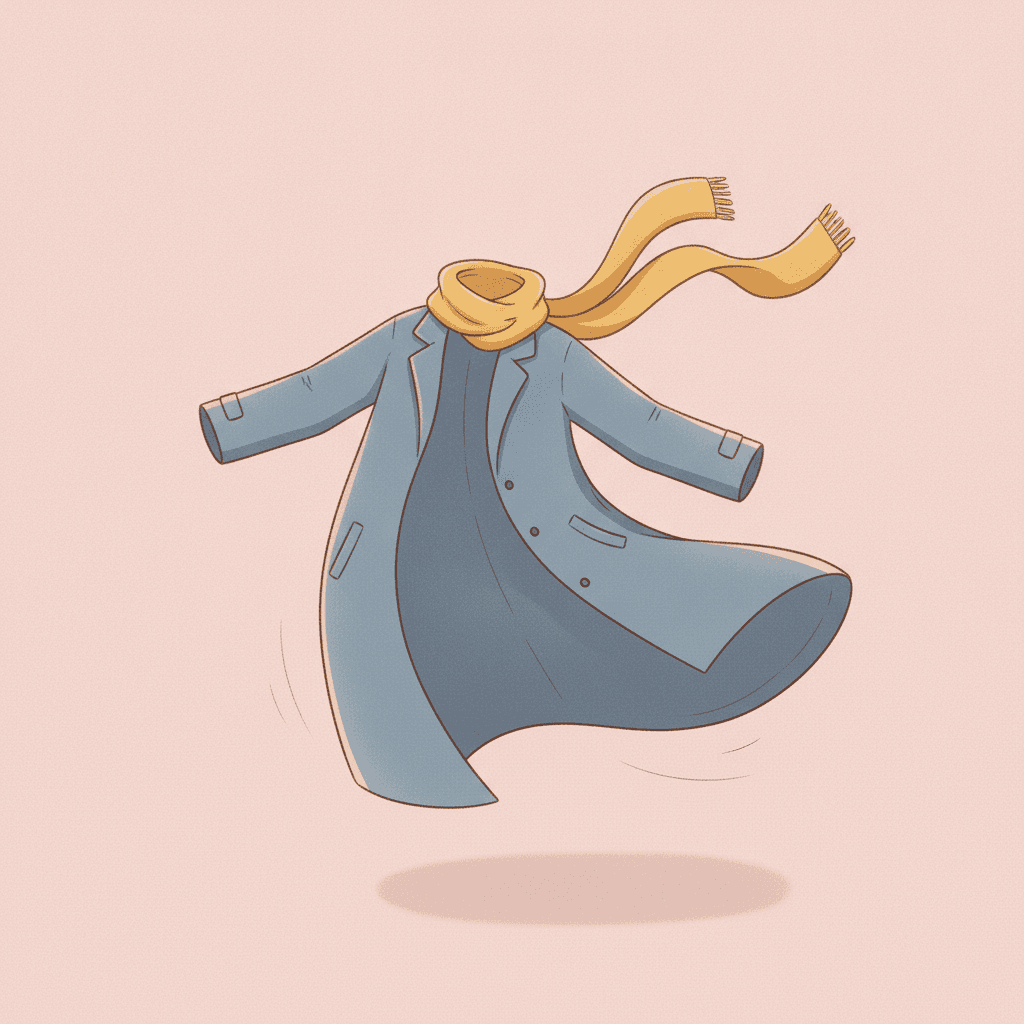
The coat beside this paragraph has nobody in it. It is still a picture of movement: the hem swirls to one side, the scarf ends fly, a couple of pencil lines trail behind. Someone was wearing it a moment ago and went somewhere fast. You can read the whole action from the fabric alone.
That is where the writing goes in this style. Fabric arrives a beat late, so a picture drawn this way always shows a little of the moment before. Use it. Write what the character has just done, not only where they are. “She spun round.” “He jumped the last step.” “They ran the whole way.” A page that says “she stood at the kerb” gives the brief nothing to show; a page that says “she stopped dead at the kerb” gives it a coat still swinging.
In a book you do not write image prompts; C2Story writes them from your story, and the verb in your sentence is the strongest thing it has to go on. Then name one garment per character, the yellow scarf, the long blush coat, so the reader has something to follow from page to page.
From One Sentence to Urban Editorial Picture Books
You pick the look once. The brief is then applied to every page, so the line, the palette and the movement never drift.
Describe the story as it moves
Write a sentence or two about who is in the story and what happens, and keep it moving: who has just run, who turns round, who hurries home. Give each character one named garment to carry through the book.
Choose Chic Urban Editorial
Pick the style from the Styles Library. From then on every page uses the same light contour, the same matte pastels and grain, and the same easy motion in the clothes.
Get a whole book
C2Story writes the story, splits it into pages and illustrates each one. Regenerate any page you want to change without touching the rest, read it online, share it, or buy the PDF download to hand to a printer.
This Style and Its Three Nearest Neighbours
One shares its chic, one shares its pastels and grain, and one shares its people in motion. Here is what each actually asks for.
Chic Urban Editorial Figure
The style on this page
Contemporary urban fashion editorial illustration with an elegant, extended, dynamic silhouette, a relaxed flowing drape of clothing, matte pastel tones with soft pencil grain, warm accent highlights and a playful colour clash, blending high-fashion polish with clean animated character design. It renders the story’s urban scene with graceful motion, and refuses stiff static poses, heavy outlines, garish saturation and gritty photorealism.
Minimal Fashion Line
Also chic, but the figure holds still
Spare black contour lines, no shading, a large clean white ground and garments reduced to a crisp silhouette. Its figures are relaxed but at rest, and the room is left out. This brief keeps the city, adds matte colour and grain, and puts the figure in motion. Take fashion line for a clean outline on white; take this one when the clothes should move.
Organic Pastel Editorial
Same pastels and pencil grain, a different idea
Light pencil-and-ink figures among a few soft abstract shapes in dusty Morandi pastels, the room replaced by shapes that carry its mood. It shares the matte pastel finish and the grain. It does not share the motion: its people sit, read and rest. If the story is quiet and inward, take organic pastel. If it is out in the street, take this one.
Bold Street Pictogram
The other city brief with people mid-motion
Thick continuous black outlines, little running figures, bold primaries and high-energy action. It is the loudest movement in the library, and its figures are symbols drawn in one heavy line. This brief is the quiet opposite: the motion is in the fabric, the figures are dressed people with simple faces, and the colour is soft.
Story Ideas for Urban Editorial Picture Books
Each idea keeps somebody moving through a city, with one garment to follow, which is what this brief draws best.
The Red-Eye Bus
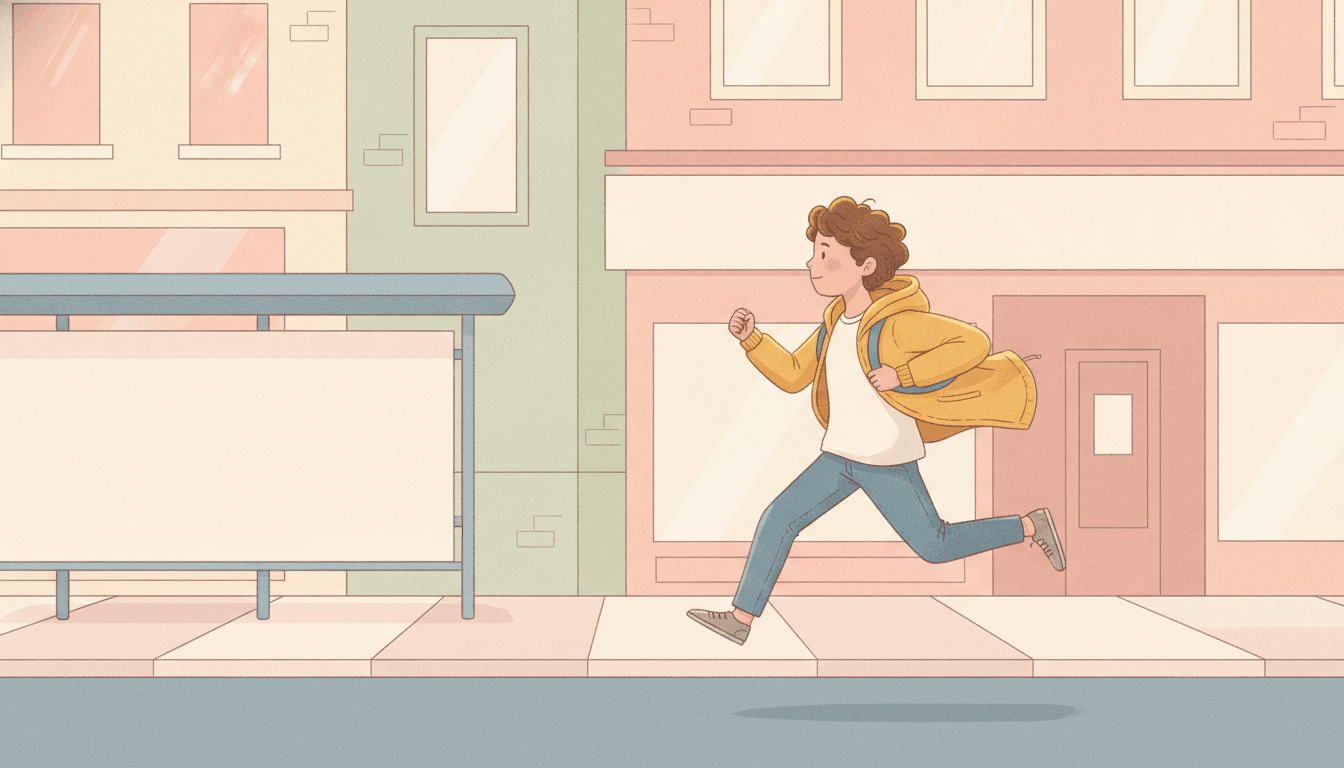
A boy runs for the last bus of the evening, and his jacket tells you on every page whether he is going to make it.
Grandpa’s Windy Walk
A grandfather and granddaughter take the long way home on the windiest day of the year, holding hands round every corner.
The Yellow Scarf
A scarf is passed from person to person across a city in one day, and each page follows it on a new pair of shoulders.
First Ride Alone
A girl cycles to school by herself for the first time, and the faster she goes the further her skirt and scarf stream out.
Mr Fenwick and the Rain
An old man walks his small grey dog every morning whatever the weather, and the rain is never a reason to slow down.
Too Busy to Stop
A mother rushes all week through the city, until one Saturday she stands still and the reader finally sees her coat hang straight.
What Chic City Illustration Looks Like Across a Book
Pages generated to this one brief, with nothing retouched afterwards. One honest note: the woman on the right was meant to have just stopped, her coat still swinging forward past her knees from the momentum. She came back standing still with the coat swept out to the side, which reads more like a gust of wind than a sudden stop. A couple of the wide pages also carry a faint grey smudge in the top-left corner.
Stiff, then moving
Late for the bus
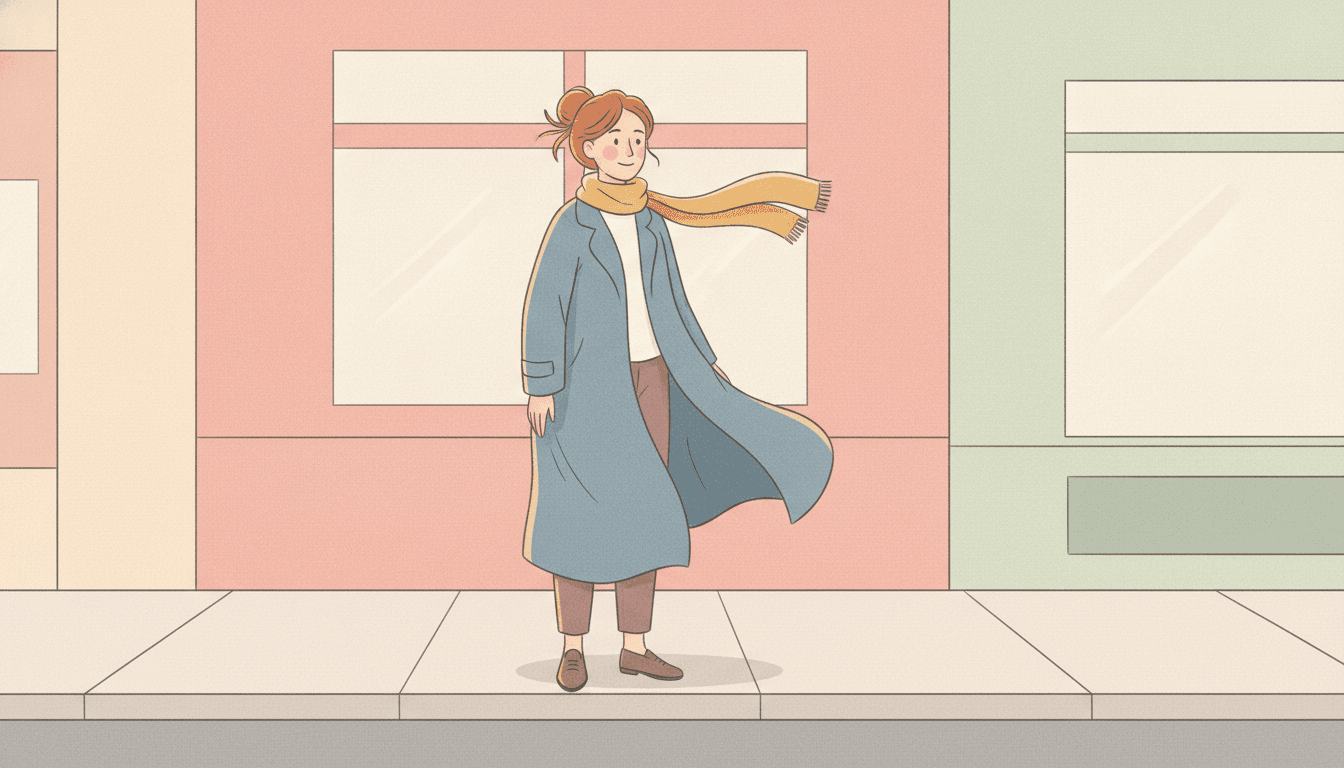
Stopped, but the coat has not
A Moving Cast, Held Steady
Here is where the design held and where it wandered. The same girl keeps her bob, blush coat, slate tights and mustard shoes through four movements, though the third pose, asked to reach up, also put a hand on her hip. The old man in the rain gained a pale sage scarf nobody asked for, and the young man was meant to look back over his shoulder but only glances sideways. Check a character in a few poses before you build a book on it.
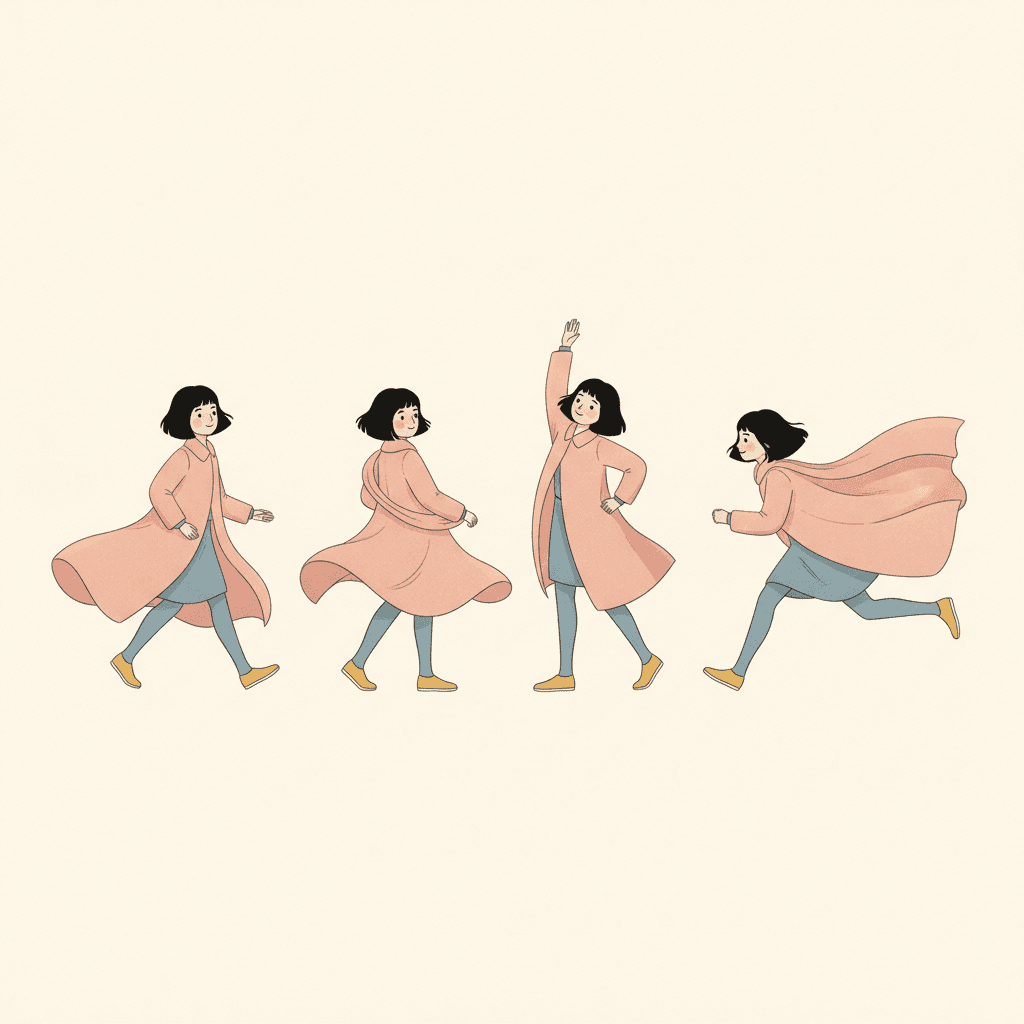
One girl, four movements
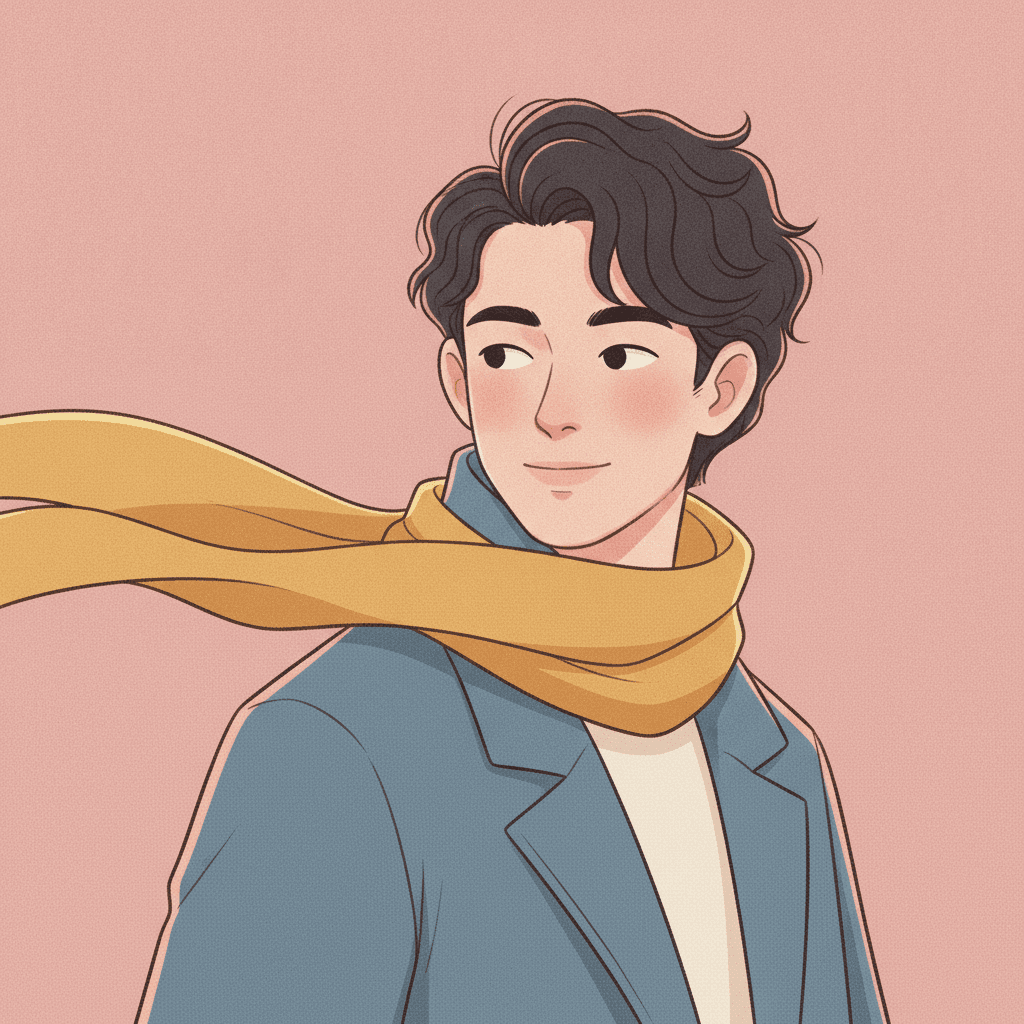
A turn of the head
Nobody in it
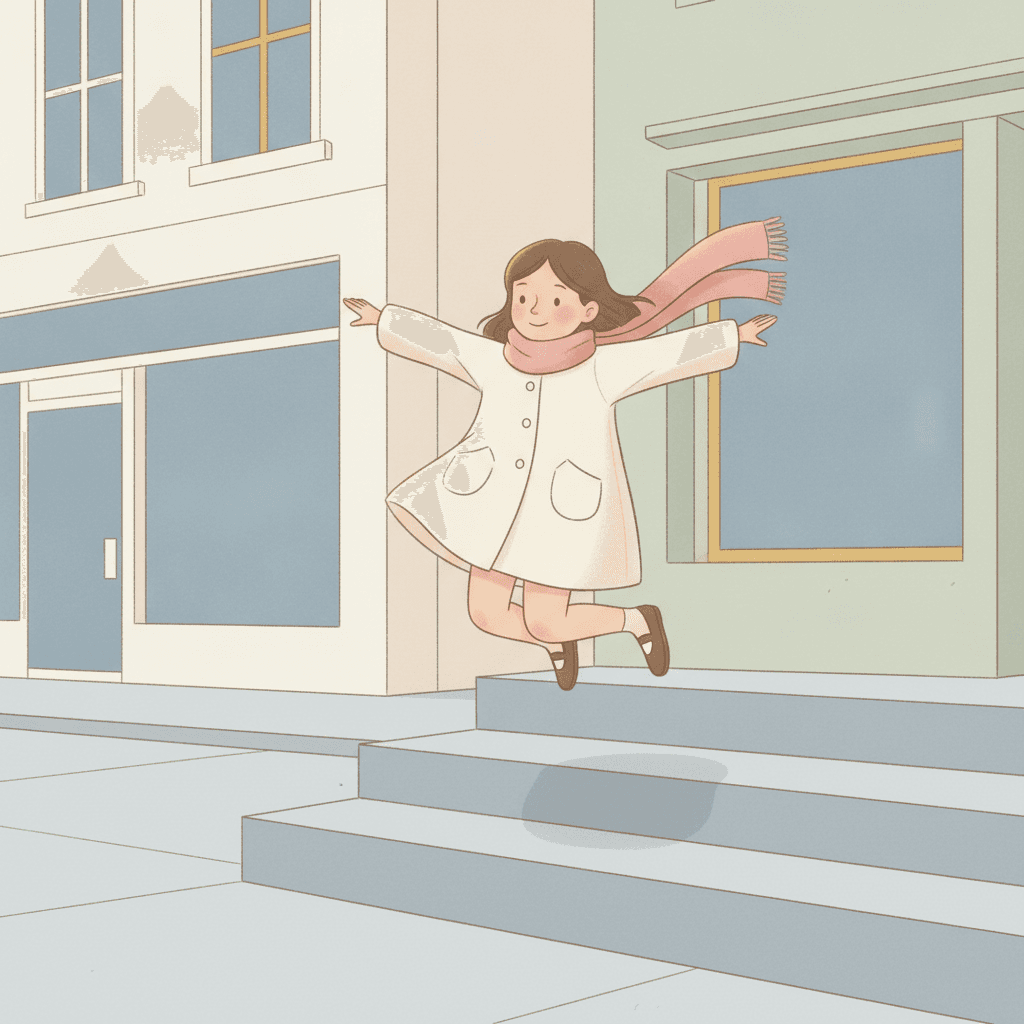
Off the last step
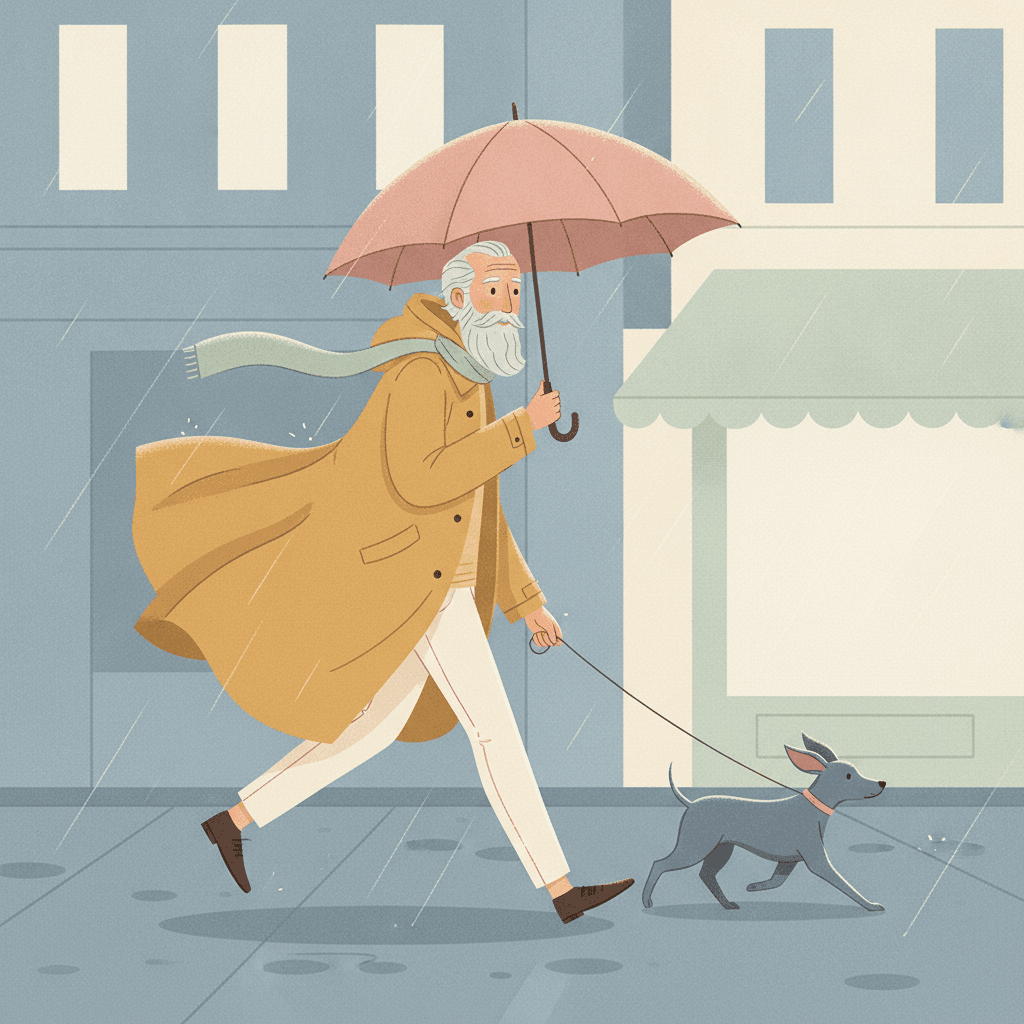
Walking the dog in the rain
Making Whole Urban Editorial Picture Books
What is useful in a book drawn this way and where the limits are, in the order you are likely to meet them.
One character, kept on model
Save each character in the Character Library with up to fourteen reference images and a plain written description. In this style the coat is half the character, so name it exactly: “long blush coat, mustard scarf”. The girl on this page kept her bob, coat, tights and shoes across four very different movements. Characters made from an uploaded photo stay private to your account.
Write what just happened
The page pictures are drawn from what you write. “She is at the bus stop” gives the brief nothing to move; “she ran for the bus” gives it a coat still flung out behind her. Bold styles draw the action itself; this one draws the trail it leaves in the fabric, so a page just after a run, a turn or a jump is where it earns its place.
The wind is always blowing
The brief wants graceful motion everywhere, so even a still moment comes with moving fabric. We asked for a woman who had just stopped at a kerb, coat still swinging forward; she came back standing with her coat swept sideways, which reads more like a breeze than momentum. Expect a gust on most pages, and choose another style for a story that is mostly sitting down.
A simple city, kept in the back
The brief renders the story’s urban scene, so streets, shop fronts and crossings come in, but drawn as calm flat blocks of colour behind the figure. Signs and windows stay blank. It is a poor fit for a busy market or a seek-and-find page: the city is a backdrop for the person, not the subject.
Daylight, not neon
The light is a soft warm accent and the colour refuses garish saturation, so there is no neon night city here and no dramatic shadow. A story set after dark or lit by streetlamps is better served by a cinematic style; this one is a bright afternoon on foot.
A whole book from a sentence
Describe the story in a sentence and C2Story writes it, splits it into pages and draws every page to the same brief, in English, Chinese, Japanese, Spanish, French and more. Story text sits beside the picture, not inside it. Read online, share a link, or buy the PDF download as the handoff to your printer. Pages are licensed for commercial use under the terms of service.
Other city and figure styles, each built on a different idea: for a crisp black outline on white, fashion line picture books; for hard 1980s colour clashes and one person going somewhere, city pop picture books; for confident modern characters with their devices, urban tech picture books; for soft shapes in place of a room, organic pastel picture books; and for running figures in thick black line, street pictogram picture books.
Questions About Urban Editorial Picture Books
Explore More Story Ideas
Discover more styles, tools, and story types

Space Stories
Blast off to distant galaxies
Explore
Shanghai Poster Picture Books
Soft airbrushed 1930s calendar-poster colour, with your whole cast dressed for the year it is set in
Explore
AI Story Generator
Generate complete stories with AI
Explore
Storybee Alternative
More styles & features
ExploreUrban Editorial Picture Books: Chic City People, Clothes in Motion
Urban editorial picture books rest on a brief that puts the clothes in motion. C2Story runs seventy-eight hand-drawn style briefs, each a short written record of a palette, a light, a line weight and a few refusals. The Chic Urban Editorial Figure brief is the only one that asks for a drape of clothing, the only one that refuses a stiff static pose, and the only one whose light is a warm accent.
The look is a graceful chic city illustration: figures with a light, graceful contour, coats and scarves that flare and trail behind them, matte pastels in warm blush and soft slate blue with a playful mustard clash, a soft pencil grain, and a city drawn as calm flat blocks of colour. It refuses stiff poses, heavy outlines, garish saturation and gritty photorealism.
This modern figure art suits active stories told on foot: a run for the bus, a windy walk with a grandparent, a first bike ride, a dog walked in the rain. Write what each character has just done, and give each one a named garment. It is a poor fit for quiet indoor stories, night scenes and busy seek-and-find settings. Characters stay on model through the Character Library, with up to fourteen reference images each.
The choice between neighbours is clear. Take fashion line for a still figure in black outline on white, organic pastel for the same pastels and grain in a quiet, inward story, and street pictogram for loud, symbolic running figures. Take this style when the people should be out in the city and the clothes should show where they have just been. Describe the story in a sentence and C2Story writes it, splits it into pages and draws every page to the same brief, with the paid PDF download as the handoff to your printer.