
Vintage Fashion Plate Picture BooksSomebody Has Stopped
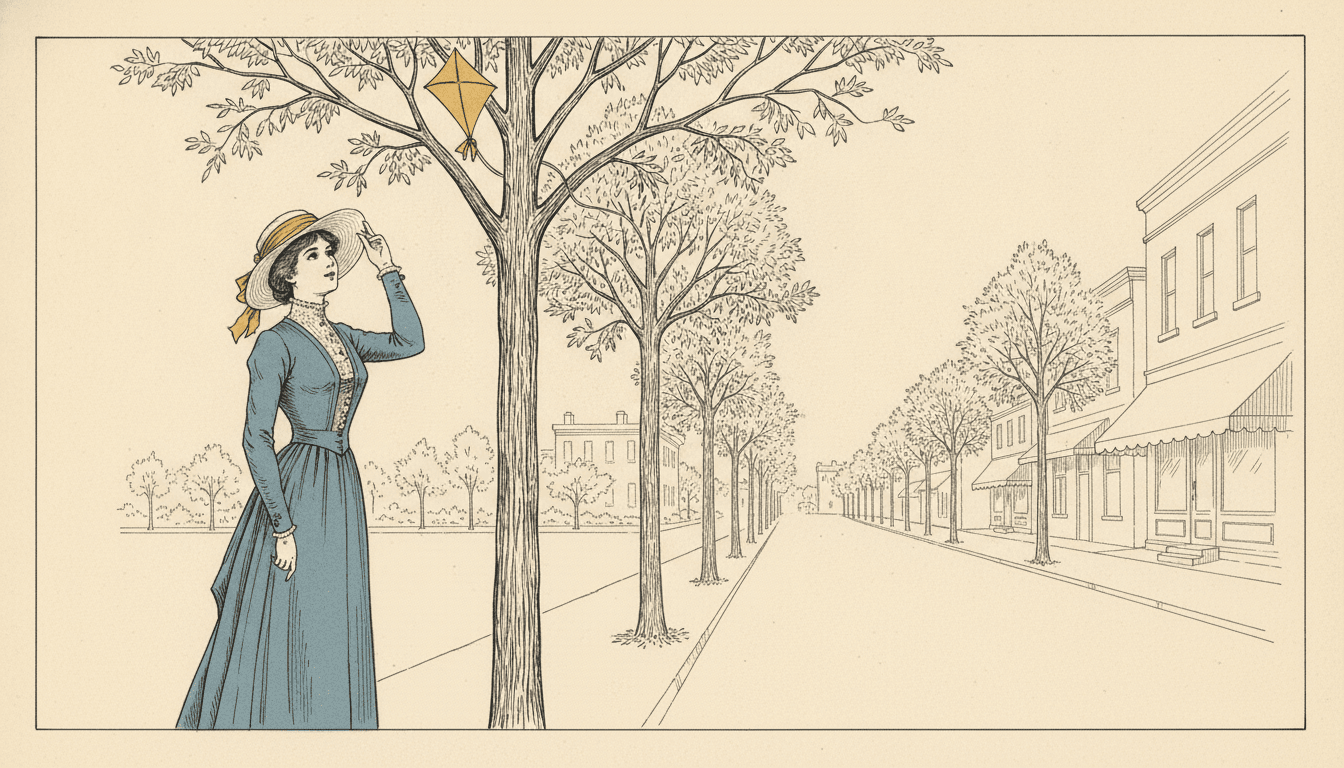
A woman on a boulevard stops to look up at a kite. Vintage fashion plate picture books are drawn in moments like that: Edwardian pen and ink, a crisp fine line, a few strokes of hatching that fade into cream paper, and just two colours, a faded blue and a mustard yellow.
- Crisp pen line, feathered hatching
- Gowns, top hats and sailor suits
- Vintage blue and mustard, nothing else
- Free credits by request, no card
50,000+
Stories Created
10,000+
Active Creators
50+
Art Styles
4.9/5
User Rating
What Makes Fashion Plate Illustration Different
Every style here is a written brief: a palette, a light, a line weight and a short list of refusals. Four things in this one decide the look, and each of them is either unique among the seventy-eight or used in a way no other brief uses it.
Hatching that fades out
Five of the seventy-eight style briefs in C2Story shade with pen hatching. Three of them ask for dense hatching, for gothic shadow, for ornament or, in one case, dense yet airy. This is the only brief that calls its shading feathered: a few fine strokes on the shadow side that thin out and stop, so the paper finishes the form. It is also the only one of the five that lists dense shading among the things it refuses.
A figure who has stopped
Every brief comes with a sample subject. This one is an elegant figure in a long gown and hat pausing on a boulevard. A few other briefs mention pauses, but they mean the pen pausing on the paper. This is the only one where the person pauses. Its neighbour in the library, the urban editorial style, refuses a still pose outright; this one is built on one.
Two named spot colours
Four briefs use spot colour, a small flat patch of colour laid inside the ink line. The other three leave it open: a muted spot, a few spots, a sparse spot. This brief names both of its colours, a faded vintage blue and a mustard yellow, and adds nothing else. On most pages one garment takes the blue and one ribbon, scarf or hat band takes the mustard.
Edwardian, and literary
It is the only brief that names the Edwardian period, and the only one that asks for a literary atmosphere and for graceful restraint. In practice that means top hats, long gowns, sailor suits and button boots, a crisp fine pen line, soft refined daylight and a large share of every page left as cream paper. It looks like the illustrations in an old novel rather than a modern picture book.
What “Avoid Dense Shading” Looks Like
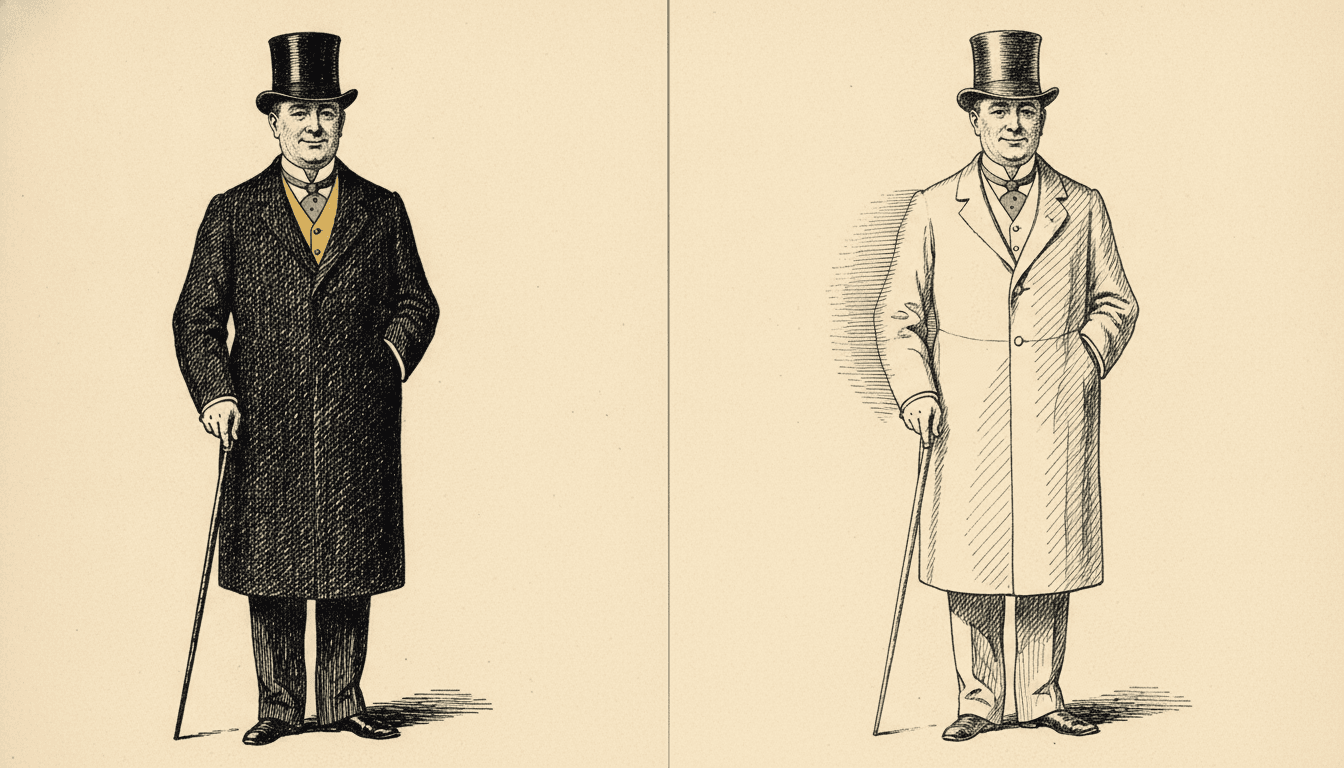
Look at one gentleman twice. The same top hat, the same cane, the same round, pleased face. On the left his coat is crosshatched until it is nearly black. It is a fine drawing, and it is heavy: your eye lands on the coat and stays there.
On the right the coat is mostly bare paper. A few fine strokes run down one side and a soft hatched shadow sits behind his shoulder, and that is enough to tell you the coat is round, the light comes from the left, and the man is standing in daylight. That is feathered shading, and it is what this fashion plate illustration brief asks for on every page. The left half is the thing it refuses.
Its four refusals all push the page towards weight or modernity.
Write Where Somebody Stops
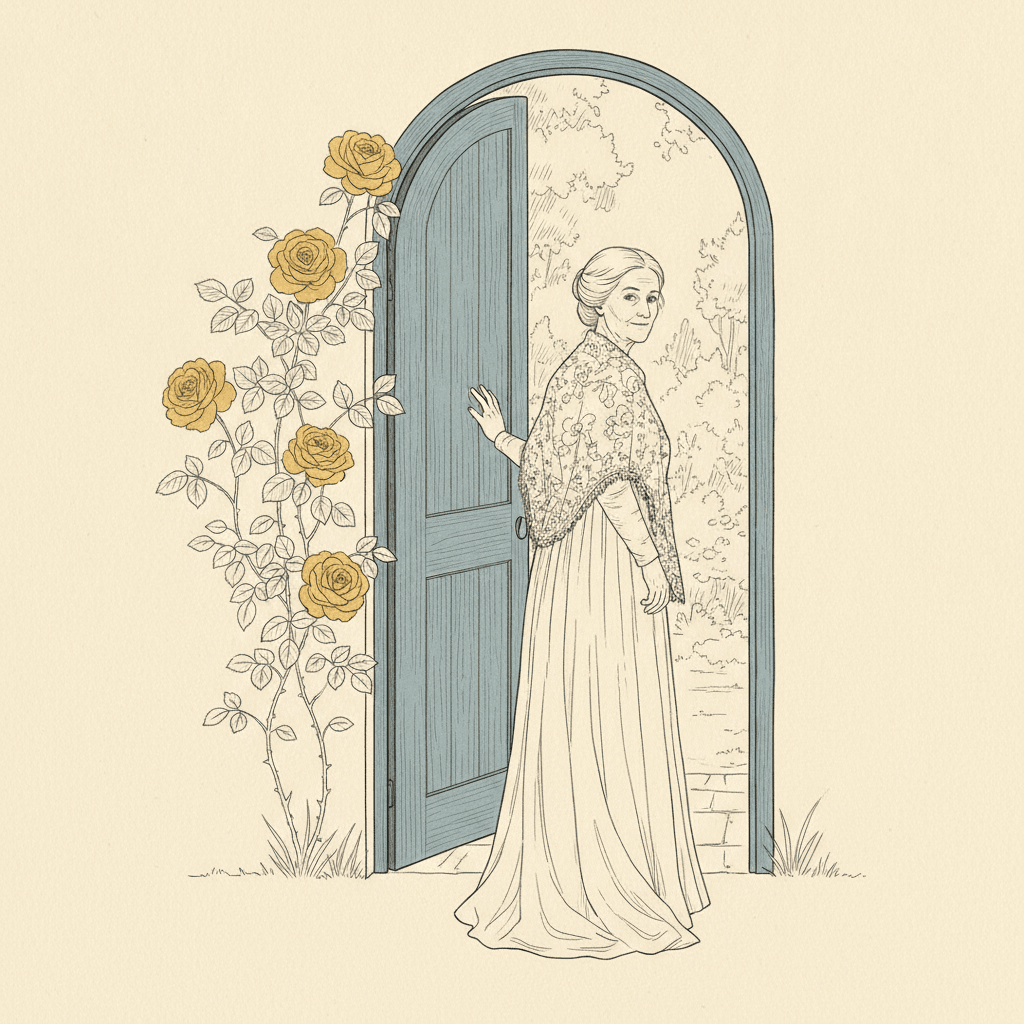
The old woman beside this paragraph has one hand on a garden door and is looking back over her shoulder. Nothing is happening. Everything is happening: she is leaving, she has not quite left, and there is something behind her she wants to see once more. The picture is a pause, and the pause is the story.
That is where the writing goes in this style. The brief’s own sample is a figure pausing on a boulevard, the line is calm, the shading is light and the page is mostly paper, so it has very little to say about running, fighting or falling. It has a great deal to say about the second when a person stops and looks at one thing. Write those seconds. “She stopped under the tree.” “He crouched to look at the snail.” “The dog sat down and waited.” Then say what they are looking at, because that is where the eye of the picture goes, and usually where the blue or the mustard lands.
In a book you do not write image prompts; C2Story writes them from your story, and the moment you choose to describe is the strongest thing it has to go on. A page that says “she walked to town” gets a figure; a page that says “she stopped” gets a scene.
From One Sentence to Vintage Fashion Plate Picture Books
You pick the look once. The brief is then applied to every page, so the line, the shading and the two colours never drift.
Describe the quiet moments
Write a sentence or two about who is in the story and what happens, and find the places where somebody stops: to look, to listen, to wait. Give each character one hat, coat or ribbon to carry through the book.
Choose Vintage Ink Fashion Plate
Pick the style from the Styles Library. From then on every page uses the same crisp pen line, the same feathered hatching and the same vintage blue and mustard on cream paper.
Get a whole book
C2Story writes the story, splits it into pages and illustrates each one. Regenerate any page you want to change without touching the rest, read it online, share it, or buy the PDF download to hand to a printer.
This Style and Its Three Nearest Neighbours
One shares its pen hatching, one shares its interest in clothes, and one shares its refusal of dense shading and its spot colour. Here is what each actually asks for.
Vintage Ink Fashion Plate
The style on this page
Edwardian vintage ink fashion illustration with refined, crisp pen hatching and feathered shading, elegant retro silhouettes of top hats and long gowns, minimal vintage-blue and mustard-yellow flat spot colour, large breathing white space and a poetic literary atmosphere, the full scene rendered with graceful restraint. It refuses saturated modern colour, thick cartoon outlines, dense shading and photorealism.
Crosshatch Gothic Ink
The same pen, taken all the way to black
Black-and-white pen illustration with dense crosshatching, a Victorian atmosphere and shadow built up stroke by stroke until whole areas go dark. It refuses colour entirely. The fashion plate brief uses the same tool for the opposite purpose: a few strokes to say which side the light is on, then it stops. Take crosshatch for weight and mood; take this one for air.
Minimal Fashion Line
Also about clothes, with no shading at all
Spare black contour on a large clean white ground, no shading, a relaxed figure and garments reduced to a crisp outline. It removes the room. The fashion plate brief keeps the whole scene, the boulevard, the pond, the library steps, and gives the clothes a little hatched volume. One is a clean sketch on white; the other is a period illustration with somewhere to stand.
Fine-Line Urban Wit
Also refuses dense shading, also uses spot colour
Precise hairline ink, tiny figures in large airy settings, abundant white space and a soft muted spot colour. It shares two of this brief’s refusals and its love of empty paper. The difference is scale and shading: its people are small inside a big drawn world with no hatching at all, while the fashion plate puts one dressed figure up close and gives it feathered shade.
Story Ideas for Vintage Fashion Plate Picture Books
Each idea is built on somebody stopping, with one thing worth looking at, which is what this brief draws best.
The Kite in the Lime Tree
On her way to the post office, a young woman stops under a tree on the boulevard, and one kite stuck in the branches changes the rest of her afternoon.
Grandpa Stops for Everything
A boy wants to hurry to the park; his grandfather stops for every snail, every cat and every interesting railing on the way, and by the end the boy is the one stopping.
The Dog Who Waited
A small terrier in a blue coat is told to wait on a bench while his owner goes into a shop, and the whole town passes by while he does exactly that.
Before the Ship Comes In
A mother and daughter stand at the seaside railing every morning of the holiday, watching for the ship that will bring their father home.
One Last Look
An old woman closes up the garden she has kept for fifty years, and on every page she stops at a gate or a door to look back at something.
Rain on the Square
A girl waits in the rain at the edge of the town square for a friend who is late, and the square slowly empties until there is only her umbrella left.
What Vintage Fashion Drawing Looks Like Across a Book
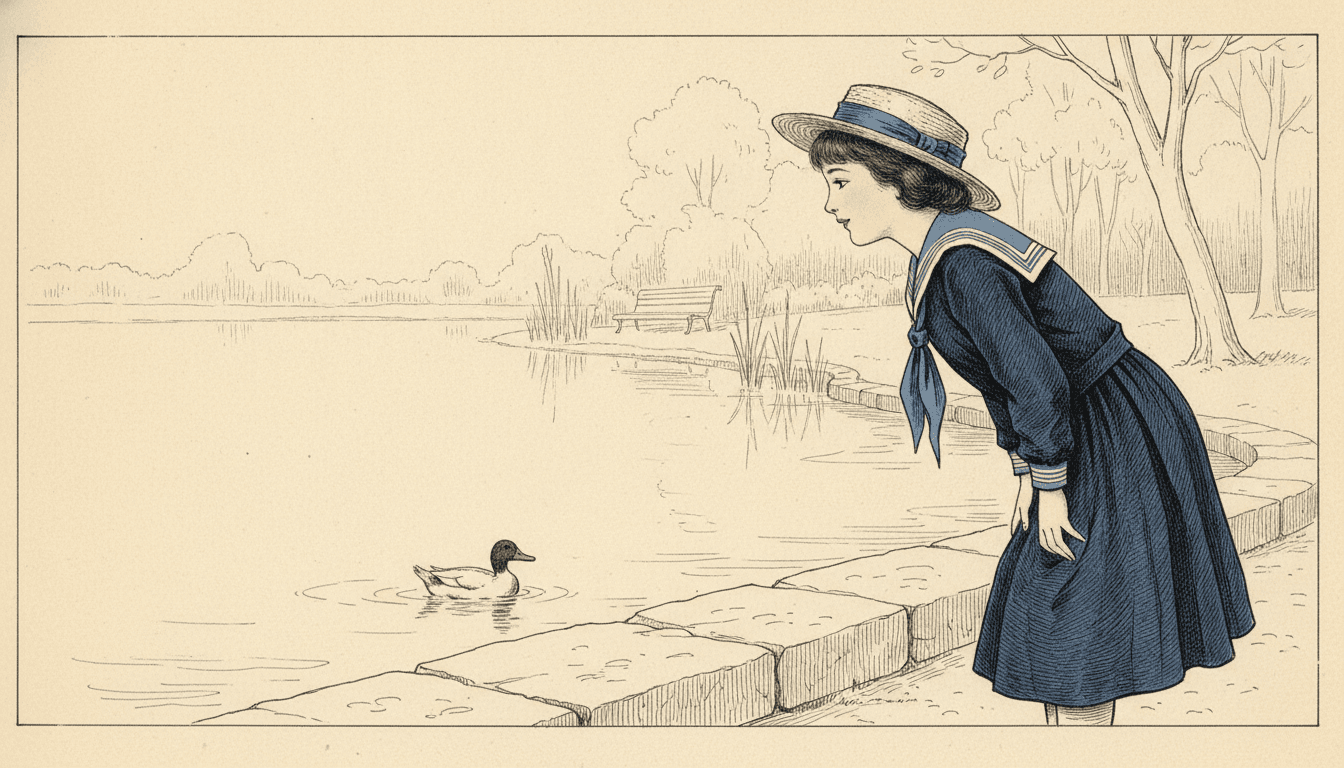
Pages generated to this one brief, with nothing retouched afterwards. Two honest notes: the young man on the right was asked to stand halfway down the library steps and came back sitting on them, and the girl at the pond was given a dark dress that is hatched more heavily than the brief usually goes. Several wide pages also arrive with a thin ruled frame line around them, like an old printed plate.
Dense, then feathered
One duck, one girl
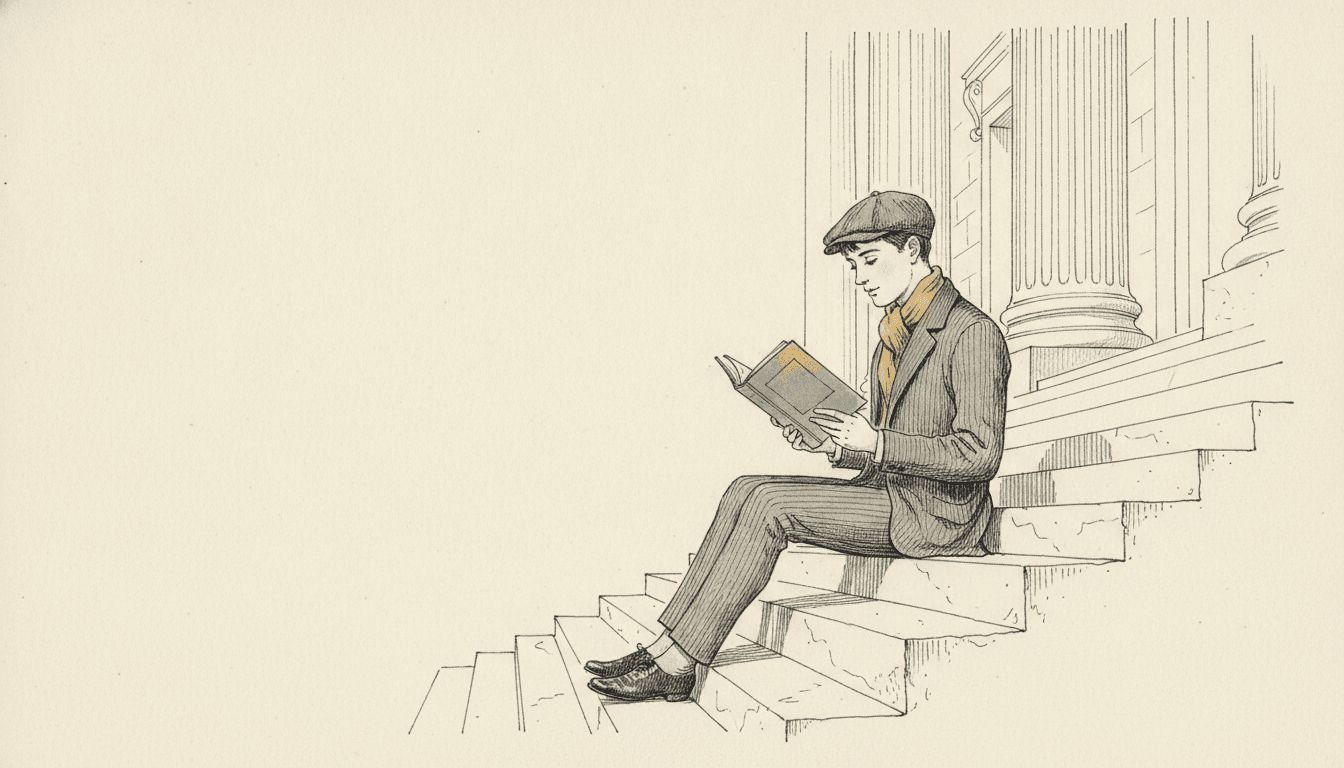
Sat down on the steps
A Period Cast, Held Steady
Here is where the design held and where it wandered. The same girl keeps her curls, blue coat, straw hat and button boots through four views, though her cheeks picked up a touch of pink that is not in the palette. On the promenade the mustard spread from the mother’s hat ribbon to her collar and cuffs. The boy’s face was kept free of hatching, as asked, and the shading went on his cap instead.
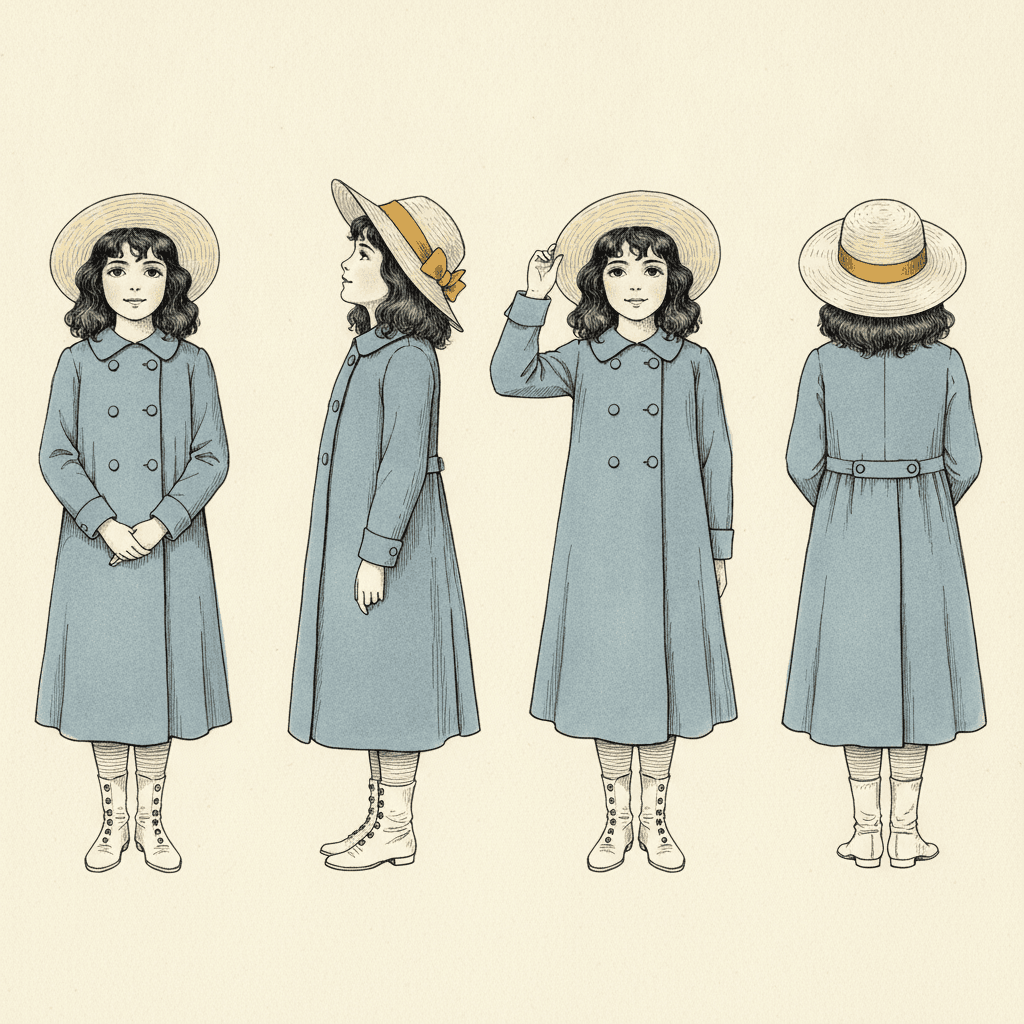
One girl, four still poses
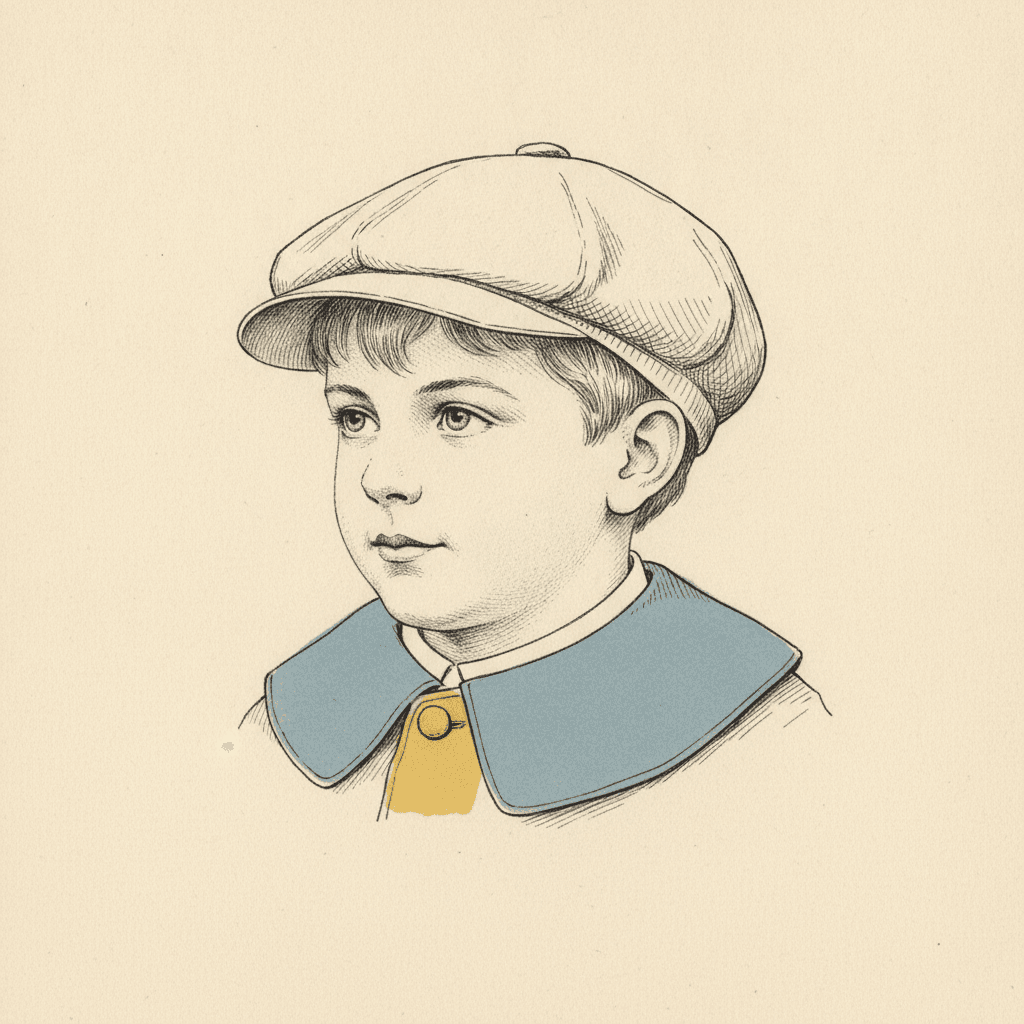
Hatching off the face
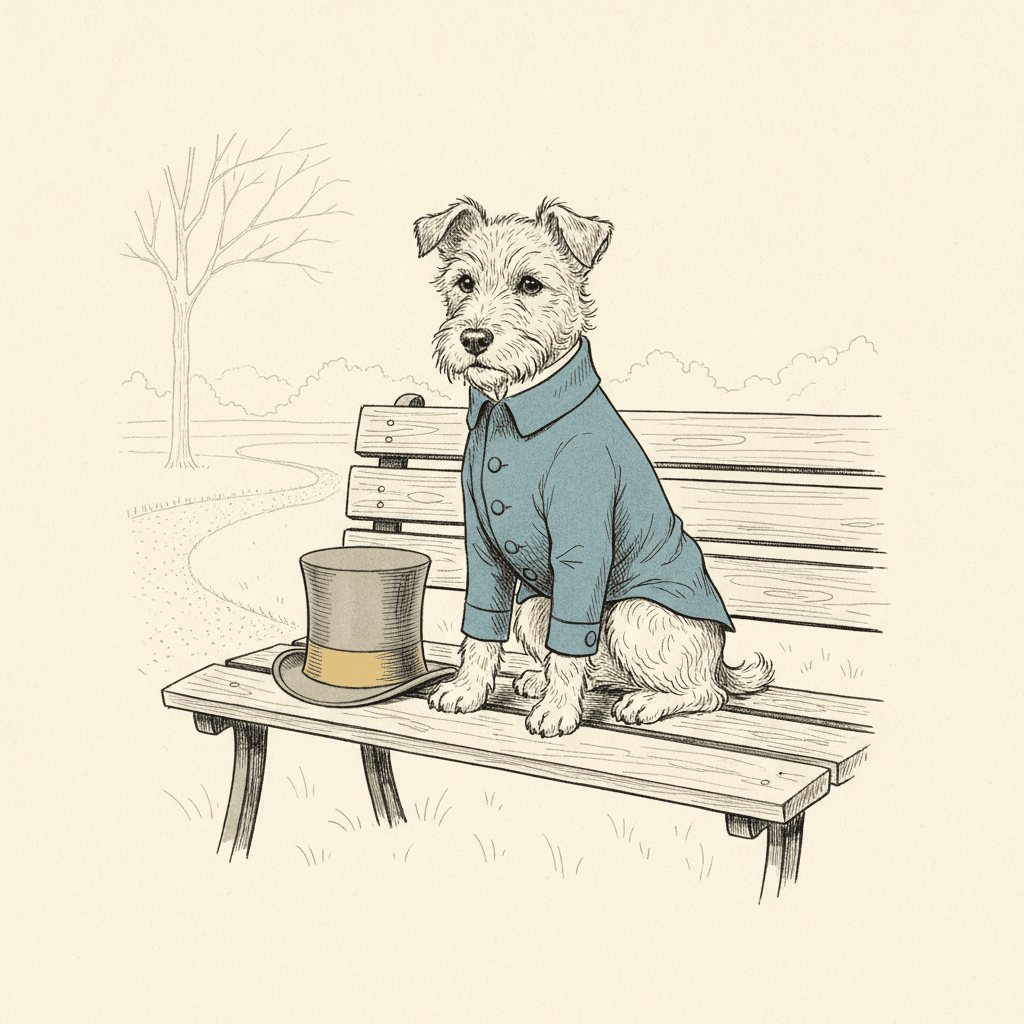
Waiting on a bench
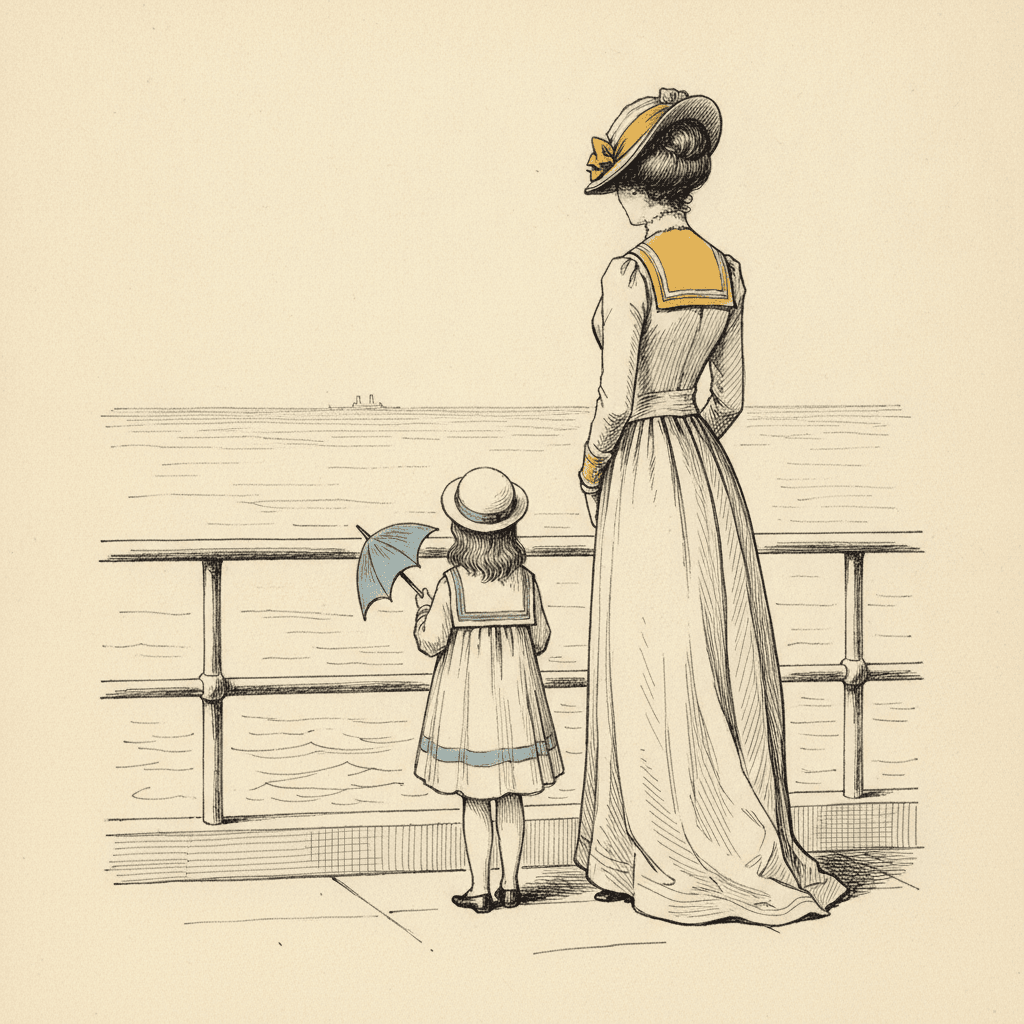
Two colours on a promenade
Looking back from the door
Making Whole Vintage Fashion Plate Picture Books
What is useful in a book drawn this way and where the limits are, in the order you are likely to meet them.
One character, kept on model
Save each character in the Character Library with up to fourteen reference images and a short written description. Period clothes are a gift for consistency, because a long blue coat and a straw hat with a mustard ribbon are easy for the reader to follow. The girl on this page kept her curls, coat, hat and boots across four views. Characters made from an uploaded photo stay private to your account.
Write where somebody stops
The page pictures are drawn from what you write. “She walked to town” gives the brief a figure with nowhere to look. “She stopped under the tree” gives it a person, a reason and a direction for her eyes. Every strong page on this one was a stop: for a kite, a duck, a snail, a book, a last look back.
Every story becomes Edwardian
The period is part of the brief, so the people arrive in long gowns, top hats, flat caps and sailor suits, and the streets get lampposts and balustrades. That is lovely for a historical tale or a timeless fable and wrong for a story about phones and buses. Choose a modern style for a story that needs the present day.
Light, not dark
Dense shading is refused, so this brief cannot do night, storm or a candlelit cellar with any weight. Most of every page stays cream paper, and the darkest thing on it is usually a hat. One page here, the girl at the pond, came back with her dress hatched fairly dark; it is about as heavy as the style goes.
Two colours, used sparingly
Expect blue and mustard and very little else. The colour is a flat patch inside the line, not a wash over the scene, so a story that needs a red door, a green field or a sunset is working against the brief. It suits stories where one thing on the page should catch the eye: a kite, a parasol, a ribbon, a rose.
A whole book from a sentence
Describe the story in a sentence and C2Story writes it, splits it into pages and draws every page to the same brief, in English, Chinese, Japanese, Spanish, French and more. Story text sits beside the picture, not inside it. Read online, share a link, or buy the PDF download as the handoff to your printer. Pages are licensed for commercial use under the terms of service.
Other ink and period styles, each built on a different idea: for pen shading taken all the way to black, crosshatch picture books; for a clean outline on white, fashion line picture books; for city clothes in motion, urban editorial picture books; for tiny figures in big airy ink scenes, fine line ink picture books; and for a painted 1930s look, Shanghai poster picture books.
Questions About Vintage Fashion Plate Picture Books
Explore More Story Ideas
Discover more styles, tools, and story types

Adventure Stories
Thrilling quests and discoveries
Explore
Essay Manga Picture Books
Quiet diary vignettes of an ordinary day
Explore
Bedtime Story Generator
Cozy goodnight stories for kids
Explore
Midjourney vs C2Story
Stories, not just images
ExploreVintage Fashion Plate Picture Books: Edwardian Ink, Feathered Shade
Vintage fashion plate picture books rest on a brief that shades lightly and stands still. C2Story runs seventy-eight hand-drawn style briefs, each a short written record of a palette, a light, a line weight and a few refusals. The Vintage Ink Fashion Plate brief is the only one with feathered shading, the only one that names the Edwardian period, the only one that names both of its spot colours, and the only one whose sample figure is pausing.
The look is a refined vintage fashion drawing: a crisp fine pen line, a few strokes of hatching that thin out into cream paper, elegant silhouettes of top hats and long gowns, flat patches of vintage blue and mustard yellow, soft refined daylight and a large share of every page left empty. It refuses saturated modern colour, thick cartoon outlines, dense shading and photorealism.
This ink fashion art suits gentle, timeless stories built on small moments: a kite caught in a tree, a snail on a railing, a dog told to wait, a last look back from a garden door. Write the moment somebody stops and what they stop for, and give each character one named hat, coat or ribbon. It is a poor fit for night scenes, loud action and stories set in the present day. Characters stay on model through the Character Library, with up to fourteen reference images each.
The choice between neighbours is clear. Take crosshatch for the same pen pushed into heavy shadow, fashion line for a clean outline on white, urban editorial for clothes in motion, and fine line ink for tiny figures in big airy scenes. Take this style when the people should be dressed for another century and the page should hold still. Describe the story in a sentence and C2Story writes it, splits it into pages and draws every page to the same brief, with the paid PDF download as the handoff to your printer.