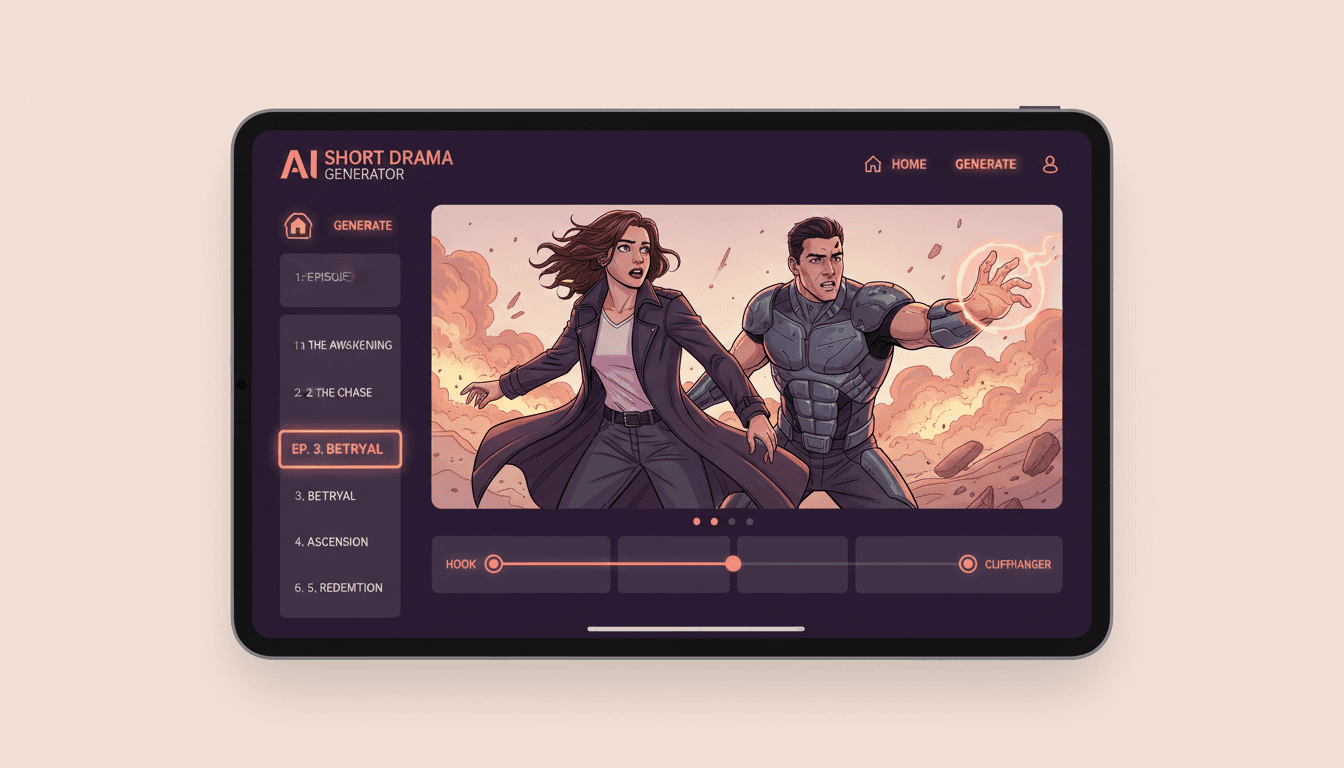
AI Short Drama GeneratorEpisode One of Sixty, Not a Standalone Clip.
Short drama lives or dies on structure: a hook inside three seconds, one turn, and an ending that stops before the answer. C2Story writes each episode to a one-to-three minute runtime and chains the cliffhangers across a whole season.
- Episodes written to a runtime, not trimmed down to one
- Your script split at the turns, so every episode ends on a hook
- Cliffhangers chained — each answer opens the next episode
- One cast and one voice per character, locked for the whole run
250,000+
Stories Created
80,000+
Characters Saved
45+
Art Styles
4.9/5
Creator Rating
How to Make an AI Short Drama
Three steps, starting with the one nobody enjoys: deciding where the episodes end.
Cut the Story Into Episodes
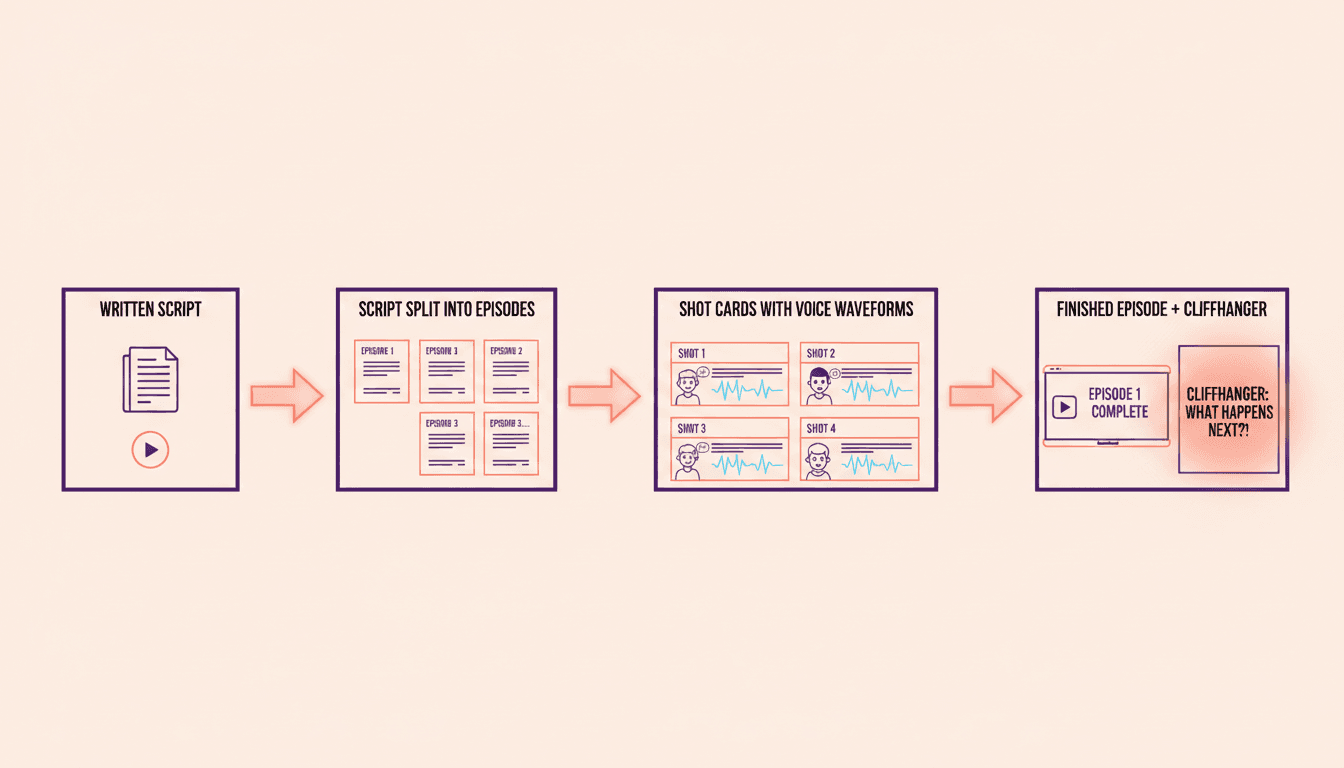
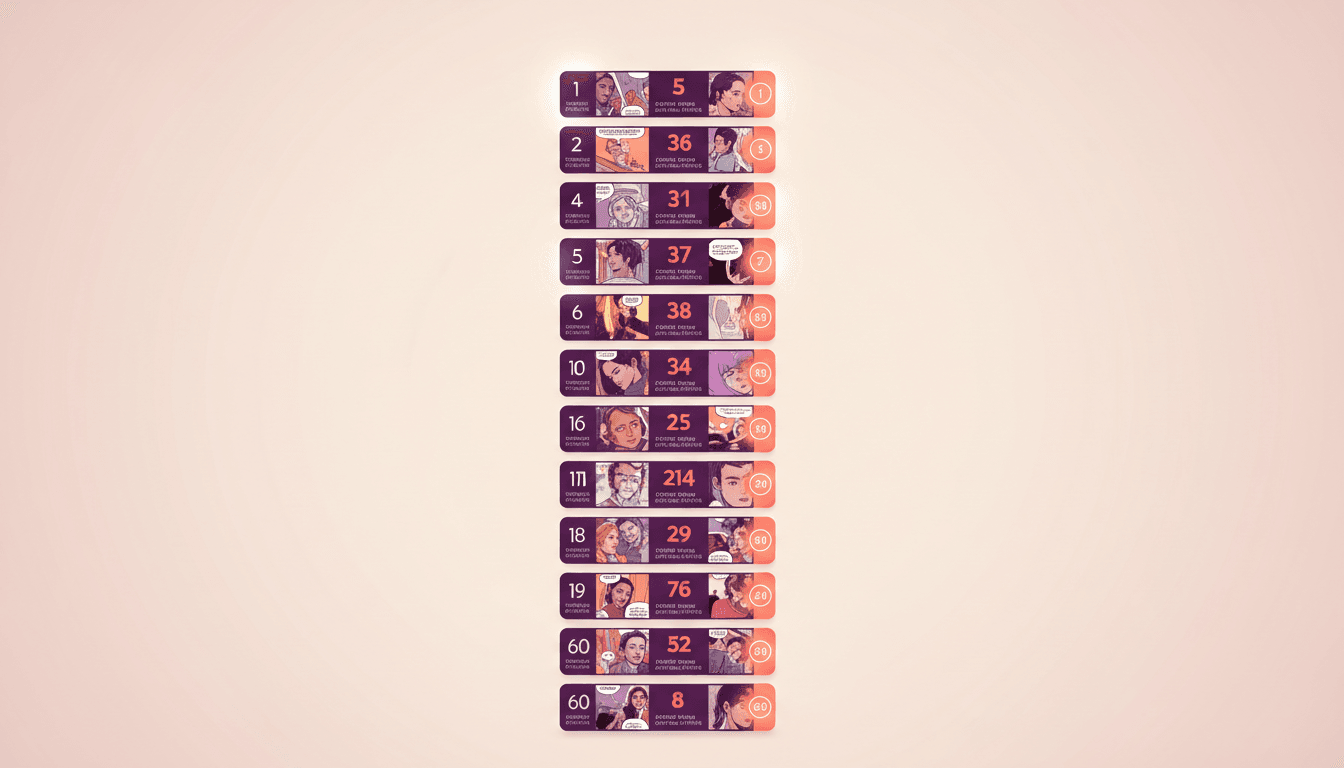
Paste a script, a chapter or a whole manuscript and it gets split at the turns rather than at even lengths — reversals, reveals and arrivals become endings, and whatever leads to each one becomes an episode.
Sixty endings, then sixty episodes
Lock the Cast Once
Save each character with reference images and assign a voice. Every episode after this generates against those designs, which is the only way a face stays recognisable from episode one to episode fifty.
Designed once, reused all season
Render and Drop
Each episode renders with voiced dialogue, camera motion, sound and music, in vertical or widescreen, as a real MP4 — so you can bank a run before publishing and then release on a cadence.
Bank ten, post daily
Hook, Turn, Cliffhanger — In Under Three Minutes
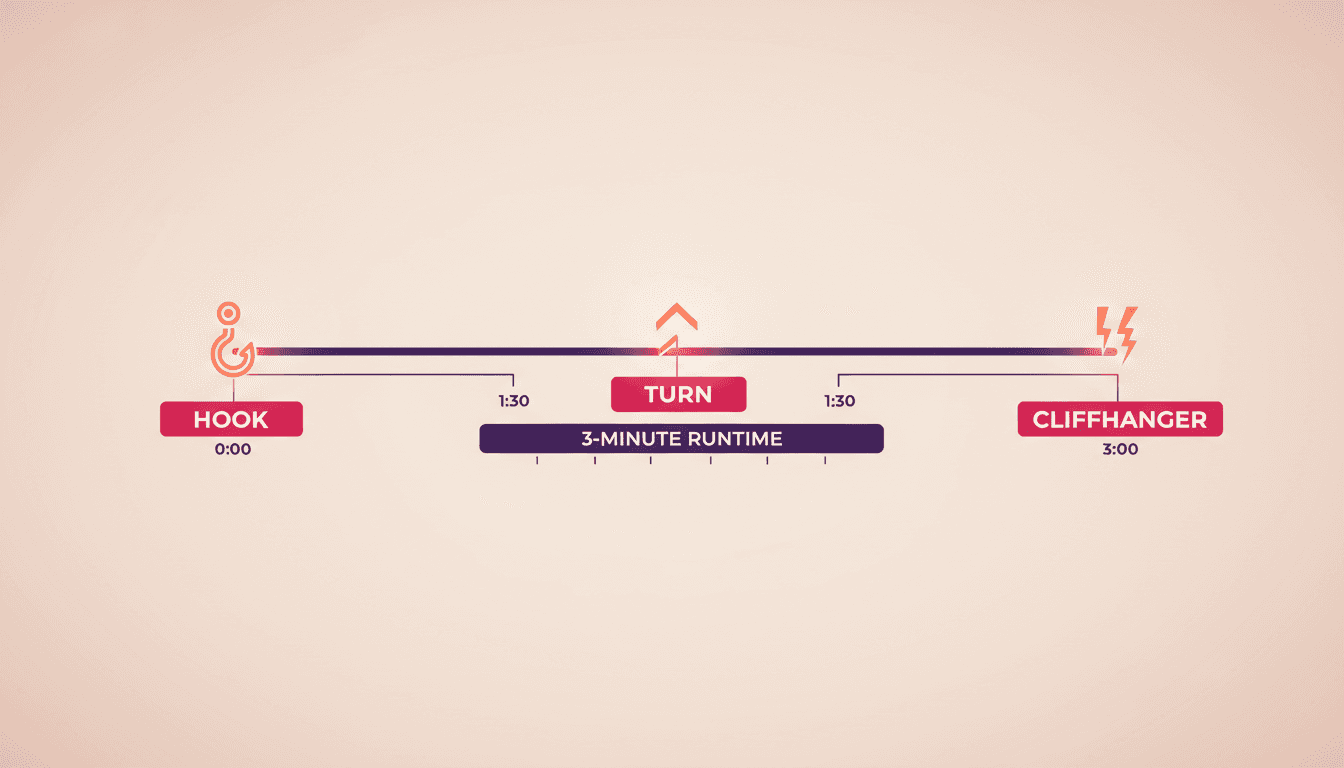
A short drama episode is not a short film. It holds exactly one situation that changes, and it stops before the change is explained.
Seconds 0–3: The Hook
Open on the consequence, never the setup. A contract already signed, a slap already landed, a name spoken by the wrong person. Context gets filled in afterwards, once the viewer has stayed.
Consequence before context
The Middle: One Turn
A single reversal, carried by dialogue rather than atmosphere. Two turns in one episode means you have two episodes and have not cut them yet — that is the most common way a season loses its pace.
One turn, not two
The Last Seconds: The Cut
Stop before the answer. Whatever the viewer needs to know is the first thing the next episode gives them, which is how a cliffhanger becomes a chain instead of a trick.
The answer opens the next one
What this is not
This is not live-action short drama with hired actors, and it is not a tool that turns a long video into clips. Episodes are produced as animated comic drama — illustrated panels in motion with voiced dialogue — which is why a season of sixty is realistic for one person. It is also not an auto-clipper: nothing here takes a finished three-hour cut and slices it every ninety seconds. The split happens at the story level, on a script or a manuscript, before any frame exists. If you already have finished footage and want it chopped up, this is the wrong tool.
Even Slices Make Episodes That End Nowhere
Dividing a chapter into equal two-minute pieces is fast, and it produces a season where half the episodes stop mid-conversation with nothing pulling the viewer forward.
Cut by the Clock
- ✕ Episodes end mid-scene with nothing at stake
- ✕ Some episodes carry two turns, others none
- ✕ The hook has to be invented after the fact
- ✕ Drop-off climbs quietly from episode three onward
Cut at the Turns
- Every episode ends on a reversal or a reveal
- One turn per episode, so the pace stays even
- The previous cliffhanger becomes the next hook
- Runtimes vary a little, and that is correct
An episode that runs one minute forty and ends on a reveal beats one that runs a tidy two minutes and ends on a doorway.
Script In, Numbered Episodes Out
Follow a season through: the beat shape of one episode, the pipeline that renders it, and the release slate it becomes.
Hook · Turn · Cliffhanger
Script → Episodes → MP4
A Season, Not a One-Off
“Split my novel into sixty two-minute drama episodes”
“Episode 1: the contract signing that ruins everything”
“A three-minute revenge episode ending on the reveal”
“Rewrite my opening so the hook lands in three seconds”
“Ten daily episodes with the same cast and one location”
“A ninety-second recap episode before the finale”
The Arcs Short Drama Is Built From
The genre conventions are strong for a reason — they generate reversals reliably, and a reversal is what an episode needs to end on.
Hook, Runtime, Cast, Cliffhanger, Next Tap
How it opens, how long it holds, who stays recognisable, where it stops, and what makes someone start the next one — in whichever of 45+ art styles suits the series.
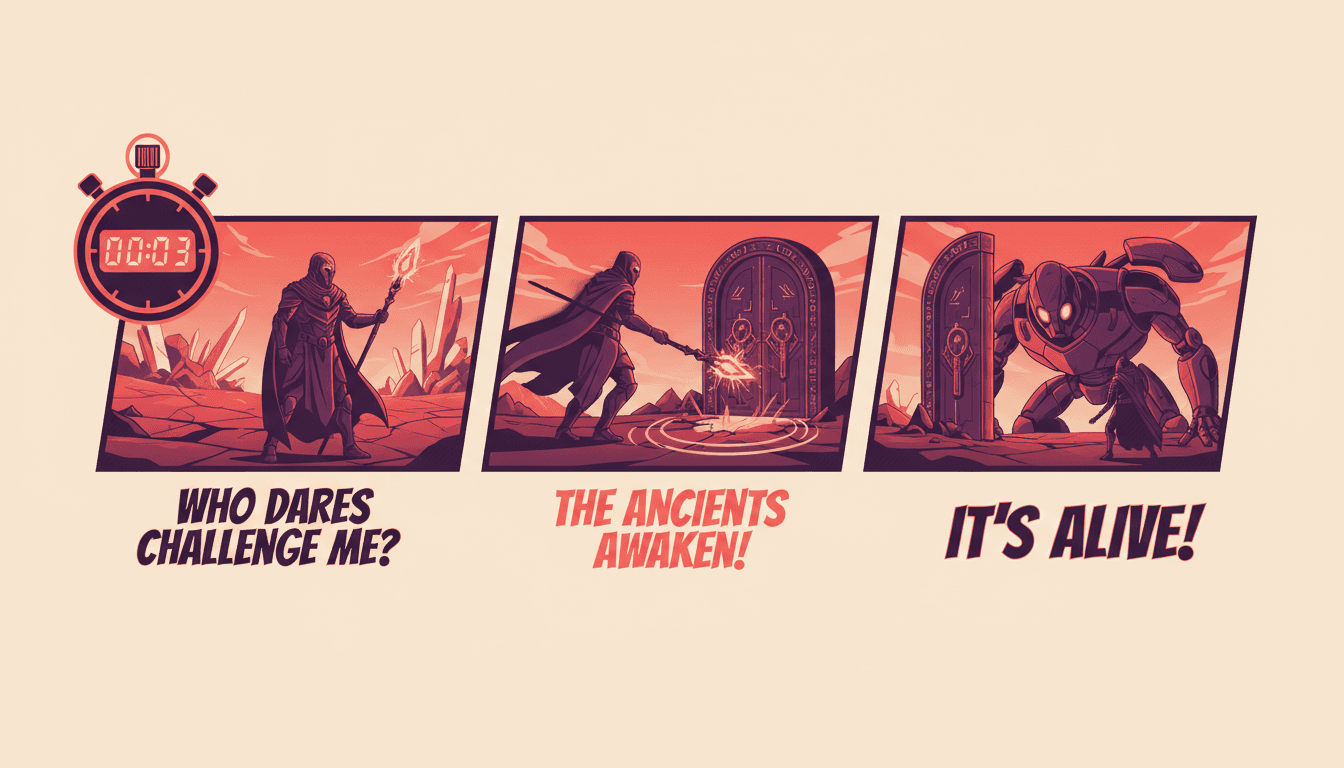
The Hook
First Three Seconds
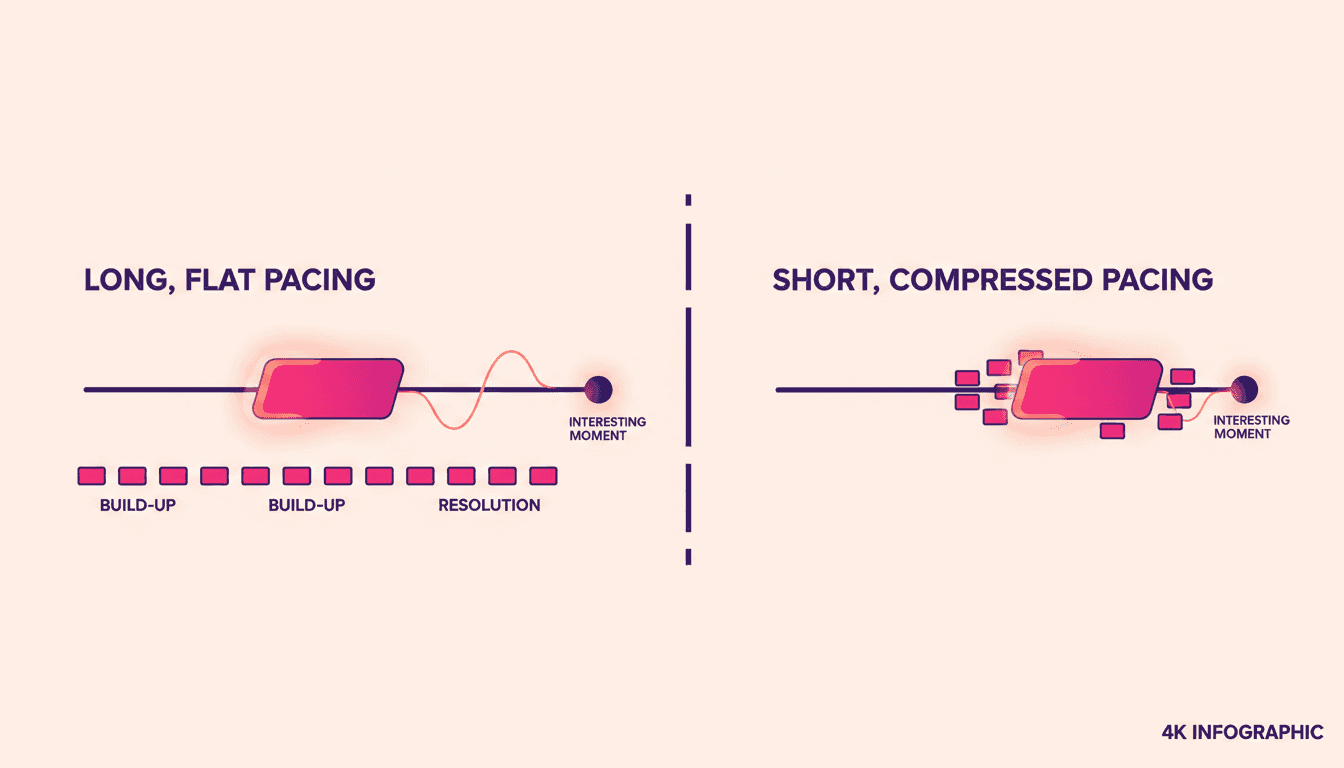
The Runtime
One to Three Minutes
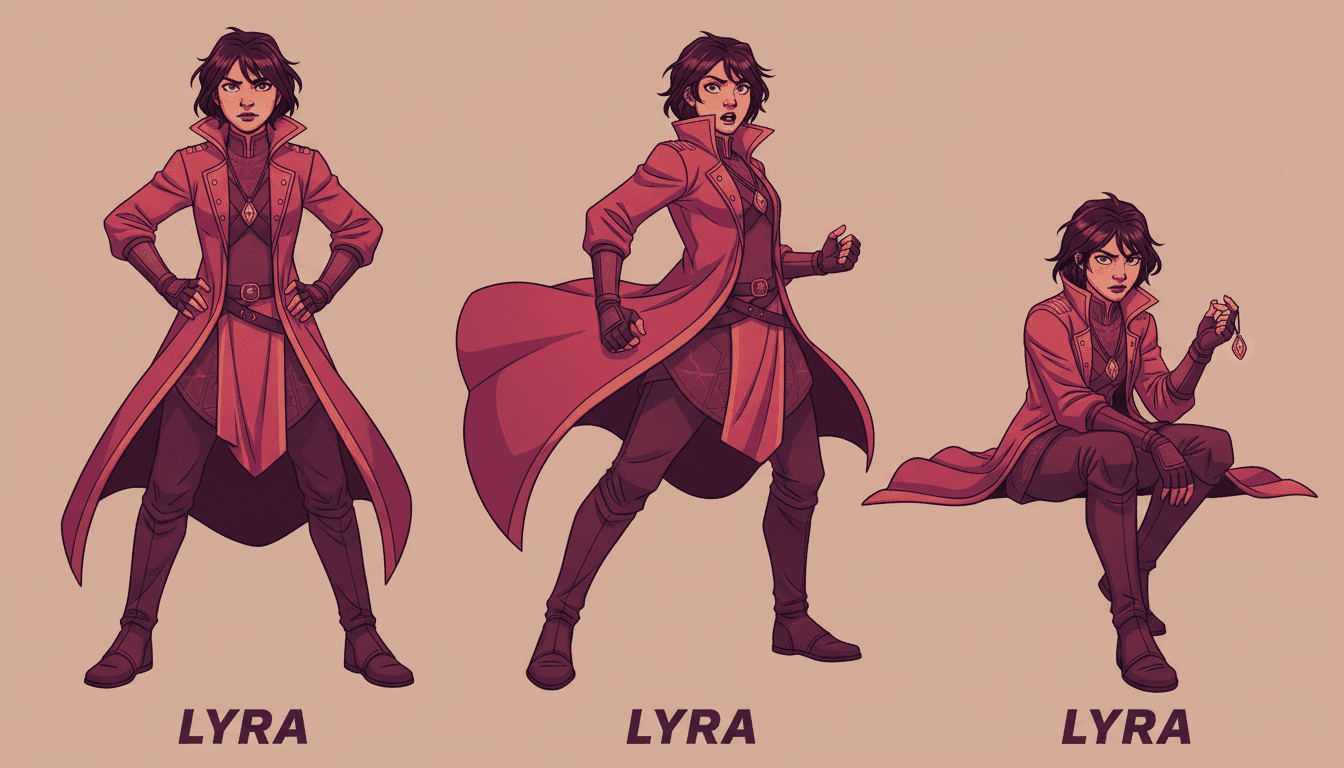
The Cast
Locked for the Season
The Cliffhanger
Ends Mid-Turn
The Next Tap
Binge, Not Browse
Match your season’s look with 45+ art styles including Comic, Manga, Anime, Cinematic and Watercolor.
What Changes When It Is a Season
Six things that work differently when episode fifty has to feel like it belongs to the same show as episode one.
Written to a Runtime, Not Trimmed to One
One to three minutes is a structural constraint, not an edit. Each episode is written knowing it has roughly that long — one situation, one turn, one unanswered question — instead of being a long scene cut down until it fits and losing its shape on the way.
A Hook in the First Three Seconds
Short drama has no room for a cold establishing beat. Episodes open on the most charged moment available — a slap, a signature, a name spoken that should not be — and the setup gets filled in afterwards, once the viewer has already decided to stay.
Cliffhangers That Point Somewhere
Every episode ends before its own answer arrives, and the answer is the first thing the next episode delivers. Endings are planned as a chain across the season rather than improvised per episode, so no cliffhanger writes a cheque the next one cannot cash.
A Story Split Into Episodes for You
Paste a long script or a novel and it gets cut at the turns, not at even intervals. The split hunts for the moments that make good endings — a reveal, a reversal, a door opening — so each episode arrives with a hook already in it.
One Cast Across Sixty Episodes
Save each lead once and every episode generates against that locked design. A season that runs for weeks only holds together if the face in episode fifty-two is unmistakably the face from episode one, including at thumbnail size in a feed.
Voices That Stay the Same Too
Each character keeps their assigned voice for the whole run, so a recurring villain sounds like themselves every time they appear. Drifting voices break a serial as fast as drifting faces, and they are harder to notice until an episode is already out.
A Cliffhanger Has a Shelf Life
The ending of episode four only works while the viewer still cares about it. Cadence is part of the writing, not something you decide afterwards.
Bank Before You Publish
Finish a run of episodes before the first one goes out. A serial that pauses after episode three to write episode four loses the audience it just built, and gaps are far more expensive than a slow start.
Ten in hand, then post
Daily Beats Weekly
Short drama audiences are used to drops measured in days, not weeks. A weekly cadence asks someone to hold a hook for seven days — most will not, and the ones who do will have forgotten the setup.
Match the format’s clock
Let New Viewers Binge In
Release several episodes at once at launch so someone arriving at episode one can keep going. The first three episodes are effectively one unit: hook, proof that the hook pays, and the reason to subscribe.
The first three are one thing
Who Makes AI Short Dramas?
Short-Drama Producers
The format runs on volume — hundreds of titles a day across the category. Generating episodes instead of shooting them is what makes a full season viable without a crew, a location or a shoot schedule.
Serial Writers
You already write in cliffhangers. The hard part is turning chapters into episodes and then producing sixty of them, which is where a locked cast and a repeatable pipeline earn their keep.
Web Novel Authors
A serialized novel is already cut close to episode shape. Adapting it into short drama reaches readers who will never open a text chapter but will happily watch ninety seconds of one.
Channel Builders
A faceless drama channel needs a pipeline more than it needs a hit. Daily episodes with a consistent cast and a house art style build a back catalogue people can binge into months later.
Is the Episode Structure the Problem You Are Solving?
This page is for creators whose starting constraint is the runtime and the release chain. If your constraint is the medium, the frame or the source material, one of these is a better door — they all share the same character library.
Yes — I am planning a season
Start here, cut the story into episodes and lock the cast before you render anything.
I want the medium, one episode
The comic drama generator covers panels in motion with voiced dialogue, standalone or serialized. Start there if the look matters more than the release chain.
The 9:16 frame is my constraint
Staging for a phone — close framing, safe zones, lettering you can read at arm’s length — is its own craft, covered in depth there.
I am adapting a web novel
Serialized prose has its own adaptation problems, starting with how much narration survives. That page handles them.
I already have finished comic pages
Bring drawn issues and have them re-staged as timed shots rather than generating new panels from a script.
My cast drifts by episode ten
Pin every design so the lead is unmistakable at thumbnail size deep into a long run.
Frequently Asked Questions
Explore More Story Ideas
Discover more styles, tools, and story types
Dragon Stories
Epic fire-breathing adventures
Explore
Folk Decorative Books
Botanical pattern & a whole village of faces
Explore
AI Story Generator
Generate complete stories with AI
Explore
Storybee Alternative
More styles & features
ExploreAI Short Drama — Writing Micro-Drama That Survives a Season
An AI short drama generator is not a video tool with a shorter export setting. Short drama — micro-drama, mini-drama, whatever the platform calls it — is defined by a release structure, not by a length limit. Episodes run one to three minutes, they arrive in runs of forty to eighty, and each one exists to make the next one get tapped. That changes what you are writing before it changes anything about how you render. The unit of work is not the video; it is the episode, and the episode only makes sense as part of a chain.
The runtime is a structural constraint, which is the part most people discover late. One to three minutes holds exactly one thing: a situation, a turn, and a question left open. Below a minute there is a hook with nothing behind it. Past four the episode starts reaching for a second turn, and a second turn means you actually have two episodes and have not cut them apart yet. Writing to the runtime from the start produces a different script than writing a scene and trimming it — roughly a beat every fifteen seconds, dialogue that carries plot rather than mood, and no establishing sequence whatsoever, because there is no budget of seconds for one.
Then there is the hook. You have about three seconds, which is not long enough to establish a location, introduce a name or set up a relationship. So short drama opens on the consequence and delivers the context second: a contract already signed, a slap already landed, a name spoken by someone who should not know it. The viewer is confused and interested at the same time, and confusion that is clearly going somewhere is the most reliable thing you can put in the first seconds. Episodes after the first have an easier job, because the previous cliffhanger is the hook — which is only true if the cliffhangers were planned as a chain.
Which brings up the actual craft problem: where to cut. The instinct is to divide a chapter into equal pieces, and it reliably produces a season where half the episodes stop in the middle of a conversation with nothing pulling anyone forward. The alternative is to find the reversals first — a secret lands, an ally switches sides, someone opens a door they should not have — and treat every one of them as an ending. Whatever leads up to a reversal becomes the episode. Runtimes come out uneven that way, and that is correct: an episode that runs one minute forty and ends on a reveal beats one that runs a tidy two minutes and ends on a doorway. C2Story runs that split on a pasted script or manuscript and proposes the boundaries, and you can move them.
Across a long run, consistency stops being a nicety. Serialized viewing happens fast and often at thumbnail size, where people recognise a lead by silhouette, hair shape and colour block well before they register a face. A design that drifts between episodes reads as a new character, and a viewer who is unsure who they are looking at in episode thirty does not watch episode thirty-one. Save each character once with reference images attached — up to fourteen per character — and every episode generates against that locked design. The same logic applies to voices: a recurring villain who sounds different in episode twelve breaks the serial just as effectively, and it is harder to catch before publishing.
Cadence is the last piece, and it belongs to the writing rather than to marketing. A cliffhanger has a shelf life — the ending of episode four only works while the viewer still cares about it, and a weekly schedule asks someone to hold that for seven days. Short drama audiences are used to daily drops or batches, so the practical pattern is to bank a run of episodes before publishing anything, release several at once at launch so a new viewer can binge into the story, then continue on a short cycle. Generation speed is what makes that realistic for one person: the bottleneck on a serial is production, not ideas, and with a locked cast episode forty costs about what episode four cost.
Worth being clear about the boundaries. This produces animated short drama — illustrated panels in motion with voiced dialogue — not live action with hired actors, which is what makes a sixty-episode season possible solo. And it is not an auto-clipper: nothing here takes finished footage and slices it at intervals. The cut happens at the story level, on a script, before a single frame exists.
Ready to start? Cut your story into episodes and go. Want the medium rather than the release structure? The AI comic drama generator covers panels in motion, standalone or serialized. Designing around the phone frame? The vertical comic video maker goes deep on 9:16 staging. Adapting serialized prose? Try web novel to comic drama. Already have drawn pages? Comic to video re-stages finished issues, and webtoon to video handles long-canvas scrolls. And if the cast is what keeps breaking, pin every design with the character consistency tool or open your character library.